Fire safety is an important life skill that children should learn from an early age. While many parents teach their children about safety at home, office environments are often overlooked. However, children may visit offices with their parents, accompany family members to workplaces during special events, or attend meetings and activities in commercial buildings. Understanding basic office fire safety can help them recognize potential dangers, respond calmly to alarms, and follow instructions during an emergency.
Teaching children about office fire safety does not mean frightening them with dangerous situations. Instead, it means building awareness through simple explanations, age-appropriate activities, and regular reminders. Children should understand that fire prevention is everyone’s responsibility and that adults, trained staff, and emergency responders are responsible for managing fire emergencies.
In Pakistan, offices range from small business premises and shops to large corporate buildings, factories, and commercial complexes. Each workplace may have different safety arrangements, but the basic principles remain similar: prevent fire hazards, maintain suitable detection and alarm systems, keep escape routes clear, and make sure everyone knows how to leave the building safely.
This guide explains how parents, teachers, and office managers can introduce children to workplace fire safety in a practical and understandable way.
Why Children Should Learn About Office Fire Safety
Children are naturally curious. They may notice electrical equipment, switches, office kitchens, storage areas, and other workplace features without understanding the risks associated with them.
Basic fire safety education helps children distinguish between safe and unsafe behavior. It also teaches them to follow instructions instead of making independent decisions during emergencies.
There are several reasons why this knowledge matters.
1. Children May Visit Workplaces
Some parents bring their children to offices during holidays, family events, or short visits. Children may also attend workplaces during open days or educational activities.
Knowing where the exits are and understanding what an alarm means can help them respond appropriately.
2. Awareness Builds Confidence
An unfamiliar alarm sound or emergency announcement can be confusing. Children who have received basic safety education are more likely to recognize that they must stop what they are doing and listen to responsible adults.
The aim is not to make children responsible for handling emergencies. It is to help them understand what adults expect them to do.
3. Children Can Develop Responsible Habits
Fire safety education encourages children to respect electrical equipment, avoid restricted areas, and understand why emergency exits must remain accessible.
These habits can also be useful at home, school, and other public places.
4. Workplaces Become More Family-Friendly
Offices that communicate safety information clearly create a more welcoming environment for visitors of different ages.
A workplace that has clear signs, maintained alarms, accessible exits, and trained staff is better prepared to protect employees and visitors.
Explain What Causes Office Fires
Children do not need detailed technical information about fire development. They should understand that fires can start when heat, electricity, or combustible materials are not managed safely.
Use familiar examples to explain common workplace hazards.
Electrical Problems
Offices use computers, printers, chargers, lights, air conditioners, and other electrical equipment. Damaged cables, overloaded sockets, and faulty equipment can increase fire risks.
Explain to children that electrical devices are not toys. They should never touch exposed wires, damaged plugs, or electrical panels.
They should also know that only authorized adults should connect, repair, or disconnect workplace electrical equipment.
Cooking and Pantry Areas
Many offices have small kitchens or pantry areas where employees prepare tea, coffee, and meals.
Cooking appliances can create risks when left unattended or used incorrectly. Children should understand that these areas may have restricted access.
They should never play near hot appliances or attempt to operate equipment without adult permission and supervision.
Paper and Packaging Materials
Offices often contain paper files, cardboard boxes, packaging, and other materials that can burn.
Children should learn not to play with matches, lighters, or any source of flame. They should also avoid entering storage rooms without permission.
Poor Housekeeping
Blocked walkways and improperly stored materials can make emergency evacuation difficult.
Explain that office corridors and emergency exits are not storage spaces. Keeping these areas clear helps everyone move toward safety.
Teach Children to Recognize Fire Safety Signs
Signs are an important part of workplace safety. They provide information about exits, emergency equipment, restricted areas, and safe behavior.
Children can learn the most common signs through pictures and simple explanations.
<PRIVATE_PERSON> should be encouraged to recognize:
– Emergency exit signs: Show the direction of a safe exit.
– Fire alarm signs: Identify the location of alarm equipment.
– Fire extinguisher signs: Show where firefighting equipment is located.
– No smoking signs: Indicate areas where smoking is prohibited.
– Restricted area signs: Warn visitors not to enter certain spaces.
– Assembly point signs: Identify the designated outdoor meeting location after evacuation.
Parents and office staff can use photographs or printed illustrations to make these signs easier to remember.
Children should understand that recognizing a sign does not mean they should operate the equipment. Their responsibility is to follow adult instructions and move away from danger.
Explain How Fire Alarm Systems Work
A fire alarm system is one of the most important safety features in an office building. It helps alert occupants when a possible fire or other emergency is detected.
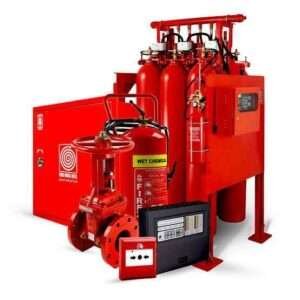
A typical system may include smoke detectors, heat detectors, manual call points, sounders, visual warning devices, and a central control panel.
The system is designed to help people receive an early warning so they can begin evacuation.
What Children Should Know
Children do not need to understand the technical operation of detectors or control panels. They only need to remember a few basic points:
– A fire alarm is a warning that must be taken seriously.
– They should stop their activities when an alarm sounds.
– They should listen to teachers, parents, security staff, or other responsible adults.
– They should move toward the nearest safe exit.
– They should never hide or return to collect personal belongings.
– They must not touch alarm panels, detectors, or emergency controls.
A reliable fire alarm system in Pakistan is an important part of workplace protection, particularly in buildings where many people work or visit every day. Regular inspection and professional maintenance help ensure that the system remains ready to provide warnings when needed.
Teach Children What to Do When an Alarm Sounds
A simple response plan is easier for children to remember than a long list of technical instructions.
Parents and workplace safety officers should explain the following steps in clear language.
Step 1: Stop and Listen
When the alarm sounds, children should stop playing, walking around, or using electronic devices.
They should listen carefully to instructions from responsible adults.
Step 2: Stay With a Responsible Adult
Children should not attempt to find their parents, friends, or other family members in different parts of the building.
If they are already with a responsible adult, they should stay with that person and follow their directions.
If they become separated, they should follow the instructions of trained staff or emergency personnel rather than wandering through the building.
Step 3: Use a Safe Exit
Children should move toward a designated emergency exit with the adult supervising them.
They should never use elevators during a fire alarm unless emergency personnel specifically direct them to do so.
Step 4: Walk Calmly
Running, pushing, and stopping in corridors can create additional risks.
Children should be encouraged to walk carefully, avoid crowding, and follow the evacuation route.
Step 5: Go to the Assembly Point
After leaving the building, children should remain with their supervising adult and go to the designated assembly point.
They should not leave the meeting area or return inside.
Step 6: Wait for Instructions
Children should remain at the assembly point until responsible adults or emergency personnel provide further instructions.
They should never re-enter the building to collect a schoolbag, phone, toy, or other personal item.
Make Emergency Exits Easy to Understand
Emergency exits are essential in every office building. Children should know that these routes are designed to help people leave safely during emergencies.
Parents can explain that an emergency exit is different from an ordinary office door because it forms part of the building’s evacuation arrangements.
When visiting an office, adults can point out visible exit signs and explain the general direction of the nearest safe exit.
However, children should not be encouraged to explore stairwells, service corridors, rooftops, or restricted areas without supervision.
Office managers should ensure that:
– Exit doors remain accessible.
– Corridors are not blocked by furniture or boxes.
– Exit signs are visible and properly maintained.
– Emergency lighting is functional.
– Evacuation routes are clearly communicated.
– Staff members understand their responsibilities.
These measures help protect employees, visitors, and children who may be present in the workplace.
Teach Children to Stay Away From Fire Equipment
Offices may contain extinguishers, fire hose reels, alarm call points, sprinkler systems, and electrical control panels.
Children should know that this equipment is installed for emergencies and must not be used for play.
Explain the purpose of common equipment in simple terms.
Fire Extinguishers
Fire extinguishers are designed for trained and appropriately instructed people to use in specific situations. Children should never experiment with them or remove them from their designated positions.
Fire Hose Reels
Fire hose reels are workplace safety equipment. Children should not pull, operate, or play with their hoses.
Manual Alarm Call Points
Manual call points allow people to activate a fire alarm when necessary. Children should not press them as a game or for entertainment.
Sprinkler Systems
Some buildings have automatic sprinkler systems designed to control or suppress fires under certain conditions.
Children should never hang objects from sprinkler heads or interfere with the system.
The key lesson is simple: fire safety equipment should remain accessible, maintained, and ready for emergencies.
Discuss Safe and Unsafe Office Areas
Children should understand that some parts of an office are intended for visitors, while others are restricted to trained staff.
For example, reception areas and designated visitor spaces may be suitable for supervised visits. Electrical rooms, server rooms, storage areas, kitchens, and maintenance spaces may have additional hazards.
Parents should explain that restricted signs and staff instructions must always be respected.
Children should never enter these areas alone, even if a door is open.
Workplace managers can support this lesson by using clear signs, visitor instructions, and appropriate supervision.
Use Simple Activities to Teach Fire Safety
Children often learn more effectively through activities than through long explanations.
Parents and teachers can introduce basic fire safety lessons through short, enjoyable exercises.
Fire Safety Picture Cards
Prepare cards showing emergency exits, alarm signs, extinguishers, smoke detectors, and assembly points.
Ask children to identify each item and explain its general purpose.
Spot the Safety Sign
During a supervised office visit, ask children to identify visible safety signs.
Explain why each sign is important without allowing them to enter restricted areas or touch safety equipment.
Safe Route Discussion
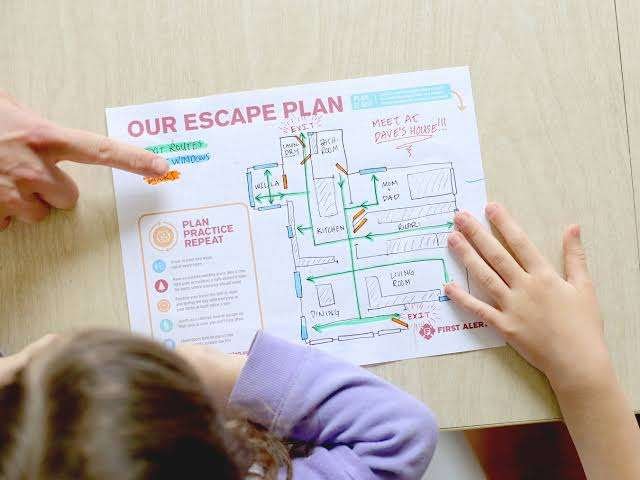
Show children a simple office floor plan and explain how people move toward designated exits.
Make it clear that they must follow the actual instructions of responsible adults during an emergency.
Story-Based Learning
Create a short story about a child visiting a workplace with a parent.
The story can explain how the child recognizes an alarm, stays with the adult, follows the evacuation route, and waits at the assembly point.
Question-and-Answer Sessions
Ask simple questions such as:
– What should you do when a fire alarm sounds?
– Should you use an elevator during a fire evacuation?
– Can you play with fire extinguishers?
– Where should you go after leaving the building?
– Should you return inside to collect a toy?
These discussions help reinforce important lessons.
The Role of Parents in Workplace Fire Safety Education
Parents play an important role in helping children understand workplace hazards.
Before taking a child to an office, parents should explain basic safety expectations.
They should also make sure the workplace allows children to visit and that suitable supervision is available.
Parents can help by:
– Explaining that office equipment is not for playing.
– Identifying appropriate visitor areas.
– Teaching children to recognize alarm sounds.
– Explaining why emergency exits must remain clear.
– Encouraging children to follow staff instructions.
– Making sure children know who to approach if they become separated.
– Keeping children away from kitchens, electrical rooms, and storage areas.
Children should never be expected to supervise other children during an emergency. Responsibility should remain with adults and trained workplace personnel.
How Office Managers Can Create a Child-Friendly Safety Environment
Office managers and building administrators should consider visitors of different ages when reviewing their emergency arrangements.
Although workplaces are primarily designed for employees, children may occasionally enter these buildings.
A few practical measures can make safety information easier for young visitors to understand.
Provide Clear Visitor Instructions
Reception staff can explain basic safety rules when children arrive with parents.
These instructions should include information about restricted areas, emergency exits, and the assembly point.
Maintain Fire Detection and Alarm Equipment
Fire alarm systems should be inspected and maintained according to applicable requirements and professional recommendations.
Smoke detectors, heat detectors, alarm sounders, control panels, and manual call points should remain in suitable working condition.
Keep Escape Routes Clear
Furniture, boxes, cables, and other objects should not obstruct corridors or exits.
Clear routes are especially important in busy buildings where employees and visitors may need to evacuate together.
Train Employees
Employees should understand evacuation procedures and know how to assist visitors.
Staff should also know how to respond when a child becomes separated from a parent during an evacuation.
Conduct Appropriate Fire Drills
Regular fire drills help employees become familiar with evacuation procedures.
Where children are present, adults should provide clear instructions and ensure that they remain supervised throughout the exercise.
Drills should be planned carefully so that children understand the process without unnecessary fear or confusion.
Understanding the Importance of Fire Prevention
Children should learn that preventing fire hazards is just as important as knowing what to do when an alarm sounds.
They can develop safe habits by following a few simple rules:
1. Never play with matches, lighters, or candles.
2. Do not touch damaged electrical wires or plugs.
3. Never operate office cooking equipment without permission and supervision.
4. Stay away from electrical rooms and restricted areas.
5. Do not block emergency exits or corridors.
6. Never interfere with smoke detectors or alarm equipment.
7. Inform a responsible adult if they notice something unsafe.
These rules are easy to understand and can be repeated at home, school, and workplaces.
Fire Safety Considerations for Offices in Pakistan
Pakistan has a wide range of commercial buildings, including offices in shopping plazas, business centers, industrial areas, and high-rise structures.
The safety arrangements required by each building depend on its design, occupancy, use, and applicable regulations.
Workplace owners and administrators should take fire protection seriously by arranging suitable detection systems, emergency lighting, evacuation signage, and other necessary safety measures.
The presence of a fire alarm alone does not guarantee complete protection. A building also needs clear evacuation procedures, properly maintained equipment, trained staff, and regular safety reviews.
Children visiting offices should receive simple instructions that match the building’s actual emergency arrangements.
Businesses should also consider whether their visitor procedures are suitable for families and young visitors.
Common Mistakes to Avoid When Teaching Children
Fire safety education can become confusing if adults use complicated language or communicate inconsistent instructions.
Avoid these common mistakes.
1. Using Fear Instead of Education
Children should not be frightened with graphic stories or exaggerated warnings.
Use calm language and focus on practical actions that help them stay safe.
2. Giving Too Much Technical Information
Young children do not need to learn how alarm circuits, control panels, or sprinkler mechanisms operate.
Focus on recognizing warnings and following instructions.
3. Allowing Children to Experiment With Equipment
Fire extinguishers, alarm call points, and electrical equipment should never become toys or learning props for unsupervised experimentation.
Use photographs, diagrams, or demonstrations conducted by qualified adults.
4. Ignoring Supervision
Children should remain under appropriate adult supervision during office visits and evacuation activities.
They should not be expected to manage an emergency independently.
5. Forgetting to Repeat Important Lessons
A single conversation may not be enough.
Parents and teachers should revisit basic safety rules occasionally so children can remember them.
A Simple Office Fire Safety Checklist for Families
Before visiting an office with children, parents can review a few important points.
– Confirm that children are permitted to visit.
– Explain basic workplace safety rules.
– Identify the responsible adult supervising the child.
– Learn where the nearest safe exit is.
– Explain what the alarm sounds like, if appropriate.
– Identify the assembly point.
– Keep children away from restricted areas.
– Remind children not to touch fire safety equipment.
– Explain that elevators should not be used during fire evacuation.
– Make sure children know to follow staff instructions.
Office managers should separately maintain their building’s formal fire safety arrangements. This family checklist is an educational aid, not a replacement for a professional fire risk assessment or workplace emergency plan.
Conclusion
Teaching kids about office fire safety is an important way to develop awareness, responsibility, and confidence. Children who understand basic workplace safety rules are better pre