Fire Fighting Training Services
Fire Safety Trading (Pvt)
ToggleOur fire fighting training services in Pakistan are designed to build exactly that kind of preparedness — for both the people who occupy a building and the professionals who maintain the systems that protect it
We deliver two complementary streams of training: occupant and staff fire safety training, and technical fire system installation and maintenance training for engineers and technicians.
Fire Fighting Training Services in Pakistan: Protecting Lives, Property, and Businesses
Fire doesn’t wait for anyone to be ready. Within minutes, a small spark can turn into a life-threatening emergency, and in that critical window, the difference between safety and disaster often comes down to one thing: training. Whether it’s an office employee who knows how to use a fire extinguisher correctly, or a technician who can service a fire pump before it fails, trained people save lives and protect property when it matters most.
Our fire fighting training services in Pakistan are designed to build exactly that kind of preparedness — for both the people who occupy a building and the professionals who maintain the systems that protect it. We deliver two complementary streams of training: occupant and staff fire safety training, and technical fire system installation and maintenance training for engineers and technicians. Together, these programs create a complete culture of fire safety, from the front desk to the plant room, for businesses across Pakistan.
Why Fire Fighting Training Matters in Pakistan
Installing fire protection systems — extinguishers, sprinklers, alarms, hydrants — is only half the equation. Systems are only as effective as the people who use, maintain, and respond with them. A building can have the most advanced fire suppression technology available, but if occupants don’t know evacuation procedures and technicians don’t know how to maintain the equipment correctly, that investment offers a false sense of security.
Pakistan has seen a steady rise in urban construction, industrial expansion, and dense commercial development in cities like Lahore, Karachi, Rawalpindi, and Peshawar. With this growth comes increased fire risk — from overloaded electrical systems in older buildings to flammable material storage in factories and warehouses. Incidents at garment factories, markets, and high-rise buildings across the country in recent years have repeatedly shown how quickly untrained response and poorly maintained fire systems can turn a manageable fire into a major tragedy. This is exactly why demand for professional fire fighting training services in Pakistan has grown significantly among businesses, developers, and institutions that take occupant safety seriously.
Fire fighting training closes this gap by ensuring:
- Occupants know how to react in the first critical moments of a fire — often before emergency services arrive
- Fire wardens and safety officers can coordinate safe, orderly evacuations under pressure
- Technical staff can install, inspect, test, and maintain fire systems to keep them fully operational at all times
- Organizations remain compliant with Pakistan’s civil defense regulations, building codes, and insurance requirements
- Response times improve, reducing injury, loss of life, and property damage when incidents occur
Fire safety is not a one-time checkbox — it’s an ongoing discipline that requires regularly refreshed knowledge and hands-on practice. That’s exactly what our fire fighting training programs are built to deliver, wherever your business operates in Pakistan.
Common Causes of Fire Incidents in Pakistan
Understanding why fires happen helps explain why structured training is so important. Some of the most common causes of fire incidents across Pakistani workplaces and buildings include:
- Electrical faults and overloaded circuits — a leading cause of fires in both older residential buildings and industrial facilities, often linked to outdated wiring, poor maintenance, or unauthorized load additions
- Improper storage of flammable materials — common in textile mills, warehouses, and manufacturing units where chemicals, fabrics, or packaging materials are stored without adequate fire separation
- Blocked or poorly marked emergency exits — a factor that has repeatedly turned survivable incidents into tragedies, particularly in densely packed commercial and industrial buildings
- Lack of functioning fire extinguishers and alarm systems — equipment that is either not installed, poorly maintained, or unfamiliar to staff at the moment it’s needed
- Gas leaks and faulty kitchen equipment — a significant risk factor in restaurants, hotels, and residential kitchens
- Human error and lack of awareness — including careless smoking, unsafe use of heating equipment, and simply not knowing how to respond in the first critical minutes
Most of these causes are preventable or manageable with the right combination of awareness training, technical maintenance, and preparedness planning — which is precisely the gap our fire fighting training services in Pakistan are designed to close.
Two Pillars of Fire Fighting Training Services in Pakistan
Pillar 1: Fire Safety Training for Staff and Occupants
This stream of training is designed for everyday building occupants — office staff, facility teams, hotel employees, factory workers, school staff, or residential building personnel — who are not fire safety professionals but need to know how to respond safely and confidently in an emergency.
Fire Awareness and Prevention Training
Before teaching people how to respond to a fire, we teach them how to prevent one. This module covers:
- Understanding the fire triangle (heat, fuel, oxygen) and common causes of workplace fires
- Identifying fire hazards specific to the workplace — electrical hazards, flammable storage, blocked exits, faulty equipment
- Safe housekeeping practices that reduce fire risk
- Understanding different fire classes (Class A, B, C, D, and electrical/K fires) and why this matters for response
Fire Extinguisher Training
One of the most requested and practical components of our staff training, this module includes:
- Identifying different types of extinguishers (water, foam, CO2, dry powder, wet chemical) and which fire class each is designed for
- The correct technique for operating an extinguisher using the internationally recognized P.A.S.S. method (Pull, Aim, Squeeze, Sweep)
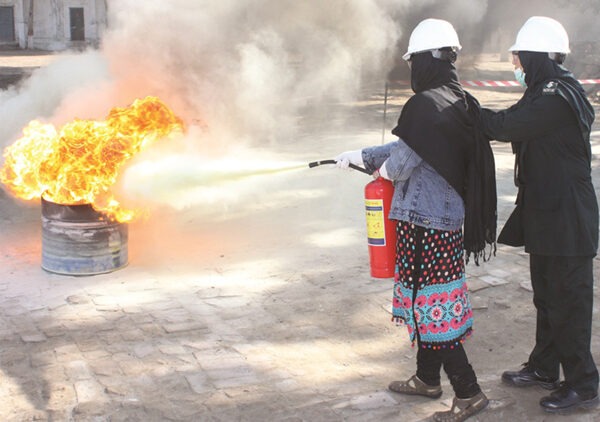
- Hands-on, live-fire extinguisher practice using controlled training fire simulators, so participants gain real confidence rather than just theoretical knowledge
- Understanding when to fight a fire and when to evacuate instead — a critical judgment call that trained individuals make far more safely than untrained ones
Evacuation Procedures and Fire Drills
This module prepares occupants and organizations to move people out of a building quickly, calmly, and safely:
- Understanding evacuation routes, assembly points, and building-specific evacuation plans
- Roles and responsibilities during an evacuation, including how to assist people with mobility challenges
- Conducting realistic fire drills that test response times and identify gaps in evacuation planning
- Post-drill debriefs and reporting to continuously improve emergency response plans
Fire Warden and Fire Safety Officer Training
For organizations that designate specific employees as fire wardens or safety officers, we provide more advanced training covering:
- Leading evacuations and coordinating headcounts at assembly points
- Communicating with emergency responders on arrival
- Conducting routine fire safety inspections and hazard identification
- Understanding legal responsibilities and liability related to fire safety compliance
- Basic first aid and smoke inhalation response awareness
High-Risk Environment Training
For industries with elevated fire risk — such as manufacturing, textiles, warehousing, and commercial kitchens, which make up a large share of Pakistan’s industrial economy — we provide specialized modules addressing the specific hazards and response protocols relevant to those environments, including handling flammable materials safely and using specialized suppression equipment.
Pillar 2: Technical Fire System Installation and Maintenance Training
This stream is designed for engineers, technicians, facility management staff, and maintenance teams responsible for the physical fire protection infrastructure of a building. Unlike general staff training, this program is hands-on, technical, and system-focused.
Fire Alarm System Training
- Understanding addressable versus conventional fire alarm panel architecture
- Installation best practices for smoke detectors, heat detectors, and manual call points
- Wiring, zoning, and system configuration
- Routine testing procedures and fault diagnosis
- Interpreting alarm panel signals and troubleshooting false alarms
Sprinkler System Training
- Understanding sprinkler system types (wet pipe, dry pipe, pre-action, deluge) and their appropriate applications
- Installation standards and spacing requirements based on hazard classification
- Testing procedures, including flow tests and alarm valve inspections
- Identifying and correcting common installation errors that compromise system performance
- Routine maintenance schedules to keep systems code-compliant and fully functional
Fire Pump and Water Supply System Training
- Understanding jockey pump, main pump, and standby pump configurations
- Startup, shutdown, and routine testing procedures for fire pump sets
- Diagnosing common fire pump issues, including pressure loss and pump failure to start
- Maintaining fire water storage tanks and monitoring system pressure
- Compliance testing in line with NFPA 25 and equivalent local standards
Fire Extinguisher Servicing and Maintenance Training
- Inspection intervals and visual check procedures for different extinguisher types
- Recharging, pressure testing, and hydrostatic testing requirements
- Record-keeping and tagging systems for compliance audits
- Identifying extinguishers that require replacement versus servicing
Gas Suppression and Specialized System Training
- Installation and maintenance of clean agent and CO2 suppression systems used in server rooms, electrical rooms, and sensitive equipment areas
- Understanding discharge testing, room integrity testing, and safety interlocks
- Safe handling procedures for suppression agents
Fire System Commissioning and Compliance Documentation
- Understanding the testing and commissioning process required before a fire system can be certified for use
- Preparing documentation for civil defense and fire authority approvals
- Maintaining ongoing compliance logs and inspection records required for insurance and regulatory audits
Who Needs Fire Fighting Training Services in Pakistan?
Our training programs are tailored for a wide range of participants and industries operating across Pakistan:
- Corporate offices — general staff fire safety awareness and fire warden training for teams working in shared office towers and business parks, where coordinated evacuation planning is essential
- Residential buildings and communities — building management staff and resident safety training for apartment complexes and gated communities, where evacuation planning must account for families, elderly residents, and children
- Hotels and hospitality venues — front-of-house and back-of-house staff training, including kitchen fire safety, guest evacuation procedures, and coordination with local emergency services
- Industrial and manufacturing facilities — high-risk hazard training and technical maintenance training for plant engineers, especially in textile, garment, and manufacturing units where flammable materials and heavy machinery increase fire risk
- Healthcare facilities — evacuation training adapted for patient mobility challenges, alongside technical training for critical fire systems that cannot be allowed to fail, such as those protecting operating theatres and ICUs
- Educational institutions — staff and safety officer training tailored to school evacuation procedures, helping schools and universities protect large numbers of students and staff
- Facility management companies — technical training for maintenance teams responsible for fire system upkeep across multiple properties and portfolios
- Fire protection contractors and technicians — advanced technical certification training for installation and servicing professionals looking to formalize and validate their expertise
- Shopping malls and retail centers — high-occupancy evacuation planning and staff readiness training for environments with heavy public footfall and complex layouts
- Warehousing and logistics operators — training focused on flammable storage practices, forklift-related fire hazards, and rapid-response protocols for large open-plan storage facilities
Our Fire Fighting Training Process
When you engage our fire fighting training services in Pakistan, the process typically follows these steps:
- Site and risk assessment — we evaluate your building layout, occupancy type, existing fire systems, and specific hazards to design a relevant training program.
- Customized training plan — based on the assessment, we build a program combining the appropriate staff safety modules and/or technical system training.
- Scheduling and delivery — training is scheduled around your operational hours to minimize disruption, delivered on-site using your actual building layout and systems wherever possible.
- Hands-on practical sessions — including live-fire extinguisher drills, evacuation simulations, and technical equipment walkthroughs.
- Assessment and certification — participants are evaluated on their understanding and practical performance, and certified upon successful completion.
- Documentation and reporting — attendance records, assessment results, and certificates are provided for compliance and audit purposes.
- Refresher scheduling — we help you plan recurring refresher sessions to keep knowledge current and meet ongoing regulatory requirements.
What to Expect During a Fire Fighting Training Session
Every organization’s needs are different, so session length and structure are tailored to your requirements, but a typical engagement generally follows one of these formats:
- Half-day awareness sessions — ideal for general staff fire safety training, covering fire prevention, extinguisher use, and evacuation basics, usually including a live-fire practical component
- Full-day fire warden and safety officer programs — combining awareness modules with deeper coverage of evacuation coordination, hazard inspection, and emergency communication
- Multi-day technical training programs — for engineers and technicians, covering fire alarm, sprinkler, fire pump, and extinguisher servicing in depth, with hands-on equipment practice
- Recurring refresher sessions — shorter follow-up sessions scheduled quarterly, biannually, or annually to keep knowledge current and satisfy ongoing compliance requirements
Group sizes are kept manageable to ensure every participant gets hands-on practice time, particularly during live-fire extinguisher exercises, rather than simply observing a demonstration.
Training Delivery Methods
We understand that different organizations have different needs, schedules, and learning preferences. Our fire fighting training services in Pakistan are delivered through a mix of formats:
- Classroom-based theory sessions covering fire science, regulations, and system fundamentals
- Hands-on practical training, including live-fire extinguisher exercises using controlled simulators
- On-site training, conducted at the client’s premises using their actual building layout and fire systems for maximum relevance
- Scenario-based fire drills that simulate real emergency conditions to test readiness
- Technical workshops for hands-on system installation, testing, and troubleshooting practice
- Refresher courses, since fire safety knowledge and regulations evolve, and skills can fade without regular practice
Compliance and Certification in Pakistan
Fire fighting training isn’t just good practice — it’s increasingly a regulatory and insurance requirement across Pakistan. Provincial civil defense authorities and building regulations typically expect:
- Regular fire safety training and evacuation drills for building occupants
- Designated, trained fire wardens for commercial and multi-occupancy buildings
- Certified technicians for the installation, testing, and maintenance of fire protection systems
- Documented training records as part of fire safety compliance audits, factory inspections, and insurance requirements
Our training programs are aligned with recognized international standards, including NFPA guidelines, alongside provincial civil defense regulations in Punjab, Sindh, and Khyber Pakhtunkhwa, ensuring your organization stays fully compliant wherever it operates in Pakistan. Upon completion, participants receive certification confirming their training, which can be used to satisfy regulatory, insurance, and audit requirements.
The Benefits of Investing in Fire Fighting Training Services in Pakistan
1. Saves Lives
The single most important outcome of fire safety training is that it equips people with the knowledge and confidence to protect themselves and others during an emergency.
2. Minimizes Property and Financial Loss
Quick, correct action in the first moments of a fire — whether extinguishing a small fire safely or executing a fast evacuation — significantly reduces the extent of damage and associated financial loss.
3. Reduces Downtime
For businesses, a well-trained team and properly maintained fire systems mean faster recovery and less operational disruption in the event of an incident.
4. Ensures Regulatory Compliance
Avoiding fines, legal liability, and insurance complications starts with meeting mandatory fire safety training requirements set by local authorities.
5. Extends the Life and Reliability of Fire Systems
Properly trained technicians catch small issues before they become system failures, ensuring fire protection equipment performs reliably when it’s needed most.
6. Builds a Safety-Conscious Culture
Regular training reinforces a workplace culture where fire safety is second nature, not an afterthought — reducing hazards and improving overall workplace safety awareness.
Why Choose Our Fire Fighting Training Programs
- Comprehensive coverage — from basic staff awareness to advanced technical system training, all under one program
- Experienced trainers — instructors with real-world fire protection engineering and emergency response backgrounds
- Hands-on approach — practical, scenario-based learning rather than passive classroom instruction alone
- Customized programs — training content tailored to your specific industry, building type, and risk profile
- Compliance-focused — programs designed to help you meet Pakistan’s regulatory and insurance requirements
- Ongoing support — refresher training and updated modules as regulations and technologies evolve
Choosing the Right Fire Fighting Training Provider in Pakistan
Not all fire safety training is created equal, and choosing the wrong provider can leave your organization with a certificate that looks good on paper but doesn’t translate into real preparedness. When evaluating fire fighting training services in Pakistan, consider the following:
- Practical, hands-on components — training should include live-fire extinguisher practice and realistic evacuation drills, not just slideshow presentations
- Qualified, experienced trainers — look for instructors with genuine fire protection engineering or emergency response backgrounds, not generic corporate trainers
- Coverage of both awareness and technical training — a provider that can support both your general staff and your technical maintenance teams saves you the hassle of coordinating multiple vendors
- Familiarity with local regulations — a provider who understands provincial civil defense requirements in Punjab, Sindh, KP, and other regions can help ensure your training actually satisfies compliance obligations
- Proper documentation and certification — training records and certificates should be detailed enough to support insurance claims and regulatory audits
- On-site delivery capability — training conducted using your actual building layout and installed systems is significantly more effective than generic off-site classroom sessions
- Ongoing support — the best providers offer scheduled refresher training rather than a one-time session that’s never revisited
What Affects the Cost of Fire Fighting Training in Pakistan
Pricing for fire fighting training services in Pakistan varies based on several factors, including:
- Type of training — general staff awareness sessions are typically less resource-intensive than multi-day technical system training for engineers
- Group size — larger groups may benefit from lower per-person costs, though hands-on components still require adequate trainer-to-participant ratios
- Session duration and depth — half-day awareness sessions cost less than full-day fire warden programs or multi-day technical certification courses
- Location and travel — on-site training in remote areas may involve additional logistics costs compared to sessions delivered in major cities
- Equipment requirements — live-fire simulation equipment, training extinguishers, and technical system mock-ups can affect overall program cost
- Frequency — organizations that commit to recurring refresher training often benefit from more favorable long-term pricing than one-off sessions
We recommend requesting a customized quote based on your organization’s specific size, industry, and training goals, so you get an accurate picture of investment versus the value of reduced risk and regulatory compliance.
Fire Fighting Training Services in Pakistan — City Coverage
Fire safety needs vary from city to city depending on building density, industrial activity, and local regulatory requirements. We provide both staff safety training and technical fire system training across Pakistan, with dedicated coverage in the country’s major urban centers.
Fire Fighting Training in Lahore
As Pakistan’s second-largest city and a major commercial, industrial, and real estate hub, Lahore has seen rapid growth in high-rise residential towers, shopping malls, and manufacturing units — particularly around the textile and industrial zones. This growth has made fire safety compliance and staff preparedness a priority for developers, factory owners, and commercial property managers. Our teams deliver on-site fire warden training, evacuation drills, and technical fire system training in Lahore in line with Punjab’s civil defense requirements.
Fire Fighting Training in Karachi
As Pakistan’s largest city and its primary port and industrial center, Karachi presents some of the highest fire-risk environments in the country, particularly across dense industrial zones such as SITE and Korangi, as well as high-rise commercial buildings in the city center. We provide specialized high-risk environment training for industrial and warehouse facilities in Karachi, alongside standard staff fire safety and technical maintenance training aligned with Sindh’s civil defense regulations.
Fire Fighting Training in Rawalpindi
Rawalpindi’s fast-growing commercial and residential sectors, along with its proximity to Islamabad, have driven increased demand for structured fire safety programs across offices, residential communities, and cantonment-adjacent developments. Our training programs in Rawalpindi cover both general staff fire safety awareness and technical training for facility management teams responsible for maintaining fire protection systems in newer commercial and residential developments.
Fire Fighting Training in Peshawar
As the commercial and administrative hub of Khyber Pakhtunkhwa, Peshawar has a mix of older infrastructure and newer commercial developments, both of which benefit from updated fire safety practices. We deliver fire awareness training, evacuation drills, and technical system training tailored to Peshawar’s building stock, helping local businesses and institutions meet KP civil defense compliance requirements.
Nationwide Coverage
While Lahore, Karachi, Rawalpindi, and Peshawar are our primary service hubs, our fire fighting training services in Pakistan are available nationwide. Whether you operate a single facility or manage properties across multiple cities, we can design a consistent, compliant training program tailored to your organization’s footprint anywhere in Pakistan.
Frequently Asked Questions
How often should fire safety training be conducted? Most regulations recommend fire safety awareness training and evacuation drills at least once or twice a year, with more frequent refreshers for high-risk environments or newly onboarded staff.
Is hands-on extinguisher training really necessary, or is theory enough? Hands-on practice is essential. Studies consistently show that people who physically practice using a fire extinguisher respond far more effectively in real emergencies than those who only receive theoretical instruction.
Who needs technical fire system training versus general staff training? General staff training is meant for all building occupants and focuses on awareness, evacuation, and basic extinguisher use. Technical training is meant for engineers, technicians, and maintenance staff responsible for installing, testing, and servicing fire protection systems.
Can training be conducted at our facility? Yes, on-site training is available and often recommended, as it allows participants to train using their actual building layout, exits, assembly points, and installed fire systems.
Do participants receive certification after training? Yes, participants receive a certificate of completion, which can support regulatory compliance, audit documentation, and insurance requirements.
Is fire fighting training only for high-risk industries? No. Every occupied building — from a small office to a large industrial plant — carries some level of fire risk. Fire safety training is valuable and often legally required across virtually all sectors.
Which cities in Pakistan do you provide fire fighting training in? We regularly deliver fire fighting training services in Pakistan, with dedicated coverage in Lahore, Karachi, Rawalpindi, and Peshawar. We also serve other cities on request, tailoring programs to local civil defense requirements in each region.
How many people can attend a single training session? Group sizes depend on the type of training and available space, but we generally recommend smaller groups for hands-on sessions like live-fire extinguisher practice, so every participant gets adequate practical experience. Larger awareness sessions can accommodate bigger groups, with practical components run in smaller rotating batches.
How long does it take to become certified? Most staff awareness and fire warden programs can be completed within a single day, while technical system training for engineers and technicians may span multiple days depending on the number of systems covered. Certification is issued upon successful completion of the assessment component.
Conclusion: Preparedness Is the Best Protection
Fire protection systems are only as strong as the people behind them. A building filled with the best extinguishers, sprinklers, and alarms is still vulnerable if occupants don’t know how to respond and technicians can’t keep systems functioning at peak reliability. Our fire fighting training services in Pakistan bridge that gap — combining practical staff safety training with rigorous technical system training to build complete, end-to-end fire preparedness across your organization, whether you’re based in Lahore, Karachi, Rawalpindi, Peshawar, or anywhere else in the country.
Whether you need to train your entire office in basic fire safety, certify your facility’s fire wardens, or upskill your technical maintenance team on fire system installation and servicing, our training programs are designed to deliver real, lasting readiness — not just a certificate on the wall.
Ready to build a safer, more prepared organization? Contact our team today to schedule fire fighting training services in Pakistan tailored to your building, industry, and compliance needs.
Get Quotation
Informational FAQs
Fire fighting training is a professional safety program that teaches employees how to prevent fires, use fire extinguishers, respond to fire emergencies, and safely evacuate a building. It helps organizations improve workplace safety and comply with fire safety regulations.
Fire fighting training helps reduce the risk of injuries, property damage, and business interruptions. It prepares employees to respond quickly during fire emergencies and improves overall workplace safety.
Fire fighting training is recommended for factory workers, office staff, HSE officers, maintenance teams, security personnel, warehouse employees, construction workers, hospital staff, hotel employees, and anyone responsible for workplace safety.
Our training covers fire prevention, classes of fire, types of fire extinguishers, PASS technique, emergency evacuation procedures, fire alarm systems, fire hose reel operation, basic fire suppression methods, and practical live fire demonstrations.
Yes. We provide hands-on practical training where participants learn how to safely operate different types of fire extinguishers, including CO₂, Dry Chemical Powder (DCP), Foam (AFFF), Water, and Clean Agent extinguishers.
Yes. We conduct on-site fire fighting training at factories, offices, hospitals, schools, warehouses, hotels, shopping malls, and industrial facilities across Pakistan, including Karachi, Lahore, Islamabad, Rawalpindi, and Peshawar.
Yes. Participants receive a Fire Fighting Training Certificate upon successful completion of the training program, which can support workplace safety records and compliance requirements.
The duration depends on your organization's requirements. Basic fire fighting training typically takes 2 to 4 hours, while comprehensive programs with practical exercises and emergency drills may take a full day.
It is recommended that employees receive fire fighting and emergency response training at least once a year. Refresher training should also be conducted whenever new hazards, equipment, or workplace changes are introduced.
Fire Safety Trading provides professional fire fighting training delivered by experienced safety instructors. Our programs include classroom sessions, practical fire extinguisher demonstrations, emergency evacuation drills, and customized training for commercial, industrial, and institutional organizations across Pakistan.