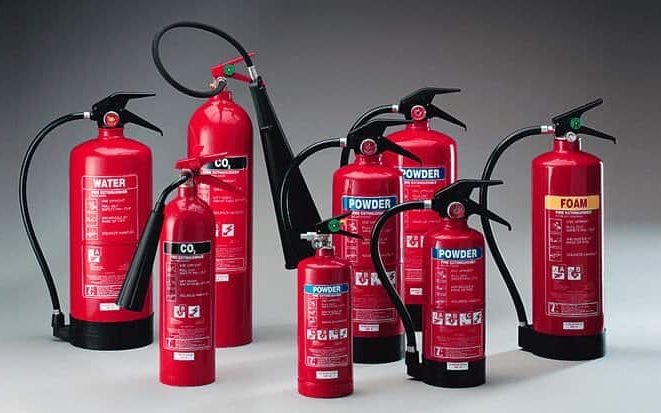
Fire Extinguishers
Fire Safety Trading (Pvt)
ToggleProfessional system inspections, nozzle testing, and pressure monitoring to ensure your suppression system remains fully operational and compliant with safety standards.
Maintenance
Strict quality checks, cylinder shell inspections, and nozzle testing to detect faults early and keep your safety equipment 100% compliant.
What is a Fire Extinguisher? Types, Uses and Price in Pakistan
By Fire Safety Trading (PVT) Ltd
What is a Fire Extinguisher?
A fire extinguisher is a portable fire protection tool designed to control and put out small fires before they spread. It is a metal cylinder that holds an extinguishing agent under pressure. When the handle is squeezed, the agent is discharged through a hose or nozzle directly onto the fire. Fire extinguisher types and uses are very specific, because different fuels burn in different ways and need different agents. Some extinguishers leave a residue behind, while others leave none at all.
A fire extinguisher is not meant to fight a large, fast-growing fire. It is a first-response tool. In the first minute or two of a fire, a trained person with the right extinguisher can often stop a small flame from turning into a disaster that destroys property and puts lives at risk. This article explains the available types of fire extinguishers, their colour codes, their uses, how to operate them, how to maintain them, and the fire extinguisher price in Pakistan, so that you can select the correct one for your home, shop, factory, school, hospital or office.
How Does a Fire Extinguisher Work? Understanding the Fire Triangle
To understand why there are so many extinguisher types, you first need to understand how fire works. A fire needs three things to exist: heat, fuel and oxygen. Together they are called the fire triangle. Remove any one of them and the fire goes out.
- Cooling the heat: Water-based extinguishers absorb heat from the burning material and bring its temperature below the point where it can keep burning.
- Starving the fuel: Some agents form a blanket or film over the fuel, cutting off the supply of flammable vapour that feeds the flame.
- Smothering the oxygen: Agents such as CO2 and foam displace or block the oxygen around the fire so that it cannot continue burning.
- Breaking the chain reaction: Dry chemical powder interrupts the chemical reaction inside the flame itself, which stops the fire very quickly.
Every extinguisher uses one or more of these methods. Choosing the wrong one can be ineffective and sometimes dangerous. For example, using water on an electrical fire or a cooking oil fire can make the situation much worse.
Purpose of a Fire Extinguisher
Fire extinguishers should be installed in every commercial and residential building so that a developing fire can be controlled at once. The agent inside blocks the fire by removing oxygen, suppressing the fuel or cooling the heat. The main purposes of keeping an extinguisher at hand are:
- Protecting lives: A small fire near an exit can block the escape route. Putting it out quickly keeps the way clear for everyone.
- Protecting property: Stock, machinery, furniture, documents and electronics can be saved when a fire is stopped early.
- Reducing business downtime: A fire that is controlled quickly means shorter interruption to your work and lower repair costs.
- Meeting safety requirements: Many insurers, building authorities and civil defence departments expect commercial buildings to have approved extinguishers installed and serviced regularly.
- Giving time to the professionals: Even if the fire cannot be fully extinguished, an extinguisher can hold it back while people evacuate and the fire brigade arrives.
Advantages of a Fire Extinguisher
Fire extinguishers have many advantages, such as:
- Highly portable: They can be easily carried to the desired location, and wall brackets keep them ready for use.
- Effective in larger areas: The capacity of the extinguisher determines its ability to put out the fire. Larger units and trolley-mounted units cover bigger risks such as warehouses and workshops.
- Safe working distance: You can extinguish fires from a distance of about 6 to 7 feet, which keeps you away from the worst of the heat.
- Quick to use: Most models can be operated in seconds by following four simple steps.
- No power or water supply needed: Unlike sprinklers or hydrants, an extinguisher works anywhere, even during a power failure.
- Low cost compared to fire damage: The price of an extinguisher is small compared with the loss that even a minor fire can cause.
They are Easy, Effective and Efficient. These three Cs can bring ease into your life swiftly, so why wait around?
Classes of Fire
Before choosing an extinguisher, you must know what kind of fire you may face. Fires are grouped into classes according to the fuel that is burning. The classification commonly used in Pakistan follows the European system.
- Class A: Ordinary solid materials such as wood, paper, cardboard, textiles, cloth and plastics.
- Class B: Flammable liquids such as petrol, diesel, paint, oil, solvents and thinners.
- Class C: Flammable gases such as LPG, natural gas, propane and butane.
- Class D: Combustible metals such as magnesium, aluminium powder and sodium. These need special dry powder extinguishers.
- Class F: Cooking oils and fats, found in kitchens, restaurants and food courts.
- Electrical fires: Fires involving live electrical equipment such as switchboards, wiring, appliances and servers. These are not a fuel class, but they need an agent that does not conduct electricity.
In some countries, including the United States, the lettering is slightly different, and cooking fires are called Class K. Always check the label on the extinguisher to confirm which classes it is rated for.
Types of Fire Extinguishers
The six main fire extinguisher types are water, foam, CO2, dry chemical powder, water mist and wet chemical. Each type is suitable for different fire classes, so it is important that you buy the right fire extinguisher for your requirements.
Fire Safety Trading Pvt. Ltd provides all six main types of fire extinguishers:
- Water fire extinguisher
- Foam fire extinguisher
- CO2 fire extinguisher
- DCP fire extinguisher
- Water mist fire extinguisher
- Wet chemical fire extinguisher
See also: Addressable Fire Detection Alarm System
Fire Extinguisher Types and Uses in Pakistan
Water Fire Extinguisher
The water extinguisher is the most traditional type. It works mainly by cooling the burning material and soaking it so that it cannot reignite.
- Required for Class A fire.
- Has a RED label.
- Controls fires on textiles, wood, paper and cardboard.
Water extinguishers are inexpensive and leave no chemical residue, which makes them popular in homes, schools, offices and stores. They must never be used on flammable liquid fires, cooking oil fires or live electrical equipment, because water can spread the burning liquid and conduct electricity.
Foam Fire Extinguisher
A foam extinguisher discharges a layer of foam that floats on the surface of burning liquids and also soaks into solid materials.
- Required for Class A and B fire.
- Has a CREAM label.
- As the name indicates, foam aids in averting re-ignition.
The foam blanket cuts off the oxygen and stops flammable vapour from rising, so it is a good choice for petrol stations, garages, workshops, paint stores and places where both solid materials and liquids are present. It should not be used on live electrical equipment unless the model is specifically tested for it.
CO2 Fire Extinguisher
A CO2 fire extinguisher is the standard choice for electrical fire. Its main use is to lower the risk of damage caused by electrical fires. The carbon dioxide gas displaces oxygen around the fire, and it leaves no residue, so it does not harm sensitive equipment. These extinguishers are best kept in computer server rooms, control rooms, laboratories and electrical panel rooms. Class B fire can also be extinguished with them.
- Required for Class B fire and electrical apparatus.
- Has a BLACK label.
- Used on electrical and flammable liquid fires.
CO2 discharge is extremely cold, so never hold the metal horn with your bare hand. In a small closed room, the gas can also reduce the oxygen you breathe, so ventilate the area after use.
Dry Chemical Powder (DCP) Fire Extinguisher
Dry chemical powder extinguishers are known as the all-rounder because they are effective on several fire classes. The powder interrupts the chemical reaction of the flame and knocks the fire down very quickly.
- Required for Class A, B, C fire, and electrical apparatus.
- Has a BLUE label.
- Used in large buildings and mixed fire threats.
DCP extinguishers are common in factories, warehouses, vehicles, parking areas, shops and commercial complexes. Their main drawback is the fine powder, which can reduce visibility, irritate the lungs and leave a residue that is difficult to clean from machinery and electronics. For this reason, use them with care in enclosed spaces and around delicate equipment.
Read also: How to Put Out a Lithium Battery Fire?
Water Mist Fire Extinguisher
A water mist extinguisher sprays very fine droplets of de-ionised water. The mist cools the fire and reduces oxygen at the same time, and because the water is de-ionised it is safe to use around electrical equipment at a suitable distance.
- Required for Class A, B, C fire, and electrical apparatus, depending on the model.
- Has a WHITE label.
- The designed mist aids in the diminution of oxygen.
Water mist units leave very little mess, which makes them suitable for hospitals, offices, schools, museums, libraries and places where cleanliness matters. Always confirm the exact classes printed on the model you are buying.
Wet Chemical Fire Extinguisher
The wet chemical extinguisher is made for kitchen fires. The agent reacts with burning cooking oil and fat to form a soapy layer that seals the surface and cools it down, which prevents the oil from catching fire again.
- Required for Class F fire.
- Has a YELLOW label.
- Used in cooking environments.
It is the right choice for restaurants, hotels, canteens, bakeries and commercial kitchens, and it is also recommended for homes with deep fryers or heavy cooking.
Fire Extinguisher Colour Codes at a Glance
Colour coding helps people recognise an extinguisher quickly in an emergency. The body of the cylinder is usually red, and a coloured band or label shows the agent inside:
- Red label: water
- Cream label: foam
- Black label: CO2
- Blue label: dry chemical powder
- White label: water mist
- Yellow label: wet chemical
Staff should be trained to read these labels, so that nobody reaches for the wrong extinguisher in a moment of panic.
How to Choose the Right Fire Extinguisher
Buying the correct extinguisher depends on the risks present in your building. Ask yourself these questions before you buy:
- What could burn here? Make a list of fuels such as paper, wood, fuel, gas, cooking oil and electrical equipment. Match each with the correct fire class.
- How big is the area? Larger spaces and higher risks need bigger capacity units or more units. Extinguishers come in sizes such as 1 kg, 2 kg, 4 kg, 6 kg, 9 kg and 12 kg for powder, and 2 kg, 5 kg and larger for CO2.
- Who will use it? Heavy extinguishers are difficult for children and elderly people. A lighter model that people can actually handle is better than a large one nobody can lift.
- Is there sensitive equipment? For servers, computers and medical devices, choose CO2 or water mist to avoid residue.
- Is it a mixed-risk area? A multi-purpose DCP extinguisher is often the practical option for general use.
- Does it meet standards? Look for a recognised standard mark, a clear label and an installation date, and buy from a trusted supplier.
As a quick guide, a typical home needs a water or DCP extinguisher for general use, plus a wet chemical or DCP unit near the kitchen. A shop needs DCP. An office needs water or water mist along with CO2 near the electrical room. A restaurant needs wet chemical in the kitchen. A factory needs DCP, CO2 and foam based on its processes.
Instructions to Use a Fire Extinguisher
All fire extinguishers operate on the same fundamental technique: PULL, AIM, SQUEEZE, SWEEP.
The PASS Technique
- P: The pin is located at the top. PULL it to break the seal.
- A: AIM the extinguisher at the base of the fire. Do not aim at the flames.
- S: SQUEEZE the handle for the agent to be released.
- S: Keep SWEEPING the extinguisher from side to side until the fire disappears.
Before you try to fight a fire, remember a few safety rules:
- Raise the alarm and make sure others are leaving the building.
- Keep your back towards a clear exit so you can escape if the fire grows.
- Stand at a safe distance, around 6 to 7 feet, and move closer only if the fire is shrinking.
- Never fight a fire if there is heavy smoke, if the fire is bigger than a small waste bin, or if you are unsure.
- Once the fire is out, watch the area for several minutes in case it reignites, and have the extinguisher refilled or replaced.
You can easily use this advantageous tool to put out fires, but the fact remains that if the fire is overwhelming you need to evacuate as soon as possible and let the experts take over.
See also: Flame Detectors
Where to Place Fire Extinguishers
An extinguisher that cannot be reached in time is of no use. Follow these placement guidelines:
- Mount extinguishers on walls or stands at an easy height, with the handle usually around 1 metre from the floor.
- Place them near exits, corridors, staircases and landings so that people can grab one while escaping.
- Keep them close to specific hazards, such as a CO2 unit near the electrical panel and a wet chemical unit near the kitchen, but not so close that a fire would block access.
- Make sure they are visible, with a sign above each unit, and never block them with boxes or furniture.
- Provide at least one extinguisher on each floor, and extra units where the travel distance to the nearest one is long.
- In vehicles, fix a small DCP extinguisher within reach of the driver.
Maintenance, Inspection and Refilling
An extinguisher is only useful if it works when needed. Regular care keeps it ready:
- Monthly visual check: Make sure the extinguisher is in place, the pin and seal are intact, the pressure gauge is in the green zone, and there is no rust, dent, leak or blocked nozzle.
- Annual service: A qualified technician should inspect and test the extinguisher at least once a year and record it on a service tag.
- Refilling: Refill the extinguisher after any use, even if you used only a little. Also refill it when the service schedule requires it.
- Pressure testing: The cylinder must be pressure tested at intervals set by the manufacturer or the applicable standard, because the metal weakens over time.
- Replacement: If the cylinder is badly corroded, damaged or very old, replace it instead of repairing it.
Keep a maintenance record for each extinguisher. This helps with insurance claims and safety audits, and it shows your staff that safety is taken seriously.
Common Mistakes to Avoid
- Using water on an electrical, oil or fat fire.
- Buying the cheapest extinguisher without checking the class rating.
- Hiding extinguishers in cupboards or behind doors.
- Ignoring the pressure gauge and the expiry or service date.
- Fighting a fire that is already out of control instead of evacuating.
- Never training staff or family members to use the extinguisher before an emergency happens.
Fire Extinguisher Price in Pakistan
The fire extinguisher price in Pakistan starts from a minimum of Rs. 549 and goes up to a maximum of Rs. 150,000. Fire Safety Trading (PVT) Ltd provides buyers with a unique fire extinguisher with a greater life span as compared to a traditional fire extinguisher. You can contact us! 0322-9700008
The wide price range exists because extinguishers differ a lot. The main factors that affect the price are:
- Type of agent: Water and basic DCP units are generally cheaper, while CO2, foam, water mist and wet chemical units cost more because of the agent and the cylinder design.
- Size and capacity: A 1 kg or 2 kg unit costs much less than a 9 kg, 12 kg or trolley-mounted unit.
- Cylinder quality and materials: Better steel, stainless steel or aluminium bodies, quality valves and coatings raise the cost but also extend life.
- Standards and certification: Approved and tested extinguishers cost more than uncertified products, but they are far more reliable.
- Brand and warranty: Reputed suppliers include servicing support, refilling and a warranty.
- Quantity: Bulk orders for buildings, factories and housing projects usually get better rates.
- Extras: Wall brackets, signs, vehicle brackets and carrying covers add to the final price.
Small household extinguishers are at the lower end of the range, while large trolley units and special-purpose systems for industrial use are at the upper end. A very cheap extinguisher may look like a saving, but if it is under-filled, uncertified or poorly made, it can fail when you need it most.
Why Choose Fire Safety Trading (PVT) Ltd?
We design unique fire extinguishers that have exceptional powers to counteract corrosion and chemical ageing of the fire extinguisher agent. As our fire extinguishers come in different sizes and quantities, prices also vary. You can always get the best reasonable prices by sending us an inquiry.
With us you get:
- All six main types of fire extinguishers under one roof.
- Honest advice on the right type and size for your building.
- Refilling, servicing and maintenance support.
- Supply for homes, shops, offices, schools, hospitals, factories and construction sites.
- Complementary fire safety products such as fire alarm systems and flame detectors.
So, without further delay, be safe and contact us to get one of the best fire extinguishers in the twin cities. Your Safety is Our Priority.
Frequently Asked Questions
Which fire extinguisher is best for home use?
For general home use, a 2 kg to 4 kg DCP extinguisher or a water extinguisher is a common choice. Keep a wet chemical or DCP unit near the kitchen. Choose according to the risks in your house.
Which fire extinguisher is used for electrical fires?
CO2 extinguishers are the standard choice, and water mist and DCP units can also be used on electrical equipment, depending on the model. Never use a plain water extinguisher on live electrical equipment.
How often should a fire extinguisher be serviced?
Check it visually every month, and have it serviced by a qualified technician at least once a year. Refill it immediately after any use.
How long does a fire extinguisher last?
The life depends on the type, the cylinder and the conditions of storage. Many extinguishers last for ten years or more when properly maintained, but the agent and cylinder must be inspected and tested regularly.
Can I use one fire extinguisher for every type of fire?
A multi-purpose DCP extinguisher covers many fire classes, but it is not ideal for every situation. Kitchen oil fires need wet chemical, and sensitive electronics are better protected with CO2 or water mist.
What should I do if the fire does not go out?
Stop fighting it, leave the building at once, close the doors behind you if it is safe to do so, and call the fire brigade (Rescue 1122 in most areas of Pakistan).
Conclusion
A fire extinguisher is one of the simplest and most affordable safety tools you can own. Knowing the classes of fire, the six main extinguisher types, their colour codes and the PASS technique can make the difference between a small incident and a major loss. Choose the right type for each risk, place it where it can be reached quickly, keep it serviced, and train the people around you to use it.
Need The Best Fire Safety Solutions?
Get Quotation

