Hospitals are among the busiest and most sensitive buildings in any city. They run around the clock, hold oxygen cylinders, electrical equipment, and flammable chemicals, and house hundreds of people who cannot evacuate quickly. This makes fire safety in hospitals a matter of life and death, not just a compliance checkbox. One of the most overlooked parts of hospital fire safety is the regular inspection of fire extinguishers. A fire extinguisher that looks fine from the outside can be completely useless in an emergency if it has not been checked, serviced, or refilled on time.
This guide explains what a proper fire extinguisher inspection for hospitals should include, why Karachi hospitals face specific fire risks, and how facility managers can stay on top of maintenance. We will also cover why timely fire extinguisher refilling in Karachi is such an important part of this process, and how to choose a reliable service partner.
Why Fire Extinguisher Inspections Matter in Hospitals
Fire Safety Trading (Pvt)
ToggleHospitals cannot afford equipment failure during a fire. Unlike offices or shops, hospitals house patients on ventilators, in operating theatres, and in intensive care units who cannot be moved out within minutes. A working fire extinguisher within reach can be the difference between a small, controlled incident and a major evacuation crisis.
Regular inspections confirm that every extinguisher is charged, undamaged, correctly placed, and ready to use. They also catch small problems, such as a cracked hose or a dropping pressure gauge, before they turn into a bigger safety gap.
Karachi Hospitals Face Unique Fire Risks
Karachi’s hospitals operate in a climate of high humidity, frequent power fluctuations, and heavy reliance on backup generators and UPS systems. These conditions increase the risk of electrical fires, especially in older buildings where wiring may not meet current standards.
Many private hospitals and clinics in Karachi also store oxygen cylinders in confined storage rooms, which raises the danger level significantly if a fire were to start nearby. Combined with dense patient wards and narrow corridors typical of older hospital buildings across the city, this makes consistent extinguisher checks even more critical here than in many other settings.
What a Proper Fire Extinguisher Inspection Includes
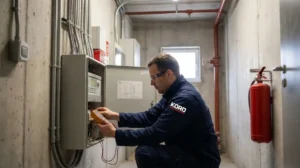
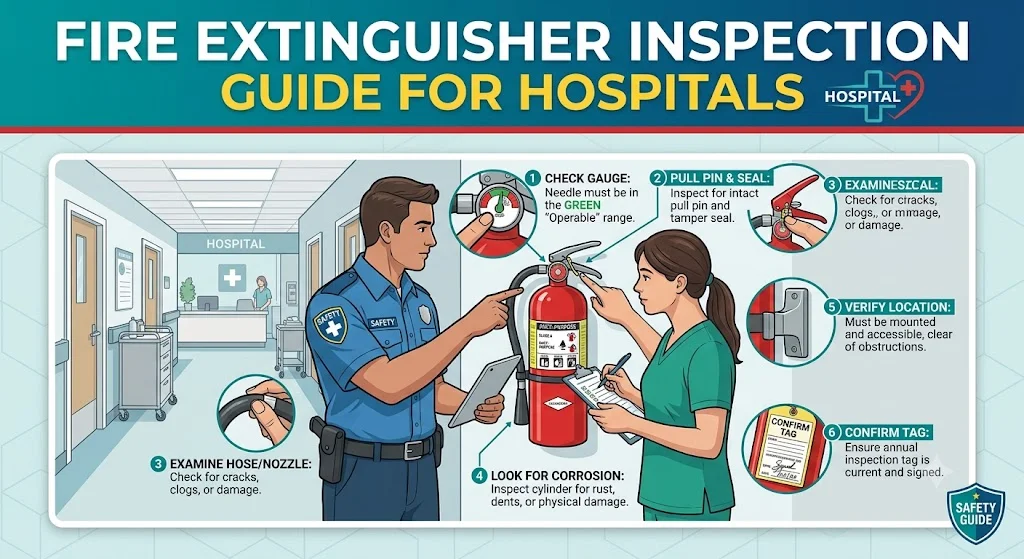
A thorough hospital inspection goes beyond a glance at the cylinder. Trained technicians typically check the following:
- Pressure gauge reading to confirm the extinguisher is fully charged
- Physical condition of the cylinder, including dents, rust, or corrosion
- Hose, nozzle, and safety pin for cracks, blockages, or missing parts
- Tamper seal to confirm the extinguisher has not been used or opened
- Mounting bracket and signage to ensure the extinguisher is visible and accessible
- Inspection tag with the date of the last service and the technician’s signature
If any of these checks fail, the extinguisher should be taken out of service immediately and either repaired, refilled, or replaced.
How Often Should Hospitals Inspect Fire Extinguishers
Monthly Visual Checks
Hospital staff, usually from the facilities or safety department, should carry out a quick visual check every month. This confirms the extinguisher is in its designated spot, the pressure gauge is in the green zone, and nothing is blocking access to it.
Annual Professional Servicing
At least once a year, a certified fire safety company should carry out a full inspection, servicing, and, where needed, refilling. This is a standard requirement for hospitals and healthcare facilities because of the high-risk environment they operate in.
Refilling After Use or Expiry
Any extinguisher that has been discharged, even partially, needs immediate refilling before it can be trusted again. Extinguishers also have a service life for their extinguishing agent, so even unused ones need refilling once that period has passed.
Common Problems Found During Hospital Inspections
Inspectors regularly come across the same recurring issues in hospital settings across Karachi:
- Extinguishers hidden behind equipment, curtains, or storage boxes
- Pressure gauges are reading low due to slow leaks that go unnoticed for months
- Expired service tags that were never updated after the last maintenance visit
- Extinguishers placed too close to heat sources like sterilizers or kitchen equipment
- Missing or damaged safety pins that would prevent the extinguisher from being activated
Each of these problems is easy to fix once identified, but dangerous if left unnoticed until an actual fire breaks out.
Why Refilling Is Sometimes Necessary After Inspection
An inspection often reveals that an extinguisher needs more than a simple wipe-down. Low pressure, expired agent, or a previous partial discharge all mean the unit needs to be refilled with fresh extinguishing agent and properly recharged. This is where fire extinguisher refilling in Karachi services becomes essential for hospitals, since delaying a refill leaves a gap in the building’s fire protection that could prove costly in an emergency.
Hospitals should treat refilling as part of the same maintenance cycle as inspection, not as a separate task to be scheduled later. Coordinating both together reduces downtime and keeps every extinguisher on the premises fully operational.
Choosing the Right Fire Safety Partner in Karachi
Not every vendor offering fire extinguisher services understands the specific needs of a hospital environment. When selecting a fire safety company for a hospital in Karachi, facility managers should look for a provider that offers documented inspection reports, trained technicians familiar with healthcare settings, quick turnaround on refilling and repairs, and proper disposal or replacement of extinguishers that can no longer be serviced.
A dependable partner will also help hospitals build a maintenance calendar so that inspections, refilling, and staff training all happen on a predictable schedule rather than only after an incident or an audit.
Compliance and Safety Standards for Hospitals
Healthcare facilities in Pakistan are expected to follow fire safety guidelines that align with international standards for extinguisher placement, servicing frequency, and staff readiness. Keeping inspection tags current, maintaining service records, and scheduling annual refilling are simple steps that keep a hospital both safer and compliant during any regulatory review or insurance audit.
Frequently Asked Questions
1. How often should hospitals inspect their fire extinguishers?
Hospital staff should do a quick visual check monthly, while a certified technician should carry out a full professional inspection and service at least once a year.
2. How do I know if a fire extinguisher needs refilling?
If the pressure gauge needle has moved out of the green zone, the tamper seal is broken, or the extinguisher has been used even briefly, it needs refilling before it can be relied on again.
3. What is the average lifespan of a fire extinguisher in a hospital?
Most extinguishers last around 10 to 12 years with proper servicing, though the extinguishing agent itself typically needs refilling every one to five years, depending on the type.
4. Why do hospitals need more frequent fire extinguisher checks than offices?
Hospitals house patients who cannot evacuate quickly, along with oxygen cylinders and sensitive electrical equipment, which raises both the fire risk and the consequences of equipment failure.
5. Can a hospital use any local vendor for fire extinguisher refilling in Karachi?
It is best to use a vendor experienced with healthcare facilities, since they understand extinguisher placement rules, documentation requirements, and the urgency around minimal downtime in patient areas.
6. What types of fire extinguishers are recommended for hospitals?
Most hospitals use a mix of CO2 extinguishers for electrical and equipment areas, and ABC dry powder or clean agent extinguishers for wards, corridors, and general areas.
7. What happens if a fire extinguisher fails inspection?
A failed extinguisher should be taken out of service immediately and either repaired, refilled, or replaced with a serviced unit so there is no gap in coverage.
8. Are fire extinguisher inspections legally required for hospitals in Pakistan?
Yes, healthcare facilities are expected to maintain functional fire safety equipment as part of building safety compliance, and inspection records are often reviewed during audits and licensing checks.
9. How long does a professional fire extinguisher inspection take?
For a mid-sized hospital, a full inspection and servicing visit usually takes a few hours to a full day, depending on the number of extinguishers on site.
10. Who should be responsible for scheduling fire extinguisher maintenance in a hospital?
Most hospitals assign this to the facilities management or safety officer, who coordinates monthly visual checks internally and books annual professional servicing with a certified fire safety provider.
Final Thoughts
Fire extinguisher inspections are a small routine that carries a huge responsibility in hospital settings. Karachi’s hospitals, with their unique mix of older infrastructure, oxygen storage, and high patient density, cannot treat this as an occasional task. Scheduling monthly checks, annual professional servicing, and timely fire extinguisher refilling in Karachi keeps every extinguisher ready when it matters most, protecting patients, staff, and the facility itself.