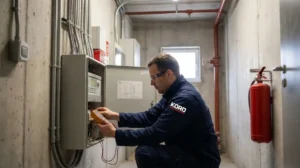
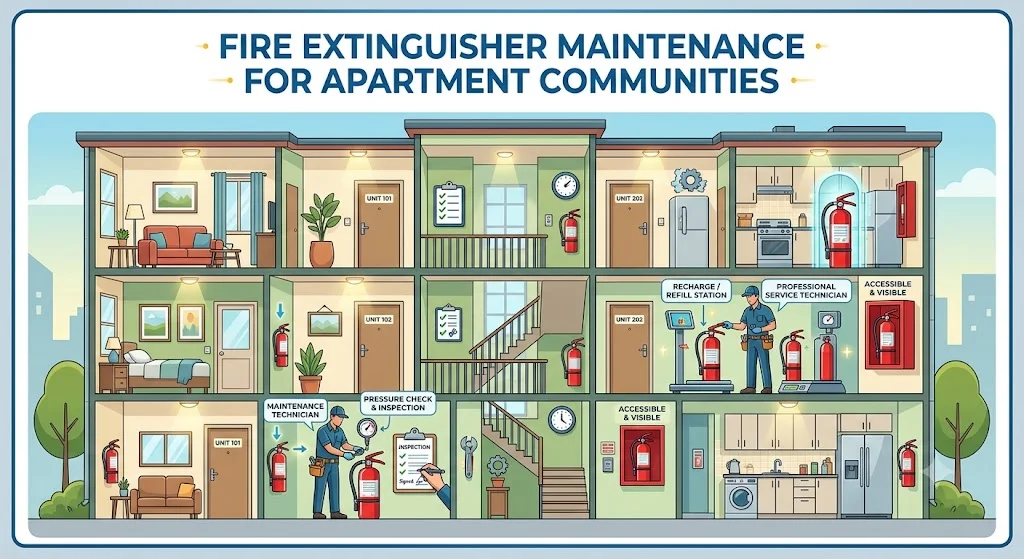
Apartment living in Karachi means shared corridors, shared parking, and shared electrical panels, and that also means shared risk. A single kitchen fire on one floor can spread through a stairwell in minutes if there is no working fire extinguisher nearby. Yet in most housing societies and apartment blocks across the city, fire extinguishers are mounted once during construction and then forgotten. Pressure drops, seals dry out, and powder settles into a solid block inside the cylinder without anyone noticing until it is too late.
This guide looks at why regular maintenance matters for apartment communities, who should be responsible for it, and what to expect from professional fire extinguisher refilling in Karachi so your building stays genuinely fire-ready, not just technically compliant.
Why Apartment Communities Carry Extra Fire Risk
Fire Safety Trading (Pvt)
ToggleApartment buildings pack many households, kitchens, and electrical connections into one structure. A few factors make fire safety especially important in these settings:
- Multiple kitchens on each floor mean multiple potential ignition points.
- Shared electrical risers and meter rooms are often overloaded during peak summer months.
- Narrow stairwells and single exit points slow evacuation if smoke fills a corridor.
- Extinguishers are shared equipment, so no single resident feels direct responsibility for checking them.
Because responsibility is shared, extinguisher upkeep is easy to overlook unless building management assigns it to someone specifically.
Common Maintenance Problems Found in Apartment Buildings
When our teams inspect residential blocks across Karachi, the same issues come up again and again:
- Pressure gauge needle sitting in the red zone, meaning the unit will not discharge properly.
- Powder-based extinguishers with caked or hardened contents from heat and humidity.
- Missing pin and tamper seals, often removed by curious children or during false alarms.
- Corroded cylinders mounted in damp stairwells or near water tanks.
- Extinguishers that were never replaced after already being used to fight a small fire.
Any one of these problems can mean the difference between putting out a small fire and watching it spread to the next floor.
Who Is Responsible for Maintenance in an Apartment Building?
In most Karachi housing societies, this responsibility sits with the building management committee or an appointed facility management company, not individual flat owners. A clear maintenance policy should assign one person or team to schedule inspections, keep service records, and budget for annual refilling. Without this ownership, extinguishers are easily overlooked during routine building upkeep, and residents are left assuming equipment works when nobody has actually checked it.
It also helps to put this responsibility in writing as part of the building bylaws or society rules, rather than leaving it as an informal understanding. When a new management committee takes over, a documented maintenance policy ensures fire safety does not quietly slip down the priority list during the handover.
Signs an Apartment’s Fire Extinguisher Needs Attention
Residents and building staff do not need technical training to spot warning signs. Watch for these indicators:
- The pressure needle is below the green zone or past it into the red.
- The last service tag is more than 12 months old or missing entirely.
- The cylinder feels noticeably lighter than similar units nearby.
- There is visible rust, dents, or a cracked hose.
- The extinguisher was used, even briefly, during a past incident.
If any of these apply, the unit should be taken out of service and sent for refilling rather than left in place as a false sense of security.
Building a Simple Maintenance Routine for Your Society
A workable routine does not need to be complicated. Most apartment communities in Karachi succeed with this basic structure:
Monthly Visual Checks
A caretaker or building manager walks each floor and confirms the pressure gauge reads in the green zone, the pin and seal are intact, and the cylinder is not blocked by furniture, bicycles, or storage boxes.
Annual Professional Refilling
Once a year, a licensed technician should weigh the cylinder, inspect its internal condition, replace the powder or gas if needed, and reseal the unit with a fresh tamper tag and inspection date.
Immediate Action After Any Use
Even a brief discharge means the unit is no longer at full pressure. It should be replaced or refilled right away, not left until the next scheduled visit.
Posting the last and next service dates near each extinguisher also helps residents feel confident the equipment actually works.
What Professional Fire Extinguisher Refilling in Karachi Involves
Reliable fire extinguisher refilling in Karachi follows a set process rather than a quick powder top-up. A proper service includes discharge testing, internal cylinder inspection, replacement of the extinguishing agent, hydrostatic testing of older cylinders when due, and reassembly with a new safety pin and inspection tag.
For apartment communities that want their fire safety equipment professionally refilled and certified, Fire Safety Trading’s fire extinguisher refilling service in Karachi offers on-site inspection and pickup for building-wide servicing, which is far more practical for large residential blocks than sending each cylinder out individually.
Working with one trusted local provider also means your building keeps a consistent service history, which is useful for insurance audits and fire safety compliance checks.
Cost Considerations for Apartment Buildings
Refilling costs depend on extinguisher type and size, but budgeting for annual servicing across a whole building is far cheaper than the cost of fire damage, downtime, or an insurance claim being denied due to expired equipment. Many management committees include this as a fixed line item in the annual maintenance fund, split evenly across residents rather than charged per incident.
It is also worth remembering that fire insurance policies for residential buildings often require proof of regular fire safety maintenance. A building with no service records may find a claim delayed or reduced after an incident, even if the fire itself was accidental and unrelated to the extinguishers.
Choosing a Reliable Local Provider
When selecting a company for fire extinguisher refilling in Karachi, look for a provider that offers documented service records, uses genuine extinguishing agents, and can service multiple units on-site to reduce downtime for the building. A provider familiar with residential societies will also know local fire safety expectations and can advise on the right extinguisher types for kitchens, parking areas, and electrical rooms.
Frequently Asked Questions
1. How often should fire extinguishers in apartment buildings be refilled?
Most residential extinguishers should be professionally serviced and refilled once a year, though the pressure gauge should be checked monthly by building staff.
2. Who pays for fire extinguisher maintenance in a Karachi apartment building?
This is usually covered by the building’s annual maintenance fund and managed by the housing society or facility management company on behalf of all residents.
3. How do I know if my building’s fire extinguisher is expired?
Check the service tag attached to the cylinder. If the date is more than 12 months old, the pressure needle is out of the green zone, or there is no tag at all, the unit needs servicing.
4. Can a fire extinguisher be refilled more than once?
Yes, most cylinders can be refilled multiple times over their working life, as long as they pass pressure and hydrostatic testing during each service.
5. What type of fire extinguisher is best for apartment kitchens?
A dry chemical powder or a wet chemical extinguisher rated for cooking fires is generally recommended for apartment kitchens, alongside a separate unit for electrical panels.
6. How many fire extinguishers does an apartment building need?
This depends on floor size and layout, but a common guideline is at least one extinguisher per floor near the stairwell, plus additional units in parking and electrical rooms.
7. Is fire extinguisher refilling available on-site for large buildings?
Yes, many Karachi-based providers offer on-site inspection and refilling for apartment blocks, which avoids removing every unit and leaving the building unprotected during servicing.
8. What happens if an apartment’s extinguisher fails during a fire?
An expired or poorly maintained extinguisher may not discharge properly or may run out before the fire is controlled, which is why regular refilling and pressure checks are essential.
9. Does humidity in Karachi affect fire extinguisher lifespan?
Yes, Karachi’s heat and humidity can speed up corrosion in cylinders and cause powder to cake faster, making annual servicing more important than in drier climates.
10. Where can I get fire extinguisher refilling in Karachi for my apartment building?
Building managers can arrange building-wide inspection and refilling through a local specialist such as Fire Safety Trading in Karachi, which handles pickup, servicing, and certification for residential societies.
Final Thoughts
Fire extinguishers are only useful if they actually work when needed. For apartment communities in Karachi, that means moving away from a one-time install-and-forget approach and adopting a simple, consistent maintenance routine. Monthly visual checks, annual professional refilling, and clear ownership within the building management team are enough to keep residents genuinely protected rather than just technically compliant.