Manual Call Point vs Automatic Fire Alarm Devices: A Complete Guide for Pakistan

Fire safety is a crucial concern in Pakistan, where residential, commercial, and industrial spaces are at constant risk of fire hazards. Installing an effective fire alarm system can save lives, reduce property damage, and ensure compliance with safety regulations. Among the essential components of fire detection systems are Manual Call Points (MCPs) and Automatic Fire Alarm Devices (AFADs). Understanding the difference between these two and knowing when to use them is vital for business owners, facility managers, and homeowners alike.

What is a Manual Call Point?

A Manual Call Point is a fire safety device designed to allow individuals to manually trigger a fire alarm when they detect a fire or smoke. Typically installed in easily accessible locations, such as near exits or along corridors, MCPs are crucial in providing immediate alerts to occupants and emergency services.

Manual Call Points are straightforward in design, often requiring the user to press or break a glass panel to activate the alarm. Despite advances in automated fire detection technology, MCPs remain indispensable because they give humans the power to act quickly in emergency situations, even before the fire reaches automatic sensors.

Key Features of Manual Call Points

  • Human Activation: Requires someone to spot the fire and operate the device.

  • Visibility: Usually installed in prominent locations for easy access.

  • Reliability: Simple mechanical or electronic mechanism reduces chances of failure.

  • Integration: Works with central fire alarm panels to alert the entire building.

In Pakistan, MCPs are widely used in offices, schools, hospitals, and industrial facilities due to their simplicity and efficiency.

What are Automatic Fire Alarm Devices?

Automatic Fire Alarm Devices (AFADs) are sensors that detect fire-related phenomena like smoke, heat, or flame automatically, without human intervention. They are designed to respond immediately to fire conditions, often before humans even notice the threat.

AFADs come in various types:

  • Smoke Detectors: Sense smoke particles in the air.

  • Heat Detectors: Trigger when a specific temperature is reached or a rapid rise in temperature occurs.

  • Flame Detectors: Detect the presence of flames using optical or ultraviolet sensors.

Automatic fire alarms are ideal for early detection, especially in large or high-risk areas where a manual response might be delayed.

Key Features of Automatic Fire Alarm Devices

  • Immediate Response: Detects fire instantly and alerts occupants.

  • Continuous Monitoring: Works 24/7 without the need for human intervention.

  • Advanced Technology: Often integrated with fire suppression systems for automatic action.

  • Flexibility: Can be tailored for different environments, such as warehouses, server rooms, or kitchens.

In Pakistan, AFADs are increasingly adopted in modern commercial buildings, industrial plants, and high-rise apartments.

Manual Call Point vs Automatic Fire Alarm Devices: Main Differences

Understanding the distinctions between MCPs and AFADs helps in designing a comprehensive fire safety strategy.

Feature Manual Call Point Automatic Fire Alarm Device
Activation Human-operated Sensor-based, automatic
Response Time Depends on human action Immediate upon detecting fire indicators
Cost Generally lower Higher, depends on technology
Installation Easy, requires minimal wiring Requires careful planning and sensor calibration
Coverage Limited to installed points Can cover larger areas continuously
Maintenance Minimal Needs periodic testing and calibration

While both devices serve the same goal of alerting people about fire hazards, they are best used together to maximize safety. Manual Call Points empower occupants to raise alarms quickly, while automatic devices ensure early detection even when no one is around.

Why Manual Call Points are Essential in Pakistan

Despite technological advancements, MCPs remain critical in the Pakistani context due to several reasons:

  1. Reliability in Power Outages: Many areas in Pakistan experience electricity shortages. Manual Call Points often work mechanically or have battery backups, making them dependable during outages.

  2. Low Maintenance: MCPs require less technical expertise for maintenance compared to automatic sensors.

  3. Cost-Effective: Budget constraints in many Pakistani businesses and schools make MCPs a practical choice.

  4. Legal Compliance: Many fire safety regulations in Pakistan mandate the installation of MCPs in commercial buildings and public spaces.

For more information on integrating fire safety solutions in your facility, you can visit this link.

Advantages of Automatic Fire Alarm Devices in Pakistan

Automatic devices complement MCPs by offering features that are particularly valuable in high-risk areas:

  • Early Detection: Essential for preventing fire escalation in factories and warehouses.

  • 24/7 Protection: Useful for office buildings, hospitals, and data centers that require round-the-clock monitoring.

  • Integration with Suppression Systems: Many AFADs can directly trigger fire suppression systems, minimizing damage.

  • Remote Monitoring: Modern systems allow real-time alerts via mobile or computer systems.

AFADs are increasingly adopted in urban centers like Karachi, Lahore, and Islamabad, where large commercial complexes and high-rise buildings are more prone to fire hazards.

How to Choose Between MCPs and Automatic Fire Alarm Devices

Selecting the right fire alarm strategy depends on your building type, budget, and safety requirements. Consider the following:

  1. Building Size: Small offices may rely more on MCPs, while large industrial facilities benefit from AFADs.

  2. Occupancy Levels: High-occupancy areas need automatic sensors for early warning.

  3. Fire Risk: Facilities dealing with flammable materials should invest in AFADs.

  4. Budget: MCPs are cost-effective, while AFADs require higher upfront investment but provide enhanced safety.

  5. Regulatory Requirements: Compliance with Pakistan’s National Fire Protection regulations may dictate specific installations.

The ideal approach often combines Manual Call Points and Automatic Fire Alarm Devices for a comprehensive safety system.

Installation Guidelines for Manual Call Points in Pakistan

Installing MCPs correctly is vital to ensure quick response during emergencies. Here are best practices:

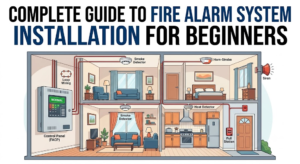
  • Install MCPs near exits, staircases, and corridors.

  • Position them at a height of 1.4 meters from the floor for easy access.

  • Ensure clear signage so occupants can locate them quickly.

  • Regularly test MCPs to verify proper functioning.

  • Integrate them with the central fire alarm panel for instant notifications.

Installation Guidelines for Automatic Fire Alarm Devices

For AFADs, installation is more technical:

  • Smoke detectors should be installed on ceilings or high walls.

  • Heat detectors must be placed where temperature rise is most likely.

  • Flame detectors should have a clear line of sight to high-risk areas.

  • Avoid locations near air vents or humid areas to prevent false alarms.

  • Conduct regular system checks and maintenance to ensure sensor accuracy.

Combining Manual Call Points and Automatic Devices

A combination of both systems provides a layered defense against fires:

  • MCPs allow humans to respond immediately if they spot a fire.

  • AFADs detect fires early, even when the building is empty.

  • Integration ensures that alarms, notifications, and suppression systems work together efficiently.

For example, in a commercial building in Lahore, MCPs near exits allow employees to raise alarms, while smoke detectors in server rooms and kitchens ensure continuous monitoring.

Maintenance and Safety Checks

Regular maintenance is essential to keep fire alarm systems reliable:

  • Test MCPs monthly to ensure they trigger alarms correctly.

  • Inspect AFAD sensors for dust, corrosion, or any obstruction.

  • Check battery backups in case of power failures.

  • Train staff on proper usage of MCPs and evacuation procedures.

  • Document all maintenance and testing for legal compliance.

Fire Safety Regulations in Pakistan

Pakistan has implemented fire safety regulations that require proper installation of fire alarm systems:

  • Building codes mandate MCPs in public buildings, offices, and educational institutions.

  • Industrial facilities must use a combination of manual and automatic devices.

  • Fire suppression systems, linked with AFADs, are compulsory in high-risk environments.

Compliance with these regulations not only ensures safety but also reduces legal liabilities in case of fire incidents.

Benefits of Installing Fire Alarm Systems in Pakistan

  • Life-Saving: Early detection and prompt alerting prevent casualties.

  • Property Protection: Reduces damage by initiating early suppression measures.

  • Insurance Advantages: Many insurance providers require certified fire alarm systems.

  • Peace of Mind: Occupants feel secure knowing a reliable system is in place.

  • Regulatory Compliance: Avoid fines and penalties by adhering to national fire safety laws.

Future Trends in Fire Alarm Technology in Pakistan

  • Smart Fire Alarms: Integrated with IoT for remote monitoring and control.

  • Wireless Systems: Reduce installation complexity and allow flexible placement.

  • AI-Based Detection: Minimize false alarms and detect fires more accurately.

  • Integration with Building Management Systems: Ensures coordinated emergency response.

10 Frequently Asked Questions (FAQs)

  1. What is a Manual Call Point?
    A device that allows individuals to manually trigger a fire alarm when they detect a fire.

  2. Where should MCPs be installed?
    Near exits, corridors, staircases, and other easily accessible locations.

  3. Are MCPs mandatory in Pakistan?
    Yes, in public buildings, schools, offices, and certain industrial facilities.

  4. How do Automatic Fire Alarm Devices work?
    They detect fire-related signs like smoke, heat, or flames and automatically trigger an alarm.

  5. Can MCPs and AFADs be used together?
    Absolutely. Combining both ensures early detection and human-triggered alerts.

  6. Do MCPs require electricity to function?
    Some operate mechanically, while others may need low-voltage power.

  7. How often should fire alarm systems be tested in Pakistan?
    Monthly testing for MCPs and quarterly or semi-annual maintenance for AFADs is recommended.

  8. What types of AFADs are available in Pakistan?
    Smoke detectors, heat detectors, and flame detectors are commonly used.

  9. Can AFADs trigger fire suppression systems?
    Yes, many modern systems are integrated to activate sprinklers or gas suppression systems.

  10. Where can I buy quality Manual Call Points and fire alarm devices in Pakistan?
    Trusted suppliers like Fire Safety Trading offer certified fire safety equipment.

Installing the right combination of Manual Call Points and Automatic Fire Alarm Devices is essential for protecting lives and property in Pakistan. With careful planning, proper installation, and regular maintenance, you can create a fire-safe environment in any residential, commercial, or industrial building.

Also Read:

Fire Extinguisher Refilling Service in Lahore

Why Fire Extinguisher Refilling Is Critical in Pakistan

Fire safety is not a luxury — it is a legal and moral obligation for every home, office, factory, and commercial building in Pakistan. Whether you are a business owner in Lahore, a factory manager in Karachi, or a residential property owner in Islamabad, having a fully charged and well-maintained fire extinguisher is one of the most important steps you can take to protect lives and property.

One of the most commonly overlooked aspects of fire safety is fire extinguisher refilling. Many people buy a fire extinguisher once and assume it will last forever. The reality is that fire extinguishers have a limited shelf life, and their internal pressure and agent content diminish over time — even without being used. This is why professional fire extinguisher refilling services are in high demand across Pakistan, especially in major industrial and commercial cities like Lahore.

In this comprehensive guide, we will cover everything you need to know about fire extinguisher refilling services in Lahore — including prices, types of extinguishers that can be refilled, locations of service providers, and complete contact information. We also introduce you to one of Pakistan’s leading fire safety companies, Fire Safety Trading (Pvt) Ltd, which offers complete fire extinguisher solutions across Pakistan.

What Is Fire Extinguisher Refilling?

Fire extinguisher refilling is the process of recharging an extinguisher with its active suppression agent — which could be dry chemical powder (DCP), CO2 gas, foam, water, or another agent — along with restoring the necessary internal pressure so the extinguisher is ready for emergency use.

The refilling process is performed by trained fire safety technicians and typically involves the following steps:

  1. Inspecting the cylinder body for damage, rust, or corrosion
  2. Emptying any remaining agent and depressurizing the cylinder
  3. Cleaning the cylinder interior thoroughly
  4. Refilling with fresh suppression agent (DCP, CO2, foam, etc.)
  5. Repressurizing to the correct operating pressure
  6. Replacing the safety pin, label, and pressure gauge seal
  7. Issuing a service certificate or refill sticker with date

A properly refilled extinguisher is as effective as a brand-new unit. It is always more cost-effective to refill than to replace, especially for large-capacity cylinders. The process requires specialized equipment and certified knowledge, which is why choosing a reputable fire safety company is so important.

When Should You Get Your Fire Extinguisher Refilled?

There are several key situations in which fire extinguisher refilling becomes necessary:

  • After use: Even if you only partially discharged the extinguisher, it must be refilled immediately. A partially discharged unit is unreliable in an emergency.
  • Annual maintenance: Pakistani fire safety standards recommend annual inspection and refilling or servicing of all fire extinguishers in commercial and industrial properties.
  • Low pressure reading: If the pressure gauge needle is in the red zone, the extinguisher needs immediate attention and refilling.
  • Expired service date: Check the sticker on your extinguisher. If it has not been serviced in over 12 months, schedule a refill right away.
  • Visible damage or corrosion: Any signs of physical damage, rust, or a cracked nozzle warrant professional inspection and potential refilling or replacement.

Types of Fire Extinguishers and Their Refilling Requirements in Pakistan

Pakistan’s fire safety market uses several types of fire extinguishers, each requiring a specific refilling process. Understanding which type you own helps you communicate better with your service provider and ensures you get the right refill at the right price.

1. DCP (Dry Chemical Powder) Fire Extinguisher

DCP extinguishers are the most common type used in Pakistan. They are suitable for Class A, B, and C fires as well as electrical fires. The powder agent inside can cake or clump over time, especially in humid climates, making regular refilling and maintenance essential. DCP fire extinguisher refilling is widely available across Lahore and other Pakistani cities. This is the type most commonly used in factories, offices, schools, shops, and warehouses throughout the country.

2. CO2 Fire Extinguisher

CO2 extinguishers use pressurized carbon dioxide gas to suppress fires caused by electrical equipment and flammable liquids (Class B fires). They are ideal for offices, server rooms, laboratories, and electrical panels. CO2 refilling requires specialized high-pressure filling equipment and certified gas suppliers. Fire Safety Trading offers CO2 extinguisher refilling as part of their comprehensive nationwide services.

3. Foam (AFFF) Fire Extinguisher

Foam extinguishers are effective for Class A and B fires. They work by forming a blanket over the burning material, cutting off the oxygen supply and preventing re-ignition. AFFF (Aqueous Film Forming Foam) is the most commonly used foam agent in Pakistan. Foam refilling requires proper mixing ratios and should only be done by trained professionals with the right equipment.

4. Water Fire Extinguisher

Water extinguishers are used for Class A fires involving wood, paper, and textiles. They are among the simplest to refill but should never be used on electrical or oil fires. In Lahore, water extinguisher refilling is one of the most affordable options available for households and small businesses.

5. Wet Chemical Fire Extinguisher

Wet chemical extinguishers are specially designed for Class F fires involving burning cooking oils and fats. They are commonly used in restaurants, commercial kitchens, and food processing factories across Lahore. Refilling requires a specific wet chemical solution and should be handled by specialists who understand the correct agent concentration.

6. Halotron Fire Extinguisher

Halotron extinguishers are clean agent fire suppressants used in areas where residue-free extinguishing is critical — such as data centres, museums, telecom equipment rooms, and medical facilities. Halotron refilling is more expensive and requires specialized suppliers with the appropriate certification. Fire Safety Trading stocks NAFFCO Halotron extinguishers and offers refilling services for these premium units.

Fire Extinguisher Refilling Price in Lahore & Pakistan (2025)

One of the first questions customers ask is: how much does fire extinguisher refilling cost in Pakistan? The price depends on the type of extinguisher, its capacity (kg or litre), the condition of the cylinder, and the service provider you choose. Below is a general price guide for fire extinguisher refilling services in Lahore and across Pakistan in 2025.

Approximate Refilling Price Guide — Pakistan 2025:

  • DCP 1 kg: 400 – Rs. 700
  • DCP 2 kg: 600 – Rs. 1,000
  • DCP 4 kg: 900 – Rs. 1,500
  • DCP 6 kg: 1,200 – Rs. 2,000
  • DCP 9 kg: 1,800 – Rs. 2,800
  • DCP 25 kg (trolley type): 5,000 – Rs. 9,000
  • CO2 2 kg: 1,500 – Rs. 2,500
  • CO2 5 kg: 3,000 – Rs. 5,000
  • CO2 9 kg: 5,000 – Rs. 8,000
  • Foam 6 litre: 1,500 – Rs. 2,500
  • Wet Chemical 6 litre: 2,000 – Rs. 3,500
  • Halotron (varies by size): 8,000 – Rs. 25,000+

Note: Prices may vary depending on cylinder condition, labour charges, spare parts needed (such as a new O-ring, valve, or safety pin), and market availability of the refilling agent. For accurate and updated pricing, contact Fire Safety Trading (Pvt) Ltd directly via their website or at 0322-9700008.

Fire Extinguisher Refilling Service in Lahore — Where to Go

Lahore, being Punjab’s industrial and commercial capital, has a significant demand for fire extinguisher refilling services. With thousands of factories, offices, hospitals, schools, restaurants, and shopping centres in the city, maintaining fire safety equipment is not just a best practice — it is a regulatory requirement under Pakistan’s factory and building safety laws.

Fire extinguisher refilling service providers in Lahore typically operate in or near the following areas:

  • Ferozpur Road: Home to many industrial supply and fire safety shops serving the surrounding factory zones
  • Multan Road Industrial Area: A large industrial zone with active fire safety service demand from manufacturing businesses
  • Shadman and Gulberg: Lahore’s major commercial hub with office buildings, banks, hotels, and shopping plazas
  • Johar Town: A rapidly growing residential and commercial area with high demand for fire safety services
  • DHA Lahore: A premium residential and commercial zone with strict building safety requirements
  • SITE Industrial Estate and Kot Lakhpat: Major industrial areas requiring large-scale fire extinguisher maintenance and refilling

For businesses in Lahore that need door-to-door fire extinguisher refilling services — meaning the technician comes directly to your premises — companies like Fire Safety Trading offer convenient on-site servicing for corporate clients. This is especially useful for factories, hospitals, schools, and large offices that have multiple extinguishers to service simultaneously and cannot afford to shut down operations.

Fire Safety Trading (Pvt) Ltd — Pakistan’s Trusted Fire Safety Partner

When searching for a reliable and certified fire extinguisher refilling service in Pakistan, one name consistently stands out: Fire Safety Trading (Pvt) Ltd. This company is one of Pakistan’s leading fire safety solution providers, offering a comprehensive range of fire extinguishers, refilling services, fire alarm systems, and safety equipment to clients across the country.

Fire Safety Trading supplies internationally recognized brands including NAFFCO (UAE), China-manufactured extinguishers, and automatic fire extinguishers. They serve a wide range of clients including factories, office buildings, hospitals, schools, restaurants, warehouses, and government facilities.

Why Choose Fire Safety Trading for Refilling?

  • Certified technicians: Their team is trained in fire safety equipment servicing to international standards
  • Wide product range: They service all major extinguisher types including NAFFCO, China-made, and automatic extinguishers
  • Nationwide coverage: Serving Lahore, Karachi, Islamabad, Rawalpindi, Faisalabad, and beyond
  • Competitive pricing: Transparent quotes with no hidden costs. Fire extinguishers and refilling from as low as Rs. 549
  • Complete fire safety solutions: Beyond refilling, they also handle fire alarm installation, CCTV, fire suppression systems, and more
  • On-site service: Corporate clients can schedule technician visits for on-premises servicing of multiple units

Contact Fire Safety Trading (Pvt) Ltd:

Fire Safety Regulations in Pakistan — What Building Owners Must Know

Pakistan does not yet have a single unified national fire safety code, but various provincial and municipal authorities have enacted laws and bylaws that require fire safety compliance for commercial, industrial, and high-rise buildings. In Punjab, the Punjab Fire Prevention Act and the Lahore Development Authority (LDA) building bylaws mandate that all commercial buildings be equipped with functional fire safety equipment.

Key regulations that apply to businesses and property owners in Pakistan include:

  • Fire extinguishers must be installed in every building used for commercial or industrial purposes
  • Extinguishers must be inspected and maintained at regular intervals — typically at minimum annually
  • Factories operating under the Factories Act are subject to periodic safety inspections that check fire equipment maintenance records
  • Buildings with fire safety violations can face penalties, fines, or closure orders from the relevant municipal authority
  • The NDMA (National Disaster Management Authority) also issues fire safety guidelines for industrial and public buildings which should be followed

Keeping your fire extinguishers refilled and up to date is therefore not just a safety choice — it is also a legal compliance issue that can affect your business licence and operational permits. Ignoring fire safety regulations not only puts lives at risk but can also result in significant financial penalties.

How to Choose the Right Fire Extinguisher Refilling Service Provider in Pakistan

With many companies offering fire extinguisher refilling services across Lahore and Pakistan, it can be difficult to identify a trustworthy and skilled provider. Here is what to look for when selecting a refilling service for your business or property:

  • Certification and training: Ask if their technicians are trained and certified in fire safety equipment maintenance. Reputable companies will have documented training records and certifications.
  • Quality of refilling agent: Insist on high-quality DCP powder, certified CO2 gas, or original foam agents. Cheap substitutes reduce effectiveness and can damage the cylinder internally.
  • Service documentation: A professional provider will always issue a service report, refill certificate, and date sticker. This documentation is important for regulatory compliance and insurance.
  • Experience and reputation: Check how long they have been operating in the fire safety industry and look for client references or online reviews from verified customers.
  • Comprehensive services: Choose a provider who can also inspect the cylinder, replace spare parts if needed, and advise on whether an extinguisher should be replaced rather than refilled.
  • Warranty on refilling: Some providers offer a guarantee on their refilling work. This demonstrates confidence in the quality of their service and gives customers peace of mind.

Fire Extinguisher Maintenance Tips for Pakistani Businesses and Homes

In addition to periodic refilling, day-to-day maintenance of your fire extinguishers is equally important. Pakistan’s hot and at times humid climate — especially in coastal cities like Karachi and in Punjab during monsoon season — can accelerate corrosion and pressure loss if extinguishers are not properly maintained. Here are essential maintenance tips:

  • Monthly visual inspection: Check the pressure gauge needle (it should be in the green zone), look for any visible damage, leaks, or corrosion on the cylinder body
  • Keep extinguishers accessible: Never block or obstruct extinguisher mounting points. They should be mounted at eye level in clearly visible and easily reachable locations
  • Store in dry locations: Avoid exposing extinguishers to extreme heat, rain, or direct sunlight for prolonged periods, which can degrade the cylinder and agent
  • Shake DCP extinguishers monthly: This prevents the powder from caking or compacting inside the cylinder, which would reduce its effectiveness in a fire
  • Annual professional service: Schedule a full inspection and refilling with a certified technician every 12 months regardless of whether the extinguisher has been used
  • Hydrostatic testing: Every 5 years, the cylinder itself should undergo pressure testing to ensure its structural integrity and safe continued use
  • Keep records: Maintain a logbook of all inspections, refills, and service dates for each extinguisher. This is required for factory safety audits and insurance claims

Should You Refill or Replace Your Fire Extinguisher?

A common question among property owners and facility managers in Pakistan is whether it is more economical to refill an existing extinguisher or simply buy a new one. The answer depends on several factors including the age and condition of the cylinder, the type of extinguisher, and the cost of refilling versus replacement.

Consider refilling if:

  • The cylinder body is in good condition with no major dents, deep cracks, or significant corrosion
  • The valve and handle mechanism are functioning properly
  • The extinguisher is under 10 years old and has been maintained reasonably well
  • The extinguisher has passed its hydrostatic test within the last 5 years

Consider replacing if:

  • The cylinder shows signs of deep rust, corrosion, significant physical damage, or weld failure
  • The extinguisher is more than 10-12 years old and has not been consistently maintained
  • The combined cost of spare parts plus refilling equals or exceeds the price of a new unit
  • A certified technician recommends replacement after performing a thorough inspection

For purchasing new fire extinguishers in Pakistan at competitive prices, you can visit the Fire Safety Trading fire extinguisher page, which lists NAFFCO, China-manufactured, and automatic extinguisher options with pricing. Their fire extinguishers are priced from as low as Rs. 549 to Rs. 150,000 depending on type and capacity — making them one of the most competitively priced fire safety suppliers in Pakistan.

Fire Extinguisher Refilling Services Across Pakistan — Beyond Lahore

While this article focuses primarily on Lahore, fire extinguisher refilling is equally important in all major cities of Pakistan. Here is a brief overview of refilling service demand across the country:

  • Karachi: Pakistan’s largest city and industrial hub has extensive demand in SITE Industrial Area, Korangi, Clifton, and Gulshan-e-Iqbal
  • Islamabad/Rawalpindi: The twin cities have growing commercial and government sectors with strong demand for certified fire safety services
  • Faisalabad: Pakistan’s textile capital requires large-scale fire safety solutions for its industrial estates and spinning mills
  • Gujranwala: A major manufacturing city with ceramics, steel, and engineering factories requiring regular extinguisher servicing
  • Multan, Peshawar, Quetta: Provincial capitals with commercial buildings, bazaars, and government offices requiring fire safety compliance
  • Sialkot: Home to Pakistan’s thriving export industry with sports goods and surgical instrument factories requiring top-tier fire safety measures

Fire Safety Trading (Pvt) Ltd serves clients across all these cities. If you are outside Lahore and need fire extinguisher refilling services, you can contact them at 0322-9700008 or via their website to arrange a service visit or find a partner provider in your region.

Frequently Asked Questions (FAQs) About Fire Extinguisher Refilling in Pakistan

FAQ 1: How often should fire extinguishers be refilled in Pakistan?

Fire extinguishers should be professionally inspected and serviced at least once a year, even if they have not been used. In high-risk environments like factories, warehouses, and restaurants, more frequent servicing may be recommended. Pakistani fire safety standards align with international best practices that require annual maintenance of all portable fire extinguishers. After any use — even partial discharge — the extinguisher must be refilled before being returned to service.

FAQ 2: What is the average price of fire extinguisher refilling in Lahore?

The price of fire extinguisher refilling in Lahore varies by type and size. A standard 1 kg DCP extinguisher refill starts at approximately Rs. 400-700, while a 9 kg DCP refill can cost Rs. 1,800-2,800. CO2 and foam extinguishers cost more to refill due to the specialized agents and equipment required. For an exact and current quote based on your specific extinguisher, contact Fire Safety Trading at 0322-9700008.

FAQ 3: Can I refill my fire extinguisher myself?

No. Fire extinguisher refilling should only be performed by trained and certified professionals. DIY refilling is dangerous because it involves high-pressure cylinders, specialized chemical agents, and precision pressure calibration. Incorrect refilling can result in cylinder failure, personal injury, or an extinguisher that does not function properly in a real emergency. Always use a professional refilling service with qualified technicians.

FAQ 4: How do I know if my fire extinguisher needs refilling?

Check the pressure gauge on your extinguisher. If the needle is in the red zone, the unit needs immediate professional servicing. Also check the service sticker — if it is more than 12 months old, schedule a refill. If the extinguisher has ever been discharged even partially, it must be refilled immediately. Visible damage, deep corrosion on the cylinder body, a cracked or damaged nozzle, and a missing safety pin are all signs that servicing is urgently needed.

FAQ 5: What is the difference between DCP and CO2 extinguisher refilling?

DCP (Dry Chemical Powder) refilling involves filling the cylinder with mono-ammonium phosphate or sodium bicarbonate powder and repressurizing with dry nitrogen gas. CO2 refilling involves filling the cylinder with liquefied carbon dioxide at high pressure. CO2 refilling requires specialized high-pressure filling equipment and certified CO2 gas suppliers. Both types require professional servicing. CO2 refilling is generally more expensive than DCP refilling due to the cost of the gas and the equipment needed.

FAQ 6: Where can I get fire extinguisher refilling service in Lahore?

Several fire safety companies offer refilling services in Lahore. One of the most trusted nationwide providers is Fire Safety Trading (Pvt) Ltd, which serves clients across Lahore and all of Pakistan. You can reach them at 0322-9700008 or visit their website at firesafetytrading.com.pk to request a service visit or get a competitive quotation tailored to your needs.

FAQ 7: Is fire extinguisher refilling legally required in Pakistan?

Yes. Commercial and industrial buildings in Pakistan are required by provincial factory acts, building bylaws, and safety regulations to maintain functional fire extinguishers. This includes keeping them regularly serviced and refilled. Failure to comply can result in fines, penalties, or the cancellation of business licences during government safety inspections. Beyond the legal obligation, it is also an ethical responsibility to keep fire safety equipment in proper working condition to protect employees, customers, and visitors.

FAQ 8: How long does a fire extinguisher refilling service take?

A standard DCP fire extinguisher refilling takes approximately 20-40 minutes per unit at a service centre. If the technician comes to your premises, they can typically service multiple units in a single visit. CO2 and foam refilling may take slightly longer due to the specific processes involved. For large corporate clients with many extinguishers, it is recommended to schedule a dedicated on-site service visit with the team at Fire Safety Trading to minimize downtime.

FAQ 9: What documents should I receive after refilling?

After a professional fire extinguisher refilling, you should receive a service sticker affixed to the cylinder showing the date of service and the next service due date. The service provider should also issue a formal service report or maintenance certificate that you can keep in your safety records. This documentation is important for factory safety inspections, building safety audits, insurance claims, and demonstrating regulatory compliance to relevant authorities.

FAQ 10: Does Fire Safety Trading provide fire extinguisher refilling across all of Pakistan?

Yes. Fire Safety Trading (Pvt) Ltd provides fire extinguisher sales, refilling, and maintenance services to clients across Pakistan, including Lahore, Karachi, Islamabad, Rawalpindi, Faisalabad, Gujranwala, Sialkot, Multan, Peshawar, and other cities. They also have a network of partner companies in cities outside their core service areas. Contact them at 0322-9700008 or email sales@firesafetytrading.com.pk to discuss nationwide service requirements and schedule a site visit.

Conclusion: Do Not Delay Your Fire Extinguisher Refilling

Fire safety is an investment that pays for itself many times over when an emergency strikes. A fire extinguisher that is out of pressure, past its service date, or has a caked and compacted powder agent is no better than an empty cylinder during a real fire emergency. The cost of fire extinguisher refilling in Pakistan is remarkably low compared to the potential loss of life, property, and business continuity.

Whether you are a home owner, a small business, a factory manager, or a facilities director at a large corporation, making sure your fire extinguishers are properly maintained and refilled is one of the simplest and most cost-effective fire safety steps you can take. It takes just one phone call or website visit to get started.

For Lahore residents and businesses, and for companies across Pakistan, Fire Safety Trading (Pvt) Ltd is your trusted partner for all fire extinguisher refilling, sales, and complete fire safety services. With competitive prices, certified technicians, nationwide coverage, and a commitment to quality, they are the right choice for anyone serious about fire safety in Pakistan. Call 0322-9700008 today and take the first step toward a safer tomorrow for your home, business, and team.

Get Your Fire Extinguisher Refilled Today

Fire Safety Trading (Pvt) Ltd

Phone/WhatsApp: 0322-9700008

Email: sales@firesafetytrading.com.pk

www.firesafetytrading.com.pk/fire-extinguishers-in-pakistan

Conventional vs Addressable Fire Alarm Control Panel

When it comes to protecting your home, office, factory, or commercial building in Pakistan, choosing the right fire alarm system is one of the most critical decisions you can make. At the heart of every fire alarm system lies the Fire Alarm Control Panel (FACP) the brain that receives signals from detectors, processes them, and triggers alarms. Two primary types dominate the Pakistani market today: Conventional Fire Alarm Control Panels and Addressable Fire Alarm Control Panels.

Understanding the difference between these two systems their features, advantages, limitations, and fire alarm control panel price in Pakistan can help building owners, safety managers, contractors, and engineers make a more informed purchase decision. In this comprehensive guide, we will break down everything you need to know about both panel types, compare them side by side, and help you find the right fire alarm solution for your needs across Pakistan.

Fire Safety Trading (Pvt) Ltd is a trusted and certified supplier of fire alarm systems across Pakistan, offering high-quality conventional and addressable fire alarm control panels from globally recognised brands such as Honeywell Gent, COFEM Spain, and C-TEC. To explore their full range of fire alarm systems and get the latest fire alarm control panel price in Pakistan, visit: https://firesafetytrading.com.pk/fire-alarm-system/

What Is a Fire Alarm Control Panel?

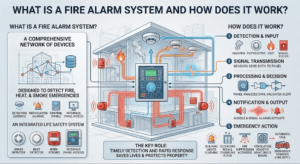
A Fire Alarm Control Panel (FACP) is the central unit of a fire detection and alarm system. It receives electrical signals from detection devices such as smoke detectors, heat detectors, manual call points, and carbon monoxide sensors. When a trigger is detected, the control panel activates audible and visual alarms, notifies the fire brigade, and can even initiate automatic fire suppression systems.

In Pakistan, fire alarm control panels are mandatory in commercial buildings, hospitals, schools, factories, warehouses, and high-rise structures under the National Building Code and provincial fire safety regulations. The type of control panel you install directly affects the accuracy, speed, and overall cost of fire detection in your premises. Whether you are looking for an affordable conventional panel for a small warehouse in Faisalabad or a sophisticated multi-loop addressable system for a hospital in Karachi, understanding your options is essential before making a purchase.


Conventional Fire Alarm Control Panel: An Overview

A conventional fire alarm control panel is the traditional and most widely used type of fire alarm system in Pakistan. It operates by dividing the building into multiple zones, with each zone represented by a dedicated circuit on the control panel. Detectors and call points in a specific zone are wired together in series or parallel circuits that connect back to the panel.

When a fire is detected, the panel identifies which zone has triggered the alarm but it cannot pinpoint the exact device that activated. For example, if Zone 3 activates, the panel will display ‘Zone 3 Fire’ without specifying which smoke detector on the third floor triggered the alarm. The fire response team must then manually check all devices within that zone.

How Conventional Panels Work

In a conventional fire alarm system, multiple call points and detectors are interconnected via physical cables. All components are controlled by the main panel unit, which receives and processes all signals. To help identify the source of an alarm, the call points and detectors are organised into separate zones. Each zone is represented on the control panel by an LED light indicator, text display, or both.

The sounder circuits which may consist of bells, electronic sounders, or other audible devices are wired directly to the control panel. Typically, a minimum of two sounder circuits are connected. When an alarm triggers, all sounders in the affected zone (or sometimes the entire building) activate simultaneously to alert occupants.

Key Features of Conventional Fire Alarm Panels

  • Zone-based detection — the building is divided into clearly defined detection zones
  • Simple wiring using standard two-core or four-core cables
  • Straightforward installation and maintenance with lower labour requirements
  • Lower upfront cost compared to addressable systems, making it budget-friendly in Pakistan
  • LED or LCD indicators on the panel for each zone
  • Suitable for small to medium-sized buildings and simple floor layouts
  • Compatible with standard smoke detectors, heat detectors, and CO detectors
  • Limited fault localisation — fault can only be identified at zone level, not device level
  • Easy operation for non-technical building managers and security staff


Popular Conventional Fire Alarm Panels in Pakistan

Fire Safety Trading (Pvt) Ltd supplies several high-quality conventional panels across Pakistan, including models from Honeywell Gent and C-TEC:

  • Honeywell Gent 13270-02LB — reliable 2-zone conventional panel for small buildings
  • Honeywell Gent 13270-04LB — versatile 4-zone conventional panel for medium offices
  • Honeywell Gent 13270-08LB — powerful 8-zone conventional panel for larger facilities
  • C-TEC FP 2-Zone Conventional Fire Alarm Panel FF382-2 — UK-manufactured economy panel
  • C-TEC FP 4-Zone Economy Conventional Fire Alarm Panel FF384-3 — compact 4-zone solution
  • C-TEC FP 8-Zone Economy Conventional Fire Alarm Panel FF388-3 — expandable 8-zone system


Addressable Fire Alarm Control Panel: An Overview

An addressable fire alarm control panel is a more advanced system where each detector and call point is assigned a unique address (identification code). Unlike conventional panels, addressable systems can identify not just which zone triggered the alarm, but the exact device that detected the fire or fault. This precision makes addressable systems ideal for large buildings, complex facilities, hospitals, hotels, and anywhere where rapid fire location is critical to safety.

In an addressable system, the detection circuit is wired as a loop meaning all devices are connected in a single continuous circuit that runs from the panel, through each device, and back to the panel again. Each loop can support up to 99 devices (depending on the panel and manufacturer). Loop isolation modules are installed at regular intervals to divide the loop into sections, ensuring that a single fault or short circuit in one area does not disable the entire system.

How Addressable Panels Work

Each detector or call point in an addressable system is assigned a unique address, typically set using DIP switches on the device itself. The control panel continuously polls each device on the loop, checking its status in real time. When a device triggers an alarm or reports a fault, the panel instantly displays the exact address and device location on its LCD screen or graphic interface. This allows building managers and fire crews to go directly to the affected device, saving precious response time.

Another major benefit is the loop design — if a wire break or short circuit occurs in one section of the loop, the isolation modules ensure that only that section is affected, while the rest of the loop continues to operate normally. This built-in redundancy makes addressable systems significantly more reliable and resilient than conventional zone-based systems.

Key Features of Addressable Fire Alarm Panels

  • Device-level identification pinpoints the exact detector or call point causing the alarm
  • Loop wiring architecture for built-in redundancy and fault tolerance
  • LCD or touchscreen display with real-time device status and location information
  • Supports up to 99 or more devices per loop depending on the panel model
  • Loop isolation modules to protect against short circuits and single-point failures
  • Significantly faster response and easier fault diagnosis compared to conventional systems
  • Ideal for large buildings, hospitals, shopping malls, hotels, and industrial plants
  • Compatible with advanced addressable sensors including multi-sensor detectors
  • Seamless integration with fire suppression systems, HVAC, and building management systems (BMS)
  • Supports optional graphic software for visual floor plan monitoring of your entire facility
  • Scalable — new devices and loops can be added as the facility grows


Popular Addressable Fire Alarm Panels in Pakistan

Fire Safety Trading (Pvt) Ltd offers top addressable panels from internationally recognised brands, all available in Pakistan:

  • COFEM SPAIN ZAFIR Control Panel: advanced addressable solution for large and complex sites
  • COFEM COMPACT LYON Control Panel: space-efficient compact addressable panel
  • Honeywell Gent COMPACT-PLUS: reliable entry-level addressable panel for medium buildings
  • Honeywell Gent VIGPLUS-24: professional 24-loop addressable system for large facilities
  • Honeywell Gent VIGPLUS-72: enterprise 72-loop addressable system for mega-sites and campuses
  • Honeywell Gent NANO-24: compact addressable panel for medium-sized buildings


Conventional vs Addressable Fire Alarm Control Panel: Side-by-Side Comparison

The table below provides a comprehensive feature-by-feature comparison to help you choose the right system for your requirements and budget in Pakistan:


Feature Conventional Panel Addressable Panel
Detection Precision Zone-level only Exact device & location
Wiring Parallel/series circuits Loop wiring
Installation Cost Lower — budget-friendly Higher — premium investment
Maintenance Simpler, lower cost More specialised, higher cost
Scalability Limited — more zones = more wiring Easily expandable
False Alarm Reduction Basic Advanced with intelligent devices
Fault Isolation Zone level only Individual device level
Best For Small to medium buildings Large, complex buildings
BMS Integration Basic / None Full integration possible
Display LED zone indicators LCD / touchscreen / graphic software
Response Speed Moderate Fast — exact location known instantly
System Reliability Good Excellent with loop redundancy
Typical Building Types Warehouses, shops, schools Hospitals, malls, factories, towers


Fire Alarm Control Panel Price in Pakistan

One of the most frequently searched questions by building owners, contractors, and safety officers in Pakistan is: what is the fire alarm control panel price in Pakistan? The answer depends on several factors including the type of panel (conventional or addressable), the number of zones or loops, the brand, and whether installation and maintenance are included in the package.

Below is a general price guide for fire alarm control panels in Pakistan based on current market rates. Prices can vary depending on supplier, prevailing exchange rates, and project scope. For the most accurate and up-to-date fire alarm control panel price in Pakistan, it is recommended to contact Fire Safety Trading (Pvt) Ltd directly at firesafetytrading.com.pk/fire-alarm-system/ or by calling 0315-4233313.


Conventional Fire Alarm Control Panel Price in Pakistan


Panel Model Zones Approximate Price (PKR)
C-TEC FF382-2 2 Zone Rs. 18,000 – Rs. 25,000
C-TEC FF384-3 4 Zone Rs. 28,000 – Rs. 38,000
C-TEC FF388-3 8 Zone Rs. 45,000 – Rs. 60,000
Honeywell Gent 13270-02LB 2 Zone Rs. 22,000 – Rs. 32,000
Honeywell Gent 13270-04LB 4 Zone Rs. 35,000 – Rs. 48,000
Honeywell Gent 13270-08LB 8 Zone Rs. 55,000 – Rs. 75,000


Addressable Fire Alarm Control Panel Price in Pakistan


Panel Model Loops / Capacity Approximate Price (PKR)
Honeywell Gent NANO-24 1 Loop / 99 devices Rs. 95,000 – Rs. 130,000
Honeywell Gent COMPACT-PLUS 1–2 Loops Rs. 110,000 – Rs. 160,000
COFEM COMPACT LYON 1–2 Loops Rs. 120,000 – Rs. 175,000
COFEM ZAFIR Control Panel Multi-Loop Rs. 200,000 – Rs. 350,000
Honeywell Gent VIGPLUS-24 24 Loops Rs. 350,000 – Rs. 500,000
Honeywell Gent VIGPLUS-72 72 Loops Rs. 700,000 – Rs. 1,200,000


Important note: The prices listed above are approximate indicative ranges for the panels alone and are subject to change based on exchange rate fluctuations and market conditions. Full fire alarm system costs will also include smoke detectors, heat detectors, manual call points, sounders, beacons, cables, conduit, installation labour, testing, and commissioning charges. For a complete fire alarm system for a medium-sized commercial building in Pakistan, total project costs typically range from Rs. 150,000 to Rs. 700,000 or more depending on building size and system complexity.


Factors That Affect Fire Alarm Control Panel Price in Pakistan

Several key factors determine the final price of a fire alarm control panel in Pakistan. Understanding these factors helps you plan your budget more accurately:

1. Type of System Conventional vs Addressable

Conventional panels are significantly cheaper than addressable panels for the same number of zones. For small buildings with simple layouts where a rough zone-level location is adequate, a conventional panel may be entirely sufficient. For large, complex buildings where precise device-level location is necessary, the higher cost of an addressable system is fully justified by its superior performance and the long-term savings from faster fault detection, fewer false alarms, and lower disruption costs.

2. Brand and Country of Origin

Internationally branded panels from manufacturers like Honeywell Gent (USA/UK), COFEM (Spain), and C-TEC (UK) command higher prices than locally assembled or generic Chinese alternatives. However, internationally branded systems typically offer better reliability, CE and FM certifications, longer operational lifespans, and superior after-sales technical support in Pakistan. For critical applications like hospitals and high-rises, investing in a branded system is strongly recommended.

3. Number of Zones or Loops

More zones (for conventional panels) or more loops (for addressable panels) directly increase the panel cost. A basic 2-zone conventional panel will be considerably cheaper than an 8-zone panel from the same manufacturer. When planning your fire alarm system, accurately estimating the number of zones or devices required will help you select the most cost-effective panel for your project.

4. Installation and Labour Costs

Installation costs vary depending on the size of the building, the complexity of cable routing, ceiling types, and the number of devices to be connected. In major Pakistani cities such as Karachi, Lahore, Islamabad, Rawalpindi, Faisalabad, Multan, and Peshawar, professional fire alarm installation companies like Fire Safety Trading (Pvt) Ltd provide end-to-end installation services including design, supply, installation, testing, and commissioning.

5. Additional System Components

A complete fire alarm system includes many components beyond the control panel itself smoke detectors, heat detectors, addressable sensors, manual call points, sounders, visual alarms (beacons), cables, conduit, back-up batteries, repeater panels, and graphic display software. Each of these components contributes to the total project cost and must be factored into the overall budget.


Which Fire Alarm Control Panel Is Right for Your Building in Pakistan?

Choosing between a conventional and addressable panel depends entirely on the specific needs, scale, and safety requirements of your building. Here is a practical guide to help you make the right decision:

Choose a Conventional Fire Alarm Control Panel If:

  • Your building is small to medium in size — typically up to 4 to 8 zones
  • You have a limited budget for your initial fire safety investment
  • The building has a simple, easily partitioned floor layout
  • You need a straightforward system that is easy for non-technical staff to operate and maintain
  • The property is a small warehouse, retail shop, school classroom block, or single-floor office
  • Precise device-level fault location is not a critical operational requirement


Choose an Addressable Fire Alarm Control Panel If:

  • Your building is large, multi-storey, or has a complex architectural layout
  • You need precise, device-level fire and fault location for fast emergency response
  • The facility is a hospital, hotel, shopping mall, university campus, or industrial plant
  • You require seamless integration with building management systems (BMS) or fire suppression
  • You need to minimise false alarms and their costly disruptions to operations
  • The building has a long detection loop distance or a large number of connected devices
  • You want a scalable fire alarm system that can be expanded as your facility grows
  • Compliance with international fire safety standards is mandatory for your sector


Fire Alarm Systems in Pakistan: Market Insights

Pakistan has seen significant growth in fire safety awareness over the past decade, particularly following several major industrial fire incidents in Karachi, Lahore, and Faisalabad that resulted in tragic loss of life and property. The government and local municipal authorities have since strengthened fire safety codes and made properly installed, certified fire alarm systems a legal requirement for many building categories.

Key industries driving demand for fire alarm control panels in Pakistan include textile factories, pharmaceutical manufacturing plants, IT parks and data centres, government buildings, educational institutions, shopping malls, and high-rise residential towers. Major cities including Karachi, Lahore, Islamabad, Rawalpindi, Faisalabad, Quetta, Peshawar, Multan, Sialkot, and Gujranwala all have active and growing demand for both conventional and addressable fire alarm systems.

Fire Safety Trading (Pvt) Ltd serves clients across all major cities in Pakistan, providing a complete one-stop service covering fire alarm supply, professional installation, commissioning, and annual maintenance contracts. Their team of certified fire safety engineers offers free on-site surveys and customised system designs to match every project’s specific safety requirements and budget. Contact Fire Safety Trading (Pvt) Ltd at 0315-4233313 or visit https://firesafetytrading.com.pk/fire-alarm-system/ to get started.


Fire Alarm Control Panel Maintenance in Pakistan

Regardless of whether you choose a conventional or addressable fire alarm control panel, regular preventive maintenance is essential to ensure the system performs reliably when a real fire emergency occurs. In Pakistan, most fire safety regulatory authorities require at least bi-annual inspection and functional testing of fire alarm systems installed in commercial and industrial buildings.

Routine maintenance tasks for fire alarm control panels typically include:

  • Visual inspection of the control panel for fault indicators, damaged components, or error codes
  • Full functional testing of all smoke detectors and heat detectors to verify correct operation
  • Testing of all manual call points and verification of sounder and beacon activation
  • Inspection and replacement of backup batteries as required by the manufacturer’s schedule
  • Inspection of all wiring connections and loop circuit integrity for addressable systems
  • Updating device addresses and zone labels if the building layout or occupancy changes
  • Reviewing, updating, and archiving the fire alarm maintenance log and service records
  • Issuing a compliance certificate after each maintenance visit for regulatory purposes

Fire Safety Trading (Pvt) Ltd offers comprehensive annual maintenance contracts for fire alarm systems across Pakistan, ensuring your system remains in full compliance with local fire safety regulations and performs reliably at all times.


Conclusion: Making the Right Fire Safety Choice for Your Building in Pakistan

Both conventional and addressable fire alarm control panels play a vital and distinct role in protecting lives and property across Pakistan. The right choice depends on the size, complexity, and safety requirements of your building, as well as your available budget. Conventional panels offer an economical and straightforward solution for smaller buildings and businesses operating with tighter fire safety budgets. Addressable panels, on the other hand, provide the precision, scalability, and advanced intelligence demanded by large and complex facilities where fast, accurate fire response is non-negotiable.

When evaluating fire alarm control panel price in Pakistan, always consider the total cost of ownership including detectors, sounders, cabling, installation labour, commissioning, and ongoing annual maintenance rather than the panel price alone. A low upfront cost on a substandard system can result in significantly higher long term costs through unreliable performance, frequent false alarms, and costly emergency repairs.

Investing in a quality, internationally certified fire alarm system from a reputable and experienced supplier like Fire Safety Trading (Pvt) Ltd ensures that your system will perform exactly as expected when it matters most saving lives, protecting property, and keeping your building fully compliant with Pakistan’s fire safety regulations.


To explore the full range of conventional and addressable fire alarm control panels in Pakistan,

get expert advice, and receive a competitive quotation for your project, visit:

https://firesafetytrading.com.pk/fire-alarm-system/

Call: 0315-4233313  |  Email: sales@firesafetytrading.com.pk


Frequently Asked Questions (FAQs)

Q1: What is the average fire alarm control panel price in Pakistan?

Conventional fire alarm panels start from approximately Rs. 18,000 for a basic 2-zone panel and go up to around Rs. 75,000 for an 8-zone branded panel. Addressable panels typically start from Rs. 95,000 for compact single-loop models and can exceed Rs. 1,200,000 for large enterprise-grade multi-loop systems. For the most current fire alarm control panel price in Pakistan, contact Fire Safety Trading (Pvt) Ltd for a tailored quotation.

Q2: Which fire alarm panel is better conventional or addressable?

Neither is universally superior; the right choice depends entirely on your building’s size, complexity, and safety requirements. Conventional panels are well-suited to small and medium buildings with limited budgets. Addressable panels are far superior for large, complex facilities where precise device-level detection, fast emergency response, and system scalability are essential operational requirements.

Q3: Is a fire alarm system mandatory in Pakistan?

Yes. Under the National Building Code of Pakistan and various provincial fire safety regulations, fire alarm systems are mandatory for commercial buildings, factories, hospitals, educational institutions, and high-rise residential structures. Failure to install a compliant fire alarm system can result in significant fines, insurance invalidation, and serious legal liability in the event of a fire incident.

Q4: How many detectors can an addressable fire alarm panel support?

Most standard addressable fire alarm panels support up to 99 devices per loop. Multi-loop enterprise panels like the Honeywell Gent VIGPLUS-72 can support thousands of individual devices across 72 independent loops, making them the ideal choice for the largest hospitals, university campuses, or industrial complexes in Pakistan.

Q5: Where can I buy a fire alarm control panel in Pakistan?

Fire Safety Trading (Pvt) Ltd is one of Pakistan’s most trusted and experienced suppliers of fire alarm control panels. They stock a comprehensive range of conventional and addressable panels from globally certified brands including Honeywell Gent, COFEM Spain, and C-TEC. They provide complete fire alarm solutions including supply, installation, testing, commissioning, and maintenance services across all major cities in Pakistan.

Visit: https://firesafetytrading.com.pk/fire-alarm-system/

Call: 0315-4233313

Address: Rawalpindi, Pakistan serving Karachi, Lahore, Islamabad, Faisalabad, Quetta, Peshawar, Gilgit, Multan, and all other cities across Pakistan.

Fire Alarm Control Panel Price in Pakistan and Features

Fire safety is no longer optional in Pakistan, it is a legal, moral, and practical necessity. Whether you run a factory in Faisalabad, manage a hospital in Lahore, or operate a shopping mall in Karachi, installing a reliable fire alarm system is critical to protecting lives and assets. At the heart of every fire alarm system is the Fire Alarm Control Panel (FACP) the brain that monitors all detectors, triggers alarms, and coordinates emergency responses.

This comprehensive guide covers everything you need to know about the fire alarm control panel price in Pakistan, the different types available, their key features, and how to choose the right panel for your specific needs. We also highlight the top brands available in the Pakistani market and explain why Fire Safety Trading (Pvt) Ltd is one of the most trusted fire safety suppliers in the country.

What Is a Fire Alarm Control Panel?

A Fire Alarm Control Panel (FACP), also known as a fire alarm control unit, is the central processing unit of a fire alarm system. It continuously monitors all connected sensors and devices including smoke detectors, heat detectors, manual call points, and sprinkler systems and activates alarms and suppression systems when a fire or related emergency is detected.

In Pakistan, fire alarm control panels are increasingly required in commercial buildings, industrial facilities, hospitals, educational institutions, high-rise apartments, and government offices. With growing urbanization and stricter building codes being enforced in cities like Islamabad, Rawalpindi, Lahore, and Karachi, the demand for reliable fire alarm control panels has grown significantly in recent years.

Types of Fire Alarm Control Panels Available in Pakistan

Understanding the different types of fire alarm control panels is the first step toward making the right investment. Here are the four main types available in the Pakistani market:

1. Conventional Fire Alarm Control Panel

A conventional fire alarm control panel divides a building into zones. Each zone consists of multiple detectors wired to the same circuit. When an alarm is triggered, the panel identifies the zone but not the exact detector location. This system is cost-effective and suitable for small to medium-sized buildings such as offices, schools, and shops.

Key Characteristics:

  • Zone-based detection identifies area, not exact device
  • Lower cost compared to addressable systems
  • Easy to install and maintain
  • Suitable for buildings with 1 to 8 zones
  • Common brands: Honeywell Gent, C-TEC

2. Addressable Fire Alarm Control Panel

An addressable fire alarm control panel assigns a unique address to every detector and device connected to the system. When an alarm triggers, the panel pinpoints the exact device and its location. This is a smarter system that reduces false alarms and enables faster emergency response, making it ideal for hospitals, large office buildings, hotels, and industrial complexes across Pakistan.

Key Characteristics:

  • Device-specific detection with exact location display
  • Reduces emergency response time in large buildings
  • Supports up to 99 to 200 devices per loop
  • Advanced fault diagnostics and event logging
  • Compatible with COFEM Spain and Honeywell Gent addressable panels

3. Intelligent Fire Alarm Control Panel

An intelligent fire alarm panel is the most advanced type available in Pakistan. Each detector has its own microprocessor that continuously analyzes the environment and communicates detailed data to the control panel. The system can distinguish between actual fire threats and false alarms caused by dust or steam, significantly reducing nuisance alarms. These systems can monitor large buildings with a single panel using 2, 4, or 8 detection loops, making them ideal for data centers, power plants, and large hospitals.

4. Wireless Fire Alarm Control Panel

A wireless fire alarm control panel uses radio frequency communication instead of physical wiring to connect all sensors and devices. Installation is faster, less disruptive, and highly suitable for heritage buildings, rented properties, and temporary structures in Pakistan where cable installation is not feasible.

Key Features of Fire Alarm Control Panels

When evaluating the fire alarm control panel price in Pakistan, it is important to understand what features justify the investment. Here are the essential features to look for:

Zone and Device Monitoring

The panel continuously monitors all connected zones and devices for fire, fault, or tamper conditions. LED indicators, LCD displays, or graphic touchscreens show real-time system status, making it easy for security personnel and fire wardens to assess the situation instantly.

Alarm Output and Evacuation Control

Upon detecting a fire signal, the control panel activates all connected sounders, bells, strobes, and voice evacuation systems. Premium panels can also trigger automatic door releases, HVAC shutdowns, elevator recalls, and fire suppression systems all from a single unit.

Event Log and History

Modern fire alarm control panels come with built-in memory that stores hundreds or thousands of past events including alarms, faults, and test activations. This event log is invaluable during post-incident investigations and for compliance reporting.

Network and Remote Monitoring

Advanced panels support LAN/Ethernet connectivity, allowing remote monitoring via computer or smartphone. This is particularly useful for building managers and facility management companies in Pakistan who oversee multiple properties simultaneously.

Backup Battery Support

Given frequent power outages (loadshedding) in Pakistan, a built in backup battery is a critical feature. Quality panels support sealed lead acid batteries that can maintain full system operation for 24 to 72 hours during a power failure an essential capability for Pakistani conditions.

Fault Detection and Diagnostics

The control panel continuously self-monitors for open circuits, short circuits, ground faults, and device failures. When a fault is detected, it is immediately displayed on the panel so maintenance teams can address it before it compromises fire safety.

Fire Alarm Control Panel Price in Pakistan 2025 Pricing Guide

The fire alarm control panel price in Pakistan varies significantly based on the type of system, number of zones or loops, brand reputation, and additional features. Below is a general pricing guide to help you plan your fire safety budget:

Conventional Panel Prices

2-Zone Conventional Panel:

Entry-level 2-zone panels from brands like C-TEC (FP 2 Zone FF382-2) or Honeywell Gent typically range from PKR 15,000 to PKR 35,000. These are ideal for small offices, shops, and small residential buildings.

4-Zone Conventional Panel:

A 4-zone panel such as the C-TEC FP 4 Zone Economy (FF384-3) or equivalent Honeywell Gent models are priced approximately between PKR 25,000 to PKR 60,000. These suit medium-sized commercial buildings with clearly defined zone divisions.

8-Zone Conventional Panel:

8-zone panels like the C-TEC FP 8 Zone Economy (FF388-3) range from PKR 45,000 to PKR 100,000 depending on the brand and features. These are widely used in schools, warehouses, and multi-floor commercial premises across Pakistan.

Addressable Panel Prices

Single-Loop Addressable Panel:

Entry-level addressable panels supporting one detection loop (such as COFEM Spain Compact LYON or Honeywell Gent NANO-24) are priced between PKR 80,000 to PKR 180,000. They support up to 99 addressable devices per loop.

Multi-Loop Addressable Panel:

Multi-loop addressable panels such as Honeywell Gent VIGPLUS-24, VIGPLUS-72, and COFEM Spain ZAFIR Control Panel range from PKR 200,000 to PKR 600,000 or more. These systems are used in hospitals, hotels, shopping malls, factories, and government buildings across Islamabad, Lahore, Karachi, Peshawar, and Faisalabad.

Intelligent Panel Prices

Intelligent fire alarm control panels represent the premium segment, priced from PKR 500,000 to well over PKR 2,000,000 depending on the number of loops, integrated features, and brand. Projects in critical infrastructure such as power plants, large hospitals, and data centers typically require this category of panel.

Important Note: All prices listed above are indicative and subject to change based on market conditions, import duties, and PKR exchange rates. For an accurate and up-to-date fire alarm control panel price in Pakistan, contact Fire Safety Trading (Pvt) Ltd at 0315-4233313 or visit firesafetytrading.com.pk/fire-alarm-system/

Top Fire Alarm Control Panel Brands in Pakistan

  1. Honeywell Gent (UK)

Honeywell Gent is among the world’s leading fire alarm manufacturers. Available models in Pakistan include the Honeywell Gent 13270-02LB, 13270-04LB, 13270-08LB (conventional), and COMPACT-PLUS, VIGPLUS-24, VIGPLUS-72, and NANO-24 (addressable). Honeywell Gent panels are known for exceptional reliability, robust build quality, and compliance with international fire safety standards.

  1. COFEM Spain

COFEM is a prestigious Spanish brand specializing in addressable fire detection and alarm systems. Their products available in Pakistan include the ZAFIR Control Panel and COMPACT LYON Control Panel. COFEM systems are built to EN54 European standards and offer excellent long-term performance for large commercial and industrial buildings.

  1. C-TEC (UK)

C-TEC is a British manufacturer known for affordable, quality conventional fire alarm control panels. Their range including the FP 2-Zone, FP 4-Zone, and FP 8-Zone panels offers excellent value for money and is widely used in smaller commercial buildings and schools across Pakistan. C-TEC panels comply with BS5839 standards and are easy to install and maintain.

How to Choose the Right Fire Alarm Control Panel in Pakistan

Choosing the correct fire alarm control panel involves more than comparing prices. Here are the most important factors to evaluate:

  • Building Size and Layout: Small buildings with up to 8 zones can work well with a conventional panel. Larger, multi-story structures require addressable or intelligent systems for precise location identification.
  • Number of Devices: Count all smoke detectors, heat detectors, manual call points, and sounders you need. Conventional panels are zone-based while addressable panels handle hundreds of individual devices.
  • Type of Risk: High-risk environments such as warehouses, hospital wards, server rooms, and industrial plants require more advanced and reliable systems than a standard office.
  • Budget: While price is a concern, never compromise on quality. An under-specified system can be more dangerous and ultimately more expensive, if it fails to detect a fire in time.
  • Compliance Requirements: Ensure the panel meets Pakistan’s National Building Code requirements and relevant international standards such as EN54, BS5839, or UL certifications.
  • After-Sales Support: Choose a supplier who offers installation, commissioning, and annual maintenance contracts. Fire Safety Trading (Pvt) Ltd provides comprehensive fire alarm services across all major cities in Pakistan.

Why Choose Fire Safety Trading (Pvt) Ltd?

Fire Safety Trading (Pvt) Ltd is one of Pakistan’s most trusted fire safety equipment suppliers. They supply fire alarm systems across the entire country, covering major cities including Islamabad, Rawalpindi, Lahore, Karachi, Faisalabad, Peshawar, Quetta, Gilgit, Muzaffarabad, and Gwadar.

  • Authorized Distributor: Fire Safety Trading is an authorized supplier of Honeywell Gent, COFEM Spain, and C-TEC, ensuring genuine products with full manufacturer warranties.
  • Full-Service Provider: They offer complete fire alarm installation, commissioning, testing, and regular maintenance services — end-to-end care for your fire safety system.
  • Competitive Pricing: Fire Safety Trading offers some of the most competitive fire alarm control panel prices in Pakistan, with flexible options for every budget.
  • Expert Consultation: Their team of certified fire safety engineers can assess your building and design a complete, compliant fire protection solution.
  • Nationwide Coverage: With projects completed in cities across Pakistan, they serve both private and public sector clients.
  • Compliance Assurance: All systems supplied meet Pakistani and international fire safety standards.

Visit their fire alarm system page for the full product range and to request a free quotation:

https://firesafetytrading.com.pk/fire-alarm-system/

Fire Alarm Control Panel Installation Process in Pakistan

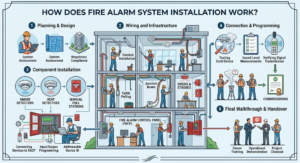
  • Site Survey and System Design: A qualified fire safety engineer surveys the building, identifies fire risks, and designs a zone plan with all device locations.
  • Cable Installation: Fire-resistant cables routed throughout the building to connect all devices to the control panel. Wireless systems skip this step entirely.
  • Panel Installation and Programming: The panel is mounted in a secure, accessible location, then programmed with zone labels, device addresses, and alarm thresholds.
  • Device Connection and Testing: All detectors, call points, and sounders are connected and individually tested, followed by a full functional test of the entire system.
  • Commissioning and Handover: The system is formally commissioned and building staff receive training on operating the panel and responding to alarms.

Maintenance of Fire Alarm Control Panels in Pakistan

A fire alarm system is only as good as its maintenance schedule. In Pakistan, fire alarm control panels should inspected and serviced at least twice a year. Regular maintenance includes:

  • Testing all detectors, manual call points, and sounders
  • Checking and replacing backup batteries as needed
  • Reviewing the event log for recurring faults or warnings
  • Cleaning detector heads to prevent dust-induced false alarms
  • Verifying and updating panel programming as building layouts change
  • Issuing a compliance certificate after satisfactory inspection

Fire Safety Trading (Pvt) Ltd offers annual maintenance contracts (AMC) for fire alarm systems installed anywhere in Pakistan. Their trained technicians provide prompt support and ensure your system remains fully operational and compliant at all times.

Frequently Asked Questions (FAQs)

Q: What is the cheapest fire alarm control panel price in Pakistan?

A: Entry-level 2-zone conventional fire alarm control panels start from approximately PKR 15,000 to PKR 35,000. For a complete system including detectors, sounders, cables, and installation, the total cost will be higher depending on building size and requirements.

Q: Which brand is best for fire alarm control panels in Pakistan?

A: Honeywell Gent, COFEM Spain, and C-TEC are among the most trusted brands in Pakistan. All three are available through Fire Safety Trading (Pvt) Ltd with full technical support and genuine warranties.

Q: Is it mandatory to install a fire alarm system in commercial buildings in Pakistan?

A: Yes. Under Pakistan’s National Building Code and local municipal regulations, fire alarm systems are mandatory in commercial buildings, hospitals, educational institutions, industrial facilities, and high-rise residential buildings.

Q: Can fire alarm control panels work during loadshedding?

A: Yes. All quality fire alarm control panels include a built in backup battery charger and support sealed lead-acid batteries that maintain system operation for 24 to 72 hours during a power outage an essential feature in Pakistan.

Q: How many detectors can connected to a single fire alarm control panel?

A: A conventional panel supports multiple detectors per zone typically 20 to 30 per zone. An addressable panel supports up to 99 devices per detection loop, with multi loop panels supporting hundreds or thousands of devices across the entire building.

Conclusion

Investing in the right fire alarm control panel is one of the most important decisions you can make for the safety of your building, employees, customers, and assets. The fire alarm control panel price in Pakistan ranges from affordable entry level conventional panels starting at PKR 15,000 to sophisticated addressable and intelligent systems exceeding PKR 2,000,000 with a solution available for every building type and budget.

Whether you need a basic 2-zone panel for a small office in Rawalpindi or a multi-loop addressable system for a large factory in Karachi, Fire Safety Trading (Pvt) Ltd has the expertise, products, and nationwide service network to deliver a complete solution. Their team of certified fire safety professionals will guide you from system design through installation and ongoing maintenance.

Do not wait for a fire incident to expose the gaps in your building’s safety. Contact Fire Safety Trading (Pvt) Ltd today for a free consultation and competitive quotation on fire alarm control panels and complete fire alarm systems anywhere in Pakistan.

Call Now: 0315-4233313

Email: sales@firesafetytrading.com.pk

Visit: firesafetytrading.com.pk/fire-alarm-system/

Honeywell Smoke Detector Price in Pakistan and Features Guide

Why Fire Safety Matters in Pakistan

Fire safety is no longer a luxury, it is a necessity. Across Pakistan, whether in Karachi’s industrial zones, Lahore’s commercial districts, Islamabad’s corporate towers, or Rawalpindi’s residential neighbourhoods, the risk of fire-related incidents is real and growing. According to data from fire departments across major Pakistani cities, thousands of fire incidents are reported each year, causing loss of life, property damage, and business disruption.

In this landscape, investing in a reliable smoke detector is one of the most important decisions any homeowner, business owner, or facility manager can make. Among all the global brands available in Pakistan today, Honeywell stands out as a name synonymous with quality, reliability, and international standards. If you are searching for the Honeywell smoke detector price in Pakistan, this comprehensive guide is exactly what you need.

From understanding how Honeywell detectors work, to exploring the different models available, their key features, and where to buy them at the best prices — we cover everything you need to know.

Who is Honeywell? A Brand You Can Trust

Honeywell International is an American multinational conglomerate with over a century of experience in safety, technology, and industrial solutions. In the fire safety sector, Honeywell operates through its Honeywell Gent division, which is one of the most trusted names in fire alarm and detection systems globally.

Honeywell Gent products are installed in some of the world’s most critical facilities hospitals, airports, data centres, factories, and high-rise buildings. Their products meet rigorous international certifications including EN 54, UL, and LPCB standards, which means they are tested and approved for real-world fire detection performance.

In Pakistan, Honeywell fire safety products including smoke detectors are widely used by industries, commercial properties, and institutional buildings. Their availability through authorised distributors makes them accessible to Pakistani buyers who want world-class fire protection.

Types of Honeywell Smoke Detectors Available in Pakistan

Before looking at Honeywell smoke detector prices in Pakistan, it is important to understand what types of smoke detectors Honeywell offers. Each type is designed for different environments and applications.

1. Conventional Smoke Detectors

Conventional smoke detectors are the most commonly used type in small to medium-sized buildings. They are wired to a central fire alarm control panel and divided into zones. When smoke is detected in a zone, the panel identifies which zone triggered the alarm.

Honeywell Gent’s conventional smoke detector range includes:

800371 Optical Smoke Detector: This is one of Honeywell Gent’s most popular conventional smoke detectors. It uses optical sensing technology to detect visible smoke particles, making it especially effective at detecting slow-burning, smouldering fires. It works in conjunction with the standard detector base (model 805590) and is widely used in offices, schools, hotels, and healthcare facilities across Pakistan.

Key features of the 800371: Optical detection principle for accurate, low false-alarm performance – Designed for use with the 805590 standard detector base – LED indicator for visual status confirmation – Suitable for conventional fire alarm systems – Meets European EN 54-7 standards

2. Addressable Smoke Detectors

Addressable systems represent the next level of fire detection sophistication. Unlike conventional systems where only a zone is identified, addressable systems pinpoint the exact detector that has been triggered. This is critical in large buildings where identifying the precise location of a fire saves precious time.

Honeywell Gent’s addressable smoke detector range includes several advanced models:

S4-720 Optical Smoke Detector: A high-performance addressable optical smoke detector from the Honeywell Gent S4 series. It features built-in drift compensation to reduce false alarms caused by dust accumulation, and communicates directly with addressable panels for real-time status updates.

S4-710 Multi-Criteria Detector: This combines optical smoke detection with heat sensing, offering a multi-criteria approach that dramatically reduces false alarms while ensuring genuine fires are detected quickly.

S4-700 Heat Detector: Designed specifically for environments where smoke detectors are not appropriate, such as kitchens or boiler rooms. It detects abnormal temperature rises and alerts the control panel.

ALD302 Addressable Linear Heat Detector: An advanced solution for warehouses, cable tunnels, and large open spaces where point detectors are insufficient.

3. Standalone Battery-Operated Smoke Detectors

For residential use and small commercial properties, Honeywell also offers standalone battery-operated smoke alarms under the BRK brand (a Honeywell subsidiary). These do not require a central control panel and are ideal for: – Homes and apartments – Small offices and shops – Rental properties – Temporary installations

Honeywell Smoke Detector Price in Pakistan

One of the most common questions from buyers is: what is the Honeywell smoke detector price in Pakistan? Pricing can vary based on the model, whether it is a conventional or addressable detector, the supplier, and whether installation is included.

Below is a general price guide for Honeywell smoke detectors in Pakistan. Note that prices are approximate and may vary based on market fluctuations, import duties, and supplier pricing:

Conventional Smoke Detector Prices

Model Type Approximate Price (PKR)
Honeywell Gent 800371 Optical Smoke Detector PKR 8,000 – PKR 12,000
Honeywell Gent 800171 Heat Detector PKR 7,000 – PKR 10,000
Honeywell Gent 800271 Rate of Rise Heat Detector PKR 8,000 – PKR 11,000
Honeywell Gent 805590 Standard Detector Base PKR 2,000 – PKR 3,500

Addressable Smoke Detector Prices

Model Type Approximate Price (PKR)
Honeywell Gent S4-720 Addressable Optical Smoke PKR 18,000 – PKR 25,000
Honeywell Gent S4-710 Multi-Criteria Detector PKR 20,000 – PKR 28,000
Honeywell Gent S4-700 Addressable Heat Detector PKR 16,000 – PKR 22,000
Honeywell Gent S4-715 Addressable Smoke + Heat PKR 22,000 – PKR 30,000

Control Panel Prices (for complete systems)

Model Type Approximate Price (PKR)
Honeywell Gent 13270-02LB 2-Zone Conventional Panel PKR 35,000 – PKR 55,000
Honeywell Gent 13270-04LB 4-Zone Conventional Panel PKR 55,000 – PKR 80,000
Honeywell Gent 13270-08LB 8-Zone Conventional Panel PKR 80,000 – PKR 120,000

Note: These are estimated market prices. For accurate, current pricing and availability, it is recommended to contact an authorised supplier directly. For genuine Honeywell products in Pakistan, you can visit Fire Safety Trading (Pvt) Ltd, one of Pakistan’s leading fire safety equipment suppliers.

Key Features of Honeywell Smoke Detectors

What makes Honeywell smoke detectors stand out from cheaper alternatives available in Pakistan? Here is a breakdown of the key features that justify the investment:

Advanced Optical Detection Technology

Honeywell’s optical smoke detectors use an infrared LED beam within a sensing chamber. When smoke particles enter the chamber, they scatter the light beam and trigger the alarm. This technology is particularly effective at detecting: – Slow-burning, smouldering fires (which are common in office environments with paper, furniture, and electronics) – Fires that produce a lot of smoke before flames appear – Early-stage fires before they escalate

Drift Compensation

One of the biggest problems with smoke detectors in dusty environments such as factories, warehouses, and construction sites in Pakistan is false alarms caused by dust accumulation. Honeywell addressable detectors feature built-in drift compensation algorithms that automatically adjust sensitivity thresholds over time to account for gradual dust build-up. This dramatically reduces nuisance alarms without compromising genuine fire detection.

Low Power Consumption

Honeywell smoke detectors are designed for energy efficiency, which is particularly important in Pakistan where power availability can be inconsistent. Their low current draw ensures that even in the event of a mains power failure, the backup battery system keeps the detectors operational for an extended period.

International Certifications

Honeywell Gent products are certified to international fire safety standards including: – EN 54 (European standard for fire detection and alarm systems) – LPCB (Loss Prevention Certification Board, UK) – UL (Underwriters Laboratories, USA)

These certifications mean that every Honeywell detector has been independently tested and verified to perform reliably in real fire conditions — something that many cheaper alternatives cannot claim.

Compatibility with Complete Fire Alarm Systems

Honeywell smoke detectors are designed as part of an integrated ecosystem. They are fully compatible with Honeywell Gent fire alarm control panels, sounders, manual call points, and accessories. This means when you invest in Honeywell, you are investing in a complete, cohesive fire safety system rather than a collection of mismatched components.

Ease of Maintenance

Honeywell detectors feature removable heads that can be easily detached for cleaning and maintenance. The detector base remains wired to the system, so maintenance can be carried out without disrupting the entire installation. For buildings in Pakistan where regular maintenance is important due to dust and environmental conditions, this is a significant practical advantage.

Honeywell vs Other Brands: Why Choose Honeywell in Pakistan?

Pakistani buyers often compare Honeywell against other brands available in the market, such as COFEM (Spain), C-TEC (UK), and various Chinese-manufactured detectors. Here is how Honeywell stacks up:

Reliability: Honeywell’s decades of global experience and rigorous quality control result in detectors that consistently perform when it matters most. Unlike uncertified Chinese alternatives, Honeywell products are independently tested.

False Alarm Reduction: The advanced algorithms in Honeywell detectors significantly reduce false alarms, which is a major operational concern for businesses in Pakistan. False alarms lead to unnecessary evacuations, productivity loss, and alarm fatigue.

After-Sales Support: Through authorised distributors in Pakistan, genuine Honeywell products come with manufacturer warranties and access to technical support, spare parts, and professional installation services.

Compliance: For commercial and industrial buildings in Pakistan that need to comply with fire safety regulations, Honeywell-certified systems provide the documentation needed to demonstrate compliance.

Long-Term Value: While the initial Honeywell smoke detector price in Pakistan may be higher than cheaper alternatives, the long-term value is superior due to lower maintenance costs, fewer false alarms, longer product lifespan, and genuine peace of mind.

Where to Buy Genuine Honeywell Smoke Detectors in Pakistan

Buying from a trusted, authorised supplier is critical when purchasing fire safety equipment. Counterfeit or substandard fire detectors are a serious risk — a detector that fails during an actual fire incident is worse than having no detector at all.

Fire Safety Trading (Pvt) Ltd is one of Pakistan’s most reputable fire safety equipment suppliers, operating since 1996. They are an authorised supplier of Honeywell Gent products in Pakistan and offer:

  • Genuine Honeywell Gent smoke detectors and fire alarm systems
  • Complete fire alarm system design and installation services
  • Smoke alarm testing and maintenance services
  • Fire risk assessment and consultancy
  • Professional technical support from certified experts

Fire Safety Trading serves clients across Pakistan including Islamabad, Rawalpindi, Lahore, Karachi, and other major cities. Their product range covers the complete Honeywell Gent ecosystem — from conventional and addressable smoke detectors to control panels, sounders, manual call points, and system accessories.

You can visit their website at firesafetytrading.com.pk for more information, to request a product quote, or to get in touch with their technical team for project consultancy.

Installation Considerations for Honeywell Smoke Detectors in Pakistan

Purchasing the right smoke detector is only one part of the equation. Proper installation is equally important for ensuring reliable performance. Here are key installation considerations for Pakistani buyers:

Placement: Smoke detectors should installed on ceilings, ideally in the centre of a room, away from air conditioning vents, fans, and corners. In Pakistan’s hot climate, placement relative to air conditioning systems requires careful consideration to avoid airflow patterns that could delay smoke reaching the detector.

Coverage Area: Each smoke detector covers a specific area as defined by the manufacturer and applicable fire safety standards. For EN 54 compliant installations, a single optical smoke detector typically covers up to 80 square metres depending on ceiling height.

Professional Installation: For commercial, industrial, and institutional buildings, Honeywell smoke detectors should installed by certified fire alarm engineers. Fire Safety Trading (Pvt) Ltd provides professional fire alarm installation services across Pakistan, ensuring your system has properly designed, installed, and commissioned.

Regular Testing: Pakistani building owners should ensure their smoke detection systems are tested regularly — at minimum annually — by qualified technicians. Fire Safety Trading also offers smoke alarm testing services to verify that all detectors are functioning correctly and meet required sensitivity levels.

Common Applications in Pakistan

Honeywell smoke detectors used across a wide range of settings in Pakistan:

Commercial Buildings: Offices, shopping malls, banks, and hotels use Honeywell addressable systems to protect large multi-zone facilities with precision detection and rapid emergency response.

Industrial Facilities: Factories, warehouses, and manufacturing plants use robust Honeywell detectors designed to operate reliably in challenging environments with dust, fumes, and temperature variations.

Healthcare: Hospitals and clinics require highly reliable, low false-alarm fire detection. Honeywell’s multi-criteria detectors particularly well-suited to healthcare environments.

Educational Institutions: Schools, colleges, and universities across Pakistan use Honeywell fire alarm systems to protect students and staff.

Residential High-Rises: Modern apartment towers in Karachi, Lahore, and Islamabad increasingly incorporate Honeywell addressable fire alarm systems to meet building code requirements.

Government and Institutional Buildings: Many government offices, embassies, and institutional facilities in Pakistan’s capital and major cities rely on Honeywell for fire protection due to the brand’s international credibility and compliance certifications.

Frequently Asked Questions (FAQs)

Q: What is the Honeywell smoke detector price in Pakistan? A: Prices vary by model. Conventional optical smoke detectors typically range from PKR 8,000 to PKR 12,000, while addressable models range from PKR 18,000 to PKR 30,000. For accurate pricing, contact Fire Safety Trading at firesafetytrading.com.pk.

Q: Are Honeywell smoke detectors available across all of Pakistan? A: Yes. Through authorised distributors like Fire Safety Trading (Pvt) Ltd, Honeywell products available and can shipped to major cities including Karachi, Lahore, Islamabad, Rawalpindi, Peshawar, Quetta, and Faisalabad.

Q: How long do Honeywell smoke detectors last? A: Honeywell recommends replacing smoke detectors every 10 years. Regular annual testing and maintenance will ensure optimal performance throughout the detector’s lifespan.

Q: Do Honeywell smoke detectors work during load shedding in Pakistan? A: Yes. Honeywell fire alarm systems include backup battery power to ensure continuous operation during mains power failures, which is a critical consideration for the Pakistani market.

Q: Can I install a Honeywell smoke detector myself? A: Standalone battery-operated smoke alarms can self-installed in residential settings. However, for commercial, industrial, or addressable systems, professional installation by a certified engineer has strongly recommended to ensure compliance and proper performance.

Q: Where can I get after-sales support for Honeywell fire alarm systems in Pakistan? A: Fire Safety Trading (Pvt) Ltd provides after-sales support, maintenance, and testing services for Honeywell Gent products. Visit firesafetytrading.com.pk or contact their team directly.

Conclusion: Invest in Genuine Honeywell Fire Safety in Pakistan

When it comes to protecting lives and property from fire, there is no room for compromise. The Honeywell smoke detector price in Pakistan represents an investment not just in equipment, but in genuine, internationally-certified fire protection that works when it has needed most.

Whether you are equipping a home, office, factory, hospital, or multi-storey building, Honeywell offers a complete range of smoke detectors and fire alarm solutions to suit every application and budget. With advanced optical detection, drift compensation, low false alarm rates, and international certifications, Honeywell smoke detectors deliver a level of reliability and peace of mind that cheaper alternatives simply cannot match.

For genuine Honeywell Gent products in Pakistan, professional installation, system design, and ongoing maintenance support, Fire Safety Trading (Pvt) Ltd is your trusted partner. With nearly three decades of experience in the Pakistani fire safety market and a comprehensive portfolio of world-class fire protection products and services, Fire Safety Trading is the go-to source for anyone serious about fire safety in Pakistan.

Visit firesafetytrading.com.pk today to explore the full Honeywell Gent product range, request a quote, or speak to their expert team about your fire safety requirements.

How Often Should Fire Extinguishers Be Serviced?

Fire safety is not a luxury, it is a legal and moral obligation. Whether you manage a factory in Karachi, run a restaurant in Lahore, or own an apartment building in Islamabad, having properly maintained fire extinguishers can mean the difference between a minor incident and a catastrophic loss of life or property. But owning a fire extinguisher is only half the battle. The other half is ensuring it is regularly serviced and ready to work when it matters most.

Many people in Pakistan purchase fire extinguishers and forget about them for years. This is a dangerous mistake. Like any safety equipment, fire extinguishers have a limited shelf life and require routine inspections, maintenance, and sometimes full replacement. In this comprehensive guide, we will explain exactly how often fire extinguishers should be serviced, why it matters, what different types of servicing involve, and how Pakistan’s fire safety landscape makes regular servicing even more critical.

Why Fire Extinguisher Servicing Is Critical

A fire extinguisher that fails to discharge during an emergency is worse than having no extinguisher at all — it creates a false sense of security. Over time, internal pressure can drop, chemical agents can degrade, seals can crack, and nozzles can clog. Without regular servicing, these problems go undetected until it is too late.

In Pakistan, the risk is even higher due to several environmental factors:

  • Extreme heat in cities like Karachi and Multan accelerates internal pressure loss
  • Dust and humidity in industrial zones can corrode extinguisher bodies
  • Power outages and load shedding increase fire risk from generators and electrical faults
  • Many buildings, especially older commercial structures, have outdated fire safety systems

According to fire safety experts and international standards such as BS 5306 and NFPA 10, fire extinguishers must undergo multiple levels of inspection at defined intervals. Let us walk through each one in detail.

The Different Levels of Fire Extinguisher Servicing

1. Monthly Visual Inspection

Every fire extinguisher — whether in a home, office, warehouse, or factory — should be visually inspected every month. This is something a trained employee or building manager can do without professional help. The monthly check should include:

  • Confirm the extinguisher is in its designated, clearly marked location
  • Check that it is visible and accessible — not blocked by furniture or equipment
  • Inspect the pressure gauge to confirm the needle is in the green zone
  • Look for visible damage such as dents, rust, or corrosion on the body
  • Ensure the safety pin and tamper seal are intact and undisturbed
  • Check that the operating instructions on the label are still legible

Monthly checks take only a few minutes but can reveal critical issues early. If any problem is found during a monthly inspection, the unit should be taken out of service immediately and replaced or professionally inspected.

2. Annual Professional Servicing

This is the most important and legally required interval for fire extinguisher maintenance in most countries, including Pakistan’s industrial and commercial sector. Every 12 months, a qualified fire safety technician must perform a thorough inspection that includes everything in the monthly check, plus:

  • Testing the discharge mechanism to ensure it operates correctly
  • Checking internal components including the valve, siphon tube, and hose
  • Weighing CO2 extinguishers to ensure adequate charge remains
  • Verifying that the extinguishing agent is still chemically effective
  • Recording the inspection date on the service label attached to the unit
  • Replacing any damaged, worn, or expired parts as needed

For businesses and commercial properties in Pakistan, annual servicing is not optional — it is a requirement for insurance coverage and compliance with local fire authority regulations. Failure to maintain service records can result in fines, insurance claim denial, or legal liability in the event of a fire.

3. Five-Year Extended Service (Overhaul)

Every five years, most fire extinguishers require a more comprehensive overhaul. This process typically involves:

  • Complete discharge of the extinguishing agent
  • Internal inspection of the cylinder for corrosion, pitting, or structural damage
  • Replacement of all O-rings, seals, and gaskets
  • Refilling with fresh extinguishing agent to manufacturer specification
  • Recharging to the correct operational pressure
  • Full pressure testing before returning the unit to service

For dry chemical powder (DCP) extinguishers — the most common type of fire extinguishers in Pakistan — this five-year service is especially important because the powder can compact and cake inside the cylinder, making it impossible to discharge properly during a fire.

4. Hydrostatic Testing (Every 5–12 Years)

Hydrostatic testing involves pressurizing the extinguisher cylinder to 1.5–2 times its rated pressure to check for structural weaknesses, leaks, or metal fatigue. This test is mandatory under international standards and should be performed by a certified testing facility. The frequency depends on the extinguisher type:

  • Stored-pressure water and foam extinguishers: every 5 years
  • CO2 extinguishers: every 5 years
  • DCP stored pressure extinguishers: every 12 years
  • Cartridge operated extinguishers: per manufacturer guidelines


Any extinguisher that fails hydrostatic testing must be permanently decommissioned. A cylinder that fails under pressure can rupture explosively, posing serious danger to anyone nearby.

Servicing by Fire Extinguisher Type What Pakistan Businesses Need to Know

Not all fire extinguishers follow the same servicing schedule. The type of extinguisher determines both the frequency and nature of maintenance required. Here is a breakdown of the most common types of fire extinguishers in Pakistan and their servicing requirements:


DCP (Dry Chemical Powder) Fire Extinguishers

DCP units are by far the most widely used fire extinguishers in Pakistan — found in offices, factories, hotels, and homes across Karachi, Lahore, Rawalpindi, and beyond. They are effective on Class A, B, and C fires and on electrical equipment.

Servicing requirements: Monthly visual check, annual professional inspection, five year internal overhaul with powder replacement, and 12 year hydrostatic test.

CO2 (Carbon Dioxide) Fire Extinguishers

CO2 extinguishers are ideal for electrical fires — especially important in data centres, server rooms, and control panels. They leave no residue and are safe for sensitive electronic equipment.

Servicing requirements: Monthly visual check, annual weighing (loss of more than 10% of charge requires refilling), annual professional inspection, and five year hydrostatic test.

Foam (AFFF) Fire Extinguishers

Foam extinguishers are used for flammable liquid fires (Class B) and are common in petrol stations, industrial facilities, and commercial kitchens. Pakistan’s growing fuel and petrochemical sector makes these extinguishers increasingly important.

Servicing requirements: Monthly visual check, annual professional service including foam concentrate inspection, and five year internal examination.

Wet Chemical Fire Extinguishers

These are designed specifically for cooking oil fires (Class F) and are essential in commercial kitchens across Pakistan’s restaurant, hospitality, and food processing industries.

Servicing requirements: Monthly visual check, annual professional service including wet chemical agent check, and five year overhaul.

Automatic Fire Extinguishers

Automatic fire extinguishers are increasingly used in server rooms, electrical panels, and generator enclosures across Pakistan. They activate without human intervention when a fire is detected.

Servicing requirements: As per manufacturer specifications, typically every 6 to 12 months, with electronic trigger components tested annually.

Signs Your Fire Extinguisher Needs Immediate Servicing

Do not wait for your annual servicing date if you notice any of the following warning signs:

  • The pressure gauge needle is in the red zone — either over or under pressurized
  • The safety pin is missing or the tamper seal is broken
  • Visible rust, corrosion, or physical dents on the cylinder body
  • The nozzle or hose is cracked, blocked, leaking, or physically damaged
  • The label is missing or the operating instructions have become unreadable
  • The extinguisher has been used — even partially — it must be refilled immediately
  • The unit was exposed to extreme temperatures, fire, or physical impact
  • The extinguisher has not been inspected by a professional in over 12 months

Any extinguisher showing these signs should be removed from service immediately and replaced or sent for professional inspection. Never assume a fire extinguisher is operational just because it looks acceptable on the outside.

Fire Extinguisher Servicing and Pakistani Law

Pakistan’s National Fire Protection Code and building regulations in major provinces require that commercial and industrial buildings maintain functional fire safety equipment. Local fire brigade authorities in cities like Karachi (Karachi Metropolitan Corporation), Lahore (Lahore Development Authority), and Islamabad (Capital Development Authority) conduct periodic inspections and can issue notices to non compliant buildings.

Key legal obligations for Pakistani businesses:

  • All commercial buildings must have adequate fire extinguishers based on floor area and occupancy type
  • Fire extinguishers must be inspected and maintained per recognized national and international standards
  • Service records must be documented and available for inspection by fire authorities
  • Buildings that fail fire safety audits can be sealed or have their NOCs (No Objection Certificates) revoked
  • Insurance companies increasingly require valid fire safety maintenance certificates

Pakistan has seen numerous devastating fire incidents in textile factories, shopping malls, and residential buildings that could have been prevented or minimized with properly maintained fire suppression equipment. Regulatory compliance is not bureaucracy — it is protection.

How to Create a Fire Extinguisher Maintenance Schedule

Establishing a systematic maintenance schedule ensures your fire extinguishers are always ready. Here is a practical framework for Pakistani businesses and property managers:

Monthly

  • Full visual inspection as described in this guide
  • Record results in a maintenance log book
  • Report any issues immediately to management or the building safety officer

Annually

  • Book professional servicing with a certified fire safety company
  • Ensure all units are covered — including portable and wheeled extinguishers
  • Update service labels and maintain documented inspection records

Every Five Years

  • Schedule extended internal overhaul with a licensed technician
  • Replace extinguishing agents as required by type and condition
  • Consider upgrading older units to newer, more efficient models

Immediately When Required

  • After any use — even partial — arrange immediate refill and professional inspection
  • After any visible damage, impact, or extreme environmental exposure
  • When relocating to a new premises or after major renovation work

The Cost of Neglecting Fire Extinguisher Servicing

Some business owners resist regular servicing because of the perceived expense. But the true cost of neglect is infinitely higher:

  • Annual fire extinguisher servicing costs a small fraction of the cost of fire damage to property and inventory
  • A single fire incident in a Pakistani factory can result in losses of millions of rupees
  • Business interruption due to fire can last weeks or months, compounding financial losses
  • Human lives lost in preventable fires cannot be measured in monetary terms
  • Insurance claims can be denied if equipment is found unmaintained at the time of a fire

Fire extinguisher servicing is not an expense — it is an investment in safety, legal compliance, and peace of mind. A properly maintained fleet of fire extinguishers costs very little compared to the protection they provide.

Choosing the Right Fire Extinguisher for Your Needs in Pakistan

Before you can maintain your fire extinguishers properly, you need the right ones for your specific environment. Different locations in Pakistan require different types:

  • Homes and apartments: DCP or CO2 extinguishers for general household fires
  • Offices and commercial buildings: CO2 for electrical areas, DCP for general spaces
  • Restaurants and commercial kitchens: Wet chemical extinguishers for cooking oil fires
  • Factories and warehouses: DCP or foam depending on materials stored on site
  • Server rooms and data centres: CO2 or clean agent (Halotron) extinguishers
  • Petrol stations and fuel storage: Foam or DCP extinguishers
  • Hospitals and healthcare: CO2 or water mist in patient and sensitive equipment areas

If you are unsure which fire extinguisher is right for your premises, consult a certified fire safety professional. Companies like Fire Safety Trading (Pvt) Ltd supply a full range of certified fire extinguishers in Pakistan from trusted international brands including NAFFCO one of the world’s leading fire safety manufacturers along with reliable and affordable China origin models that offer excellent value across all budget levels.

Quick Reference: Fire Extinguisher Servicing Schedule

Here is a simple summary of the recommended servicing intervals for fire extinguishers:

  • Every month: Visual inspection (owner or trained staff responsibility)
  • Every year: Full professional inspection and service by a certified technician
  • Every 5 years: Extended internal overhaul with agent replacement
  • Every 5–12 years: Hydrostatic pressure testing depending on extinguisher type
  • Immediately after use: Refill and professional inspection before returning to service
  • Immediately if damaged or showing warning signs: Remove and have professionally assessed

Conclusion

Fire extinguishers are your first and most immediate line of defence against fire. But they can only perform their vital function if they are properly maintained on a consistent schedule. In Pakistan, where fire risk is high and fire safety regulations are increasingly being enforced by authorities and insurance providers alike, regular servicing of fire extinguishers is not just good practice — it is essential for the protection of lives, assets, and business continuity.

Whether you own a single DCP extinguisher in a small office in Rawalpindi, CO2 units in a data centre in Lahore, or a full fleet of NAFFCO extinguishers in a large manufacturing facility in Karachi, commit to a proper maintenance schedule. Monthly visual checks, annual professional inspections, five year overhauls, and periodic hydrostatic testing will ensure your fire extinguishers perform reliably when every second counts.

For businesses and individuals across Pakistan looking for high quality, certified fire extinguishers in Pakistan along with professional refilling, testing, and maintenance services, Fire Safety Trading (Pvt) Ltd is a trusted partner in comprehensive fire safety. Your safety is too important to leave to chance — get your fire extinguishers serviced today and stay protected tomorrow.

Fire Safety for High Rise Buildings in Pakistan

Pakistan is rapidly urbanising. Cities like Karachi, Lahore, Islamabad, and Rawalpindi are witnessing an unprecedented surge in high-rise construction from residential towers and commercial plazas to mixed-use developments and industrial complexes. While this vertical growth symbolises economic progress, it also brings with it a critical and often neglected responsibility: fire safety.

In recent years, Pakistan has witnessed several devastating fire incidents in multi-storey buildings that have resulted in loss of lives, injuries, and massive financial damage. The Karachi garment factory fire, the Lahore plaza fire, and numerous other incidents have exposed serious gaps in fire safety planning, enforcement, and the availability of proper fire fighting equipment in high-rise buildings across the country.

This article explores the importance of fire safety in high-rise buildings in Pakistan, the essential fire fighting equipment required, applicable regulations, and best practices that building owners, developers, and safety managers must follow to protect lives and property.

Why Fire Safety is Critical for High-Rise Buildings in Pakistan

High-rise buildings present unique fire safety challenges that are fundamentally different from low-rise structures. The higher the building, the more complex the fire suppression and evacuation challenges become. In Pakistan, these challenges are further compounded by several factors:

  • Dense population: Many high-rise residential buildings in cities like Karachi and Lahore house hundreds of families, making safe evacuation especially critical.
  • Aging infrastructure: Older buildings across major cities were not designed with modern fire safety codes in mind.
  • Insufficient fire brigade resources: Fire departments in many Pakistani cities lack the equipment, manpower, and training to effectively tackle high-rise fires.
  • Limited public awareness: Residents and building management often lack training in fire prevention and emergency evacuation procedures.
  • Weak enforcement: Building codes and fire safety regulations exist in Pakistan but enforcement remains inconsistent.

Given these realities, it is not enough to simply install fire safety systems at the time of construction. Buildings require a comprehensive fire safety strategy one that includes the right fire fighting equipment, regular maintenance, staff training, and compliance with national safety standards.

Understanding Pakistan’s Fire Safety Regulations

Fire safety in Pakistan is governed by a combination of national building codes, local authority regulations, and provincial bylaws. The key regulatory frameworks relevant to high-rise buildings include:

Pakistan Building Code (PBC)

The Pakistan Building Code provides guidelines for fire-resistant construction, compartmentation, means of egress, and the installation of fire protection systems. High-rise buildings above a certain height threshold are required to have sprinkler systems, fire alarm systems, fire exits, emergency lighting, and appropriate fire fighting equipment on every floor.

Provincial Building Bylaws

Provinces like Punjab and Sindh have their own building bylaws administered by development authorities such as LDA (Lahore Development Authority), KDA (Karachi Development Authority), and CDA (Capital Development Authority in Islamabad). These bylaws specify fire safety standards that must be met before a completion certificate is issued.

NFPA Standards

Many fire safety consultants and engineers in Pakistan also reference the National Fire Protection Association (NFPA) standards particularly NFPA 1 (Fire Code), NFPA 13 (Sprinkler Systems), and NFPA 72 (Fire Alarm Systems) as international benchmarks for designing fire safety systems in high-rise buildings.

Essential Fire Fighting Equipment for High-Rise Buildings in Pakistan

Equipping a high-rise building with the right fire fighting equipment is the cornerstone of any effective fire safety strategy. Below is a detailed look at the essential fire fighting equipment that every high-rise building in Pakistan must have:

1. Fire Extinguishers

Fire extinguishers are the first line of defence against a small fire before it escalates. For high-rise buildings, different types of extinguishers are required depending on the fire risk of each area:

  • DCP (Dry Chemical Powder) Extinguishers: Suitable for Class A, B, and C fires. Widely used in offices, corridors, and car parks.
  • CO2 Extinguishers: Ideal for electrical rooms, server rooms, and areas with sensitive electronic equipment.
  • Foam (AFFF) Extinguishers: Best for liquid fuel fires — used in generator rooms and fuel storage areas.
  • Wet Chemical Extinguishers: Essential for commercial kitchens and cooking areas within high-rise buildings.
  • Halotron Extinguishers: Clean agent extinguishers for server rooms and areas where residue damage must be avoided.

For a wide selection of certified fire extinguishers suitable for high-rise buildings in Pakistan, visit Fire Safety Trading’s fire fighting equipment page, which stocks NAFFCO, China, and automatic fire extinguisher ranges to meet every building’s specific needs.

2. Fire Suppression Systems

A fire suppression system is an engineered system designed to automatically detect and control or extinguish a fire. For high-rise buildings, the following suppression systems are commonly used:

  • FM200 Fire Suppression System: A gas-based clean agent system widely used for server rooms, data centres, and control rooms within high-rise buildings. It suppresses fire without causing water damage or leaving residue.
  • NOVEC 1230 System: Another advanced clean agent suppression solution that is environmentally friendly and highly effective for sensitive equipment areas.
  • Water Mist Fire Suppression: Uses fine water droplets to suppress fires with minimal water usage ideal for hotel rooms, corridors, and residential floors.
  • CO2 Suppression Systems: Used for confined spaces such as generator rooms and electrical switch rooms.
  • Kitchen Fire Suppression Systems: Specifically designed for commercial kitchens a must-have for high-rise buildings with restaurants or food courts.

3. Fire Sprinkler Systems

A sprinkler system is one of the most effective passive fire protection tools in a high-rise building. In Pakistan, most new high-rise buildings are required by code to install automatic fire sprinkler systems throughout the building. Sprinklers activate automatically when heat is detected, spraying water directly onto the fire to suppress it before it spreads. This buys critical time for occupants to evacuate and for firefighters to arrive.

4. Fire Alarm Systems

A reliable fire alarm system is non-negotiable in any high-rise building. Modern fire alarm systems for high-rise buildings in Pakistan include:

  • Addressable Fire Alarm Systems: Allow pinpoint identification of the exact detector or device that has activated essential in large multi-floor buildings.
  • Conventional Fire Alarm Systems: Cost-effective for smaller buildings or individual floors.
  • Smoke Detectors: Optical and ionisation detectors that detect the early signs of fire.
  • Heat Detectors: Trigger when temperatures rise above a threshold — ideal for dusty or steamy environments like kitchens.
  • Manual Call Points: Allow occupants to manually trigger the alarm when they detect a fire.
  • Sounders and Beacons: Audible and visual alarms to alert all occupants on every floor.

5. Fire Hydrant Systems

A fire hydrant system provides a pressurised water supply that firefighters can tap into during an emergency. High-rise buildings in Pakistan must have a wet riser system a permanently charged pipe running the full height of the building with landing valves on each floor. The system includes fire hose reels, fire hydrant valves, fire fighting nozzles, and fire cabinets strategically placed throughout the building. Fire fighting pumps are integral to this system, maintaining the water pressure required on upper floors.

6. Fire Fighting Pumps

In high-rise buildings, gravity alone cannot provide sufficient water pressure on upper floors. Dedicated fire fighting pumps including electric jockey pumps, diesel-driven main pumps, and electric standby pumps — ensure the entire hydrant and sprinkler network maintains adequate pressure at all times. Common configurations include EDJ (Electric-Diesel-Jockey) and EEJ (Electric-Electric-Jockey) pump sets.

7. Fire Exit Doors

Fire-rated exit doors are a vital passive fire protection measure. These doors are designed to withstand fire and smoke for a specified period, allowing safe evacuation and limiting the spread of fire. High-rise buildings in Pakistan must have properly rated fire exit doors at stairwell entrances, lobby areas, and at the exit from each floor.

8. Emergency Exit Lighting & Signage

During a fire emergency, power failures are common. Emergency exit lights and illuminated fire safety signs are essential to guide occupants safely towards exits in low visibility conditions. These must be battery-backed and positioned at all exit routes throughout the building.

9. Breathing Apparatus & Fire Safety Suits

For building fire wardens, security staff, and the fire brigade, having access to self-contained breathing apparatus (SCBA) and fire safety suits can mean the difference between life and death when entering smoke-filled environments. Buildings with dedicated fire response teams should maintain these as part of their fire fighting equipment inventory.

Fire Safety Planning for High-Rise Buildings: Key Considerations

Purchasing and installing fire fighting equipment is only one piece of the puzzle. Effective fire safety in high-rise buildings requires holistic planning:

Fire Risk Assessment

A professional fire risk assessment identifies potential fire hazards within the building, evaluates the risk to occupants, and recommends measures to reduce that risk. In Pakistan, fire risk assessments are increasingly being required by insurance companies and corporate tenants. Leading fire safety companies like Fire Safety Trading (Pvt) Ltd provide comprehensive fire risk assessment services tailored to the local regulatory environment.

Compartmentation and Fire-Resistant Construction

High-rise buildings should be designed with fire compartmentation the division of the building into separate fire compartments using fire-rated walls, floors, and doors. This limits the spread of fire and smoke, giving occupants more time to evacuate and reducing overall fire damage.

Evacuation Planning

Every high-rise building must have a detailed and practiced fire evacuation plan. This includes clearly marked evacuation routes on every floor, designated assembly points, appointed fire wardens, and regular fire drills. In Pakistan, many buildings lack practiced evacuation protocols an oversight that can cost lives in a real emergency.

Regular Maintenance and Inspection

Fire fighting equipment is only effective if it is properly maintained. All fire extinguishers must be refilled and inspected annually. Fire alarm systems, sprinkler systems, and suppression systems require regular testing and servicing. Fire hose reels, hydrant valves, and pumps must be routinely tested to ensure they operate correctly under pressure. Neglecting maintenance is one of the most common fire safety failures in Pakistani buildings.

Common Fire Safety Failures in Pakistani High-Rise Buildings

Understanding common failures helps building managers and owners avoid repeating the same costly mistakes. The most frequently observed fire safety failures in Pakistani high-rise buildings include:

  • Blocked or locked fire exits: Exit doors are chained or blocked with stored goods, making evacuation impossible.
  • Expired or empty fire extinguishers: Extinguishers that have not been maintained for years, rendering them useless in an emergency.
  • Non-functional fire alarms: Alarm systems that have been disabled due to false alarms, or simply left unmaintained.
  • Absence of sprinkler systems: Many older buildings have no sprinkler coverage whatsoever.
  • Illegal modifications: Renovation works that pierce fire compartment walls, creating easy pathways for fire and smoke to spread between floors.
  • Overloaded electrical circuits: A leading cause of fire in residential and commercial high rise buildings across Pakistan.
  • Inadequate firefighter access: Narrow service roads or blocked fire vehicle access routes that prevent fire brigades from reaching the building.

The Role of Fire Safety Companies in Pakistan

Given the complexity of fire safety requirements for high rise buildings, building owners and developers in Pakistan increasingly rely on specialist fire safety companies for supply, installation, testing, and maintenance of fire fighting equipment and systems.

Companies like Fire Safety Trading (Pvt) Ltd are leading providers of complete fire fighting equipment solutions in Pakistan. Their product range covers everything a high rise building requires from fire extinguishers, fire suppression systems, fire alarm systems, fire sprinkler systems, fire fighting pumps, fire hydrant systems, and fire exit doors, to personal fire safety equipment like breathing apparatus and fire safety suits.

In addition to supplying internationally certified products from reputed brands such as NAFFCO, Honeywell (GENT), COFEM Spain, and C-TEC, they also provide critical services including fire alarm installation, fire extinguisher refilling and testing, fire suppression testing, fire risk assessment, and HSE/fire audits all essential for maintaining a compliant and safe high-rise building.

Fire Safety Tips for High-Rise Building Residents in Pakistan

While building management and owners carry primary responsibility for fire safety, residents also have a critical role to play. Here are essential fire safety tips for residents of high-rise buildings in Pakistan:

  • Know your evacuation route: Familiarise yourself with the nearest fire exits on your floor. Do not rely on lifts during a fire emergency always use fire stairs.
  • Never prop open fire doors: Fire doors designed to stay closed. Propping them open allows fire and smoke to spread rapidly.
  • Do not overload electrical sockets: Overloaded circuits are a primary cause of building fires in Pakistan. Use surge protectors and avoid daisy-chaining extension cords.
  • Report fire hazards immediately: If you notice blocked exits, broken smoke detectors, or other fire hazards, report them to building management promptly.
  • Participate in fire drills: Regular fire drills save lives. Take them seriously and encourage your neighbours to do the same.
  • Keep flammable materials away from heat sources: Curtains, furniture, and other combustibles should be kept well away from stoves, heaters, and electrical equipment.
  • Never re-enter a burning building: Once you have evacuated, do not re-enter under any circumstances. Smoke inhalation is the leading cause of fire-related deaths.

Future of Fire Safety in Pakistan’s High-Rise Sector

Pakistan’s fire safety landscape is gradually improving. Growing awareness among developers, stricter scrutiny by development authorities, and increased demand from multinational tenants and insurance companies are all pushing the industry toward better standards. Smart fire safety systems including intelligent addressable alarm panels, IoT connected sprinkler monitoring, and remote fire safety management platforms are beginning to make their way into premium high-rise developments in Karachi, Lahore, and Islamabad.

However, significant gaps remain. Thousands of existing high-rise buildings across Pakistan still do not meet basic fire safety standards. Retrofitting older buildings with adequate fire fighting equipment and systems is both a legal obligation and a moral one. Authorities must intensify enforcement, and building owners must invest proactively not reactively after a tragedy has already occurred.

The cost of installing proper fire fighting equipment in a high-rise building is a fraction of the financial, legal, and human cost of a major fire. The question is not whether Pakistan can afford to invest in fire safety, it is whether it can afford not to.

Conclusion

Fire safety in high-rise buildings is a complex, multi-layered challenge that demands serious attention across Pakistan. From the installation of the right fire fighting equipment fire extinguishers, suppression systems, alarm systems, sprinklers, hydrant systems, and fire pumps to comprehensive fire risk assessments, regular maintenance, staff training, and practiced evacuation procedures, every element of a fire safety strategy plays a vital role in protecting lives.

Building owners, developers, facility managers, and government authorities in Pakistan must work together to raise fire safety standards across the country’s growing high-rise sector. Investing in quality, certified fire fighting equipment from reputed suppliers, and ensuring that equipment is properly installed, maintained, and regularly tested, has the foundation upon which all other fire safety measures rest.

For all your fire fighting equipment needs in Pakistan from fire extinguishers and suppression systems to fire alarm systems and fire hydrant equipment visit https://firesafetytrading.com.pk/fire-fighting/ and get in touch with Pakistan’s trusted fire safety experts.

Top Fire Safety Products Manufacturers in Pakistan You Can Trust (Before a Small Fire Becomes a Disaster)

Fire safety is often treated as a formality in many buildings across Pakistan. A few extinguishers are placed, a siren is installed, and doors are labeled fire rated without proper certification. On paper, everything looks compliant, but these systems often fail during real emergencies. For building owners, factory managers, contractors, architects, and safety officers, this creates serious risk. Fires can lead to injuries, heavy property loss, business shutdowns, legal trouble, and rejected insurance claims.

Effective fire safety depends on certified equipment and two systems working together. Active protection detects and fights fire using alarms, detectors, and suppression tools. Passive protection slows fire and smoke through fire rated doors, walls, and safe escape routes. When both systems function correctly, people get precious time to evacuate safely and emergency teams can respond more effectively.

This guide explains what fire safety products actually include, the difference between active and passive protection, and the most trusted manufacturers in Pakistan across three major categories.

What Are Fire Safety Products and Why They Matter

Fire safety products include all tools, equipment, and systems designed to detect fire, suppress it, or contain its spread. They are generally divided into three categories.

  • Fire detection and alarm systems
  • Fire safety equipment and tools
  • Fire rated doors and windows

Detection systems provide early warning through smoke detectors, heat sensors, alarm panels, and manual call points. Safety equipment includes extinguishers, hoses, suppression systems, and emergency response tools used to control flames. Passive protection products such as fire doors, fire rated windows, fire stopping materials, and compartmentalization systems prevent fire and smoke from spreading quickly.

When one part of this system fails, the entire building becomes vulnerable. A working alarm cannot save lives if smoke travels freely through uncertified doors. A strong fire door is ineffective if occupants are not alerted in time. Fire protection only works when all components are reliable and designed together.

Understanding Active and Passive Fire Protection

Active fire protection systems respond when a fire begins. Their purpose is early detection and rapid response. These include alarms, detectors, extinguishers, suppression systems, and emergency communication tools. Properly maintained active systems can significantly reduce damage and give occupants time to escape.

Passive fire protection works differently. It does not fight fire directly. Instead, it slows the spread of flames and toxic smoke. Fire resistant walls, sealed penetrations, protected escape routes, and certified fire rated doors are all part of passive protection. These systems maintain structural integrity and prevent fire from engulfing the entire building.

Both systems are essential. Buildings that rely only on one approach face higher risk during emergencies.

Why Certification Is Non-Negotiable

Certifications are not marketing labels. They prove that products perform under real fire conditions. Certified fire safety products are tested under extreme heat, pressure, and smoke exposure according to standards such as UL, NFPA, EN, and BS.

Uncertified products may look similar but often fail early during actual fires. Doors can collapse, alarms may malfunction, and suppression tools can lose pressure. Certified systems perform as designed, which directly impacts life safety, regulatory compliance, and insurance approval.

Choosing certified manufacturers may seem more expensive at the start, but it significantly lowers long-term risk, compliance issues, and liability. Some suppliers, such as Zemtas and Adams Fire, sell fire-rated doors without manufacturing them locally, as their products are imported. While imported doors can meet quality standards, they often come with practical challenges. For example, if performance issues arise during installation, returns or replacements can be difficult or delayed. In contrast, local manufacturers oversee production and installation on site, giving you greater control over specifications, quality, quantities, timelines, and payment terms.

Fire Detection and Alarm Systems in Pakistan

Reliable detection systems form the first line of defense against fire emergencies. Early alerts allow occupants to evacuate safely and responders to act before flames spread. In large facilities, advanced alarm networks can prevent small incidents from escalating into catastrophic losses. The companies below specialize in modern detection, monitoring, and integrated safety solutions across Pakistan.

Universal Fire Protection — Comprehensive Detection & Emergency Support

Universal Fire Protection offers complete fire safety solutions tailored for commercial and industrial environments. Its portfolio includes sophisticated alarm systems, smoke detection technologies, and fully integrated protection setups built to meet strict compliance standards. The company sources certified equipment from the United States, China, and the United Kingdom, ensuring dependable performance across diverse applications. Beyond installation, it provides repair and maintenance services for major systems such as Honeywell, Asenware, MENWARE, and C-Tec. Trained emergency personnel are also available to respond during critical situations, making it a strong partner for large, compliance-driven projects.

Greentech Solution — Intelligent Safety & Automation Systems

Greentech Solution specializes in advanced detection systems, alarm panels, and smart safety automation for modern buildings. Its approach focuses on creating secure, connected environments that enhance both protection and operational efficiency. With expertise spanning fire protection, ELV infrastructure, security systems, and automation, the company delivers end-to-end solutions for complex facilities. Its technologies are widely deployed in commercial towers, factories, universities, malls, corporate offices, hospitals, warehouses, and residential communities. By integrating multiple safety layers into a unified system, it helps organizations protect assets while meeting regulatory standards.

Abdullah Fire Protection — Full-Scope Safety Engineering

Established in 2004, Abdullah Fire Protection provides comprehensive firefighting and industrial safety services for factories, offices, and residential developments. Its offerings include fire alarms, detection equipment, sprinkler systems, gas suppression, fire vehicles, and related safety gear. The company manages projects from initial design through supply, installation, testing, commissioning, and ongoing maintenance. Hazard analysis services ensure systems are tailored to site-specific risks. All solutions follow NFPA guidelines, supporting compliance and long-term reliability.

Capital Solutions — Certified Safety Infrastructure Provider

Since 2013, Capital Solutions has supplied fire alarm systems and integrated safety infrastructure for commercial and institutional projects. Its product range includes emergency lighting, detection devices, PPE, extinguishers, and related equipment that meets recognized industry certifications. The company complements product supply with system design, installation, and performance testing services. This comprehensive approach helps organizations satisfy regulatory requirements while maintaining readiness for emergencies. Its solutions are designed for both new construction and facility upgrades.

CTI Technologies — Integrated Protection for High-Risk Sites

CTI Technologies focuses on advanced fire detection and alarm solutions for facilities where early warning is critical. In addition to fire protection systems, it offers solar power installations, surveillance networks, building automation, and public address systems. This multidisciplinary capability allows clients to implement unified safety and infrastructure solutions. Industrial plants benefit especially from rapid hazard detection that can prevent operational shutdowns and major financial losses. By combining multiple technologies, CTI delivers robust protection for personnel and assets.

Comparison Table

The table below provides a quick, easy-to-scan comparison of leading Fire Detection and Alarm Systems in Pakistan, highlighting their specialities, key services, certifications, and ideal use cases.

Company Core Expertise Key Products & Services Certifications / Standards Best Suited For
Universal Fire Protection End-to-end fire safety solutions Alarm systems, smoke detection, integrated protection, maintenance, emergency response Works with Honeywell, Asenware, MENWARE, C-Tec equipment Large industrial and compliance-driven projects
Greentech Solution Smart safety automation Alarm panels, ELV systems, integrated building safety Modern connected safety frameworks Commercial towers, hospitals, campuses, smart buildings
Abdullah Fire Protection Full-scope safety engineering Alarms, sprinklers, gas suppression, fire vehicles, hazard analysis NFPA-compliant systems Factories, offices, residential developments
Capital Solutions Safety infrastructure supply Detection devices, emergency lighting, PPE, extinguishers Certified equipment standards Institutional projects and facility upgrades
CTI Technologies High-risk site protection Fire alarms, surveillance, PA systems, automation, solar solutions Integrated multi-system approach Industrial plants and critical infrastructure


Fire Safety Equipment and Tools Manufacturers

Once a fire is detected, reliable suppression equipment becomes essential. High-quality tools must perform instantly under extreme conditions, making certification and durability critical factors. The following manufacturers and suppliers play a major role in providing dependable firefighting equipment across Pakistan.

Fire Safety Trading (Pvt) Ltd — Pakistan’s Virtual Safety Store Pioneer

Fire Safety Trading (Pvt) Ltd is an award-winning company known for delivering dependable fire protection products at competitive prices. It operates Pakistan’s first online store dedicated exclusively to safety and firefighting equipment, enabling quick purchasing with minimal effort. The company supplies products from trusted brands such as Akronix, LPCB-approved manufacturers, and NAFFCO. Since 1996, it has supported commercial, industrial, healthcare, and educational sectors with compliance-ready equipment rather than low-grade imports. Its long track record highlights reliability and commitment to safety standards.

Karachi Fire Corporation — Four Decades of Manufacturing Expertise

With more than 39 years of experience, Karachi Fire Corporation manufactures fire extinguishers and a broad range of safety equipment. Its certified products are widely used in factories, warehouses, and public facilities where dependable suppression systems are essential. The company distributes recognized brands including TVONE and Al-Barakah and has served prominent institutions such as SZABIST. In addition to manufacturing, it offers installation and maintenance of alarm systems, hydrant networks, and suppression equipment. This full-service capability supports long-term operational readiness.

Fire Tech Pakistan — Globally Certified Safety Solutions

Fire Tech Pakistan has over 23 years of experience supplying firefighting tools and systems for commercial and industrial clients. Its equipment carries approvals from leading international certification bodies such as BSI, LPCB, TÜV, CE, UL, ULC, FM, SABS, SASO, BM TRADA, and KITEMARK. Continuous after-sales support ensures systems remain effective throughout their lifecycle. The company’s portfolio addresses both new installations and replacement requirements. This emphasis on certified quality makes it a trusted partner for safety-critical environments.

Pakistan Fire Corporation — Long-Standing Compliance Partner

Operating since 1985, Pakistan Fire Corporation provides certified extinguishers, refilling services, maintenance, and a wide range of safety equipment. Its decades of service have established strong trust among organizations requiring reliable protection. The company also offers comprehensive training programs to ensure personnel can use equipment effectively during emergencies. This combination of products, servicing, and education supports ongoing compliance and preparedness. Many clients rely on it for long-term safety management.

Universal Fire Protection — Equipment Supply & System Maintenance

With over 30 years of experience, Universal Fire Protection also supplies firefighting and security equipment alongside detection systems. Its services include installation and maintenance of alarms, extinguishers, hose reels, hose cabinets, automatic suppression systems, and warning sirens. The company additionally provides refilling for various extinguisher types. This broad capability allows clients to source equipment and servicing from a single provider. Such integrated support simplifies maintenance planning for large facilities.

Comparison Table

The table below provides a quick, easy-to-scan comparison of leading Fire Safety Equipment and Tools Manufacturers in Pakistan, highlighting their specialities, key services, certifications, and ideal use cases.


Company Core Expertise Key Products & Services Certifications / Standards Best Suited For
Fire Safety Trading (Pvt) Ltd Online safety equipment supply Firefighting gear, extinguishers, safety products LPCB-approved brands, NAFFCO Organizations needing fast, reliable procurement
Karachi Fire Corporation Local manufacturing expertise Fire extinguishers, hydrant systems, alarm installation Certified suppression products Factories, warehouses, public facilities
Fire Tech Pakistan Internationally certified equipment Firefighting tools, system supply, lifecycle support BSI, LPCB, TÜV, CE, UL, FM, and more Safety-critical commercial and industrial sites
Pakistan Fire Corporation Compliance and training services Extinguishers, refilling, maintenance, training programs Long-standing certified operations Organizations requiring ongoing compliance support
Universal Fire Protection Equipment supply + servicing Extinguishers, hose reels, suppression systems, refilling Multi-system maintenance capability Large facilities seeking one vendor for supply and upkeep


Fire Door and Window Manufacturers

Passive fire protection products play a critical role in containing flames and smoke. Fire-rated doors and windows help preserve escape routes and slow the spread of fire between building compartments. These manufacturers specialize in certified solutions designed for high-risk environments.

Mechatronix Solutions — Certified Solutions for Critical Facilities

Mechatronix is recognized for producing fire-rated doors, windows, and advanced safety products for demanding projects. Its certifications include UL, ISO, BS-EN, NFPA, and other recognized standards. These products are commonly installed in major commercial developments, industrial sites, and data centres where strict compliance is mandatory. The company focuses on reliability, durability, and performance under extreme conditions. Its solutions support both life safety and asset protection.

MEK Pakistan — Durable Fire-Rated Door Manufacturing

MEK Pakistan manufactures steel and wood fire-rated doors engineered for long-term performance. Its products carry certifications such as UL-10C and NFPA-252, confirming their ability to withstand fire exposure. Designed for factories, warehouses, and commercial buildings, these doors help maintain compartmentalization during emergencies. The company emphasizes quality manufacturing and dependable installation. This ensures that fire barriers perform as intended when needed most.

K Furniture — Structural Safety with Architectural Appeal

K Furniture produces high-quality steel fire doors and specialized safety joinery products for commercial interiors. Beyond fire resistance, its designs also address aesthetic and architectural requirements. The company’s extensive hardware and fitting options demonstrate strong manufacturing capability and credibility. These solutions are often used in projects where both safety and interior design matter. Combining strength with visual integration makes them suitable for modern developments.

SeccoPak — Compartmentalization Experts

Manufactures fire-resistant doors and windows used in commercial and industrial facilities. These products help divide buildings into protected zones, slowing the spread of fire and safeguarding escape routes. Such compartmentalization is critical for occupant safety and damage control. The company focuses on durable construction and regulatory compliance. Its solutions contribute to safer building design and emergency preparedness.

KSS Pakistan — Code-Compliant Protective Systems

Crafting fire-rated doors and protective building products engineered to meet modern safety codes. Its doors offer integrity ratings ranging from approximately 23 to 180 minutes, depending on project requirements. UL-10C certification confirms performance under fire conditions. In addition to doors, the company provides related security and protection systems. This broad offering supports comprehensive building safety strategies.

Comparison Table 

The table below provides a quick, easy-to-scan comparison of leading Fire Door and Window Manufacturers in Pakistan, highlighting their specialities, key services, certifications, and ideal use cases.

Category Company Core Expertise Key Products & Services Certifications / Standards
Mechatronix Certified fire-rated solutions Fire doors, windows, safety systems UL – 10C & 10B, ISO, BS-EN, NFPA Data centres, industrial sites, large developments
MEK  Heavy-duty fire doors Steel and wood fire-rated doors UL-10C, NFPA-252 Factories, warehouses, commercial buildings
KSS Code-compliant protection Fire doors with 23–180 min ratings, security systems UL-10C Modern buildings meeting strict safety codes
SeccoPak Compartmentalization systems Fire-resistant doors and windows UL-10C Facilities needing zone-based fire containment
K Furniture Safety + architectural design Steel fire doors, safety joinery UL, BS, ISO Projects needing aesthetics with protection


Why Certified Fire Safety Systems Matter for Commercial Projects

Commercial buildings in Pakistan face increasing scrutiny from regulators, insurers, and safety inspectors. Using certified detection systems, reliable equipment, and tested passive protection reduces legal risk and improves occupant safety.

Working with experienced manufacturers ensures smoother approvals, fewer project delays, and long-term reliability. Fire safety is not just a compliance requirement. It is a responsibility toward employees, customers, and the public.

Common Mistakes Building Owners Make

Many building owners focus only on visible equipment.

  •   Extinguishers are installed, but alarms are neglected.
  •   Doors are labeled fire rated without certification.

Fire stopping is ignored completely. Another mistake is mixing certified and non-certified products. Fire protection works as a system. Weak components can compromise the entire setup.

How to Choose the Right Fire Safety Manufacturer

Always request certification documents, test reports, and compliance records. Avoid suppliers who provide only catalogs or verbal assurances. Confirm installation experience and maintenance support.

Most importantly, ensure active and passive systems are designed together. Fire safety is not a single purchase. It is a long-term strategy.

Final Advice from a Fire Safety Consultant

Fire safety is about protecting lives, assets, and business continuity. Fires spread quickly, and smoke spreads even faster. Reliable detection, effective suppression tools, and strong passive protection can mean the difference between safe evacuation and irreversible loss.

 Choosing reliable fire safety products manufacturers in Pakistan is one of the most critical decisions for any commercial building project. If you are planning a new building or upgrading an existing one, invest in manufacturers that prioritize certification, testing, and long-term reliability. The right decision today can prevent a disaster tomorrow.


Also Read: 

Fire Safety Rules Every School and Hospital Should Follow

Fire is one of the most dangerous emergencies any institution can face. In Pakistan, schools and hospitals are often crowded, and many buildings are not designed with modern safety standards in mind. A small spark can turn into a major disaster within minutes. That is why strict Fire Safety Rules are not optional. They are essential for protecting children, patients, staff, and visitors.

Schools are responsible for the safety of students who may not know how to respond in an emergency. Hospitals care for sick and injured people who cannot move quickly. In both places, panic can increase the damage. Proper planning, equipment, training, and regular inspection can prevent loss of life and property.

This article explains in detail the Fire Safety Rules that every school and hospital in Pakistan should follow. It also highlights the importance of using quality fire safety equipment and reliable suppliers such as https://firesafetytrading.com.pk/fire-safety-equipment/ to ensure compliance with national and international standards.

Why Fire Safety Rules Are Critical in Pakistan

Pakistan faces several fire risks due to electrical overload, poor wiring, gas leaks, and lack of regular maintenance. In many cities including Karachi, Lahore, Islamabad, Rawalpindi, and Faisalabad, commercial and institutional buildings operate without proper fire audits.

Schools often use temporary wiring for fans, projectors, and computers. Hospitals use oxygen cylinders, medical gases, and heavy electrical equipment. These factors increase the risk of fire.

Strong Fire Safety Rules help institutions:

Reduce fire hazards
Ensure safe evacuation
Comply with local building regulations
Protect reputation and legal standing
Avoid financial losses

When management takes fire safety seriously, it builds trust among parents, patients, and the community.

Understanding Common Fire Hazards in Schools

Schools have unique fire risks that require special attention.

Electrical Overload

Classrooms often have multiple devices connected to a single socket. Overloaded circuits can overheat and cause sparks. Old wiring is a major cause of fire incidents in Pakistani schools.

Laboratory Chemicals

Science labs store flammable chemicals. Improper storage or mixing of chemicals can lead to explosions or fires.

Canteen Areas

Cooking oil, gas cylinders, and stoves in school canteens increase fire risk. Without proper ventilation and fire suppression systems, a kitchen fire can spread quickly.

Blocked Exits

Many schools use corridors and staircases for storage. During an emergency, blocked exits can trap students.

Understanding Common Fire Hazards in Hospitals

Hospitals face even greater risks because of sensitive equipment and vulnerable occupants.

Medical Gas Systems

Oxygen supports combustion. In areas like operation theatres and ICUs, even a small spark can become a serious fire hazard.

Electrical Equipment

Ventilators, monitors, MRI machines, and air conditioning systems consume high power. Faulty wiring or short circuits are common causes of hospital fires.

Pharmacy Storage

Some medicines and chemicals are flammable. Improper storage can increase danger.

Laundry and Kitchen Areas

Hospital kitchens and laundry rooms use heating equipment that can overheat if not maintained properly.

Core Fire Safety Rules Every School Must Follow

Installation of Fire Detection Systems

Every school should install smoke detectors and heat detectors in classrooms, laboratories, libraries, and corridors. Early detection saves lives. Alarm systems must be loud enough to be heard in every part of the building.

Regular Electrical Inspection

Electrical wiring should be inspected at least once a year by certified professionals. Loose connections, damaged wires, and overloaded circuits must be repaired immediately.

Fire Extinguishers in Accessible Locations

Portable fire extinguishers should be placed in every corridor, lab, and office. Staff must know how to use them. Different types of extinguishers are required for different types of fires, such as electrical fires or kitchen fires.

Clear Emergency Exits

Emergency exits must remain unlocked during school hours. Exit signs should be visible and illuminated. Staircases should never be used for storage.

Fire Drill Training

Students and teachers should participate in fire drills at least twice a year. Practice helps reduce panic and ensures smooth evacuation.

Safe Laboratory Practices

Chemicals must be stored in proper cabinets. Students should be supervised during experiments. Flammable materials should be kept away from heat sources.

Safe Canteen Operations

Gas cylinders should be placed in ventilated areas. Staff should check for leaks regularly. Fire blankets and Class K extinguishers should be available in kitchen areas.

Core Fire Safety Rules Every Hospital Must Follow

Comprehensive Fire Risk Assessment

Hospitals must conduct a detailed fire risk assessment. This identifies high risk areas such as operation theatres, generator rooms, and oxygen storage areas.

Advanced Fire Alarm Systems

Hospitals require addressable fire alarm systems that can pinpoint the exact location of a fire. This allows faster response.

Automatic Sprinkler Systems

Sprinkler systems are critical in hospitals because many patients cannot evacuate quickly. These systems control fire before it spreads.

Fire Compartmentalization

Hospitals should be divided into fire compartments. Fire resistant walls and doors help contain fire in one area and prevent it from spreading.

Emergency Lighting

In case of power failure, emergency lights must automatically turn on. Clear visibility is essential for safe evacuation.

Dedicated Fire Response Team

Hospitals should have trained fire wardens in every department. These individuals coordinate evacuation and assist patients.

Safe Oxygen Handling

Oxygen cylinders must be stored upright and away from heat sources. Smoking should be strictly prohibited near oxygen areas.

Importance of Quality Fire Safety Equipment

Following Fire Safety Rules is impossible without proper equipment. Low quality products may fail during emergencies. Schools and hospitals should only purchase certified fire safety equipment from trusted suppliers.

Essential equipment includes:

Fire extinguishers
Fire alarm panels
Smoke detectors
Heat detectors
Fire hoses and reels
Sprinkler systems
Fire blankets
Emergency exit lights

Institutions in Pakistan can find reliable fire safety products at https://firesafetytrading.com.pk/fire-safety-equipment/. Investing in quality equipment is not an expense. It is a long term safety investment.

Legal Requirements and Compliance in Pakistan

Different provinces in Pakistan have building codes that require fire safety measures. The Civil Defence Department and local development authorities conduct inspections. Non compliance can lead to fines, sealing of buildings, or legal action.

School and hospital management must:

Obtain fire safety certificates
Maintain updated inspection records
Ensure staff training documentation
Renew licenses as required

Compliance also improves chances of insurance approval and claim settlement in case of fire damage.

Training and Awareness Programs

Equipment alone is not enough. Human awareness plays a major role in preventing disasters.

Staff Training

Teachers, nurses, and administrative staff should know how to operate fire extinguishers and alarms. Training sessions should be conducted by certified fire safety professionals.

Student Education

Schools should include basic fire safety awareness in their curriculum. Students must understand emergency signals and evacuation routes.

Hospital Staff Drills

Hospital drills must include patient evacuation scenarios. Special attention should be given to ICU and neonatal units.

Proper Evacuation Planning

Evacuation plans should be displayed clearly on walls. Maps must show exit routes and assembly points.

Assembly Areas

Both schools and hospitals must have designated assembly areas outside the building. These areas should be at a safe distance from the structure.

Special Needs Consideration

Hospitals must plan evacuation for patients on ventilators or wheelchairs. Schools should have strategies for young children and students with disabilities.

Maintenance and Regular Inspection

Fire safety is not a one time setup. It requires continuous monitoring.

Monthly Inspection

Fire extinguishers should be checked monthly for pressure levels. Alarm systems should be tested regularly.

Annual Servicing

Professional servicing of sprinkler systems and fire pumps should be done annually.

Record Keeping

Maintain a logbook of inspections, maintenance activities, and fire drills. This record proves compliance during audits.

Fire Safety Culture in Institutions

True safety comes when fire prevention becomes part of the institution’s culture.

Management Commitment

Leadership must allocate budget for safety improvements. Cost cutting in fire safety can lead to heavy losses later.

Clear Communication

Emergency procedures should be communicated clearly to everyone. Posters and signs can reinforce awareness.

Encouraging Reporting

Staff and students should feel comfortable reporting faulty wiring or blocked exits without fear.

Modern Fire Safety Technologies

Technology is improving fire protection systems.

Smart Smoke Detectors

These devices send alerts to mobile phones and control rooms.

Integrated Building Management Systems

Large hospitals can integrate fire alarms with security and HVAC systems for automatic shutdown during emergencies.

Fire Resistant Materials

Using fire rated doors, cables, and panels can slow down fire spread.

Upgrading to modern systems enhances compliance with Fire Safety Rules and ensures better protection.

Role of Fire Safety Audits

A professional fire safety audit identifies weaknesses in the system.

Auditors check:

Equipment placement
Exit accessibility
Electrical safety
Staff training records
Risk areas

After the audit, management receives a report with recommendations. Implementing these recommendations reduces risk significantly.

Cost of Ignoring Fire Safety Rules

Ignoring Fire Safety Rules can result in:

Loss of precious lives
Severe injuries
Legal action
Closure of institution
Reputation damage
Financial losses

For schools, it can mean loss of parents’ trust. For hospitals, it can destroy public confidence.

Budget Planning for Fire Safety

Many institutions delay safety upgrades due to budget concerns. However, fire safety planning can be included in annual budgets.

Cost effective approach includes:

Phased equipment installation
Regular maintenance instead of replacement
Training internal staff

Reliable suppliers like https://firesafetytrading.com.pk/fire-safety-equipment/ provide a range of products suitable for different budget levels while maintaining quality.

Community Responsibility and Social Impact

Schools and hospitals are community pillars. Ensuring their safety protects the entire neighborhood. A fire in a hospital can spread to nearby buildings. A school fire can cause national outrage.

Strong Fire Safety Rules create a safer society. They show that management values human life above everything.

Conclusion

Fire safety in schools and hospitals is not just about installing extinguishers. It is about planning, training, inspection, compliance, and culture. In Pakistan, where infrastructure challenges exist, institutions must take extra responsibility.

By following strict Fire Safety Rules, conducting regular risk assessments, training staff, and investing in high quality equipment from trusted sources like https://firesafetytrading.com.pk/fire-safety-equipment/, schools and hospitals can significantly reduce fire risks.

Protecting children and patients should always be the top priority. A proactive approach today can prevent a tragedy tomorrow. Fire safety is not an option. It is a duty.

Fire Extinguisher Types and How to Use Them Properly

Fire safety is not a luxury. It is a basic need for homes, offices, factories, hospitals, shopping malls, and industrial sites. Every year, fire incidents cause heavy financial losses and serious injuries across Pakistan. Many of these losses could be reduced if the right fire extinguisher types were installed and used properly.

Understanding fire extinguisher types is important because not every fire can be controlled with the same equipment. Using the wrong extinguisher can make the situation worse. In this detailed guide, you will learn about different fire extinguisher types, their uses, and the correct way to operate them safely.

This article is specially written for Pakistani readers, business owners, safety officers, and homeowners who want practical and clear information about fire protection.

Why Understanding Fire Extinguisher Types Is Important

A fire extinguisher is usually the first line of defense in a fire emergency. It is designed to control small fires before they spread. However, different fires require different extinguishing agents.

For example, a water extinguisher works well on paper or wood fires, but if you use it on an electrical fire, it can cause electric shock. Similarly, using water on an oil fire can spread flames rapidly.

That is why knowing fire extinguisher types is not just technical knowledge. It is a matter of safety.

Classification of Fire Types

Before learning about fire extinguisher types, it is important to understand fire classes. Fires are classified based on the type of material that is burning.

Class A fires involve ordinary combustible materials like wood, paper, cloth, and plastic.

Class B fires involve flammable liquids such as petrol, diesel, oil, and paint.

Class C fires involve gases like LPG and CNG.

Class D fires involve combustible metals such as magnesium and sodium.

Electrical fires involve energized electrical equipment such as wiring, panels, and machines.

Cooking oil fires are sometimes classified separately in commercial kitchens because they require special extinguishers.

Each class of fire requires a suitable extinguisher.

Main Fire Extinguisher Types Used in Pakistan

There are several fire extinguisher types available in the Pakistani market. The most commonly used ones are described below in detail.

Water Fire Extinguisher

Water extinguishers are one of the most basic and affordable options. They are mainly used for Class A fires involving wood, paper, and cloth.

How it works
Water cools the burning material and reduces the temperature below the ignition point. Once the heat is removed, the fire stops.

Where it is used
Schools, offices, homes, and places where flammable liquids are not present.

Where it should not be used
It must not be used on electrical fires or oil fires. Water conducts electricity and can cause severe injury. On oil fires, it can spread the flames.

Foam Fire Extinguisher

Foam extinguishers are suitable for Class A and Class B fires.

How it works
Foam forms a thick layer over burning liquid, cutting off oxygen supply and preventing re ignition. It also cools the surface.

Where it is used
Petrol pumps, workshops, warehouses, and industrial facilities where flammable liquids are stored.

Limitations
Foam extinguishers should not be used on live electrical equipment unless they are specifically rated safe.

Dry Powder Fire Extinguisher

Dry powder is one of the most common fire extinguisher types in Pakistan because it is versatile.

How it works
Dry powder interrupts the chemical reaction of fire. It creates a barrier between fuel and oxygen.

Types of dry powder
There are general purpose powders for Class A, B, and C fires. There are also special powders for Class D metal fires.

Where it is used
Factories, gas stations, vehicles, commercial buildings, and industrial plants.

Advantages
It can be used on electrical fires. It works quickly.

Disadvantages
It leaves residue and can damage sensitive equipment. It reduces visibility when discharged.

Carbon Dioxide CO2 Fire Extinguisher

CO2 extinguishers are specially designed for electrical and Class B fires.

How it works
Carbon dioxide displaces oxygen and cools the fire. Since it is a gas, it does not leave residue.

Where it is used
Server rooms, laboratories, electrical panels, offices with computers, and control rooms.

Advantages
No residue. Safe for electronic equipment.

Limitations
It is less effective outdoors where gas can disperse quickly. It does not work well on deep seated Class A fires.

Wet Chemical Fire Extinguisher

Wet chemical extinguishers are specially designed for cooking oil fires.

How it works
It reacts with hot oil to form a soap like layer that seals the surface and prevents re ignition.

Where it is used
Hotels, restaurants, commercial kitchens, and food processing units.

Why it is important
Using water on cooking oil can cause a dangerous fire explosion. Wet chemical extinguishers are much safer in such environments.

Choosing the Right Fire Extinguisher for Your Property

Selecting the correct fire extinguisher types depends on risk assessment. You must consider:

The type of materials present
The size of the building
Electrical installations
Storage of fuel or chemicals
Local fire safety regulations

For example, a house may need a dry powder extinguisher for general use and a small CO2 extinguisher for electrical panels. A factory handling chemicals may require foam, powder, and CO2 extinguishers at different locations.

If you want professional guidance and certified products, you can explore reliable suppliers such as https://firesafetytrading.com.pk/fire-extinguishers-in-pakistan/ to understand available options and compliance standards.

How to Use a Fire Extinguisher Properly

Knowing fire extinguisher types is only half the job. You must also know how to use them correctly.

The most common method is remembered by the word PASS.

Pull the pin
This breaks the tamper seal and allows you to operate the extinguisher.

Aim at the base of the fire
Do not spray at the flames. Always target the base where the fuel is burning.

Squeeze the handle
This releases the extinguishing agent.

Sweep from side to side
Move the nozzle slowly across the base of the fire until it is fully out.

Always maintain a safe distance, usually about two to three meters from the fire. Move closer only if necessary.

Important Safety Precautions

Never attempt to fight a large fire. If the fire is spreading rapidly, evacuate immediately and call emergency services.

Always keep an exit route behind you while using an extinguisher.

Check pressure gauges regularly to ensure the extinguisher is charged.

Do not use expired or damaged extinguishers.

Training employees in fire extinguisher types and usage is essential in offices and factories.

Maintenance and Inspection of Fire Extinguishers

A fire extinguisher is useful only if it works during an emergency. Regular inspection is mandatory.

Monthly checks should include:

Ensuring the pressure gauge is in the green zone
Checking for visible damage
Making sure the pin and seal are intact
Confirming the extinguisher is easily accessible

Annual servicing should be carried out by certified professionals. In Pakistan, safety regulations often require documented maintenance records for commercial properties.

Refilling should be done immediately after use, even if the extinguisher was partially discharged.

Fire Extinguisher Placement Guidelines

Proper placement is as important as selecting the correct fire extinguisher types.

Extinguishers should be mounted on walls at visible and accessible points.

They should be placed near exits, kitchens, electrical panels, and high risk areas.

Do not block extinguishers with furniture or storage items.

Clear signage should be installed to indicate their location.

In multi story buildings, each floor should have appropriate fire extinguishers installed.

Fire Safety Laws and Compliance in Pakistan

Many commercial buildings, factories, and high rise structures are legally required to install fire extinguishers. Local building control authorities and civil defense departments conduct inspections.

Failure to comply can result in fines, closure notices, or legal action.

Insurance companies also check whether proper fire extinguisher types are installed before issuing coverage.

Investing in certified extinguishers is not just about safety. It is also about legal protection.

Common Mistakes People Make

One major mistake is buying the cheapest extinguisher without understanding fire risk.

Another mistake is ignoring maintenance. An expired extinguisher is as useless as having none.

Many people install only one type of extinguisher for all areas, which is risky.

Some people hesitate during fire emergencies because they are not trained.

Awareness and training solve most of these issues.

Fire Extinguishers for Homes in Pakistan

In Pakistani homes, common fire risks include gas leakage, electrical short circuits, and kitchen oil fires.

A small dry powder extinguisher of 2 kg or 4 kg is suitable for general household use.

A CO2 extinguisher is useful near inverter systems and electrical panels.

If you run a home based food business, a wet chemical extinguisher is strongly recommended.

Installing extinguishers near the kitchen and main entrance increases response time during emergencies.

Fire Extinguishers for Industries and Commercial Buildings

Industrial sites require detailed risk assessments.

Factories dealing with chemicals may need foam and dry powder units.

Data centers require CO2 extinguishers to protect sensitive electronics.

Petrol pumps must have foam and powder extinguishers strategically placed.

Shopping malls and offices require multiple units on every floor.

Professional consultation ensures that the correct fire extinguisher types are installed according to risk.

Importance of Fire Safety Training

Even the best equipment is useless without trained people.

Employees should receive training on:

Identifying fire classes
Selecting the right extinguisher
Using the PASS method
Evacuation procedures

Regular fire drills improve response time and reduce panic.

Training also builds confidence. When people know what to do, they act quickly and correctly.

The Cost of Ignoring Fire Safety

Fire damage is not limited to property loss. It can result in business closure, legal cases, injury, and even loss of life.

In many cases, small fires turn into major disasters because there was no proper extinguisher nearby.

Investing in the correct fire extinguisher types is a small cost compared to the potential losses.

Final Thoughts

Understanding fire extinguisher types and how to use them properly is essential for every home and business. Each type is designed for specific fire classes, and using the wrong one can be dangerous.

In Pakistan, where industrial growth and urban development are increasing, fire safety awareness must also grow. Whether you are a homeowner, factory owner, school administrator, or office manager, installing the correct fire extinguishers and training people to use them can save lives.

Do not wait for an emergency to realize the importance of fire safety. Evaluate your property, choose the right fire extinguisher types, maintain them regularly, and ensure everyone knows how to use them correctly.

Proper preparation today can prevent disaster tomorrow.