Electrical faults rarely announce themselves before it is too late. A loose connection, an overloaded circuit, or a failing breaker can sit quietly inside a panel for weeks, slowly heating up, until one day it sparks a fire or takes down an entire production line. In Pakistan, where voltage fluctuations, aging wiring, and heavy electrical loads are part of daily life, this kind of silent failure is far more common than most building owners realize. An Electrical Thermography Test is the one inspection method that can catch these problems before they turn into an emergency, and knowing exactly when to schedule one can save you from costly downtime, expensive repairs, and in the worst cases, a fire that could have been prevented.
This guide walks you through what an electrical thermography test actually involves, the warning signs that mean you need one right now, how often it should be repeated, and why it has become a standard part of fire safety and electrical maintenance planning across homes, offices, factories, and commercial buildings in Pakistan.
What Is an Electrical Thermography Test?
Fire Safety Trading (Pvt)
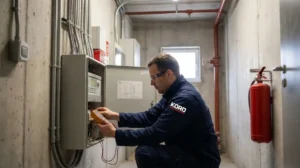
ToggleAn electrical thermography test, also called an infrared inspection or thermal imaging scan, is a non-invasive way to check the health of an electrical system while it is running under normal load. A trained technician uses an infrared camera to capture the surface temperature of electrical components such as circuit breakers, cables, switchgear, transformers, panels, and connectors.
Every electrical connection carries a certain amount of resistance. When that resistance rises because of a loose terminal, corrosion, an unbalanced load, or worn-out insulation, the connection heats up. This extra heat shows up on an infrared camera as a bright “hot spot” against the cooler background of properly functioning components. Because the test does not require shutting down equipment or opening panels while live, it lets you inspect an entire electrical system safely, without interrupting business operations.
The output of the test is a thermal image paired with a written report. The report highlights any abnormal temperature readings, ranks them by severity, and recommends corrective action, whether that means tightening a connection, replacing a breaker, or rebalancing a circuit.
Common Causes of Electrical Hot Spots
Understanding what actually causes a component to overheat helps explain why thermography testing is so effective at catching problems early. Some of the most frequent causes include:
- Loose or corroded connections. Over time, vibration, temperature cycling, and general wear can loosen bolted or screwed connections inside a panel. A loose connection has higher resistance than a tight one, and that extra resistance generates heat every time current passes through it.
- Overloaded circuits. When a circuit is asked to carry more current than it was designed for, whether because of added equipment or an undersized cable, the conductors and connection points heat up faster than normal.
- Unbalanced loads across phases. In three-phase systems, uneven distribution of load across the phases can cause one phase to run hotter than the others, a pattern that is easy to spot with an infrared camera but nearly impossible to detect by eye.
- Deteriorating insulation. As cable and wire insulation ages, cracks, or degrades from heat exposure, it loses some of its ability to contain and manage current safely, which can show up as a localized temperature rise.
- Faulty or aging circuit breakers. Internal contacts inside a breaker can wear down over years of use, increasing resistance at the point of contact and generating heat even when the breaker is functioning within its rated capacity on paper.
- Poor quality components or workmanship. Substandard cables, connectors, or termination work, unfortunately still common in some construction and renovation projects, are a frequent source of avoidable hot spots.
Because these issues develop gradually and rarely produce any visible or audible warning until they are already serious, an infrared scan is often the only practical way to catch them while they are still easy and inexpensive to fix.
Why Electrical Thermography Testing Matters in Pakistan
Pakistan’s electrical infrastructure faces a unique combination of stresses that make thermal imaging especially valuable:
- Extreme summer heat. Ambient temperatures above 40°C in cities like Lahore, Karachi, and Multan push electrical components closer to their thermal limits even before any fault develops, making early detection more urgent.
- Voltage fluctuations and load shedding. Frequent power cuts followed by sudden restoration create surge conditions that stress connections and insulation over time.
- Rapid urban and industrial growth. Many commercial buildings, textile units, and factories have added machinery and load over the years without upgrading the original wiring or panel capacity.
- Informal wiring practices. In older buildings and smaller industrial units, electrical work is not always carried out to a consistent standard, increasing the chance of loose or improperly terminated connections.
- Rising insurance and compliance requirements. More insurers and regulatory bodies operating in Pakistan now expect documented electrical safety inspections, including thermal imaging, as part of standard risk management.
Given these conditions, an electrical thermography test is no longer a luxury reserved for large multinational plants. It has become a practical, affordable safeguard for homes, offices, hospitals, schools, malls, hotels, and factories throughout the country.
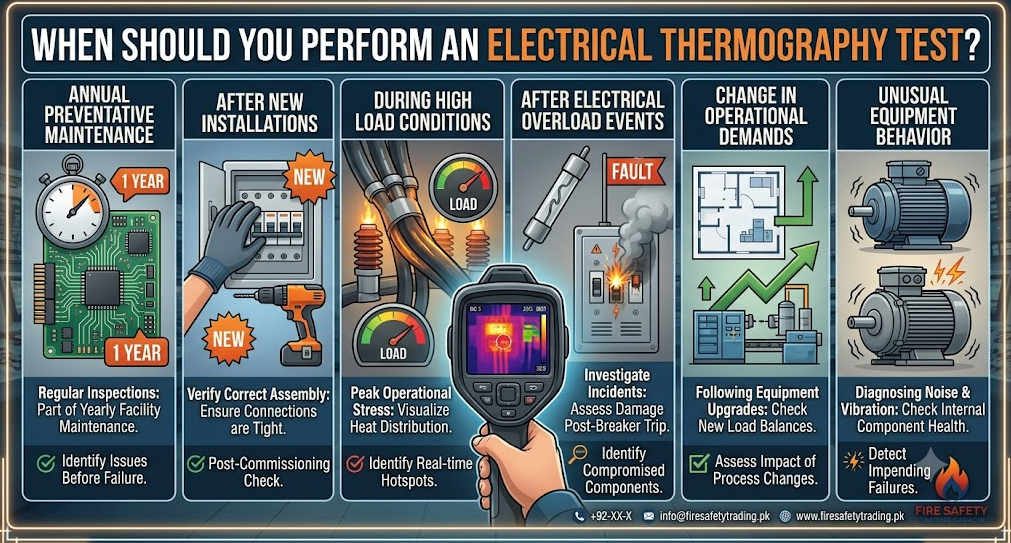
When Should You Perform an Electrical Thermography Test?
This is the question every facility manager, business owner, and homeowner should be asking. Below are the situations where scheduling a thermography test is not just recommended, it is necessary.
1. As Part of Routine Annual Maintenance
Even if nothing appears to be wrong, an annual thermal imaging scan should be a standard part of your building’s preventive maintenance schedule. Many electrical faults develop gradually and produce no visible symptoms until they fail completely. A yearly scan catches these issues while they are still minor and inexpensive to fix. For facilities with heavy electrical loads, such as factories or data rooms, a scan every six months is often more appropriate.
2. Before and After the Peak Summer Season
Since electrical components already run hotter during Pakistan’s summer months, it makes sense to test your system just before the peak load season begins, typically in early spring, and again once the season ends. Testing beforehand identifies weak points before they are pushed to their limit by air conditioning loads and high ambient temperatures. Testing afterward confirms whether any component was damaged by the season’s stress.
3. After Installing New Equipment or Increasing Load
Adding new machinery, air conditioning units, generators, server racks, or production lines changes the load pattern across your electrical distribution system. Connections and breakers that were adequate for the previous load may now be undersized or under extra strain. A thermography test after any significant equipment addition confirms that your panels and wiring can safely handle the new demand.
4. Following Renovation or Electrical Rewiring Work
Any time electrical work is carried out, whether it’s a full rewiring project or a smaller panel upgrade, there is a risk of loose terminations or incorrectly sized connections. A thermography scan shortly after the work is completed acts as a quality check, confirming that every connection was made correctly before problems have a chance to develop.
5. If You Notice Warning Signs of Electrical Trouble
Certain symptoms are strong indicators that a thermography test should be scheduled immediately, not at the next routine interval:
- Breakers that trip repeatedly without an obvious cause
- Lights that flicker or dim when other equipment switches on
- A burning smell near outlets, panels, or switchgear
- Discoloration, scorch marks, or melted plastic around switches or sockets
- Panels, switches, or cables that feel warm or hot to the touch
- Unusual buzzing or crackling sounds from electrical equipment
- Circuit breakers or fuses that fail more often than expected
Any one of these signs suggests that heat is already building up somewhere in the system. Waiting for the next scheduled inspection is not advisable; a thermography test should be arranged as soon as possible.
6. Before Purchasing or Leasing a Commercial Property
If you are buying, leasing, or taking over management of a commercial building, factory, or warehouse, an electrical thermography inspection should be part of your due diligence process, similar to a structural or plumbing inspection. It reveals the true condition of the electrical infrastructure and can uncover problems that are not visible during a standard walkthrough, potentially saving you from inheriting expensive repairs.
7. For Insurance Assessments and Risk Audits
Many insurance providers now request documented proof of electrical safety inspections before issuing or renewing commercial property or fire insurance policies. A thermography report demonstrates that you have taken proactive steps to reduce fire risk, which can support smoother claims processing and, in some cases, more favorable premiums.
8. In Facilities With Critical or Continuous Operations
Hospitals, data centers, cold storage facilities, textile mills, and manufacturing plants that cannot afford unplanned downtime should treat thermography testing as a core part of their maintenance strategy. An unexpected electrical failure in these environments does not just cost money in repairs, it can halt production, spoil inventory, or put patient safety at risk. Scheduling scans quarterly or semi-annually, rather than just once a year, is common practice for these high-stakes environments.
9. After a Power Surge, Lightning Strike, or Major Fault
Following any significant electrical event, such as a surge from grid instability, a lightning strike, or a fault that tripped your main breaker, a thermography scan helps confirm whether any connections or components were weakened by the event, even if they appear to be functioning normally afterward.
10. When Preparing for Regulatory Inspections or Fire Safety Audits
If your building is due for a fire safety audit, NOC renewal, or compliance inspection, having a recent thermography report on hand shows regulators and auditors that your electrical systems have been checked and verified as safe. It also gives you the opportunity to fix any flagged issues before the official inspection takes place.
What Happens During an Electrical Thermography Inspection?
Understanding the process helps set expectations for what your facility will experience during the test.
Step 1: Pre-Inspection Planning. The technician reviews your facility’s electrical layout, identifies the panels, switchgear, and equipment to be scanned, and confirms that the system will be under a representative load during the inspection, since thermal patterns are most meaningful when equipment is actively drawing power.
Step 2: Live Infrared Scanning. Using a calibrated infrared camera, the technician scans each panel, connection point, breaker, cable run, and piece of switchgear without needing to power down or physically disturb the equipment. This keeps your operations running uninterrupted throughout the inspection.
Step 3: Identifying and Classifying Hot Spots. Any temperature anomaly is recorded and compared against the surrounding components and accepted industry temperature-rise thresholds. Findings are typically classified by severity, ranging from components to monitor over time to issues that need urgent repair.
Step 4: Reporting. You receive a detailed report with thermal images, temperature readings, severity ratings, and clear recommendations for corrective action. This report also serves as a valuable record for future comparison and for insurance or compliance documentation.
Step 5: Corrective Action and Follow-Up. Once repairs or adjustments are made, a follow-up scan on the affected components confirms that the issue has been resolved and that temperatures have returned to normal.
What Equipment Is Used for Thermography Testing?
The accuracy of a thermography inspection depends heavily on the quality of the equipment used and the skill of the technician operating it. Professional thermal imaging cameras used for electrical inspections are far more sensitive and precise than the basic infrared tools sold for general home use. They are built to detect small temperature differences, often as little as one degree Celsius, across a wide range of surface temperatures, and they are regularly calibrated to maintain measurement accuracy.
A qualified technician also considers factors such as emissivity, the distance from which the scan is taken, ambient temperature, and the load the equipment is under at the time of inspection, since all of these variables can affect the reading. This is one reason why thermography testing should always be carried out by a trained professional rather than treated as a simple point-and-shoot exercise. A poorly conducted scan can miss genuine problems or flag false positives, undermining the entire purpose of the inspection.
Benefits of Regular Electrical Thermography Testing
- Prevents electrical fires. Since a large share of electrical fires start at overheating connections and switchgear, catching these hot spots before they ignite surrounding insulation or nearby combustible materials removes one of the most common fire triggers in commercial and residential buildings alike.
- Reduces unplanned downtime. A failing breaker or connection rarely fails gracefully. It tends to fail suddenly, often during peak operating hours, taking equipment, production lines, or entire sections of a building offline until repairs can be made. Identifying the problem in advance lets you schedule the fix on your own terms.
- Lowers long-term maintenance costs. Tightening a loose connection or replacing a single breaker costs a fraction of what it takes to repair fire damage, replace burned-out equipment, or carry out emergency after-hours electrical work.
- Extends equipment lifespan. Excess heat accelerates wear on insulation, contacts, and other components. Catching and correcting hot spots early reduces the cumulative stress on your electrical infrastructure, helping panels and switchgear last longer.
- Supports insurance and compliance requirements. A documented thermography report gives insurers, auditors, and regulators clear evidence that your electrical system has been proactively checked, which can smooth the path for policy renewals, claims, and safety certifications.
- Improves energy efficiency. Loose connections and unbalanced loads waste electricity as heat rather than useful work. Fixing these issues can produce a small but measurable reduction in energy costs over time.
- Provides peace of mind. For building owners, facility managers, tenants, and employees, knowing that the electrical system has been independently verified as safe removes one significant source of everyday risk and uncertainty.
Who Needs Electrical Thermography Testing in Pakistan?
While every property with an electrical system benefits from thermal imaging, it is especially important for the following types of facilities:
- Textile mills and garment factories, where heavy motor loads, dyeing and finishing machinery, and long production hours put continuous stress on panels and cabling.
- Manufacturing plants and industrial warehouses, where large equipment startups draw high inrush currents that place extra demand on connections and breakers.
- Hospitals, clinics, and diagnostic labs, where life-support and diagnostic equipment cannot tolerate unplanned power interruptions, and patient safety depends on a reliable electrical supply.
- Shopping malls, hotels, and restaurants, which combine heavy lighting, HVAC, kitchen equipment, and constant public footfall, making fire safety a top priority.
- IT offices, call centers, and data rooms, where servers and networking equipment run continuously and even a brief outage can mean significant data or business disruption.
- Educational institutions and universities, which house large numbers of students and staff across buildings that are often decades old.
- High-rise residential and commercial buildings, where a single electrical fault in a shared panel can affect dozens of units or tenants.
- Government buildings and public facilities, which are increasingly expected to demonstrate documented safety compliance.
- Cold storage and food processing units, where refrigeration equipment runs around the clock and any electrical failure risks significant product loss.
- Any facility with an aging electrical panel or wiring system over ten years old, since components naturally degrade over time regardless of the type of building they serve.
How Often Should You Schedule a Thermography Test?
There is no single answer that fits every property, but general guidance includes:
- Residential buildings: every 2 to 3 years, or sooner if warning signs appear
- Small commercial offices: annually
- Industrial and manufacturing facilities: every 6 to 12 months, depending on load intensity
- Critical facilities (hospitals, data centers, cold storage): every 3 to 6 months
- After any major electrical work, load increase, or fault: immediately, regardless of the last scheduled test
Facility managers should treat these intervals as a starting point and adjust based on the age of their electrical infrastructure, the intensity of their operations, and any history of electrical issues.
Choosing the Right Thermography Testing Provider
Not every inspection is equal. When selecting a company to carry out your electrical thermography test, look for:
- Technicians trained and certified in infrared thermography, not just general electrical work
- Use of calibrated, industry-standard thermal imaging equipment
- A detailed written report with images, not just a verbal summary
- Experience working across the type of facility you operate, whether residential, commercial, or industrial
- A clear process for follow-up scans after corrective action is taken
Fire Safety Trading works with qualified technicians who understand the specific challenges of Pakistan’s electrical environment, from high summer loads to older industrial wiring, and delivers clear, actionable reports that help you act on findings quickly. You can learn more about the service here: https://firesafetytrading.com.pk/electrical-thermography-test/
Final Thoughts
An electrical thermography test is one of the most cost-effective ways to protect your property, your equipment, and the people inside it from the hidden risks of overheating electrical connections. Rather than waiting for a tripped breaker, a burning smell, or worse, a fire, scheduling regular thermal imaging inspections, and acting promptly when warning signs appear, keeps your electrical system reliable and your building safer year-round. Whether you manage a factory floor, a hospital, an office building, or your own home, knowing when to test is the first step toward preventing the electrical failures that so often catch people by surprise.
Frequently Asked Questions
- What is the main purpose of an electrical thermography test?
The main purpose is to detect abnormal heat build-up in electrical connections and components before it leads to equipment failure or fire. It identifies problems like loose connections, overloaded circuits, and deteriorating insulation while the system is running normally.
- Is an electrical thermography test safe to perform on live equipment?
Yes. One of the biggest advantages of thermal imaging is that it is a non-contact, non-invasive test. The technician scans equipment from a safe distance using an infrared camera while the system continues operating normally, so there is no need to shut down power.
- How long does an electrical thermography inspection take?
The duration depends on the size of the facility and the number of panels or components being scanned. A small office may take one to two hours, while a large industrial facility with multiple panels can take a full day or more to inspect thoroughly.
- Can thermography testing detect all electrical problems?
Thermal imaging is highly effective at detecting issues that produce heat, such as loose connections, overloaded circuits, and failing components. However, it works best as part of a broader electrical maintenance program that may also include visual inspections and load testing for a complete picture of system health.
- How much does an electrical thermography test cost in Pakistan?
Costs vary depending on the size of the facility, the number of panels and components scanned, and the accessibility of the equipment. Smaller residential or office inspections are generally more affordable, while large industrial facilities with extensive electrical infrastructure cost more due to the time and equipment involved. Contacting a provider directly for a site assessment gives the most accurate estimate.
- What happens if a thermography test finds a hot spot?
If a hot spot is identified, the report will classify its severity and recommend corrective action, which typically involves tightening or replacing the affected connection, rebalancing the circuit load, or repairing damaged components. A follow-up scan afterward confirms that the temperature has returned to a normal range.
- Do residential homes need electrical thermography testing, or is it only for factories?
While industrial and commercial facilities benefit the most due to higher electrical loads, residential homes, especially older ones or those with high electricity usage, can also benefit from periodic thermography testing to catch hidden wiring issues before they cause a fire.
- How is thermography testing different from a regular electrical inspection?
A regular electrical inspection typically involves a visual check and testing with standard electrical meters, often requiring circuits to be powered down. Thermography testing adds a layer of insight by revealing heat patterns invisible to the naked eye, all while the system remains live and operational.
- Is electrical thermography testing required by law in Pakistan?
While not universally mandated by a single national law, thermography testing is increasingly expected by insurance providers, fire safety auditors, and regulatory bodies as part of standard risk management and compliance practices, particularly for commercial and industrial properties.
- How soon can repairs be made after a thermography test identifies a problem?
This depends on the severity of the finding. Critical issues that pose an immediate fire or failure risk should be addressed right away, often within days. Lower-severity findings can typically be scheduled into routine maintenance, though they should still be resolved before the next inspection cycle.