Fire safety is not something a building owner can leave to chance, and in Pakistan, where commercial plazas, factories, hospitals, and residential towers keep expanding every year, a properly installed fire alarm system is often the difference between a small incident and a major disaster. Yet many property owners still do not understand what actually happens during installation, or how much it costs to get it right.
This guide walks through the full fire alarm system installation process step by step, explains the different system types used across Pakistani buildings, and breaks down the fire alarm system price in Pakistan so you know what to expect before you call a contractor. We will also look at why installation is only half the job, and how ongoing upkeep keeps a system reliable for years.
What Is a Fire Alarm System and Why It Matters
Fire Safety Trading (Pvt)
ToggleA fire alarm system is a network of detectors, control panels, sounders, and manual call points designed to sense smoke, heat, or flame at the earliest possible stage and alert everyone in the building before the situation becomes dangerous. In Pakistan, building codes increasingly require certified fire alarm systems in commercial plazas, hospitals, schools, factories, and high-rise apartments, both for legal compliance and for insurance purposes.
Beyond compliance, the real value of a fire alarm system is time. Every extra minute of early warning gives occupants a better chance to evacuate safely and gives the fire brigade a better chance of controlling the fire before it spreads through stairwells, electrical risers, or shared ventilation systems common in older Pakistani buildings.
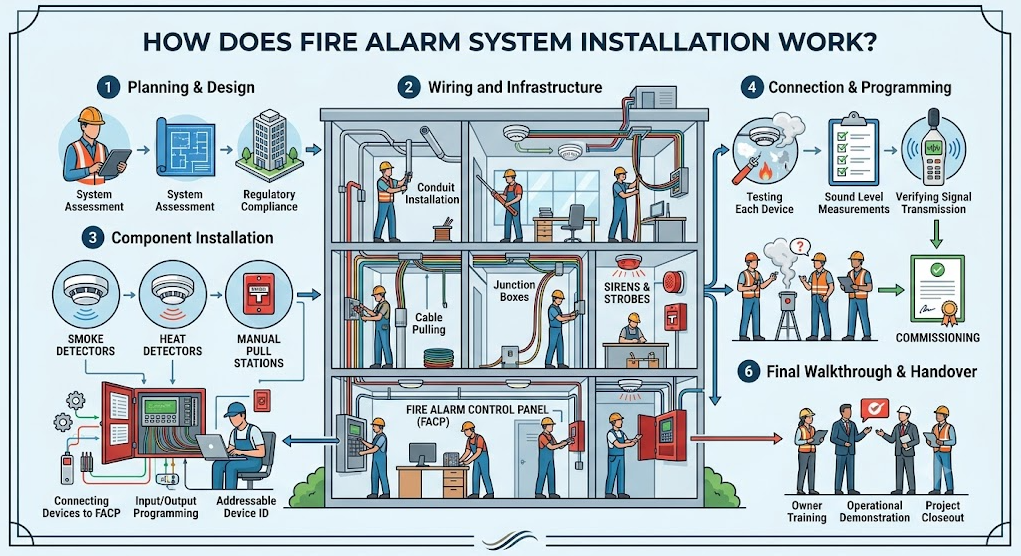
How Does Fire Alarm System Installation Work? Step by Step
Installing a fire alarm system is not simply a matter of mounting a few smoke detectors on the ceiling. A proper installation follows a structured process that considers the building’s layout, occupancy, and fire risk profile. Here is how a professional installation typically unfolds.
Step 1: Site Survey and Risk Assessment
A technician visits the site to assess the building’s layout, construction materials, occupancy type, and existing electrical infrastructure. This survey identifies high-risk areas such as kitchens, server rooms, generator rooms, and storage areas that need specialised detectors, and it forms the basis for the system design that follows.
Step 2: System Design and Panel Selection
Based on the survey, the installer designs a zoning plan and selects an appropriate control panel, either conventional or addressable, depending on the building’s size and complexity. Larger commercial buildings in cities like Lahore and Karachi typically need addressable panels that pinpoint the exact device that triggered an alarm, while smaller shops or homes can usually be served by simpler conventional panels.
Step 3: Wiring and Device Placement
Cabling is run through walls, ceilings, and risers to connect smoke detectors, heat detectors, manual call points, and sounders back to the main panel. Device placement follows spacing standards so that no area of the building is left without adequate coverage, and fire-rated cable is used wherever local code requires it.
Step 4: Control Panel Installation and Integration
The control panel is mounted, powered, and connected to every detection zone. Where required, it is also integrated with other building systems such as sprinklers, elevators, HVAC shutdown relays, and emergency lighting so that a confirmed alarm can trigger a coordinated building-wide response.
Step 5: Testing and Commissioning
Every detector, call point, and sounder is individually tested to confirm it communicates correctly with the panel. Technicians simulate alarm conditions, check battery backup performance, and verify that notification devices are audible and visible throughout the building before the system is signed off as operational.
Step 6: Certification and Handover
Once testing is complete, the installer provides documentation covering the system design, zone charts, and test results, along with a certificate confirming the installation meets the relevant fire safety standard. Building staff are briefed on how to respond to alarms and reset the panel, and the site is handed over ready for use.
Types of Fire Alarm Systems Used in Pakistan
Not every building needs the same type of system, and choosing the right one affects both performance and cost.
- Conventional fire alarm systems: cost-effective and suited to smaller buildings such as shops, clinics, and small offices, where zones cover general areas rather than individual devices.
- Addressable fire alarm systems: used in larger commercial plazas, hospitals, and factories, where each device has its own address so staff can identify the exact point of an alarm instantly.
- Wireless fire alarm systems: increasingly used in heritage buildings or renovated spaces in Pakistan where running new cable is impractical.
- Hybrid systems: combine wired and wireless devices to extend coverage in phased construction projects without disrupting finished areas.
Fire Alarm System Price in Pakistan: What Affects the Cost
One of the most common questions building owners ask is about the fire alarm system price in Pakistan, and the honest answer is that it varies significantly depending on several factors rather than a single fixed rate.
- Building size and number of zones: larger floor areas need more detectors, cabling, and sounders, which increases both material and labour cost.
- System type: addressable panels and devices cost more upfront than conventional systems but offer faster fault location and lower long-term maintenance effort.
- Brand and certification: internationally certified equipment generally costs more than uncertified alternatives but is essential for insurance compliance and reliable performance.
- Cabling requirements: fire-rated cable and concealed wiring in finished buildings add to labour time compared to open, easily accessible ceilings.
- Integration needs: connecting the fire alarm system with sprinklers, elevators, or building management systems adds engineering and programming cost.
- Ongoing maintenance: annual inspection, battery replacement, and servicing contracts are a recurring cost separate from the initial installation.
Because of these variables, the most reliable way to know your actual cost is to request a site survey and written quotation from a certified fire safety contractor rather than relying on a generic estimate.
Why Choose Professional Installation Instead of DIY
Fire alarm systems are life-safety equipment, and a poorly installed system can fail exactly when it is needed most. Professional installers understand local fire codes, correct detector spacing, and how to avoid false alarms caused by dust, cooking fumes, or humidity, all common challenges in Pakistani commercial buildings.
Professional installers also provide the documentation and certification that insurance companies and local authorities require, something a self-installed or informally fitted system usually cannot offer.
Fire Alarm Maintenance After Installation
Installation is only the beginning of a fire alarm system’s working life. Detectors accumulate dust, batteries degrade, and wiring connections can loosen over time, all of which reduce reliability if left unchecked. Routine servicing keeps every device functioning as designed and keeps your system compliant with fire safety regulations.
For a closer look at what routine servicing involves and how often it should be scheduled, see this guide on fire alarm maintenance.
Common Mistakes to Avoid During Installation
Many fire alarm problems in Pakistani buildings trace back to a handful of avoidable mistakes made during installation.
- Skipping a proper site survey and using generic detector placement instead of a layout suited to the building.
- Choosing the cheapest panel available without checking whether it is certified for the building’s occupancy type.
- Leaving high-risk areas such as kitchens or generator rooms without specialised heat or multi-sensor detectors.
- Not integrating the fire alarm with sprinklers or emergency lighting where the building design calls for a coordinated response.
- Skipping commissioning tests, which means faults are only discovered during a real emergency.
How to Choose a Fire Alarm Installation Company in Pakistan
With fire safety demand rising across Pakistan, more contractors are offering installation services, but not all of them have the same level of expertise. Choosing the right company matters just as much as choosing the right equipment.
- Ask for certification: confirm the company installs equipment that meets recognised fire safety standards and can provide compliance documentation.
- Check experience with your building type: a contractor experienced with factories may not be the best fit for a hospital, and vice versa.
- Request a detailed, written quotation: a transparent breakdown of equipment, labour, and cabling costs helps you compare offers fairly instead of guessing at a single lump sum.
- Confirm after-sales support: ask whether the company offers maintenance contracts, warranty coverage, and emergency callout service after installation.
- Look for local references: contractors with a track record in Pakistani commercial and residential buildings understand local wiring practices, power fluctuations, and climate factors that affect detector performance.
Conclusion
A correctly installed fire alarm system protects lives, property, and business continuity, and understanding the installation process helps building owners in Pakistan make informed decisions rather than settling for the cheapest quote. From the initial site survey through to certification, every step matters, and so does the fire alarm system price in Pakistan you are quoted, since it should reflect the building’s actual risk profile rather than a one-size-fits-all package.
Once your system is installed, keeping up with regular servicing ensures it remains ready to perform when it matters most.
Frequently Asked Questions
How long does fire alarm system installation take?
For a small shop or office, installation can often be completed in one to two days. Larger commercial buildings or factories with multiple zones may take one to two weeks depending on cabling requirements and integration with other systems.
What is the average fire alarm system price in Pakistan?
Pricing depends on building size, system type, and brand, so there is no single fixed figure. A basic conventional system for a small space costs less than an addressable system for a large commercial plaza. Requesting a site survey gives the most accurate quote.
Is a fire alarm system mandatory for commercial buildings in Pakistan?
Many provincial building codes and civil defence regulations require certified fire alarm systems in commercial plazas, hospitals, schools, and high-rise buildings. Requirements vary by city and occupancy type, so it is best to confirm with local authorities.
What is the difference between conventional and addressable fire alarm systems?
A conventional system groups detectors into zones covering a general area, while an addressable system gives each detector its own unique identifier so the exact device that triggered an alarm can be located instantly.
How often should a fire alarm system be tested after installation?
Most standards recommend monthly functional checks, along with a full professional inspection and service at least once a year, to confirm detectors, batteries, and wiring are all functioning correctly.
Can a fire alarm system be installed in an already-finished building?
Yes. Wireless or hybrid fire alarm systems are commonly used in finished or heritage buildings where running new concealed cabling would be disruptive or impractical.
Does a fire alarm system need to be connected to sprinklers?
It is not always mandatory, but integrating fire alarms with sprinklers and other systems allows for a faster, coordinated response and is often recommended for larger commercial and industrial buildings.
What happens during fire alarm system commissioning?
Commissioning involves testing every detector, call point, and sounder individually, checking battery backup performance, and confirming the entire system communicates correctly with the control panel before final handover.
Who should install a fire alarm system?
Fire alarm systems should be installed by a certified fire safety contractor familiar with local building codes and detector placement standards, since improper installation can lead to false alarms or system failure during an emergency.
Does fire alarm system price in Pakistan include maintenance?
Installation cost usually covers equipment, cabling, and commissioning only. Ongoing maintenance, battery replacement, and annual servicing are typically billed separately under a maintenance contract.