Home safety begins with understanding everyday risks and preparing for unexpected emergencies. A kitchen accident, an electrical fault, or a problem involving a heating appliance can sometimes lead to a fire. Although prevention is always the best approach, having suitable fire safety equipment at home can help families respond more effectively when an emergency occurs.
A fire extinguisher is one important part of a home fire safety plan. However, choosing the correct type, keeping it accessible, and understanding its limitations are essential. An extinguisher is not a replacement for smoke alarms, a fire escape plan, or professional emergency assistance.
In Pakistan, where homes range from apartments and rented properties to large family houses, fire safety needs can vary considerably. Understanding the role of extinguishers, smoke detectors, and a fire alarm system in Pakistan can help homeowners make informed decisions and create safer living environments.
This guide explains the main types of fire extinguishers, how to select appropriate equipment, where to keep it, and why regular maintenance matters.
Why Are Fire Extinguishers Important for Home Safety?
A fire extinguisher is portable equipment designed to control certain types of fires when used under appropriate conditions. Different extinguishers use different agents, and each is intended for particular fire hazards.
At home, potential fire risks may include cooking appliances, electrical equipment, combustible furniture, paper products, and flammable liquids. The right equipment can form part of a broader strategy to reduce the consequences of these hazards.
However, not every fire can be safely approached with an extinguisher. A fire may spread rapidly, produce dangerous smoke, or block the exit. In such circumstances, leaving the building and contacting emergency services are the priorities.
The main benefits of including extinguishers in a home safety plan are:
– Preparedness: Suitable equipment is available if a small, manageable fire occurs.
– Risk awareness: Selecting equipment encourages families to identify potential fire hazards.
– Improved planning: Extinguisher placement can be considered alongside escape routes and alarms.
– Protection of property: Appropriate equipment may help limit damage when circumstances permit safe use.
– A stronger safety culture: Family members become more aware of prevention, maintenance, and emergency procedures.
An extinguisher should always be viewed as one layer of protection rather than the only measure against fire.
Understanding the Different Types of Fire Extinguishers
Choosing an extinguisher starts with understanding the fire hazards present in a home. The labels and classifications on products matter because an agent suitable for one type of fire may be ineffective or dangerous for another.
1. Water Fire Extinguishers
Water extinguishers are generally intended for fires involving ordinary combustible materials, such as paper, wood, and some fabrics.
They are not suitable for fires involving energised electrical equipment or flammable liquids. Using the wrong extinguishing agent can increase danger, so homeowners should never assume that water-based equipment is appropriate for every household fire.
Before selecting this type, consider the materials and hazards present in the intended area and seek advice from a qualified fire safety professional.
2. Foam Fire Extinguishers
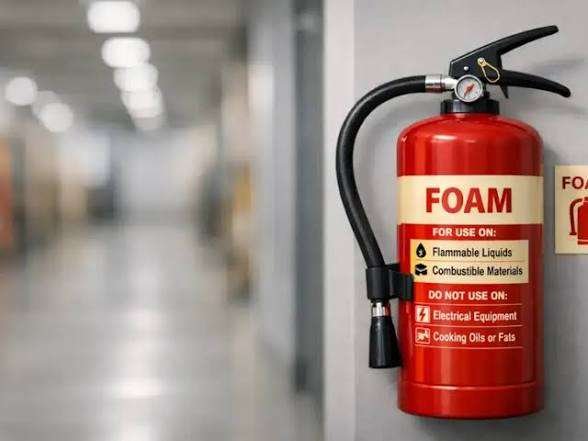
Foam extinguishers are designed for certain fires involving ordinary combustible materials and flammable liquids, depending on the product’s rating and approval.
They are not universally suitable for electrical hazards. Product labels should clearly identify the approved applications and limitations.
A household with a garage, workshop, or storage area may have different fire risks from a typical living room. The correct equipment should reflect those specific conditions.
3. Dry Chemical Powder Fire Extinguishers
Dry chemical powder extinguishers are widely used because certain models can address several types of fires. Their suitability depends on the classification shown on the extinguisher.
Some models are rated for ordinary combustibles, flammable liquids, and electrical equipment. Others may have different capabilities.
Powder can leave residue and affect sensitive electronics, appliances, and indoor surfaces. Homeowners should therefore consider both the potential fire hazards and the environment in which the extinguisher would be used.
4. Carbon Dioxide (CO₂) Fire Extinguishers
Carbon dioxide extinguishers are commonly intended for certain flammable-liquid and electrical-equipment fires.
They generally leave little or no residue, which can be useful around some electrical equipment. However, they may be less effective on deep-seated combustible materials, and carbon dioxide can create an additional hazard in small, poorly ventilated spaces.
A CO₂ extinguisher is not automatically the best option for every room containing electrical appliances. Always check its rating and obtain professional advice when selecting equipment for a particular hazard.
5. Wet Chemical Fire Extinguishers
Wet chemical extinguishers are designed for particular cooking-oil and fat fires and may also be rated for other specified combustible materials.
They can be relevant in kitchens where deep-fat frying or commercial-style cooking equipment creates a particular risk. The correct product depends on the cooking equipment and the manufacturer’s approved applications.
Never pour water onto burning cooking oil. If a cooking fire develops and cannot be safely controlled immediately, leave the area, alert others, and call emergency services.
How to Choose the Right Fire Extinguisher for Your Home
The most suitable extinguisher depends on the property, its occupants, and the hazards in each area. Buying the largest or least expensive model is not necessarily the safest choice.
Assess the Fire Risks
Start by identifying likely hazards throughout the home. A kitchen may have cooking oils and electrical appliances, while a living room may contain upholstered furniture, paper, and electronic devices.
A storage area or garage may have different materials that require a different approach. A qualified professional can help determine which extinguisher types and ratings are appropriate.
Check the Fire Rating
Fire extinguishers carry markings that identify the classes of fire they are designed to address. Do not select a product based only on its colour, size, or general description.
Read the label and confirm that the equipment is suitable for the intended hazard. Where a building has special risks, such as a workshop or backup power equipment, seek a professional assessment.
Consider the People Living in the Home
The safety plan should account for children, older adults, and people who may have difficulty moving quickly or understanding emergency instructions.
Equipment must be accessible to responsible adults without creating additional risks. Children should be taught to recognise alarms, leave promptly, and contact a trusted adult rather than attempt to fight a fire.
Buy From a Reliable Supplier
Look for clearly labelled products from reputable suppliers. Check the manufacturer’s details, product rating, instructions, service requirements, and any relevant conformity or approval information.
Be cautious of products with unclear labelling, missing instructions, damaged components, or no traceable manufacturer information. Ask the supplier about servicing arrangements and whether the extinguisher is appropriate for your property.
Where Should Fire Extinguishers Be Kept?
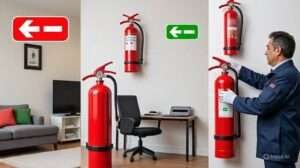
Location is an important part of extinguisher safety. Equipment that is hidden behind furniture, locked away, or surrounded by stored items may be difficult to access during an emergency.
A home fire safety assessment can help identify suitable locations, such as accessible areas near relevant hazards and along normal routes of travel. Placement should follow the manufacturer’s instructions and applicable fire safety requirements.
Keep these points in mind:
– Make sure the extinguisher is easy for a responsible adult to locate.
– Keep it visible and free from obstructions.
– Avoid locations where a fire could trap someone between the equipment and an exit.
– Follow the mounting and environmental requirements provided by the manufacturer.
– Keep children from treating the extinguisher as a toy.
– Make sure family members know where the equipment is located.
Avoid placing an extinguisher directly beside a likely fire source if doing so could make it inaccessible when that area catches fire. A qualified professional can recommend a location that balances accessibility with safe escape.
The Role of a Fire Alarm System in Pakistan Homes
An extinguisher can be useful only if a fire is recognised in time and the situation allows safe action. Smoke alarms and fire detection systems help provide early warning, giving occupants a better opportunity to evacuate.
A fire alarm system in Pakistan may be relevant to houses, apartment buildings, residential complexes, and other properties depending on their size, layout, use, and applicable requirements.
Basic smoke alarms may be suitable for some residential settings, while larger or more complex buildings may need professionally designed detection and alarm arrangements.
Smoke Detectors and Early Warning
Smoke detectors can alert occupants when smoke is detected. This warning is especially important when people are sleeping or when a fire starts in a room away from the occupants.
Install suitable devices in accordance with the manufacturer’s guidance and applicable local requirements. Test them as instructed and replace batteries or devices when required.
A smoke alarm does not extinguish a fire. Its purpose is to provide warning so people can take appropriate action.
Integrated Fire Detection
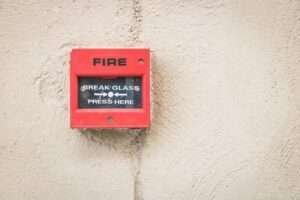
Larger residential buildings may require a more comprehensive system, depending on local regulations and the building’s characteristics. Such systems can include detectors, manual call points, audible or visual alarms, and a control panel.
The design should be based on a proper assessment rather than a one-size-fits-all approach. Professional installation, testing, and maintenance help ensure that the system functions as intended.
Combining Alarms With Extinguishers
Alarms and extinguishers perform different functions. An alarm warns occupants, while an extinguisher may help control a suitable small fire when conditions allow.
Neither replaces a clear escape plan. Families should know how to leave the property, where to gather outside, and how to contact emergency services.
For apartment buildings, residents should also understand the building’s evacuation arrangements and follow instructions from emergency personnel.
Fire Extinguisher Safety: What Every Household Should Know
Owning an extinguisher does not automatically make a home safe. Family members need to understand when to leave and when not to approach a fire.
Put Personal Safety First
If a fire starts, alert others and leave the building if there is smoke, rapid fire growth, uncertainty about the source, or any threat to your escape route.
Do not delay evacuation to retrieve an extinguisher or personal belongings. Never enter a smoke-filled room or return to a burning building.
Understand the Equipment’s Limitations
An extinguisher may be unsuitable for the type or size of fire. It may also be ineffective if the fire has spread beyond its intended use.
Only trained adults should consider using an extinguisher in a small, contained incident when they can do so without compromising their escape. If there is any doubt, evacuate and contact emergency services.
Keep Escape Routes Clear
Hallways, doors, and staircases should remain free from stored items that could obstruct evacuation. Everyone should know the safest available exits and a meeting point outside the home.
For multi-storey homes and apartments, plan how occupants can reach a safe exit without using lifts during a fire emergency unless emergency authorities specifically direct otherwise.
Teach Children Simple Emergency Actions
Children should know how to recognise a smoke alarm, alert an adult, leave the property, and stay outside. They should never hide during a fire or attempt to collect toys and belongings.
Practise the family escape plan calmly so everyone understands what to do.
Maintaining Fire Extinguishers for Reliable Performance
Fire safety equipment needs regular inspection and servicing. An extinguisher that is damaged, discharged, or past its required service date may not operate as expected.
Follow the manufacturer’s instructions and the applicable servicing requirements for the particular model.
Conduct Visual Checks
Responsible adults should periodically check that the extinguisher remains in its designated location and is easy to access. Look for visible damage, corrosion, leakage, missing labels, or other signs that professional attention may be needed.
Where the model has a pressure indicator, check it according to the manufacturer’s instructions. Do not dismantle or attempt to repair the equipment yourself.
Arrange Professional Servicing
Follow the manufacturer’s schedule and applicable standards for professional inspection, servicing, and any required internal examination or recharge.
If an extinguisher has been used, even briefly, arrange appropriate servicing or replacement before relying on it again. A qualified service provider can advise whether the unit can be restored to service.
Keep Records
Homes may use a simple checklist to record visual checks, servicing dates, and any issues that need attention. For landlords, apartment managers, and building administrators, organised records can help demonstrate that fire safety equipment is being maintained.
Common Mistakes to Avoid
Several avoidable mistakes can reduce the value of home fire protection.
Choosing an unsuitable type: An extinguisher must match the potential fire hazards. Read the label and seek expert guidance where necessary.
Ignoring smoke alarms: Detection equipment should be tested and maintained according to its instructions.
Blocking access: Equipment must remain visible and accessible without creating a risk to the person trying to reach it.
Forgetting maintenance: Damage, missing components, or overdue servicing should be addressed promptly by an appropriate professional.
Relying only on extinguishers: Fire prevention, early warning, evacuation planning, and emergency assistance are equally important parts of a safety strategy.
Attempting to fight a spreading fire: Extinguishers are not a reason to delay leaving a dangerous environment. Human safety always comes first.
Fire Safety Considerations for Homes in Pakistan
Homes in Pakistan vary widely in construction, occupancy, and access to emergency services. Some families live in detached houses, while others live in apartment blocks or shared residential buildings. These differences affect the fire safety measures that may be appropriate.
The Building Code of Pakistan—Fire Safety Provisions 2016, issued through the Pakistan Engineering Council in collaboration with the National Disaster Management Authority, provides a national reference for fire prevention, life safety, and fire protection in buildings and structures. Its applicability and enforcement should be confirmed with the relevant local authority for the specific property. The Punjab Civil Defence Department also identifies fire detection and alarm systems, firefighting arrangements, fire safety plans, and evacuation provisions among the measures inspected in relevant premises.
For homeowners, the practical starting points are straightforward:
– Identify likely fire hazards in the kitchen, living areas, and storage spaces.
– Install and maintain suitable smoke alarms.
– Select appropriate extinguishers based on a professional assessment where needed.
– Keep doors, corridors, and escape routes clear.
– Teach every household member the emergency plan.
– Seek qualified advice for apartments, larger homes, and properties with special risks.
Fire safety products should be selected for their suitability and reliability, not merely their price. Building owners and managers should check the requirements that apply to their premises rather than assume that every property follows identical rules.
Creating a Complete Home Fire Safety Plan
A reliable home safety plan combines prevention, early warning, preparation, and regular review.
First, reduce common risks by keeping cooking areas orderly, using electrical equipment according to its instructions, and arranging repairs through qualified professionals. Keep matches, lighters, and other ignition sources away from young children.
Second, make sure suitable smoke alarms are installed and maintained. Consider whether the property requires a more comprehensive detection or alarm system based on its size and applicable regulations.
Third, have appropriate fire extinguishers selected and maintained for the hazards present. Make sure responsible adults know where they are located and understand that using one is only an option when the fire is small, the equipment is suitable, and escape remains safe.
Finally, practise the escape plan. Identify exits, agree on an outdoor meeting point, and ensure that everyone understands how to raise the alarm and contact emergency services.
Review the plan when household arrangements change, new equipment is installed, or a home is renovated. For rented properties and apartment buildings, discuss shared fire safety responsibilities with the landlord or building management.
Conclusion
Fire extinguishers are an important part of home fire preparedness, but their effectiveness depends on choosing suitable equipment, keeping it accessible, and maintaining it correctly. Homeowners should understand the limitations of different extinguisher types and avoid putting themselves at risk by attempting to control a spreading fire.
A safer home also needs working smoke alarms, clear escape routes, a practical evacuation plan, and good everyday prevention habits. In Pakistan, choosing suitable fire protection equipment and checking the requirements that apply to a property can help families prepare more responsibly.
For homes and residential buildings, the goal is not simply to own fire safety equipment. It is to create a complete safety plan that helps people recognise danger, leave promptly, and seek professional assistance when needed.
Frequently Asked Questions (FAQs)
1. Which fire extinguisher is best for a home?
There is no single best extinguisher for every home. The correct type depends on the fire hazards present, the product’s rating, and the location where it will be used. Read the label and seek advice from a qualified fire safety professional when necessary.
2. Should every home in Pakistan have a fire extinguisher?
A suitable extinguisher can be a valuable part of household fire preparedness. The exact equipment needed depends on the property, its hazards, and any applicable requirements. Smoke alarms, clear exits, and an evacuation plan are also essential parts of home safety.
3. How often should a fire extinguisher be checked?
Follow the manufacturer’s instructions and the applicable inspection and servicing requirements. Check that the unit remains accessible and look for visible damage or other warning signs. Arrange professional servicing when required, and do not rely on an extinguisher that appears damaged or has been discharged.
4. Is a fire alarm system necessary in a residential p