Construction sites are busy environments where buildings, electrical systems, and working conditions can change every day. Workers may be handling combustible materials, using electrical equipment, carrying out hot-work activities, or storing supplies near unfinished structures. These conditions make fire prevention an important part of construction planning.
A fire at a construction site can endanger workers, damage equipment, delay project completion, and affect neighbouring properties. The risks may increase when emergency exits are incomplete, temporary electrical installations are poorly maintained, or fire protection equipment is missing or unsuitable.
Choosing the right fire safety equipment is therefore an important responsibility for construction companies, contractors, developers, and site managers. However, buying equipment should not be based on price alone. Buyers need to understand the project’s hazards, applicable regulations, equipment specifications, installation requirements, and maintenance needs.
When considering a Fire alarm system in Pakistan, construction teams should assess the building’s stage of development, the areas requiring protection, and the warning arrangements needed for workers. A permanent system may be required as the project progresses, while temporary safety measures may also be necessary during construction.
This guide explains what to check before purchasing fire safety equipment for a construction site and how to make informed decisions that support worker safety and project compliance.
1. Assess the Construction Site Before Buying Equipment
The first step is to understand the site rather than immediately selecting products. Different construction projects have different fire risks, and the required equipment depends on the activities being carried out.
A residential building project may have different requirements from a factory, warehouse, commercial tower, or infrastructure development. The number of workers, building height, construction materials, temporary facilities, and available escape routes can all affect the safety arrangements.
Before purchasing equipment, assess:
– The size and layout of the construction site.
– The number of workers and contractors present.
– The materials stored or used during construction.
– Temporary electrical installations and machinery.
– Areas where hot work or other ignition-producing activities occur.
– Available access routes for evacuation and emergency responders.
– The stage of construction and planned changes to the building.
A qualified fire safety professional can help identify hazards and determine which equipment and procedures are appropriate. This assessment also helps prevent unnecessary purchases and reduces the risk of overlooking important safety requirements.
2. Understand the Importance of a Fire Alarm System
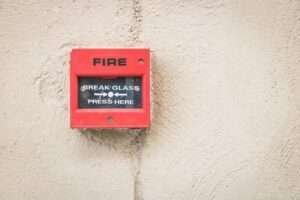
A fire alarm system provides a warning when a fire is detected or an alarm is manually activated. On a construction site, timely warning can help workers recognise an emergency and follow the designated evacuation procedure.
The appropriate arrangement depends on the site. Some projects may require temporary warning arrangements during early construction, while more developed buildings may need an installed system designed for the completed structure and its intended occupancy.
When evaluating a fire alarm system in Pakistan, buyers should consider the following factors.
Detection requirements: Ask which detection devices are appropriate for the areas being protected. Dust, changing room layouts, temperature, and construction activities can affect equipment selection.
Alarm coverage: Workers should be able to recognise the warning throughout the relevant work areas. Large sites or noisy environments may require carefully designed audible or visual notification.
System compatibility: Confirm that the proposed equipment is compatible with the intended control panel, power arrangements, and other components.
Power supply: Ask how the system will operate during a power interruption and what backup arrangements are required.
Installation and commissioning: Check who will design, install, test, and commission the equipment.
Maintenance support: Confirm how faults will be reported, how the system will be tested, and who will be responsible for ongoing maintenance.
Do not assume that a single detector or alarm device is suitable for an entire construction site. The system should be selected according to the project’s actual risks and applicable requirements.
3. Check the Quality and Specifications of Fire Safety Equipment
Before purchasing fire safety products, review their technical specifications and suitability for the intended application. Product descriptions and marketing claims alone are not enough to establish that equipment will perform as expected.
Ask the supplier for documentation that identifies the product, its intended use, operating limitations, relevant approvals, and maintenance requirements.
Important checks include:
– Product model and manufacturer details.
– Relevant technical specifications.
– Applicable standards and certification documents.
– Compatibility with the site’s safety arrangements.
– Installation and operating instructions.
– Warranty conditions.
– Availability of replacement parts.
– Access to technical support and servicing.
Where a supplier claims that a product meets a particular standard, request supporting documentation and verify the claim where possible.
Buyers should also confirm that the product is suitable for the conditions in which it will be installed. Equipment intended for a clean indoor office, for example, may not be appropriate for a dusty or exposed construction environment.
The aim is to purchase reliable equipment that matches the project’s requirements rather than selecting products based only on appearance, price, or promotional language.
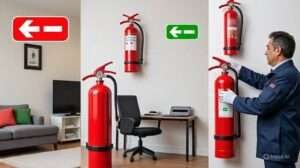
4. Choose Suitable Fire Extinguishers
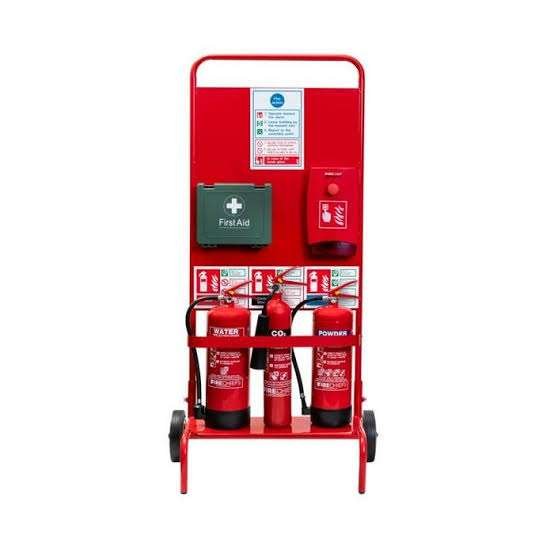
Fire extinguishers may be required at construction sites, but the correct type, quantity, and placement depend on the fire hazards present.
Construction sites can contain combustible building materials, electrical equipment, flammable liquids, and other materials that require different fire protection considerations. Not every extinguisher is suitable for every type of fire.
Before buying extinguishers, check:
– The types of fire hazards identified in the risk assessment.
– The extinguisher’s labelled applications.
– Its suitability for the intended location.
– The required number and placement of units.
– Inspection and servicing requirements.
– Product documentation and warranty conditions.
– Whether appropriate workers will receive relevant training.
Extinguishers should remain accessible, clearly identified, and maintained according to applicable requirements and manufacturer instructions.
Construction managers should arrange professional advice when the hazards are complex or when specialised equipment is required. Workers should never be expected to fight a dangerous or spreading fire. Evacuation and contacting emergency services must remain the priority when conditions are unsafe.
5. Consider the Special Risks of Temporary Electrical Systems
Construction sites frequently use temporary lighting, power distribution equipment, tools, machinery, and other electrical installations. These systems may change as work progresses, so their safety needs regular attention.
Damaged cables, defective equipment, overloaded connections, and unsuitable temporary arrangements can create fire hazards.
Before work begins, ensure that temporary electrical systems are assessed and installed by appropriately qualified personnel. Buyers should check whether equipment is suitable for the site conditions and whether inspection and maintenance arrangements are included in the project plan.
Useful purchasing and planning considerations include:
– Suitable equipment for the intended working environment.
– Appropriate protection and installation arrangements.
– Clear responsibility for electrical inspections.
– Manufacturer instructions and maintenance information.
– Procedures for reporting damaged equipment.
– Safe arrangements during changes to the site layout.
Avoid improvised repairs or unapproved modifications. Any electrical fault that could present an immediate danger should be reported and addressed by qualified personnel.
Electrical safety should be considered alongside fire alarms and firefighting equipment, not treated as a separate concern.
6. Review Fire Risks from Hot Work and Combustible Materials
Some construction activities involve heat, sparks, or other potential ignition sources. Combustible materials such as timber, insulation, packaging, and certain building products may be present nearby.
Construction managers should establish suitable procedures for activities that can create ignition risks. These procedures may include risk assessment, authorisation, supervision, housekeeping, and checks appropriate to the work and site.
Before purchasing equipment for these activities, determine which measures are required by the project’s safety plan and applicable regulations.
Buyers should also consider how materials will be stored. Packaging and other combustible waste should not accumulate around equipment, work areas, or escape routes. Materials requiring special storage conditions must be handled according to their documentation and relevant requirements.
Because the risks differ between projects, specialist guidance may be necessary for flammable liquids, gases, chemicals, and other higher-risk materials.
A carefully planned site layout can help reduce hazards and keep emergency routes accessible as construction progresses.
7. Make Sure Emergency Exits and Warning Signs Are Included
Fire safety equipment is only useful if people can recognise an emergency and reach safety. Construction sites should have suitable evacuation arrangements for the current stage of work.
Temporary access routes may change as floors, walls, stairs, and other structural elements are completed. Site managers should review escape arrangements whenever the layout changes.
Before purchasing signs or emergency lighting, check:
– Which routes are designated for evacuation.
– Whether the routes remain accessible.
– Whether exit signs are appropriate and visible.
– Whether emergency lighting is required.
– Whether workers can recognise alarm signals.
– Whether workers know the designated assembly point.
– Whether emergency responders can access the site.
Do not assume that a route shown on an old site plan remains usable after construction changes. Evacuation arrangements should be reviewed and communicated regularly.
Where workers may have different language or communication needs, warning instructions should be understandable and appropriate for the workforce.
8. Compare Suppliers Beyond the Purchase Price
Price matters when managing a construction budget, but the cheapest quotation may not offer the best overall value.
A low-priced product may have limited documentation, inadequate technical support, or unsuitable specifications. At the same time, a more expensive product is not automatically the right choice.
When comparing suppliers, consider the complete service being offered.
Factor| What to check
Product suitability| Does it match the site’s identified hazards?
Documentation| Are specifications and relevant approvals available?
Installation| Is professional installation included or clearly defined?
Testing| Is commissioning or functional testing included where required?
Warranty| What does the warranty cover, and for how long?
Maintenance| Are servicing arrangements and costs explained?
Technical support| Can faults and replacement needs be addressed?
Delivery| Can the equipment be provided when the project requires it?
Request written quotations that describe the products, quantities, installation work, exclusions, and ongoing costs.
For larger projects, compare quotations with the same scope of work. This makes it easier to understand whether suppliers are offering equivalent protection and services.
9. Confirm Installation, Testing, and Maintenance Arrangements
Buying equipment is only the beginning. Fire protection systems must be installed correctly, tested where required, and maintained throughout their service life.
This is especially important during construction because equipment may be affected by dust, physical damage, temporary power arrangements, or changes to the building.
Before approving a purchase, ask who will be responsible for installation, commissioning, inspections, repairs, and maintenance records.
A suitable arrangement should identify:
– The responsible installer or service provider.
– The required commissioning and acceptance checks.
– The applicable inspection and testing schedule.
– The process for reporting equipment faults.
– Responsibility for repairs and replacements.
– The records that need to be retained.
– How changes to the site will be reflected in the safety arrangements.
Construction teams should make sure that temporary protective measures remain appropriate until permanent systems are ready and approved for use.
The applicable requirements should be confirmed with the relevant authority and qualified professionals. Equipment should not be treated as compliant simply because it has been delivered or installed.
10. Check Pakistan’s Fire Safety Requirements
Fire safety requirements depend on the project’s location, building type, construction stage, intended occupancy, and applicable laws.
The Building Code of Pakistan Fire Safety Provisions 2016 is an important reference for fire prevention, life safety, and fire protection in buildings and structures. The code’s applicability and implementation depend on the relevant government and authority arrangements. <Cite refs={[“turn196095search24″,”turn196095search25”]}/>
Punjab Civil Defence identifies fire detection and alarm systems, firefighting arrangements, fire safety plans, emergency exits, and evacuation plans among the measures considered during inspections of relevant premises. <Cite refs={[“turn196095search0”]}/>
Before buying equipment for a construction project, owners and contractors should:
1. Identify the authority responsible for the project.
2. Confirm which regulations and approvals apply.
3. Arrange a suitable fire risk assessment.
4. Select equipment that meets the project’s documented requirements.
5. Use qualified professionals for design and installation.
6. Keep the required inspection, testing, and maintenance records.
7. Review safety arrangements as construction progresses.
A generic equipment list cannot determine compliance for every site. Seek professional guidance when the project has complex hazards, multiple storeys, specialised storage, or changing occupancy arrangements.
11. Use a Practical Fire Safety Buying Checklist
Before placing an order, use the following checklist to review the proposed purchase.
Risk assessment
– [ ] The site’s main fire hazards have been identified.
– [ ] The equipment suits the construction stage and working environment.
– [ ] Special storage or operational hazards have been considered.
Product quality
– [ ] Product specifications and relevant documentation are available.
– [ ] The equipment is suitable for the intended use.
– [ ] Warranty and technical support terms are clear.
Installation and maintenance
– [ ] Installation responsibilities are documented.
– [ ] Testing and commissioning requirements are understood.
– [ ] Inspection and servicing arrangements are established.
– [ ] Replacement parts and repairs can be arranged.
Emergency preparedness
– [ ] Warning arrangements suit the site layout.
– [ ] Escape routes are accessible.
– [ ] Signs and emergency lighting are provided where required.
– [ ] Workers know the evacuation procedure and assembly point.
Compliance
– [ ] Applicable building and fire safety requirements have been checked.
– [ ] Relevant authorities have been consulted where necessary.
– [ ] Required records and approvals are accounted for.
This checklist can help buyers compare options, but it does not replace a formal risk assessment or any required inspection.
Conclusion
Buying fire safety equipment for a construction site requires careful planning. The right choices depend on the project’s hazards, construction stage, building design, and applicable regulations.
Before purchasing a fire alarm system in Pakistan or other protective equipment, review the product specifications, installation arrangements, maintenance support, and compliance documentation. Compare suppliers on overall value rather than price alone, and make sure emergency procedures keep pace with changes to the site.
Fire safety is a shared responsibility involving developers, contractors, site managers, workers, suppliers, and qualified professionals. A well-planned approach can help reduce avoidable hazards, support safe evacuation, and protect people and property throughout construction.
Frequently Asked Questions (FAQs)
1. What should I check before buying fire safety equipment for a construction site?
Assess the site’s fire hazards, check the product’s suitability and documentation, confirm installation and maintenance arrangements, and verify the applicable requirements with the relevant authority or a qualified fire safety professional.
2. Is a fire alarm system necessary at a construction site in Pakistan?
Requirements depend on the building, project stage, site conditions, and applicable regulations. Temporary warning arrangements may be needed during construction, and permanent systems may be required as the building progresses. Confirm the requirements with the responsible authority.
3. Which fire extinguishers are suitable for construction sites?
The correct extinguisher depends on the materials and hazards present. Review the product label and obtain professional advice about the appropriate type, quantity, placement, and maintenance requirements.
4. Why is maintenance important for construction site fire safety equipment?
Equipment can become damaged, develop faults, or be affected by changing site conditions. Regular inspection, testing, and servicing help identify problems and keep protective arrangements reliable.
5. Which fire safety standards apply to construction sites in Pakistan?
The Building Code of Pakistan Fire Safety Provisions 2016 is an important reference, but the specific requirements depend on the project and relevant authority. Confirm applicable regulations, approvals, and inspection requirements before purchasing or installing equipment.