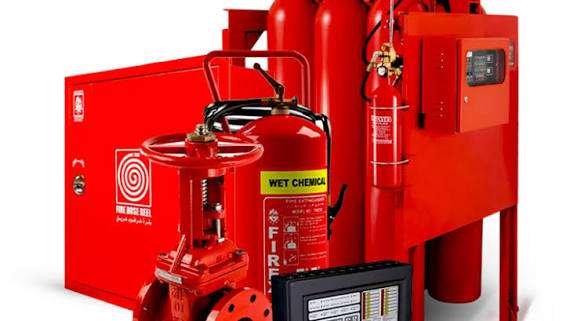
Fire safety is an important part of protecting homes, offices, schools, shops, factories, and other buildings in Pakistan. However, alongside useful safety information, many myths continue to influence how people think about fire prevention and emergency response.
The title “Where to Buy Fire Safety Myths in Pakistan” may sound unusual because myths are not products that people actually purchase. Instead, it highlights a common problem: people sometimes “buy into” incorrect ideas about fire safety. These misconceptions can lead to poor decisions, delayed evacuation, neglected maintenance, or misuse of safety equipment.
Understanding the difference between a fire-safety fact and a myth is therefore essential. A reliable safety approach should be based on building requirements, professional guidance, properly maintained equipment, emergency planning, and practical awareness.
Pakistan’s Building Code of Pakistan Fire Safety Provisions 2016 addresses fire-warning systems, emergency action plans, evacuation procedures, fire drills, and other protective measures. The code also states that people should not render fire-warning or fire-extinguishing systems inoperative or inaccessible.
Rescue 1122 also places considerable emphasis on prevention, preparedness, community safety education, and evacuation drills.
Why Fire Safety Myths Are Dangerous
A fire-safety myth may sound harmless when discussed casually, but it can become dangerous when someone relies on it during an emergency.
For example, a person might believe that a fire alarm is only necessary in large commercial buildings. Another person may assume that a small amount of smoke is not serious. Someone else might think that a familiar exit will always be available.
These assumptions can create delays.
Fire safety is not about memorizing frightening scenarios. It is about understanding the systems and procedures designed to provide early warning, support evacuation, and reduce preventable risks.
The most useful approach is to question common assumptions and replace them with reliable safety practices.
Myth 1: Fire Alarms Are Only for Large Buildings
One common misconception is that fire alarms are useful only in factories, shopping centers, hospitals, or high-rise buildings.
In reality, fire detection and alarm systems can have an important role in many types of occupied buildings, depending on their design, occupancy, size, and applicable requirements.
The Building Code of Pakistan provides for fire alarm systems where required and identifies fire alarm and automatic fire detection systems as important emergency systems in applicable buildings.
A properly designed fire alarm system in Pakistan can provide occupants with an early warning that allows them to follow the building’s emergency procedure.
The important point is not simply having an alarm installed. The system must also be appropriate for the building and properly maintained.
Myth 2: A Fire Alarm Alone Makes a Building Safe
Another common misconception is that installing an alarm solves the entire fire-safety problem.
It does not.
Fire safety involves several layers, including:
– Fire prevention
– Early detection
– Alarm notification
– Clear escape routes
– Emergency lighting
– Exit signs
– Appropriate fire protection equipment
– Emergency plans
– Staff and occupant awareness
– Inspection and maintenance
– Evacuation drills
– Professional emergency response
An alarm is valuable because it provides warning, but people still need a safe way to respond to that warning.
The Pakistan Engineering Council’s fire-safety provisions address multiple elements of building safety rather than relying on one system alone.
Myth 3: You Can Ignore a Fire Alarm if There Is No Smoke
A person may hear an alarm and assume that it is a false alarm simply because there is no visible smoke nearby.
This is unsafe thinking.
Smoke or fire may not be visible from every part of a building. A detection system may also respond before occupants personally notice signs of a fire.
When a building alarm activates, occupants should follow the property’s emergency procedures and instructions from responsible personnel.
The safest approach is to take warnings seriously rather than attempting to determine whether an alarm is “real” by investigating the source.
Myth 4: False Alarms Mean the System Is Useless
Repeated false alarms can be frustrating, but they do not mean that a fire alarm system has no value.
Frequent unwanted alarms may indicate a need for professional inspection, maintenance, adjustment, or investigation of the cause.
Ignoring or disabling the system is not an appropriate solution.
Pakistan’s Fire Safety Provisions specifically address the maintenance and operation of fire-warning systems and prohibit people from rendering fire-warning or fire-extinguishing systems inoperative or inaccessible.
If an alarm repeatedly activates without an apparent emergency, the issue should be reported to the responsible building management or qualified professionals.
Myth 5: Fire Safety Is Only the Building Owner’s Responsibility
Building owners and managers have important responsibilities, but occupants also have a role.
A safe building depends on cooperation between:
– Property owners
– Building managers
– Employees
– Tenants
– Visitors
– Students
– Residents
– Maintenance personnel
– Emergency services
Occupants should avoid creating unnecessary hazards, keep escape routes clear, report problems, understand emergency procedures, and participate in drills where required.
The Building Code also places responsibilities on owners, operators, lessees, occupants, and people in control of premises in relation to fire-safety compliance.
Myth 6: Fire Extinguishers Can Handle Every Fire
Fire extinguishers are useful safety equipment, but they are not a universal solution.
Different fires involve different materials and hazards. The appropriate equipment depends on the type of fire, the building, and the applicable safety requirements.
More importantly, an occupant should not put themselves at risk by attempting to fight a developing fire without suitable training and a safe escape route.
For many people, the appropriate response to a serious fire is to raise the alarm, evacuate, and contact emergency services rather than attempting to control the fire personally.
Fire protection equipment should be selected, installed, inspected, and maintained according to applicable requirements.
Myth 7: Small Fires Are Always Safe to Handle
The word “small” can create a false sense of security.
A fire can grow rapidly, produce smoke, spread to nearby materials, or block an escape route. Conditions can also change quickly.
For this reason, people should not assume that a fire is safe simply because it initially appears limited.
Emergency plans should establish appropriate procedures for reporting emergencies, evacuation, relocation, and other responses. The Pakistan Fire Safety Provisions specifically include these elements in emergency action plans where such plans are required.
Myth 8: Fire Safety Equipment Does Not Need Regular Maintenance
Installing equipment once and forgetting about it is another dangerous misconception.
Fire alarms, detectors, extinguishers, emergency lighting, fire doors, and other systems need appropriate inspection, testing, servicing, and maintenance.
A device that worked when it was installed may not necessarily work correctly years later without proper maintenance.
The Building Code includes provisions concerning testing, inspection, maintenance, and records for fire-protection and fire-alarm systems.
Professional maintenance is therefore an essential part of fire safety.
Myth 9: Emergency Exits Are Only Necessary During Major Fires
Emergency exits are part of a building’s overall life-safety design.
An exit route may become important during many types of emergencies, not only a large fire.
Exit routes should be kept accessible and clearly identified. Occupants should know where they are before an emergency occurs.
A person discovering an emergency should not have to start searching for an unfamiliar staircase while others are trying to evacuate.
Myth 10: Elevators Are Always the Fastest Way Out
In ordinary circumstances, an elevator may be the quickest way to move between floors. During an emergency, however, the appropriate evacuation route depends on the building’s emergency plan and instructions from responsible authorities.
Buildings may designate protected stairs or other routes for evacuation.
Occupants should know the property’s emergency procedures rather than making assumptions based on normal daily routines.
The Building Code specifically includes consideration of elevator use within emergency action plans where such plans are required.
Myth 11: Fire Drills Are a Waste of Time
Some people see fire drills as interruptions to work or school.
In reality, drills can help occupants become familiar with evacuation procedures before an actual emergency occurs.
Rescue 1122’s community safety program includes training for students, teachers, citizens, and organizations, including emergency evacuation drills.
A useful drill can help people understand:
– What the alarm sounds like
– Where exits are located
– Where to assemble
– How to leave without unnecessary delay
– What procedures apply to visitors
– How building staff coordinate an evacuation
The goal is not to create fear. The goal is to replace uncertainty with familiarity.
Myth 12: Fire Safety Training Is Only for Firefighters
Professional firefighters obviously require specialized training, but ordinary occupants can also benefit from basic fire-safety awareness.
Rescue 1122’s Community Safety Program includes emergency-management and life-saving training for citizens, industrial workers, healthcare providers, volunteers, government officials, and other groups.
People do not need to become firefighters to understand basic safety principles.
Knowing where an exit is, recognizing an alarm, understanding evacuation procedures, and knowing whom to contact can all contribute to safer communities.
Myth 13: Electrical Problems Are Not a Fire-Safety Issue
Electrical systems are an important part of modern buildings, so electrical safety should be included in fire-prevention planning.
Warning signs such as damaged cables, overheating outlets, unusual burning smells, repeated electrical faults, or visibly damaged equipment should not be ignored.
Electrical repairs and technical work should be handled by appropriately qualified professionals.
Occupants should report concerns rather than attempting unsafe repairs themselves.
Myth 14: Keeping More Items in Corridors Is Harmless
Storage in corridors may appear convenient, particularly in apartments, offices, shops, and shared buildings.
However, unnecessary items can interfere with movement and make emergency evacuation more difficult.
Emergency routes should remain accessible and clearly identifiable.
The Building Code’s provisions concerning means of egress are designed to support safe movement toward a place of safety.
Good housekeeping is therefore a basic part of fire prevention.
Myth 15: Fire Safety Is Only About Equipment
Equipment is important, but fire safety is much broader.
A building may contain modern alarms and extinguishers while still having weaknesses caused by:
– Poor housekeeping
– Blocked exits
– Lack of emergency planning
– Untrained occupants
– Neglected maintenance
– Unsafe electrical practices
– Poor communication
– Inadequate drills
A safer approach combines equipment with planning and responsible behavior.
Choosing Reliable Fire-Safety Information in Pakistan
Because fire-safety myths can spread through casual conversations and social media, people should consider the source before accepting advice.
Reliable information can come from:
– Government emergency services
– Pakistan Engineering Council publications
– Relevant building authorities
– Qualified fire-safety professionals
– Recognized training programs
– Equipment manufacturers’ instructions
– Building management procedures
Rescue 1122 provides community safety resources covering preventive fire measures and broader emergency preparedness.
For technical systems such as fire detection and alarm equipment, professional installation, commissioning, and maintenance are important. The Pakistan Engineering Council identifies fire detection, alarm, and suppression systems as a specialized engineering area.
What to Do Instead of Believing Fire-Safety Myths
Replacing myths with simple safety habits can make a meaningful difference.
1. Learn the Building
Know the exits, stairs, alarms, emergency lighting, assembly areas, and emergency procedures relevant to the property.
2. Report Problems
Tell responsible management about damaged equipment, blocked exits, electrical concerns, or other hazards.
3. Take Alarms Seriously
Do not ignore an alarm simply because you cannot see a problem.
4. Participate in Drills
Use drills as opportunities to become familiar with the building’s evacuation procedure.
5. Keep Exits Clear
Do not use emergency routes as storage spaces.
6. Respect Safety Equipment
Do not remove, cover, damage, disable, or obstruct fire-safety equipment.
7. Follow Professional Guidance
Technical fire-protection systems should be designed, installed, inspected, tested, and maintained appropriately.
The Role of a Fire Alarm System in Pakistan
A fire alarm system can be an important part of a building’s overall protection strategy. Its primary value is early warning, allowing occupants and responsible personnel to respond according to the building’s emergency plan.
However, the system’s effectiveness depends on appropriate design, installation, maintenance, testing, and occupant awareness.
The Pakistan Engineering Council’s code requires fire alarm systems where applicable and addresses their inspection, testing, maintenance, and records.
This is why fire safety should not be reduced to simply asking whether a building has an alarm. The better question is whether the complete safety system is appropriately designed, maintained, and understood by the people who use the building.
Fire Safety and Emergency Preparedness in Pakistan
Pakistan has developed formal emergency services and community-safety initiatives to improve preparedness and response.
Rescue 1122 describes its mission as developing safer communities through emergency preparedness, response, and prevention. Its community safety activities include fire-safety education, evacuation training, community emergency response teams, and cooperation with organizations on fire and workplace safety.
This reflects an important principle: emergency safety is not only about responding after an incident. Prevention and preparedness matter before an emergency occurs.
A Simple Fire-Safety Myth Checklist
Before accepting a fire-safety claim, ask:
– Is the information supported by an official or qualified source?
– Does it match the building’s emergency procedure?
– Is the equipment being described appropriate for the hazard?
– Does the advice encourage prevention and safe evacuation?
– Does it recommend professional inspection for technical problems?
– Could following the advice create additional risk?
– Is the information consistent with applicable building requirements?
If the answer to these questions is unclear, it is better to seek reliable professional or official guidance.
Conclusion
Fire-safety myths can be surprisingly persistent because they often sound logical at first. The problem is that an incorrect assumption can influence decisions when time matters.
The solution is not to memorize every possible myth. Instead, people should understand the fundamentals of fire prevention, early warning, evacuation, equipment maintenance, emergency planning, and professional response.
A fire alarm system in Pakistan can be an important part of that approach, but it should work alongside clear exits, appropriate fire-protection equipment, maintenance, emergency planning, training, and responsible occupant behavior.
Whether you live in a house, rent an apartment, work in an office, operate a shop, attend school, or manage a larger facility, reliable information is one of the most useful fire-safety tools available. Replacing myths with verified guidance can help create safer buildings and better-prepared communities across Pakistan.
Frequently Asked Questions
1. What is the biggest fire-safety myth in Pakistan?
One of the most harmful myths is that having a fire alarm or extinguisher alone makes a building safe. Effective fire safety also requires prevention, clear escape routes, appropriate emergency planning, maintenance, occupant awareness, and professional response.
2. Is a fire alarm system necessary in every building?
Requirements depend on factors such as the building’s use, size, design, occupancy, and applicable regulations. The Pakistan Building Code provides for fire alarm systems where required by its applicable fire-safety provisions.
3. Should a fire alarm be ignored if there is no visible smoke?
No. Occupants should take alarms seriously and follow the building’s emergency procedure. The absence of visible smoke in one location does not establish that there is no emergency elsewhere in the building.
4. Why are fire drills important?
Fire drills help occupants become familiar with alarms, exits, evacuation procedures, and assembly arrangements. Rescue 1122 includes emergency evacuation drills within its community safety and preparedness activities.
5. Where can people find reliable fire-safety information in Pakistan?
Useful sources include the Pakistan Engineering Council, government emergency services such as Rescue 1122, relevant building authorities, qualified fire-safety professionals, and recognized training providers. Technical fire-detection and alarm systems should be handled according to applicable requirements and professional guidance.