Fire safety is something every child should learn in a simple, calm, and age-appropriate way. Children spend time at home, school, tuition centers, playgrounds, shops, restaurants, and other buildings, so knowing what to do when a fire alarm sounds can help them respond safely.
Unfortunately, children can also hear confusing or incorrect information about fire. Some common ideas come from cartoons, movies, social media, friends, or misunderstandings about how fire behaves. These myths may sound harmless, but believing them can make an emergency more difficult to manage.
The best approach is to teach children that fire safety is mainly about prevention, early warning, getting to safety, and listening to trusted adults and emergency professionals.
In Pakistan, organizations such as Rescue 1122 actively promote community safety education, including fire safety and emergency evacuation drills for students and teachers. The Pakistan Engineering Council’s Building Code of Pakistan Fire Safety Provisions 2016 also includes emergency action planning and fire drills for applicable educational and other occupancies.
This guide looks at some of the biggest fire-safety myths children may encounter and explains the safer way to understand them.
Why Children Need Fire-Safety Education
Children are naturally curious. They may be interested in candles, matches, electrical devices, cooking appliances, or other sources of heat without fully understanding their risks.
Fire-safety education should therefore focus on simple habits rather than frightening children.
Children can learn to:
– Tell a trusted adult when they notice a fire hazard.
– Recognize the sound of a fire alarm.
– Understand that an alarm should always be taken seriously.
– Know basic evacuation routes at home and school.
– Stay away from fire and smoke.
– Follow instructions from parents, teachers, and emergency responders.
– Avoid playing with matches, lighters, electrical equipment, or flames.
– Know where their family or school assembly point is located.
Rescue 1122’s Community Safety Program specifically includes school safety, fire-safety education, and emergency evacuation drills.
Myth 1: Fire Is Something Children Can Safely Play With
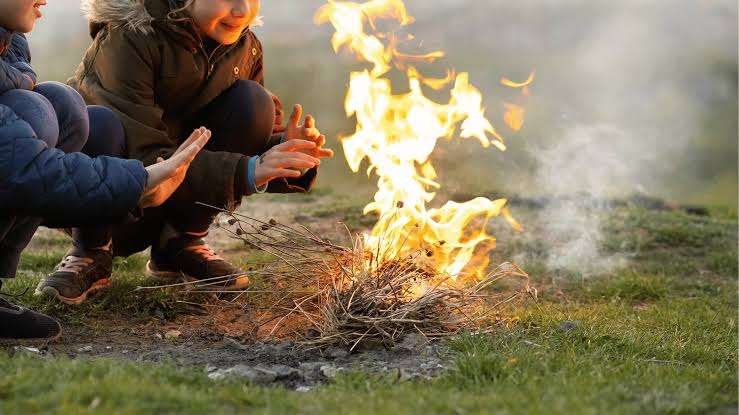
One of the most important myths to correct is the idea that fire is a toy.
A flame may look small and interesting, but children should never experiment with fire, matches, lighters, candles, or similar sources of heat.
Parents and teachers should explain that fire can spread unexpectedly and that children should tell an adult if they find matches, lighters, or another unsafe fire source.
The lesson should be simple:
Fire is useful when controlled by responsible adults, but it is never a toy.
Children do not need to learn how to start, control, or experiment with fire. Their role is to stay away and tell a trusted adult.
Myth 2: A Small Fire Is Always Safe
A small flame can create a dangerous situation if it grows or produces smoke.
Children should not be taught that they can judge whether a fire is safe simply by looking at its size.
Instead, children should understand that if they see fire where it should not be, they need to move away and alert a responsible adult.
For younger children, the safest rule is especially simple:
Do not try to fight the fire. Get away and tell an adult.
Adults and trained emergency responders can determine the appropriate response.
Myth 3: Children Should Hide During a Fire
Movies and games sometimes show characters hiding during emergencies.
This can give children the wrong idea.
During a real fire emergency, hiding is generally not an appropriate evacuation strategy. Children should follow their school’s or family’s emergency plan and move toward a safe location when instructed.
Emergency action plans under Pakistan’s Fire Safety Provisions include procedures for occupant response, evacuation, relocation, and fire drills where applicable.
Parents should teach children that the goal during an evacuation is to reach a safe place, not to find a secret hiding spot.
Myth 4: A Fire Alarm Can Be Ignored
Some children may think a fire alarm is simply a loud noise or that they can wait to see whether smoke appears.
This is a dangerous misconception.
A fire alarm exists to provide warning. Children should learn that when an alarm sounds, they need to follow the instructions of teachers, parents, or other responsible adults.
They should not assume that an alarm is a joke or a false alarm.
A properly designed fire alarm system in Pakistan can form an important part of a building’s fire-protection strategy, where such systems are required. The Pakistan Engineering Council’s provisions address fire alarm systems, automatic detection, maintenance, testing, and related requirements.
Myth 5: You Only Need to Leave If You See Flames
A child might think evacuation is necessary only when flames are visible.
That is not a safe rule.
There may be an emergency elsewhere in the building even when flames are not visible from a child’s location. Smoke, alarms, instructions from adults, or other warnings can all indicate that evacuation is necessary.
Children should follow the established emergency procedure rather than trying to decide whether the situation is serious enough.
Myth 6: Smoke Is Not as Dangerous as Fire
Children sometimes focus only on flames and may not understand why smoke is important.
Smoke can make it difficult to see and can create serious health risks. This is one reason buildings use detection, alarm, smoke-control, and evacuation measures.
Children should never move toward smoke to investigate what is happening.
If smoke or a fire is noticed, they should move away and follow the evacuation instructions provided by responsible adults.
Myth 7: Children Should Go Back for Their Favorite Things
During an emergency, a child may worry about a favorite toy, school bag, phone, book, pet, or other personal possession.
It is important to teach children that belongings can be replaced, but personal safety comes first.
Once a child has safely left the building, they should remain in the designated safe area and follow instructions.
They should never return to a building simply to collect something.
Myth 8: Children Should Become Firefighters During an Emergency
Firefighters are specially trained professionals with protective equipment and emergency procedures.
Children should not try to copy firefighters.
Their job during a fire emergency is much simpler:
1. Recognize the warning.
2. Listen to a trusted adult.
3. Leave through the designated safe route.
4. Stay at the agreed meeting point.
5. Wait for further instructions.
This approach helps children understand that being helpful does not mean putting themselves in danger.
Myth 9: Fire Drills Are Just a School Activity
Some students may think fire drills are simply an interruption to class.
They actually provide an opportunity to practice emergency procedures before a real emergency happens.
Rescue 1122 reports that teachers and students are trained in life-saving skills and emergency evacuation drills, with schools across Punjab participating in evacuation training.
A drill can help students learn:
– What the alarm sounds like
– Which exit to use
– Where to gather
– How to listen to teachers
– Why running and pushing are unsafe
– What to do if the normal route is unavailable
Practice can make emergency procedures more familiar.
Myth 10: Running Makes Evacuation Faster
Children may think running will help everyone leave more quickly.
In a crowded building, however, running can lead to falls, collisions, or confusion.
Children should follow teachers or responsible adults, move calmly, and avoid pushing others.
The purpose of an evacuation is to reach a safe place efficiently—not to create a race.
Myth 11: Elevators Are Always the Best Way Out
Children may normally use elevators with their families, so they might assume an elevator is automatically the fastest evacuation route.
Emergency procedures can be different from normal building routines.
A building’s emergency plan determines appropriate evacuation routes and may designate stairs or other protected routes.
Children should follow instructions from responsible adults rather than deciding independently which route to use.
Pakistan’s Fire Safety Provisions specifically recognize evacuation procedures and the appropriateness of elevator use as matters to be addressed in emergency action plans where applicable.
Myth 12: Fire Extinguishers Are Toys or School Equipment to Experiment With
Children may see fire extinguishers mounted on walls and become curious about them.
They should understand that fire extinguishers are emergency equipment, not toys.
Children should not remove, operate, damage, or play with extinguishers.
The Pakistan Fire Safety Provisions prohibit making fire-extinguishing or fire-warning equipment inoperative or inaccessible.
If an extinguisher appears damaged, missing, blocked, or otherwise unsafe, a child should tell a teacher, parent, or responsible adult.
Myth 13: Children Should Fix Fire-Safety Equipment
Another misconception is that children can help by repairing alarms, detectors, electrical equipment, or other safety systems.
Technical fire-safety equipment should be handled by appropriately qualified adults and professionals.
The Pakistan Engineering Council identifies installation, commissioning, and maintenance of fire detection, alarm, and suppression systems as a specialized engineering area.
A child can help by reporting a problem, not by attempting to repair it.
For example, a child might tell a teacher:
«“The fire alarm looks damaged.”»
That is a useful safety action.
Myth 14: Children Should Investigate Strange Smells
Children are naturally curious, but unusual smells should not become an invitation to investigate.
If a child notices smoke, a burning smell, or another unusual sign that could indicate a fire or electrical problem, they should move away and tell a responsible adult.
They should not search rooms, electrical areas, kitchens, storage spaces, or other potentially dangerous locations.
Myth 15: Fire Safety Is Only for Schools
Fire safety is important wherever children spend time.
That includes:
– Homes
– Schools
– Hostels
– Tuition centers
– Libraries
– Shopping centers
– Restaurants
– Sports facilities
– Community buildings
– Places of worship
– Public buildings
Children can learn the same basic principles in different environments: recognize warnings, stay away from hazards, follow trusted adults, and know where to go during an evacuation.
Myth 16: Children Do Not Need to Know the Emergency Meeting Point
A family or school meeting point can make it easier to know whether everyone has reached safety.
Parents can choose an appropriate location outside the home, while schools and other institutions should follow their established emergency arrangements.
Children should know that once they reach the designated assembly point, they should stay there and wait for instructions.
They should not leave independently to search for family members.
Myth 17: Fire-Safety Education Should Scare Children
Fear is not the best foundation for safety education.
Children can learn fire safety without being shown frightening images or being told exaggerated stories.
A calm approach can teach practical habits:
– Fire is not a toy.
– Alarms should be taken seriously.
– Do not hide.
– Follow trusted adults.
– Leave when instructed.
– Never return for belongings.
– Stay at the meeting point.
– Tell an adult about hazards.
This makes the subject easier to understand and remember.
Teaching Fire Safety at Home
Parents and guardians can introduce fire-safety habits through simple conversations.
For example, families can identify:
– Main exits
– Alternative exits where appropriate
– The outdoor meeting location
– Smoke alarms or other warning devices
– Important emergency contact information
Families can also discuss what children should do if an alarm sounds.
The discussion should be age-appropriate. Younger children need simple rules, while older children can learn more about emergency plans and building safety.
Fire Safety in Schools
Schools have a special responsibility because many students may need to evacuate the same building at the same time.
A school safety program can include:
– Regular evacuation drills
– Clearly identified exits
– Staff responsibilities
– Student awareness
– Emergency communication
– Visitor procedures
– Assembly areas
– Assistance for students who may need additional support
Pakistan’s Building Code identifies educational occupancies among the situations where emergency action plans may be required, with provisions covering evacuation and fire-drill arrangements.
The Importance of Adults in Children’s Fire Safety
Children should never be expected to manage a serious fire emergency independently.
Parents, teachers, school administrators, building managers, and trained emergency responders have important roles.
Adults can:
– Maintain appropriate safety equipment.
– Arrange professional inspections.
– Teach evacuation procedures.
– Organize drills.
– Keep emergency routes clear.
– Explain alarms.
– Report hazards.
– Contact emergency services when necessary.
Children can contribute by learning, following instructions, and reporting hazards.
How a Fire Alarm System Helps Children
A fire alarm system can be particularly important in buildings where many children are present because children may not immediately notice smoke or understand what is happening.
The purpose of an alarm is to provide a warning that prompts occupants to follow the building’s emergency procedure.
A properly designed and maintained system can include detection devices, notification devices, manual alarm points, control equipment, and other components depending on the building.
However, children should not be expected to understand the technical operation of the system. They mainly need to recognize the warning and know what to do next.
The Building Code states that fire alarm systems should be provided where required and includes provisions concerning automatic detection, alarm initiation, testing, service, and maintenance.
What Children Should Remember
A simple set of rules can help children remember the essentials:
Stay Away
Never play with fire, matches, lighters, electrical equipment, or other potential hazards.
Speak Up
Tell a trusted adult if something looks unsafe.
Listen to the Alarm
Treat a fire alarm as an important warning.
Follow Adults
During an emergency, listen to parents, teachers, and emergency responders.
Leave Safely
Use the designated evacuation route and do not push or run unnecessarily.
Stay Outside
Once safely evacuated, remain at the designated assembly point.
Do Not Go Back
Never return to a building for toys, bags, phones, or other belongings.
A Simple Fire-Safety Checklist for Parents and Teachers
Adults teaching children about fire safety can use this checklist:
– Explain that fire is not a toy.
– Identify the building’s evacuation routes.
– Explain what the fire alarm sounds like.
– Practice an evacuation drill appropriately.
– Identify the assembly point.
– Teach children not to hide during an evacuation.
– Explain why they should not return for belongings.
– Encourage children to report hazards.
– Keep emergency routes clear.
– Make sure fire-safety equipment is maintained professionally.
– Teach children to follow emergency instructions.
The aim should be preparation rather than fear.
Fire Safety in Pakistan: Building a Safer Culture
Fire safety becomes stronger when safety education starts early.
Rescue 1122’s Community Safety Training Booklet includes preventive fire measures and is intended to help communities develop safety knowledge and responsible behavior.
The service also provides community training and school-related safety activities, demonstrating the importance of teaching young people about emergency preparedness.
For children, the most valuable lesson is not how to fight a fire. It is how to recognize danger, avoid unnecessary risks, evacuate safely, and seek help from responsible adults and emergency professionals.
Conclusion
Fire-safety myths can create confusion, especially for children who may learn about emergencies from entertainment, social media, or conversations with friends.
The best way to replace those myths is with simple, consistent education.
Children should understand that fire is not a toy, alarms should not be ignored, evacuation drills are important, emergency routes should be respected, and personal belongings are never worth returning for during an emergency.
A fire alarm system in Pakistan can provide an important early warning in buildings where such systems are required, but alarms are only one part of a broader safety strategy. Effective protection also involves appropriate building design, clear evacuation routes, maintenance, emergency planning, drills, adult supervision, and professional emergency response.
Most importantly, children should know that they are not expected to fight fires or repair safety equipment. Their responsibility is to stay safe, follow trusted adults, and tell someone when they notice a potential hazard.
Teaching these habits early can help children become more confident, prepared, and safety-conscious members of their families, schools, and communities.
Frequently Asked Questions
1. What is the most important fire-safety rule for children?
The most important rule is to stay away from fire and immediately tell a trusted adult about a fire or potential hazard. During an emergency, children should follow the established evacuation procedure rather than trying to control the fire themselves.
2. Should children ignore a fire alarm if they cannot see smoke?
No. Children should treat a fire alarm as an important warning and follow instructions from teachers, parents, or other responsible adults. They should not investigate the source of an alarm themselves.
3. Should children use a fire extinguisher?
Children should not be expected to fight fires. Fire extinguishers are emergency equipment and should be handled according to appropriate safety procedures by trained, responsible people when circumstances permit. Children should prioritize getting to safety and following adult instructions.
4. Why are fire drills important for children?
Fire drills help children become familiar with alarms, evacuation routes, assembly areas, and instructions. Rescue 1122 includes emergency evacuation drills and fire-safety education within its school and community safety activities.
5. What should parents teach children about a fire alarm system in Pakistan?
Parents should explain that an alarm is a warning that must be taken seriously. Children should know how to recognize the alarm, follow the family’s or building’s evacuation procedure, leave with responsible adults, go to the designated safe area, and never return inside for personal belongings.