A fire extinguisher is only as good as its weakest part, and more often than not, that weak point turns out to be the valve. In Karachi, where extinguishers are exposed to heat, humidity, dust, and salty coastal air, the valve assembly takes a beating over time. Yet it’s one of the most overlooked components during routine checks. Most people focus on the pressure gauge or the outer cylinder and forget that the valve is what actually controls whether the extinguisher will discharge properly when it matters most.
This guide breaks down what a fire extinguisher valve does, how to tell when it’s failing, and why valve inspection should always be part of any servicing or refilling routine.
If your extinguisher hasn’t been checked recently, arranging fire extinguisher refilling in Karachi through a qualified technician is the safest way to catch valve issues before they become a real problem.
What Is a Fire Extinguisher Valve and Why It Matters
Fire Safety Trading (Pvt)
ToggleThe valve sits at the top of the extinguisher, connecting the pressure gauge, the discharge lever, the hose or nozzle, and the internal siphon tube. When you squeeze the lever, the valve opens a pathway that lets the pressurized agent shoot out. If the valve is corroded, cracked, or clogged, the extinguisher may not discharge at all, or it may release the agent unevenly and lose pressure within seconds.
Think of the valve as the extinguisher’s gatekeeper. Everything else in the unit, the powder, the gas, the cylinder itself, is useless if the valve fails to open cleanly under pressure during an emergency.
Common Signs of Valve Damage or Wear
Valve problems don’t always announce themselves loudly. Here are the warning signs technicians look for during inspection:
- Rust or white powdery corrosion around the valve stem or threads
- A pressure gauge needle that sits outside the green zone
- A discharge lever that feels stiff, loose, or doesn’t spring back
- Visible cracks in the plastic or metal valve housing
- Powder residue leaking from the seal even when the unit hasn’t been used
- A hissing sound near the valve, which usually means slow pressure loss
Any one of these signs is reason enough to have the unit inspected and serviced before it’s needed in a real fire.
How Valve Problems Affect Extinguisher Performance
A faulty valve can cause several failure modes. Sometimes the extinguisher won’t pressurize at all, so pulling the pin and squeezing the lever produces nothing. Other times the valve leaks slowly, and the unit loses pressure over weeks or months without anyone noticing until the gauge is checked. In the worst cases, a corroded or damaged valve can fail suddenly under pressure, which is a safety risk in itself, not just an inconvenience.
This is exactly why valve inspection isn’t optional. A cylinder that looks fine on the outside can still be completely unreliable because of what’s happening inside the valve assembly.
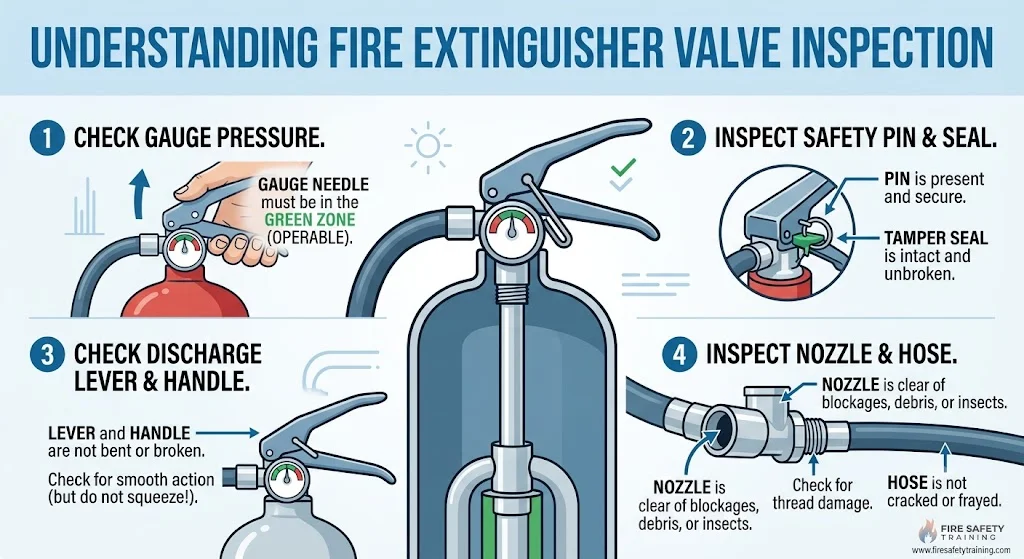
Step-by-Step Valve Inspection Process
1. Visual Check
The technician first looks for corrosion, cracks, dents, or discoloration around the valve body and threads.
2. Pressure Gauge Reading
The gauge needle should sit in the green zone. Anything in the red zones on either side points to a valve or seal problem.
3. Lever and Pin Function Test
The safety pin should pull out smoothly, and the lever should move freely without sticking or excessive resistance.
4. Seal and O-Ring Inspection
Rubber seals and O-rings inside the valve degrade with age and heat. Cracked or hardened seals are a common cause of slow leaks.
5. Discharge Test (When Required)
For extinguishers due for full servicing, technicians may perform a controlled discharge test to confirm the valve opens and closes as expected before the unit is refilled and resealed.
How Often Should Valves Be Inspected in Karachi
Karachi’s climate makes valve deterioration faster than in cooler, drier regions. Humidity accelerates corrosion, and dust from construction sites, warehouses, and roadside areas tends to work its way into moving parts over time. Because of this, a monthly visual check and a professional inspection at least once a year is recommended for most commercial properties. High-risk locations such as factories, kitchens, and fuel storage areas often need inspections every six months.
Why Professional Refilling Includes Valve Checks
Refilling an extinguisher isn’t just about topping up the powder or gas. A proper refill service always includes dismantling the valve assembly, cleaning it, checking the seals, and testing the discharge mechanism before the unit is repressurized. Skipping this step means you could end up with a freshly refilled extinguisher that still has the same faulty valve that caused problems before.
This is one of the biggest differences between a shortcut refill and a proper servicing job. A technician who only refills the cylinder without checking the valve is leaving the most important part of the extinguisher untested.
Common Valve Issues Seen in Karachi’s Climate
Technicians across Karachi commonly report a few recurring valve problems tied to local conditions. Salt-laden air near coastal areas speeds up corrosion on metal valve components. Dust from construction zones and industrial areas gets lodged in the discharge nozzle and lever mechanism. Extended exposure to direct sunlight and heat in rooftop storage or outdoor installations causes rubber seals to dry out and crack faster than expected. Recognizing these patterns helps property owners plan inspections around the seasons when risk is highest, particularly before and after Karachi’s humid summer months.
What Happens If a Faulty Valve Goes Unnoticed
The real danger of a bad valve isn’t during a routine check, it’s during an actual fire. An extinguisher that fails to discharge, or discharges weakly, wastes precious seconds when a small fire could still be contained. In commercial buildings, this can also lead to compliance failures during safety audits or insurance inspections, since a non-functional extinguisher counts the same as having no extinguisher at all.
Choosing the Right Service Provider in Karachi
When selecting a company for inspection and refilling, look for technicians who explain what they check rather than just handing back a refilled cylinder. A trustworthy provider will walk through the valve, gauge, seal, and hose condition, and will flag any unit that needs replacement rather than refilling. Proper documentation, a service tag with the inspection date, and clear pricing are also good indicators of a provider that takes valve inspection seriously.
Conclusion
Valve inspection is the part of fire extinguisher maintenance that’s easiest to overlook and most costly to ignore. In a city like Karachi, where heat, humidity, and dust all work against these small but critical components, regular checks make the difference between an extinguisher that works when needed and one that doesn’t. Scheduling routine fire extinguisher refilling in Karachi with a provider who inspects valves thoroughly is a simple step that protects both people and property.
Frequently Asked Questions
1. What is the main function of a fire extinguisher valve?
The valve controls the release of the extinguishing agent. It connects the pressure gauge, lever, and hose, and opens the pathway for the agent to discharge when the lever is squeezed.
2. How do I know if my fire extinguisher valve is faulty?
Common signs include a pressure gauge reading outside the green zone, a stiff or loose lever, visible corrosion or cracks around the valve, and powder leaking from the seal without the unit being used.
3. Can a fire extinguisher work with a damaged valve?
Not reliably. A damaged valve can prevent the extinguisher from discharging, cause a slow pressure leak, or release the agent unevenly, which reduces its effectiveness during a fire.
4. How often should fire extinguisher valves be inspected?
A monthly visual check is recommended for most properties, with a full professional inspection at least once a year. High-risk areas like kitchens and factories often need checks every six months.
5. Does refilling a fire extinguisher include valve inspection?
A proper refill service should always include dismantling and checking the valve assembly, seals, and discharge mechanism, not just topping up the powder or gas.
6. Why do fire extinguisher valves fail faster in Karachi?
Karachi’s humidity, coastal salt air, and dust accelerate corrosion and cause rubber seals to degrade faster than in drier climates, making regular inspection especially important.
7. What happens if a fire extinguisher valve leaks?
A leaking valve causes gradual pressure loss, which can leave the extinguisher unable to discharge properly when needed. The pressure gauge will typically show a reading below the green zone.
8. Can I inspect a fire extinguisher valve myself?
You can do a basic visual and gauge check yourself, but a full inspection involving seal condition and discharge testing should be handled by a trained technician.
9. How long does a valve inspection take during servicing?
A standard inspection usually takes a technician only a few minutes per unit, though a full service including cleaning, seal replacement, and refilling can take longer depending on the extinguisher type.
10. Is valve inspection required for fire safety compliance?
Yes. Most fire safety audits and insurance inspections require documented proof of regular extinguisher servicing, which includes valve function checks, not just a visual inspection of the cylinder.