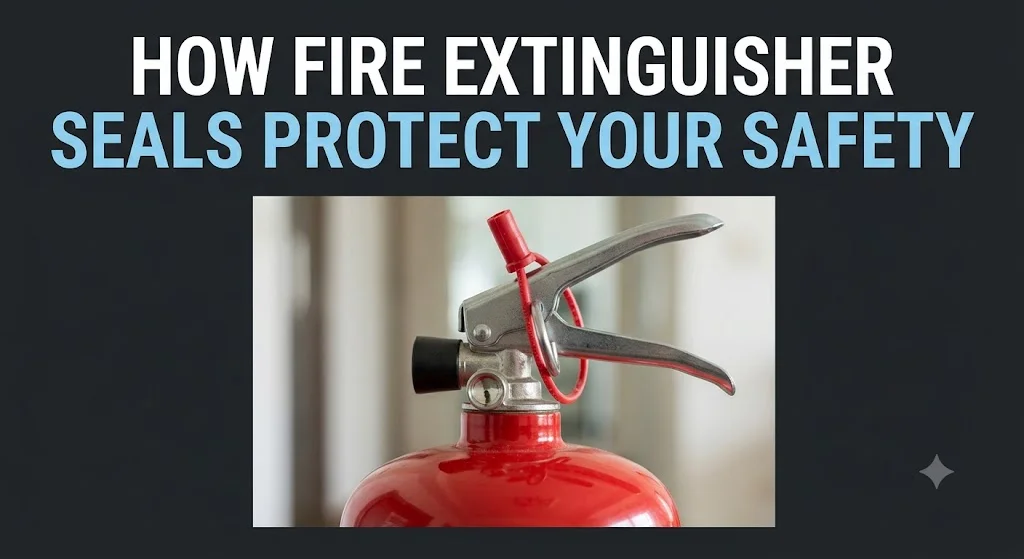
A fire extinguisher looks simple from the outside, but one of its smallest parts does one of its biggest jobs. The tamper seal, that thin plastic tag looped through the pin, quietly tells you whether the extinguisher is ready to work or not. Most people in Karachi walk past fire extinguishers every day, in offices, shops, factories, and apartment lobbies, without ever glancing at this small detail. Yet a broken, missing, or faded seal can mean the difference between an extinguisher that saves your property and one that fails the moment you need it most.
In this guide, we will explain what fire extinguisher seals actually do, why they matter so much for safety, and how they connect to regular servicing. If you manage a business or building in Karachi, understanding seals is the first step toward keeping your fire safety equipment truly ready.
What Is a Fire Extinguisher Seal?
Fire Safety Trading (Pvt)
ToggleThe seal is a small plastic or metal tag that passes through the safety pin at the top of the extinguisher. Its only job is to stop the pin from being pulled by accident. Once the pin is pulled and the extinguisher is used, even briefly, the seal breaks and cannot be reattached without a proper recharge.
Because of this, the seal acts as visible proof of use. A technician checking dozens of extinguishers across a building does not need to test each one physically. A quick glance at the seal tells them whether that unit has been triggered since its last inspection.
Why Seals Matter for Safety
Seals matter because they remove guesswork. An extinguisher can look completely normal from the outside, full gauge, clean body, correct mounting, and still be empty or partially discharged if it was used and never reported. The seal is what exposes this gap between appearance and reality.
- It confirms the extinguisher has not been triggered since its last check.
- It discourages accidental or playful pin-pulling, especially in busy commercial spaces.
- It gives inspectors and fire marshals an instant visual pass or fail indicator.
- It protects staff and tenants who rely on the equipment during a real emergency.
Without an intact seal, nobody, not the building owner, not the staff, not the fire safety officer, can be fully confident the extinguisher will discharge properly if a fire breaks out.
Signs a Seal Is Broken or Tampered
Not every damaged seal is obvious at first glance. Here are the common signs worth checking during a routine walkthrough:
- The plastic tag is snapped, cracked, or missing entirely.
- The pin is loose or sits at an odd angle inside the seal loop.
- The seal colour or printed batch number does not match your building’s current servicing record.
- There are scratch marks or bent wire around the pin area, suggesting someone tried to reset it manually.
Any of these signs should prompt an immediate inspection rather than being dismissed as normal wear and tear.
What Happens When a Seal Is Missing
A missing seal does not automatically mean the extinguisher is empty, but it does mean the unit cannot be trusted until it is checked. In a warehouse, restaurant kitchen, or crowded office in Karachi, this uncertainty is exactly what fire safety regulations try to eliminate. An extinguisher with a broken seal must be weighed, pressure tested, and, if needed, refilled before it goes back into service.
Skipping this step is one of the most common and most dangerous shortcuts businesses take. It saves a small amount of time now but creates a serious risk later, when the extinguisher is grabbed during an actual fire and turns out to be useless.
How Seals Connect to Fire Extinguisher Refilling in Karachi
Seals and refilling go hand in hand. Every time an extinguisher is opened for fire extinguisher refilling in Karachi, a fresh, numbered seal is fitted as part of the service. This is not just a formality, it is how technicians and building owners track exactly when each unit was last serviced and confirm that nobody has interfered with it since.
If you manage multiple extinguishers across different floors or branches, matching seal numbers against your service log is one of the fastest ways to spot which units are overdue. A mismatched or outdated seal number is often the first clue that an extinguisher needs attention before its scheduled annual check.
How Often Should Seals Be Checked
Seals should be part of your monthly visual inspection routine, not just the annual servicing visit. A quick check takes less than a minute per unit:
- Confirm the seal is intact and not cracked.
- Check that the pin sits straight and firmly in place.
- Compare the seal number to your maintenance log.
- Note the pressure gauge reading alongside the seal condition.
This habit costs almost nothing in time but catches problems long before an annual inspection would.
Fire Extinguisher Seal Types
Seals vary slightly depending on the extinguisher type and the servicing company, but most fall into a few common categories.
Plastic Pull-Tag Seals
The most common type in commercial and residential buildings across Karachi. Lightweight, colour coded by year, and easy to inspect visually.
Wire and Lead Seals
Used more often on industrial or older cylinders. These require slightly more force to break, which reduces accidental triggering in high traffic areas.
Numbered Security Seals
Increasingly used by professional servicing companies because each seal carries a unique number that ties directly to a service record, making tampering easy to detect.
Common Mistakes Businesses Make With Seals
- Assuming a full-looking gauge means the seal does not need checking.
- Reusing an old seal after a minor pin adjustment instead of calling a technician.
- Not recording seal numbers, making it impossible to confirm service history.
- Ignoring a broken seal because the extinguisher was never actually used.
- Waiting for the annual inspection instead of doing quick monthly seal checks.
Each of these mistakes is easy to avoid once seal checks become a normal part of building maintenance rather than an afterthought.
Seals and Compliance for Karachi Businesses
Fire safety compliance in Karachi increasingly depends on documentation, not just having extinguishers mounted on the wall. Auditors and insurance assessors often check seal condition and matching service records as part of their review. A building with intact, correctly numbered seals across all its extinguishers presents a much stronger compliance picture than one with mismatched or missing seals.
This matters for offices, factories, schools, hospitals, and residential communities alike. A small detail like a seal can directly affect how quickly a compliance audit is completed and how confident an insurer is in a building’s fire readiness.
Choosing a Reliable Refilling Service in Karachi
Since seals are replaced every time an extinguisher is serviced, the quality of your refilling provider matters more than most people realise. A reliable service will always fit a new, properly numbered seal, update your maintenance log, and explain the condition of each unit clearly rather than just handing it back.
For businesses and residential buildings across the city, working with an experienced provider for fire extinguisher refilling in Karachi ensures that every extinguisher leaves with a correct seal, an accurate weight check, and a clear service record you can rely on during an audit or emergency.
Final Thoughts
Fire extinguisher seals are small, inexpensive, and easy to overlook, yet they carry real weight in keeping people safe. A quick glance at a seal tells you far more than the extinguisher’s shiny exterior ever could. Building this check into your routine maintenance, alongside professional refilling and servicing, is one of the simplest ways to make sure your fire safety equipment will actually work when it matters most.
Frequently Asked Questions
1. What is the purpose of a fire extinguisher seal?
The seal prevents the safety pin from being pulled accidentally and shows whether the extinguisher has been used since its last inspection or service.
2. How do I know if my fire extinguisher seal is broken?
Look for a cracked, missing, or loose plastic tag around the pin. If the seal number does not match your service record, treat it as broken and have the unit checked.
3. Can I reseal a fire extinguisher myself?
No. Resealing without proper testing hides whether the unit still has adequate pressure. Only a qualified technician should reseal an extinguisher after inspection.
4. Does a broken seal mean the extinguisher is empty?
Not always, but it does mean the unit is unverified. It should be weighed and pressure checked before anyone assumes it is still fully charged.
5. How often should I check extinguisher seals in Karachi?
A monthly visual check is recommended, in addition to the standard annual professional servicing most Karachi businesses follow.
6. Are seal numbers important for fire safety compliance?
Yes. Numbered seals link directly to your maintenance log, making it easy to prove during an audit that every extinguisher has been serviced on schedule.
7. What should I do if I find a tampered seal?
Take the extinguisher out of service temporarily and arrange for inspection and, if needed, refilling before placing it back on the wall.
8. Does every extinguisher type use the same kind of seal?
No. Common types include plastic pull-tag seals, wire and lead seals, and numbered security seals, with the choice often depending on the extinguisher and the servicing provider.
9. Is a new seal fitted every time an extinguisher is refilled?
Yes. A fresh, uniquely numbered seal is standard practice after every refill so the service date and condition can be tracked accurately.
10. Who should I contact for fire extinguisher refilling in Karachi?
It is best to work with an established local provider experienced in fire extinguisher refilling in Karachi, so seals, pressure levels, and service records are all handled correctly in one visit.