Factories are essential to Pakistan’s industrial and economic development. They manufacture products, provide employment, support supply chains, and contribute to business growth. However, factory environments can contain several fire hazards, including electrical equipment, industrial machinery, combustible materials, chemicals, packaging, and heating processes.
A fire in a factory can put employees at risk, damage expensive machinery, destroy stock, interrupt production, and affect nearby properties. Even a small incident can become a serious emergency when hazards are not identified and managed properly.
Factory fire safety is therefore an important responsibility for business owners, managers, supervisors, and employees. It involves more than keeping fire extinguishers on site. A complete safety programme includes hazard identification, preventive maintenance, suitable fire detection, safe storage, employee training, emergency exits, and regular inspections.
For beginners, understanding where to start can seem difficult. A practical checklist makes the process easier by breaking fire safety into manageable responsibilities.
This guide explains the essential factory fire safety measures that businesses in Pakistan should consider. It covers common hazards, equipment maintenance, workplace organisation, employee awareness, emergency planning, and the importance of professional fire safety inspections.
## 1. Identify Common Fire Hazards in the Factory
The first step in factory fire safety is understanding what could cause a fire. Different industries have different risks, so every factory should have a safety assessment based on its activities, materials, machinery, and building layout.
### Electrical Equipment and Wiring
Factories often use motors, control panels, lighting systems, compressors, production machines, and other electrical equipment. Damaged wiring, unsuitable installations, overloaded circuits, and poorly maintained equipment can create fire hazards.
Electrical systems should be inspected by qualified professionals. Employees should report exposed cables, unusual smells, sparks, or repeated electrical interruptions instead of attempting repairs themselves.
### Industrial Machinery
Machines may generate heat during normal operation. Poor maintenance, damaged components, friction, and unsuitable operating conditions can increase the risk of overheating.
Factories should follow manufacturer maintenance recommendations and establish procedures for reporting equipment that behaves unusually.
### Combustible Materials
Many factories store materials such as paper, cardboard, wood, textiles, plastics, packaging, and other combustible products.
The quantity and location of these materials should be considered during fire risk assessments. Suitable storage arrangements and good housekeeping can help reduce unnecessary hazards.
### Chemicals and Flammable Liquids
Some industrial processes involve solvents, oils, paints, cleaning products, gases, and other chemicals.
Their hazards depend on their properties and intended use. Businesses should identify these materials, follow their safety data sheets, and arrange suitable storage and handling procedures.
## 2. Arrange a Professional Fire Risk Assessment
A fire risk assessment helps a business understand its hazards and determine which safety measures are needed.
It should consider the factory’s operations, building structure, number of employees, stored materials, machinery, and emergency arrangements.
### Identify Potential Ignition Sources
The assessment should consider electrical equipment, machinery, heating systems, maintenance activities, and other possible sources of ignition.
Activities involving heat or sparks should be managed through suitable authorised procedures and appropriate controls.
### Identify People Who May Be at Risk
Employees, contractors, visitors, cleaners, and delivery personnel may all be present inside a factory.
The assessment should consider workers who may need additional assistance during an evacuation, including people with mobility limitations or temporary injuries.
### Review Existing Safety Arrangements
Management should review the condition and suitability of fire alarms, extinguishers, emergency lighting, exits, signage, and other protective measures.
Any weaknesses should be recorded, assigned to responsible personnel, and addressed within an appropriate timeframe.
### Update the Assessment When Conditions Change
A factory’s risks may change when new machinery is installed, production processes are modified, storage areas expand, or building extensions are completed.
Fire risk assessments should be reviewed when significant changes occur.
## 3. Install a Suitable Fire Alarm System
Early warning is an important part of factory fire protection. A suitable fire detection and alarm arrangement can alert employees when signs of fire are detected.
A fire alarm system in Pakistan can support safety in factories, warehouses, offices, and other industrial buildings when it is properly designed, installed, and maintained.
### Choose Equipment According to Factory Requirements
Not every factory has the same layout or operating conditions. A production floor may contain dust, heat, airflow, high ceilings, or machinery that affects detector selection.
A qualified fire safety professional should assess the building and recommend a suitable system.
### Understand the Main Components
Depending on its design, a fire alarm system may include:
– Smoke detectors.
– Heat detectors.
– Manual call points.
– Alarm sounders.
– Visual warning devices.
– A fire alarm control panel.
– Power supply and backup arrangements.
Each component has a specific purpose within the overall system.
### Keep the Alarm System Maintained
Installing an alarm is only the beginning. The system should receive regular professional inspection and servicing according to manufacturer instructions and applicable requirements.
Faults, damaged components, and maintenance issues should be addressed promptly.
### Train Employees to Recognise Alarm Signals
Employees should know what the alarm sounds like and what they must do when it activates.
Training should explain that workers must follow the evacuation plan rather than investigating the source of an alarm themselves.
## 4. Maintain Electrical Systems and Equipment
Electrical safety is a major part of factory fire prevention. Electrical installations should be suitable for the building’s power requirements and maintained by qualified professionals.
### Arrange Regular Electrical Inspections
Professional inspections can help identify damaged wiring, unsuitable equipment, deteriorating components, and other electrical concerns.
The inspection schedule should reflect the factory’s equipment, operating conditions, and applicable requirements.
### Avoid Overloading Electrical Circuits
Adding machinery without reviewing electrical capacity can create unsafe conditions.
Before introducing new equipment, management should arrange a professional assessment to confirm that the electrical installation and protective devices are suitable.
### Do Not Ignore Repeated Breaker Trips
A circuit breaker that trips repeatedly may indicate an electrical fault or overloading.
Employees should report the problem. Protective devices must not be bypassed, and breakers should not be repeatedly reset without identifying the cause.
### Keep Electrical Areas Clear
Electrical distribution areas should remain accessible to authorised personnel. Do not store cardboard, packaging, cleaning materials, or other combustible items around electrical equipment.
Only qualified personnel should open or service electrical panels.
## 5. Keep the Factory Clean and Organised
Good housekeeping reduces the amount of unnecessary combustible material in the workplace and helps maintain clear access to emergency equipment.
A clean factory is also easier to inspect and manage.
### Remove Waste Regularly
Production waste, paper, cardboard, fabric scraps, packaging, and other discarded materials should be managed through a suitable waste-handling programme.
Waste should not be allowed to accumulate near machinery, electrical equipment, heating sources, or escape routes.
### Keep Walkways Clear
Employees should be able to move around the factory without unnecessary obstacles.
Corridors, stairways, emergency exits, and access routes should remain clear at all times.
### Maintain Storage Areas
Raw materials, finished goods, packaging, and other products should be stored in designated areas.
Storage arrangements should reflect the properties of the materials and should not obstruct emergency equipment or escape routes.
### Assign Housekeeping Responsibilities
Supervisors should ensure that employees understand their responsibility for maintaining organised work areas.
Regular checks can help identify waste accumulation, blocked exits, and unsuitable storage practices.
## 6. Store Chemicals and Flammable Materials Safely
Some factories use materials that require additional fire safety controls. These may include solvents, paints, oils, adhesives, cleaning products, and other chemicals.
The correct precautions depend on the specific material and its properties.
### Identify and Label Materials
Containers should have clear labels, and relevant safety information should be available to employees who handle them.
Unknown or unlabelled substances should be reported to responsible personnel rather than handled or mixed.
### Follow Safety Data Sheets
Safety data sheets provide important information about chemical hazards, storage requirements, handling precautions, and emergency measures.
Management should ensure that relevant employees receive suitable training and can access the necessary information.
### Use Designated Storage Areas
Chemicals and flammable materials should be stored in suitable areas that meet their specific safety requirements.
Storage arrangements should consider ventilation, separation, protection from unsuitable conditions, and access control where necessary.
### Train Employees
Workers who handle chemicals should receive appropriate instruction about safe storage, workplace procedures, spill reporting, and emergency response.
Untrained employees should not attempt to deal with chemical incidents independently.
## 7. Provide Suitable Fire Protection Equipment
Fire protection equipment helps support emergency response, but different products are designed for different hazards.
The equipment required in a factory should be determined through a professional fire risk assessment.
### Select Appropriate Fire Extinguishers
Factories may contain combustible materials, electrical equipment, machinery, and chemicals. The correct extinguisher depends on the potential fire hazards.
Extinguishers should be suitable for their locations, clearly identified, accessible, and maintained according to applicable requirements.
Only trained personnel should consider using an extinguisher, and only when the fire is small, an escape route remains clear, and it is safe to do so. Evacuation should always take priority over attempting to fight a developing fire.
### Maintain Fire Hydrants and Hose Reels
Some factories have hydrants and hose reels as part of their fire protection arrangements.
These systems require professional inspection and maintenance. Employees should understand their assigned responsibilities and should not be expected to operate equipment without appropriate training.
Water must not be used on electrical equipment that may still be energised.
### Keep Equipment Accessible
Fire extinguishers, alarm call points, hydrants, and other emergency equipment should not be blocked by stock, machinery, or packaging.
Suitable signs should help people identify equipment locations.
## 8. Make Emergency Exits and Escape Routes Safe
Every factory should have an evacuation plan that reflects its building layout and the number of people who may be present.
During an emergency, employees need clear routes that lead towards safe outdoor locations.
### Identify Suitable Exit Routes
Management should identify appropriate escape routes and make sure employees know how to use them.
Routes should remain clear of stored materials, machinery, and other obstacles.
### Maintain Exit Doors
Emergency exit doors should be maintained according to the building’s approved safety arrangements and applicable requirements.
They should not be obstructed or made difficult to use during an emergency.
### Install Emergency Lighting
Emergency lighting helps occupants identify escape routes if normal lighting fails.
The system should be suitable for the facility and professionally maintained.
### Display Clear Exit Signs
Exit signs and evacuation information should be placed where employees and visitors can understand the direction of travel.
Signs should remain visible and should not be hidden behind equipment or stored materials.
## 9. Train Employees in Fire Safety
Employees need to understand how to recognise fire hazards and what to do when an emergency occurs.
Training should be relevant to their work areas and responsibilities.
### Provide Basic Fire Safety Awareness
Employees should learn about common workplace hazards, alarm signals, reporting procedures, evacuation routes, and assembly points.
They should also understand that they must not touch damaged electrical equipment or investigate smoke and unusual smells.
### Train Supervisors and Safety Personnel
Designated safety personnel may have additional responsibilities for coordinating evacuation and communicating with emergency responders.
Their training should match their assigned roles and should not encourage untrained employees to take unnecessary firefighting risks.
### Include New Employees and Contractors
New employees should receive safety information before beginning work in production areas.
Contractors and visitors should also be informed about relevant alarms, restricted areas, and evacuation procedures.
### Use Understandable Training Materials
Safety information should be communicated in language employees can understand.
Pictures, clear signs, practical demonstrations, and short refresher sessions can support workplace learning.
## 10. Conduct Regular Fire Drills
A written evacuation plan is useful, but employees also need opportunities to practise following it.
Fire drills help workers become familiar with alarm signals, escape routes, and assembly points.
### Schedule Suitable Drills
Management should organise drills according to the factory’s risk profile, operational needs, and applicable requirements.
Drills should be planned carefully to avoid unnecessary disruption or additional workplace hazards.
### Practise an Organised Evacuation
Employees should practise stopping work safely where appropriate, leaving through designated routes, and moving towards assembly points.
They should not return to production areas to collect personal belongings.
### Account for Employees
Supervisors or designated personnel should have a process for checking attendance at assembly points.
Any missing person should be reported to emergency responders. Employees should never re-enter the building to search for someone.
### Review Drill Results
After each drill, management should identify any difficulties, such as blocked routes, unclear instructions, or problems with alarm audibility.
Corrective actions should be recorded and followed up.
## 11. Maintain Machinery and Production Areas
Factory machinery can create hazards when it is damaged, poorly maintained, or operated outside its intended conditions.
A planned maintenance programme helps reduce equipment-related risks.
### Follow Manufacturer Instructions
Machinery should be operated and maintained according to manufacturer recommendations.
Maintenance schedules should include relevant inspections, servicing, and replacement of unsuitable or damaged components.
### Report Unusual Operating Conditions
Employees should report unusual noise, unexpected heat, smoke, unusual smells, or changes in machine performance.
They should follow workplace procedures and avoid attempting unauthorised repairs.
### Manage Hot Work Activities
Some maintenance and production activities involve heat, sparks, or other ignition sources.
Factories should manage these activities through appropriate authorisation, risk assessment, trained personnel, and suitable safety controls.
### Keep Machinery Areas Organised
Waste and combustible materials should not accumulate around machines.
Cleaning and housekeeping arrangements should be suitable for the equipment and the materials involved.
## 12. Protect Visitors, Contractors, and Delivery Personnel
Factories often receive visitors, maintenance contractors, transport workers, and suppliers.
These people may not know the building layout or understand its emergency procedures.
### Provide Basic Safety Instructions
Visitors should receive relevant information about emergency alarms, restricted areas, evacuation routes, and assembly points.
### Manage Contractor Activities
Contractors should understand the facility’s safety requirements before carrying out maintenance or other work.
Activities that may introduce additional hazards should be managed through the factory’s authorised procedures.
### Keep Visitor Routes Clear
Where possible, visitors should use designated routes and avoid entering restricted production areas without permission and appropriate supervision.
## 13. Keep Fire Safety Records Updated
Good recordkeeping helps management monitor the condition of safety equipment and follow up on identified problems.
Records can also support internal reviews and demonstrate that maintenance responsibilities are being managed.
A factory fire safety file may include:
– Fire risk assessment reports.
– Electrical inspection records.
– Machinery maintenance documents.
– Fire alarm servicing reports.
– Fire extinguisher inspection records.
– Emergency lighting maintenance details.
– Employee training records.
– Fire drill reports.
– Corrective action records.
– Emergency contact information.
Records should be updated when inspections, repairs, or safety improvements are completed.
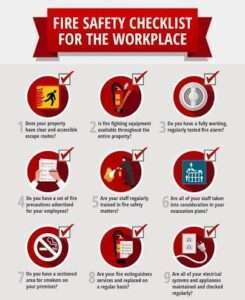
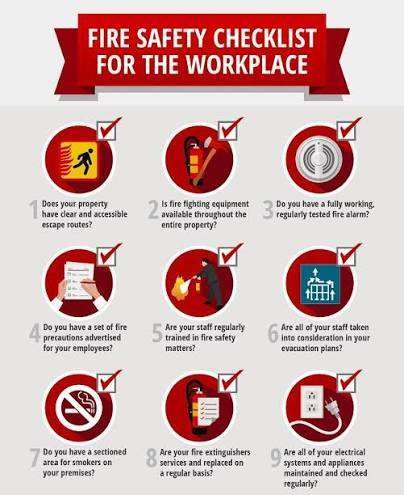
## 14. Create a Practical Factory Fire Safety Checklist
A simple checklist can help managers review the main areas of workplace fire safety.
<escape>**Factory fire safety checklist:**</escape>
– [ ] Identify common fire hazards throughout the facility.
– [ ] Arrange a professional fire risk assessment.
– [ ] Inspect electrical installations through qualified professionals.
– [ ] Maintain machinery according to manufacturer instructions.
– [ ] Keep production and storage areas clean.
– [ ] Remove waste and combustible materials appropriately.
– [ ] Store chemicals according to their safety requirements.
– [ ] Install suitable fire detection and alarm equipment.
– [ ] Arrange professional alarm system maintenance.
– [ ] Provide appropriate fire protection equipment.
– [ ] Keep emergency exits and walkways clear.
– [ ] Maintain emergency lighting and exit signs.
– [ ] Train employees and supervisors.
– [ ] Conduct suitable fire drills.
– [ ] Provide safety information to visitors and contractors.
– [ ] Keep inspection and maintenance records updated.
– [ ] Review safety arrangements whenever operations change.
This checklist provides a starting point, not a substitute for a detailed professional assessment. Every factory should adapt it to its specific activities and legal responsibilities.
## 15. Why Factory Fire Safety Is Important for Business Continuity
Fire safety is not only about meeting safety responsibilities. It also supports the long-term stabilit