Teaching children about fire safety is an important part of helping them understand how to stay safe at home, school, and in public places. One useful topic is learning that different types of fire extinguishers are designed for different kinds of fires.
However, children should understand one rule above all: their job during a fire is to alert an adult, leave the danger area, and get to safety—not to fight the fire. Fire extinguishers should only be handled by trained, responsible adults when it is safe and appropriate to do so.
In Pakistan, families and educational institutions can help children develop fire awareness through simple lessons, age-appropriate explanations, and supervised safety activities. Children do not need advanced technical knowledge. They should learn what extinguishers are, why different types exist, and why choosing the right equipment matters.
This guide explains the main types of fire extinguishers in plain English and offers practical ways to teach children about them safely.
1. What Is a Fire Extinguisher?
A fire extinguisher is a portable safety device designed to control certain small fires. It contains an extinguishing agent that helps stop or control a fire under suitable conditions.
Fire extinguishers are commonly found in:
– Homes and apartment buildings.
– Schools and colleges.
– Offices and commercial buildings.
– Hospitals and healthcare facilities.
– Restaurants and hotels.
– Factories and warehouses.
– Shopping centres and public buildings.
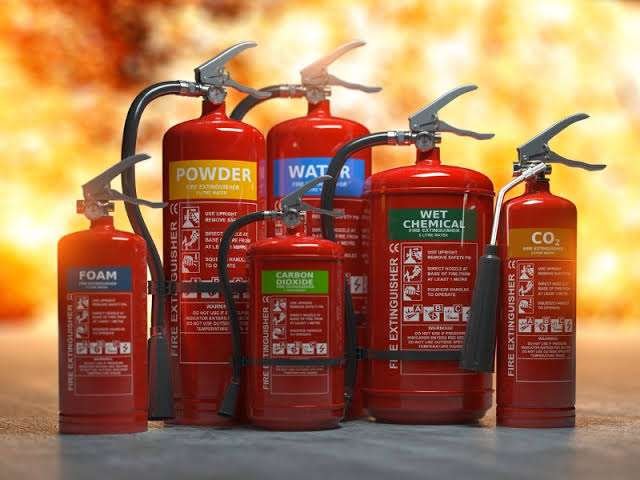
Although extinguishers may look similar, they do not all contain the same material. Some use water, while others contain foam, dry chemical powder, carbon dioxide, or specialised agents.
Children should learn that an extinguisher is not a toy or a general-purpose household object. It should remain in its designated location, be maintained properly, and only be used by trained adults when conditions allow.
2. Why Should Kids Learn About Fire Extinguisher Types?
Children may see fire extinguishers in classrooms, corridors, shopping centres, or other public places. Explaining their purpose can help children recognise safety equipment and understand why it is present.
There are several benefits to teaching this subject.
It Builds Fire Safety Awareness
Children learn that different emergencies require different responses. They also begin to recognise that fire safety involves prevention, detection, evacuation, and suitable equipment.
It Helps Children Understand Warning Signs
Children can learn to recognise fire alarm sounds, emergency exit signs, and designated assembly points.
It Encourages Responsible Behaviour
A basic lesson can explain why extinguishers should never be touched, moved, or played with without an authorised adult.
It Reduces Confusion
Children who understand the purpose of safety equipment may feel more prepared to follow instructions during an emergency.
It Supports School Safety Education
Teachers can include extinguisher awareness in wider lessons about emergency planning, safe behaviour, and evacuation procedures.
The aim is not to turn children into firefighters. It is to help them understand safety equipment and make sensible decisions during an emergency.
3. First Understand the Different Classes of Fire
Before explaining extinguisher types, children can learn that fires may involve different materials. The type of material burning helps determine which extinguishing agent is suitable.
Fire classifications can differ between standards and countries. In Pakistan, some safety references use a classification that includes Class C for gases and Class E for electrical fires. Other international systems use different labels, including Class C for electrical fires and Class K or F for cooking oils and fats.
For this reason, children should not be expected to memorise every technical classification. Adults responsible for fire safety should always check the extinguisher’s actual label and applicable standards.
The following examples introduce the main hazards in simple terms.
Class A: Ordinary Solid Materials
These fires involve materials such as:
– Paper.
– Wood.
– Cloth.
– Cardboard.
– Some types of plastic.
Children may recognise these materials from classrooms, furniture, books, and household objects.
Class B: Flammable Liquids
These fires involve flammable liquids such as petrol, diesel, paint, and certain oils.
Children should understand that these materials can be dangerous and must never be handled or experimented with.
Class C: Gases in Some Classification Systems
Some standards use Class C for fires involving flammable gases, including LPG and natural gas.
Children should be taught to stay away from gas appliances if they suspect a problem and immediately inform an adult.
Class D: Combustible Metals
These fires involve certain metals that can burn under specific conditions. They are more commonly associated with specialised industrial environments.
This is an advanced topic for children. A simple explanation that some workplace fires require specialised equipment is enough.
Electrical Fires
Electrical equipment, wiring, and appliances can be involved in fires. Some classification systems identify these separately, while others use a different class label.
Children should never touch damaged electrical equipment or attempt to investigate an electrical fire.
Cooking Oil and Fat Fires
Commercial kitchens and household cooking areas can involve hot cooking oils and fats. These fires require suitable protection equipment and should never be approached by children.
4. Main Types of Fire Extinguishers
Children can learn the names and general purposes of common extinguisher types. The explanation should remain educational and should not include instructions for operating them.
1. Water Fire Extinguishers
<text> </text>
Water extinguishers are generally intended for fires involving ordinary solid materials, such as paper, wood, and textiles.
Water helps cool the burning material. These extinguishers are commonly associated with suitable Class A fire hazards.
Simple explanation for children: A water extinguisher is designed for certain fires involving solid materials, but it is not suitable for every fire.
Children must understand that water should never be thrown on a fire involving electricity or flammable liquids. They should leave the area and alert an adult.
2. Foam Fire Extinguishers
Foam extinguishers are designed for certain fires involving ordinary solid materials and flammable liquids, depending on their rating and manufacturer specifications.
The foam forms a covering over the burning material or liquid, helping control the fire.
Simple explanation for children: Foam extinguishers contain a special material that helps cover certain types of fires.
Children should not try to identify a fire and select an extinguisher themselves. That responsibility belongs to trained adults.
3. Dry Chemical Powder Extinguishers
Dry chemical powder extinguishers contain a specially formulated powder. Different versions are designed for different fire classifications.
For example, an ABC-rated powder extinguisher is designed for specified ordinary-material, flammable-liquid, and gas-related hazards under the relevant classification system.
Not every powder extinguisher has the same rating. Its label must be checked before it is assigned to a particular area.
Simple explanation for children: Some extinguishers contain a special powder that is designed to control several types of fires.
These extinguishers may be found in commercial and industrial buildings, but children should never attempt to handle them.
4. Carbon Dioxide (CO2) Extinguishers
Carbon dioxide extinguishers contain pressurised carbon dioxide gas. They are commonly associated with certain flammable-liquid and electrical-equipment fire risks, subject to their rating and local requirements.
They are often used in areas containing electrical equipment, such as offices and some technical facilities.
Simple explanation for children: A CO2 extinguisher contains a special gas used for certain fire risks, including some involving electrical equipment.
Children should know that the presence of a CO2 extinguisher does not mean they should approach an electrical fire.
5. Wet Chemical Extinguishers
Wet chemical extinguishers are designed for certain cooking oil and fat fire hazards, particularly in commercial kitchens. Some products may also carry additional ratings.
They are important in environments where cooking equipment creates specific fire risks.
Simple explanation for children: A wet chemical extinguisher is special equipment used for certain kitchen fire risks.
Children should be taught never to pour water onto burning cooking oil or try to handle a kitchen fire. They should move away and call an adult.
6. Specialised Dry Powder Extinguishers for Metal Fires
Some industrial environments work with combustible metals. These materials require specialised extinguishing agents.
Class D extinguishers are designed for particular metal-fire hazards. The agent must match the metal involved.
Simple explanation for children: Some factories work with special metals that need special fire-safety equipment.
This type of extinguisher is not a normal household safety item and should be handled only by trained personnel.
5. How to Teach Kids About Extinguisher Types Safely
Children learn best when information is simple, visual, and appropriate for their age.
Use Pictures and Labels
Teachers and parents can show children pictures of different extinguisher types and explain their general purpose.
The lesson should focus on recognising safety equipment rather than teaching children how to operate it.
Use Simple Examples
Explain that paper, furniture, electrical equipment, cooking oil, and industrial materials can create different fire risks.
Use familiar examples without creating a real fire or demonstrating dangerous situations.
Explain the Important Safety Rule
Repeat a simple message:
If you see fire or hear an emergency alarm, tell an adult, leave the area, and go to the agreed safe meeting place.
Children should not return to collect belongings or attempt to use firefighting equipment.
Make Learning Interactive
A teacher can ask children to identify safety signs, locate marked exits from a safe classroom setting, or explain why emergency equipment should not be touched.
These activities help children remember important information without exposing them to hazards.
Involve Parents and Guardians
Families can discuss their home emergency plan, identify safe ways to leave the building, and agree on a meeting point outside.
Children should know which adults they can contact if they notice a safety problem.
6. Teaching Children About Fire Safety at School
Schools have an important responsibility to provide a safe learning environment. Fire safety education should be part of a wider school preparedness programme.
Teachers can introduce children to:
– The purpose of fire extinguishers.
– The meaning of common fire-safety signs.
– Fire alarm sounds and school announcements.
– Emergency exits and evacuation routes.
– Designated outdoor assembly points.
– The importance of following teacher instructions.
– How to report a fire or suspected hazard.
Schools should ensure that fire extinguishers remain accessible to authorised adults and that equipment is inspected and maintained.
The National Disaster Management Authority’s Pakistan School Safety Framework highlights the importance of school fire-safety assessments, available safety equipment, awareness training, and regular fire drills.
A school should plan drills carefully and explain their purpose to students. Children should follow staff instructions and avoid running, pushing, or returning to classrooms during an evacuation.
7. The Role of Parents in Fire Safety Education
Parents and guardians can reinforce school lessons by discussing fire safety at home.
A few simple habits can make these conversations useful.
Identify Safe Exits
Explain which doors or routes the family should use in an emergency. Children should understand that the safest route may depend on where the danger is located.
Agree on a Meeting Point
Choose a safe location outside the home where family members can gather after leaving.
Explain Emergency Contacts
Children should know how to contact a trusted adult and how to seek emergency assistance when appropriate for their age.
Keep Safety Equipment Accessible
Adults should ensure that extinguishers and other safety equipment are properly installed, maintained, and accessible to authorised users.
Children should not move or play with this equipment.
Encourage Children to Report Hazards
If a child notices damaged electrical equipment, an unusual smell, smoke, or another possible hazard, they should tell a responsible adult immediately.
8. Fire Alarm Systems and Children’s Safety
Fire extinguishers are only one part of a complete fire-safety arrangement. Early warning and safe evacuation are equally important.
A fire alarm system can alert building occupants when connected detection devices identify a fire-related condition. Depending on the design, it may include smoke detectors, heat detectors, manual call points, sounders, and a control panel.
Children should learn what the school’s or home’s alarm sounds like and understand that an alarm means they must follow the emergency procedure.
A properly selected fire alarm system in Pakistan should reflect the building’s size, layout, occupancy, and applicable safety requirements. Its installation and maintenance should be managed by competent professionals.
For children, the most important lessons are straightforward:
– Never ignore an alarm.
– Follow the teacher’s or responsible adult’s instructions.
– Leave through the designated safe route.
– Do not stop to collect personal belongings.
– Go to the assembly point.
– Do not re-enter until authorised adults say it is safe.
9. Common Mistakes to Avoid When Teaching Kids
Fire safety lessons should be clear, calm, and age-appropriate. Some teaching mistakes can create confusion.
Giving Children Too Much Technical Information
Children do not need to memorise chemical contents, pressure ratings, or detailed extinguisher specifications.
Focus on the basic purpose of each type and the importance of adult supervision.
Encouraging Children to Use Extinguishers
Children should not be trained or encouraged to fight fires. Their emergency responsibility is to alert an adult and evacuate.
Using Real Fire for Demonstrations
Never create a fire to demonstrate how an extinguisher works in a classroom or home activity.
Any practical equipment demonstration should be organised for appropriate adult participants by qualified instructors in a controlled professional setting.
Forgetting About Evacuation
Knowing the names of extinguisher types is not enough. Children must understand how to leave safely and where to go.
Making Lessons Frightening
Fire safety education should be serious but reassuring. Avoid frightening stories or graphic descriptions. Explain that preparation and following instructions help people stay safer.
10. Creating a Simple Fire Safety Learning Plan
Parents and teachers can organise a short learning programme around a few basic topics.
Lesson 1: Recognising Fire-Safety Equipment
Show pictures of water, foam, powder, CO2, and wet chemical extinguishers. Explain that each type has a specific purpose.
Lesson 2: Understanding Fire Risks
Discuss familiar examples such as paper, electrical appliances, cooking equipment, and heating devices. Explain that children should never experiment with these hazards.
Lesson 3: Recognising Alarms and Signs
Show children what common alarm and exit signs look like. Explain the meaning of the school’s or home’s emergency signals.
Lesson 4: Learning the Evacuation Plan
Explain the safe exit route, assembly point, and importance of following adult instructions.
Lesson 5: Reviewing What They Have Learned
Ask simple questions, such as:
– What should you do when you see smoke?
– Should you touch a fire extinguisher without permission?
– What does a fire alarm tell you?
– Where should you go after leaving the building?
– Should you return inside to collect your schoolbag?
These questions help children remember the most important safety messages.
11. Why Adults Must Select and Maintain the Right Extinguishers
Choosing an extinguisher is a responsibility for building owners, parents, school management, and qualified fire-safety professionals.
The selection should consider the materials and activities present in the building, the likely fire hazards, the equipment nearby, and applicable safety requirements.
Pakistan’s Building Code of Pakistan – Fire Safety Provisions 2016 explains that extinguisher selection should be based on the hazards present and the fire classifications the equipment is designed to address.
Adults should check product labels, ratings, manufacturer instructions, service history, and maintenance requirements. An extinguisher that cannot be properly serviced should not remain in service.
A building also needs more than portable extinguishers. Depending on its requirements, a complete safety arrangement may include alarm and detection systems, emergency exits, evacuation plans, emergency lighting, and other firefighting provisions.
Conclusion
Teaching kids about types of fire extinguishers helps them understand an important part of fire safety. Water, foam, dry chemical powder, carbon dioxide, wet chemical, and specialised powder extinguishers are designed for different hazards.
Children should learn their general purposes without being encouraged to handle them. Their priority during an emergency is to alert a responsible adult, evacuate safely, and reach the agreed meeting point.
Parents, teachers, and school administrators can make fire safety education more effective through simple explanations, pictures, supervised awareness activities, and regular evacuation practice.
A complete fire-safety approach combines suitable equipment, a reliable fire alarm system in Pakistan, professional maintenance, and clear emergency procedures. Most importantly, children should know that staying away from danger and following trusted adults’ instructions are the safest actions they can take.
Frequently Asked Questions
1. What are the main types of fire extinguishers children should know about?
Children can learn the names and general purposes of water, foam, dry chemical powder, carbon dioxide, wet chemical, and specialised metal-fire extinguishers. They should not attempt to operate any of them.
2. Why are there different types of fire extinguishers?
Different fires involve different materials, such as paper, wood, flammable liquids, gases, electrical equipment, or cooking oils. Each extinguisher is designed for particular hazards, so selecting the correct type is important.
3. Should children learn how to use a fire extinguisher?
Children should learn what extinguishers are and why they are important, but they should not be expected to fight fires. Their responsibility is to alert an adult, leave the danger area, and reach safety.
4. How can parents teach children about fire safety at home?
Parents can explain alarm signals, identify safe exits, agree on an outdoor meeting point, and teach children to report hazards to an adult. Pictures and simple discussions can make lessons easier to understand.
5. Why is a fire alarm system important in schools?
A fire alarm system can warn students and staff about a possible emergency. When combined with clear evacuation procedures and regular safety education, it helps occupants understand when to leave and where to go.