Fire safety is an important consideration for every home, office, commercial building, school, restaurant, and industrial facility. Fires can develop unexpectedly, making it essential to have suitable safety equipment and a clear emergency plan. While fire alarms, smoke detectors, extinguishers, and sprinkler systems are widely recognized, fire blankets are another useful fire safety product that deserves attention.
A fire blanket is a specially designed safety sheet made from fire-resistant materials. It is intended for certain small, contained fires and specific emergency situations. Fire blankets are commonly associated with kitchen safety because cooking-related incidents can involve burning food or cooking oil. They may also be provided in workshops, laboratories, staff kitchens, and other suitable locations.
However, like every safety product, fire blankets have advantages and limitations. They are not suitable for every type of fire, and using one incorrectly can create additional risks. Understanding when a fire blanket may be useful—and when people should evacuate instead—is essential.
In Pakistan, where homes, restaurants, factories, offices, and commercial buildings have different fire safety requirements, fire blankets can form part of a wider protection strategy. They should complement, rather than replace, appropriate detection equipment, alarms, extinguishers, and emergency procedures.
This guide explains the major pros and cons of fire blankets, their common applications, important limitations, and the factors to consider when selecting one.
What Is a Fire Blanket?
A fire blanket is a flexible sheet made from fire-resistant material, often designed to help cover a small fire. Many products use woven fibreglass fabric or other materials suitable for their intended safety application.
The purpose of an appropriate fire blanket is to help isolate a small, contained fire from the surrounding air. This can interrupt the conditions needed to sustain combustion.
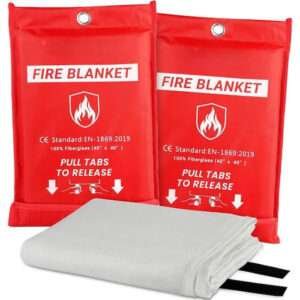
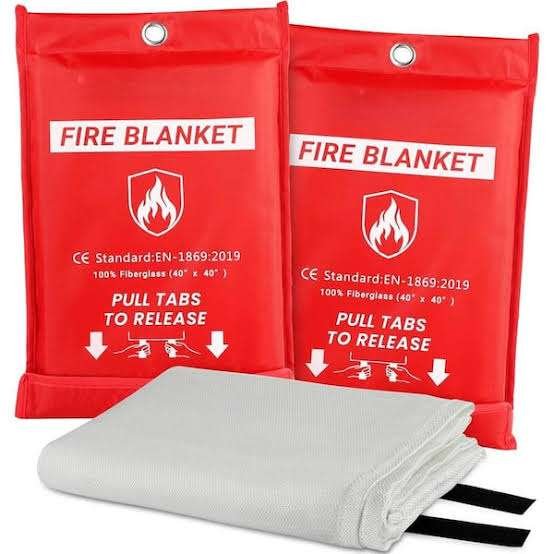
Fire blankets are often supplied in protective pouches or containers. Some designs include visible pull tabs so the blanket can be removed from its storage package.
They are generally intended for specific small-fire situations, such as certain cooking incidents or emergencies involving clothing. The product label and manufacturer’s instructions determine the situations for which a particular blanket is suitable.
A fire blanket is not a universal firefighting product. It cannot safely control every fire, particularly fires that are spreading, involve hazardous materials, or occur in large areas.
How Does a Fire Blanket Work?
Fire needs suitable conditions to continue burning. These generally include heat, fuel, and oxygen. Some fire blankets are designed to cover a small, contained fire and reduce its access to oxygen.
When used in an appropriate situation, the blanket may help interrupt the burning process. Its effectiveness depends on the type and size of the fire, the material being burned, the blanket’s specifications, and whether it can be used safely.
Fire blankets are not designed to cool every burning material or eliminate all possible sources of ignition. A fire may continue or reignite if the underlying heat source or fuel remains.
This is why following the manufacturer’s instructions is important. If a fire is not immediately contained, is spreading, or creates a dangerous amount of smoke or heat, people should leave the area and contact emergency services from a safe location.
Pros of Fire Blankets
Fire blankets offer several advantages when they are selected correctly and used within their intended applications. The following benefits explain why they are included in many fire safety arrangements.
1. Simple and Convenient Design
One of the biggest advantages of a fire blanket is its relatively simple design. Unlike some fire protection equipment, it does not depend on a pressurized cylinder or complicated mechanical parts.
Many fire blankets are stored in compact pouches that can be mounted in an accessible location. This makes them suitable for kitchens, staff areas, workshops, and other places where a suitable product may be needed.
Their straightforward design can also make them easier to understand during safety training. People can become familiar with the product’s storage location, purpose, and limitations before an emergency occurs.
However, simplicity does not mean that everyone should use a fire blanket in every situation. Proper training and an assessment of the emergency remain important.
2. Useful for Certain Small Cooking Fires
Kitchen fires are a common concern in residential and commercial environments. Cooking equipment, hot surfaces, and combustible materials can create fire risks when safety precautions are ignored.
An appropriately rated fire blanket may be suitable for certain small, contained cooking fires, depending on the manufacturer’s instructions.
This makes fire blankets a useful consideration for:
– Residential kitchens.
– Restaurant preparation areas.
– Hotel kitchens.
– Office staff kitchens.
– Cafeterias.
– Certain food preparation facilities.
However, cooking oil and deep-fat fryer fires require particular caution. A fire blanket should only be used if the specific product is approved for that application and the situation is safe enough to approach. Never use water on a cooking oil fire.
If flames are spreading, smoke is building, or the fire is beyond immediate safe control, occupants should evacuate instead of attempting to fight it.
3. Compact Storage Requirements
Many fire blankets are lightweight and packaged in relatively small containers. They can therefore be easier to accommodate in locations where space is limited.
For example, a small office kitchen may not have enough wall space for several large safety products. A suitable fire blanket can provide an additional safety option without taking up a large storage area.
Compact packaging also makes it possible to include fire blankets in carefully planned safety stations.
Despite their small size, fire blankets should not be hidden inside locked cupboards, placed behind heavy objects, or stored where access could become difficult.
4. No Pressurized Discharge
Many common fire extinguishers use pressurized contents that are discharged through a nozzle. Fire blankets work differently and do not require a pressurized discharge mechanism.
This means there is no extinguisher-style spray or discharge cloud associated with the blanket itself.
For some suitable small-fire situations, this can be an advantage. It may also reduce concerns about cleaning up discharged extinguishing agents, although the fire itself can still cause smoke, heat, and property damage.
It is important to remember that the absence of a pressurized discharge does not make a fire blanket risk-free. Approaching a fire always involves potential exposure to heat and smoke.
5. Can Support Clothing Fire Emergencies
Some fire blankets are designed for use in certain clothing-related fire emergencies. Their purpose is to help smother flames on clothing when the product instructions and circumstances allow.
This can be an important consideration in workplaces, laboratories, and other environments where specific clothing fire risks have been assessed.
However, people should never assume that every fire blanket is suitable for every clothing emergency. Product specifications and safety training should guide its use.
If a person is affected by a fire emergency, immediate assistance and appropriate medical care are important. Emergency services should be contacted when needed.
6. Can Be Part of a Wider Fire Safety Plan
Fire blankets are most useful when they are included in a broader fire safety arrangement.
A building may have smoke detectors, manual alarm call points, fire extinguishers, emergency exits, and evacuation procedures. A suitable fire blanket can provide an additional protective option for certain small fires.
For example, a restaurant may assess its kitchen risks and decide that a fire blanket is appropriate alongside other suitable equipment. It should not be treated as a replacement for professional fire protection systems.
A complete safety plan also includes staff awareness, equipment inspections, maintenance, and emergency drills.
7. Relatively Straightforward to Inspect
Many fire blankets have simple construction and do not require the same type of servicing as some complex mechanical systems.
Nevertheless, they still need routine checks. Their protective packaging should remain intact, the product should be accessible, and the blanket should not show signs of damage, contamination, or deterioration.
Inspection requirements should follow the manufacturer’s instructions and any applicable local safety requirements.
Cons of Fire Blankets
Although fire blankets offer useful benefits, they also have limitations. Understanding these disadvantages helps prevent people from depending on them in situations where they are unsuitable.
1. Not Suitable for Every Type of Fire
The biggest limitation of a fire blanket is that it cannot be used for every fire.
Different fires involve different fuels and hazards. A blanket suitable for a small cooking fire may not be appropriate for an electrical installation fire, a chemical fire, or a large industrial incident.
For example, fires involving flammable liquids, gases, reactive materials, or electrical equipment require specific risk assessments and suitable firefighting arrangements.
The product’s approved applications should always be checked before it is purchased or installed.
A fire blanket should never be considered a substitute for a suitable fire extinguisher or a properly designed fire protection system.
2. Limited to Certain Small and Contained Fires
Fire blankets are generally intended for small, contained incidents. They are not designed to control a fire that has spread across a room or building.
A growing fire can produce intense heat and dangerous smoke. Attempting to approach it with a blanket can expose a person to serious danger.
This limitation is especially important in restaurants, factories, warehouses, and commercial kitchens, where fires may involve multiple materials and larger areas.
If the fire is spreading or cannot be approached safely, the correct priority is evacuation and contacting emergency services.
3. Incorrect Use Can Create Additional Risks
A fire blanket may be simple in appearance, but incorrect use can make an emergency more dangerous.
For example, a person may approach a fire that is already too large, use a product that is not suitable for the burning material, or misunderstand the manufacturer’s instructions.
People should not experiment with fire blankets or attempt to learn their use during an actual emergency.
Training should take place beforehand under appropriate supervision. It should cover the product’s approved applications, limitations, and the circumstances in which evacuation is the only safe option.
4. Does Not Remove the Source of Heat
A fire blanket may help interrupt combustion in an appropriate small-fire situation, but it does not necessarily remove the underlying heat source.
Some materials can remain hot after visible flames have disappeared. Under certain conditions, the fire may restart.
This means that people should not assume an incident is completely safe simply because flames are no longer visible.
Follow the product instructions and emergency guidance. Do not handle hot materials or uncover a potentially burning area unnecessarily. If there is any uncertainty, keep away and seek professional assistance.
5. Requires Accessible Placement
A fire blanket is only useful if people can identify and access it when needed.
If it is stored inside a locked cabinet, hidden behind equipment, or placed too far from the intended risk area, it may not provide the expected benefit.
At the same time, it should not be positioned so close to a likely fire source that people would have to approach danger to reach it.
A qualified fire safety professional can help determine suitable storage locations based on the building layout and risk assessment.
6. Quality Can Vary Between Products
Not every fire blanket available in the market has the same specifications, materials, or certification.
Poor-quality products may not meet the requirements needed for their advertised applications. This can create a false sense of security.
Buyers should check product documentation, relevant test standards, manufacturer information, and the intended use of the blanket.
For commercial and industrial settings, purchasing decisions should follow the organization’s fire risk assessment and applicable safety requirements.
7. May Need Replacement After Use or Damage
A fire blanket should not automatically be considered reusable after an emergency.
Depending on the product, exposure to flames, high temperatures, contamination, or physical damage may affect its suitability for future use.
The manufacturer’s instructions should explain whether a used blanket must be discarded or can be inspected by an authorized service provider.
Damaged packaging or a blanket showing signs of deterioration should also be assessed and replaced when required.
Where Are Fire Blankets Commonly Used?
Fire blankets may be appropriate in different environments, depending on the risks and the product’s specifications.
Residential Kitchens
Homes may keep a suitable fire blanket as part of their kitchen safety arrangements. It should be stored in an accessible location and kept away from areas where a fire could block access.
Families should also understand that evacuation is more important than attempting to control a fire that is spreading.
Restaurants and Commercial Kitchens
Restaurants use cooking equipment, hot surfaces, and oils that can create fire hazards. A fire risk assessment can help determine whether fire blankets are appropriate alongside other required protection equipment.
Staff should receive suitable safety training and understand the emergency procedures for kitchen incidents.
Schools and Educational Facilities
Some educational environments may use fire blankets in supervised practical areas, such as certain laboratories or food preparation rooms.
The selection and placement of equipment should be based on the risks of each area. Students should not be encouraged to handle firefighting equipment without appropriate supervision.
Workshops and Laboratories
Workshops and laboratories may contain specialized materials and equipment. A fire blanket should only be included when it is suitable for the hazards identified through a professional risk assessment.
Offices and Staff Areas
Office kitchens and designated staff facilities may benefit from suitable fire safety equipment. The building’s wider arrangements should also include alarms, marked exits, emergency lighting where required, and evacuation procedures.
Fire Blankets vs. Fire Extinguishers: Understanding the Difference
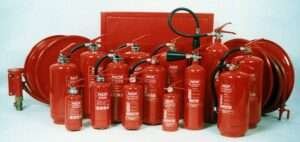
Fire blankets and fire extinguishers are different types of fire safety equipment. They should not be viewed as interchangeable products.
Feature| Fire Blanket| Fire Extinguisher
Design| Flexible fire-resistant sheet| Pressurized firefighting device
Common application| Certain small, contained fires| Specific fire classes, depending on type
Storage| Usually a compact pouch or container| Usually a mounted cylinder
Operation| Used according to product instructions| Requires suitable training and correct selection
Limitations| Not suitable for every fire| Not every extinguisher is suitable for every fire
The appropriate equipment depends on the fire risks present. A qualified professional can help identify which products are suitable for a particular building.
How to Choose a Suitable Fire Blanket
Selecting a fire blanket requires attention to quality, intended use, and storage arrangements.
Check Product Specifications
Review the manufacturer’s documentation to understand the blanket’s materials, size, approved applications, and limitations.
Look for Relevant Standards
Choose products that meet applicable recognized safety standards. Ask the supplier for supporting documentation rather than relying only on marketing descriptions.
Consider the Intended Location
A blanket for a residential kitchen may have different requirements from one intended for a commercial or industrial environment.
Check Packaging and Accessibility
The storage pouch should be durable and clearly identifiable. It should also allow the product to be accessed according to the manufacturer’s instructions.
Purchase From a Reliable Supplier
Buyers should look for suppliers who can provide clear product information, technical specifications, and suitable after-sales support.
Fire Blanket Maintenance and Inspection
Even a simple safety product needs attention. Regular inspections help ensure that a fire blanket remains available and suitable for its intended purpose.
A basic inspection routine should include:
– Checking that the blanket is stored in its designated location.
– Confirming that the pouch or container is intact.
– Looking for visible signs of damage or deterioration.
– Ensuring that the product label and instructions remain readable.
– Checking that nearby objects do not block access.
– Reviewing the manufacturer’s inspection and replacement guidance.
Organizations should keep records of relevant safety inspections. If a blanket has been used, damaged, or exposed to conditions that may affect its performance, it should be assessed according to the manufacturer’s instructions.
Fire Safety in Pakistan: Why a Complete Approach Matters
Homes and workplaces across Pakistan have different fire safety needs. Residential buildings may focus on kitchen and electrical risks, while factories and warehouses may need more extensive protection because of machinery, storage materials, and building size.
A fire blanket can provide an additional safety option in suitable locations, but it should never be the only fire protection measure.
A complete fire safety plan may include:
– Smoke and heat detection equipment.
– A suitable fire alarm system.
– Correctly selected fire extinguishers.
– Fire blankets where appropriate.
– Clearly marked emergency exits.
– Emergency lighting where required.
– Evacuation plans and assembly points.
– Staff awareness and safety training.
– Regular equipment inspections.
A properly selected fire alarm system in Pakistan can help notify occupants about a potential emergency. When combined with suitable signage, evacuation procedures, and other safety equipment, it supports a more organized response.
Building owners and managers should consult qualified fire safety professionals to identify the right arrangements for their premises. They should also consider applicable local regulations and recognized fire safety standards.
Conclusion
Fire blankets can be a valuable addition to fire safety arrangements when they are selected and used for their intended applications. Their compact design, convenient storage, and suitability for certain small, contained fires make them useful in some homes, kitchens, workplaces, and educational facilities.
However, they also have important limitations. They are not suitable for every type of fire, cannot control large or spreading incidents, and may create additional risks if used incorrectly. Product quality, correct storage, inspection, and user awareness are all important considerations.
The most effective approach is to treat fire blankets as one part of a complete fire safety plan. Appropriate alarms, extinguishers, emergency exits, training, and evacuation procedures remain essential.
Understanding both the advantages and disadvantages o