Fire safety training is an important part of protecting people, buildings, equipment, and businesses. Fires can start unexpectedly because of electrical faults, cooking accidents, gas-related hazards, faulty machinery, or unsafe storage practices. When people do not know how to respond, confusion and delays can make an emergency more difficult to manage.
Fire safety training helps individuals recognise hazards, understand warning signals, follow evacuation procedures, and use safety equipment appropriately. It is useful in offices, factories, schools, hospitals, warehouses, apartment buildings, shopping centres, and residential properties.
In Pakistan, improving fire safety awareness is particularly important for organisations that use electrical equipment, store combustible materials, operate machinery, or accommodate large numbers of people. Installing suitable equipment is an important step, but equipment alone cannot guarantee safety. People must also understand how it works and what actions to take when an alarm sounds.
A properly planned fire safety programme combines prevention, early detection, emergency communication, and safe evacuation. This article explains the fundamentals of fire safety training, its benefits, the role of alarm systems, and practical ways organisations can prepare for emergencies.
1. What Is Fire Safety Training?
Fire safety training is an educational process that teaches people how to reduce fire risks and respond appropriately when a fire occurs. It may include classroom instruction, demonstrations, emergency drills, equipment familiarisation, and workplace-specific safety procedures.
The exact content depends on the environment. Office employees may need to understand evacuation routes and alarm signals, while designated safety personnel may require additional training in emergency coordination and approved equipment use.
A comprehensive programme usually covers:
– Common causes of fires and how to prevent them.
– Recognition of potential fire hazards.
– The purpose of fire detection and alarm systems.
– Emergency exits and evacuation routes.
– Procedures for raising the alarm.
– Communication with emergency services.
– The safe use and limitations of firefighting equipment.
– Assistance for people who may need help evacuating.
– Reporting hazards and maintaining safety equipment.
Training should be understandable, relevant to the building, and appropriate for participants’ responsibilities. It should also be reviewed whenever the workplace layout, equipment, processes, or emergency procedures change.
2. Why Is Fire Safety Training Important?
Fire safety training helps people make informed decisions under pressure. Without preparation, individuals may waste valuable time looking for exits, misunderstand an alarm, or attempt to protect property instead of leaving a dangerous area.
Regular training supports a safer environment in several ways.
Better hazard awareness
Employees and residents learn to identify common hazards, including damaged electrical cables, blocked exits, unsafe storage, and poorly maintained equipment. Recognising these problems early allows them to be reported before an emergency occurs.
Faster emergency response
People who know the evacuation procedure are more likely to understand where to go when an alarm sounds. Clear instructions can reduce confusion and help building occupants move towards safe exits.
Protection of people
The main purpose of fire safety training is to protect life. Training reinforces the importance of leaving a dangerous area promptly, avoiding smoke-filled routes, and following instructions from emergency personnel.
Improved workplace preparedness
Organisations can use training to clarify responsibilities, explain communication procedures, and make sure staff know how to report a fire or another emergency.
Better equipment awareness
People learn the purpose of smoke detectors, alarms, extinguishers, emergency lighting, and other protective equipment. They also learn that equipment must be maintained and used only for its intended purpose.
3. Common Fire Hazards in Pakistan
Understanding local and workplace hazards is a fundamental part of effective training. Although risks differ between buildings, several problems deserve attention.
Electrical faults
Damaged wiring, overloaded sockets, poor-quality electrical accessories, and faulty appliances can increase fire risk. Warning signs may include unusual heat, burning smells, sparks, or circuit breakers that repeatedly trip.
Workers should report these problems and avoid attempting repairs on live electrical equipment. Electrical inspections and repairs should be carried out by qualified professionals.
Cooking and kitchen equipment
Commercial kitchens, staff canteens, and residential cooking areas may contain hot surfaces, cooking oils, gas appliances, and electrical equipment.
Training should emphasise attentive cooking, suitable equipment maintenance, and keeping combustible materials away from heat sources. Water must never be poured onto burning cooking oil.
Gas-related hazards
Incorrectly installed or poorly maintained gas appliances may create serious risks. Training should explain the importance of qualified installation, routine maintenance, and following approved procedures.
If a gas leak is suspected, people should avoid flames and electrical switches, leave the affected area, and contact the appropriate emergency or gas service from a safe location.
Combustible materials
Paper, packaging, textiles, certain chemicals, and other combustible materials can contribute to a fire. Storage areas should be organised according to the materials involved, with unsuitable ignition sources kept away.
Unsafe work practices
Hot work, maintenance activities, machinery operation, and temporary electrical installations may introduce additional hazards. Organisations should establish suitable controls and ensure that relevant workers understand their responsibilities.
4. The Role of a Fire Alarm System in Pakistan
A fire alarm system provides an essential warning when a fire is detected. It may use smoke detectors, heat detectors, manual alarm points, sounders, visual notification devices, and a central control panel.
The purpose is to alert building occupants so they can follow the emergency plan and reach safety. Depending on the building’s design, an alarm system may also connect with other fire protection equipment.
A fire alarm system in Pakistan should be selected according to the building’s size, occupancy, layout, risks, and applicable regulations. A small office, a multistorey commercial building, and an industrial facility may have very different requirements.
Training employees to recognise alarm signals
Employees should know what the building’s alarm sounds like, what it means, and which actions they must take. They should not assume that an alarm is only a test unless an authorised announcement clearly confirms that.
If a genuine alarm sounds or a fire is suspected, occupants should follow the emergency procedure without delay.
Understanding alarm components
Basic awareness can help staff recognise the purpose of detectors, manual call points, sounders, and control panels. However, only authorised, appropriately trained personnel should inspect, reset, or modify system components according to approved procedures.
Employees should report damaged detectors, visible faults, or alarm problems rather than attempting unauthorised repairs.
Professional installation and maintenance
A suitable alarm system must be correctly designed, installed, commissioned, tested, and maintained. Training should explain how to report faults and whom to contact if equipment is not functioning correctly.
An alarm system is most effective when it forms part of a wider emergency plan that includes clear exits, appropriate signage, and regular staff awareness.
5. What Should a Fire Safety Training Programme Include?
A successful programme should be practical, organised, and specific to the people and premises involved.
Fire prevention
Participants should learn how everyday activities can create fire risks. This includes safe electrical practices, proper storage, responsible use of heating equipment, and reporting damaged appliances.
Emergency procedures
Every participant should know how to raise an alarm, contact emergency services, and leave the building safely. Instructions should identify primary and alternative escape routes where available.
Equipment awareness
Training should explain the purpose of available safety equipment and its limitations. Where employees are expected to operate specific equipment, they should receive appropriate instruction from qualified trainers.
Roles and responsibilities
Organisations should explain who coordinates evacuation, who contacts emergency services, and who assists with accountability at the assembly point. Responsibilities should be realistic and should not place untrained people in danger.
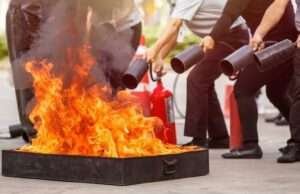
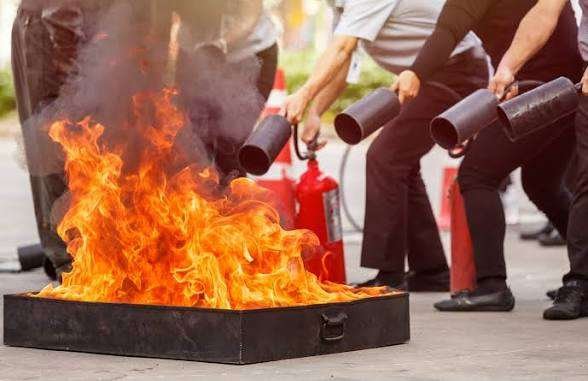
Practical exercises
Drills allow participants to practise following the evacuation plan. They can also help managers identify blocked routes, unclear instructions, or communication problems.
Exercises should be planned to avoid creating a real hazard or interfering with emergency services. Everyone should know when an exercise is taking place, while the scenario should still help participants practise the correct response.
6. Fire Extinguisher Awareness and Safe Use
Fire extinguisher training should explain that different extinguishers are designed for different types of fire. Using an unsuitable extinguisher may be ineffective or dangerous.
For example, water should never be used on burning cooking oil or potentially live electrical equipment. Organisations should select appropriate extinguishers based on their hazards and applicable requirements.
Training should cover:
– Recognising the extinguisher types provided at the site.
– Understanding their labels and intended uses.
– Knowing where the equipment is located.
– Identifying circumstances in which an attempt to extinguish a fire is unsafe.
– Understanding inspection and maintenance requirements.
– Knowing when to evacuate rather than attempt firefighting.
Only people who have received appropriate training and have been authorised under the emergency plan should be assigned firefighting duties. Any attempted response must be limited to circumstances that are safe, with a clear escape route and no exposure to spreading fire or smoke.
For most occupants, the priority is to raise the alarm, evacuate, and contact emergency services.
7. Fire Drills: Turning Knowledge into Practice
A fire drill gives people an opportunity to practise emergency procedures in a controlled setting. It can reveal problems that are difficult to identify through classroom instruction alone.
Plan the drill
Before conducting a drill, management should establish the objectives, communication arrangements, evacuation routes, and responsibilities. The exercise should reflect the building’s actual conditions without introducing unnecessary risks.
Explain evacuation routes
Participants should know where the exits are located and which route to use. Alternative routes should be included in the plan when available.
Identify an assembly point
Choose a safe location outside the building where occupants can gather without obstructing emergency vehicles or nearby exits.
Review the results
After the drill, management should discuss what went well and what needs improvement. Relevant issues may include unclear announcements, blocked routes, confusion about responsibilities, or difficulty accounting for occupants.
The findings should lead to practical improvements. Drills should be repeated according to the organisation’s needs and applicable requirements.
8. Fire Safety Training for Different Workplaces
Different workplaces require different approaches to fire safety.
Offices
Office training should cover electrical safety, alarm recognition, escape routes, meeting-room evacuation, and the correct use of shared facilities.
Employees should avoid storing boxes or equipment in corridors and should report damaged electrical accessories promptly.
Factories and industrial facilities
Factories may contain machinery, combustible materials, industrial electrical equipment, and specialised processes. Training should reflect the site’s specific hazards and emergency arrangements.
Only suitably trained and authorised personnel should perform specialised emergency tasks.
Schools and educational institutions
School fire safety programmes should use clear, age-appropriate instructions. Students should understand how to respond to alarms, follow staff directions, and move towards the designated assembly point.
Teachers and administrators should coordinate evacuation arrangements and consider the needs of students requiring additional assistance.
Hospitals and healthcare facilities
Hospitals may accommodate people who cannot evacuate independently. Training should reflect patient needs, communication arrangements, and the facility’s approved emergency procedures.
Only authorised personnel should perform specialised patient movement or equipment shutdown duties.
Warehouses and retail buildings
Warehouses and retail premises may contain large quantities of goods, packaging, storage racks, and areas unfamiliar to visitors. Training should emphasise clear routes, visible exits, safe storage, and suitable communication procedures.
9. Fire Safety Responsibilities of Employers and Managers
Employers and building managers play an important role in making sure training is supported by practical safety arrangements.
Their responsibilities may include:
– Assessing fire risks and implementing suitable controls.
– Developing an emergency action plan.
– Providing appropriate alarms and safety equipment.
– Keeping escape routes and exits accessible.
– Arranging equipment inspection and maintenance.
– Training employees according to their duties.
– Providing information about new or changed hazards.
– Conducting drills where appropriate.
– Recording training, inspections, and corrective actions.
– Reviewing the emergency plan after significant changes or incidents.
Training alone cannot compensate for defective equipment or unsafe building conditions. Managers should address reported hazards and make sure employees have the information and resources needed to follow the emergency plan.
10. Fire Safety Training and Regulations in Pakistan
The Building Code of Pakistan (Fire Safety Provisions–2016), developed by the Pakistan Engineering Council in collaboration with the National Disaster Management Authority, provides a national framework for building fire prevention, life safety, and fire protection. Its application depends on the relevant adoption, enforcement, and requirements of the responsible authorities. <Cite refs={[“turn877057search24″,”turn877057search26”]} />
Organisations should consult the relevant building control authority and qualified fire safety professionals to determine which requirements apply to their premises.
International guidance can also help organisations understand effective training practices. For example, the United States Occupational Safety and Health Administration explains the importance of educating employees about extinguisher principles and training designated personnel who are assigned to use equipment. These are useful reference practices, but they should not be mistaken for Pakistani legal requirements. <Cite refs={[“turn877057search1″,”turn877057search2”]} />
Businesses should document their training arrangements, review them when workplace conditions change, and make sure staff understand their responsibilities.
11. How Often Should Fire Safety Training Take Place?
Training frequency depends on the workplace, its hazards, employee responsibilities, equipment, and applicable requirements.
A sensible programme generally includes an initial introduction for new employees, refresher training, and additional instruction when procedures or risks change.
Training should also be reviewed after an emergency, a drill that identifies weaknesses, significant building alterations, or the installation of new fire protection equipment.
Employees with designated emergency responsibilities may require more specialised and frequent training than general staff. Organisations should follow the applicable rules and seek professional advice where necessary.
12. How to Evaluate the Effectiveness of Training
A training programme should be assessed to determine whether it prepares people to act safely.
Managers can review whether participants:
– Recognise the fire alarm signal.
– Know the correct evacuation route.
– Understand how to report a fire.
– Can identify the designated assembly point.
– Know when they must evacuate immediately.
– Understand the limits of their assigned responsibilities.
– Know how to report damaged safety equipment.
Feedback from participants can help identify confusing instructions or practical difficulties. Drill observations, training records, and hazard reports can guide improvements.
The goal is not simply to complete a training session. It is to ensure that people understand the emergency plan and can follow it safely.
13. A Practical Fire Safety Training Checklist
Organisations can use this checklist when reviewing their fire safety programme:
– [ ] Fire risks have been assessed.
– [ ] Employees receive relevant fire safety information.
– [ ] New staff are introduced to emergency procedures.
– [ ] Alarm signals and reporting methods are explained.
– [ ] Escape routes and assembly points are identified.
– [ ] Safety equipment is appropriate for the premises.
– [ ] Designated personnel receive role-specific training.
– [ ] Fire drills are planned where appropriate.
– [ ] Equipment inspections and maintenance are recorded.
– [ ] Training is reviewed when hazards or procedures change.
– [ ] Corrective actions are assigned and followed up.
– [ ] Applicable local requirements have been checked.
This checklist should be adapted to the organisation’s size, activities, and risks.
Conclusion
Fire safety training is an essential part of preparing people to prevent fires, recognise warning signals, and respond safely during emergencies. It helps create a culture in which employees and building occupants understand their responsibilities and report hazards before they become more serious.
Effective training should be supported by working alarms, suitable firefighting equipment, clear escape routes, regular maintenance, and a well-understood emergency plan. No individual should be expected to take unnecessary risks or fight a fire beyond their training and assigned responsibilities.
For organisations reviewing a fire alarm system in Pakistan, professional assessment can help identify the appropriate detection and notification arrangements for the building. The system should be installed and maintained correctly, and occupants should understand what to do when it activates.
Ultimately, the purpose of fire safety training is simple: protect people first, reduce avoidable hazards, and make sure everyone knows how to reach safety when an emergency occurs.
Frequently Asked Questions (FAQs)
1. What is fire safety training?
Fire safety training teaches people how to identify fire hazards, prevent common incidents, recognise alarm signals, follow evacuation procedures, and understand the purpose and limitations of safety equipment.
2. Why is fire safety training important in the workplace?
It helps employees recognise hazards, understand t