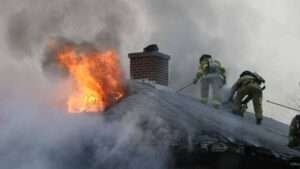
Fire safety is an important life skill that every child should learn. Fires can happen in homes, schools, shops, restaurants, and other places. Although adults are responsible for managing fire risks, children also need to understand basic safety rules so they can recognise danger, stay calm, and make safer decisions during an emergency.
Children are naturally curious. They may see matches, lighters, electrical appliances, candles, or cooking equipment around them without understanding the risks. Simple fire safety education helps them learn which objects are dangerous, why they should never play with fire, and when they need to ask an adult for help.
In Pakistan, fire safety education is particularly useful for families, schools, childcare centres, and community organisations. Children should know what a smoke alarm sounds like, where to go during an evacuation, and why they must never hide when a fire occurs.
Teaching these lessons does not need to be frightening. Parents and teachers can explain fire safety through calm conversations, age-appropriate activities, supervised discussions, and regular practice of emergency plans.
This guide explains the basics of fire safety for kids in plain English. It covers common household hazards, safe behaviour, fire alarms, escape plans, school safety, and important lessons that can help children respond appropriately during an emergency.
1. Explain What Fire Is and Why It Can Be Dangerous
Children should first understand that fire is not a toy. It can produce heat, smoke, and flames that can quickly make an area unsafe.
A small flame may appear harmless, but it can spread to nearby materials. Smoke can also make it difficult to see and breathe. This is why children should never experiment with matches, lighters, candles, or other sources of fire.
Teach Children to Respect Fire
Parents and teachers should explain that fire has useful purposes when controlled by responsible adults, such as cooking and heating. However, it becomes dangerous when it spreads beyond its intended place.
Children should remember three basic rules:
– Never play with matches or lighters.
– Never touch candles, stoves, or burning objects.
– Always tell an adult if they notice smoke, flames, or a burning smell.
These simple messages help children understand that fire-related activities belong to responsible adults.
Avoid Making Fire Safety Frightening
Children learn better when information is presented calmly. Instead of using frightening descriptions, adults should explain what children can do to remain safe.
Focus on practical instructions, such as leaving the building, staying with a responsible adult, and contacting emergency services from a safe location.
2. Keep Matches and Lighters Away from Children
Matches and lighters can cause serious accidents when handled by children. They should never be treated as toys or used during unsupervised games.
Store Dangerous Items Securely
Adults should keep matches, lighters, and other ignition sources out of children’s reach and securely stored.
Children should also understand that finding these items does not mean they should touch or examine them.
Teach Children What to Do If They Find a Lighter
Give children a simple instruction:
“If you find matches or a lighter, do not touch them. Move away and tell an adult.”
This message is easy to remember and helps prevent curiosity from turning into an unsafe situation.
Never Encourage Fire Experiments
Children should not be encouraged to light candles, burn paper, or experiment with flames as a learning activity.
Fire safety lessons can use drawings, pictures, discussions, and supervised educational materials instead.
3. Teach Children About Electrical Safety
Electrical equipment is common in modern homes and schools. Children see switches, plugs, chargers, fans, televisions, and other appliances every day.
They should understand that electricity can be dangerous when electrical equipment is damaged or used incorrectly.
Keep Away from Damaged Wires
Children should never touch exposed wires, broken sockets, damaged plugs, or loose electrical connections.
If they notice something damaged, they should stay away and inform an adult.
Keep Electrical Equipment Away from Water
Water and electricity can create dangerous conditions. Children should not touch electrical switches or appliances with wet hands or use electrical equipment near water.
Adults should supervise electrical equipment in kitchens, bathrooms, and other areas where water may be present.
Do Not Put Objects into Sockets
Children should never insert fingers, toys, keys, or other objects into electrical sockets.
Parents can use suitable socket safety measures where appropriate, but these should not replace supervision and education.
Avoid Playing with Chargers and Cables
Children should not pull power cords, chew cables, or play with chargers. Damaged cables should be reported to an adult rather than handled.
4. Explain Kitchen Fire Safety
Kitchens contain several potential fire hazards, including cooking equipment, hot surfaces, electrical appliances, and flammable materials.
Children should know that kitchens require extra care and that cooking activities should be managed by responsible adults.
Stay Away from Cooking Equipment
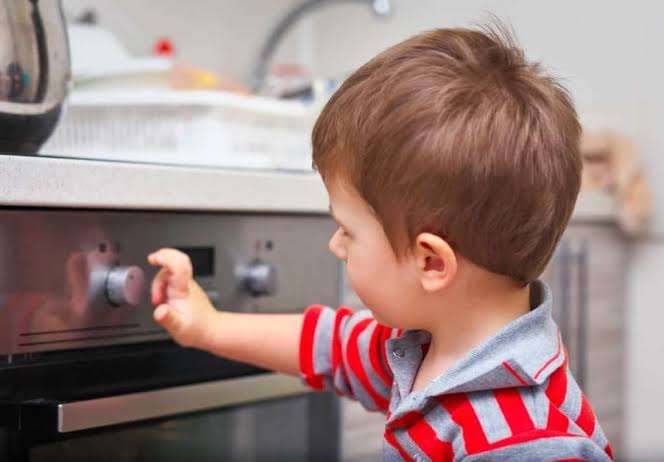
Children should not operate stoves, ovens, gas burners, or other cooking equipment without appropriate adult supervision.
They should also avoid reaching over cooking areas or playing near hot appliances.
Keep Away from Hot Objects
Hot pots, pans, kettles, and cooking surfaces can cause injuries. Adults should explain that these objects should never be touched without permission and proper supervision.
Tell an Adult About Smoke or Unusual Smells
If a child notices smoke, unusual heat, or a strange smell in the kitchen, they should move away and tell an adult immediately.
They should never investigate the source themselves.
Keep the Kitchen Organised
Adults should keep matches, lighters, and combustible materials away from cooking areas. Electrical appliances should be maintained properly, and children should have clear instructions about places they should not enter during cooking.
5. Help Children Understand Smoke Alarms
Smoke alarms are important parts of home fire safety. They detect smoke and provide an early warning that can help people respond before a dangerous situation becomes worse.
Children should know what a smoke alarm looks like and what its sound means.
Explain the Purpose of a Smoke Alarm
A smoke alarm is a safety device that warns people when smoke is detected. It may be installed in suitable areas of a home, school, or other building according to the property’s design and applicable safety guidance.
Children should understand that an alarm is not a toy or an ordinary household sound.
Teach Children to Respond to the Alarm
If a smoke alarm sounds, children should:
1. Stop what they are doing.
2. Follow the family’s or school’s evacuation instructions.
3. Leave using the approved escape route.
4. Stay with a responsible adult or their group.
5. Go to the agreed meeting place.
6. Never return inside to collect belongings.
If children are at school, they should follow their teacher’s instructions and remain with their class where possible.
Adults Must Maintain the Alarm
Parents and building managers are responsible for ensuring that smoke alarms are suitable, installed correctly, and maintained according to manufacturer instructions.
Children should never remove batteries, cover detectors, or attempt to repair alarm equipment.
6. Introduce Children to Fire Alarm Systems
A fire alarm system is designed to detect signs of fire and alert people inside a building. It may include smoke detectors, heat detectors, manual call points, control panels, and sounders.
A fire alarm system in Pakistan can support safety in homes, schools, offices, shopping centres, and other buildings when it is properly selected, installed, and maintained.
Children do not need to understand the technical operation of these systems. They mainly need to recognise the warning signal and know what action to take.
Recognise the Alarm Sound
Parents and teachers can explain the sound of the building’s fire alarm during a supervised safety lesson.
Children should know that hearing the alarm means they must follow the emergency plan, even if they cannot see smoke or flames.
Never Play with Manual Call Points
Manual call points allow people to activate a fire alarm in an emergency. Children should understand that these devices are not toys.
They should never press them as a joke or for entertainment. Adults and teachers should explain their purpose and how to report a genuine emergency.
Understand That Alarms Need Maintenance
Fire alarm systems must be inspected and maintained by qualified professionals. Adults should make sure that alarms are working and that any faults are addressed promptly.
A working alarm is only one part of fire safety. Clear escape routes and regular emergency practice are also necessary.
7. Create a Simple Home Fire Escape Plan
Every family should have a home fire escape plan. Children should know how to leave the building safely and where to meet family members outside.
A simple plan can make an emergency easier to understand.
Identify Safe Exit Routes
Parents should identify suitable exits from the home and explain which routes children should follow.
Escape routes should remain clear of furniture, stored items, and other obstacles.
Children should know that lifts should not be used during a fire unless emergency personnel or an approved building evacuation plan specifically directs otherwise.
Choose an Outdoor Meeting Place
Families should select a safe meeting point outside the building. It could be an agreed place away from the home where everyone can gather after leaving.
Children should know that they must not leave the meeting point without informing a responsible adult.
Explain What to Do If a Door or Route Is Unsafe
Children should be taught to follow the approved escape plan and seek help from a responsible adult.
If they cannot safely use the expected route, they should follow age-appropriate instructions from their family or school and contact emergency services when possible.
Never Go Back Inside
One of the most important lessons is that children must never return to a burning or evacuated building.
They should not go back for toys, schoolbags, mobile phones, pets, or other belongings. Adults and emergency personnel should manage any further action.
8. Teach Children How to Respond to Smoke
Smoke can make a building unsafe even when flames are not visible. Children should understand that smoke is a warning sign and that they must leave the area according to their emergency plan.
Do Not Investigate Smoke
If a child notices smoke coming from a room, appliance, or another area, they should move away and alert an adult.
They should never open doors, investigate electrical equipment, or attempt to find the source.
Follow the Escape Plan
Children should leave using the approved escape route and follow instructions from responsible adults.
They should avoid delaying evacuation to collect belongings.
Stay with the Group
At home, children should stay with their responsible adult. At school, they should follow their teacher’s instructions and remain with their class during evacuation.
This helps adults account for children after everyone reaches the safe meeting place.
9. Make Fire Safety Part of School Education
Schools play an important role in teaching children about fire safety. Students spend many hours in classrooms, laboratories, libraries, cafeterias, playgrounds, and other shared spaces.
Teachers can help children understand how to recognise alarms, follow instructions, and use designated escape routes.
Explain School Emergency Procedures
Every school should have an appropriate fire emergency plan. Students should know what the alarm sounds like, where to go, and how to behave during an evacuation.
Teachers should explain these procedures in simple language that matches the children’s ages.
Keep Corridors and Exits Clear
School corridors, stairways, and emergency exits should remain accessible.
Students should not place bags, books, sports equipment, or other belongings in escape routes.
Practise Calm Evacuation
Age-appropriate fire drills help students become familiar with emergency arrangements.
Teachers should explain the purpose of drills before they take place. Children should practise walking calmly, listening to instructions, and going to the correct assembly area.
Discuss Laboratory and Workshop Safety
Schools may have science laboratories, workshops, kitchens, or other specialist areas.
Students should follow teacher instructions and never handle flames, chemicals, electrical equipment, or heating devices without appropriate supervision and permission.
10. Explain Why Children Should Never Hide During a Fire
Children may become frightened when they hear an alarm or notice smoke. Some may instinctively hide under beds, inside cupboards, or behind furniture.
Adults should clearly explain that hiding can make it harder for responsible adults and emergency responders to find them.
Teach Children to Leave Instead
Children should follow their escape plan and move towards a safe exit with a responsible adult or teacher.
If they become separated from their group, they should follow the age-appropriate emergency instructions they have practised.
Make the Message Easy to Remember
Parents and teachers can repeat a simple rule:
“Do not hide. Leave the building and go to the meeting place.”
Repeating clear instructions during ordinary safety lessons helps children remember what to do.
11. Help Children Remember Important Emergency Information
Children should know basic information that can help them during an emergency.
Depending on their age, they can learn:
– Their full name.
– Their home address.
– The names of their parents or responsible adults.
– How to recognise trusted emergency personnel.
– Where the family meeting point is.
– How to ask a responsible adult for emergency help.
Older children may also learn how to contact local emergency services with adult guidance.
Parents should explain that emergency calls must only be made for genuine emergencies and that children should provide clear information when they are able to do so safely.
12. Use Simple Activities to Teach Fire Safety
Fire safety education does not need to be complicated. Parents and teachers can use simple, age-appropriate activities to help children understand important lessons.
Draw a Home Escape Map
Children can draw a simple map of their home with adult guidance. The family can identify suitable exits and mark the outdoor meeting place.
Adults should check that the map reflects the actual home layout and approved escape arrangements.
Practise Recognising Alarm Sounds
During a supervised lesson, adults can explain the sound of the home’s or school’s fire alarm.
Children should practise responding by following the agreed evacuation instructions rather than treating the alarm as a game.
Read Fire Safety Stories
Age-appropriate books and educational materials can introduce fire safety ideas in a calm and understandable way.
Stories can help children remember that they should avoid matches, stay away from damaged electrical equipment, and tell adults about possible hazards.
Repeat Key Safety Messages
Short reminders are often more useful than complicated instructions. Parents and teachers can regularly review the most important rules.
The aim is to build understanding and confidence without making children unnecessarily afraid.
13. What Parents Should Do to Improve Children’s Fire Safety
Parents and guardians are responsible for creating a safer home environment and helping children understand everyday hazards.
Keep Dangerous Items Secure
Matches, lighters, candles, and other potentially hazardous items should be stored securely and kept away from children.
Maintain Electrical and Gas Equipment
Electrical installations and gas appliances should be inspected and maintained by qualified professionals.
Children should never be asked to investigate unusual smells, damaged wiring, or equipment faults.
Install Suitable Fire Detection Equipment
Homes should have appropriate smoke alarms and other fire detection equipment based on their layout and safety requirements.
Adults should ensure that equipment is maintained according to the manufacturer’s instructions.
Review the Escape Plan
Families should review their escape routes and meeting place whenever the home layout changes or family circumstances require an update.
Children should understand that the plan is for everyone in the household.
14. Common Fire Safety Mistakes Children Should Avoid
Children can remember several simple rules that help them stay away from danger.
Playing with matches or lighters: These items should never be handled as toys.
Touching electrical sockets: Children should never insert objects into sockets or touch damaged electrical equipment.
Playing near cooking areas: Stoves, ovens, and hot appliances should be treated as adult-controlled areas.
Ignoring alarm sounds: A fire alarm should always be taken seriously.
Hiding during an emergency: Children should follow their escape plan rather than hiding.
Returning for belongings: Toys, bags, and other personal items are never more important than getting to safety.
Playing with fire alarm equipment: Detectors and manual call points are safety devices, not toys.
Adults should reinforce these rules through calm conversations and regular practice.
Conclusion
Fire safety for kids is about teaching simple habits that help children recognise danger, avoid hazardous objects, and respond appropriately during an emergency. Children should understand that matches, lighters, cooking equipment, damaged electrical cables, and other potential hazards are not toys.
Parents and teachers can make a real difference by explaining fire safety in plain language, keeping dangerous items secure, maintaining smoke alarms, and practising suitable escape plans.
Fire alarm systems provide an important warning when a fire develops, but children also need to know how to respond when an alarm sounds. They should leave the building using the approved escape route, stay with a responsible adult or group, reach the outdoor meeting point, and never return for belongings.
In Pakistan, fire safety education should be encouraged in homes, schools, and community settings. When children receive clear, age-appropriate guidance, they can develop safer habits that remain useful as they grow older.
The most important lesson is simple: stay away from fire, tell an adult about danger, follow the emergency plan, and put personal safety first.
Frequently Asked Questions (FAQs)
1. Why is fire safety important for children?
Fire safety helps children understand common hazards and learn how to respond during emergencies. It teaches them to stay away from matches, lighters, damaged electrical equipment, and cooking areas while following instructions from responsible adults.
2. What should a child do when a fire alarm sounds?
A child should stop what they are doing, follow the approved escape route, and leave the building with a responsible adult or their group. They should go to the designated meeting place and never return inside to collect belongings.
3. How can parents teach children about fire safety?
Parents can use simple conversations, age-appropriate books, supervised safety activities, and regular practice of the home escape plan. They should also keep matches and lighters securely stored and make sure children understand that f