Fire safety is an important responsibility for every building owner, business manager, school administrator, factory operator, and property manager. A fire can start because of electrical faults, unsafe storage, faulty equipment, or simple mistakes. Without proper precautions, a small problem can become a serious emergency.
A fire safety audit helps identify these risks before an incident occurs. It examines a building’s fire protection equipment, emergency exits, evacuation arrangements, staff awareness, and general safety practices. The purpose is to understand what is working, identify weaknesses, and recommend practical improvements.
In Pakistan, fire safety deserves particular attention in offices, shopping malls, hospitals, schools, warehouses, factories, restaurants, and residential buildings. A structured audit can help organizations improve preparedness, protect occupants, and review whether their arrangements meet applicable requirements.
This guide explains fire safety audits in plain English, including what they involve, why they matter, and how organizations can benefit from them.
What Is a Fire Safety Audit?
A fire safety audit is a systematic assessment of a building, workplace, or facility to evaluate its fire risks and protective measures.
During an audit, a qualified fire safety professional examines the premises, reviews relevant documents, and assesses whether the available precautions are suitable for the building’s activities and occupants.
For example, an audit at a school may focus on clear corridors, accessible exits, alarm systems, evacuation procedures, and staff training. In a factory, the assessment may also consider combustible materials, machinery-related hazards, storage arrangements, and the suitability of fire protection equipment.
The audit usually identifies three main things:
– Existing safety measures that are working properly.
– Hazards, defects, or gaps that need attention.
– Recommendations for improving fire prevention and emergency preparedness.
A fire safety audit is not simply a search for fire extinguishers. It evaluates how different safety measures work together to reduce risks and help people evacuate safely.
The Building Code of Pakistan—Fire Safety Provisions 2016 provides an important national reference for fire prevention, life safety, and fire protection in buildings. Its application and specific requirements should be checked with the relevant authority for the building’s location and use. “Source: Pakistan Engineering Council” (https://www.pec.org.pk/wp-content/uploads/2021/05/Building-Code-of-Pakistan-Fire-Safety-Provisions-2016.pdf).
Why Are Fire Safety Audits Important in Pakistan?
Buildings have different layouts, occupancy levels, equipment, and operational risks. A measure that is suitable for a small office may not be sufficient for a large hospital or manufacturing facility.
A fire safety audit helps decision-makers understand these differences and make informed improvements.
1. Identifying Fire Hazards Early
Fire hazards can develop gradually. Electrical equipment may become damaged, storage areas may become overcrowded, or exit routes may be blocked by supplies and furniture.
An audit helps identify such concerns before they contribute to an emergency. It also encourages building managers to review unsafe practices rather than waiting for an incident to expose them.
2. Protecting People and Property
Employees, customers, students, patients, visitors, and residents all depend on a building’s safety arrangements.
Clear evacuation routes, suitable alarm coverage, maintained fire protection equipment, and effective emergency procedures can help reduce the risks associated with a fire.
Although no audit can eliminate every possible danger, a well-planned assessment can reveal weaknesses and support better decisions.
3. Reviewing Compliance
Building owners and businesses may need to meet requirements established by applicable building codes, local authorities, fire services, and other relevant regulations.
A fire safety audit helps review existing arrangements against the requirements that apply to the particular premises. However, an audit report alone does not automatically prove legal compliance or replace any required inspection, approval, or certificate.
4. Improving Emergency Preparedness
A building may have fire equipment but still lack an effective evacuation plan. Employees might not know the nearest safe exit, or visitors might not understand the alarm signal.
Audits can highlight these gaps and help organizations improve emergency communication, staff responsibilities, evacuation arrangements, and training.
5. Supporting Business Continuity
A fire can interrupt operations, damage equipment, affect stock, and disrupt services. Improving fire prevention and preparedness can help businesses reduce avoidable risks and plan for interruptions.
The benefits extend beyond financial considerations: a safer workplace also supports employee confidence and organizational responsibility.
What Does a Fire Safety Audit Examine?
The exact scope depends on the building’s size, purpose, occupancy, and hazards. A professional assessment commonly reviews the following areas.
1. Fire Alarm Systems
A fire alarm system is an important part of a building’s early-warning arrangements. It can alert occupants when a fire-related condition is detected, giving them an opportunity to follow the evacuation procedure.
During an audit, a qualified professional may review:
– Whether the alarm arrangement is appropriate for the building.
– The condition and placement of detectors and manual call points.
– Whether alarm signals can be heard or otherwise perceived in relevant occupied areas.
– The condition of the control panel and associated equipment.
– Available inspection, testing, and maintenance records.
– Whether faults have been reported and addressed.
The audit should also consider whether occupants understand what to do when the alarm sounds.
For organizations researching a Fire alarm system in Pakistan, the key consideration is not simply purchasing equipment. The system must be appropriate for the premises, professionally installed where required, maintained correctly, and assessed against applicable standards.
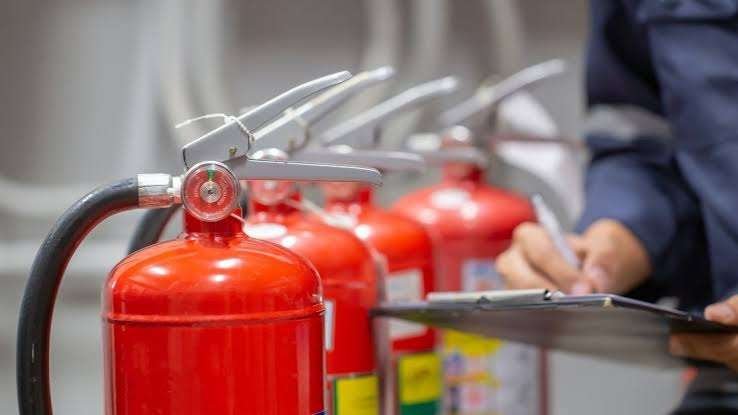
2. Fire Extinguishers and Other Equipment
Fire extinguishers, hose reels, hydrants, sprinklers, and other protection systems may form part of a building’s fire safety arrangements.
An audit reviews whether the equipment provided is appropriate for the risks and whether access, inspection, and maintenance arrangements are satisfactory.
The assessor may check equipment identification, visible condition, service records, and any reported defects. They may also identify areas where equipment appears unsuitable, inaccessible, or insufficient for the building’s needs.
Equipment selection and servicing should be handled by competent professionals. Occupants should not attempt to operate unfamiliar equipment or enter a dangerous area during an emergency.
3. Emergency Exits and Escape Routes
People need a clear and reliable way to leave a building during an emergency.
An audit examines whether designated escape routes are accessible and suitable for the building. This may include reviewing corridors, stairways, exit doors, exit signage, and the arrangements for reaching a safe assembly point.
Common concerns include:
– Corridors or stairways obstructed by stored items.
– Exit doors that are difficult to open.
– Missing or unclear directional signs.
– Poorly maintained emergency lighting.
– Escape routes that are not suitable for the number or needs of occupants.
The auditor may also consider whether evacuation arrangements account for people who need assistance, including children, older adults, patients, and people with disabilities.
Escape routes should remain clear and usable. Any concerns affecting safe evacuation should be referred promptly to the responsible building manager.
4. Electrical Safety
Electrical faults can contribute to fires in homes, offices, factories, and commercial buildings.
An audit may review visible signs of damage, the condition of electrical distribution areas, relevant inspection records, and the management of electrical equipment.
Potential concerns include damaged cables, overloaded power arrangements, poor housekeeping around electrical panels, and unaddressed maintenance issues.
A fire safety audit is not a substitute for a specialist electrical inspection. Suspected electrical defects should be assessed by a qualified electrician, and occupants should never attempt repairs on potentially dangerous equipment.
5. Storage and Housekeeping
The way materials are stored can influence how quickly a fire develops and whether people can evacuate safely.
Auditors may examine the storage of paper, packaging, fabrics, chemicals, fuels, and other combustible or hazardous materials. They may also review waste management, storage-room access, and whether materials are kept away from equipment or locations where they could create additional risk.
Businesses should establish clear storage rules and ensure that emergency routes and safety equipment remain accessible.
6. Fire Doors and Building Features
Fire doors and fire-resistant building features may help restrict the spread of fire and smoke when properly designed, installed, and maintained.
An audit may review visible damage, door condition, signs of unauthorized alterations, and maintenance records. It may also consider whether the building’s layout and separation arrangements are suitable for its use.
These features should not be altered or repaired casually. Where a defect is suspected, a competent specialist should assess it and recommend appropriate corrective work.
7. Emergency Lighting and Safety Signs
Smoke, power interruptions, and unfamiliar surroundings can make evacuation more difficult.
Emergency lighting and clear safety signs can help occupants identify exit routes and important safety locations. An audit may examine their visibility, placement, condition, and testing records.
The assessor should consider the building as a whole, including stairs, corridors, changes in direction, and areas that may be occupied outside normal working hours.
8. Staff Training and Evacuation Drills
Fire safety equipment is only one part of preparedness. People also need to understand their responsibilities.
An audit may review training records, evacuation plans, drill reports, staff responsibilities, and arrangements for visitors or contractors.
Employees should know how to raise an alarm, follow designated escape routes, reach the assembly point, and report concerns. They should not be expected to fight a fire or take unnecessary risks.
How Does a Fire Safety Audit Work?
A typical audit follows several stages. The precise process varies according to the building and the scope of the assessment.
Step 1: Understand the Building
The auditor gathers basic information about the premises, including its purpose, size, occupancy, working hours, activities, and known hazards.
Relevant documents may include floor plans, previous inspection reports, equipment maintenance records, evacuation plans, and information about earlier incidents.
This initial review helps the auditor understand the building’s needs.
Step 2: Inspect the Premises
The auditor visits the site and examines relevant areas. This may include occupied rooms, corridors, stairways, storage spaces, equipment locations, and designated escape routes.
The inspection should be conducted in a controlled and safe manner. Any specialist testing should be carried out by appropriately qualified personnel using suitable procedures.
Step 3: Review Documents and Procedures
The auditor checks whether important records are available and current. These may include fire alarm maintenance records, extinguisher servicing documents, staff training information, emergency plans, and records of corrective work.
The aim is to compare written procedures with the actual condition of the premises.
Step 4: Identify and Prioritize Findings
Not every issue presents the same level of risk. A blocked escape route or a major defect in a critical safety system may require more urgent attention than a minor documentation issue.
The auditor should explain the findings clearly and help the responsible organization understand which concerns require immediate action, which need planned improvements, and which require specialist assessment.
Step 5: Prepare the Audit Report
A useful report documents the scope of the audit, the observations made, the relevant evidence, and the recommended corrective actions.
Where appropriate, recommendations should identify responsibility, priority, and a target completion date. Photographs or supporting records may be included when useful and suitable.
Step 6: Complete Corrective Actions
An audit only creates lasting value when the organization responds to its findings.
Management should assign responsibility for each action, arrange professional repairs where necessary, keep evidence of completed work, and verify that the changes have addressed the identified concern.
Critical safety defects should not be left unresolved while an organization waits for the next routine audit.
Who Needs a Fire Safety Audit?
Fire safety audits can benefit many types of premises in Pakistan.
Offices: Assessments can review alarms, escape routes, electrical safety, emergency lighting, staff awareness, and workplace housekeeping.
Factories and industrial facilities: Audits may focus on machinery-related hazards, combustible materials, storage arrangements, alarm coverage, and the suitability of protection systems.
Schools and colleges: Auditors can assess evacuation routes, alarm arrangements, emergency communication, staff responsibilities, and procedures for helping students leave safely.
Hospitals and healthcare facilities: Assessments need to consider patients who may have limited mobility, critical services, staff training, and the complexity of evacuating different areas.
Shopping malls and retail stores: High visitor numbers make clear signage, accessible exits, reliable alarms, and coordinated emergency procedures especially important.
Warehouses: Storage layout, access routes, combustible stock, and suitable protection arrangements may require particular attention.
Residential and mixed-use buildings: Shared corridors, stairways, electrical areas, parking facilities, and the needs of different occupants may all be relevant.
The appropriate audit scope should reflect the actual risks rather than applying the same checklist to every building.
Fire Safety Audits and Pakistani Regulations
Pakistan’s Building Code of Pakistan—Fire Safety Provisions 2016 is a key reference for fire and life safety in buildings. It addresses matters such as fire prevention, building safety features, protection systems, and means of escape. The Code includes provisions relevant to existing as well as new buildings. “Source: Pakistan Engineering Council” (https://www.pec.org.pk/wp-content/uploads/2021/05/Building-Code-of-Pakistan-Fire-Safety-Provisions-2016.pdf).
However, regulatory requirements can depend on the building’s occupancy, location, size, activities, and the authority responsible for enforcement. Provincial and local rules, approvals, and other applicable standards may also be relevant.
For this reason, organizations should not assume that one general checklist guarantees compliance everywhere in Pakistan.
Building owners and managers should confirm applicable requirements with the relevant local building-control authority, fire service, or qualified fire safety consultant. They should also keep copies of applicable approvals, inspection records, maintenance documents, and completed corrective actions.
How Often Should a Fire Safety Audit Be Conducted?
There is no single interval that is suitable for every building in every situation. The appropriate schedule depends on applicable requirements, the level of risk, the nature of the activities, and the condition of the safety arrangements.
An organization may choose to schedule a formal audit periodically and conduct routine internal checks between audits.
An additional assessment may be appropriate when:
– The building undergoes renovation or major changes.
– New machinery, processes, or hazardous materials are introduced.
– Occupancy levels or the building’s use change.
– A fire-related incident or significant near miss occurs.
– Inspection records reveal repeated defects.
– Applicable regulations or safety requirements change.
Routine checks should not replace formal inspections, professional servicing, or testing required by the relevant standards.
A documented schedule helps ensure that fire safety remains an ongoing responsibility rather than a one-time project.
Common Fire Safety Audit Mistakes to Avoid
Organizations can reduce the value of an audit if they treat it as a paperwork exercise.
Relying Only on a Checklist
A checklist can provide structure, but it cannot replace professional judgment. A building’s specific risks, layout, occupancy, and activities must also be considered.
Ignoring Previous Recommendations
Repeated findings may indicate that corrective actions have not been completed or that the underlying cause has not been addressed. Previous reports should be reviewed to check whether problems remain unresolved.
Overlooking Human Factors
A building may contain modern equipment but still have weak emergency procedures. Training, communication, supervision, and clear responsibilities should be part of the assessment.
Choosing an Auditor Based Only on Price
The cheapest assessment may not provide the depth required for a complex facility. Organizations should consider qualifications, experience, scope, report quality, and the ability to explain practical recommendations.
Failing to Follow Up
A report does not correct a hazard by itself. Management must allocate resources, complete the required work, and maintain evidence of the improvements.
Choosing a Fire Safety Audit Service in Pakistan
When selecting a service provider, building owners should look for relevant technical competence, experience with similar premises, and a clear explanation of the audit process.
Before confirming an assessment, ask the provider:
– What areas and systems are included in the audit?
– What qualifications and relevant experience does the audit team have?
– Will the report prioritize findings according to risk?
– Will recommendations refer to applicable requirements where relevant?
– Does the service include follow-up or verification of completed actions?
– What information and documents should the organization prepare?
The scope and cost of an audit can vary with building size, complexity, location, industry, and the number of systems requiring assessment. A written quotation should clearly explain what is included and identify any additional services that may be needed.
Fire Safety Trading provides information about its HSE and fire audit services on its website. Organizations can review the service details and contact the provider to discuss the requirements of their premises. “Fire Safety Trading — HSE Audit / Fire Audit” (https://firesafetytrading.com.pk/hsc-audit-fire-audit/).
The Role of a Fire Alarm System in Pakistan
A fire alarm system is one component of a wider fire safety strategy. Its purpose is to provide warning so that people can respond according to the building’s emergency procedure.
When assessing a Fire alarm system in Pakistan, organizations should consider the type of premises, likely hazards, number of occupants, layout, and applicable standards. The system should be selected and installed by competent professionals and maintained a