Warehouses in Karachi store everything from textiles and plastics to chemicals and packaged food, which means a small spark can turn into a major fire within minutes. Long storage aisles, stacked pallets, and limited ventilation make warehouses one of the riskiest commercial spaces when it comes to fire safety. A well-planned fire extinguisher system, backed by regular fire extinguisher refilling in Karachi, is one of the simplest ways to protect your stock, your staff, and your business reputation.
This guide covers practical, easy-to-follow fire extinguisher safety tips built specifically for warehouse owners and facility managers operating in Karachi’s industrial zones.
Why Warehouse Fire Safety Needs Extra Attention
Fire Safety Trading (Pvt)
ToggleKarachi’s warehouses often deal with a mix of risk factors that smaller offices or shops don’t face:
- Large open floor plans that let fire and smoke spread quickly
- Heavy use of forklifts, generators, and electrical wiring
- Cardboard, plastic wrapping, and wooden pallets that catch fire easily
- Hot, humid weather that puts extra strain on electrical equipment
- Long gaps between shifts, when a small fire can go unnoticed
Because of these conditions, a warehouse cannot rely on a single extinguisher tucked away in a corner. Fire protection needs to be planned floor by floor, with extinguishers refilled and inspected on a strict schedule.
Choose the Right Type of Fire Extinguisher
Not every fire extinguisher works on every type of fire. Warehouses usually need a mix of:
- ABC Dry Powder Extinguishers – effective on solid materials, flammable liquids, and electrical fires, making them the most common choice for general storage areas.
- CO2 Extinguishers – ideal near electrical panels, server rooms, or control rooms where powder residue could damage equipment.
- Foam Extinguishers – useful in areas storing flammable liquids such as oils, paints, or solvents.
A fire safety consultant can walk through your warehouse and recommend the right combination based on what you store and how the space is laid out.
Placement Matters More Than Quantity
Simply having extinguishers on-site isn’t enough if they are hard to reach during an emergency. Follow these placement rules:
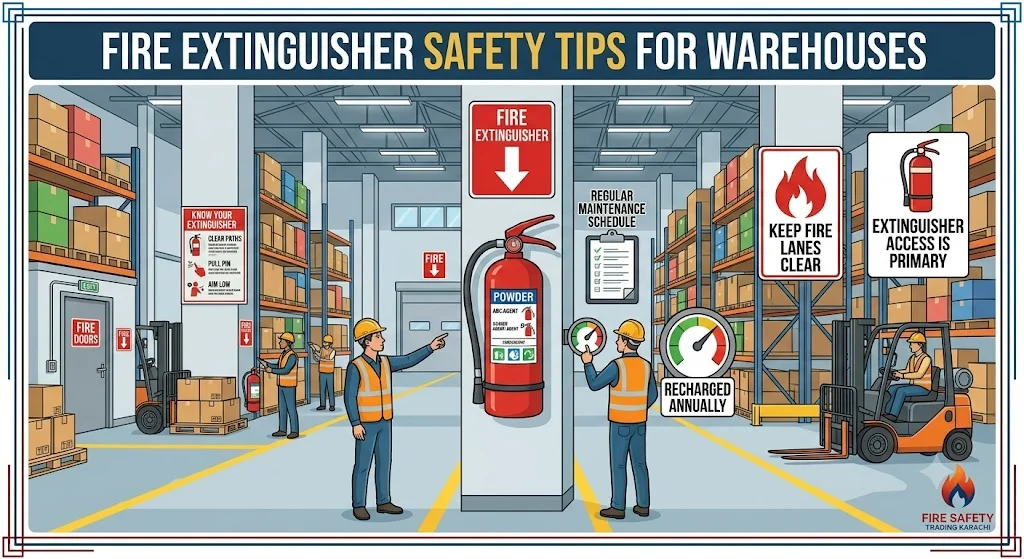
1. Mount extinguishers at eye level, roughly 3 to 4 feet from the floor, so staff can grab them without wasting time.
2. Keep a clear path to every extinguisher — never block them with pallets, boxes, or equipment.
3. Place extinguishers near exits, loading bays, and high-risk zones like electrical rooms or fuel storage.
4. Make sure the maximum travel distance from any point in the warehouse to the nearest extinguisher does not exceed the distance recommended for your building’s fire risk category.
5. Use clear, illuminated signage so extinguishers are visible even in low light or during a power cut.
Build a Routine Inspection Schedule
Fire extinguishers lose pressure, corrode, or develop faulty seals over time, even if they are never used. A simple monthly and annual routine keeps them ready:
- Monthly visual check: Confirm the pressure gauge reads in the green zone, the pin and tamper seal are intact, and there is no visible damage or corrosion on the cylinder.
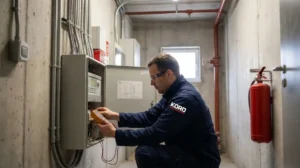
- Annual professional inspection: A certified technician should check the internal condition, weigh the cylinder, and confirm that the extinguishing agent is still effective.
- Refilling after use or expiry: Any extinguisher that has been discharged, even partially, must be refilled immediately. Powder and foam extinguishers also need periodic refilling as the agent settles or loses effectiveness over time.
Skipping these checks is one of the most common reasons extinguishers fail exactly when they’re needed most.
Why Timely Refilling Is Non-Negotiable
A fire extinguisher that looks fine on the outside can be completely useless on the inside if the pressure has dropped or the agent has degraded. This is especially common in Karachi’s warehouse districts, where heat and humidity accelerate wear on cylinders and valves. Scheduling regular fire extinguisher refilling in Karachi with a trusted local provider ensures every unit in your warehouse is at full pressure and ready to perform when it matters.
Warehouse managers should keep a simple logbook noting the refill date, technician name, and next due date for every extinguisher on the premises. This makes audits easier and helps you spot units that are overdue at a glance.
Train Your Staff, Not Just Your Equipment
Even the best-maintained extinguisher is only useful if someone knows how to operate it under pressure. Warehouse fire safety training should cover:
- The PASS technique — Pull the pin, Aim low, Squeeze the handle, Sweep side to side
- Which extinguisher type to use for which material
- How to raise the alarm and evacuate safely
- When to fight a small fire versus when to leave immediately and call the fire department
Running a short refresher drill every few months keeps this knowledge fresh, especially in warehouses with high staff turnover.
Don’t Forget Documentation and Compliance
Karachi’s commercial and industrial buildings are increasingly expected to meet fire safety compliance standards for insurance, licensing, and audits. Keep the following on file:
- Extinguisher inspection and refilling records
- Fire safety training attendance sheets
- A site map showing extinguisher and fire exit locations
- Maintenance contracts with your fire safety service provider
Having this documentation ready not only satisfies inspectors but also speeds up insurance claims if an incident does occur.
Common Mistakes Warehouse Owners Make
Even experienced facility managers slip up on a few basics that quietly increase fire risk:
- Assuming a full-looking cylinder means it’s working. Pressure loss and internal corrosion aren’t always visible from the outside, which is why gauge checks and professional servicing matter more than appearance.
- Buying extinguishers once and forgetting them. Fire safety isn’t a one-time purchase — it’s an ongoing maintenance commitment tied to a calendar, not a memory.
- Storing extinguishers in inconsistent spots. If staff have to search for equipment during an emergency, precious seconds are lost. Standardize placement across every warehouse section.
- Ignoring smaller satellite storage areas. Mezzanines, loading docks, and outdoor storage yards often get overlooked in fire safety planning, even though they carry real risk.
- Delaying refilling after a partial discharge. An extinguisher that’s been used even briefly should be treated as empty until it’s professionally refilled and re-certified.
Avoiding these mistakes usually costs very little compared to the potential loss from an uncontrolled warehouse fire.
Final Thoughts
Warehouse fires spread fast, but most are preventable with the right equipment, placement, and maintenance routine. Choosing the correct extinguisher types, checking them monthly, and staying on top of professional fire extinguisher refilling in Karachi are small, low-cost habits that protect your warehouse, your staff, and everything stored inside it.
Frequently Asked Questions
1. How often should fire extinguishers be refilled in a warehouse?
Most extinguishers need refilling once a year during their annual service, or immediately after any use, even a partial discharge. High-risk warehouses may need more frequent checks depending on temperature and humidity.
2. What type of fire extinguisher is best for a warehouse in Karachi?
ABC dry powder extinguishers are the most common choice for general warehouse storage since they work on solid materials, liquids, and electrical fires. Areas with flammable liquids or sensitive electronics may also need foam or CO2 units.
3. How do I know if my fire extinguisher needs refilling?
Check the pressure gauge regularly. If the needle falls outside the green zone or the tamper seal is broken, the extinguisher needs immediate refilling or servicing.
4. Where can I get a fire extinguisher refilled in Karachi?
Local fire safety providers offer on-site and workshop refilling services for homes, offices, and warehouses across Karachi, including pickup and delivery for bulk industrial units.
5. How many fire extinguishers does a warehouse need?
The number depends on the warehouse size, layout, and fire risk category. Still, a general rule is to have an extinguisher within easy reach of every section, with none exceeding the recommended maximum travel distance.
6. Can an expired fire extinguisher still work?
An expired or under-pressurized extinguisher may release little to no extinguishing agent or fail, which is why timely refilling and replacement are critical for warehouse safety.
7. What is the shelf life of a fire extinguisher before it needs servicing?
Most extinguishers require a full internal inspection and possible refilling every year, with a more thorough overhaul or hydrostatic test typically needed every five years, depending on the extinguisher type.
8. Who should inspect fire extinguishers in a commercial warehouse?
A certified fire safety technician should carry out inspections and refilling, since they can properly test pressure, weight, and the condition of the extinguishing agent.
9. What causes most warehouse fires in Karachi?
Common causes include electrical faults, overheated machinery, poorly stored flammable materials, and unattended heat sources such as welding equipment or generators.
10. Is fire extinguisher training necessary for warehouse staff?
Yes. Staff who know how to use an extinguisher correctly and recognize when to evacuate can prevent a small fire from becoming a major loss, making regular training an essential part of warehouse fire safety, alongside professional fire extinguisher refilling in Karachi on a fixed schedule.