Fire extinguishers sit quietly in the corner of homes, offices, shops, and factories across Karachi, and most people forget about them until an emergency hits. But here’s a question that deserves more attention than it usually gets: can a fire extinguisher actually explode if it’s never serviced? The short answer is yes, it can happen, and it’s more common than most business owners realize. Neglected cylinders build up pressure problems, rust from the inside out, and can eventually fail in dangerous ways. In this guide, we’ll walk through exactly why this happens, the warning signs to watch for, and why regular fire extinguisher refilling in Karachi is one of the simplest ways to keep your property and the people in it safe.
Why Fire Extinguishers Need Regular Servicing
Fire Safety Trading (Pvt)
ToggleA fire extinguisher isn’t a one-time purchase you install and forget. It’s a pressurized metal cylinder holding a chemical agent under constant internal pressure, and like any pressurized equipment, it has moving parts, seals, and gauges that wear down over time. Heat, humidity, dust, and vibration all take a toll on the internal components. Karachi’s hot and humid climate makes this even more of a concern, since moisture speeds up corrosion inside metal cylinders far faster than in cooler, drier environments. Without periodic inspection and refilling, an extinguisher slowly turns from a life-saving device into a hidden hazard.
Can an Unserviced Fire Extinguisher Actually Explode?
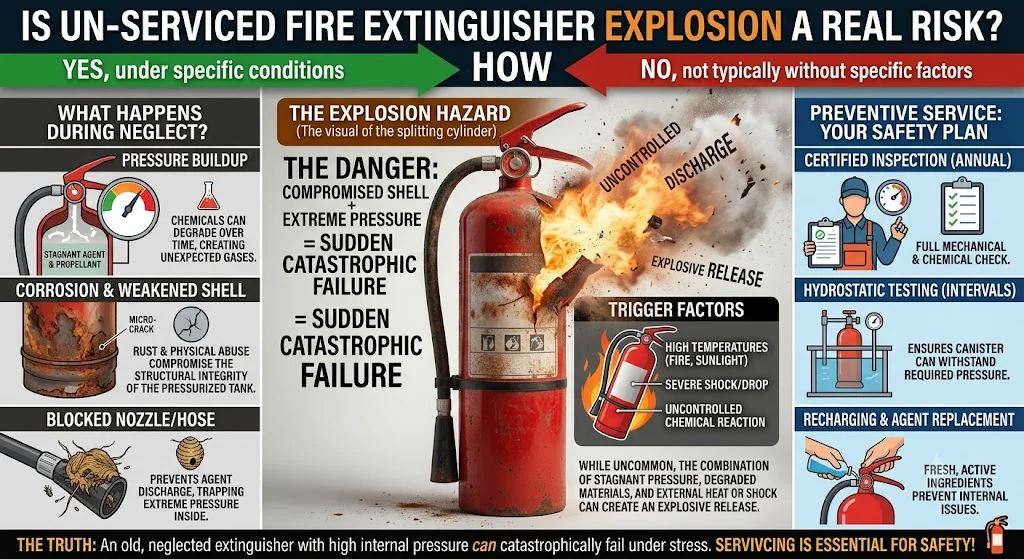
Yes. While it isn’t an everyday occurrence, an old, corroded, or overpressurized fire extinguisher can rupture violently, sometimes with enough force to injure whoever is standing nearby. This usually isn’t a sudden, random event; it’s the end result of years of neglect. Here are the main reasons it happens.
Corrosion and Rust Build-Up
Over years of use, moisture can seep into the cylinder, especially around the valve and base. This slowly eats away at the metal walls from the inside, thinning them out until they can no longer safely hold the internal pressure. A rusted cylinder is far more likely to crack or burst than a well-maintained one.
Pressure Loss or Overpressure
Extinguishers rely on a specific pressure range to work properly and safely. If the seal weakens or the gauge malfunctions, pressure can either drop too low to be effective or, in some cases, build up beyond what the cylinder was designed to hold. Extreme heat exposure, such as leaving an extinguisher in direct sunlight or near machinery, can also push internal pressure past safe limits.
Expired or Damaged Cylinders
Every fire extinguisher has a manufacturing date and a recommended service life. Once a cylinder passes its hydrostatic testing interval or shows visible dents, cracks, or damage, it becomes structurally unreliable. Using an expired extinguisher isn’t just ineffective against fire; it’s genuinely risky to keep around.
Blocked Nozzles and Valves
Dust, dirt, and old residue can clog the nozzle or valve mechanism over time, especially in industrial or workshop settings common across Karachi. A blocked outlet can trap pressure that has nowhere to release, which raises the risk of a sudden rupture when the extinguisher is finally triggered.
Warning Signs Your Fire Extinguisher Needs Attention
Before things reach a dangerous point, most extinguishers give off warning signs. Keep an eye out for:
- The pressure gauge needle sitting outside the green zone
- Visible rust, dents, or corrosion on the cylinder body
- A cracked hose, damaged nozzle, or loose pin
- Powder clumping or leaking from the base or valve
- A service tag that’s missing, expired, or hasn’t been updated in over a year
If any of these apply to an extinguisher in your home, shop, warehouse, or office, it’s time to get it inspected rather than wait for an emergency to reveal the problem.
How Often Should Fire Extinguishers Be Serviced in Karachi?
As a general rule, fire extinguishers should be visually checked every month and professionally serviced at least once a year. Cylinders also need hydrostatic testing every five years, depending on the type of extinguisher and the agent inside it. Given Karachi’s coastal humidity and dust exposure, many local businesses find it safer to schedule inspections slightly more often, particularly for extinguishers kept in kitchens, workshops, or near machinery where heat and grease accumulate faster.
Why Choose Professional Fire Extinguisher Refilling in Karachi
Refilling isn’t just about topping up the powder or gas inside the cylinder. A proper service checks the pressure gauge, examines the cylinder body for corrosion, tests the valve and hose, and confirms the extinguisher meets safety standards before it’s returned to service. Attempting a DIY refill or using an unqualified technician can leave hidden problems unresolved, which defeats the entire purpose of maintenance.
For businesses and homeowners across the city, fire extinguisher refilling in Karachi from a trained team means every cylinder is inspected, pressure-tested, and refilled according to proper safety protocols, not just given a quick top-up and sent back out the door.
Fire Extinguisher Refilling in Karachi – What the Process Involves
A proper refilling service typically follows these steps:
- Full visual inspection of the cylinder, hose, and nozzle
- Pressure testing to confirm the gauge and internal pressure are within safe range
- Emptying and cleaning the cylinder before refilling
- Refilling with the correct type and quantity of extinguishing agent
- Re-pressurizing to manufacturer specifications
- Sealing, tagging, and dating the extinguisher for future tracking
This process ensures the extinguisher isn’t just full again, but actually safe and reliable to use in a real emergency.
Tips to Keep Your Fire Extinguisher Safe Between Services
- Store extinguishers away from direct sunlight and extreme heat sources
- Mount them upright on a wall bracket rather than leaving them on the floor
- Check the pressure gauge briefly once a month
- Keep the area around the extinguisher clear of dust and clutter
- Never attempt to open, refill, or repair the cylinder yourself
Conclusion
An unserviced fire extinguisher isn’t just useless in an emergency, it can become a hazard in its own right. Corrosion, pressure imbalances, and cylinder damage are all real risks that build up quietly over years of neglect. The good news is that this is entirely preventable with routine checks and professional servicing.
If it’s been a while since your extinguishers were last checked, scheduling fire extinguisher refilling in Karachi is a small step that makes a real difference in keeping your home, shop, or workplace protected.
Frequently Asked Questions
1. Can a fire extinguisher really explode?
Yes, though it’s rare. It usually happens when a cylinder has been neglected for years, allowing corrosion or pressure problems to weaken the metal until it fails under stress.
2. How do I know if my fire extinguisher is unsafe to keep?
Check the pressure gauge, look for rust or dents on the body, and confirm the service tag is current. Any of these being off is a sign it needs inspection.
3. How often should a fire extinguisher be refilled?
Most extinguishers should be professionally serviced once a year, with a full refill needed after use or once the pressure or agent condition falls below standard.
4. Is it dangerous to use an expired fire extinguisher?
Yes. An expired extinguisher may not discharge properly, may have reduced pressure, or in rare cases could fail structurally, making it unreliable exactly when it’s needed most.
5. What causes rust inside a fire extinguisher cylinder?
Moisture entering through the valve or seal over time is the main cause, and Karachi’s humid climate can speed up this process compared to drier regions.
6. Where can I get fire extinguisher refilling in Karachi?
Local fire safety companies offer full inspection and refilling services across the city, checking pressure, cylinder condition, and agent quality before returning the extinguisher to use.
7. How long does a fire extinguisher last before it needs replacing?
Most extinguishers have a service life of five to fifteen years depending on the type, after which the cylinder typically needs replacement rather than another refill.
8. Can I refill a fire extinguisher myself?
It isn’t recommended. Refilling involves pressure testing and handling equipment that requires proper training, so a DIY attempt can leave safety issues unresolved.
9. What is hydrostatic testing and why does it matter?
It’s a pressure test performed every few years to check the cylinder’s structural strength, helping catch weaknesses before they become a safety risk.
10. Does the type of fire extinguisher affect how often it needs servicing?
Yes. Powder, CO2, and foam extinguishers each have slightly different maintenance schedules and testing intervals, so it’s worth checking the specific requirements for your extinguisher type.