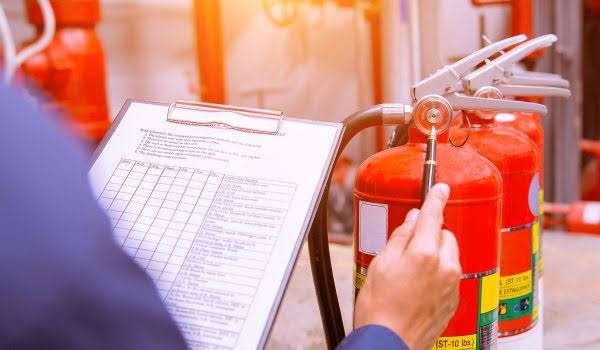
- Choosing a fire extinguisher is an important part of preparing a home, office, shop, school, factory, warehouse, or commercial building for a possible fire emergency. However, buying an extinguisher is not simply a matter of selecting the largest or most affordable cylinder. The correct choice depends on the type of fire that may occur, the size of the risk, the location, the surrounding equipment, and the characteristics of the extinguisher itself.
In Pakistan, fire safety planning commonly includes portable extinguishers alongside other protective measures such as fire detection and alarm systems, hydrants, sprinklers, emergency exits, and evacuation plans. The Building Code of Pakistan – Fire Safety Provisions 2016 states that portable extinguishers should be selected according to the likely fire type, fire size, hazards in the area, electrical equipment, temperature conditions, and other relevant factors.
This buyer’s guide explains the main types of fire extinguishers, how to match them with different risks, what to check before purchasing, and how to think about installation and maintenance in Pakistan.
Why Choosing the Right Fire Extinguisher Matters
A fire extinguisher is designed for controlling a fire of limited size during its early stage. It is not a replacement for a complete fire protection system or for professional firefighting services.
Using an unsuitable extinguisher can be ineffective and, in some situations, unsafe. For example, the extinguisher selected for ordinary combustible materials may not be suitable for a particular electrical or cooking-oil hazard.
The first step for any buyer is therefore to understand the fire risks present at the location. A house may have risks from cooking, electrical appliances, paper, furniture, and gas. An office may have computers, electrical equipment, paper, furniture, and a small kitchen. A workshop or factory may also contain fuels, chemicals, machinery, gases, or other specialized hazards.
Pakistan’s Building Code emphasizes selecting extinguishers according to the specific class of hazard they are intended to protect.
Understanding Fire Classes
Fire classes help identify what type of material is burning. Different standards can use slightly different terminology, so buyers should always read the classification printed on the extinguisher and follow the manufacturer’s instructions.
Class A Fires
Class A fires involve ordinary combustible materials such as:
– Wood
– Paper
– Cardboard
– Cloth
– Some plastics
– Other ordinary solid materials
These materials are common in homes, offices, schools, shops, and warehouses.
An extinguisher approved for Class A fires may therefore be appropriate where ordinary solid combustibles represent a significant risk.
Class B Fires
Class B hazards involve flammable liquids, including materials such as petrol, diesel, oils, paints, and certain solvents.
These risks can occur in workshops, garages, industrial areas, fuel-related facilities, and locations where flammable liquids are stored or used.
The extinguisher must specifically be rated for the relevant hazard.
Class C and Electrical Hazards
Classification terminology for electrical fires varies between standards. Some systems use Class C for energized electrical equipment, while other systems use Class C for flammable gases and treat energized electrical equipment separately.
For this reason, buyers should not rely only on the letter printed on a product. Read the manufacturer’s fire-class markings and instructions carefully.
Electrical equipment can be present in almost every modern building, including computers, distribution boards, machinery, appliances, and control panels.
Class D Fires
Class D fires involve combustible metals. These hazards are generally associated with specialized industrial or laboratory environments rather than ordinary homes.
If combustible metals are present, a standard multipurpose extinguisher should not automatically be assumed to be suitable. The extinguisher should be specifically approved for the particular metal hazard.
Cooking-Oil and Fat Fires
Commercial kitchens and restaurants can face fires involving cooking oils and fats. These fires require an extinguisher designed for the specific cooking hazard.
A kitchen should therefore be assessed separately from the rest of a building. The appropriate extinguisher depends on the equipment, cooking process, fuel, and applicable safety requirements.
Common Types of Fire Extinguishers
Once the likely fire hazards are identified, the next step is choosing an appropriate extinguishing agent.
Dry Chemical Powder Extinguishers
Dry Chemical Powder, commonly called DCP, extinguishers are widely used for general fire protection. Depending on their formulation and certification, they can be suitable for several fire classes.
ABC-rated DCP extinguishers are commonly used for a range of ordinary combustible, flammable-liquid, and other specified hazards. However, buyers should always confirm the actual classification printed on the product rather than assuming every DCP extinguisher has identical capabilities.
DCP units can be useful in offices, shops, workshops, warehouses, and other locations where multiple fire hazards may exist.
One consideration is that powder can leave residue after discharge. This may matter around sensitive electronic equipment or areas where cleanup could be difficult.
Carbon Dioxide Extinguishers
Carbon dioxide, or CO₂, extinguishers are commonly associated with electrical equipment and certain flammable-liquid hazards.
They are useful in locations where avoiding powder residue is important, such as offices and areas containing electronic equipment, provided the extinguisher is appropriately rated for the hazard.
As with every extinguisher, the label and manufacturer’s instructions should be checked before purchase.
Water Extinguishers
Water extinguishers are designed primarily for appropriate Class A hazards. They can be useful where ordinary combustible materials such as paper, cardboard, or wood are the main concern.
However, water is not universally suitable for every type of fire. A buyer should never assume that a water extinguisher can be used for electrical equipment or other hazards for which it is not rated.
Foam Extinguishers
Foam extinguishers can be used for certain Class A and Class B risks, depending on the product’s approval and rating.
They may be considered in environments where combustible solids and flammable liquids are both present.
The specific rating should always be checked before purchase because not every foam product has identical applications.
Wet Chemical Extinguishers
Wet chemical extinguishers are designed for particular cooking-related hazards and are commonly considered for commercial kitchens.
Restaurants, hotels, cafeterias, and other food-service businesses should assess cooking equipment and oil-related risks before selecting fire protection equipment.
How to Choose the Correct Size
Fire extinguishers are available in different capacities. Bigger does not automatically mean better.
A larger extinguisher can contain more extinguishing agent and may provide greater capacity, but it can also be heavier and more difficult for some people to handle.
The correct size depends on:
– The size of the protected area
– The fire risk
– The fire rating of the extinguisher
– The number and location of hazards
– Accessibility
– The people expected to use the equipment
– Applicable building and fire-safety requirements
The Building Code of Pakistan treats extinguishers as first-line protection for fires of limited size and requires selection based on the particular hazards present.
For a commercial or industrial facility, extinguisher placement and capacity should ideally be determined through a proper fire-risk assessment rather than simply purchasing a convenient cylinder size.
Check the Label Before Buying
The label is one of the most important parts of a fire extinguisher.
Before purchasing, check for:
Fire classification: Confirm which fire types the extinguisher is designed to handle.
Extinguishing agent: Identify whether it contains powder, CO₂, water, foam, wet chemical, or another agent.
Capacity: Check the quantity of extinguishing agent.
Operating instructions: Instructions should be clear and readable.
Manufacturer information: Look for the manufacturer’s name and relevant product information.
Manufacturing information: Check the manufacturing date and other required markings.
Certification or approval: Make sure the product complies with the relevant standards or approval requirements applicable to the project.
Technical specifications used in Pakistani procurement documents commonly require extinguishers to identify the extinguishing agent, quantity, gross weight, filling pressure, fire classifications, manufacturer, and manufacturing year.
Consider the Environment
The same extinguisher is not necessarily suitable for every location.
For example, an office containing computers may require different consideration from a warehouse storing cardboard. A restaurant kitchen presents different risks from a residential bedroom. A workshop with fuel and machinery may require another combination of equipment.
Temperature and environmental conditions can also matter. The Building Code specifically identifies ambient temperature as one of the factors to consider when selecting portable extinguishers.
Buyers should therefore tell the supplier exactly where the extinguisher will be installed and what materials or equipment are present.
Where Should Fire Extinguishers Be Installed?
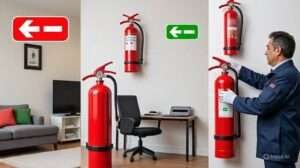
Accessibility is essential. A fire extinguisher that is hidden behind furniture, stored in a locked room, or blocked by equipment may not be useful during an emergency.
Civil Defence guidance in Pakistan highlights appropriate placement, including locations such as exits and corridors, while emphasizing that extinguishers should be easily accessible and maintained in working order.
The exact placement and number should be determined according to the building layout, fire hazards, applicable code requirements, and a qualified assessment.
Extinguishers should also be clearly visible and accompanied by operating instructions.
Fire Extinguishers Are Only One Part of Fire Safety
Buying extinguishers should not be treated as a complete fire-safety plan.
For commercial and other regulated buildings, fire safety may also involve:
– Fire detection systems
– Fire alarm systems
– Emergency exits
– Evacuation plans
– Fire hydrants
– Sprinkler systems
– Emergency lighting
– Fire control rooms
– Fire drills
– Staff training
– Regular inspection and maintenance
Punjab Civil Defence lists fire detection and alarm systems, firefighting arrangements, fire safety plans, emergency fire control rooms, and emergency evacuation measures among important fire-safety measures for relevant premises.
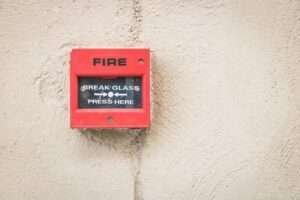
A properly planned Fire alarm system in Pakistan can provide early warning, while portable extinguishers provide a means of responding to a small fire when it is safe to do so.
Fire Extinguisher Maintenance
A newly purchased extinguisher still requires ongoing attention.
Regular checks should look for:
– Physical damage
– Corrosion
– Leakage
– Missing or damaged safety components
– Pressure problems where applicable
– Blocked or damaged discharge mechanisms
– Unreadable labels
– Expired or unsuitable equipment
– Signs that the extinguisher has been discharged
Maintenance should follow the manufacturer’s instructions and applicable standards.
The Building Code of Pakistan states that an extinguisher that can no longer be serviced according to the manufacturer’s maintenance manual is considered obsolete and should be removed from service.
Civil Defence guidance also emphasizes checking that fire extinguishers and other firefighting equipment are properly maintained and in working order.
Should You Buy the Cheapest Fire Extinguisher?
Price is an important consideration, but it should not be the only consideration.
A very inexpensive extinguisher may not provide the required capacity, rating, quality, certification, or service support for a particular application.
Instead of comparing products only by price, buyers should compare:
1. Fire classification
2. Extinguishing agent
3. Fire rating
4. Capacity
5. Certification or applicable approval
6. Manufacturing information
7. Construction quality
8. Maintenance and refill support
9. Supplier reputation
10. Suitability for the intended location
For businesses and larger buildings, the purchase should ideally be based on a documented fire-risk assessment.
Buying Fire Extinguishers in Pakistan
When purchasing fire extinguishers in Pakistan, buyers should provide the supplier with basic information about the property.
Useful information includes:
– Building type
– Number of floors
– Approximate area
– Main activities
– Electrical equipment
– Kitchen facilities
– Fuel or chemical storage
– Machinery
– Number of occupants
– Existing fire protection systems
A supplier can then help identify products appropriate to the identified risks. For larger or regulated buildings, consultation with a qualified fire-safety professional may be necessary.
A complete fire protection strategy can also include a fire alarm system, emergency lighting, hydrants, sprinklers, and evacuation planning.
Questions to Ask a Fire Extinguisher Supplier
Before purchasing, ask:
What fire classes is this extinguisher approved for?
This is the most basic question because the extinguisher must match the expected hazard.
What is the fire rating?
Capacity alone does not tell you how effective an extinguisher is. The rating provides additional information about its tested capability.
What standard does the product comply with?
Ask for documentation of applicable standards or approvals.
How often does it require inspection or servicing?
Maintenance requirements should be understood before purchase.
Is refill and servicing available locally?
An extinguisher is a long-term safety product, so after-sales support matters.
Is this product appropriate for my particular environment?
A supplier should consider the actual fire risk instead of recommending a product based only on size or price.
A Practical Buying Checklist
Before finalizing a purchase, use this simple checklist:
– Identify the likely fire hazards.
– Determine the appropriate fire classification.
– Select the correct extinguishing agent.
– Check the extinguisher’s fire rating.
– Choose a practical capacity.
– Confirm applicable certification or standards.
– Inspect the cylinder and components.
– Check manufacturing information.
– Make sure instructions are clearly visible.
– Plan accessible installation locations.
– Confirm servicing and refill arrangements.
– Keep records of inspection and maintenance.
– Coordinate extinguishers with the wider fire-safety plan.
For larger premises, the selection should be based on the applicable building code and professional fire-risk assessment rather than a one-size-fits-all approach.
Final Thoughts
A fire extinguisher is a relatively simple piece of equipment, but choosing the correct one requires careful consideration. The most suitable extinguisher depends on the type of fire risk, the size of the hazard, the surrounding environment, and applicable safety requirements.
Homeowners, business owners, facility managers, and industrial operators in Pakistan should avoid selecting equipment based only on appearance or price. Instead, they should examine fire classifications, ratings, extinguishing agents, standards, installation requirements, and maintenance support.
Fire extinguishers should also be viewed as one component of a broader fire-protection strategy. Detection and alarm systems, emergency exits, evacuation procedures, hydrants, sprinklers, training, and regular inspections can all contribute to a safer building.
For information about fire-safety equipment and related solutions in Pakistan, visit “Fire Safety Trading” (https://firesafetytrading.com.pk).
FAQs
1. What type of fire extinguisher is suitable for a home in Pakistan?
The appropriate extinguisher depends on the fire hazards present in the home. Many homes have a combination of ordinary combustibles and electrical risks, while kitchens can have additional cooking-related hazards. The extinguisher’s label and fire classification should always be checked before purchase.
2. Is a DCP fire extinguisher suitable for every type of fire?
No. DCP extinguishers can be manufactured for different classifications, so buyers should check the exact rating and label. An ABC-rated DCP extinguisher is designed for specified multiple fire classes, but specialized hazards may require a different extinguishing agent.
3. How do I know which size fire extinguisher I need?
Size depends on the fire risk, area, fire rating, accessibility, and applicable requirements. A larger cylinder is not automatically the correct choice. Commercial and industrial properties should use a fire-risk assessment to determine suitable capacity and placement.
4. How often should fire extinguishers be checked?
Fire extinguishers require regular inspection and maintenance according to the manufacturer’s instructions and applicable standards. They should remain accessible, clearly identifiable, undamaged, and in working condition. Equipment that cannot be properly serviced should be removed from service.
5. Is a fire extinguisher enough to protect a building?
No. Portable extinguishers are intended as first-line protection for limited fires. A complete fire-safety strategy can also include fire detection and alarm systems, emergency exits, evacuation planning, hydrants, sprinklers, emergency lighting, training, and regular inspections. Pakistan’s Civil Defence guidance identifies several of these measures as part of fire-safety arrangements.