Fire safety is not a luxury. It is a basic need for homes, offices, factories, hospitals, shopping malls, and industrial sites. Every year, fire incidents cause heavy financial losses and serious injuries across Pakistan. Many of these losses could be reduced if the right fire extinguisher types were installed and used properly.
Understanding fire extinguisher types is important because not every fire can be controlled with the same equipment. Using the wrong extinguisher can make the situation worse. In this detailed guide, you will learn about different fire extinguisher types, their uses, and the correct way to operate them safely.
This article is specially written for Pakistani readers, business owners, safety officers, and homeowners who want practical and clear information about fire protection.
Why Understanding Fire Extinguisher Types Is Important
Fire Safety Trading (Pvt)
ToggleA fire extinguisher is usually the first line of defense in a fire emergency. It is designed to control small fires before they spread. However, different fires require different extinguishing agents.
For example, a water extinguisher works well on paper or wood fires, but if you use it on an electrical fire, it can cause electric shock. Similarly, using water on an oil fire can spread flames rapidly.
That is why knowing fire extinguisher types is not just technical knowledge. It is a matter of safety.
Classification of Fire Types
Before learning about fire extinguisher types, it is important to understand fire classes. Fires are classified based on the type of material that is burning.
Class A fires involve ordinary combustible materials like wood, paper, cloth, and plastic.
Class B fires involve flammable liquids such as petrol, diesel, oil, and paint.
Class C fires involve gases like LPG and CNG.
Class D fires involve combustible metals such as magnesium and sodium.
Electrical fires involve energized electrical equipment such as wiring, panels, and machines.
Cooking oil fires are sometimes classified separately in commercial kitchens because they require special extinguishers.
Each class of fire requires a suitable extinguisher.
Main Fire Extinguisher Types Used in Pakistan
There are several fire extinguisher types available in the Pakistani market. The most commonly used ones are described below in detail.
Water Fire Extinguisher
Water extinguishers are one of the most basic and affordable options. They are mainly used for Class A fires involving wood, paper, and cloth.
How it works
Water cools the burning material and reduces the temperature below the ignition point. Once the heat is removed, the fire stops.
Where it is used
Schools, offices, homes, and places where flammable liquids are not present.
Where it should not be used
It must not be used on electrical fires or oil fires. Water conducts electricity and can cause severe injury. On oil fires, it can spread the flames.
Foam Fire Extinguisher
Foam extinguishers are suitable for Class A and Class B fires.
How it works
Foam forms a thick layer over burning liquid, cutting off oxygen supply and preventing re ignition. It also cools the surface.
Where it is used
Petrol pumps, workshops, warehouses, and industrial facilities where flammable liquids are stored.
Limitations
Foam extinguishers should not be used on live electrical equipment unless they are specifically rated safe.
Dry Powder Fire Extinguisher
Dry powder is one of the most common fire extinguisher types in Pakistan because it is versatile.
How it works
Dry powder interrupts the chemical reaction of fire. It creates a barrier between fuel and oxygen.
Types of dry powder
There are general purpose powders for Class A, B, and C fires. There are also special powders for Class D metal fires.
Where it is used
Factories, gas stations, vehicles, commercial buildings, and industrial plants.
Advantages
It can be used on electrical fires. It works quickly.
Disadvantages
It leaves residue and can damage sensitive equipment. It reduces visibility when discharged.
Carbon Dioxide CO2 Fire Extinguisher
CO2 extinguishers are specially designed for electrical and Class B fires.
How it works
Carbon dioxide displaces oxygen and cools the fire. Since it is a gas, it does not leave residue.
Where it is used
Server rooms, laboratories, electrical panels, offices with computers, and control rooms.
Advantages
No residue. Safe for electronic equipment.
Limitations
It is less effective outdoors where gas can disperse quickly. It does not work well on deep seated Class A fires.
Wet Chemical Fire Extinguisher
Wet chemical extinguishers are specially designed for cooking oil fires.
How it works
It reacts with hot oil to form a soap like layer that seals the surface and prevents re ignition.
Where it is used
Hotels, restaurants, commercial kitchens, and food processing units.
Why it is important
Using water on cooking oil can cause a dangerous fire explosion. Wet chemical extinguishers are much safer in such environments.
Choosing the Right Fire Extinguisher for Your Property
Selecting the correct fire extinguisher types depends on risk assessment. You must consider:
The type of materials present
The size of the building
Electrical installations
Storage of fuel or chemicals
Local fire safety regulations
For example, a house may need a dry powder extinguisher for general use and a small CO2 extinguisher for electrical panels. A factory handling chemicals may require foam, powder, and CO2 extinguishers at different locations.
If you want professional guidance and certified products, you can explore reliable suppliers such as https://firesafetytrading.com.pk/fire-extinguishers-in-pakistan/ to understand available options and compliance standards.
How to Use a Fire Extinguisher Properly
Knowing fire extinguisher types is only half the job. You must also know how to use them correctly.
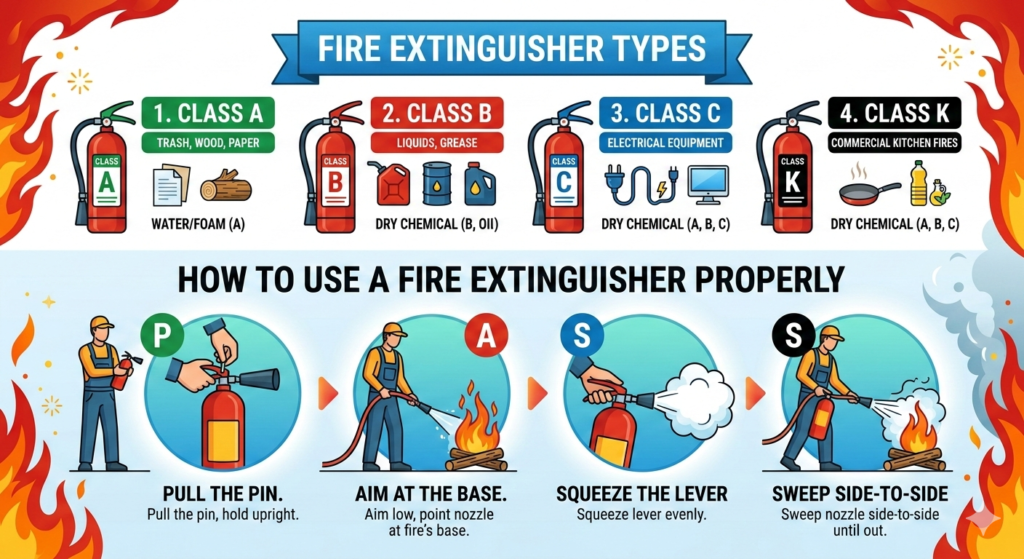
The most common method is remembered by the word PASS.
Pull the pin
This breaks the tamper seal and allows you to operate the extinguisher.
Aim at the base of the fire
Do not spray at the flames. Always target the base where the fuel is burning.
Squeeze the handle
This releases the extinguishing agent.
Sweep from side to side
Move the nozzle slowly across the base of the fire until it is fully out.
Always maintain a safe distance, usually about two to three meters from the fire. Move closer only if necessary.
Important Safety Precautions
Never attempt to fight a large fire. If the fire is spreading rapidly, evacuate immediately and call emergency services.
Always keep an exit route behind you while using an extinguisher.
Check pressure gauges regularly to ensure the extinguisher is charged.
Do not use expired or damaged extinguishers.
Training employees in fire extinguisher types and usage is essential in offices and factories.
Maintenance and Inspection of Fire Extinguishers
A fire extinguisher is useful only if it works during an emergency. Regular inspection is mandatory.
Monthly checks should include:
Ensuring the pressure gauge is in the green zone
Checking for visible damage
Making sure the pin and seal are intact
Confirming the extinguisher is easily accessible
Annual servicing should be carried out by certified professionals. In Pakistan, safety regulations often require documented maintenance records for commercial properties.
Refilling should be done immediately after use, even if the extinguisher was partially discharged.
Fire Extinguisher Placement Guidelines
Proper placement is as important as selecting the correct fire extinguisher types.
Extinguishers should be mounted on walls at visible and accessible points.
They should be placed near exits, kitchens, electrical panels, and high risk areas.
Do not block extinguishers with furniture or storage items.
Clear signage should be installed to indicate their location.
In multi story buildings, each floor should have appropriate fire extinguishers installed.
Fire Safety Laws and Compliance in Pakistan
Many commercial buildings, factories, and high rise structures are legally required to install fire extinguishers. Local building control authorities and civil defense departments conduct inspections.
Failure to comply can result in fines, closure notices, or legal action.
Insurance companies also check whether proper fire extinguisher types are installed before issuing coverage.
Investing in certified extinguishers is not just about safety. It is also about legal protection.
Common Mistakes People Make
One major mistake is buying the cheapest extinguisher without understanding fire risk.
Another mistake is ignoring maintenance. An expired extinguisher is as useless as having none.
Many people install only one type of extinguisher for all areas, which is risky.
Some people hesitate during fire emergencies because they are not trained.
Awareness and training solve most of these issues.
Fire Extinguishers for Homes in Pakistan
In Pakistani homes, common fire risks include gas leakage, electrical short circuits, and kitchen oil fires.
A small dry powder extinguisher of 2 kg or 4 kg is suitable for general household use.
A CO2 extinguisher is useful near inverter systems and electrical panels.
If you run a home based food business, a wet chemical extinguisher is strongly recommended.
Installing extinguishers near the kitchen and main entrance increases response time during emergencies.
Fire Extinguishers for Industries and Commercial Buildings
Industrial sites require detailed risk assessments.
Factories dealing with chemicals may need foam and dry powder units.
Data centers require CO2 extinguishers to protect sensitive electronics.
Petrol pumps must have foam and powder extinguishers strategically placed.
Shopping malls and offices require multiple units on every floor.
Professional consultation ensures that the correct fire extinguisher types are installed according to risk.
Importance of Fire Safety Training
Even the best equipment is useless without trained people.
Employees should receive training on:
Identifying fire classes
Selecting the right extinguisher
Using the PASS method
Evacuation procedures
Regular fire drills improve response time and reduce panic.
Training also builds confidence. When people know what to do, they act quickly and correctly.
The Cost of Ignoring Fire Safety
Fire damage is not limited to property loss. It can result in business closure, legal cases, injury, and even loss of life.
In many cases, small fires turn into major disasters because there was no proper extinguisher nearby.
Investing in the correct fire extinguisher types is a small cost compared to the potential losses.
Final Thoughts
Understanding fire extinguisher types and how to use them properly is essential for every home and business. Each type is designed for specific fire classes, and using the wrong one can be dangerous.
In Pakistan, where industrial growth and urban development are increasing, fire safety awareness must also grow. Whether you are a homeowner, factory owner, school administrator, or office manager, installing the correct fire extinguishers and training people to use them can save lives.
Do not wait for an emergency to realize the importance of fire safety. Evaluate your property, choose the right fire extinguisher types, maintain them regularly, and ensure everyone knows how to use them correctly.
Proper preparation today can prevent disaster tomorrow.