Restaurants are busy environments where cooking equipment, electrical appliances, gas connections, ventilation systems, employees, and customers come together every day. These activities make fire safety an important part of restaurant management. A small safety oversight can create serious problems, particularly when a restaurant is crowded or employees are unfamiliar with emergency procedures.
Restaurant fire safety involves more than keeping a fire extinguisher in the kitchen. It requires identifying potential hazards, maintaining equipment, providing suitable fire detection, keeping escape routes clear, and preparing employees to respond appropriately during an emergency.
In Pakistan, restaurants range from small family-owned eateries to large commercial dining establishments. Each type of business has different requirements depending on its kitchen facilities, building layout, occupancy, and location. Owners and managers should therefore develop safety arrangements that reflect their premises rather than relying on a general checklist alone.
Understanding common mistakes is a useful first step towards creating a safer restaurant. This guide explains seven mistakes that restaurant owners, managers, and employees should avoid.
## 1. Ignoring Regular Kitchen Cleaning and Maintenance
One of the most common restaurant fire safety mistakes is neglecting kitchen cleanliness and equipment maintenance.
Commercial kitchens use cooking ranges, ovens, grills, fryers, and other heat-producing appliances. During normal operations, grease, oil, and food residues can accumulate around cooking surfaces, filters, extraction hoods, and ventilation systems.
If these areas are not cleaned and maintained appropriately, accumulated grease and other combustible materials can increase fire risks.
Poor housekeeping can also create problems in storage areas. Cardboard packaging, paper supplies, cleaning materials, and waste should not be allowed to accumulate near equipment or other potential heat sources.
**Why this mistake matters**
A restaurant kitchen operates throughout the day, often under considerable pressure. When cleaning responsibilities are unclear, important areas may be overlooked. Over time, this can create conditions that increase the likelihood of a fire.
**How restaurants can improve**
– Establish a documented kitchen cleaning schedule.
– Assign cleaning responsibilities to appropriate staff members.
– Arrange professional cleaning of ventilation and extraction components as required.
– Keep cooking and storage areas organised.
– Remove waste regularly.
– Maintain cooking appliances according to manufacturer recommendations.
– Arrange professional inspections when equipment shows signs of damage or malfunction.
Cleaning should be treated as an essential part of restaurant operations, not simply an end-of-day activity.
## 2. Choosing an Unsuitable Fire Alarm System
Another important mistake is selecting a fire alarm system without considering the restaurant’s actual layout and operating conditions.
Restaurants contain different areas, including kitchens, dining rooms, storage spaces, offices, and sometimes multiple floors. Each area may have different environmental conditions and fire risks.
A suitable fire alarm arrangement should be selected according to the building’s design, occupancy, applicable requirements, and the characteristics of its individual spaces.
Depending on the system design, components may include smoke detectors, heat detectors, manual call points, control panels, audible alarms, and visual warning devices.
However, choosing equipment without a professional assessment may result in unsuitable coverage or repeated nuisance alarms.
**Why this mistake matters**
An alarm system must provide occupants with an appropriate warning. If employees do not recognise the alarm or customers cannot hear or otherwise receive the warning, the system may not support an effective emergency response.
**How restaurants can improve**
– Arrange a professional assessment before selecting equipment.
– Consider the kitchen, dining areas, storage spaces, and escape routes.
– Use suitable detection arrangements for different environments.
– Ensure warning devices can alert occupants throughout the premises.
– Arrange professional installation and maintenance.
– Train employees to recognise the alarm signal.
– Keep inspection and testing records.
A fire alarm system in Pakistan should be selected with consideration for applicable building regulations and the restaurant’s specific requirements. Punjab Civil Defence identifies fire detection and alarm systems among the fire safety measures considered during inspections of relevant commercial premises.
## 3. Neglecting Electrical and Gas Safety
Restaurants depend on electrical and gas-powered equipment for everyday operations. Cooking appliances, refrigeration units, lighting, ventilation systems, water heaters, and other equipment all require appropriate installation and maintenance.
Ignoring electrical or gas-related concerns can create serious safety risks.
Common warning signs may include damaged electrical equipment, unusual overheating, repeated electrical faults, or concerns about gas appliances and connections. These issues should never be dismissed as minor inconveniences.
**Why this mistake matters**
Restaurants often operate several appliances simultaneously. Poor maintenance or unsuitable installations can increase risks and affect the safety of employees and customers.
**How restaurants can improve**
– Arrange electrical inspections through qualified professionals.
– Maintain gas appliances and connections appropriately.
– Report unusual smells, damaged equipment, and other warning signs immediately.
– Keep electrical installations in suitable condition.
– Follow manufacturer instructions for commercial appliances.
– Ensure maintenance work is performed by competent professionals.
– Maintain records of inspections and repairs.
Employees should not attempt technical repairs beyond their training. Any suspected gas or electrical emergency should be handled according to the restaurant’s emergency procedures and by appropriate professionals.
## 4. Blocking Emergency Exits and Escape Routes
Some restaurants focus heavily on seating capacity, furniture arrangements, and storage space without giving enough attention to emergency exits.
This can create dangerous conditions when corridors, doorways, staircases, or designated escape routes become obstructed.
Boxes, delivery supplies, extra chairs, decorations, and other materials should never interfere with designated escape routes. Required exits must also remain available in accordance with applicable safety requirements.
**Why this mistake matters**
Customers may not know the restaurant’s layout. During an emergency, they need clear and understandable ways to leave the premises.
Smoke, noise, reduced visibility, and confusion can make evacuation more difficult. Blocked exits may add further complications.
**How restaurants can improve**
– Keep designated escape routes clear.
– Ensure emergency exits are appropriately identified.
– Maintain exit doors and access arrangements.
– Display suitable exit signs.
– Provide emergency lighting where required.
– Identify a safe outdoor assembly point.
– Review escape arrangements whenever the restaurant layout changes.
Employees should understand the approved evacuation routes and know how to communicate instructions to customers.
## 5. Keeping Firefighting Equipment Without Proper Maintenance
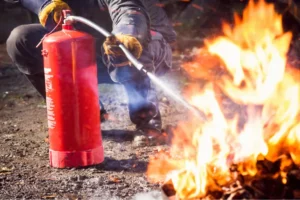
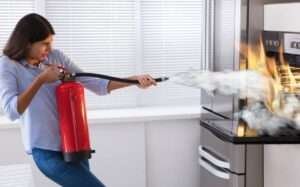
Many restaurant owners understand that firefighting equipment is important. However, simply purchasing extinguishers or other equipment does not complete their fire safety responsibilities.
Different fires require different types of firefighting equipment. For example, equipment suitable for ordinary combustible materials may not be appropriate for cooking oils or electrical hazards.
A restaurant needs an assessment of its potential risks so that suitable equipment can be selected for the kitchen, dining area, storage spaces, and other relevant locations.
**Why this mistake matters**
Unsuitable, inaccessible, damaged, or poorly maintained equipment may not provide the expected protection during an emergency.
Employees may also become confused if they do not understand the purpose of the equipment or their responsibilities.
**How restaurants can improve**
– Arrange a professional fire risk assessment.
– Select equipment suitable for the identified hazards.
– Keep firefighting equipment accessible and clearly identified.
– Arrange inspections and servicing by competent personnel.
– Maintain records of equipment maintenance.
– Provide appropriate awareness training to employees.
– Replace or service defective equipment promptly.
Employees should never attempt to fight a growing fire or put themselves in danger. Evacuation and contacting emergency services must take priority when conditions are unsafe.
## 6. Failing to Train Restaurant Employees
Restaurant employees are often the first people to notice unusual conditions in the kitchen or dining area. However, they may not know how to respond if they have not received appropriate fire safety training.
Staff members should understand common fire hazards, alarm signals, emergency exits, assembly points, and reporting procedures.
Training should also explain the responsibilities of designated personnel, such as managers or emergency coordinators.
**Why this mistake matters**
Without clear instructions, employees may become confused during an emergency. They may not know whom to notify, where customers should go, or how to follow the restaurant’s evacuation plan.
**How restaurants can improve**
A suitable awareness programme should cover:
– Common kitchen and workplace fire hazards.
– The purpose of fire detection and alarm systems.
– Emergency reporting procedures.
– Approved evacuation routes.
– Assembly points.
– Employee responsibilities during evacuation.
– Procedures for assisting customers who need additional support.
– The importance of leaving the premises when instructed.
New employees should receive relevant safety information before taking on their normal responsibilities. Existing staff should receive refresher training when procedures or workplace conditions change.
Training should be appropriate to each employee’s role and delivered by competent personnel.
## 7. Not Having a Written Emergency Plan
One of the most serious mistakes is operating a restaurant without a clear emergency plan.
Even when a business has suitable equipment, employees may not know what to do if an alarm activates. Customers may also be unfamiliar with the building’s exits and assembly arrangements.
A written plan helps establish responsibilities and provides a consistent approach to emergency communication and evacuation.
**Why this mistake matters**
During an emergency, confusion can delay important decisions. A documented plan helps employees understand their responsibilities and supports a more organised response.
**How restaurants can improve**
An emergency plan should include:
– Procedures for raising the alarm.
– Emergency contact information.
– Approved evacuation routes.
– Alternative routes where available.
– A designated outdoor assembly point.
– Employee responsibilities.
– Arrangements for visitors and customers.
– Procedures for assisting people who need additional support.
– Communication arrangements with emergency responders.
– Instructions about when occupants may safely return.
Restaurants should also practise their evacuation arrangements through appropriate drills. After each drill, management should review any problems and update the plan when necessary.
## Additional Fire Safety Considerations for Restaurants
Avoiding the seven mistakes above is a strong starting point, but restaurant owners should also consider several other areas.
### Proper Storage of Combustible Materials
Restaurants regularly receive packaging, paper supplies, cleaning products, and food stock. Storage arrangements should keep these materials away from unsuitable heat sources and ensure that emergency equipment and escape routes remain accessible.
### Safe Ventilation and Extraction Systems
Commercial kitchens depend on ventilation and extraction equipment to manage heat, smoke, and cooking vapours. These systems should receive suitable cleaning and professional maintenance according to their design and operating conditions.
### Customer Awareness
Customers may not know where emergency exits are located. Restaurants should ensure that emergency signs and evacuation arrangements are understandable and accessible.
Staff should know how to communicate evacuation instructions clearly without creating unnecessary confusion.
### Regular Safety Inspections
A regular inspection helps identify problems before they become more serious. Restaurant management should review kitchen equipment, electrical installations, storage areas, alarm systems, emergency exits, and firefighting equipment.
Any identified issue should be recorded and assigned to the appropriate person for follow-up.
## Restaurant Fire Safety Requirements in Pakistan
Fire safety requirements in Pakistan may depend on the restaurant’s location, building classification, occupancy, layout, and the authority responsible for regulating the premises.
The Building Code of Pakistan Fire Safety Provisions 2016 provides a framework for fire prevention, detection, protection, and life safety. It addresses relevant matters such as fire alarm and detection systems, emergency planning, and evacuation arrangements.
Punjab Civil Defence lists fire detection and alarm systems, firefighting arrangements, fire safety plans, emergency exits, and evacuation plans among the measures considered during inspections of applicable commercial premises.
The Sindh Civil Defence Department also identifies restaurants among the commercial premises for which fire safety inspection and technical assistance may be provided. <Cite refs={[“turn433233search0″,”turn433233search3″,”turn433233search12”]}/>
Restaurant owners should confirm the requirements applicable to their particular premises with the relevant local authority or a qualified fire safety professional. A general checklist cannot replace an official assessment of a building.
## How to Create a Restaurant Fire Safety Checklist
A written checklist can help restaurant managers organise safety responsibilities and review important areas consistently.
| Area | What should be reviewed |
|—|—|
| Kitchen cleanliness | Cleaning schedules and grease management |
| Cooking equipment | Condition and professional maintenance |
| Electrical safety | Wiring, appliances, and reported faults |
| Gas safety | Suitable installation and professional inspection |
| Fire alarm | Suitability, testing, and maintenance |
| Firefighting equipment | Correct selection, accessibility, and servicing |
| Emergency exits | Clear routes and suitable signage |
| Employee training | Awareness of alarms and evacuation procedures |
| Emergency plan | Written procedures and assigned responsibilities |
| Fire drills | Practice and review of evacuation arrangements |
| Storage | Safe organisation of combustible materials |
| Documentation | Inspection, training, and maintenance records |
The checklist should be reviewed regularly and updated whenever the restaurant’s layout, equipment, or operations change.
## Conclusion
Restaurant fire safety requires consistent attention from owners, managers, and employees. Common mistakes such as neglecting kitchen cleaning, choosing unsuitable alarm systems, ignoring electrical and gas safety, blocking emergency exits, overlooking equipment maintenance, failing to train employees, and operating without an emergency plan can create unnecessary risks.
For restaurants in Pakistan, a suitable fire alarm system, appropriate firefighting equipment, clear evacuation arrangements, and regular employee training should form part of a broader safety strategy. The Building Code of Pakistan Fire Safety Provisions 2016 and relevant local requirements provide important guidance for applicable premises.
The most effective approach is to identify hazards, maintain safety equipment, communicate responsibilities, and review emergency arrangements regularly. Fire safety should be part of everyday restaurant management rather than a task considered only during inspections.
By avoiding these common mistakes, restaurant operators can improve preparedness, support safer working conditions, and help protect both employees and customers.
## Frequently Asked Questions (FAQs)
### 1. What are the most common restaurant fire safety mistakes?
Common mistakes include neglecting kitchen cleaning, ignoring electrical and gas safety, selecting unsuitable alarm systems, blocking emergency exits, failing to maintain firefighting equipment, overlooking employee training, and not preparing a written emergency plan.
### 2. Why is a fire alarm system important in a restaurant?
A suitable fire alarm system alerts employees and customers to a potential fire so they can follow the emergency procedures. Its effectiveness depends on appropriate selection, professional installation, regular maintenance, and clear evacuation arrangements.
### 3. How can restaurants reduce kitchen fire risks?
Restaurants can reduce risks through regular cleaning, appropriate equipment maintenance, professional inspection of electrical and gas installations, suitable storage arrangements, and employee awareness.
### 4. Should restaurant employees receive fire safety training?
Yes. Employees should understand common hazards, alarm signals, emergency exits, reporting procedures, and their responsibilities during evacuation. Training should reflect the restaurant’s layout and operating conditions.
### 5. Are restaurants required to follow fire safety regulations in Pakistan?
Restaurants must follow the fire safety requirements applicable to their building, location, and occupancy. Owners should consult the relevant local authority or a qualified professional to confirm the specific requirements for their premise