Summer brings higher temperatures, increased use of electrical appliances, outdoor activities, and changes in everyday routines. While many people look forward to the season, hot weather can also create additional fire safety concerns in homes, offices, factories, restaurants, warehouses, and public buildings.
In Pakistan, summer temperatures can become particularly high in many regions. Air conditioners, fans, refrigerators, water pumps, generators, and other electrical equipment may operate for extended periods. These appliances place additional demands on electrical installations, especially where wiring and equipment are poorly maintained.
Outdoor activities, cooking arrangements, fuel storage, and careless disposal of smoking materials can also contribute to fire risks. Understanding these hazards is important because prevention is generally more effective than responding after an incident occurs.
Summer fire hazards should not be treated as ordinary seasonal inconveniences. They require attention, regular maintenance, and clear safety procedures. This article explains common summer fire risks, how to manage them responsibly, and why suitable fire protection arrangements are important throughout the season.
## 1. Understand Why Summer Can Increase Fire Risks
Hot weather does not automatically cause every fire, but summer conditions can make certain hazards more significant.
Electrical appliances may operate for longer periods, outdoor vegetation may become dry, and some businesses may use additional cooling equipment or generators. Poor housekeeping and unsuitable storage arrangements can make these conditions more concerning.
Several factors can contribute to summer fire risks:
– Increased use of electrical appliances.
– Poorly maintained air conditioners and cooling systems.
– Damaged electrical wiring.
– Improper storage of combustible materials.
– Careless handling of cooking equipment.
– Generator-related hazards.
– Dry vegetation around buildings.
– Lack of fire safety awareness.
The first step towards prevention is identifying which risks are relevant to a particular property. A home, factory, restaurant, and commercial building will not necessarily require the same safety arrangements.
## 2. Manage Electrical Appliances Carefully
Electrical appliances are widely used during summer. Fans, air conditioners, refrigerators, water pumps, and other devices may operate for long periods, increasing the importance of proper maintenance.
Damaged equipment, unsuitable connections, and poorly maintained wiring can create fire hazards. People should avoid ignoring warning signs such as unusual overheating, damaged cables, repeated electrical faults, or burning smells.
Electrical problems should be assessed by qualified professionals rather than handled through temporary repairs.
**Practical safety measures:**
– Use electrical appliances according to manufacturer instructions.
– Arrange professional inspections when necessary.
– Report damaged plugs, cables, and sockets.
– Avoid unsuitable electrical connections.
– Keep electrical equipment in good condition.
– Follow recommended maintenance schedules.
– Switch off equipment according to safe operating procedures when it is not required.
A properly maintained electrical installation supports safer operation throughout the summer months.
## 3. Pay Attention to Air Conditioners and Cooling Systems
Air conditioners are used extensively during hot weather, particularly in offices, shops, homes, and commercial buildings.
Although these systems improve indoor comfort, poor maintenance can create safety concerns. Damaged electrical components, faulty connections, blocked filters, and neglected maintenance may affect their safe operation.
Cooling equipment should receive appropriate servicing from qualified technicians. Building owners should also make sure that electrical installations are suitable for the equipment being used.
**Practical safety measures:**
– Arrange regular professional servicing.
– Keep filters and components maintained according to manufacturer guidance.
– Report unusual noises, overheating, or electrical problems.
– Avoid using visibly damaged equipment.
– Ensure electrical connections are appropriate.
– Keep maintenance records for commercial installations.
Air conditioners should never be treated as maintenance-free appliances. Regular checks help identify problems before they become more serious.
## 4. Use Generators Responsibly During Power Interruptions
Power interruptions can lead households and businesses to depend on backup generators. In Pakistan, generators are commonly used in residential buildings, offices, shops, factories, and other premises.
However, generators require careful installation, operation, and maintenance. Poorly managed equipment can create electrical, fire, and other serious safety hazards.
Generators should be installed and maintained by qualified professionals in suitable locations that follow applicable safety requirements. Fuel should be stored and managed according to relevant regulations and manufacturer instructions.
**Practical safety measures:**
– Arrange professional generator installation.
– Follow manufacturer operating instructions.
– Keep equipment maintained.
– Use approved fuel storage arrangements.
– Keep fuel away from unsuitable heat sources.
– Report leaks or equipment faults immediately.
– Ensure appropriate ventilation and safe operating conditions.
Employees and household members should understand that generator-related problems require professional attention. They should not attempt repairs beyond their training.
## 5. Keep Cooking Areas Safe
Cooking remains an important source of potential fire hazards throughout the year. During summer, restaurants, food businesses, and households may also use additional appliances and equipment.
Kitchen safety depends on good housekeeping, suitable appliance maintenance, and responsible supervision.
Grease, oil, food waste, and packaging materials should be managed carefully. Cooking areas should be kept organised, and equipment should receive appropriate maintenance.
**Practical safety measures:**
– Keep cooking areas clean.
– Maintain appliances according to manufacturer guidance.
– Avoid leaving cooking activities unattended.
– Store combustible materials appropriately.
– Arrange professional inspections when required.
– Make sure suitable fire protection equipment is available.
– Train relevant employees in emergency procedures.
Restaurant owners should include kitchens, storage rooms, dining areas, and ventilation systems in their fire risk assessments.
## 6. Control Dry Vegetation Around Buildings
In some areas, summer weather can leave grass, leaves, bushes, and other vegetation dry. This may increase the likelihood of outdoor fires spreading, particularly near buildings, storage facilities, and open land.
Properties with gardens, vacant plots, boundary areas, or nearby vegetation should consider seasonal housekeeping.
**Practical safety measures:**
– Keep outdoor areas reasonably maintained.
– Remove accumulated dry leaves and waste.
– Avoid careless disposal of smoking materials.
– Keep combustible waste away from buildings.
– Follow local restrictions on outdoor burning.
– Report nearby fire hazards to the appropriate authority.
Property owners should also consider nearby structures and surrounding land when reviewing their fire prevention arrangements.
## 7. Store Flammable and Combustible Materials Properly
Many buildings contain materials that can contribute to fire spread if stored carelessly. These may include packaging, paper, cleaning products, fuels, solvents, and other combustible supplies.
Summer heat makes responsible storage particularly important, especially in facilities containing materials that require specific temperature or handling conditions.
Businesses should follow the relevant product safety information, storage requirements, and applicable regulations.
**Practical safety measures:**
– Use designated storage areas.
– Follow product labels and manufacturer instructions.
– Keep storage spaces organised.
– Prevent unnecessary accumulation of waste.
– Maintain suitable separation from heat sources.
– Keep emergency routes and firefighting equipment accessible.
– Restrict access where required.
Different materials have different storage requirements. Organisations should obtain professional advice where hazardous or specialised products are involved.
## 8. Understand the Importance of Fire Detection and Alarm Systems
A fire detection and alarm system is an important part of a building’s overall protection arrangements.
It helps identify signs of a potential fire and alert occupants so they can follow the emergency plan. Depending on the building’s design, a system may include smoke detectors, heat detectors, manual call points, control panels, audible alarms, and visual warning devices.
The suitability of the system depends on the building’s size, layout, occupancy, and potential hazards.
During summer, businesses should make sure that their fire detection and alarm arrangements remain properly maintained. Increased use of cooling equipment, changes in building operations, and seasonal maintenance activities should not result in neglected safety systems.
**Practical safety measures:**
– Arrange a professional assessment of detection requirements.
– Use suitable equipment for different building areas.
– Follow the manufacturer’s inspection and maintenance guidance.
– Report faults promptly.
– Keep alarm devices accessible.
– Make sure occupants understand warning signals.
– Maintain relevant service and inspection records.
A fire alarm system in Pakistan should be selected and maintained according to the building’s applicable requirements. The Building Code of Pakistan Fire Safety Provisions 2016 provides a framework for fire detection, protection, and life safety.
## 9. Keep Firefighting Equipment Suitable and Accessible
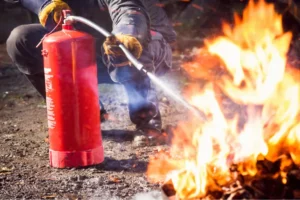
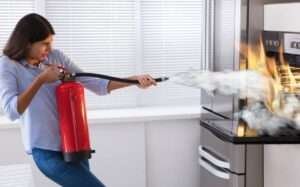
Firefighting equipment can support a building’s fire protection arrangements, but only when the equipment is suitable for the identified risks and properly maintained.
Different fire classifications require different firefighting approaches. A business should not assume that one type of extinguisher is appropriate for every location.
Qualified fire safety professionals can help assess equipment requirements and suitable placement.
**Practical safety measures:**
– Arrange a professional fire risk assessment.
– Select equipment according to potential hazards.
– Keep equipment visible and accessible.
– Arrange inspections and servicing.
– Replace damaged or defective equipment.
– Provide suitable awareness training.
– Keep records of maintenance activities.
Employees should understand that their personal safety comes first. They should not attempt to fight a fire that is spreading or creating dangerous conditions.
## 10. Prepare a Clear Emergency Evacuation Plan
A building may have appropriate alarms and firefighting equipment but still lack an effective emergency plan.
During an emergency, occupants need clear instructions about leaving the premises, using approved escape routes, and gathering at a designated assembly point.
An evacuation plan should reflect the building’s layout and the needs of its occupants.
**Practical safety measures:**
– Identify approved emergency exits.
– Keep escape routes unobstructed.
– Display appropriate exit signs.
– Identify an assembly point.
– Assign emergency responsibilities.
– Include visitors and contractors in arrangements.
– Consider people who may need additional assistance.
– Review the plan whenever the building layout changes.
The plan should be communicated clearly to employees and other relevant occupants.
## 11. Provide Summer Fire Safety Awareness Training
Fire safety training helps people recognise seasonal hazards and understand their responsibilities.
Employees should know how to report damaged electrical equipment, recognise alarm signals, follow evacuation procedures, and identify the person responsible for managing emergencies.
Training should reflect the actual working environment rather than relying only on general information.
For example, office employees may need awareness of cooling equipment and electrical installations, while restaurant staff may require additional instruction about kitchen hazards and emergency arrangements.
**A suitable awareness programme may cover:**
– Common summer fire hazards.
– Electrical and appliance safety.
– Generator-related precautions.
– Alarm awareness.
– Emergency exits and assembly points.
– Reporting procedures.
– Fire protection equipment awareness.
– Emergency responsibilities.
Organisations should also arrange appropriate drills and review their results.
## 12. Avoid Common Summer Fire Safety Mistakes
Seasonal risks can become more serious when people ignore basic safety responsibilities.
Some common mistakes include:
### Ignoring Electrical Warning Signs
People sometimes continue using equipment despite unusual overheating, damaged cables, or repeated faults. Such concerns should be reported and assessed by qualified professionals.
### Neglecting Seasonal Maintenance
Cooling systems and other appliances may operate more frequently during summer. Skipping recommended maintenance can allow problems to remain unnoticed.
### Poor Fuel Storage
Improper fuel storage can create serious hazards. Businesses should follow applicable storage requirements and seek professional advice where necessary.
### Blocking Emergency Exits
Storage boxes, furniture, and other materials should never obstruct designated escape routes.
### Forgetting Employee Training
New staff members may not know the building’s emergency procedures. Relevant safety information should be provided and refreshed when necessary.
### Ignoring Outdoor Hazards
Dry vegetation and accumulated waste around a property may increase outdoor fire concerns. Regular housekeeping can help reduce these risks.
## 13. Summer Fire Safety for Different Buildings
Fire safety arrangements should reflect the purpose and conditions of each building.
**Homes:** Residents should understand electrical safety, cooking precautions, appliance maintenance, and household evacuation arrangements. Families should discuss emergency contacts and safe meeting points.
**Offices:** Businesses should review electrical equipment, cooling systems, alarm arrangements, emergency lighting, and employee awareness.
**Factories and warehouses:** These facilities may contain machinery, large storage areas, and specialised materials. Fire risk assessments and maintenance programmes should reflect their specific operations.
**Restaurants:** Kitchen cleaning, cooking equipment maintenance, ventilation, storage, and customer evacuation arrangements deserve particular attention.
**Schools:** Staff should understand emergency procedures, while students should receive age-appropriate fire safety education and clear evacuation instructions.
## 14. Follow Relevant Fire Safety Requirements in Pakistan
Fire safety responsibilities in Pakistan may involve national building provisions, provincial rules, local requirements, and instructions from the relevant authorities.
The Building Code of Pakistan Fire Safety Provisions 2016 provides a framework for fire prevention, fire detection, fire protection, and life safety. It addresses matters relevant to fire alarm arrangements, emergency planning, and evacuation.
Punjab Civil Defence also identifies fire detection and alarm systems, firefighting arrangements, fire safety plans, emergency exits, and evacuation plans among the measures considered during inspections of applicable premises. <Cite refs={[“turn752341search21″,”turn752341search0”]}/>
Requirements may differ according to the building’s location, classification, occupancy, and use. Property owners and business operators should therefore confirm their obligations with the relevant authority or a qualified fire safety professional.
## 15. Create a Practical Summer Fire Safety Checklist
A written checklist can help households and organisations review important seasonal safety arrangements.
| Safety area | What to review |
|—|—|
| Electrical appliances | Condition, maintenance, and safe use |
| Air conditioners | Professional servicing and reported faults |
| Generators | Installation, maintenance, and fuel arrangements |
| Cooking areas | Cleaning and appliance condition |
| Outdoor spaces | Dry vegetation and waste management |
| Storage | Safe organisation of combustible materials |
| Fire alarms | Suitable coverage and maintenance |
| Extinguishers | Suitability, accessibility, and servicing |
| Emergency exits | Clear routes and visible signs |
| Employee training | Alarm awareness and evacuation procedures |
| Emergency plans | Updated routes and assembly points |
| Documentation | Inspection and maintenance records |
The checklist should be reviewed before and throughout the summer season. Any identified issue should be assigned to a responsible person for appropriate follow-up.
## Conclusion
Summer fire hazards can affect homes, offices, factories, restaurants, warehouses, and public buildings. Increased use of electrical appliances, poorly maintained cooling systems, generator operation, cooking activities, dry vegetation, and unsuitable storage arrangements can all contribute to seasonal fire risks.
The right approach is to identify hazards early, maintain equipment, follow manufacturer instructions, and ensure that people understand emergency procedures. Suitable fire detection, firefighting equipment, clear escape routes, and regular employee awareness are important parts of a complete fire safety strategy.
In Pakistan, building owners and businesses should also consider the Building Code of Pakistan Fire Safety Provisions 2016 and any applicable provincial or local requirements. A properly selected and maintained fire alarm system in Pakistan can support early warning, but it must be combined with a clear evacuation plan and informed occupants.
Summer safety is not achieved through one product or a single inspection. It depends on regular attention, responsible behaviour, and a commitment to protecting people and property throughout the year.
## Frequently Asked Questions (FAQs)
### 1. What are the most common summer fire hazards?
Common summer fire hazards include electrical faults, poorly maintained air conditioners, generator-related risks, cooking equipment, improper fuel storage, dry vegetation, and accumulated combustible waste.
### 2. How can households reduce fire risks during summer?
Households can reduce risks by maintaining electrical appliances, arranging professional inspections when necessary, keeping cooking areas organised, storing combustible materials responsibly, and maintaining clear escape routes.
### 3. Why is fire alarm maintenance important during summer?
Fire alarm maintenance helps ensure that detection and warning equipment remains in suitable working condition. Regular professional inspections can identify faults and help ensure occupants receive appropriate warnings.
### 4. Should businesses arrange fire safety training before summer?
Seasonal training can help employees understand relevant hazards, recognise alarm signals, report safety concerns, and follow emergency procedures. Businesses should also p
rovide training when staff or workplace conditions change.
### 5. What should a summer fire safety checklist include?
A summer checklist should cover electrical equipment, cooling systems, generators, cooking areas, storage arrangements, fire alarms, firefighting equipment, emergency exits, employee training, and evacuation plans.