Children are naturally curious about the world around them. They learn from parents, teachers, friends, cartoons, videos, and everyday experiences. However, not everything they hear about fire is accurate. Misunderstandings about flames, smoke, alarms, and emergency procedures can make it harder for children to respond safely when a fire occurs.
Teaching children about fire safety myths is an important part of building a safer home and school environment. The goal is not to frighten children but to help them understand risks, recognise warning signs, and follow simple safety rules.
In Pakistan, children may spend time at home, school, tuition centres, shopping malls, restaurants, and apartment buildings. Each environment can have different fire risks and evacuation procedures. Parents and teachers can help children prepare by explaining the purpose of smoke alarms, practising emergency plans, and teaching them to seek help from trusted adults.
A fire alarm system in Pakistan can provide an important warning in buildings where such systems are installed and required. However, an alarm is only one part of fire protection. Children also need to know how to leave a building safely, avoid smoke, and never attempt to fight a fire themselves.
This guide explores common fire safety myths, explains the facts behind them, and offers practical ways to teach children safer habits.
Why Is Fire Safety Education Important for Children?
Children may not fully understand how quickly a fire can become dangerous. A small flame may seem harmless, while smoke or an alarm may be confusing or frightening. Without clear guidance, children might make unsafe decisions during an emergency.
Fire safety education helps children develop habits that can protect them throughout their lives. It also encourages them to recognise hazards and communicate concerns to responsible adults.
Parents and teachers can help children learn to:
– Stay away from matches, lighters, candles, and other sources of fire.
– Tell an adult when they notice a potential fire hazard.
– Recognise the sound of a smoke alarm or building fire alarm.
– Follow instructions during an evacuation.
– Know the safe exits at home and school.
– Stay outside once they have left a building during a fire.
– Understand that personal belongings are never worth risking their safety.
These lessons should be repeated calmly and regularly. Younger children often need simple language, demonstrations that do not involve real fire, and adult supervision.
Myth 1: Fire Is Safe If It Looks Small
One common misconception is that a small flame cannot cause serious harm. Children may see a candle or a cooking flame and assume that every fire starts small enough to be controlled easily.
The truth is that even a small fire can spread, produce harmful smoke, or make an area unsafe. Children should never be expected to judge whether a fire is manageable.
What Children Should Learn
Explain that fire is not a toy and that any unexpected fire needs to be reported immediately.
Teach children to move away from the danger, alert a trusted adult, and follow the household or school emergency plan. They should not touch burning objects, investigate the source of a fire, or try to put it out.
Parents can reinforce this lesson by keeping ignition sources out of children’s reach and modelling safe behaviour around heat-producing appliances.
The key message is simple: If you see an unexpected fire, get away and tell a trusted adult.
Myth 2: Children Only Need to Leave When They See Flames
Some children believe that evacuation is necessary only when they can see flames. This misunderstanding can cause them to ignore smoke or delay leaving a building.
Smoke can travel beyond the area where a fire begins. A fire may also be hidden behind a door or in another room, meaning occupants might not see flames before conditions become dangerous.
What Children Should Learn
Children should understand that a smoke alarm or fire alarm is a warning, even when there are no visible flames.
If an alarm sounds, they should follow the emergency plan and instructions from responsible adults. If they notice smoke, unusual burning smells, or another possible sign of fire, they should report it immediately and move to safety as directed.
At school, children should follow the teacher’s evacuation instructions. At home, they should know how to reach the agreed safe meeting place.
Do not encourage children to search the building to discover why an alarm is sounding. Identifying the cause is a task for responsible adults and emergency professionals.
Myth 3: Hiding Is the Best Way to Stay Safe During a Fire
Movies, cartoons, and games sometimes show characters hiding when they are frightened. Children may copy this behaviour during a real emergency because hiding can feel comforting.
During a fire, hiding can make it harder for adults and emergency responders to locate a child. Children should instead follow the evacuation plan and move towards a safe exit when it is possible to do so safely.
What Children Should Learn
Teach children that the goal is to reach a safe place, not to find a hiding spot.
Practise the home or school evacuation plan so children know where to go when an alarm sounds. Explain that they should not hide under beds, inside cupboards, or in other concealed places during an evacuation.
Young children may need an adult to help them leave. Parents and caregivers should decide in advance who will assist each young child, especially in homes with several floors.
If a child cannot safely reach an exit, they should follow the emergency instructions taught by responsible adults and contact emergency services when possible. The appropriate response depends on the situation, so families should seek guidance from local fire safety professionals.
Myth 4: A Fire Alarm Can Be Ignored If Nothing Looks Wrong
Children may sometimes hear an alarm during a drill, a test, or a false alarm. They might conclude that alarms are not important if they have previously sounded without a visible emergency.
This is a dangerous assumption. An alarm exists to warn people of a possible emergency, and occupants should not ignore it simply because they cannot see smoke or flames.
What Children Should Learn
Explain the difference between a planned drill and an unexpected alarm. Adults and school staff should clearly announce when a drill begins and ends.
Whenever an unexpected fire alarm sounds, children should follow the established evacuation procedure and listen to responsible adults. They should not assume that the alarm is a joke or wait for someone else to react first.
A properly designed fire alarm system in Pakistan can help warn occupants in homes, schools, offices, and other buildings, depending on the building’s needs and applicable requirements.
Parents can familiarise children with the sound of their home’s smoke alarm. School administrators can explain alarm procedures before practising evacuation drills.
Myth 5: Smoke Is Not Dangerous Unless It Is Thick
Children may think that smoke is harmless when it appears light or does not block their view. They may also believe that visible flames are more dangerous than smoke.
In reality, smoke can contain harmful gases and particles, and it can make breathing and seeing difficult. Conditions may become dangerous before a child understands how serious the situation is.
What Children Should Learn
Teach children never to investigate smoke or walk towards its source. They should alert an adult, follow evacuation instructions, and avoid areas affected by smoke.
Do not let children experiment with smoke or attempt to assess its safety. They should not re-enter a room to retrieve belongings or look for a pet during a fire emergency.
Adults should maintain smoke alarms and ensure that escape routes remain clear. Children should be reminded that an alarm provides warning, while evacuation is what helps them move away from danger.
Myth 6: Fire Drills Are Only for Schools
Some families assume that fire drills are necessary only in schools, factories, or commercial buildings. However, children also need to understand what to do if a fire occurs at home.
An unfamiliar emergency can make children confused or frightened. Practising an evacuation plan helps them recognise routes, understand instructions, and know where to meet family members outside.
What Children Should Learn
Families should create a simple home escape plan that everyone understands.
The plan should identify suitable exits, an outdoor meeting point, and the adults responsible for helping younger children. Where possible, identify more than one way out of rooms and discuss what to do if a route becomes unsafe.
Practise the plan periodically without using real flames or creating dangerous situations. Children should know that they must never return inside once they have left a building during a fire.
For apartments, families should also learn the building’s evacuation procedures and use designated stairs rather than lifts during a fire unless emergency personnel direct otherwise.
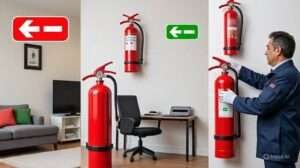
Myth 7: Children Can Safely Use a Fire Extinguisher
A child may see a fire extinguisher mounted in a hallway and assume that it is equipment they should use if a fire starts.
Fire extinguishers are designed for specific types of fires, and using the wrong equipment or approaching an unsafe fire can make the situation more dangerous. Children should not be expected to control a fire.
What Children Should Learn
Explain that extinguishers are emergency equipment, not toys. Children should leave fire response to responsible, appropriately trained adults and emergency professionals.
If a fire occurs, children should alert others, leave the area, and follow the evacuation plan. They should never delay leaving because they want to help operate equipment.
Adults should ensure that extinguishers are appropriate for the hazards present, professionally maintained, and accessible to the people responsible for fire safety.
Myth 8: Fire Safety Equipment Is Only Needed in Large Buildings
Children may associate fire alarms and safety equipment with shopping centres, hospitals, or tall office buildings. They might believe that homes and small schools do not need fire protection.
Every building has its own risks. The appropriate safety measures depend on the building’s layout, use, occupants, and applicable requirements.
What Children Should Learn
Explain that different safety devices have different purposes. Smoke alarms provide warning, fire alarm systems can alert building occupants, and extinguishers may help trained adults respond to certain small fires when conditions permit.
Families should consider suitable smoke alarms, clear escape routes, and an evacuation plan. Building owners and managers should check whether additional detection, alarm, or firefighting measures are required.
In Pakistan, the Building Code of Pakistan—Fire Safety Provisions 2016 provides a national reference for fire prevention, life safety, and building fire protection. The requirements applicable to a particular property should be confirmed with the relevant authority.
Children do not need to memorise building regulations. They need to understand how to recognise an alarm, follow instructions, and get to safety.
Myth 9: Children Should Return Inside to Collect Their Belongings
During an emergency, children may worry about their schoolbags, favourite toys, books, phones, or other belongings. They may think that returning for one item will be harmless.
Returning to a building during a fire can expose a child to smoke, flames, or changing conditions. Once outside, they should remain outside.
What Children Should Learn
Teach children that people are more important than possessions.
After leaving, they should go to the family’s or school’s designated meeting point and tell a responsible adult if someone may still be inside. They should never re-enter the building to collect an item or search for another person.
Adults should account for children at the meeting point and communicate any missing-person information to emergency responders.
This rule should be repeated during family discussions and school drills so children remember it under stress.
Myth 10: Fire Safety Is Only an Adult’s Responsibility
Adults have the main responsibility for installing and maintaining safety equipment, supervising children, and managing emergency plans. However, children can also learn age-appropriate habits that contribute to a safer environment.
The mistake is assuming that children have no role at all—or expecting them to take on responsibilities that belong to adults.
What Children Should Learn
Children can help by following safety rules, keeping away from dangerous objects, and telling an adult when they notice something unsafe.
They can learn to recognise alarm sounds, remember evacuation routes, and attend drills seriously. They should not handle electrical repairs, operate firefighting equipment, or investigate fire hazards themselves.
Parents, teachers, and school administrators should create an environment where children feel comfortable reporting concerns without fear of punishment.
How Parents Can Teach Fire Safety Without Frightening Children
Fire safety education works best when it is calm, clear, and suitable for a child’s age. Scaring children with dramatic stories may make them anxious without teaching them what to do.
Consider these approaches:
Use Simple, Direct Language
Explain that fire can hurt people and that children should never play with it. Give clear instructions such as, “If you hear the alarm, follow the evacuation plan and go to the meeting place.”
Avoid complicated technical explanations for younger children. Repeat the same important rules consistently.
Use Stories and Drawings
Pictures of exits, smoke alarms, and safe meeting places can help children understand what they are learning.
Ask children to draw a simple escape route or identify the meeting place on a home layout. These activities should be educational and should not involve lighting flames or handling dangerous equipment.
Practise Through Safe Drills
Family and school drills help children become familiar with emergency procedures. Tell them when a practice drill is happening, explain what they should do, and discuss any confusion afterwards.
Do not create surprise fire scenarios or use real flames to test children’s reactions.
Praise Responsible Behaviour
Encourage children when they follow safety rules, report a hazard, or take a drill seriously. Positive feedback helps them understand that asking for help is the right decision.
The Importance of Fire Alarm Systems in Schools and Homes
Fire detection and alarm equipment can provide an important early warning, particularly in buildings where people may be sleeping, studying, or gathered in different rooms.
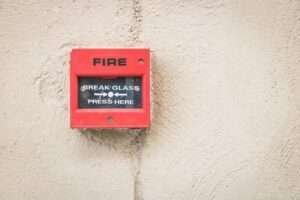
A fire alarm system in Pakistan may include devices such as smoke or heat detectors, manual call points, audible alarms, visual indicators, and a control panel. The design depends on the property’s size, use, risk level, and applicable requirements.
For schools and other buildings occupied by children, responsible adults should make sure that evacuation instructions are clear and that alarm and safety equipment are maintained appropriately.
Parents can ask schools about fire drills, exit routes, assembly points, and the arrangements for helping children who need additional support.
At home, suitable smoke alarms should be installed and maintained according to the manufacturer’s instructions and applicable guidance. Children should learn what the alarm sounds like and what action to take when they hear it.
Remember that an alarm is a warning system, not a guarantee that a building is safe. It must be supported by suitable escape routes, a clear emergency plan, and people who know how to respond.
Fire Safety Education in Pakistan
Fire safety awareness is important in homes, schools, tuition centres, and community buildings across Pakistan. Different buildings have different layouts and emergency arrangements, so families and school administrators should learn the procedures relevant to their location.
The Pakistan Engineering Council’s Building Code of Pakistan—Fire Safety Provisions 2016 provides a reference for building fire protection and life safety. Local requirements and enforcement may vary, so property owners and administrators should consult the relevant authorities and qualified professionals.
Families can strengthen children’s understanding by discussing fire risks in everyday settings, such as kitchens, electrical appliances, and blocked exits. Schools can reinforce these lessons through age-appropriate teaching and organised evacuation drills.
Where available, community safety education from local emergency services can also help adults and children understand emergency procedures.
The most important lesson is that children should never be expected to fight a fire. Their priorities are to recognise the warning, follow instructions, leave safely, and remain outside until authorities say it is safe to return.
A Simple Fire Safety Checklist for Families
Parents can use this checklist to review whether children understand the basics:
– [ ] Children know that matches, lighters, candles, and flames are not toys.
– [ ] Smoke alarms are installed where appropriate and maintained according to instructions.
– [ ] Children know what to do when an alarm sounds.
– [ ] The family has identified safe exits and an outdoor meeting point.
– [ ] Escape routes are kept clear.
– [ ] Adults have planned how to help younger children leave.
– [ ] Children know not to hide during evacuation or return for belongings.
– [ ] Everyone understands that children should not fight fires.
– [ ] The family practises its escape plan periodically.
– [ ] School evacuation procedures are explained and practised by responsible staff.
Review this checklist when moving home, changing schools, renovating a property, or changing family arrangements.
Conclusion
Teaching children about fire safety myths is an important step towards building safer homes, schools, and communities. Misunderstandings such as believing small fires are always harmless, ignoring alarms, hiding during emergencies, or returning for belongings can lead to unsafe decisions.
Parents and teachers can replace these myths with simple, consistent lessons. Children should know that fire is not a toy, smoke can be dangerous, alarms must be taken seriously, and evacuation is more important than possessions.
A reliable fire safety plan combines education, early warning, clear escape routes, regular drills, and properly maintained equipment. A fire alarm system in Pakistan can be an important part of that plan where appropriate, but its value depends on suitable design, maintenance, and an effective response.
Above all, children should understand that they do not have to solve a fire emergency themselves. Their job is to stay away from danger, follow trusted adults, reach a safe place, and seek help. These habits can help them respond with greater confidence when an emergency occurs.
Frequently Asked Questions (FAQs)
1. What is the most important fire safety rule for children?
Children should stay away from fire and immediately tell a trusted adult if they notice a fire or a potential hazard. During an emergency, they should follow the evacuation plan and never try to fight the fire themselves.
2. Should children ignore a fire alarm if they cannot see smoke?
No. Children should treat an unexpected fire alarm as a warning and follow instructio