Warehouses play an important role in Pakistan’s supply chain. They store products, raw materials, packaging, machinery, and other goods used by businesses across different industries. However, large quantities of stored materials, electrical equipment, charging stations, and busy loading areas can create fire risks if they are not managed properly.
A warehouse fire can endanger workers, damage valuable stock, interrupt deliveries, and affect the wider business. Smoke may also make it difficult for workers to identify safe exits, particularly in large buildings with high storage racks and multiple working areas.
The good news is that many risks can be reduced through proper planning, safe storage, equipment maintenance, employee training, and suitable fire protection systems. Warehouse owners do not need to wait for an emergency before taking action. Regular inspections and clear safety procedures can help identify problems early.
A Fire alarm system in Pakistan can be an important part of a warehouse’s fire protection arrangements. However, an alarm alone cannot prevent a fire or guarantee complete safety. Effective protection combines prevention, early warning, appropriate firefighting arrangements, accessible exits, and a well-maintained emergency plan.
This guide explains warehouse fire safety in plain English and outlines practical measures that warehouse owners, managers, and workers should understand.
1. Understand Common Warehouse Fire Hazards
The first step in improving warehouse safety is identifying the conditions that could allow a fire to start or spread.
Different warehouses have different risks. A facility storing clothing and cardboard packaging may require different precautions from one storing machinery, chemicals, food products, or other specialised materials.
Common hazards include:
– Damaged electrical equipment and wiring.
– Overloaded electrical connections.
– Combustible packaging and waste.
– Poorly maintained machinery.
– Unsafe storage of materials.
– Heat-producing equipment near combustible goods.
– Blocked emergency exits.
– Inadequate maintenance of fire protection equipment.
Some hazards may develop gradually. For example, damaged cables may remain unnoticed, or waste may accumulate near equipment and escape routes. Regular inspections can help identify these problems before they become more serious.
Warehouse managers should assess the building, its activities, the materials stored, and the number of people working inside. A qualified fire safety professional can help determine the appropriate protection measures for the facility.
2. Keep Stored Materials Organised
Storage arrangements can affect how easily workers move through a warehouse and how fire and smoke may spread.
Boxes, cartons, fabrics, wooden products, and other combustible goods can contribute to fire growth. If materials are stacked without considering the building’s fire protection design, they may obstruct access to equipment or interfere with detection and suppression systems.
Good storage management includes:
– Keeping goods in designated storage areas.
– Maintaining clear access to emergency exits and firefighting equipment.
– Following approved storage layouts and rack-loading limits.
– Removing unnecessary packaging and waste.
– Keeping combustible materials away from unsuitable heat sources.
– Following the storage instructions for products that require special handling.
– Reviewing storage arrangements whenever inventory or operations change.
High-rack and high-piled storage may require specialised fire protection arrangements. The suitability of sprinklers, detection systems, aisle widths, and other measures depends on the stored commodities and building design.
Do not assume that an arrangement suitable for one warehouse will be safe for another. Have storage layouts reviewed against applicable requirements, especially when storing large quantities of combustible or higher-risk materials.
3. Install a Suitable Fire Alarm System
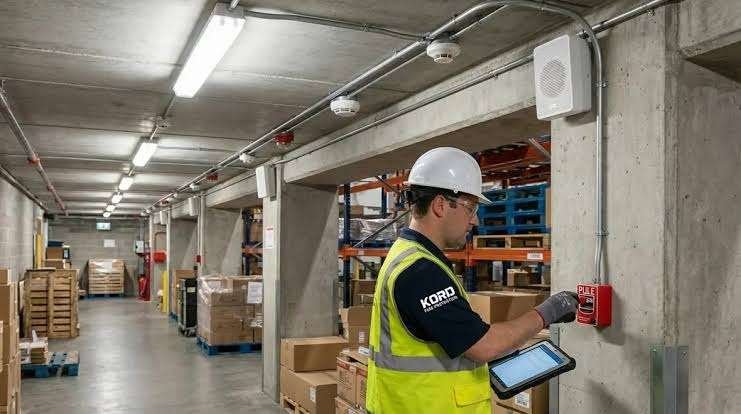
A fire alarm system helps alert workers when a fire is detected. In a large warehouse, early warning is particularly important because staff may be spread across different aisles, loading bays, offices, and storage areas.
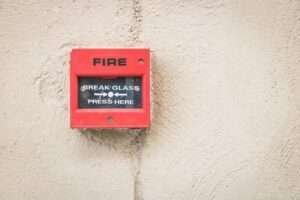
Depending on the design, a system may include smoke or heat detectors, manual alarm points, audible alarms, visual warning devices, and a central control panel.
When selecting a fire alarm system in Pakistan, warehouse owners should consider the building’s layout, ceiling height, stored materials, operating conditions, and applicable fire safety requirements.
Important factors include:
Appropriate detection: The type and placement of detectors should suit the environment and the hazards present. Dust, temperature, airflow, and the nature of stored goods may affect the choice of equipment.
Effective warning: Alarm signals should be suitable for the warehouse environment, including areas where background machinery noise may make ordinary sounders difficult to hear.
System design: The arrangement should account for storage aisles, work areas, offices, loading zones, and other relevant spaces.
Power arrangements: Ask the installer how the system operates during a power interruption and what backup provisions are required.
Professional installation: Use qualified professionals to design, install, commission, and explain the system.
Maintenance: Confirm how the equipment will be inspected, tested, and serviced throughout its working life.
The Building Code of Pakistan Fire Safety Provisions 2016 includes provisions for fire alarm systems and storage occupancies. The exact requirements and exceptions depend on the building and the applicable code provisions. <Cite refs={[“turn214152search25″,”turn214152search2”]}/>
4. Maintain Suitable Firefighting Equipment
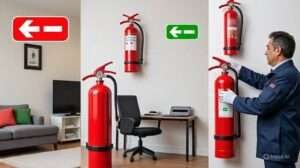
Firefighting equipment may form part of a warehouse’s protection strategy, but the correct arrangement depends on the materials stored, the size of the premises, and the hazards identified.
Equipment can include suitable fire extinguishers, hydrants, hose arrangements, or automatic sprinkler systems where required by the design and applicable regulations.
Before purchasing equipment, warehouse management should consider:
– The types of fire hazards present.
– The equipment’s approved applications.
– Required locations and access arrangements.
– Inspection and servicing requirements.
– Compatibility with the building’s existing protection systems.
– The need for trained personnel.
– Applicable local and national requirements.
Not every extinguisher is suitable for every type of fire. For example, fires involving combustible materials, flammable liquids, cooking oils, and electrical equipment may require different approaches.
Equipment selection and placement should therefore be assessed by a qualified professional rather than based only on price or convenience.
Workers should also understand that firefighting equipment does not replace evacuation. If a fire is spreading, smoke is present, or the situation is unsafe, workers should leave promptly and contact emergency services.
5. Improve Electrical Safety
Electrical systems are an important consideration in warehouses because they may support lighting, conveyors, machinery, office equipment, charging stations, and other operations.
Damaged wiring, defective equipment, and unsuitable electrical connections can create ignition risks. These problems should be addressed through planned maintenance and professional inspection.
Warehouse managers should ensure that:
– Electrical equipment is suitable for its working environment.
– Damaged cables and equipment are reported promptly.
– Electrical installations are inspected by qualified professionals as required.
– Repairs are completed by authorised or appropriately qualified personnel.
– Equipment is used according to manufacturer instructions.
– Electrical panels remain accessible to authorised personnel.
– Unusual heat, burning smells, or repeated electrical faults are investigated.
Avoid temporary or improvised electrical arrangements that have not been assessed for safety. Where charging stations or specialised equipment are used, follow the manufacturer’s instructions and relevant professional guidance.
Employees should know how to report electrical hazards without attempting repairs themselves.
6. Keep Emergency Exits and Aisles Clear
A warehouse needs clear routes so workers can leave promptly if an alarm sounds. Stored goods, pallets, packaging, and equipment should never be allowed to obstruct designated emergency exits or escape routes.
Management should regularly check that:
– Emergency exits remain accessible.
– Escape routes are clearly identified.
– Exit signs are visible.
– Emergency lighting is maintained where required.
– Doors and designated escape routes function properly.
– Access to firefighting equipment is unobstructed.
– Evacuation routes reflect the current warehouse layout.
Changes to shelving, storage racks, machinery, or internal partitions can affect evacuation arrangements. Review the safety plan whenever significant changes are made.
Workers should be familiar with the primary escape routes and the designated assembly point. If the usual route becomes unsafe, they should follow the established alternative procedure rather than entering smoke-filled areas.
The Building Code of Pakistan Fire Safety Provisions 2016 addresses means of escape and related life safety measures. Applicable exit requirements depend on the building’s characteristics and use. <Cite refs={[“turn214152search25″,”turn214152search2”]}/>
7. Store Special-Risk Materials Properly
Some warehouses handle materials that require additional precautions. These may include flammable liquids, aerosols, gases, chemicals, batteries, or other products with specific storage requirements.
The risks depend on the material’s properties, quantity, packaging, and storage conditions. Ordinary warehouse practices may not be sufficient for specialised or hazardous goods.
Before storing such materials, management should:
– Identify the materials and review their safety documentation.
– Follow the manufacturer’s storage and handling instructions.
– Check the applicable regulatory requirements.
– Arrange appropriate separation and storage conditions.
– Consult qualified professionals about ventilation and fire protection needs.
– Train relevant employees in the facility’s approved procedures.
– Keep access routes and emergency equipment accessible.
Do not rely on general-purpose storage rules for hazardous materials. The Building Code of Pakistan Fire Safety Provisions 2016 includes provisions relevant to storage and hazardous-material occupancies. Additional standards or approvals may apply depending on the materials and quantities involved. <Cite refs={[“turn214152search25″,”turn214152search26”]}/>
8. Keep Machinery and Warehouse Equipment Maintained
Conveyors, forklifts, motors, packaging machines, and other equipment require appropriate inspection and maintenance. Defects can create operational hazards and may contribute to fire risks.
Warehouse management should establish maintenance schedules based on manufacturer guidance, the working environment, and relevant requirements.
A maintenance programme may include:
– Routine checks by trained personnel.
– Professional servicing at the required intervals.
– Prompt reporting of unusual noises, heat, or faults.
– Records of inspections and repairs.
– Review of equipment following major repairs or modifications.
– Clear procedures for removing defective equipment from service.
Workers should never be expected to diagnose or repair technical faults beyond their training. Problems should be reported to the responsible supervisor or maintenance team.
Good maintenance also supports business continuity by reducing unexpected equipment failures and helping keep warehouse operations organised.
9. Train Employees in Fire Safety
Workers are more likely to respond appropriately when they understand the warehouse’s emergency arrangements.
Fire safety training should be appropriate to employees’ roles and the hazards of the facility. New employees should receive relevant safety information, and refresher training should be provided when needed.
Training should cover:
– Recognising fire alarms and warning signals.
– Reporting a suspected fire.
– Identifying designated escape routes.
– Knowing the assembly point.
– Following instructions from emergency coordinators.
– Understanding the limitations of firefighting equipment.
– Keeping exits and firefighting equipment accessible.
– Avoiding unsafe attempts to control a fire.
Evacuation drills can help workers become familiar with the building’s procedures and reveal problems that need correction. Drills should be planned appropriately and reviewed afterwards.
Workers should never be encouraged to delay evacuation to save stock, equipment, documents, or personal belongings. Protecting people must remain the priority.
10. Create a Written Warehouse Fire Safety Plan
A written fire safety plan helps warehouse managers organise responsibilities and respond consistently to changing conditions.
The plan should reflect the actual facility rather than relying on a generic template. It should be reviewed when the warehouse layout, stored goods, equipment, staffing, or operations change.
A practical plan should cover:
1. The main fire hazards identified in the warehouse.
2. Measures to reduce ignition and fire-spread risks.
3. Fire detection and alarm arrangements.
4. Required firefighting equipment and its maintenance.
5. Emergency exits and evacuation routes.
6. Responsibilities of supervisors and designated personnel.
7. Procedures for reporting hazards and equipment faults.
8. Employee training and evacuation drills.
9. Emergency contact arrangements.
10. Inspection, maintenance, and review records.
The plan should be communicated to relevant workers and made available to responsible personnel. Building management should also confirm whether local authorities require specific plans, records, inspections, or approvals.
11. Carry Out Regular Inspections
A warehouse may change considerably as inventory moves, equipment is added, and operations expand. Regular inspections help ensure that fire safety arrangements remain appropriate.
Inspections should cover both fire protection equipment and everyday housekeeping. A building can have a well-designed alarm system yet still present avoidable risks if exits are blocked or storage arrangements have changed.
A warehouse inspection checklist may include:
– [ ] Fire alarms and detectors are maintained.
– [ ] Firefighting equipment is accessible and serviced.
– [ ] Emergency exits and aisles remain clear.
– [ ] Exit signs and required emergency lighting are functional.
– [ ] Electrical hazards are reported and addressed.
– [ ] Stored materials are arranged appropriately.
– [ ] Special-risk materials are handled according to their requirements.
– [ ] Machinery maintenance records are up to date.
– [ ] Workers know the evacuation procedures.
– [ ] Required inspections and repairs are documented.
Assign responsibility for correcting each identified issue and record when it has been resolved. A checklist is useful, but it does not replace formal inspections or specialist assessments required by applicable regulations.
12. Understand Warehouse Fire Safety Requirements in Pakistan
Warehouse fire safety requirements depend on the property’s location, size, construction, occupancy, stored materials, and applicable regulations.
The Building Code of Pakistan Fire Safety Provisions 2016 provides an important reference for fire protection and life safety. Its storage-related provisions address matters such as fire alarm systems and the requirements applicable to different storage occupancies.
Punjab Civil Defence identifies fire detection and alarm systems, firefighting arrangements, fire safety plans, emergency exits, and evacuation plans among the measures considered during inspections of relevant industrial and commercial premises. <Cite refs={[“turn214152search25″,”turn214152search0”]}/>
Warehouse owners should consult the relevant local authority and qualified fire safety professionals to confirm the requirements applicable to their facilities.
A responsible compliance process should include:
– Reviewing the applicable building and fire safety provisions.
– Assessing the hazards associated with stored materials.
– Selecting suitable detection and protection systems.
– Using qualified installers and maintenance providers.
– Maintaining required inspection and servicing records.
– Providing appropriate training and evacuation arrangements.
– Reviewing safety measures whenever the facility changes.
Purchasing equipment alone does not automatically establish compliance. The equipment must be appropriate, correctly installed, maintained, and supported by suitable safety procedures.
13. Why Warehouse Fire Safety Is a Long-Term Investment
Fire safety requires planning and resources, but it should be considered part of responsible warehouse management rather than an unnecessary expense.
Preventive maintenance may help identify faults before they cause disruption. Suitable alarms can provide early warning, while accessible exits and trained employees can support a safer evacuation.
Good fire safety management can also help businesses protect stock, machinery, buildings, and delivery schedules. Although no safety programme can remove every possible risk, a planned approach can reduce avoidable hazards and improve preparedness.
The most effective approach is to assess the actual risks, address urgent problems, maintain protective systems, and review the plan regularly.
Conclusion
Warehouse fire safety is easier to understand when it is treated as a combination of everyday prevention, suitable equipment, and clear emergency procedures.
Organised storage, electrical safety, equipment maintenance, accessible exits, employee training, and regular inspections all contribute to a safer working environment. A properly selected and maintained fire alarm system can provide an important early warning, but it must be part of a wider protection strategy.
For warehouses in Pakistan, owners and managers should review the applicable fire safety requirements, consult qualified professionals where necessary, and ensure that safety arrangements reflect the materials stored and the activities carried out.
Taking these steps can help protect workers, reduce avoidable property damage, and support more reliable warehouse operations.
Frequently Asked Questions (FAQs)
1. Why is fire safety important in a warehouse?
Warehouses may contain large quantities of combustible goods, packaging, machinery, and electrical equipment. Fire safety measures help reduce hazards, warn workers, support evacuation, and protect property.
2. Is a fire alarm system necessary for every warehouse in Pakistan?
Requirements depend on the warehouse’s occupancy, size, stored materials, protection systems, and applicable code provisions. Owners should confirm the requirements with the relevant authority and a qualified fire safety professional.
3. What fire safety equipment may be required in a warehouse?
Depending on the building and its hazards, equipment may include fire detection and alarm systems, extinguishers, hydrants, sprinklers, emergency lighting, and exit signs. The required arrangement should be determined through an appropriate assessment.
4. How can warehouse owners reduce fire risks?
Maintain electrical and mechanical equipment, organise stored goods safely, keep escape routes clear, manage special-risk ma