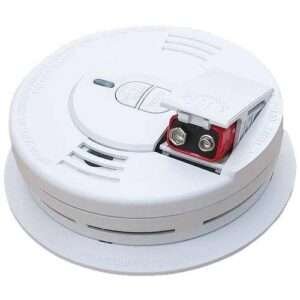
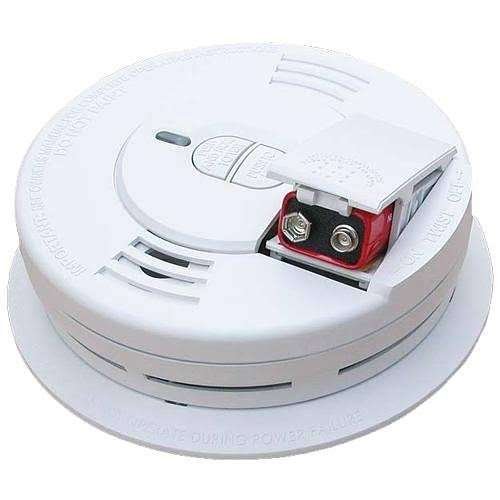
Smoke alarms are among the simplest devices used for early fire warning, but their effectiveness depends on something many people overlook: reliable power. A smoke alarm with a weak, expired, disconnected, or missing battery may look perfectly normal on the wall while failing to provide the warning people expect during an emergency.
For homes, offices, shops, schools, apartments, and other buildings in Pakistan, regular smoke alarm maintenance should therefore be treated as an important part of fire prevention. Pakistan’s Building Code of Pakistan Fire Safety Provisions 2016 includes provisions for smoke alarms and smoke detection systems, while Rescue 1122 promotes fire-safety education, prevention, and emergency preparedness.
The real cost of ignoring smoke alarm batteries is not simply the price of replacing a battery. The greater concern is losing an important early-warning layer when it is needed most.
Why Smoke Alarm Batteries Matter
A smoke alarm is designed to detect smoke and produce an audible warning. In a battery-powered unit, the battery supplies the energy required for the device to operate.
When the battery becomes weak, several problems can develop. The alarm may begin producing periodic low-battery warning sounds, or the device may eventually stop operating. If someone removes the battery because the warning sound is annoying and does not replace it, the alarm can remain inactive.
This creates a dangerous false sense of security.
A person may see a smoke alarm installed on a ceiling and assume the building is protected. However, installation alone does not guarantee that the alarm is ready to work. The device needs appropriate power, proper installation, and regular testing and maintenance.
This principle also applies to larger fire-protection arrangements. A complete fire alarm system in Pakistan may include automatic detection, manual alarm initiation, notification devices, control equipment, and other components depending on the building and applicable requirements.
The Difference Between a Smoke Alarm and a Fire Alarm System
The terms smoke alarm and fire alarm system are sometimes used interchangeably, but they do not always mean the same thing.
A standalone smoke alarm is generally a self-contained device designed to detect smoke and provide a local warning. It may be battery-operated or connected to building power with backup power.
A building fire alarm system can be much more comprehensive. Depending on the building’s design and requirements, it can include smoke detectors, heat detectors, manual fire alarm boxes, audible or visual notification appliances, control panels, and connections to other fire-protection equipment.
Pakistan’s Fire Safety Provisions 2016 specifically address smoke alarms and smoke detection systems, including requirements concerning approved standards, power arrangements, installation locations, and interconnection in certain new-construction situations.
That means battery maintenance should not be viewed as a minor household chore. It is one part of maintaining the reliability of an overall fire-safety strategy.
What Happens When Batteries Are Ignored?
Ignoring smoke alarm batteries can create several avoidable problems.
1. The Alarm May Stop Working
The most obvious risk is that an alarm with a depleted battery may no longer provide the expected warning.
A smoke alarm cannot perform its basic function reliably without an appropriate power source. This is particularly important at night, when people may not immediately notice signs of a developing fire.
2. People May Become Overconfident
An installed alarm can create a feeling that a room or building is protected even when the device is not functioning correctly.
This is sometimes more problematic than having no alarm because people may not realize that maintenance is overdue.
3. Low-Battery Warnings May Be Ignored
Many smoke alarms provide a warning when battery power is becoming low. If residents or building occupants repeatedly ignore that warning, the device may eventually become unreliable.
The better approach is to treat a low-battery warning as a maintenance signal rather than an annoyance.
4. Batteries Can Be Forgotten After Replacement
Replacing a battery once is not enough. Batteries have a limited service life, and the replacement date can easily be forgotten.
A simple maintenance record or reminder can help homeowners and building managers keep track of when batteries were installed and when the alarm was last tested.
The Hidden Cost of Delayed Maintenance
The financial cost of a battery can be relatively small compared with the potential consequences of an undetected fire.
A fire can affect furniture, electrical equipment, documents, stock, appliances, building materials, and personal belongings. Businesses may also experience interruption of operations.
For a family, the consequences can extend beyond property. For a business, there can be additional costs associated with damaged inventory, lost working time, repairs, temporary relocation, and interruption of services.
Early warning does not guarantee that a fire will be prevented, but it can provide people with more time to recognize an emergency and follow an established evacuation plan.
That is why smoke alarm maintenance should be considered an investment in preparedness rather than an unnecessary expense.
Why Night-Time Protection Is Especially Important
Smoke alarms are particularly valuable when people are asleep or when an area is not continuously occupied.
During the daytime, someone may notice smoke, unusual smells, heat, or other warning signs. At night, these signs may not be noticed immediately.
A functioning alarm can provide an audible warning that attracts attention.
For this reason, homes should not treat a smoke alarm as decorative equipment. Its purpose is to provide an early alert that can support a safe response.
Common Reasons People Ignore Smoke Alarm Batteries
There are several simple reasons maintenance gets delayed.
“The alarm is still installed, so it must be working.”
Installation does not prove that the device is functioning correctly. Batteries can become depleted, components can become damaged, and alarms can require replacement after reaching the end of their service life.
“It only makes a small sound.”
A recurring warning sound can indicate that the device needs attention. Ignoring it can leave the alarm without reliable power.
“I will replace it later.”
Small maintenance tasks are easy to postpone. The problem is that there is no convenient time to discover that an alarm was inactive during a fire emergency.
“We already have a fire extinguisher.”
Different safety measures perform different functions.
An extinguisher may be useful for certain appropriate situations when trained adults can use it safely, while a smoke alarm provides early warning. One should not be considered a substitute for the other.
“There has never been a fire here.”
Past experience does not guarantee future safety. Fire risk can change because of electrical equipment, cooking, heating devices, building alterations, occupancy changes, or other factors.
Smoke Alarm Maintenance in Pakistani Homes
Pakistan has a wide variety of residential buildings, from individual houses and apartments to high-rise developments and mixed-use properties.
Maintenance practices should therefore reflect the type of building and the equipment installed.
For a home with standalone smoke alarms, occupants should:
– Keep track of battery replacement dates.
– Follow the manufacturer’s testing and maintenance instructions.
– Pay attention to low-battery warnings.
– Keep alarms accessible for appropriate maintenance.
– Avoid disabling an alarm simply because it produces an unwanted warning.
– Replace damaged or unreliable units according to the manufacturer’s instructions.
– Make sure household members understand what the alarm sound means.
– Maintain a clear evacuation plan.
The Pakistan Engineering Council’s fire-safety provisions also address where smoke alarms and smoke detectors should and should not be installed, including considerations around cooking appliances and bathrooms.
For larger buildings, maintenance should be handled as part of the building’s overall fire-safety program rather than as an informal task.
Smoke Alarms and Cooking Areas
False alarms can be frustrating, especially in kitchens. However, repeatedly disabling an alarm is not a safe solution.
The Building Code of Pakistan Fire Safety Provisions 2016 includes specific placement considerations for smoke alarms and smoke detectors near cooking appliances. For example, the provisions establish exclusion and installation requirements depending on the distance from cooking appliances and the type of detection used.
This highlights an important point: correct placement matters.
If an alarm frequently activates because of normal cooking activity, the appropriate response is to review its location and follow the manufacturer’s and applicable safety requirements—not simply remove its battery.
Smoke Alarm Batteries in Offices and Businesses
Businesses have additional responsibilities because more people may be present and because a fire can affect equipment, records, inventory, and operations.
An office should not rely only on individual employees remembering to check alarms. Building management or designated personnel should maintain a structured inspection and testing program appropriate to the installed system.
For larger properties, qualified professionals may be required to inspect, test, service, or maintain fire detection and alarm equipment.
Pakistan Engineering Council’s registration information recognizes specialized engineering work covering the installation, commissioning, and maintenance of fire detection, alarm, and suppression systems and related equipment.
This is particularly relevant where a property has a centralized fire alarm system rather than simple standalone smoke alarms.
The Importance of Regular Testing
A smoke alarm should not simply be installed and forgotten.
Regular testing helps identify obvious problems with the device. Owners and occupants should follow the manufacturer’s instructions for testing rather than experimenting with the equipment.
Testing is only one part of maintenance. Batteries, physical condition, installation, cleanliness, age, and other system requirements may also need attention.
For larger fire alarm installations, maintenance should follow the applicable code, system documentation, manufacturer’s requirements, and advice from appropriately qualified professionals.
What Building Owners Should Consider
Property owners and managers should look at fire safety as a system rather than a collection of individual devices.
A basic review can include:
– Are smoke alarms installed where required?
– Are the devices powered correctly?
– Are low-battery warnings being addressed?
– Are alarms being tested according to their instructions?
– Are occupants familiar with emergency procedures?
– Are exits accessible and clearly identified?
– Is the building’s fire alarm equipment maintained?
– Are maintenance records available?
– Has the system been inspected when required?
– Are changes to the building or its use affecting fire-safety arrangements?
The Building Code of Pakistan Fire Safety Provisions 2016 includes requirements concerning fire alarm systems, maintenance, testing, and fire-safety arrangements. The exact requirements can vary according to building type and applicable provisions.
Why Businesses Should Keep Maintenance Records
Records may seem like paperwork, but they can help prevent small maintenance issues from being forgotten.
A basic record can include:
– Date of inspection
– Date of battery replacement
– Device or alarm location
– Testing observations
– Reported faults
– Maintenance completed
– Professional service details where applicable
– Date of the next scheduled review
For larger buildings, documentation is especially useful because multiple devices and systems may need attention.
The Role of Fire Safety Education in Pakistan
Equipment works best when people understand how to respond to warnings.
Rescue 1122’s Community Safety Program includes fire-safety education, emergency evacuation drills, citizen training, and other prevention activities. Its community safety material also emphasizes preventive fire measures and preparedness.
This is important because a working alarm is only the beginning of an emergency response.
People should know what the alarm means, where they should go, which exits are available, and how to contact emergency services according to their local arrangements.
In Punjab, Rescue 1122 identifies 1122 as its emergency number.
The Real Cost Is the Loss of Early Warning
When people calculate the cost of replacing smoke alarm batteries, they usually think about the price of the battery.
That is the wrong comparison.
The real value of a functioning smoke alarm is the early warning it can provide. If an inexpensive maintenance task is ignored, that warning layer may be unavailable when it is needed.
For families, the priority should be protecting people first. For businesses and property managers, the same principle extends to employees, visitors, buildings, equipment, and business continuity.
A reliable fire alarm system in Pakistan is therefore not simply a collection of alarms and detectors. It is part of a broader approach to prevention, detection, warning, evacuation, maintenance, and preparedness.
A Simple Smoke Alarm Maintenance Checklist
A practical checklist can help keep maintenance from being forgotten:
1. Check the alarm regularly according to the manufacturer’s instructions.
2. Respond to low-battery warnings instead of ignoring them.
3. Record battery replacement dates where appropriate.
4. Do not remove batteries simply to silence unwanted warnings.
5. Review alarm placement if repeated nuisance alarms occur.
6. Keep access to alarms clear so they can be inspected and maintained.
7. Replace damaged or unreliable devices according to manufacturer guidance.
8. Review the building’s evacuation plan with household members or occupants.
9. Arrange professional inspection and maintenance for systems that require qualified service.
10. Treat fire-safety maintenance as ongoing work, not a one-time installation task.
Final Thoughts
Smoke alarm batteries are easy to overlook because they are small, inexpensive components. Yet their role can be extremely important.
A smoke alarm cannot provide reliable warning if its power source has been neglected. For this reason, homeowners, landlords, offices, shops, schools, and other property managers should include smoke alarm maintenance in their regular fire-safety routines.
Pakistan’s fire-safety framework recognizes the importance of smoke alarms, smoke detection, fire alarm systems, emergency egress, and ongoing safety measures. Rescue 1122 also emphasizes prevention, preparedness, fire safety, and evacuation education.
The best time to discover that a smoke alarm needs attention is during routine maintenance—not during an emergency.
A small battery replacement may seem like a minor expense, but maintaining reliable early warning can be one of the simplest ways to strengthen a building’s overall fire-safety preparedness.
FAQs
1. Why are smoke alarm batteries important?
Smoke alarm batteries provide the power needed for many battery-operated smoke alarms. If the battery becomes depleted and is not replaced, the alarm may not provide the expected warning.
2. How often should smoke alarm batteries be checked?
Follow the manufacturer’s instructions for your specific alarm. Regular checks can help identify low-battery warnings, faults, or other maintenance issues before they become serious.
3. Can I remove a smoke alarm battery if it keeps making noise?
A recurring warning should not simply be ignored. The cause should be identified and addressed according to the manufacturer’s instructions. If the alarm has been installed incorrectly or is experiencing repeated nuisance alarms, its location and condition may need professional review.
4. Is a smoke alarm the same as a complete fire alarm system?
No. A standalone smoke alarm is generally a local detection and warning device. A building fire alarm system can include multiple detectors, manual alarm devices, control equipment, notification appliances, and other components depending on the building’s requirements.
5. Why is smoke alarm maintenance important in Pakistan?
Regular maintenance supports reliable early warning and forms part of broader fire-safety preparedness. Pakistan’s fire-safety provisions address smoke alarms and detection systems, while Rescue 1122 promotes fire prevention, safety education, and emergency evacuation preparedness.