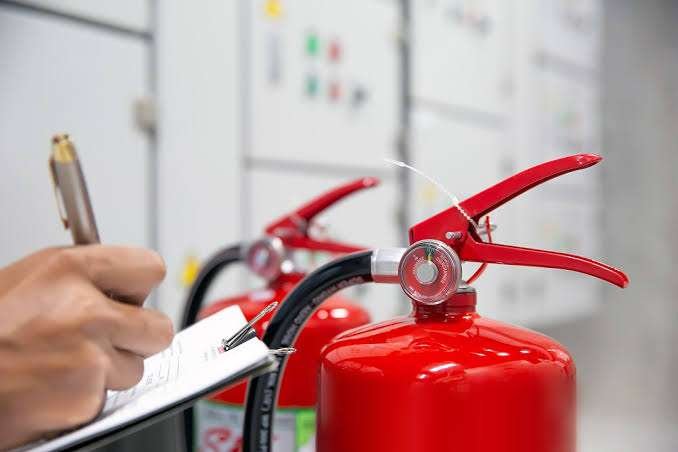
Fire safety is an important responsibility for every business, regardless of its size. A small shop, office, restaurant, workshop, warehouse, salon, school, or service center may have fewer employees and less space than a large commercial facility, but it can still contain significant fire risks.
Electrical equipment, cooking appliances, combustible materials, storage areas, generators, gas equipment, and crowded workspaces can all create potential hazards. For this reason, small-business owners should think about fire safety before purchasing equipment rather than waiting until an emergency occurs.
Buying fire-safety equipment is not simply a matter of choosing the cheapest extinguisher, alarm, or emergency sign. The equipment needs to be suitable for the building, the hazards present, the number of occupants, and the business activities taking place inside.
In Pakistan, the Building Code of Pakistan Fire Safety Provisions 2016 addresses important areas such as occupant notification, means of egress, fire-protection systems, inspection, testing, maintenance, and approval. It states that fire alarm systems should be provided where a building’s size, arrangement, or occupancy means a fire itself may not provide adequate warning.
Rescue 1122 also places strong emphasis on fire prevention, preparedness, community safety, evacuation drills, and workplace safety. Its Community Safety Program includes collaboration with Chambers of Commerce and Industries on fire and work safety.
For businesses researching a fire alarm system in Pakistan, the first step should therefore be understanding the property’s risks and requirements.
Why Small Businesses Need a Fire-Safety Plan
Small businesses sometimes assume that fire safety is mainly a concern for large factories, shopping malls, hotels, or high-rise buildings.
That assumption can create unnecessary risk.
A small business may contain:
– Electrical appliances
– Computers and electronic equipment
– Paper and packaging
– Furniture
– Cooking equipment
– Gas appliances
– Flammable liquids
– Storage materials
– Generators or backup power equipment
– Customers and employees
The exact risks depend on the type of business.
A clothing shop may have large amounts of fabric and packaging. A restaurant may have cooking equipment and oils. An office may contain electrical equipment and paper. A workshop may use machinery and specialized materials.
The correct safety equipment should therefore be selected based on the actual business environment.
1. Start With a Fire-Risk Assessment
Before buying anything, identify where a fire could potentially start and what materials could be involved.
Walk through the premises and look at areas such as:
– Electrical rooms
– Kitchens
– Storage rooms
– Work areas
– Generator locations
– Server or equipment rooms
– Gas installations
– Customer areas
– Emergency exits
Ask basic questions.
What can burn?
Identify combustible materials such as paper, cardboard, fabrics, plastics, packaging, furniture, and other stored goods.
What produces heat?
Consider cooking equipment, electrical equipment, machinery, heaters, and other heat-producing devices.
Where is electricity heavily used?
Look for areas containing multiple appliances, extension arrangements, electrical panels, or other equipment.
Who occupies the building?
Consider employees, customers, visitors, children, older people, and anyone who may require additional assistance during evacuation.
A risk assessment gives the business owner a better foundation for choosing appropriate equipment.
Do Not Buy Equipment Before Understanding the Hazard
A common mistake is purchasing fire equipment simply because it is advertised as a general-purpose solution.
Different fire hazards require different approaches.
The type and quantity of fire-protection equipment should be determined by the building’s use, risk profile, applicable regulations, and professional recommendations where necessary.
For more complex businesses, a qualified fire-safety professional can help identify appropriate equipment and locations.
2. Check the Fire Extinguisher Type
Fire extinguishers are not all the same.
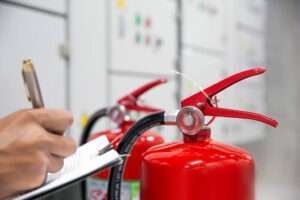
Different extinguishing agents are designed for different fire hazards. Depending on the application, businesses may encounter water, foam, dry chemical powder, carbon dioxide, wet chemical, or specialized extinguishing agents.
The correct choice depends on the materials and equipment present.
For example, a business with ordinary combustible materials may have different requirements from a restaurant kitchen or an industrial workshop.
Before buying an extinguisher, check:
– Fire classification
– Extinguishing agent
– Rating
– Manufacturer information
– Suitable applications
– Size and capacity
– Maintenance requirements
– Applicable local requirements
Do not select equipment solely because it looks familiar or is inexpensive.
Why Extinguisher Selection Matters
Using an unsuitable extinguishing agent can be ineffective and may create additional hazards.
Businesses should therefore identify their fire risks before deciding which extinguishers are appropriate.
Employees should also receive suitable fire-safety education. They should understand that their first responsibility during a serious fire is to follow the emergency plan and reach safety rather than attempting to deal with a dangerous or spreading fire.
3. Check the Fire Alarm Requirements
Early warning can be one of the most important parts of a commercial fire-safety plan.
A small business may have employees working in different rooms, customers in public areas, or people working in locations where a developing fire may not immediately be visible.
The Building Code of Pakistan Fire Safety Provisions 2016 states that fire alarm systems should be provided where the size, arrangement, or occupancy of a building means that a fire itself may not provide adequate warning to occupants.
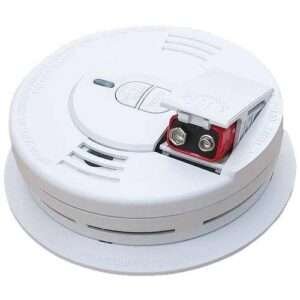
This makes it important to evaluate whether a business needs standalone smoke alarms or a more comprehensive fire alarm system.
What Can a Fire Alarm System Include?
Depending on the building, a system may include:
– Automatic fire detectors
– Manual alarm points
– Audible alarm devices
– Visual notification devices
– Control panels
– Backup power
– Monitoring arrangements
– Connections to other fire-protection systems
The appropriate design depends on the size, layout, occupancy, and risk of the property.
When considering a fire alarm system in Pakistan, businesses should look beyond the initial purchase price and consider installation, testing, maintenance, reliability, and long-term servicing.
Pakistan Engineering Council identifies installation, commissioning, and maintenance of fire detection, alarm, and suppression systems as a specialized engineering area.
4. Check the Quality of the Equipment
Fire-safety equipment is not an area where businesses should make purchasing decisions based only on price.
Poor-quality equipment may create reliability concerns and can increase long-term costs through premature replacement or maintenance problems.
When purchasing safety equipment, review:
– Manufacturer information
– Product specifications
– Appropriate ratings
– Installation requirements
– Maintenance instructions
– Warranty information
– Replacement parts
– Service availability
For larger or more complex systems, businesses should seek professional advice about suitable products and installation.
Avoid Unclear or Incomplete Product Information
A responsible supplier should be able to provide understandable information about the equipment.
If a product has unclear specifications, missing safety information, or no clear maintenance guidance, the business should investigate further before purchasing it.
Fire protection should be treated as a safety investment rather than an ordinary commodity purchase.
5. Check Installation Requirements
Buying appropriate equipment is only part of the process.
Correct installation can be equally important.
A fire alarm detector installed in an unsuitable location may not provide the intended coverage. An extinguisher hidden behind stored goods may not be readily accessible. Emergency lighting or signage may be ineffective if installed where occupants cannot easily see it.
The Building Code requires fire-protection systems and safeguards to be designed, installed, and approved according to applicable codes and referenced standards.
This is particularly important for businesses with integrated systems.
Professional Installation for Complex Systems
Simple household equipment may have straightforward installation requirements, but commercial fire alarm systems can involve multiple components.
Professional installation can help ensure that the system is designed and installed appropriately for the building.
Pakistan Engineering Council’s ME02 specialization specifically covers installation, commissioning, and maintenance of fire detection, alarm, and suppression systems and allied equipment.
6. Check Emergency Exits
Fire safety is not only about buying equipment.
Employees and customers also need safe ways to leave the building.
The Building Code states that means of egress should be arranged or marked so that the route toward a place of safety is clearly indicated, and it also addresses illumination of means of egress.
Small businesses should therefore check:
– Are exit routes clear?
– Can doors be reached easily?
– Are escape routes properly identified?
– Is emergency lighting needed?
– Are stairs and corridors unobstructed?
– Do employees know where to go?
Do not use emergency routes as permanent storage areas.
Boxes, merchandise, furniture, equipment, or other objects should not unnecessarily block escape paths.
7. Check Fire-Safety Signage
Clear signs can help occupants understand where exits and safety equipment are located.
Depending on the business, signs may identify:
– Emergency exits
– Fire extinguishers
– Alarm points
– Assembly areas
– Emergency routes
– Other important safety locations
Signs should be visible and maintained.
Businesses should also consider the needs of visitors who may not be familiar with the building.
8. Check Electrical Safety
Electrical equipment is a common part of almost every modern business.
Offices may contain computers and printers. Retail shops may use refrigerators, lighting systems, electronic displays, and point-of-sale equipment. Workshops can use machinery and power tools.
Before buying fire-safety equipment, businesses should also review their electrical conditions.
Look for:
– Damaged power cords
– Broken plugs
– Overloaded connections
– Unusual heat
– Burning smells
– Repeated electrical faults
– Damaged electrical panels
Electrical repairs should be performed by appropriately qualified professionals.
Fire equipment should not be used as a substitute for fixing an underlying electrical problem.
9. Check Kitchen and Cooking Risks
Restaurants, bakeries, cafés, catering businesses, and other food-related businesses have additional fire-safety considerations.
Cooking equipment can introduce heat, electrical hazards, gas appliances, and cooking oils.
The business should consider:
– Suitable detection
– Appropriate extinguishing equipment
– Kitchen ventilation
– Equipment maintenance
– Gas safety
– Clear escape routes
– Employee training
Commercial cooking environments can require specialized fire-protection arrangements, so businesses should seek professional assessment where appropriate.
10. Check Generator and Backup Power Areas
Many Pakistani businesses use generators, UPS systems, batteries, or other backup-power arrangements.
These systems require appropriate installation, operation, ventilation, and maintenance.
A fire-safety review should consider where backup power equipment is located and whether the area is appropriately separated from other hazards.
Employees should not be expected to carry out technical repairs to generators, electrical systems, or batteries without appropriate qualifications.
Professional maintenance is the safer approach.
11. Check Maintenance and Servicing
Buying fire-safety equipment is not the end of the process.
Equipment needs to remain functional throughout its service life.
Businesses should create a maintenance schedule covering relevant equipment such as:
– Fire alarms
– Smoke detectors
– Fire extinguishers
– Emergency lighting
– Fire doors
– Other fire-protection systems
The Building Code includes requirements relating to inspection, testing, servicing, and maintenance of fire-protection systems.
For specialized systems, businesses should use appropriately qualified service providers.
Keep Maintenance Records
Businesses should maintain records of relevant inspections, tests, repairs, and servicing.
Records can help management understand:
– When equipment was last checked
– Whether faults were identified
– What repairs were completed
– When future servicing is due
– Which equipment has been replaced
Good documentation also makes it easier to demonstrate that fire-safety responsibilities are being taken seriously.
12. Check Staff Fire-Safety Training
Equipment is only one part of workplace safety.
Employees should understand the business’s emergency procedures.
Training can cover:
– Recognizing the alarm
– Evacuation routes
– Emergency exits
– Assembly areas
– Reporting hazards
– Basic fire-prevention practices
– Roles during evacuation
Rescue 1122’s Community Safety Program includes training citizens, industrial workers, and other groups in emergency-management and life-saving skills. It also works with Chambers of Commerce and Industries on fire and workplace safety.
Businesses can use these principles to develop an appropriate workplace safety culture.
13. Check Your Evacuation Plan
Every small business should have a simple emergency plan appropriate to its size and activities.
The plan should identify:
– Primary exits
– Alternative exits where applicable
– Assembly location
– Emergency communication
– Responsibilities of designated staff
– Procedures for assisting people who may need additional support
Employees should know the plan before an emergency occurs.
Where applicable, evacuation drills can help workers become familiar with procedures.
Rescue 1122’s community-safety activities include emergency evacuation drills and safety education.
14. Check Local Requirements
Fire-safety requirements can depend on the building, location, occupancy, and business activity.
A small office may have different requirements from a restaurant, factory, warehouse, school, or healthcare facility.
Business owners should therefore identify the authority having jurisdiction and determine which requirements apply to their property.
The Building Code of Pakistan Fire Safety Provisions 2016 states that the Authority Having Jurisdiction determines whether its provisions are met. It also contains provisions concerning fire certificates and inspection.
This is one reason businesses should not rely solely on generic online checklists when dealing with complex or regulated premises.
15. Consider the Number of People in the Building
Fire safety should consider more than the building itself.
The number of employees and customers can affect evacuation needs.
A small shop may have only a few workers at quiet times but significantly more people during busy periods.
Businesses should consider:
– Maximum occupancy
– Customer movement
– Staff locations
– Public areas
– Accessible exits
– People requiring assistance
The objective is to make sure that everyone can receive an appropriate warning and reach a safe location.
Common Buying Mistakes Small Businesses Should Avoid
Several mistakes can reduce the value of a fire-safety investment.
Buying Only the Cheapest Equipment
Price matters, but suitability and reliability are more important.
Buying Without a Risk Assessment
Equipment should match the hazards present.
Installing Without Professional Guidance
Complex systems need appropriate design and installation.
Ignoring Maintenance
Fire equipment requires ongoing attention.
Blocking Safety Equipment
Extinguishers, alarms, and exits should remain accessible.
Forgetting Employee Training
Employees need to understand emergency procedures.
Treating an Alarm as a Complete Solution
Detection is only one layer of fire protection.
A Small-Business Fire-Safety Buying Checklist
Before making a purchase, business owners can ask the following questions:
Risk
– What fire hazards exist on the premises?
– What materials are stored?
– What equipment produces heat?
– Are cooking, gas, electrical, or industrial hazards present?
Detection
– Is suitable smoke detection required?
– Is a building-wide fire alarm system appropriate?
– Where should detection equipment be installed?
Extinguishers
– Which fire classifications are relevant?
– Which extinguisher types are suitable?
– Are the extinguishers appropriately rated?
Evacuation
– Are exits clear?
– Are routes clearly marked?
– Is emergency lighting required?
– Is there a designated assembly point?
Maintenance
– Who will inspect the equipment?
– How often should it be serviced?
– Are maintenance records being kept?
Training
– Do employees know the evacuation procedure?
– Do they know how alarms work?
– Do they know where the exits are?
Compliance
– Which local requirements apply?
– Does the building require inspection or certification?
– Is professional fire-safety advice necessary?
Why Fire Safety Is an Investment
Some small-business owners see fire-safety equipment as an expense.
A better way to view it is as an investment in people, business continuity, property, and preparedness.
A fire can interrupt operations, damage stock and equipment, affect employees and customers, and create significant financial consequences.
Preventive measures cannot eliminate every risk, but they can help create a more organized and prepared workplace.
Rescue 1122 describes prevention and preparedness as important parts of developing safer communities and conducts fire-safety and workplace-safety initiatives.
Final Thoughts
Buying fire-safety equipment for a small business should never be based on guesswork.
Start by understanding the hazards present in the building. Then consider appropriate detection, alarms, extinguishers, emergency exits, signage, emergency lighting where applicable, maintenance, staff training, and evacuation planning.
For businesses researching a fire alarm system in Pakistan, the most important question is not simply which system is cheapest. It is whether the system is appropriate for the property’s size, layout, occupancy, and risks, and whether it can be properly installed, tested, and maintained.
Pakistan’s Building Code of Pakistan Fire Safety Provisions 2016 provides important principles concerning fire alarm systems, means of egress, fire-protection systems, inspection, testing, and maintenance.
Small businesses should also remember that fire safety is an ongoing process. Equipment needs maintenance, employees need awareness, exits need to remain clear, and emergency plans need to be reviewed.
A well-prepared business is not simply one that owns fire equipment. It is one that understands why the equipment is needed, how it fits into the overall safety plan, and when professional support is required.
Frequently Asked Questions
1. What should a small business check before buying fire-safety equipment?
Start with a fire-risk assessment. Identify combustible materials, electrical equipment, cooking or gas hazards, storage areas, occupancy, exits, and other risks. Then select equipment appropriate to those hazards and applicable requirements.
2. Does every small business need a fire alarm system in Pakistan?
The appropriate fire-dete