Fire blankets are simple fire-safety products that are often kept in kitchens, workshops, laboratories, commercial buildings, and other places where a small fire risk may exist. Because a fire blanket does not require complicated machinery, it can be easy to assume that once it has been purchased and stored, no further attention is necessary.
That assumption can create problems.
Like other safety equipment, a fire blanket should be kept in an appropriate condition and made available for inspection when required. Its packaging, fabric, storage container, location, and overall condition can affect whether it remains suitable for its intended purpose.
In Pakistan, fire prevention is an important part of community safety. Rescue 1122’s Community Safety Program includes fire-safety education, emergency preparedness, evacuation drills, and preventive measures.
Fire blankets should also be considered as one component of a broader fire-safety strategy. They do not replace smoke detection, alarms, extinguishers, emergency exits, evacuation plans, or professional fire-protection systems.
This guide explains practical maintenance considerations for fire blankets and why they should not be ignored.
What Is a Fire Blanket?
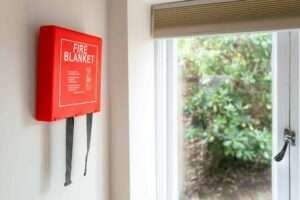
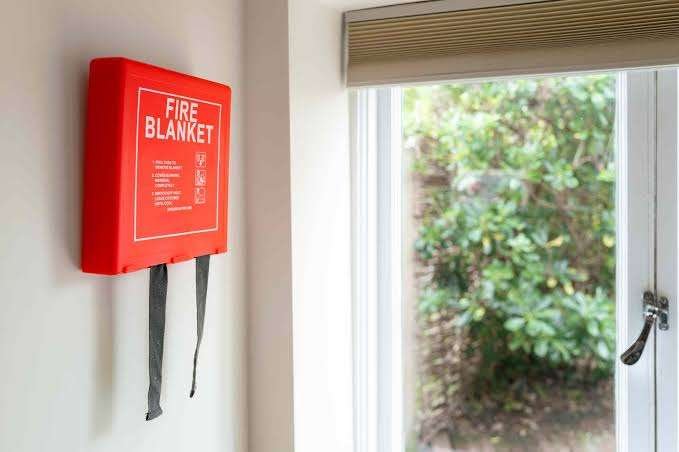
A fire blanket is a specially manufactured sheet of fire-resistant material designed for specific fire-safety applications. It is commonly associated with kitchens and areas where cooking-related fire risks may exist.
Unlike a fire alarm, a fire blanket does not detect a fire or automatically warn occupants. It is a passive piece of safety equipment that remains stored until it is needed.
Because it is passive equipment, maintenance mainly involves making sure it remains:
– Accessible
– Clearly identified
– Properly stored
– Free from obvious damage
– Suitable for its intended application
– Available in an appropriate location
– Consistent with the manufacturer’s instructions
The exact material, certification, size, packaging, and intended use can vary between products. Therefore, maintenance should always follow the manufacturer’s instructions and applicable safety requirements.
Why Fire Blanket Maintenance Matters
A fire blanket can sit untouched for months or years. This can make it easy for people to forget about it.
Dust can accumulate around storage areas. Packaging can become damaged. Equipment may be moved during cleaning or renovation. A blanket may accidentally be used and returned without being reported. Its storage location may become blocked by furniture or other items.
These seemingly small issues can reduce the reliability of the equipment.
The purpose of maintenance is not to encourage people to confront a fire. Instead, it helps ensure that safety equipment is properly managed as part of an overall emergency-preparedness plan.
For a building that has a broader fire alarm system in Pakistan, fire blankets can be considered one additional safety measure rather than a replacement for the detection and warning system.
1. Keep the Fire Blanket in Its Original Storage
One of the simplest maintenance practices is keeping the blanket in its designated container or packaging when not in use.
Many fire blankets are supplied in protective covers or dedicated pouches. These help keep the blanket organized and make it easier to identify.
The storage arrangement should be checked periodically for:
– Tears or damage
– Loose components
– Broken closures
– Missing labels
– Signs of contamination
– Unusual moisture
– Excessive dust
– Damage caused by surrounding equipment
If the packaging has deteriorated, follow the manufacturer’s guidance regarding replacement or servicing.
2. Make Sure the Location Is Easy to Identify
A fire blanket is less useful if nobody knows where it is.
The storage location should be clearly identifiable to the people responsible for the building or area. Appropriate signage can make safety equipment easier to locate during an emergency.
This is especially important in workplaces, schools, restaurants, commercial kitchens, laboratories, and other buildings where many people may use the same area.
However, visibility should not come at the expense of safe storage. The equipment should remain protected from conditions that could damage it.
3. Keep Access Clear
A common maintenance problem is not the blanket itself but the area around it.
Boxes, furniture, cleaning supplies, appliances, or stored materials can gradually obstruct access to safety equipment.
During routine inspections, check whether the fire blanket can be reached without unnecessary obstacles.
This principle also applies to other fire-safety equipment. Emergency exits, alarms, fire extinguishers, and other safety systems should not become inaccessible because of ordinary storage practices.
Pakistan’s fire-safety framework places importance on safe means of egress and the maintenance of fire-protection arrangements.
4. Protect Fire Blankets From Moisture
Moisture can be an important concern for stored safety equipment.
A fire blanket should be stored according to the manufacturer’s environmental recommendations. Areas with excessive moisture, leaks, condensation, or poor storage conditions may not be suitable.
In parts of Pakistan where seasonal weather produces high humidity or heavy rainfall, building managers should pay particular attention to storage conditions.
If the blanket becomes wet, contaminated, or otherwise compromised, do not assume that simply drying it automatically restores it to its original condition.
Instead, check the manufacturer’s instructions or obtain advice from an appropriately qualified supplier or fire-safety professional.
5. Check for Visible Damage
A routine visual inspection can identify obvious problems.
Look at the packaging and, where inspection can be performed safely and according to manufacturer instructions, the blanket itself.
Warning signs may include:
– Tears
– Holes
– Severe fraying
– Burn damage
– Chemical contamination
– Heavy staining
– Mold or moisture damage
– Missing sections
– Damaged packaging
– Signs that the blanket has previously been used
A damaged blanket should not simply be returned to storage and forgotten.
The appropriate action depends on the product and manufacturer. In some situations, replacement may be more appropriate than attempting to repair the blanket.
6. Never Assume a Used Blanket Is Automatically Ready for Reuse
This is an important maintenance point.
If a fire blanket has been removed from its packaging or used during an incident, its condition should be evaluated according to the manufacturer’s instructions.
A blanket that appears visually acceptable may still have been exposed to heat, contamination, chemicals, or other conditions that affect its suitability.
For that reason, building managers should have a clear procedure for reporting and evaluating used fire-safety equipment.
If there is any uncertainty, professional advice should be obtained.
7. Do Not Make Unapproved Repairs
A damaged safety product should not be modified with ordinary household materials.
For example, sewing, cutting, taping, washing, or otherwise altering a fire blanket without manufacturer approval may change its properties.
Fire-resistant products are manufactured using specific materials and construction methods. A repair that looks acceptable may not provide the same performance.
When in doubt, replacement or professional assessment is safer than improvised repair.
8. Keep Fire Blankets Away From Unnecessary Heat
Although fire blankets are designed for fire-safety applications, they should not be stored directly against heat-producing equipment unless the manufacturer specifically permits that arrangement.
Storage areas should be selected according to the product’s instructions and the risks present in the building.
A kitchen, for example, may contain ovens, cooking appliances, electrical equipment, and other heat sources. The safety equipment should be positioned appropriately without creating additional hazards.
9. Include Fire Blankets in Workplace Inspections
Businesses should not rely on employees remembering to inspect safety equipment individually.
A workplace fire-safety inspection program can include fire blankets alongside other equipment.
A basic inspection record might include:
– Location
– Date inspected
– Packaging condition
– Accessibility
– Visible damage
– Signage condition
– Action required
– Date of follow-up
– Person responsible for inspection
Larger buildings may require more formal inspection and maintenance procedures based on their fire-protection systems, occupancy, and applicable requirements.
Pakistan Engineering Council recognizes specialized engineering work for the installation, commissioning, and maintenance of fire detection, alarm, suppression systems, and related equipment.
10. Train Staff to Recognize Safety Equipment
Maintenance is not only about equipment.
People should know where important fire-safety equipment is located and understand the building’s emergency procedures.
Rescue 1122’s community-safety work includes training citizens, industrial workers, students, and other groups in emergency management and safety skills. It also promotes evacuation drills and fire-safety education.
For businesses, basic awareness can include:
– Knowing the location of fire-safety equipment
– Recognizing emergency alarm signals
– Knowing evacuation routes
– Understanding who is responsible for contacting emergency services
– Knowing where to assemble after evacuation
– Reporting damaged or missing safety equipment
Young people and untrained occupants should not be expected to fight fires. The priority during a fire emergency should be following the building’s emergency plan and getting to a safe location.
11. Check Fire Blanket Signage
Clear identification can make a difference during an emergency.
A fire blanket storage point should be easy for authorized occupants and staff to identify.
During inspections, check whether:
– The sign is visible
– The sign has not been covered
– The storage point has not been relocated without updating signage
– Lighting conditions allow the area to be identified
– Other equipment has not been placed in front of it
Signage should support the overall emergency-evacuation system rather than create confusion.
12. Consider the Environment Around the Blanket
Different locations create different maintenance challenges.
Kitchens
Kitchens can have grease, steam, heat, moisture, and cleaning chemicals. Fire-safety equipment should therefore be checked more carefully for contamination and environmental exposure.
Workshops
Workshops may contain dust, oils, tools, machinery, and other materials. Fire blankets should be stored where they remain protected and accessible.
Laboratories
Laboratory environments can involve chemicals and specialized equipment. Fire-safety arrangements should be designed according to the risks present, with appropriate professional guidance.
Offices
In offices, the biggest issue may simply be accessibility. Furniture, files, boxes, or renovation materials can block safety equipment.
Schools
Schools should ensure that fire-safety equipment is properly managed by responsible adults and that students understand evacuation procedures rather than being expected to handle firefighting equipment.
Fire Blankets Are Not a Substitute for a Fire Alarm
This distinction is important.
A fire blanket does not normally detect smoke or automatically alert people to a fire.
A smoke detector can provide early warning. A building fire alarm system can provide detection and notification across multiple areas. Emergency exits provide a route away from danger. Fire blankets and other firefighting equipment serve different purposes.
A strong fire-safety approach therefore uses multiple layers.
For example, a building may have:
1. Fire prevention measures
2. Smoke or heat detection
3. Alarm and notification systems
4. Emergency lighting and exit signage
5. Evacuation procedures
6. Appropriate firefighting equipment
7. Regular inspection and maintenance
8. Emergency-service coordination
The Building Code of Pakistan Fire Safety Provisions 2016 addresses fire alarm systems, automatic detection, manual alarm initiation, maintenance, testing, and system impairments.
How Fire Blankets Fit Into a Larger Fire-Safety Plan
A fire blanket should never be considered the entire fire-safety plan.
A properly maintained fire alarm system in Pakistan can help provide early warning, while evacuation arrangements help occupants move away from danger.
Rescue 1122 describes fire prevention and community preparedness as important parts of its safety mission. Its programs include fire-safety education and emergency evacuation drills.
This layered approach is particularly important in larger buildings where a single piece of equipment cannot protect everyone.
Maintenance During Building Renovations
Renovation and construction can change the location and condition of fire-safety equipment.
Walls may be moved. Kitchens may be redesigned. Storage areas may change. Equipment may temporarily be relocated.
During such work, responsible building personnel should ensure that required fire-protection and emergency arrangements are not accidentally compromised.
Pakistan’s fire-safety provisions address fire-protection and egress considerations during construction, repair, alteration, and changes to buildings.
A fire blanket that has been placed in a temporary storage area and forgotten can become effectively unavailable.
Create a Simple Inspection Schedule
A written inspection schedule makes maintenance easier to manage.
For a small property, the responsible person can maintain a basic checklist.
For a larger workplace, responsibility can be assigned to designated staff or qualified service providers depending on the building’s systems and requirements.
A simple record might contain:
Inspection Item| What to Check
Location| Is the blanket where it should be?
Access| Is anything blocking it?
Packaging| Is the container intact?
Condition| Is there visible damage?
Moisture| Is there evidence of dampness?
Signage| Is the location clearly identified?
Usage| Has it been removed or used?
Action| Is replacement or professional assessment needed?
The exact inspection frequency should follow manufacturer instructions, the building’s fire-safety program, and applicable requirements.
When Should a Fire Blanket Be Replaced?
There is no single replacement interval that applies to every fire blanket.
Replacement decisions can depend on:
– Manufacturer guidance
– Product condition
– Age
– Storage conditions
– Previous use
– Damage
– Contamination
– Certification or applicable standards
– Recommendations from qualified professionals
A blanket that has been damaged should not remain in service simply because it is still physically present.
Similarly, a very old product should not automatically be assumed to be reliable simply because it has never been used.
The Cost of Neglecting Maintenance
The cost of maintaining a fire blanket is generally small compared with the potential consequences of poorly managed fire-safety equipment.
A neglected safety device may provide false confidence. People may believe that equipment is available when it is damaged, inaccessible, or unsuitable.
For businesses, inadequate maintenance can also contribute to wider operational problems. Fire-safety equipment is part of a building’s overall risk-management system.
The real objective of maintenance is therefore not simply preserving a piece of fabric. It is maintaining a dependable layer of preparedness.
Fire Safety in Pakistan: A Broader Responsibility
Fire safety requires cooperation between property owners, managers, employees, residents, visitors, safety professionals, and emergency services.
Rescue 1122’s Community Safety Program emphasizes prevention, preparedness, training, evacuation drills, and collaboration with organizations for fire and workplace safety.
This approach is especially valuable because emergencies can occur in homes, offices, schools, factories, restaurants, markets, warehouses, and other environments.
Every building has different risks, so its fire-safety arrangements should be appropriate to its use, occupancy, layout, and applicable requirements.
Final Thoughts
Fire blankets are simple pieces of safety equipment, but simplicity does not mean they can be ignored.
Regularly checking their storage location, accessibility, packaging, condition, and suitability can help ensure that they remain part of an organized fire-safety plan.
They should also be viewed alongside other safety measures. Smoke detection and alarm systems provide warning, emergency exits support evacuation, and professional fire-protection systems help manage building-wide risks.
For anyone responsible for a home, office, school, shop, restaurant, warehouse, or other property in Pakistan, the most important principle is consistency: fire-safety equipment should be inspected, maintained, documented, and replaced when necessary.
A fire blanket that is properly stored and maintained is one small part of a much larger safety system. Ignoring it, however, can create an avoidable weakness in that system.
FAQs
1. How should a fire blanket be maintained?
A fire blanket should be kept in its designated storage location, protected from damaging environmental conditions, kept accessible, and checked for visible damage or contamination. Always follow the manufacturer’s maintenance instructions.
2. Can a damaged fire blanket still be used?
A damaged blanket should not automatically be considered suitable for use. Damage, contamination, or previous exposure may affect its performance. Follow the manufacturer’s guidance or seek advice from an appropriately qualified fire-safety professional.
3. Where should a fire blanket be stored?
It should be stored in an appropriate, clearly identifiable, and accessible location that follows the manufacturer’s recommendations and suits the risks of the building. It should not be hidden behind boxes or other obstacles.
4. Does a fire blanket replace a fire alarm system?
No. A fire blanket and a fire alarm serve different purposes. A fire alarm or detection system is intended to provide warning, while a fire blanket is a passive piece of fire-safety equipment. A complete fire-safety plan should use appropriate layers of protection.
5. Why is fire equipment maintenance important in Pakistan?
Regular maintenance helps ensure that safety equipment remains available and suitable for its intended purpose. Rescue 1122 promotes fire prevention, preparedness, safety education, and evacuation training, while Pakistan’s fire-safety provisions address the maintenance and reliability of fire-protection systems.