Fire safety is often discussed as a workplace responsibility, but its importance extends far beyond the office. Families depend on workplaces, schools, shops, hospitals, and other buildings being prepared for emergencies. When employees understand basic fire-safety principles, they can also bring that knowledge home and help their families develop safer habits.
An office may contain computers, electrical equipment, paper files, furniture, kitchen appliances, generators, batteries, and other materials that can contribute to a fire risk. A good safety plan therefore needs more than a fire extinguisher in the corner. It should include prevention, early detection, alarms, clear escape routes, emergency lighting, training, maintenance, and regular drills.
In Pakistan, the Pakistan Engineering Council’s Building Code of Pakistan Fire Safety Provisions 2016 includes specific provisions for fire alarm and detection systems in business occupancies under certain conditions.
This guide explains office fire safety in simple language and shows why the lessons learned at work can also help families create safer homes.
1. Why Office Fire Safety Matters
Offices can become busy environments where many people work around electrical equipment, appliances, paper, furniture, and other materials.
A fire can create several problems at the same time:
– Smoke can reduce visibility.
– People may become confused.
– Electrical equipment can create additional hazards.
– Escape routes may become difficult to use.
– Visitors may not know the building layout.
– Employees may not know where to assemble.
Good preparation helps people respond more calmly during an emergency.
2. Fire Safety Starts With Prevention
The first goal should always be preventing a fire from starting.
Office management and employees can reduce common risks by paying attention to:
– Electrical equipment
– Extension leads
– Cooking appliances
– Heating equipment
– Generators
– Batteries
– Combustible storage
– Smoking-related hazards
– Damaged electrical wiring
Prevention should be part of everyday workplace culture rather than something considered only during an annual inspection.
3. Electrical Safety in Offices
Modern offices depend heavily on electricity.
Computers, printers, photocopiers, air conditioners, chargers, refrigerators, kitchen appliances, and other equipment may operate throughout the day.
Electrical safety practices include keeping cables and equipment in good condition and avoiding unsafe connections or overloaded outlets.
Electrical installation and repair work should be handled by appropriately qualified professionals.
Employees should report damaged equipment instead of attempting repairs themselves.
4. Keep Electrical Areas Clear
Electrical equipment needs an appropriate environment.
Do not allow paper, packaging, boxes, cloth, or other unnecessary combustible materials to accumulate around electrical equipment.
Storage should also avoid blocking access to electrical panels and other essential building systems.
Keeping these areas organized makes inspection and maintenance easier.
5. Office Kitchens Need Attention
Many offices have kitchens, tea areas, or break rooms.
These areas can contain:
– Electric kettles
– Microwaves
– Refrigerators
– Hot plates
– Coffee machines
– Toasters
Employees should use appliances according to their manufacturer’s instructions and report damaged equipment.
Kitchen areas should be kept clean and free from unnecessary combustible materials.
6. Fire Detection Provides Early Warning
Early detection is one of the most important parts of building fire safety.
Smoke and heat detection systems can identify certain signs of a developing fire and activate an alarm system when designed and installed for that purpose.
The Building Code of Pakistan includes fire alarm and detection provisions for various occupancy types. For example, its business-occupancy provisions specify fire alarm and detection requirements for certain new and existing business buildings based on factors such as building height and occupant load.
The exact requirements depend on the building and its use.
7. Understanding a Fire Alarm System
A fire alarm system can include several components working together.
Depending on the building, these may include:
– Smoke detectors
– Heat detectors
– Manual alarm devices
– Control panels
– Audible alarms
– Visual notification devices
– Backup power
– Communication equipment
A Fire alarm system in Pakistan should be designed according to the building’s characteristics and applicable requirements rather than selected solely according to price.
8. Why Employees Should Know the Alarm
Employees do not need to be fire-system technicians, but they should understand what the building’s alarm sounds or signals mean.
Everyone should know that an alarm requires immediate attention.
When an alarm activates, employees should follow the building’s established emergency procedure and evacuation instructions.
People should not assume that an alarm is false simply because they cannot see smoke or flames.
9. Do Not Ignore False Alarms
Repeated false alarms can cause people to become less responsive to future warnings.
If an alarm activates without an obvious emergency, trained building personnel should investigate according to the building’s procedures.
Employees should never disable detectors or silence safety systems simply because an alarm is inconvenient.
Any recurring issue should be addressed through proper inspection and maintenance.
10. Keep Emergency Exits Clear
A safe escape route is essential during a fire.
Office corridors, stairways, doors, and exit paths should remain accessible.
Do not use escape routes as storage areas.
Boxes, furniture, files, equipment, and other objects should not create unnecessary obstacles.
Pakistan’s fire-safety provisions address means of egress and the safe movement of occupants during emergencies.
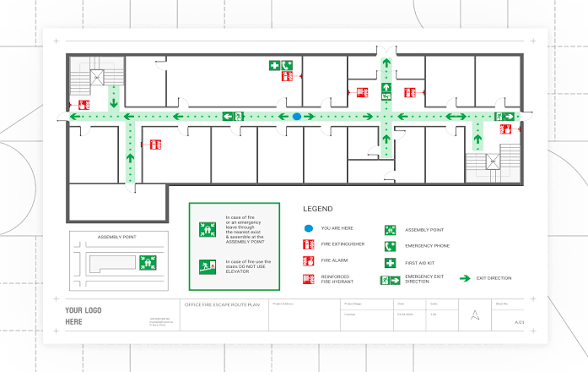
11. Know the Nearest Exit
Employees should know more than the location of their usual office door.
They should understand:
– The nearest safe exit
– An alternative exit
– The location of assembly areas
– The building’s evacuation procedure
– Who is responsible for emergency coordination
This is especially important for people working in large or multi-story buildings.
12. Emergency Lighting Helps During Power Loss
A fire or other emergency can interrupt normal electrical power.
Emergency lighting can help people identify routes and move toward safer areas when normal lighting is unavailable.
The design and requirements of emergency lighting depend on the building and applicable standards.
It should be inspected and maintained as part of the overall emergency system.
13. Fire Doors Are Important
Fire doors can help limit the movement of fire and smoke between certain areas when correctly designed, installed, and maintained.
Employees should not wedge fire doors open unless the building’s approved system specifically allows it.
Damaged or poorly maintained fire doors should be reported to building management.
14. Keep Fire Protection Equipment Accessible
Fire-safety equipment should be easy to locate and access.
Depending on the building, this may include:
– Fire extinguishers
– Fire hose reels
– Fire alarm devices
– Fire hydrants
– Emergency lighting
– Fire doors
– Other approved protection systems
Equipment should not be hidden behind boxes or furniture.
Inspection and maintenance should be carried out according to the relevant requirements and manufacturer’s guidance.
15. Employees Should Not Take Unnecessary Risks
When a fire occurs, employees should follow the building’s emergency procedure rather than attempting to become firefighters.
Ordinary occupants should prioritize safe evacuation and alerting others.
People should not enter smoke-filled areas or return to an evacuated building to collect belongings.
Firefighting should be handled by appropriately trained personnel and emergency responders.
16. Fire Drills Teach People What to Do
A fire drill gives employees an opportunity to practice evacuation procedures.
Punjab Rescue 1122 describes emergency preparedness and evacuation drills as part of its community safety work and reports training students and others in emergency management.
A useful office drill can help identify issues such as:
– Blocked routes
– Confusing exits
– Poor communication
– Problems with assembly arrangements
– Difficulties assisting people who need additional support
Drills should be planned responsibly and according to the building’s safety procedures.
17. Families Can Learn From Workplace Drills
Fire-safety knowledge should not stop when an employee leaves the office.
Families can use similar principles at home.
For example, family members can discuss:
– Where to leave the house
– Where to meet outside
– What an alarm means
– Who helps younger children
– How to contact emergency services
– Why nobody should return inside after evacuation
A simple plan is easier to remember than a complicated one.
18. Teach Children About Fire Alarms
Children should understand that a fire alarm is a warning that requires attention.
Parents can explain in simple language that:
– An alarm should never be treated as a joke.
– Children should follow adults during an emergency.
– They should not hide.
– They should not return inside after leaving.
– They should tell an adult immediately if they notice smoke or fire.
Children should not be expected to operate fire-protection equipment or manage an emergency themselves.
19. Visitors Need Protection Too
Offices may have customers, contractors, delivery workers, interview candidates, and other visitors.
Visitors may not know:
– Where exits are located
– Where the assembly point is
– What the alarm sounds like
– Which stairway to use
Office emergency procedures should therefore account for visitors.
Reception staff and security personnel can play an important role in communicating emergency procedures.
20. Special Consideration for People Who Need Assistance
A good evacuation plan should consider employees and visitors who may need additional help.
This may include people with:
– Mobility difficulties
– Hearing difficulties
– Visual limitations
– Temporary injuries
– Other conditions affecting evacuation
The appropriate arrangements depend on the individual and the building.
Planning in advance can reduce confusion during an emergency.
21. Generator Safety in Offices
Many offices use generators or other backup-power systems.
Generators can introduce additional fire, electrical, fuel, exhaust, and carbon-monoxide risks.
Generator areas should be properly planned and maintained, and electrical connections should be handled by qualified professionals.
Fuel and combustible materials should be managed according to applicable safety requirements.
22. Storage Areas Need Regular Checks
Offices sometimes use storage rooms for paper, files, packaging, cleaning materials, or other supplies.
Poor storage can increase fire risk or block access to safety equipment.
Storage areas should therefore be organized, and unnecessary combustible materials should not be allowed to accumulate.
Emergency exits and equipment must remain accessible.
23. Smoking-Related Risks
Where smoking is permitted in designated areas, management should ensure that applicable rules and safety measures are followed.
Smoking materials should never be discarded carelessly.
Workplace policies should clearly identify where smoking is allowed and how related waste is managed.
24. Maintenance Is Essential
Fire-safety systems require more than installation.
Regular maintenance helps ensure that equipment remains in suitable working condition.
Maintenance programs may cover:
– Fire alarms
– Detection devices
– Emergency lighting
– Fire extinguishers
– Fire doors
– Backup power
– Other fire-protection systems
Pakistan Engineering Council’s professional categories include installation, commissioning, and maintenance of fire detection, alarm, suppression systems, and related equipment.
25. Fire Safety Responsibilities
Fire safety should not be the responsibility of only one employee.
Management can establish policies and provide appropriate resources.
Employees can:
– Follow safety procedures
– Report hazards
– Keep exits clear
– Participate in drills
– Learn evacuation routes
– Take alarms seriously
Security and facility teams can support emergency coordination and equipment maintenance.
26. Fire Safety Training
Training can help employees understand how to respond during an emergency.
Training topics may include:
– Fire prevention
– Alarm awareness
– Evacuation
– Emergency communication
– Assembly procedures
– Reporting hazards
– Responsibilities during drills
Punjab Rescue 1122’s community safety program includes training and awareness activities related to emergency preparedness, fire safety, and evacuation.
27. Office Fire Safety Audits
A fire-safety review can identify problems before an emergency occurs.
Depending on the building and applicable requirements, an assessment may consider:
– Fire detection
– Alarm systems
– Exit routes
– Emergency lighting
– Fire doors
– Electrical hazards
– Storage
– Fire-protection equipment
– Evacuation procedures
– Emergency access
Punjab Rescue 1122 provides building-safety information and a building-safety checklist under the Punjab Community Safety framework.
28. High-Rise Office Safety
High-rise offices require careful evacuation planning because occupants may be several floors above ground level.
Building safety may involve:
– Fire detection
– Alarm communication
– Protected stairways
– Emergency lighting
– Fire-resistant construction
– Fire lifts where required
– Refuge arrangements where applicable
The Pakistan fire-safety code includes specific provisions for high-rise buildings, including fire alarm and detection systems.
Employees should follow the building’s official evacuation instructions.
29. What Families Should Ask About Office Safety
Employees can use their workplace experience to start useful conversations at home.
Families can ask:
– Where are our home’s smoke alarms?
– What should we do if one sounds?
– What is our safest exit?
– Where should we meet outside?
– Who will help younger children?
– Are emergency routes clear?
– Are electrical appliances maintained?
– Do we know the local emergency contact?
These questions can turn fire safety into a regular family discussion.
30. Office Safety Can Influence Home Habits
A person who learns to keep office exits clear may become more aware of blocked routes at home.
Someone who learns to report damaged electrical equipment at work may become more careful about damaged chargers and appliances at home.
Someone who participates in evacuation drills may better understand the importance of having a family escape plan.
Small habits can therefore have value beyond the workplace.
31. Do Not Depend on One Safety Measure
No single fire-safety product can protect an entire building by itself.
A strong approach combines:
Prevention + Detection + Alarm + Evacuation + Maintenance + Training
For example, a fire alarm can provide an important warning, but people still need clear exits and a practiced evacuation plan.
Similarly, an extinguisher cannot replace early detection, safe evacuation, or professional emergency response.
32. Keep Emergency Information Available
An office should maintain appropriate emergency information that employees can easily access.
Depending on the organization, this may include:
– Emergency contact details
– Building evacuation procedures
– Assembly-point information
– Floor plans
– Responsibilities of designated staff
– Maintenance records
– Fire-safety instructions
Information should be updated when the building layout or emergency arrangements change.
33. Review Fire Safety After Building Changes
Fire-safety arrangements may need review when an office is renovated, expanded, or changes its use.
Examples include:
– New rooms
– Additional floors
– Changes in occupancy
– New electrical equipment
– New storage areas
– Changes to escape routes
– Installation of generators or other major equipment
A system designed for an old layout may not automatically remain suitable after major changes.
34. Building Management Has an Important Role
Building owners and managers have a significant role in maintaining safe conditions.
They should ensure that appropriate inspections, maintenance, emergency planning, and safety measures are addressed.
In Punjab, the Community Safety framework includes building-safety regulations and inspection-related resources through Rescue 1122.
Specific legal and technical requirements can vary according to building type, location, and applicable regulations.
35. Final Thoughts
Office fire safety is not only about protecting employees during working hours. The knowledge people gain at work can also help families create safer homes.
The basic principles are simple: prevent hazards where possible, maintain electrical equipment, keep exits clear, understand alarms, maintain fire-protection systems, conduct appropriate drills, and know what to do during an emergency.
Pakistan’s fire-safety framework contains specific provisions for business occupancies and fire alarm and detection systems, while Rescue 1122 also promotes emergency preparedness, fire safety education, and evacuation training.
A suitable Fire alarm system in Pakistan is one part of a complete fire-safety strategy. The correct system depends on the building, its occupancy, layout, risks, and applicable requirements.
Families can take the same principles home by creating a simple evacuation plan, keeping escape routes clear, maintaining electrical equipment, teaching children basic fire awareness, and making sure everyone knows what to do when an alarm sounds.
For offices and other properties, Fire Safety Trading can provide information about fire-safety products and solutions. Professional assessment and maintenance should be considered when designing or upgrading a building’s fire-protection arrangements.
FAQs
1. Why is office fire safety important?
Office fire safety helps reduce fire risks and prepares employees and visitors to respond appropriately during an emergency. It includes prevention, detection, alarms, evacuation planning, maintenance, and training.
2. What should employees do when a fire alarm sounds?
Employees should follow the building’s emergency procedure, leave through the designated safe exit, and proceed to the assembly area. They should not delay evacuation to collect belongings or return to the building without authorization.
3. Is a fire alarm system required in Pakistani offices?
Requirements depend on the building’s type, size, height, occupancy, and other applicable conditions. Pakistan’s Building Code of Pakistan Fire Safety Provisions 2016 specifies fire alarm and detection requirements for certain new and existing business occupancies.
4. How can families learn from office fire safety?
Families can use workplace safety lessons to create home evacuation plans, keep exits clear, understand alarm warnings, maintain electrical equipment, and practice emergency procedures.
5. How often should office fire-safety equipment be maintained?
Maintenance schedules depend on the equipment, manufacturer’s instructions, applicable standards, and building requirements. Fire alarms, detection equipment, emergency lighting, extinguishers, and other systems should receive appropriate inspection and maintenance rather than being ignored after installation.