Fire alarm systems are an important part of modern fire-safety planning. They are designed to detect signs of fire, provide an early warning, and help people respond before a small incident becomes a larger emergency. They are used in homes, offices, schools, hospitals, hotels, shopping centers, factories, warehouses, apartment buildings, and other facilities.
In Pakistan, the need for reliable fire detection and alarm arrangements is particularly important in buildings where many people live, work, study, or visit. The Pakistan Engineering Council (PEC) publishes the Building Code of Pakistan Fire Safety Provisions 2016, which includes provisions concerning fire detection and alarm systems. PEC’s online engineering portal also identifies installation, commissioning, and maintenance of fire detection, alarm, and suppression systems as a specialized engineering service.
Using a fire alarm system correctly does not simply mean installing detectors and waiting for an alarm. The system needs appropriate design, suitable equipment, professional installation, regular testing, proper maintenance, and clear emergency procedures.
This guide explains the right way to understand, use, and maintain fire alarm systems in Pakistan.
1. What Is a Fire Alarm System?
A fire alarm system is a group of devices and equipment designed to detect a possible fire and provide an alert.
Depending on the building, a system may include:
– Smoke detectors
– Heat detectors
– Manual alarm devices
– Fire alarm control panels
– Audible alarm sounders
– Visual notification devices
– Emergency power supplies
– Monitoring equipment
– Communication equipment
– Associated wiring and control equipment
The exact combination depends on the building’s size, occupancy, layout, hazards, and applicable safety requirements.
A properly designed system allows a fire to be detected and communicated to responsible people as quickly as practical.
2. Why Fire Alarm Systems Matter
Fire can spread quickly, while people may not immediately notice smoke or flames.
An alarm system provides an important early-warning layer. When a detector identifies conditions associated with fire, the system can provide a warning so occupants and responsible personnel can begin following the building’s emergency procedure.
This is particularly important in larger buildings where people may be far away from the location where an incident starts.
A fire alarm system is not intended to replace evacuation planning, fire-resistant construction, firefighting equipment, or professional emergency response. Instead, it works as one part of a larger fire-safety strategy.
3. Understanding a Fire Alarm System in Pakistan
A Fire alarm system in Pakistan should be selected according to the building’s particular requirements rather than simply choosing the cheapest or most basic equipment.
The Building Code of Pakistan Fire Safety Provisions 2016 includes requirements for fire alarm and detection systems in different types of occupancies. For example, the provisions specifically address new and existing high-rise buildings and require an approved emergency voice/alarm communication system and fire detection system in accordance with the applicable section.
This demonstrates why system design should consider the building’s use, size, occupancy, and physical arrangement.
4. Choose the System According to the Building
Different buildings have different fire risks.
A small office may have very different requirements from:
– A hospital
– A hotel
– A shopping mall
– A factory
– A warehouse
– A school
– A high-rise apartment building
– A mixed-use development
Factors such as floor area, number of occupants, building height, room arrangement, environmental conditions, and combustible materials can influence system design.
A professional assessment can help determine what type and quantity of detection and notification equipment is appropriate.
5. Smoke Detectors
Smoke detectors are among the most familiar components of a fire alarm system.
They are designed to identify smoke particles associated with a developing fire and send a signal to the alarm system.
However, not every location is suitable for the same type of detector. Dust, steam, cooking activity, temperature, airflow, and other environmental conditions can affect detector performance.
For this reason, detector selection and placement should be based on professional design rather than simply installing devices wherever convenient.
6. Heat Detectors
Heat detectors respond to specified heat conditions.
They can be useful in environments where smoke detection may not be suitable because of normal environmental conditions.
For example, some areas may experience dust, steam, fumes, or other conditions that could produce unwanted alarms.
The choice between smoke detection, heat detection, or another detection method should depend on the characteristics of the area and applicable requirements.
7. Manual Fire Alarm Devices
Automatic detectors are not the only way an alarm can be initiated.
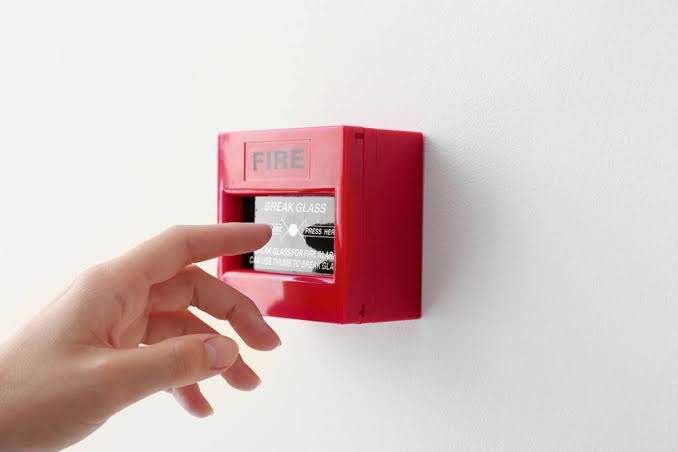
Manual fire alarm devices allow a person who discovers a fire or emergency condition to activate the alarm system.
These devices should be appropriately located, visible, accessible, and maintained.
Building occupants should know that a genuine fire or emergency should be reported immediately according to the building’s established emergency procedure.
8. The Fire Alarm Control Panel
The control panel is a central component of many fire alarm systems.
It receives information from connected devices and can indicate alarm or fault conditions.
In larger systems, the panel may help trained personnel identify the area or device associated with an alarm.
Some systems use conventional zones, while addressable systems can provide more detailed information about individual devices.
The choice depends on the building’s needs and the system design.
9. Alarm Notification Must Be Clear
Detecting a fire is only one part of the process.
People also need to receive a clear warning.
Fire alarm systems may use audible sounders, visual notification devices, voice communication, or combinations of these methods.
Large buildings may require more advanced notification arrangements because people can be spread across many rooms or floors.
The objective is to make sure occupants can recognize the warning and follow the building’s emergency instructions.
10. Do Not Ignore Fire Alarms
One of the most important rules is simple: a fire alarm should be taken seriously.
Even if previous alarms have turned out to be unwanted alarms, occupants should not assume that every future alarm is harmless.
A responsible response is to follow the building’s emergency procedure and instructions from trained personnel.
Repeated unwanted alarms should be professionally investigated instead of simply being ignored.
Possible causes can include equipment faults, environmental conditions, unsuitable detector selection, dust, installation issues, or other technical problems.
11. False Alarms Need Professional Attention
Unwanted alarms can create problems for building occupants and management.
If alarms happen repeatedly without an actual fire, people may eventually become less responsive to the warning.
However, disabling detectors or ignoring alarm signals is not an appropriate solution.
Instead, qualified professionals should investigate the reason for repeated activations.
Corrective measures may involve reviewing detector locations, environmental conditions, equipment condition, wiring, or system programming.
The objective is to maintain reliable fire detection while reducing unnecessary alarms.
12. Professional Installation Is Important
A fire alarm system is a life-safety system, so installation should be treated accordingly.
Poor installation can affect detection, notification, communication, and reliability.
PEC’s online Constructor/Operator Portal identifies ME02 as covering installation, commissioning, and maintenance of fire detection, alarm and suppression systems and associated equipment.
This highlights the importance of using appropriately qualified professionals for technical work.
13. Commissioning Confirms System Performance
After installation, a fire alarm system should be properly commissioned.
Commissioning involves checking whether the installed system operates according to its intended design and requirements.
Depending on the system, this can involve checking detectors, manual devices, alarm notification, control equipment, backup power, communications, and fault indications.
The building owner or manager should retain appropriate documentation for the system.
14. Regular Maintenance Keeps the System Reliable
Installation alone does not guarantee long-term performance.
Fire alarm systems need regular inspection, testing, and maintenance.
Maintenance programs may include checking:
– Smoke detectors
– Heat detectors
– Manual alarm devices
– Control panels
– Alarm sounders
– Visual notification devices
– Backup batteries
– Wiring
– Fault indicators
– Communication equipment
The frequency and extent of maintenance should follow applicable requirements, manufacturer recommendations, and the building’s professional fire-safety program.
15. Backup Power Is an Important Part of Reliability
Fire emergencies can sometimes affect normal electrical power.
Fire alarm systems therefore commonly include backup power arrangements appropriate to the system design.
Backup batteries or other approved power arrangements can help the system remain available when normal electrical supply is interrupted.
These components also require inspection and maintenance. A backup battery that has deteriorated may not provide the expected performance when needed.
16. Keep Alarm Devices Accessible
Fire alarm devices should not be hidden, blocked, damaged, or covered by furniture or other objects.
Building managers should ensure that detectors, manual alarm devices, sounders, visual indicators, and control equipment remain accessible and visible as intended.
Renovations can sometimes unintentionally affect fire alarm equipment.
For example, changing ceilings, room layouts, partitions, or ventilation arrangements can affect detector locations or system coverage.
Significant building changes should therefore be reviewed by appropriate professionals.
17. Fire Alarm Systems and High-Rise Buildings
High-rise buildings require particularly careful fire-safety planning because occupants may be located many floors above ground level.
The Pakistan Fire Safety Provisions specifically address new and existing high-rise buildings and require fire alarm and detection arrangements under the applicable provisions.
A high-rise fire alarm strategy may need to work alongside:
– Protected escape routes
– Emergency lighting
– Fire doors
– Fire-resistant construction
– Fire lifts
– Emergency communication
– Smoke-control arrangements
– Firefighting systems
The alarm system is therefore one component of a larger safety network.
18. Fire Alarm Systems in Commercial Buildings
Commercial buildings can have large numbers of employees, customers, visitors, and contractors.
Shopping centers, offices, hotels, and other commercial facilities may have different occupancy patterns throughout the day.
The alarm system should be designed with these conditions in mind.
For example, visitors may not know the location of emergency exits, so clear notification and effective emergency procedures are particularly important.
The Building Code of Pakistan Fire Safety Provisions includes specific fire alarm and detection requirements for various occupancies, including certain business and mercantile buildings.
19. Fire Alarm Systems in Industrial Facilities
Factories and industrial facilities can contain machinery, electrical equipment, chemicals, combustible materials, and other hazards.
A fire alarm design for an industrial facility should therefore consider the specific risks present at the site.
Detection methods may vary between production areas, storage locations, offices, electrical rooms, and other spaces.
Professional risk assessment and system design are important because a system suitable for an ordinary office may not be suitable for an industrial environment.
20. Fire Alarm Systems in Schools
Schools require special attention because children may need assistance during an emergency.
An effective school fire-safety program should combine fire detection with clear evacuation procedures, staff responsibilities, emergency communication, and regular preparedness activities.
Students should understand basic safety expectations, such as taking alarms seriously and following instructions from responsible adults.
Rescue 1122 also identifies community safety training and school safety among its community-safety activities.
21. Fire Alarm Systems in Hospitals
Hospitals present unique fire-safety challenges because some patients may have limited mobility or may require assistance.
Fire alarm planning in healthcare facilities therefore needs to consider patient movement, staff responsibilities, emergency communication, compartmentation, and the specific layout of the facility.
The system should be integrated into the facility’s broader emergency plan.
22. Connect Fire Alarms With Emergency Planning
A fire alarm is only useful if people know what to do after receiving the warning.
Building management should establish clear emergency procedures covering:
– Alarm activation
– Evacuation
– Emergency communication
– Assembly areas
– Staff responsibilities
– Assistance for people who need additional support
– Communication with emergency responders
Fire drills can help occupants become familiar with these procedures.
The drills should be planned responsibly and should not create unnecessary risks.
23. Keep Escape Routes Clear
A fire alarm does not physically remove people from danger.
Occupants need safe routes to leave the building.
Corridors, stairs, exits, and other designated escape routes should therefore remain clear and properly maintained.
Furniture, boxes, waste, equipment, and other objects should not unnecessarily obstruct designated escape paths.
Emergency lighting and exit signs should also be maintained so that people can identify routes during an emergency.
24. Never Treat the Alarm as a Firefighting Tool
A fire alarm system is designed primarily to detect, notify, and communicate.
It does not mean that occupants should attempt to fight a serious fire themselves.
If a fire is developing or spreading, people should prioritize personal safety, alert responsible adults or building personnel, evacuate according to the emergency plan, and follow instructions from trained emergency responders.
Emergency services should handle serious fire incidents.
In Punjab, Rescue 1122 provides fire and rescue services as part of its emergency response system, and its official emergency number is 1122.
25. Protect the System From Unnecessary Damage
Fire alarm equipment should be treated as life-safety equipment.
Occupants should not:
– Cover detectors
– Damage alarm devices
– Disconnect equipment
– Tamper with control panels
– Block notification devices
– Interfere with wiring
– Disable alarms because they are inconvenient
Any suspected problem should be reported to building management or an appropriate qualified professional.
26. Maintain Proper Records
Good documentation can make fire-safety management more effective.
Building management should keep appropriate records of:
– Installation
– Commissioning
– Inspections
– Testing
– Maintenance
– Faults
– Repairs
– Replacements
– Modifications
– Fire drills
Records can help identify recurring problems and demonstrate that the system is being actively maintained.
27. Review the System After Building Changes
Buildings can change over time.
A company may add new offices. A hotel may renovate rooms. A shopping center may change its layout. A factory may install new machinery.
These changes can affect fire risks and the performance or coverage of an existing alarm system.
Whenever significant changes occur, the fire-safety system should be reviewed by qualified professionals to determine whether modifications are required.
28. A Simple Fire Alarm Safety Checklist
Building owners and managers can use a general checklist when reviewing their fire alarm arrangements:
Detection
– Are appropriate detectors installed?
– Are detectors unobstructed?
– Are devices regularly inspected?
– Are unwanted alarms investigated?
Alarm and Notification
– Are audible alarms functional?
– Are visual notification devices maintained where required?
– Is the control panel operating normally?
– Are fault conditions addressed?
Power
– Is the normal power supply reliable?
– Is backup power maintained?
– Are batteries or other backup components checked?
Emergency Planning
– Do occupants know what the alarm means?
– Are evacuation procedures documented?
– Are escape routes clear?
– Are emergency drills conducted appropriately?
Professional Maintenance
– Are inspections and maintenance documented?
– Are repairs completed promptly?
– Are significant building changes professionally reviewed?
This checklist is a general guide and does not replace a professional fire-safety assessment or applicable legal requirements.
29. Why Correct Use Matters
The value of a fire alarm system depends on more than the equipment itself.
A modern system can only provide its intended benefit when detectors are appropriate, equipment is correctly installed, alarms are recognizable, backup power is available, faults are addressed, and occupants understand the emergency procedure.
This is why fire alarm safety should be treated as an ongoing process rather than a one-time purchase.
30. Fire Safety in Pakistan Requires a Complete Approach
Pakistan has published building and fire-safety codes through the Pakistan Engineering Council. PEC’s published-code listings include the Building Code of Pakistan Fire Safety Provisions 2016 and the Building Code of Pakistan 2021.
At the emergency-response level, Rescue 1122 describes its role as covering emergencies including fires, building collapses, hazardous-material incidents, and other emergencies. Its community-safety program also focuses on prevention and emergency preparedness.
These elements show that fire safety involves both prevention and emergency response.
For property owners, managers, businesses, and other organizations, the goal should be to maintain a complete safety system that combines appropriate technology with responsible management and occupant awareness.
Final Thoughts
Fire alarm systems are an essential part of modern fire protection, but simply installing an alarm is not enough.
The right approach includes proper system selection, professional design, suitable detector placement, reliable notification, correct installation, commissioning, regular testing, maintenance, backup power, clear emergency procedures, and responsible occupant behavior.
A Fire alarm system in Pakistan should always be considered within the wider context of the building’s occupancy, layout, fire risks, applicable safety requirements, and emergency arrangements.
PEC’s fire-safety provisions specifically recognize the importance of fire detection and alarm systems across different building occupancies, while PEC also identifies installation, commissioning, and maintenance of fire detection and alarm systems as specialized engineering work.
The most important principle is simple: a fire alarm should detect danger, warn people quickly, and support a well-planned emergency response.
For organizations looking at fire-safety solutions in Pakistan, Fire Safety Trading can be considered as part of the wider process of understanding fire detection an