
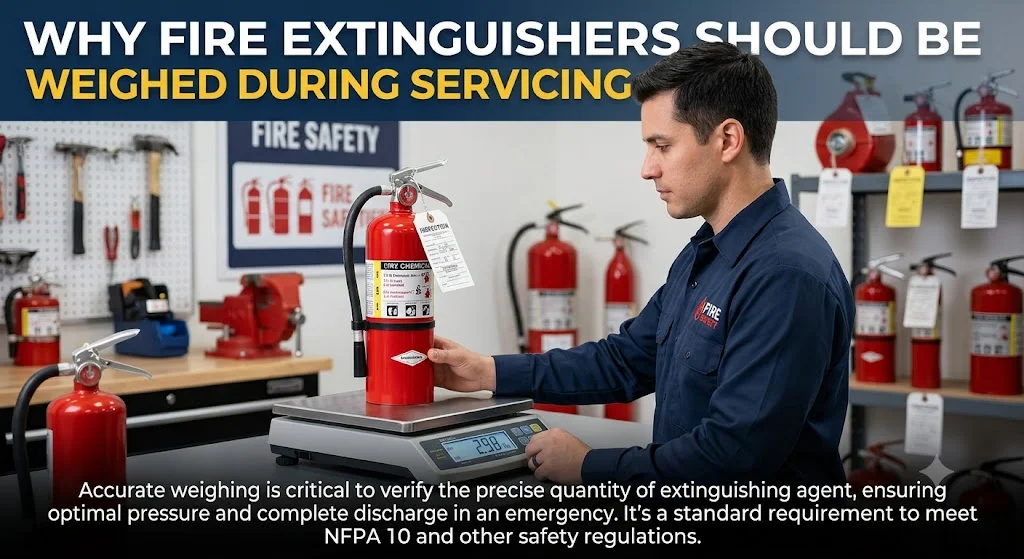
A fire extinguisher hanging on the wall can look perfectly fine and still be empty. The paint may be fresh, the pin may be in place, and the gauge needle may even sit in the green zone, yet the cylinder inside can have lost most of its firefighting agent without any visible sign. This is exactly why weighing is one of the most important steps in professional fire extinguisher servicing, and why it should never be skipped during fire extinguisher refilling in Karachi.
In a city like Karachi, where extinguishers are installed in everything from small shops in Saddar to large factories in Korangi and high-rise offices along Shahrah-e-Faisal, a silent loss of pressure or agent can turn a safety device into a false sense of security. Weighing during servicing is the simplest, most reliable way to catch this problem before it becomes dangerous.
What Does Weighing an Extinguisher Actually Check?
Fire Safety Trading (Pvt)
ToggleEvery fire extinguisher is manufactured with a specific gross weight, which includes the weight of the empty cylinder plus the weight of the extinguishing agent inside it. This figure is stamped on the cylinder body or the manufacturer’s label. During servicing, a technician places the extinguisher on a calibrated scale and compares the current weight against this original figure.
If the extinguisher weighs noticeably less than it should, it means agent has escaped, either through a slow leak in the valve, a worn seal, a hairline crack in the cylinder, or a faulty discharge mechanism. A gauge alone cannot always reveal this, because some extinguisher types, particularly CO2 cylinders, do not even have a pressure gauge. Weighing is the only accurate way to confirm how much agent remains.
Why a Gauge Reading Is Not Enough
Many building owners assume that if the pressure gauge needle points to the green zone, the extinguisher is ready to use. In reality, gauges can stick, corrode, or give a false reading long after they stop moving accurately. A gauge measures pressure, not quantity, so a partially empty cylinder can still show a normal-looking pressure reading for some time before the fault becomes obvious.
Weighing removes this guesswork completely. It gives a hard number that can be checked against the manufacturer’s specification every single time, which is why serious fire safety companies treat it as a mandatory step, not an optional extra.
Common Reasons Extinguishers Lose Weight Over Time
- Slow leakage through the valve stem or O-ring seals, especially in older units
- Micro-cracks in the cylinder caused by rough handling, dents, or corrosion
- Extreme heat exposure, common in Karachi’s summer months, which stresses seals and fittings
- Partial discharge during a false alarm or accidental trigger that goes unreported
- Manufacturing defects that only surface after months of use
Why This Matters More in Karachi’s Climate
Karachi’s combination of high humidity, coastal salt air, and long stretches of intense heat accelerates corrosion on metal valves, hoses, and cylinder threads far faster than in cooler, drier cities. An extinguisher installed in a warehouse near the port or a kitchen in a busy restaurant is exposed to conditions that quietly wear down seals year after year. Regular weighing during servicing catches this wear before it results in a completely empty or unusable unit.
This is one of the main reasons professional fire extinguisher refilling in Karachi should always include a weight check, not just a visual inspection and a top-up. A technician who skips weighing may refill a cylinder that still has a leak, meaning the unit will be empty again within weeks.
What Happens If an Underweight Extinguisher Is Never Caught
The real danger of an underweight extinguisher is that it fails exactly when it is needed most. During an actual fire, staff or residents will grab the nearest extinguisher expecting a full discharge capable of controlling a small fire. If the cylinder only has a fraction of its agent left, the burst will be short, weak, or nonexistent, giving the fire time to spread before anyone realizes the equipment has failed.
This is not a rare scenario. Fire safety audits across Karachi regularly find extinguishers that look untouched on the outside but are significantly underweight inside, particularly in buildings where servicing has been treated as a formality rather than a genuine safety check.
How Weighing Fits Into a Proper Servicing Routine
A thorough servicing visit should always include the following steps, with weighing as a core part of the process:
- Visual inspection of the cylinder body, hose, nozzle, and pin for damage or corrosion
- Weighing the extinguisher and comparing it against the stamped gross weight
- Checking the pressure gauge or, for CO2 units, confirming weight loss is within safe limits
- Refilling or recharging the agent if the weight falls below the safe threshold
- Re-pressurizing the cylinder and sealing it with a new tamper-evident pin and tag
- Recording the service date, weight reading, and technician details on the inspection tag
This last point matters for accountability. A properly filled service tag with an actual recorded weight gives building owners, fire safety officers, and insurance assessors a clear paper trail proving the extinguisher was genuinely checked, not just glanced at.
How Often Should Extinguishers Be Weighed?
As a general rule, extinguishers should be weighed and inspected at least once every year, with more frequent checks recommended for units in high-risk environments such as commercial kitchens, factories, fuel storage areas, and warehouses. CO2 extinguishers in particular should be weighed every six months, since they are more prone to gradual pressure loss than dry powder or foam types.
Businesses in Karachi that operate around the clock, such as textile units, hospitals, and shopping malls, often benefit from a stricter six-month cycle simply because the consequences of equipment failure are higher and the extinguishers see more handling.
Choosing a Servicing Provider That Weighs Every Cylinder
Not every service provider follows this standard. Some technicians rush through visits, glance at the gauge, and move on without ever placing the cylinder on a scale. When looking for fire extinguisher refilling in Karachi, it is worth asking the provider directly whether weighing is part of their standard process, and asking to see the recorded weight on the service tag afterward.
A trustworthy provider will not hesitate to show this, because it reflects real, verifiable work rather than a quick visual check. This single habit, weighing every cylinder before and after servicing, is often the clearest sign of a fire safety company that takes the job seriously.
Final Thoughts
A fire extinguisher is only useful if it actually works when a fire breaks out, and appearance alone cannot confirm that. Weighing during servicing is a small step that takes only a few minutes but reveals problems that a visual check or a gauge reading will always miss. For homes, offices, and factories across Karachi, making sure this step is never skipped is one of the easiest ways to keep a fire safety plan genuinely reliable rather than just look reliable.
Frequently Asked Questions
1. Why do fire extinguishers need to be weighed instead of just checked visually?
A visual check only shows external damage or an obvious gauge fault. Weighing reveals internal agent loss that has no outward sign, which is why it is considered the most reliable check during servicing.
2. How much weight loss is considered unsafe in an extinguisher?
Most manufacturers allow a small tolerance, usually around 5 to 10 percent of the stamped gross weight. Anything beyond that generally means the unit needs to be refilled or recharged.
3. Do CO2 fire extinguishers need weighing more often than dry powder ones?
Yes. CO2 cylinders do not have a pressure gauge, so weighing is the only way to check their content, and they are recommended to be weighed every six months rather than annually.
4. Can a fire extinguisher look full but still be empty inside?
Yes. The cylinder can appear undamaged with an intact pin and seal while a slow leak has quietly reduced the agent inside, which is exactly why weighing is necessary rather than relying on appearance alone.
5. How is the correct weight of an extinguisher determined during servicing?
Technicians compare the current weight on a calibrated scale against the gross weight stamped on the cylinder label by the manufacturer, which includes both the empty cylinder and the agent inside.
6. What causes an extinguisher to lose weight over time?
Common causes include valve or seal leaks, hairline cracks from rough handling or corrosion, heat stress, and partial discharge from an unreported accidental trigger.
7. How often should extinguishers be serviced and weighed in Karachi?
At least once a year for general use, and every six months for CO2 units or extinguishers in high-risk areas such as kitchens, factories, and fuel storage sites, given Karachi’s humid and hot climate.
8. Will a service provider refill an extinguisher without weighing it first?
Some providers skip this step to save time, which is why it is important to confirm beforehand that weighing is part of the standard servicing process before booking a refill.
9. Is the weight recorded anywhere after servicing?
A proper service should note the recorded weight, service date, and technician details on the inspection tag attached to the extinguisher, giving a verifiable record for future checks.
10. What should a business in Karachi look for when choosing a refilling service?
Look for a provider that weighs every cylinder before and after servicing, documents the reading on the tag, and is transparent about the process, rather than one that only offers a quick visual inspection.