
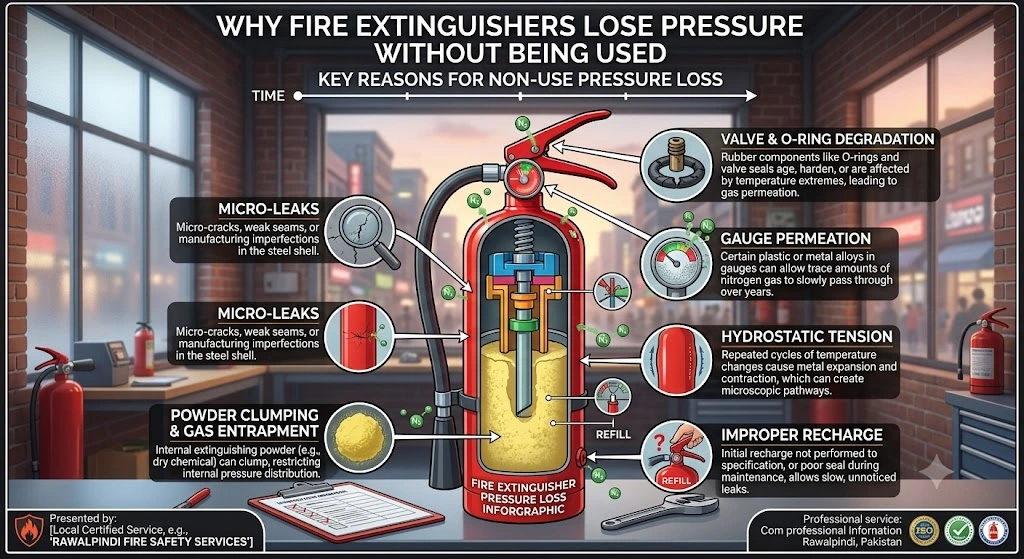
A fire extinguisher hanging quietly on the wall looks like it will always be ready when you need it. But pressure gauges don’t always agree. Many homeowners and business owners in Karachi discover, often during a routine check or a real emergency, that the needle has dropped into the red zone even though the extinguisher was never triggered. This is more common than most people realise, and understanding why it happens is the first step toward keeping your property properly protected.
In this guide, we’ll explain the real reasons extinguishers lose pressure over time, how to spot the warning signs early, and why regular servicing through professional fire extinguisher refilling in Karachi is the simplest way to avoid being caught off guard.
How a Fire Extinguisher Actually Holds Its Pressure
Fire Safety Trading (Pvt)
ToggleMost extinguishers used in homes, offices, shops, and factories are pressurised containers. Inside, the extinguishing agent — whether dry chemical powder, CO2, foam, or water-based — is kept ready to discharge by internal pressure, usually created by nitrogen or the agent itself in the case of CO2 units. A rubber gasket, a valve assembly, and a sealed body work together to keep that pressure locked in for years.
The problem is that none of these components are permanent. Seals age, metal fatigues, and small imperfections in manufacturing or handling can create tiny leak paths that are invisible to the naked eye. Over months and years, even a microscopic gap is enough to let pressure escape slowly.
The Real Reasons Extinguishers Lose Pressure
1. Natural Seal and O-Ring Degradation
Every extinguisher relies on rubber or synthetic seals to keep the pressurised gas inside. Rubber naturally hardens and loses elasticity with age, especially in Karachi’s hot and humid climate. Once a seal loses its flexibility, it can no longer form a perfectly airtight barrier, and pressure begins to seep out gradually.
2. Temperature Fluctuations
Karachi summers push temperatures well above 40°C in many areas, and extinguishers stored in un-shaded corridors, rooftops, or near windows absorb that heat directly. Repeated heating and cooling cycles cause the internal gas to expand and contract, which stresses seals and valve components. Over time, this thermal cycling accelerates seal failure far more than steady, moderate temperatures would.
3. Corrosion of the Valve or Cylinder
Coastal humidity, salt in the air, and general moisture exposure can slowly corrode the valve stem, cylinder threads, or the internal pressure gauge mechanism. Corrosion doesn’t need to be visible on the outside to cause an internal leak; a valve that no longer seats perfectly will bleed pressure even while looking untouched.
4. Manufacturing Defects
Occasionally, a unit leaves the factory with a slightly imperfect seal or a valve that wasn’t torqued correctly. These defects are rare, but when they occur, pressure loss can appear within months of purchase, which is one reason why a first-year check is worth doing even on brand-new extinguishers.
5. Vibration and Physical Jarring
Extinguishers mounted near heavy machinery, on vehicles, or in areas with regular foot traffic and accidental bumps can experience micro-vibrations that gradually loosen valve threads or disturb the seal seating. This is common in warehouses, workshops, and factory floors across Karachi’s industrial zones.
6. Age of the Extinguisher
Even with perfect storage conditions, no extinguisher holds its charge forever. Dry chemical units typically need attention within a set number of years, and internal components simply wear out with time. An old extinguisher that has never been serviced is far more likely to be under-pressurised than one on a regular maintenance schedule.
7. Improper Storage Position
Extinguishers left lying on their side, stored upside down, or placed where they take on constant pressure from nearby objects can develop uneven stress on the valve assembly, encouraging slow leaks that wouldn’t occur if the unit were stored upright as intended.
Why This Matters More Than Most People Realise
A pressure gauge in the red zone doesn’t mean the extinguisher is completely empty — but it does mean it may not discharge with enough force, for long enough, to control a fire. In an emergency, a weak or partial discharge can waste precious seconds while a small fire spreads into something unmanageable. This is exactly why fire safety regulations and insurance requirements call for regular inspection and recharging, not just a one-time purchase.
For businesses in Karachi, an under-pressurised extinguisher discovered during a fire audit or, worse, during an actual fire, can lead to compliance issues, failed inspections, and in the worst case, serious property or life-safety risk.
How to Catch the Problem Early
- Check the pressure gauge monthly — the needle should sit in the green zone, not the red.
- Look at the tamper seal and pin to confirm the unit hasn’t been triggered or opened.
- Inspect the cylinder body for dents, rust spots, or corrosion around the valve.
- Weigh CO2 extinguishers periodically, since their gauges don’t always reflect the true fill level.
- Keep a record of the last service date — most extinguishers need professional attention on a yearly basis, with a full recharge typically required every few years depending on type.
Professional Fire Extinguisher Refilling in Karachi
The most reliable way to deal with pressure loss is not to guess or top it up yourself, but to have the unit inspected and recharged by trained technicians. Fire extinguisher refilling in Karachi through Fire Safety Trading covers a full inspection of the valve, seals, and cylinder, replacement of worn components, precise recharging to the correct pressure specification, and a fresh tamper seal, so the extinguisher performs exactly as intended if it’s ever needed.
This service is available across Karachi for homes, offices, retail outlets, warehouses, and industrial facilities, with technicians who understand the specific wear patterns caused by the city’s climate, coastal air, and typical storage conditions.
Rather than waiting for an annual audit to reveal a problem, scheduling routine refilling keeps every extinguisher on your property genuinely fire-ready, not just visually present.
Frequently Asked Questions
1. How often should a fire extinguisher be refilled in Karachi?
Most dry chemical extinguishers should be inspected annually and refilled roughly every 3 to 5 years, or immediately after any use. Karachi’s heat and humidity can shorten this interval, so annual professional checks are strongly recommended.
2. Can a fire extinguisher lose pressure without ever being used?
Yes. Seal degradation, temperature swings, corrosion, and normal aging can all cause a slow pressure loss even if the extinguisher has never been discharged.
3. How do I know if my fire extinguisher needs refilling?
Check the pressure gauge — if the needle sits in the red zone rather than green, the unit needs professional attention. Visible corrosion, a damaged hose, or a broken tamper seal are also signs it’s time for a service.
4. Is it cheaper to refill an old extinguisher or buy a new one?
Refilling is usually more affordable than replacement, provided the cylinder itself has passed its hydrostatic test and shows no structural damage. A technician can advise whether your specific unit is still safe to recharge.
5. Where can I get fire extinguisher refilling in Karachi?
Fire Safety Trading offers professional fire extinguisher refilling in Karachi for residential, commercial, and industrial clients, including on-site pickup and inspection services.
6. Does a low-pressure extinguisher still work at all?
It may partially discharge, but with reduced force and duration, which can be the difference between controlling a small fire and losing control of it. It should not be relied upon in an emergency.
7. How long does professional refilling take?
A standard refill and inspection typically takes a short turnaround of a day or two, depending on the extinguisher type and whether any parts need replacement.
8. Do CO2 extinguishers lose pressure the same way as dry chemical ones?
CO2 units work differently and their gauges aren’t always reliable indicators, which is why they’re usually checked by weight rather than pressure reading alone during servicing.
9. Is fire extinguisher servicing a legal requirement for businesses in Karachi?
Most commercial properties are expected to maintain functional, regularly inspected fire safety equipment to meet local safety codes and insurance conditions, making routine servicing a compliance as well as a safety matter.
10. Can I refill a fire extinguisher myself?
No. Refilling requires specialised equipment, the correct extinguishing agent, and proper pressure calibration. It should only be done by trained fire safety technicians to ensure the unit is safe and effective.