If you run a business in Karachi, chances are you already have a fire extinguisher hanging in a corner somewhere. But here is the question most people never ask: is it actually safe to refill that cylinder? Before any technician tops up your extinguisher with fresh agent, the cylinder itself needs to pass a pressure test. Skip this step, and you could be putting a weak, damaged, or corroded cylinder back into service, one that might fail exactly when you need it most.
This guide explains what pressure testing is, why it is a non-negotiable part of fire extinguisher refilling in Karachi, and how Fire Safety Trading handles this process safely for homes, offices, and industrial units across the city.
What Is Pressure Testing, Exactly?
Fire Safety Trading (Pvt)
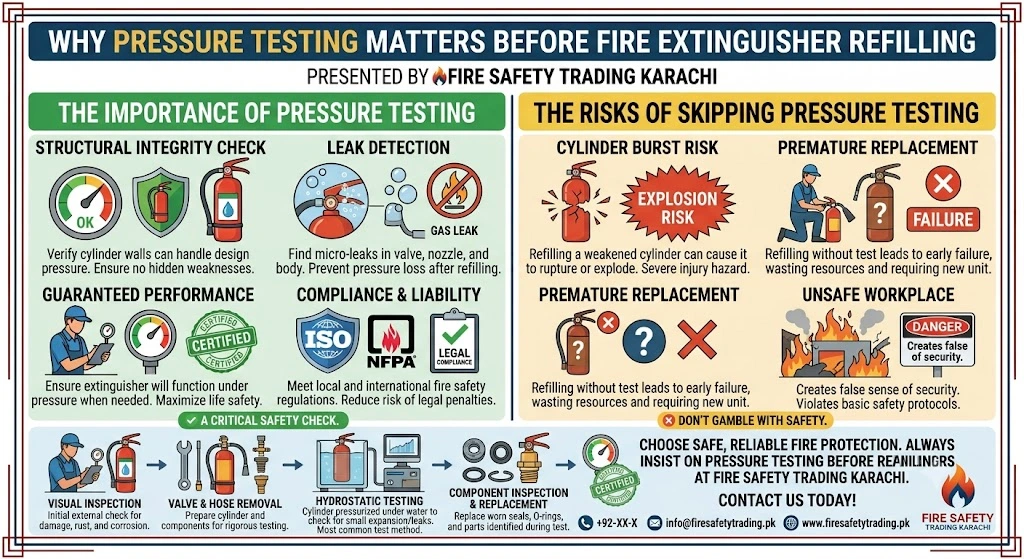
TogglePressure testing, also called hydrostatic testing, is a safety check performed on the metal body of a fire extinguisher cylinder. The cylinder is filled with water or another testing medium and pressurized well beyond its normal working pressure. Technicians then watch for leaks, bulging, or any sign that the metal has weakened over time.
Every extinguisher cylinder is rated to hold a certain amount of pressure safely. Years of use, temperature changes, rust, and general wear can weaken that metal without any visible warning. Pressure testing catches these hidden weaknesses before they turn into real hazards.
Why Pressure Testing Comes Before Refilling
Refilling an extinguisher means forcing pressurized gas or chemical agent back into the cylinder. If the cylinder has any hidden weakness, that added pressure is exactly what could cause it to crack, leak, or in rare but serious cases, rupture. This is why any responsible fire safety company tests the cylinder first and refills it only after confirming it is structurally sound.
1. It Confirms the Cylinder Can Handle Pressure Safely
A pressure test proves the cylinder body is still strong enough to hold pressurized contents without failing. This is the whole point of the test, and it is the single biggest reason it cannot be skipped.
2. It Catches Corrosion You Cannot See From Outside
Karachi’s coastal humidity and salty air speed up rust formation, especially on older cylinders or ones stored in exposed areas like warehouses, rooftops, or near the sea. Corrosion often starts from the inside, so a cylinder can look fine on the outside while being weak underneath. Pressure testing is one of the few ways to catch this early.
3. It Protects Whoever Uses the Extinguisher Later
A fire emergency is already stressful enough. The last thing anyone needs is an extinguisher that leaks, loses pressure, or fails under stress. Testing before refilling means the person who eventually grabs that extinguisher can trust it will work.
4. It Is Often a Legal and Insurance Requirement
Many commercial buildings, factories, and offices in Karachi are required to keep their fire safety equipment compliant with local safety codes. Insurance policies frequently ask for proof of regular testing and maintenance. Skipping pressure testing can create compliance gaps that show up at the worst possible time, during an audit or after an incident.
What Happens If You Skip Pressure Testing?
- A weakened cylinder could leak agent slowly, leaving you with an extinguisher that looks full but is actually underpowered.
- In rare cases, a compromised cylinder can rupture under pressure, which is dangerous for anyone nearby.
- You may end up refilling a cylinder that needs to be condemned and replaced instead, wasting money on agent that will not stay contained.
- Your fire safety compliance records may not hold up during inspections or insurance claims.
How Fire Safety Trading Handles Pressure Testing in Karachi
At Fire Safety Trading, every extinguisher that comes in for refilling goes through a proper inspection and pressure test first. Our technicians check the cylinder body for rust, dents, and wear, then run the hydrostatic pressure test to confirm it can safely hold pressure again. Only cylinders that pass are refilled. Anything that fails is flagged and, where needed, recommended for replacement rather than repair.
This process applies whether you bring in a single household extinguisher or manage fire safety equipment for a factory floor, warehouse, retail outlet, or office building anywhere in Karachi.
Fire Extinguisher Refilling in Karachi: Areas We Cover
Fire Safety Trading provides fire extinguisher refilling in Karachi to businesses and households across major localities, including Clifton, DHA, Gulshan-e-Iqbal, North Nazimabad, Korangi, SITE Industrial Area, Malir, and Saddar. Whether you are running a single shop or managing safety compliance across multiple sites, our team can reach you across the city.
Types of Extinguishers That Need Pressure Testing
Not every extinguisher is tested the same way, since different agents and cylinder designs behave differently under pressure.
Water and Foam-Based Extinguishers
These cylinders are checked for internal corrosion, which is common given their water content, before being refilled with fresh agent.
Dry Powder Extinguishers
Powder cylinders are tested for pressure retention and checked to make sure the powder inside has not caked or clumped, which can affect discharge during an emergency.
CO2 Extinguishers
Since CO2 cylinders operate at much higher pressures, they go through a stricter hydrostatic test, as any weakness here carries a higher risk.
Signs Your Fire Extinguisher Needs Testing and Refilling
- The pressure gauge needle is out of the green zone.
- You notice rust, dents, or discoloration on the cylinder body.
- It has been more than a year since the last inspection.
- The pin or tamper seal is missing or broken.
- The extinguisher has been used, even partially, during a false alarm or minor incident.
Why Choose Fire Safety Trading for Refilling in Karachi
Fire safety is not something to gamble on, and that is exactly why our process puts inspection and testing ahead of speed. We understand that businesses want their extinguishers back quickly, but we never skip the pressure test just to save time. Every cylinder that leaves our facility has been checked, tested, and refilled by trained technicians who follow the correct safety standards.
We also keep detailed records of every test and refill, so if you ever need proof of compliance for an audit, insurance claim, or safety inspection, that documentation is ready. This gives building owners, factory managers, and shopkeepers across Karachi one less thing to worry about.
Book Your Fire Extinguisher Refilling in Karachi
Do not wait for an emergency to find out your extinguisher was not safe to begin with. Fire Safety Trading offers pressure testing and fire extinguisher refilling in Karachi for homes, offices, shops, and industrial sites, with technicians who follow proper safety checks at every step.
Visit our service page to learn more or book a technician:
Fire Extinguisher Refilling in Karachi – Fire Safety Trading
Frequently Asked Questions
1. What is pressure testing on a fire extinguisher?
It is a safety check where the cylinder is pressurized to confirm it can safely hold pressurized agent without leaking, cracking, or bulging.
2. Why is pressure testing needed before refilling?
Refilling adds pressure back into the cylinder. Testing first confirms the metal is still strong enough to handle that pressure safely.
3. How often should a fire extinguisher be pressure tested?
Most extinguishers should be pressure tested every five years, though heavily used or older cylinders may need more frequent checks.
4. Can every extinguisher be refilled after testing?
No. If a cylinder fails the pressure test due to corrosion or structural weakness, it should be replaced rather than refilled.
5. Does Fire Safety Trading offer pressure testing in Karachi?
Yes, pressure testing is a standard part of our fire extinguisher refilling service across Karachi.
6. How long does refilling take after testing?
For most standard extinguishers, testing and refilling can be completed within the same day, depending on the cylinder type and condition.
7. What happens if my extinguisher fails the pressure test?
Our technicians flag the cylinder as unsafe and recommend replacement instead of refilling, so you are never given a compromised unit.
8. Is pressure testing required by law in Pakistan?
Regular inspection and testing of fire safety equipment is generally expected under workplace safety compliance, especially for commercial and industrial buildings.
9. Which areas in Karachi do you cover for refilling services?
We serve Clifton, DHA, Gulshan-e-Iqbal, North Nazimabad, Korangi, SITE Industrial Area, Malir, Saddar, and surrounding areas.
10. How do I book a fire extinguisher refilling service in Karachi?
You can book directly through our website or contact our team, and a technician will be scheduled to inspect, test, and refill your extinguisher.