Smoke detectors are among the most important early-warning devices used in fire-safety planning. They are designed to identify smoke and provide an alert, giving occupants an opportunity to respond to a developing fire and follow the appropriate evacuation procedure.
For homes, offices, schools, hospitals, hotels, warehouses, restaurants, factories, and other buildings, selecting the right smoke detector is an important part of a wider fire-protection strategy.
In Pakistan, smoke detectors can be purchased through fire-safety equipment suppliers, specialist fire-alarm companies, and online suppliers. However, buying a detector should not be based only on price. The type of detector, compatibility with an existing system, certification, installation requirements, environmental conditions, and ongoing maintenance can all affect whether a product is suitable.
The Pakistan Engineering Council (PEC) publishes the Building Code of Pakistan Fire Safety Provisions 2016 and the Building Code of Pakistan 2021 as part of its building-code resources. These documents contain provisions relating to fire alarm systems and smoke alarms for applicable occupancies.
This guide explains what smoke detectors are, where they can be purchased in Pakistan, what buyers should consider, and how smoke detectors relate to a broader Fire alarm system in Pakistan.
1. What Is a Smoke Detector?
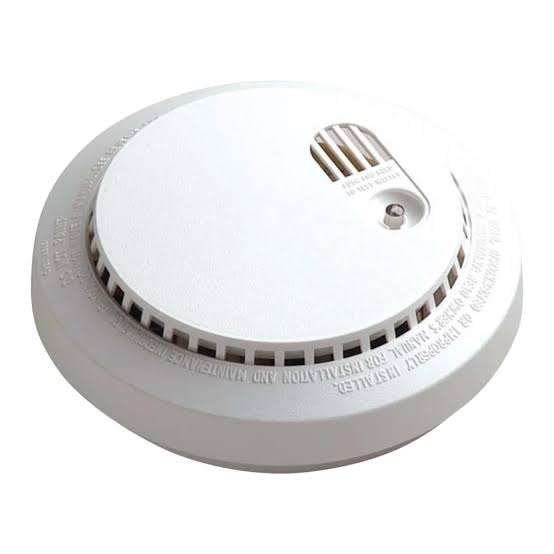
A smoke detector is a device designed to detect smoke associated with a fire and provide an early warning.
In a simple residential application, a smoke alarm may have its own audible alarm. In a larger commercial installation, smoke detectors can be connected to a central fire alarm control panel.
Fire Safety Trading describes smoke detectors as components that can send signals to a fire alarm control panel in commercial systems, while household smoke detectors can provide their own audible or visual warning.
The exact design depends on the application.
A small residential property may use individual smoke alarms, whereas a large office building, hospital, warehouse, or educational facility may require a professionally designed detection and alarm system.
2. Why Smoke Detectors Are Important
Fire can develop before occupants immediately recognize that something is wrong.
Smoke detectors provide an early warning that can help occupants respond more quickly.
This is particularly important at night. People who are sleeping may not notice the early signs of a fire without an alarm.
The Building Code of Pakistan Fire Safety Provisions 2016 includes requirements for smoke alarms in certain residential and care occupancies. For example, specific provisions require approved smoke alarms in sleeping rooms and other designated areas for certain occupancies.
The exact requirements depend on the building type and applicable regulations.
3. Where Can You Buy Smoke Detectors in Pakistan?
Smoke detectors are available through several types of suppliers.
Specialist Fire-Safety Companies
Fire-safety companies can provide detectors as individual products or as components of a complete fire alarm system.
This option can be particularly useful for commercial buildings because the supplier may also provide design, installation, testing, commissioning, and maintenance services.
Online Fire-Safety Stores
Online suppliers allow customers to review product specifications and request quotations without visiting a physical store.
Fire Safety Trading’s website currently lists smoke detectors and fire-alarm products and provides online purchasing and quotation options.
Local Fire-Protection Suppliers
Many cities in Pakistan have companies that supply fire extinguishers, alarms, detectors, emergency lighting, and related equipment.
When purchasing from a local supplier, buyers should verify the manufacturer’s information, product specifications, documentation, and suitability for the intended application.
4. Buying Smoke Detectors Online
Online purchasing can make it easier to compare specifications, but buyers should not select a detector based only on a photograph or a low price.
Before ordering, check:
– Manufacturer
– Model number
– Detector type
– System compatibility
– Power requirements
– Applicable standards
– Environmental rating where relevant
– Installation requirements
– Warranty
– Availability of replacement components
– Technical support
A product page should provide enough technical information to determine whether the device is suitable for the intended system.
For a commercial fire alarm project, it is better to obtain technical advice before ordering individual detectors.
5. Types of Smoke Detectors
Smoke detectors can use different sensing technologies.
Optical Smoke Detectors
Optical or photoelectric detectors use light-based sensing technology to identify smoke particles.
They are widely used in many fire-detection applications.
Fire Safety Trading currently lists the Honeywell Gent S4-715 as an intelligent analogue optical smoke detector designed for commercial and industrial applications.
Ionization Smoke Detectors
Ionization technology uses a different sensing method and has historically been used in certain smoke alarms.
The choice between technologies should be based on the application rather than assuming that one type is appropriate everywhere.
Multi-Criteria Detectors
Some modern systems combine multiple sensing technologies, such as smoke and heat, and in some product ranges additional sensing capabilities.
These detectors can be useful in environments where the system designer needs to manage different fire signatures or reduce unwanted alarms.
The appropriate detector should be selected by considering the building’s conditions and fire-risk assessment.
6. Conventional vs Addressable Smoke Detectors
Another important distinction is whether the detector belongs to a conventional or addressable fire alarm system.
Conventional Systems
In a conventional system, detectors are generally connected to zones. The control panel identifies the affected zone rather than providing the same individual device identification available in an addressable system.
These systems can be suitable for certain smaller or simpler installations.
Addressable Systems
Addressable systems can identify individual devices or specific points within the system.
They are commonly used in larger or more complex buildings where detailed information about the location of an alarm condition is valuable.
Fire Safety Trading lists both conventional fire-alarm equipment and addressable Honeywell Gent products for commercial and industrial applications.
7. How Much Do Smoke Detectors Cost in Pakistan?
The price of a smoke detector can vary considerably.
Cost depends on factors such as:
– Brand
– Model
– Sensing technology
– Conventional or addressable design
– Certification
– System compatibility
– Features
– Quantity
– Installation requirements
– Import and market conditions
Fire Safety Trading’s published guide gives example price ranges for several Honeywell Gent detectors, but also notes that prices can change depending on model, market conditions, import duties, supplier pricing, and whether installation is included.
Therefore, a published price should be treated as an indication rather than a permanent market price.
For a commercial project, buyers should request a current quotation based on the required system design.
8. Don’t Choose a Detector Based Only on Price
The cheapest detector is not necessarily the most suitable detector.
Fire detection equipment has a life-safety function, so reliability and compatibility matter.
A low-cost device may not be suitable for the environment or may not integrate with an existing control panel.
Before buying, consider:
– Is it compatible with the fire alarm panel?
– Is the detector suitable for the environment?
– Is technical documentation available?
– Can replacement parts be obtained?
– Is professional installation available?
– Can the system be tested and maintained?
The overall cost of a fire-detection system includes more than the initial purchase price.
9. Consider the Building Before Buying
Different buildings require different fire-detection arrangements.
For example:
Homes
A residential property may require standalone smoke alarms or another appropriate arrangement depending on the building and applicable requirements.
Offices
Offices may use conventional or addressable fire alarm systems depending on their size, layout, occupancy, and fire-safety design.
Hospitals
Hospitals can have complex life-safety requirements because occupants may include people who cannot evacuate independently.
Schools
Educational buildings require careful consideration of alarm audibility, evacuation routes, occupancy, and building design.
Warehouses
Warehouses may contain high storage levels, dust, temperature variations, and other environmental factors that affect detector selection.
The appropriate system should therefore be determined by the building’s risk profile rather than by selecting a detector first.
10. Smoke Detectors and Fire Alarm Systems
A smoke detector can be either a standalone alarm or a component of a larger fire alarm system.
In a commercial installation, a smoke detector may communicate with a fire alarm control panel. The panel can then activate notification appliances such as sounders or other alarm devices.
This is why the target topic Fire alarm system in Pakistan is closely connected to smoke detectors.
PEC’s Fire Safety Provisions contain requirements for fire alarm systems and smoke alarms in applicable occupancies.
A detector should therefore be selected as part of the overall system design where it is intended to operate as part of a fire alarm installation.
11. Check Compatibility Before Buying
One of the most important technical considerations is compatibility.
A detector designed for one manufacturer’s addressable system may not work correctly with another manufacturer’s control panel.
Even products that appear similar may use different communication protocols or system architectures.
Before purchasing replacement detectors, confirm:
– Fire alarm panel manufacturer
– Panel model
– Existing detector model
– System type
– Wiring arrangement
– Required base
– Compatibility information
For commercial systems, the safest approach is to confirm compatibility with the system manufacturer, installer, or qualified fire-alarm professional.
12. Consider Environmental Conditions
The location where a detector will be installed can influence which type is appropriate.
Potential environmental factors include:
– Dust
– Steam
– Humidity
– Temperature
– Cooking vapour
– Industrial processes
– Air movement
– Contamination
For example, a detector designed for a clean office environment may not be the best choice for an industrial area with significant dust or other contaminants.
Fire Safety Trading describes its S4-715 optical detector as supporting multi-criteria detection options and applications in environments including commercial and industrial facilities.
A professional assessment can help determine whether a particular detector is suitable for a challenging environment.
13. Avoid Unnecessary False Alarms
A good fire alarm system should detect genuine fire conditions while minimizing inappropriate alarms.
False alarms can occur when detectors are installed in unsuitable locations or when environmental conditions interfere with their operation.
Common causes can include:
– Steam
– Dust
– Cooking vapour
– Aerosols
– Poor detector placement
– Contamination
– Incorrect detector selection
This does not mean detectors should simply be removed from locations where nuisance alarms occur.
Instead, the system should be reviewed to determine whether detector type, placement, environmental protection, or other design factors need adjustment.
14. Installation Is Just as Important as the Product
Buying a high-quality detector does not guarantee effective fire detection.
Installation matters.
Detector positioning, spacing, wiring, compatibility, programming, testing, and integration with the control panel all influence system performance.
For commercial installations, professional design and installation are especially important.
The Pakistan Engineering Council’s engineering classification ME02 covers installation, commissioning, and maintenance of fire detection, alarm, and suppression systems and associated equipment.
This highlights why technically appropriate installation and maintenance should be treated as part of the overall project.
15. Smoke Detector Maintenance
Smoke detectors need ongoing attention.
Maintenance requirements depend on the type of detector and system, but can include:
– Visual inspection
– Functional testing
– Cleaning where appropriate
– Checking connections
– Reviewing alarm-panel information
– Battery replacement for applicable standalone alarms
– Replacement of damaged or unreliable devices
Fire Safety Trading also lists smoke-alarm testing among its fire-safety services.
A maintenance programme should follow manufacturer instructions and applicable requirements.
16. When Should a Smoke Detector Be Replaced?
A detector may need replacement when:
– It is damaged
– It fails testing
– It reaches the end of its recommended service life
– Replacement parts are unavailable
– It is incompatible with a system upgrade
– The building’s fire-risk conditions have changed
Standalone residential smoke alarms often have manufacturer-recommended replacement periods. Buyers should check the specific product documentation rather than applying one universal replacement period to every detector.
For commercial systems, replacement decisions should be based on the manufacturer’s requirements, system condition, maintenance findings, and applicable standards.
17. Buy Genuine Products
Fire-safety equipment should be sourced carefully.
Counterfeit or substandard equipment can create significant safety concerns because its performance may not match the claimed specifications.
Before purchasing, check:
– Original packaging
– Manufacturer details
– Model number
– Technical documentation
– Product certification where applicable
– Supplier information
– Warranty
– Availability of technical support
Fire Safety Trading states that it supplies fire-safety equipment and provides product testing and certification information through its business.
Buyers should still verify product documentation and suitability for their specific project.
18. Where to Buy Smoke Detectors in Major Pakistani Cities
Smoke detectors and fire-alarm equipment are available through suppliers serving major Pakistani markets.
Fire Safety Trading currently lists branch or service locations including Rawalpindi, Peshawar, Lahore, and Karachi, along with online purchasing and support.
However, buyers do not necessarily need to select a supplier solely because of location.
For commercial projects, factors such as technical expertise, product authenticity, installation capability, maintenance support, and system compatibility may be more important than physical proximity.
19. Questions to Ask a Smoke Detector Supplier
Before purchasing, buyers can ask:
1. What type of detector is recommended for my application?
2. Is it conventional or addressable?
3. Which control panels is it compatible with?
4. What standards or certifications apply?
5. Is installation available?
6. Is testing and commissioning available?
7. What maintenance is required?
8. Are replacement parts available?
9. What warranty is provided?
10. Is technical support available after installation?
These questions can help buyers compare products based on safety and suitability rather than price alone.
20. Smoke Detectors for Homes
Homeowners should consider smoke detection as part of household fire preparedness.
Standalone smoke alarms can provide an audible warning when smoke is detected.
The exact placement and number of alarms should follow the manufacturer’s instructions and applicable local requirements.
Residents should also maintain clear escape routes and make sure everyone in the household knows what to do if the alarm sounds.
Children should be taught to recognize the alarm and follow an adult’s evacuation instructions rather than being expected to investigate the source of smoke.
21. Smoke Detectors for Commercial Buildings
Commercial buildings often require a more comprehensive approach.
An office, hotel, hospital, school, warehouse, or industrial facility may require a complete fire alarm system rather than standalone smoke alarms.
The Building Code of Pakistan 2021 includes provisions requiring fire alarm systems and smoke alarms in specified occupancy groups in accordance with the applicable Fire Safety Provisions.
Therefore, commercial buyers should have the building assessed before selecting equipment.
22. Why Professional Design Matters
A fire alarm system should be designed around the building.
Professional design can consider:
– Occupancy
– Building size
– Floor layout
– Escape routes
– Fire hazards
– Detector types
– Alarm audibility
– Control-panel requirements
– Emergency power
– System monitoring
– Maintenance requirements
The goal is not simply to install as many detectors as possible.
The goal is to create a system that provides appropriate detection and notification for the actual building.
23. Smoke Detectors Are Part of a Larger Safety Plan
Smoke detectors are valuable, but they are only one part of fire safety.
A complete fire-protection strategy can include:
– Smoke detection
– Heat detection where appropriate
– Fire alarm systems
– Manual call points
– Fire extinguishers
– Emergency lighting
– Exit signs
– Fire doors
– Sprinkler systems where required
– Evacuation procedures
– Staff training
– Regular inspection and maintenance
Each measure addresses a different part of the overall risk.
24. Where to Start When Buying in Pakistan
For a homeowner, the process can begin with identifying the areas that need smoke detection and checking suitable products from reputable suppliers.
For a business, the process should begin with a fire-risk assessment and review of the applicable building requirements.
After that, a qualified supplier or fire-protection professional can recommend:
– Detector types
– Number of devices
– System architecture
– Control panel
– Notification appliances
– Wiring
– Installation
– Testing
– Maintenance
This approach reduces the possibility of buying incompatible equipment.
25. Why Fire Safety Trading Can Be Considered
“Fire Safety Trading” (https://firesafetytrading.com.pk/) currently lists smoke detectors, fire alarm systems, installation, testing, maintenance, and other fire-safety services. Its website also provides information about products such as Honeywell Gent smoke detectors and fire-alarm components.
For buyers in Pakistan, the company can therefore be considered as one source for researching smoke detectors and related fire-protection systems.
As with any life-safety purchase, customers should confirm current product availability, specifications, pricing, certification, compatibility, and installation requirements before making a purchase.
26. Final Checklist Before Buying
Before ordering a smoke detector, review the following:
Product
– Correct detector type
– Appropriate technology
– Suitable environmental rating
– Genuine manufacturer
– Required certification
System
– Compatible control panel
– Correct system architecture
– Appropriate wiring and base
– Integration with notification devices
Supplier
– Product documentation
– Technical support
– Installation capability
– Testing and commissioning
– Maintenance services
– Warranty
Building
– Occupancy type
– Fire hazards
– Detector locations
– Applicable building requirements
– Evacuati