Fire safety is essential for homes, offices, schools, factories, shopping centres, hospitals, and other buildings. However, many people make decisions about fire protection based on incomplete information or common myths. Some believe that a fire extinguisher alone is enough to protect a building, while others assume that smoke detectors are unnecessary in smaller properties. These misunderstandings can create serious risks.
Before purchasing fire safety equipment, it is important to separate reliable information from misleading claims. Understanding how fire alarms, smoke detectors, extinguishers, emergency exits, and other protective measures work can help people make informed decisions.
In Pakistan, fire safety requirements may vary according to the building’s purpose, size, occupancy, and applicable local regulations. The Building Code of Pakistan Fire Safety Provisions 2016 provides an important national reference for fire prevention and life safety. Punjab Civil Defence also identifies fire detection and alarm systems, firefighting arrangements, fire safety plans, and emergency exits among the measures considered during inspections. “Source: Building Code of Pakistan” (https://www.hec.gov.pk/english/services/universities/Monitoring-Evaluation/Documents/Fire-Safety%20Provisions.pdf) and “Punjab Civil Defence” (https://civildefence.punjab.gov.pk/inspection_of_fire_safety_measures).
This guide explains what to check before trusting fire safety claims or buying related equipment, helping readers understand the facts and avoid common mistakes.
1. Understand the Difference Between Fire Safety Facts and Myths
The first step is to recognise that not every claim about fire safety is accurate. Some statements are based on outdated information, while others oversimplify how fire protection works.
For example, a seller might suggest that one detector can protect an entire multi-storey building. In reality, detector placement depends on the building layout, ceiling height, room use, airflow, and applicable design requirements.
Before making a purchase, ask these questions:
– Is the claim supported by recognised safety standards?
– Does the product suit the building’s specific risks?
– Is the seller explaining both the benefits and limitations?
– Can the product’s specifications and certification be verified?
– Will professional installation or maintenance be required?
Reliable fire safety decisions should be based on documented requirements rather than assumptions or sales promises.
2. Myth: Every Building Needs the Same Fire Safety Equipment
One common misconception is that the same equipment package will work for every property. However, a small home, a restaurant, a warehouse, and a high-rise office building have different fire risks.
A residential property may need suitable smoke alarms, appropriate extinguishers, and a clear escape plan. A commercial building may require a more comprehensive arrangement involving fire detection, audible or visual alarms, emergency lighting, exit signs, and firefighting equipment.
Industrial facilities may also face additional hazards associated with machinery, combustible materials, manufacturing processes, or specialised storage.
Before purchasing equipment, assess:
– The building’s size and number of floors.
– The number of people who normally occupy it.
– The activities carried out inside the premises.
– The types of materials stored on-site.
– The available escape routes.
– The fire safety requirements applicable to that occupancy.
Consult a qualified fire safety professional when the risks or legal requirements are unclear. Buying equipment without assessing the property can result in gaps in protection or unnecessary expenses.
3. Myth: A Fire Alarm System Is Only Necessary for Large Buildings
Some people believe that fire alarm systems are useful only in shopping malls, factories, and high-rise buildings. This assumption overlooks the importance of early warning in many types of properties.
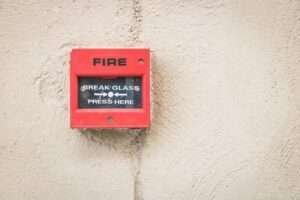
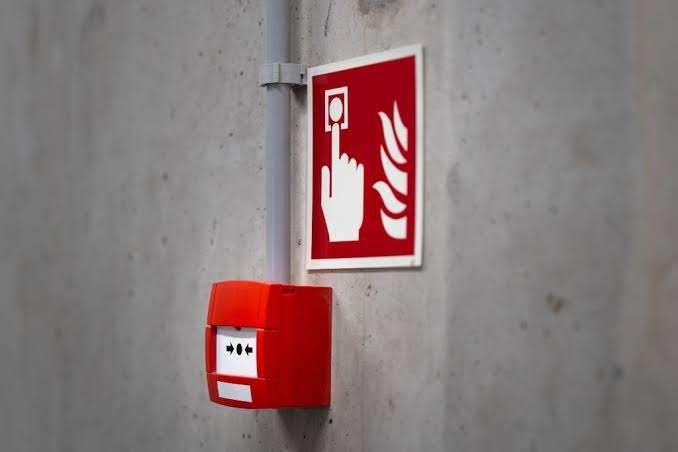
A suitable alarm system can alert occupants when a fire is detected, giving them an opportunity to begin evacuation promptly. Depending on the system design, detection devices may identify smoke or heat, while notification devices communicate the warning to people inside the building.
When evaluating a Fire alarm system in Pakistan, consider the following:
System suitability: Confirm that the system is appropriate for the building’s size, occupancy, and hazards.
Detection devices: Ask which detectors are included and why their locations are suitable for the premises.
Alarm notification: Check whether the alarm can be heard or seen in the areas where people may be present.
Power backup: Confirm how the system behaves during a power interruption and whether backup power is provided where required.
Professional installation: Make sure the installer can explain the design, commissioning, and testing process.
Maintenance support: Ask how the system will be inspected, tested, repaired, and maintained.
The appropriate system depends on the building and applicable requirements. The Building Code of Pakistan Fire Safety Provisions 2016 addresses fire detection and alarm systems and refers to recognised technical standards for their design and maintenance. “Read the official code” (https://www.hec.gov.pk/english/services/universities/Monitoring-Evaluation/Documents/Fire-Safety%20Provisions.pdf).
4. Myth: Installing Smoke Detectors Guarantees Complete Fire Protection
Smoke detectors are valuable because they can provide early warning, but they do not eliminate every fire hazard. Their effectiveness depends on correct selection, placement, maintenance, and the building’s wider safety arrangements.
A detector may fail to provide the expected warning if it is damaged, poorly positioned, unsuitable for the environment, or not maintained according to the manufacturer’s instructions.
Before purchasing smoke detectors, check:
– Whether the device is suitable for the intended room or environment.
– Whether its specifications and approvals can be verified.
– How it receives power and signals when necessary.
– Whether it includes a low-battery or fault warning, where applicable.
– How it should be tested and maintained.
– Whether its placement meets relevant guidance and code requirements.
Remember that smoke detection is only one part of fire protection. People also need a clear escape route, appropriate warning arrangements, and an emergency plan.
5. Myth: The Cheapest Fire Safety Product Is Always the Best Choice
Price is an important consideration, particularly for homes and small businesses with limited budgets. However, selecting equipment solely because it is inexpensive can lead to problems if the product is unsuitable or lacks verifiable quality information.
A lower-priced product may have limited features, unclear specifications, inadequate support, or no reliable documentation. On the other hand, an expensive product is not automatically the best option for every property.
Compare products using objective criteria:
– Compliance with applicable standards.
– Suitability for the identified fire risk.
– Product specifications and operating limitations.
– Installation and commissioning requirements.
– Availability of replacement parts.
– Warranty terms and after-sales support.
– Expected inspection and maintenance costs.
Ask for written quotations that clearly describe what is included. For larger projects, compare the complete system cost rather than the price of individual devices.
The goal is to choose suitable, dependable equipment that meets the building’s requirements, not simply the cheapest or most expensive option.
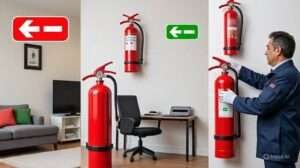
6. Myth: Any Fire Extinguisher Can Be Used on Any Fire
Fire extinguishers are designed for particular types of fire hazards. A product suitable for one fire classification may be unsuitable or dangerous in another situation.
Before buying an extinguisher, identify the materials and hazards present in the building. For example, ordinary combustible materials, flammable liquids, cooking oils, and energised electrical equipment can require different considerations.
Check the extinguisher’s label, approved applications, capacity, operating instructions, service information, and suitability for the intended location. Also consider whether occupants can recognise the equipment and understand its limitations.
For workplaces, a qualified professional should assess the required type, quantity, and placement of extinguishers in accordance with applicable standards.
Extinguishers should never replace evacuation planning or professional emergency response. If a fire is spreading, smoke is affecting the area, or the situation is uncertain, occupants should leave and contact emergency services rather than attempting to fight the fire.
7. Myth: Fire Safety Equipment Does Not Need Regular Maintenance
Another serious misconception is that purchasing and installing equipment completes the fire safety process. In reality, protective equipment must remain functional throughout its service life.
Dust, physical damage, depleted batteries, electrical faults, expired components, or neglected servicing can affect performance. An alarm that worked during installation may not operate correctly years later if nobody checks it.
Before buying a product, find out:
– What inspections are required.
– How often functional testing should occur.
– Whether maintenance must be completed by a qualified technician.
– Which records should be retained.
– How faults are reported and corrected.
– Whether spare parts and technical support are available.
Create a maintenance schedule based on the manufacturer’s instructions, relevant standards, and local requirements. Keep records of inspections, tests, repairs, and replacements.
For building fire alarm and detection systems, the Building Code of Pakistan Fire Safety Provisions 2016 addresses inspection, testing, and maintenance. The applicable requirements should be confirmed with the relevant authority and qualified professionals.
8. Myth: Fire Safety Signs and Emergency Exits Are Less Important Than Equipment
Some property owners focus on alarms and extinguishers while overlooking escape routes and emergency signs. Yet people need to know how to leave safely when a warning occurs.
Emergency exits should be appropriate for the building, accessible, clearly identified, and maintained according to applicable requirements. Exit routes should not be obstructed by stock, furniture, equipment, or temporary storage.
Before purchasing signs or emergency lighting, consider:
– Whether signs are visible and easy to understand.
– Whether they suit the building’s layout.
– Whether emergency routes are adequately identified.
– Whether lighting arrangements support evacuation during a power failure.
– Whether people with disabilities or mobility limitations have been considered.
– Whether the proposed arrangements meet applicable local rules.
A qualified professional can help determine the appropriate locations and specifications. The complete escape plan should also be communicated to occupants and practised where appropriate.
9. Myth: Fire Safety Training Is Unnecessary Once Equipment Is Installed
Even suitable equipment may provide limited benefit if people do not understand the emergency procedures. Employees, residents, and visitors need clear information about alarms, evacuation routes, assembly points, and who is responsible for emergency communication.
Training should be appropriate to the building and the responsibilities of the people involved. For workplaces, designated personnel may need additional instruction relevant to their roles.
A useful fire safety programme can include:
– Explaining alarm sounds and warning signals.
– Identifying primary and alternative escape routes.
– Establishing a safe assembly point.
– Explaining how to report a fire.
– Conducting appropriate evacuation drills.
– Providing accessible instructions for people who need assistance.
– Reviewing lessons learned after drills or changes to the building.
Training should emphasise that occupants must not delay evacuation to collect belongings or attempt to manage a dangerous fire themselves.
When comparing suppliers, ask whether they provide handover guidance, operating instructions, or training support as part of the service.
10. Myth: A Supplier’s Verbal Promise Is Enough
Before purchasing fire safety equipment, request clear documentation. Verbal assurances may be difficult to verify later and may not explain whether a product is suitable for your building.
Ask the supplier for product specifications, installation details, warranty conditions, service arrangements, and any relevant certification or test documentation. Verify claims with the issuing organisation where possible.
For an installed fire alarm system, the quotation should clearly explain the scope of work. Depending on the project, this may cover control panels, detectors, notification devices, cabling, power arrangements, commissioning, user instructions, and maintenance.
Do not assume that a product is compliant merely because a supplier uses terms such as “professional,” “advanced,” or “international quality.” Request evidence relevant to the exact product and intended application.
It is also sensible to compare more than one quotation for a major installation, ensuring that each supplier is pricing a similar scope of work.
11. How to Evaluate Fire Safety Requirements in Pakistan
Fire safety requirements are not necessarily identical across every city, building type, or occupancy. Applicable laws, building regulations, approval conditions, and inspection procedures may differ.
The Building Code of Pakistan Fire Safety Provisions 2016 is an important reference for building fire safety. However, property owners should confirm which provisions apply to their premises and whether additional provincial or local requirements are relevant.
Punjab Civil Defence lists several measures considered during inspections, including fire detection and alarm systems, firefighting arrangements, fire safety plans, emergency fire control rooms, and emergency exits and evacuation plans. These details demonstrate why fire safety should be approached as a coordinated system rather than a single purchase. “Source: Punjab Civil Defence” (https://civildefence.punjab.gov.pk/inspection_of_fire_safety_measures).
Before starting a new installation or upgrading an existing building:
1. Identify the relevant building authority or fire safety authority.
2. Confirm the requirements for your building’s use and occupancy.
3. Obtain a professional assessment where needed.
4. Select equipment that meets the specified requirements.
5. Use qualified installers and request commissioning records.
6. Establish inspection, testing, maintenance, and training arrangements.
This approach can help reduce the risk of purchasing unsuitable equipment or overlooking important safety obligations.
12. A Practical Checklist Before Buying Fire Safety Equipment
Use this checklist to review a product or proposed installation before making a decision.
Product and documentation
– [ ] The equipment matches the identified fire risks.
– [ ] Product specifications and relevant approvals are documented.
– [ ] The supplier explains the product’s limitations.
– [ ] Warranty and service terms are provided in writing.
Installation and compatibility
– [ ] The equipment is suitable for the building’s layout.
– [ ] Required installation work is clearly described.
– [ ] Compatibility with existing equipment has been checked.
– [ ] Commissioning and handover requirements are understood.
Maintenance and training
– [ ] Inspection and testing requirements are known.
– [ ] Spare parts and technical support are available.
– [ ] Responsible people know how to respond to alarms.
– [ ] Evacuation routes and emergency procedures are established.
Compliance
– [ ] Relevant building and fire safety requirements have been checked.
– [ ] The appropriate authority has been consulted where necessary.
– [ ] Required inspection and maintenance records can be maintained.
A checklist does not replace a formal risk assessment or professional inspection, but it can help buyers ask better questions and compare available options.
Conclusion
Understanding fire safety myths is an important step towards making informed purchasing decisions. No single alarm, detector, extinguisher, or sign can provide complete protection on its own. Effective fire safety depends on suitable equipment, correct installation, regular maintenance, clear emergency procedures, and appropriate training.
Before purchasing a fire alarm system in Pakistan or any other fire protection product, verify its specifications, suitability, documentation, maintenance requirements, and compliance with the rules applicable to your building. Avoid relying solely on price, marketing language, or assumptions about what other properties use.
For homes, offices, commercial premises, and industrial facilities, a planned approach to fire protection can support safer evacuation and more reliable emergency preparedness. When requirements are unclear, consult qualified fire safety professionals and the relevant local authority.
Frequently Asked Questions (FAQs)
1. What should I check before buying fire safety equipment?
Check whether the equipment suits the building’s fire risks, whether its specifications and approvals are verifiable, and whether installation, maintenance, warranty, and support arrangements are clearly explained.
2. Is a fire alarm system necessary for every building in Pakistan?
Requirements depend on the building’s occupancy, design, size, and applicable regulations. Consult the relevant authority or a qualified fire safety professional to determine what is required for your premises.
3. Can one fire extinguisher protect an entire building?
Not necessarily. The appropriate number, type, and placement of extinguishers depend on the building layout, fire hazards, applicable standards, and risk assessment. Extinguishers do not replace alarms or safe escape routes.
4. How often should fire safety equipment be inspected?
Inspection and testing schedules vary by equipment type, manufacturer instructions, relevant standards, and local requirements. Maintain a documented schedule and arrange professional servicing whenever required.
5. Why is fire safety training important after equipment installation?
Training helps occupants recognise warnings, understand evacuation routes, and follow emergency procedures. Equipment is only one part of a safety plan; people also need to know how to respond promptly and safely.