Living in a high-rise building offers many benefits, including convenient facilities, better use of space, and access to urban services. However, apartment living also brings important fire safety responsibilities. Families living several floors above ground level need to understand how to recognise fire warnings, use designated escape routes, and respond calmly during an emergency.
A fire in a high-rise building can affect multiple floors because smoke and heat may spread through corridors, stairwells, service shafts, and other openings. Evacuation can also take longer when many residents need to leave at the same time. These risks make reliable fire detection, clear emergency exits, regular maintenance, and family preparedness especially important.
In Pakistan, the Building Code of Pakistan Fire Safety Provisions 2016 provides an important reference for building fire protection and life safety. Punjab Civil Defence also identifies fire detection and alarm systems, firefighting arrangements, emergency exits, and evacuation plans among the measures considered during building inspections.
This guide explains what every family should know about high-rise fire safety, how to prepare before an emergency, and why a suitable fire alarm system in Pakistan is an important part of a wider safety plan.
1. Understand the Fire Risks in High-Rise Buildings
High-rise buildings contain many apartments, shared corridors, lifts, electrical systems, kitchens, storage areas, and utility spaces. These areas can present different fire hazards that require suitable prevention and protection measures.
Common sources of fire include:
– Faulty electrical wiring or damaged electrical equipment.
– Overloaded sockets and unsuitable electrical connections.
– Cooking accidents and unattended cooking.
– Improper storage of combustible materials.
– Poorly maintained electrical and mechanical systems.
– Renovation work that creates heat, sparks, or temporary hazards.
– Neglected fire protection equipment.
Smoke can become a serious threat before flames reach an apartment’s occupants. Shared corridors and staircases may become difficult to use if smoke enters them. For this reason, families should never assume that a fire on another floor cannot affect them.
Residents should learn the building’s emergency procedures and report blocked exits, damaged safety equipment, or other hazards to building management. Prevention is a shared responsibility involving residents, property owners, maintenance teams, and relevant authorities.
2. Why Fire Alarm Systems Matter
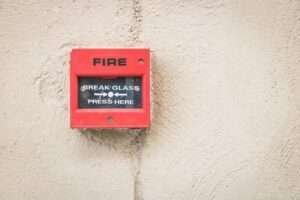
A fire alarm system helps alert occupants when a fire is detected. Depending on the design, the system may use smoke detectors, heat detectors, manual alarm points, audible alarms, visual notification devices, and a central control panel.
In a large building, an alarm can provide important warning to people who may be far from the original fire. Some systems also support emergency voice communication so that occupants can receive instructions during an incident.
When considering a Fire alarm system in Pakistan, building owners and management teams should check that the system is appropriate for the building’s height, layout, occupancy, and fire risks.
Important considerations include:
– Suitable detection: Devices should be selected and positioned according to the building design and applicable requirements.
– Clear notification: Warnings should be effective in the areas where occupants may be present.
– Backup power: The system should have the required arrangements to operate during a power interruption.
– Professional installation: Qualified professionals should design, install, and commission the system.
– Regular testing: Devices, control panels, and notification equipment should be inspected and tested according to applicable standards and manufacturer instructions.
– Maintenance records: Building management should maintain records of tests, faults, repairs, and servicing.
A fire alarm is not a substitute for a safe building design or a clear evacuation plan. It works best as part of a coordinated fire protection system.
3. Learn the Building’s Emergency Exits
Every family should know how to leave their building without depending entirely on lifts or directions from neighbours.
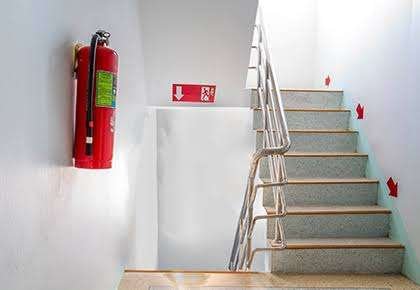
During a fire, ordinary passenger lifts may become unsafe because of power interruptions, smoke exposure, or other hazards. Residents should follow the building’s emergency plan and use designated escape staircases unless emergency personnel instruct them otherwise.
Before an emergency occurs, identify:
– The primary designated escape route from your apartment.
– An alternative route, where provided.
– The nearest appropriate emergency staircases.
– Exit signs and emergency lighting.
– The building’s assembly point outside.
– The location of posted evacuation instructions.
Walk through the routes with family members when it is safe and permitted. Explain where the stairs lead and how to reach the designated assembly area.
Never assume that the nearest staircase will always be usable. If smoke or fire blocks your route, do not enter a smoke-filled corridor or staircase. Follow your building’s emergency procedures, contact emergency services, and communicate your location so responders can guide you.
4. Prepare a Family Fire Escape Plan
A family escape plan helps everyone understand what to do when an alarm sounds. This is particularly important in high-rise buildings, where family members may be in different rooms or on different floors when an emergency begins.
Start by discussing the building’s official evacuation arrangements. Then create a household plan that supports those procedures.
Your plan should include:
Two ways to think about escape. Identify the designated route and understand what to do if it becomes unsafe. Never improvise a dangerous route from a balcony or window.
A meeting point. Choose the building’s designated assembly area or another safe location specified by management.
Emergency contacts. Make sure family members know how to contact local emergency services and building management.
Assistance arrangements. Plan how children, older adults, and people with disabilities or mobility limitations will receive help. Coordinate with building management where necessary.
Communication after evacuation. Agree that family members should report to the meeting point and avoid re-entering the building to search for others.
Practise the plan in a calm setting. Children should understand the alarm signal, the importance of leaving promptly, and why they must not hide or return for personal belongings.
5. Keep Corridors and Staircases Clear
Shared escape routes must remain accessible. Shoes, bicycles, furniture, cartons, rubbish, and other stored items can obstruct movement and slow evacuation.
Residents should avoid placing belongings in corridors or staircases, even temporarily. Building management should inspect common areas and address obstructions promptly.
Fire doors are also important. Depending on the building’s design, they help limit the movement of smoke and fire between areas. Residents should not wedge open fire doors or interfere with their closing mechanisms.
Families should report damaged doors, missing exit signs, failed emergency lighting, or locked emergency exits to management.
A staircase that appears convenient during everyday use may become difficult to navigate during an emergency if it is cluttered or poorly maintained. Keeping routes clear is a simple but important responsibility.
6. Understand What to Do When the Alarm Sounds
An alarm should always be taken seriously. Do not assume it is a false alarm simply because you cannot see smoke or flames.
When a warning sounds:
1. Stop what you are doing and listen for official instructions.
2. Follow the building’s evacuation plan and directions from emergency personnel.
3. Leave promptly using a designated route if it is safe to do so.
4. Avoid passenger lifts unless emergency responders specifically direct you to use an approved evacuation lift.
5. Help children and other family members according to your prepared plan.
6. Move to the designated assembly area and stay clear of emergency vehicle access.
7. Contact emergency services if necessary and provide clear information about the location and situation.
Do not delay evacuation to collect money, electronics, documents, or other possessions.
If smoke or fire makes the route unsafe, do not force your way through it. Move to a safer location according to the building’s emergency procedures, close doors between yourself and the smoke if possible, call emergency services, and clearly communicate your floor and apartment number. Follow the instructions of emergency responders.
Never jump from a window or balcony. Do not return inside until authorised by emergency personnel.
7. Reduce Fire Hazards Inside Your Apartment
Families can help prevent fires by maintaining safe habits at home.
Electrical safety
Use electrical equipment according to its instructions. Avoid overloading sockets, using damaged cables, or ignoring repeated electrical faults. Arrange for qualified professionals to inspect and repair electrical problems.
Kitchen safety
Stay attentive while cooking and keep combustible items away from cooking appliances. Make sure household members understand how to respond to a cooking fire without taking unnecessary risks.
If a fire develops, prioritise getting people to safety and calling emergency services. Do not attempt to handle a dangerous fire yourself.
Heating and household appliances
Follow the manufacturer’s instructions for heating devices and appliances. Keep combustible materials away from equipment that becomes hot, and switch off appliances when appropriate.
Storage and housekeeping
Avoid accumulating unnecessary combustible materials. Keep exits and access routes clear, and ensure that household storage does not interfere with electrical equipment or safety devices.
These precautions cannot eliminate every possible fire, but they reduce common risks and support a safer home environment.
8. Know the Role of Smoke Detectors and Other Equipment
Smoke detectors and fire alarm systems serve related but different roles. A smoke detector senses smoke and may sound a local alarm, while a building-wide fire alarm system can coordinate detection and notification across multiple areas.
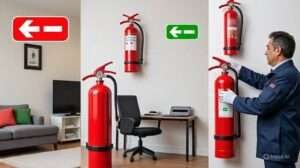
High-rise buildings may also require other protective measures, such as fire extinguishers, hydrants, sprinkler systems, emergency lighting, fire doors, and designated fire control arrangements. The exact requirements depend on the building and the applicable rules.
Families should ask building management:
– Are the fire alarm and detection systems maintained?
– Are the alarms and notification devices tested?
– Are emergency lights and exit signs functional?
– Are firefighting systems inspected and serviced?
– Are emergency exits accessible?
– Is there a written evacuation plan?
– Are evacuation drills arranged where required?
Residents should not dismantle, cover, or disable smoke detectors or alarm devices because they are inconvenient. Report repeated faults or unwanted alarms to management so the underlying problem can be investigated by qualified personnel.
9. Give Special Attention to Children and Vulnerable Family Members
An emergency can be confusing for young children, older adults, people with disabilities, and anyone who may need additional time or assistance to evacuate.
Families should discuss individual needs before an emergency occurs. Identify who will help each person and how that assistance will be arranged without placing another person at unreasonable risk.
For children, explain the alarm signal and the designated escape route using simple language. Make sure they know not to hide, use lifts independently during a fire, or return to the apartment for toys.
Older adults and people with limited mobility may need a specific evacuation plan developed with building management and appropriate professionals. Never assume that another resident or emergency worker will automatically know who needs assistance.
If someone cannot safely use the ordinary escape route, contact emergency services promptly and provide their exact location. Follow professional instructions rather than attempting an improvised rescue.
10. Why Regular Maintenance and Fire Drills Matter
Fire protection equipment needs ongoing attention. A system that was working when installed may develop faults due to damaged components, power problems, poor maintenance, or changes to the building.
Building management should arrange appropriate inspection, testing, and servicing of fire alarms, detectors, emergency lighting, firefighting equipment, and other required systems. Records should be kept so that faults and repairs can be tracked.
Fire drills can help residents and staff understand the evacuation procedure and identify problems before an actual emergency. Drills should follow the building’s approved arrangements and be organised with appropriate safety guidance.
After a drill, management can review whether people understood the alarm, whether routes were accessible, and whether communication was effective.
Families can support this process by taking drills seriously, learning the designated routes, and reporting concerns. Regular maintenance and practice make emergency arrangements more dependable.
11. Fire Safety Requirements for High-Rise Buildings in Pakistan
Pakistan’s Building Code of Pakistan Fire Safety Provisions 2016 is an important reference for fire prevention, detection, evacuation, and other life safety measures. It addresses matters including occupant notification, means of escape, and fire protection system design and maintenance.
Punjab Civil Defence identifies fire detection and alarm systems, firefighting arrangements, fire safety plans, emergency control rooms, emergency exits, and evacuation plans among the safety measures considered during inspections.
Requirements and inspection procedures may vary by province, city, occupancy, and building type. Owners and management teams should confirm the current requirements with the relevant authority rather than assuming that one set of arrangements applies everywhere.
For a high-rise property, responsible management should ensure that:
– Applicable building and fire safety requirements have been reviewed.
– Required fire detection and alarm systems are installed.
– Escape routes and emergency exits are maintained.
– Firefighting equipment is suitable and properly serviced.
– Evacuation plans are displayed and communicated where required.
– Residents and staff understand emergency procedures.
– Inspections, tests, repairs, and drills are documented as applicable.
Official references include the “Building Code of Pakistan Fire Safety Provisions 2016” (https://www.pec.org.pk/wp-content/uploads/2021/05/Building-Code-of-Pakistan-Fire-Safety-Provisions-2016.pdf) and “Punjab Civil Defence’s inspection guidance” (https://civildefence.punjab.gov.pk/inspection_of_fire_safety_measures).
12. A Simple High-Rise Fire Safety Checklist for Families
Use this checklist to review your household’s preparedness.
– [ ] Everyone knows the building’s alarm signal.
– [ ] Family members know the designated escape routes.
– [ ] Emergency staircases and corridors are kept clear.
– [ ] The family knows the assembly point.
– [ ] Children understand the basic evacuation plan.
– [ ] Additional assistance has been planned for anyone who needs it.
– [ ] Fire alarms and detectors are not disabled or obstructed.
– [ ] Electrical and cooking hazards are managed responsibly.
– [ ] Emergency contact details are available.
– [ ] The family participates in building fire drills where arranged.
– [ ] Concerns about equipment or blocked exits are reported to management.
– [ ] Everyone understands not to use ordinary lifts or re-enter the building during a fire unless directed by emergency personnel.
Review this checklist periodically and whenever your family moves to a different apartment or the building’s layout changes.
Conclusion
Fire safety in high-rise buildings requires more than equipment installed in corridors or technical rooms. Families need to understand fire risks, recognise alarms, learn escape routes, and know how to respond when evacuation becomes necessary. Building owners and management teams must also maintain fire protection systems and keep emergency routes accessible.
A suitable fire alarm system in Pakistan is an important part of high-rise safety, but it must work alongside reliable detection, appropriate firefighting arrangements, emergency lighting, clear exits, maintenance, and resident awareness.
By preparing a family escape plan, participating in drills, and reporting safety concerns, residents can help create a safer living environment. For building-specific requirements, consult qualified fire safety professionals and the relevant local authorities.
Frequently Asked Questions (FAQs)
1. What should families do when a fire alarm sounds in a high-rise building?
Take the alarm seriously, follow the building’s evacuation plan, and use a designated escape route if it is safe. Avoid ordinary passenger lifts, move to the assembly point, and follow instructions from emergency personnel.
2. Why is a fire alarm system important in high-rise buildings?
It provides warning when a fire is detected and can alert occupants across different areas of a building. Its effectiveness depends on suitable design, correct installation, regular testing, and maintenance.
3. Should families use lifts during a high-rise fire?
Families should not use ordinary passenger lifts during a fire unless emergency personnel specifically direct them to use an approved evacuation lift. Follow the building’s emergency plan and use designated escape routes when safe.
4. What fire safety equipment should a high-rise building have in Pakistan?
Depending on the building and applicable requirements, protection may include fire detection and alarm systems, smoke detectors, extinguishers, hydrants, sprinklers, emergency lighting, fire doors, and marked escape routes. Confirm the specific requirements with the relevant authority.
5. How can families prepare children for a fire emergency?
Explain the alarm signal, identify the designated escape route, and practise the family plan in an age-appropriate way. Children should know where to meet after evacuation and understand that they must not hide or return inside to collect belongings.