Office fire safety is not only about having a fire extinguisher on the wall or installing an alarm near the reception area. A safe workplace requires a combination of prevention, early warning, clear escape routes, properly maintained equipment, employee awareness, and a practical emergency plan.
Offices in Pakistan can have many different fire risks. Computers, printers, chargers, air conditioners, electrical equipment, kitchens, storage rooms, generators, UPS systems, and crowded workspaces can all require attention. Poor housekeeping can also create problems when combustible materials are stored near electrical or heat-producing equipment.
The Building Code of Pakistan Fire Safety Provisions 2016 states that buildings should be constructed, arranged, equipped, maintained, and operated to provide a reasonable level of life safety and property protection from fire hazards. It also places responsibilities on owners, operators, lessees, and occupants and calls for appropriate records of maintenance, inspections, testing, and emergency drills.
For an office, fire safety should therefore be treated as an ongoing management responsibility rather than a one-time installation.
What Does Office Fire Safety Actually Mean?
Office fire safety is a collection of measures designed to reduce the likelihood of fire and help people respond safely if an emergency occurs.
It normally involves several layers:
– Fire prevention
– Electrical safety
– Smoke detection
– Fire alarm systems
– Appropriate firefighting equipment
– Emergency lighting
– Exit signs
– Clear escape routes
– Emergency procedures
– Employee awareness
– Regular inspections and maintenance
Each layer has a different purpose.
A smoke detector may provide early warning. A fire alarm system can alert occupants across a building. Emergency exits provide routes toward safety. Maintenance helps ensure these systems remain available when needed.
No single piece of equipment should be treated as a complete fire-safety solution.
Why Office Fire Safety Matters in Pakistan
Office buildings can vary considerably in Pakistan. A small office may occupy one room in a commercial plaza, while a large organization may operate across several floors of a high-rise building.
The number of occupants, building layout, electrical demand, storage arrangements, and type of business can all influence fire-safety requirements.
Rescue 1122’s Community Safety Program specifically includes fire safety, prevention, emergency preparedness, citizen training, and evacuation drills. It also works with business organizations on fire and workplace safety.
This shows why office safety should not be viewed simply as an equipment-purchasing exercise. People and procedures are just as important as physical safety equipment.
1. Start With Fire Prevention
The best office fire is one that never starts.
Prevention begins with identifying everyday conditions that could increase risk.
Office managers should consider:
– Electrical equipment
– Extension arrangements
– Air-conditioning equipment
– Kitchens and tea areas
– Storage rooms
– Paper and cardboard
– Charging stations
– UPS and backup-power equipment
– Generators
– Waste materials
– Maintenance activities
Employees should report unusual electrical smells, damaged equipment, overheating, or other concerns to the responsible person rather than attempting repairs themselves.
2. Keep Electrical Equipment in Good Condition
Electrical equipment is a normal part of modern offices, but damaged or poorly maintained equipment can create unnecessary risks.
Computers, printers, photocopiers, monitors, fans, air conditioners, chargers, and other equipment should be used according to manufacturer instructions.
Employees should avoid using equipment that has obvious damage.
Potential warning signs that should be reported include:
– Damaged cables
– Broken plugs
– Damaged outlets
– Unusual heat
– Burning smells
– Repeated electrical faults
– Sparks or other abnormal behavior
Building wiring and electrical systems should be inspected or repaired by appropriately qualified professionals.
Employees should not attempt to repair electrical installations themselves.
3. Avoid Overcrowded Electrical Connections
Offices can accumulate multiple devices around desks.
A workstation may contain a computer, monitor, phone charger, printer, lamp, fan, and other equipment.
Instead of connecting everything through unsuitable extension arrangements, office management should ensure that electrical equipment is supplied through appropriate installations.
If the electrical capacity of an office is a concern, a qualified professional should assess the installation.
Adding more power boards is not necessarily a solution to an underlying electrical problem.
4. Keep Combustible Materials Organized
Paper, cardboard, packaging, cleaning materials, and other combustible items are common in offices.
They should be stored in an organized way and kept away from inappropriate heat or ignition sources.
Storage should not obstruct:
– Corridors
– Stairways
– Emergency exits
– Fire alarm equipment
– Fire extinguishers
– Emergency lighting
– Other safety equipment
Good housekeeping makes hazards easier to identify and helps keep escape routes available.
5. Keep Emergency Exits Clear
An office evacuation plan is only useful if people can actually reach an exit.
The Building Code of Pakistan Fire Safety Provisions 2016 addresses means of egress and requires them to be arranged and marked so the way to a place of safety is clearly indicated. It also addresses illumination of means of egress.
Office managers should therefore regularly check:
– Corridors
– Stairways
– Exit doors
– Exit signs
– Emergency lighting
– Access routes
Employees should not use emergency routes as storage areas.
Boxes, furniture, files, promotional materials, or other objects should not be allowed to gradually obstruct escape routes.
6. Understand the Office Fire Alarm System
A fire alarm system in Pakistan can contain several components depending on the building and its requirements.
A larger office may have:
– Smoke detectors
– Heat detectors
– Manual alarm devices
– Alarm control equipment
– Audible notification devices
– Visual notification devices
– Backup power
– Connections to other fire-protection systems
Employees do not need to understand the technical design of the system, but they should understand what the alarm means.
Everyone should know that an alarm requires an appropriate response according to the office emergency plan.
The Pakistan fire-safety provisions recognize automatic detection, manual fire alarm initiation, and other means of initiating an alarm in applicable systems.
7. Never Ignore a Fire Alarm
One of the most important office safety rules is to take alarms seriously.
Employees may become accustomed to alarms if previous activations turned out to be false. That does not make it safe to ignore a future alarm.
When the building’s emergency procedure calls for evacuation, employees should follow it promptly and move toward an appropriate safe location.
They should not delay evacuation simply to collect personal belongings or investigate the source of the alarm.
A fire alarm is intended to provide warning, not to serve as background noise in the workplace.
8. Maintain Smoke Detection Equipment
Smoke detectors can provide important early warning, but they require appropriate installation and maintenance.
Office managers should ensure that installed detectors are included in the building’s inspection and maintenance program.
Employees should report obvious damage or unusual behavior rather than attempting to dismantle or repair detectors.
For larger fire-protection systems, inspection, testing, and maintenance should be performed according to applicable requirements, system documentation, and qualified professional guidance.
The Building Code of Pakistan Fire Safety Provisions 2016 specifically includes maintenance, inspection, and testing provisions for fire-protection systems.
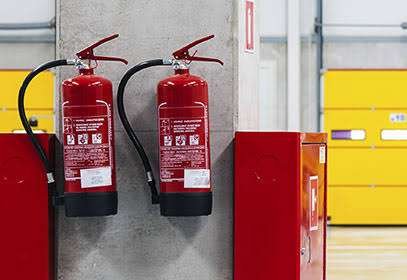
9. Know Where Fire Extinguishers Are Located
Fire extinguishers are another component of office fire safety.
Employees should know where designated fire extinguishers are located and understand the organization’s emergency procedures.
However, employees—especially those who are untrained—should not be expected to confront a dangerous fire.
The priority during an emergency should be personal safety, alerting others, following the evacuation plan, and contacting appropriate emergency services.
Fire extinguishers also require appropriate inspection and maintenance. Damaged, inaccessible, or improperly maintained equipment should be reported to responsible management.
10. Do Not Block Fire-Safety Equipment
Fire-safety equipment must remain accessible.
A common office problem is allowing furniture, cartons, files, or decorations to accumulate around safety equipment.
Regular inspections should confirm that:
– Fire extinguishers are accessible.
– Alarm devices are visible.
– Exit signs are not covered.
– Emergency routes remain clear.
– Emergency equipment has not been moved without authorization.
Small changes to office layouts can unintentionally create safety problems.
11. Pay Attention to Office Kitchens
Many offices have a small kitchen, tea area, or pantry.
These spaces can contain electrical appliances and cooking equipment.
Management should establish reasonable rules for using such equipment.
Employees should follow manufacturer instructions and avoid leaving equipment operating unnecessarily.
The kitchen area should be kept clean and organized, with combustible materials appropriately separated from heat-producing equipment.
Any faulty appliance should be reported rather than repeatedly used despite warning signs.
12. Manage Charging Areas Carefully
Modern offices may have large numbers of rechargeable devices.
Phones, laptops, tablets, power banks, and other equipment can be charged throughout the working day.
Charging areas should be kept organized and free from unnecessary combustible materials.
Employees should use compatible charging equipment and avoid using visibly damaged chargers or cables.
If a battery-powered device shows signs of damage or unusual overheating, it should be handled according to the manufacturer’s safety guidance and reported when appropriate.
13. Give Special Attention to UPS and Backup Power
Many offices in Pakistan use UPS systems or other backup-power arrangements.
These systems can involve electrical equipment, batteries, ventilation considerations, and maintenance requirements.
They should be installed and maintained according to the manufacturer’s instructions and applicable electrical and fire-safety requirements.
Employees should not attempt to modify wiring or battery systems themselves.
Any unusual condition should be reported to responsible maintenance personnel.
14. Consider Generator Safety
Some offices use generators when normal electrical supply is unavailable.
Generator installations require appropriate planning, ventilation, fuel management, electrical connections, and maintenance.
Because these are technical matters, they should be handled by qualified professionals.
Office employees should not attempt improvised connections between generators and building electrical systems.
The safest office policy is to ensure that backup-power equipment is professionally installed and routinely maintained.
15. Keep Emergency Lighting Functional
Normal office lighting may not be available during every emergency.
Emergency lighting can help occupants identify routes toward safety when normal lighting is interrupted.
Building management should ensure that emergency lighting is included in the inspection and maintenance program where required.
Employees should report damaged or non-functioning emergency lights.
The Building Code of Pakistan Fire Safety Provisions 2016 addresses illumination of means of egress as part of life-safety arrangements.
16. Use Clear Exit Signs
Exit signs should be easy to recognize.
A sign hidden behind an office decoration or blocked by a newly installed partition may no longer serve its intended purpose effectively.
Whenever an office layout changes, management should review whether emergency routes and signs remain appropriate.
This is particularly important when offices are renovated or additional workstations are installed.
17. Create an Office Emergency Plan
Every workplace should have an emergency plan appropriate to its size and activities.
The plan can address:
– How an alarm is raised
– Who contacts emergency services
– How occupants evacuate
– Where people assemble
– Who assists with accountability
– How visitors are managed
– How employees with additional needs are supported
– Who communicates with emergency responders
The exact plan should be appropriate to the building.
Pakistan’s fire-safety provisions include emergency action plans and emergency evacuation and relocation drills among the records that may need to be maintained.
18. Conduct Appropriate Evacuation Drills
An evacuation plan should not remain a document that nobody has practiced.
Appropriate drills can help employees understand:
– Alarm signals
– Exit routes
– Assembly areas
– Responsibilities
– Visitor procedures
Rescue 1122 provides safety education and evacuation-drill training through its community-safety activities.
Office drills should be organized responsibly and in a way that does not create unnecessary risk.
The purpose is preparedness, not speed at any cost.
19. Train Employees About Fire Safety
Employees should receive basic information about the workplace’s emergency procedures.
Training can cover:
– Recognizing alarms
– Finding exits
– Reporting hazards
– Keeping routes clear
– Understanding emergency procedures
– Knowing the assembly point
– Reporting damaged safety equipment
Specialized fire-protection work should remain with qualified personnel.
Pakistan Engineering Council identifies a specialist engineering category, ME02, for installation, commissioning, and maintenance of fire detection, alarm, and suppression systems and related equipment.
20. Keep Maintenance Records
Fire safety becomes easier to manage when inspections and repairs are documented.
Records can include:
– Fire alarm inspections
– Testing dates
– Maintenance work
– Equipment faults
– Fire-drill dates
– Emergency-plan reviews
– Emergency lighting checks
– Fire-extinguisher inspections
– Corrective actions
The Building Code of Pakistan Fire Safety Provisions 2016 specifically calls for records of maintenance, inspections, testing, fire alarm systems, emergency evacuation and relocation drills, emergency action plans, and other relevant equipment as required by the Authority Having Jurisdiction.
Good records can help management identify recurring problems and demonstrate that safety systems are being actively maintained.
21. Review Fire Safety After Office Changes
An office can change significantly over time.
New partitions, additional employees, extra electrical equipment, storage changes, or a change in business activity may affect fire-safety arrangements.
The Pakistan Engineering Council’s 2021 draft Building Code states that the 2016 Fire Safety Provisions apply to matters involving fire hazards and the construction, extension, repair, alteration, or removal of fire-protection and alarm systems, subject to the applicable authority and provisions.
Before making significant changes, office management should therefore consider whether professional fire-safety or building-code review is needed.
22. Keep Visitors in Mind
Office fire safety should cover visitors as well as employees.
Visitors may not know:
– Where exits are located
– What the alarm sounds like
– Where the assembly area is
– Which routes are normally used
Reception or designated staff should have a reasonable process for accounting for visitors during an evacuation.
The objective is to ensure that emergency procedures are not limited only to permanent employees.
23. Consider People Who Need Additional Assistance
Some employees or visitors may need additional assistance during an evacuation.
Office emergency planning should consider accessibility and individual needs where appropriate.
Management can identify suitable procedures in advance rather than trying to create them during an emergency.
This is another reason why emergency planning should be treated as an ongoing workplace responsibility.
24. Report Problems Quickly
Employees should have a simple way to report fire-safety concerns.
Examples include:
– Blocked exits
– Damaged alarm devices
– Missing fire extinguishers
– Faulty emergency lights
– Damaged electrical equipment
– Unsafe storage
– Obstructed stairways
Management should establish a process for reviewing and correcting reported problems.
A safety reporting system is useful only when reported issues receive appropriate attention.
25. Know When Professional Assistance Is Necessary
Office staff should not be expected to perform technical fire-system work.
Professional assistance may be necessary for:
– Fire alarm installation
– Fire alarm system testing
– Major repairs
– Electrical-system work
– Emergency lighting systems
– Fire-protection system design
– Building alterations
– Generator installation
– Complex fire-safety assessments
Qualified professionals can evaluate systems according to applicable requirements.
The Pakistan Engineering Council’s ME02 category specifically covers installation, commissioning, and maintenance of fire detection, alarm, and suppression systems and allied equipment.
A Practical Office Fire-Safety Checklist
Office management can use a simple checklist as part of its regular safety review.
Fire detection and alarms
– Are fire alarm systems appropriately installed?
– Are detectors and alarm devices maintained?
– Are faults reported and addressed?
– Are inspections and tests documented?
Escape routes
– Are corridors clear?
– Are emergency exits accessible?
– Are exit signs visible?
– Is emergency lighting maintained?
Electrical safety
– Are damaged cables and equipment removed from service?
– Are electrical problems reported?
– Is electrical maintenance performed professionally?
Fire equipment
– Is firefighting equipment accessible?
– Is it maintained according to applicable requirements?
– Are employees aware of its location?
Emergency preparedness
– Is there an emergency action plan?
– Do employees know evacuation procedures?
– Is there an assembly point?
– Are appropriate drills conducted?
– Are visitors considered?
The Role of Management and Employees
Effective office fire safety requires cooperation.
Management is responsible for establishing appropriate systems, arranging maintenance, providing information, and addressing building-level hazards.
Employees contribute by following safety procedures, keeping work areas organized, reporting hazards, and responding appropriately to alarms.
Neither side can create a safe workplace alone.
Rescue 1122’s community-safety approach similarly emphasizes prevention, preparedness, training, and cooperation between communities and organizations.
Final Thoughts
Office fire safety is a continuous process.
A workplace needs more than a fire extinguisher and an alarm. It needs appropriate prevention measures, maintained fire-protection equipment, reliable warning systems, accessible exits, emergency lighting, employee awareness, evacuation procedures, and regular reviews.
A properly designed and maintained fire alarm system in Pakistan can provide an important layer of early warning, but it works best as part of a complete fire-safety strategy.
For office managers, the most important habits are simple: identify hazards, keep escape routes clear, ma