Warehouses play an important role in Pakistan’s supply chain. They store food products, clothing, electronics, packaging materials, machinery, raw materials, chemicals, and many other goods. Because warehouses can contain large quantities of stored materials, maintaining effective fire-safety arrangements should be a regular priority.
Warehouse fire safety is not something that should be reviewed only after an incident. Equipment, storage arrangements, electrical systems, emergency exits, alarms, and fire-protection systems all require ongoing attention.
The Building Code of Pakistan Fire Safety Provisions 2016 specifically recognizes warehouses as a type of storage occupancy and contains requirements covering fire protection, means of egress, alarms, maintenance, inspection, and related safety measures.
Rescue 1122 also emphasizes prevention and preparedness as important parts of community safety. Its Community Safety Program includes fire-safety education, emergency preparedness, training, and cooperation with business organizations on fire and workplace safety.
A good warehouse maintenance program does not need to be complicated. It needs to be consistent, documented, and appropriate for the building and the materials being stored.
Why Warehouse Fire Safety Requires Regular Maintenance
A warehouse can change significantly over time.
New products may be introduced. Storage racks may be moved. Electrical equipment may be added. More workers may occupy the building. Packaging waste may increase. Forklifts and other machinery may change the way people move around the facility.
These changes can affect fire risk.
For example, an emergency exit that was clear last month could become obstructed by cartons or equipment. A fire alarm device could become difficult to access because of a new storage arrangement. Electrical equipment may develop problems if it is damaged or poorly maintained.
Regular inspections help identify these issues before they become larger safety concerns.
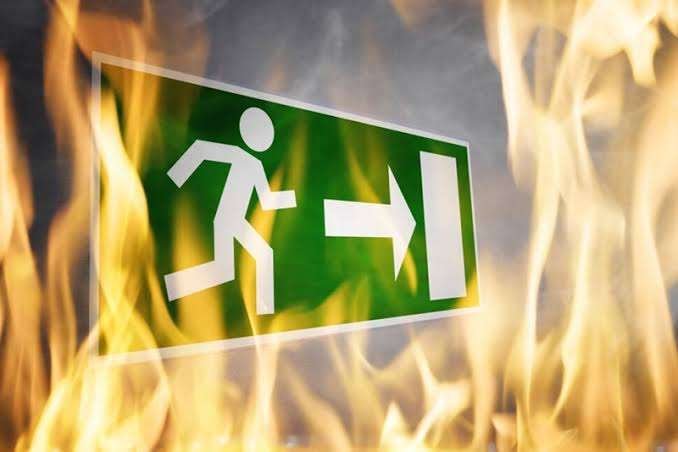
1. Keep Fire Exits and Escape Routes Clear
Emergency exits are among the most important features of warehouse fire safety.
During an emergency, workers need a clear route toward a place of safety. The Building Code of Pakistan Fire Safety Provisions 2016 addresses means of egress and requires appropriate arrangements and markings to indicate the route toward safety.
Warehouse managers should regularly check:
– Emergency exits
– Corridors
– Stairways
– Doorways
– Exit signs
– Emergency access routes
– Assembly areas
Storage should never be allowed to gradually spread into evacuation routes.
Cartons, pallets, packaging materials, machinery, or unused equipment can create obstacles.
A simple daily or shift-based visual check can help identify problems quickly.
2. Inspect Fire Alarm Systems Regularly
Early warning is a critical part of warehouse fire safety.
A warehouse can be large, noisy, and divided into multiple areas. Workers may not immediately notice smoke or signs of a fire, especially when they are working in another part of the building.
This is why an appropriate fire alarm system in Pakistan can be an important component of a warehouse’s overall fire-protection strategy where required or appropriate.
The Building Code includes provisions for fire alarm systems where the size, arrangement, or occupancy means that a fire itself may not provide sufficient warning to occupants.
Warehouse management should ensure that alarm and detection equipment receives appropriate professional inspection and maintenance.
Workers should also know:
– What the alarm sounds like
– What they should do when it activates
– Where emergency exits are located
– Where the assembly point is
– Who has emergency responsibilities
A warning system is most useful when people understand how to respond to it.
3. Keep Fire Detection Equipment Unobstructed
Detection devices need suitable placement and clear access.
Warehouse storage arrangements can change over time, particularly when businesses add new racks or increase inventory.
Management should check whether stored goods, shelving, packaging, or other objects have altered the conditions around fire detection devices.
Changes to the building layout should be reviewed by appropriate professionals when they could affect fire-protection systems.
Do not relocate, disconnect, cover, or modify fire detection equipment without proper technical assessment and authorization.
Pakistan Engineering Council identifies installation, commissioning, and maintenance of fire detection, alarm, and suppression systems as specialized engineering work under ME02.
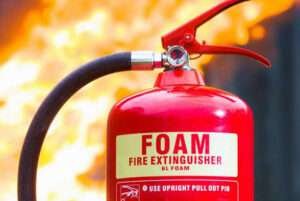
4. Inspect Fire Extinguishers and Other Equipment
Fire extinguishers and other fire-protection equipment should remain accessible and maintained according to their intended use and applicable requirements.
A basic warehouse inspection can look for:
– Obstructed equipment
– Visible physical damage
– Missing equipment
– Unclear signage
– Signs of leakage or deterioration
– Expired or overdue maintenance markings where applicable
Employees should not attempt technical servicing themselves unless they are appropriately trained and authorized.
Instead, visible problems should be reported to the responsible safety or maintenance team.
The Building Code includes requirements concerning fire-protection equipment and its inspection and maintenance.
5. Maintain Fire Hose and Hydrant Systems
Some warehouses use fixed water-based fire-protection systems such as hose stations, hydrants, or other approved arrangements.
These systems require professional inspection and maintenance.
Warehouse managers should make sure that:
– Access to equipment remains clear
– Valves and associated components are accessible
– Equipment is not damaged
– Storage does not interfere with fire-protection systems
– Required professional inspections are completed
– Maintenance records are maintained
The exact requirements depend on the system and the building’s fire-protection design.
Fixed systems should not be modified without professional evaluation.
6. Monitor Electrical Systems
Electrical equipment is common in warehouses.
Lighting, ventilation, refrigeration, charging equipment, computers, machinery, conveyor systems, and other electrical installations may operate for long periods.
Regular electrical maintenance can help identify problems before they become serious.
Warehouse management should pay attention to:
– Damaged cables
– Damaged plugs or equipment
– Improper temporary connections
– Overloaded electrical arrangements
– Unapproved modifications
– Equipment showing signs of malfunction
Electrical maintenance should be performed by appropriately qualified personnel.
Workers should be encouraged to report electrical problems rather than attempting unauthorized repairs.
7. Keep Storage Areas Organized
Storage management is an important part of fire prevention.
Warehouses should have clear arrangements for storing products and materials.
Managers should consider:
– The type of materials being stored
– Storage height
– Rack arrangement
– Aisle access
– Separation of incompatible materials
– Packaging waste
– Access to emergency equipment
– Access to exits
The Building Code distinguishes warehouse occupancies and includes different classifications for general-purpose and liquid warehouses.
This illustrates why warehouse fire safety should be based on the actual contents and use of the facility.
8. Control Combustible Waste
Packaging materials can accumulate quickly in warehouses.
Cardboard, plastic wrapping, paper, wooden pallets, and other combustible waste should be managed through the warehouse’s waste-control procedures.
Do not allow waste to accumulate around:
– Electrical equipment
– Emergency exits
– Fire-protection equipment
– Machinery
– Loading areas
Good housekeeping is a simple but important part of fire prevention.
Workers should understand that keeping the workplace clean is also a safety responsibility.
9. Review Storage Changes
A warehouse may have a different layout after several months than it did when the original fire-protection system was designed.
This can happen when:
– New racks are installed
– Storage height changes
– New products are introduced
– Aisles are changed
– Additional machinery is installed
– Warehouse capacity is increased
– Different materials are stored
These changes should trigger a review of fire-safety arrangements.
The existing alarm, detection, suppression, and evacuation systems may need professional reassessment if the building’s use or storage conditions change significantly.
10. Maintain Emergency Lighting and Exit Signs
Normal lighting may not remain available during every emergency.
Emergency lighting and illuminated exit signs can help occupants identify evacuation routes where such systems are required.
The Building Code addresses illumination of means of egress.
Warehouse managers should ensure that:
– Exit signs remain visible
– Emergency lights are not obstructed
– Damaged units are reported
– Required testing and maintenance are completed
– Storage does not cover signs
A warehouse can be large and confusing, so visible evacuation information is especially useful.
11. Train Warehouse Employees
Equipment is only one part of warehouse fire safety.
Workers need to understand what to do when a fire alarm activates.
Training can cover:
– Fire prevention
– Alarm awareness
– Emergency exits
– Evacuation procedures
– Assembly points
– Hazard reporting
– Emergency communication
– Roles of designated personnel
Training should be appropriate to each employee’s role.
Workers should not be encouraged to take unnecessary risks during an emergency. The priority should be following the warehouse’s emergency plan and reaching safety.
Rescue 1122’s Community Safety Program includes training industrial workers and other groups in emergency-management and life-saving skills.
12. Conduct Evacuation Drills
An emergency plan should be tested periodically through appropriate drills.
A drill can help warehouse management identify:
– Confusing evacuation routes
– Problems with alarm communication
– Blocked exits
– Difficult assembly areas
– Gaps in employee knowledge
– Problems accounting for workers
Rescue 1122 includes emergency evacuation drills in its safety-education activities and has trained schools and other community groups in evacuation procedures.
After a warehouse drill, management should review the results and address identified problems.
13. Keep Fire Safety Records
Maintenance becomes easier when inspections are documented.
A warehouse fire-safety record can include:
– Inspection dates
– Equipment inspected
– Maintenance completed
– Problems identified
– Corrective actions
– Professional service visits
– Training sessions
– Evacuation drills
– Follow-up inspections
Records help managers track whether identified problems have actually been corrected.
They can also provide useful information during safety reviews or inspections.
14. Inspect Loading and Unloading Areas
Loading docks and unloading areas can become busy places.
They may contain vehicles, pallets, packaging materials, machinery, and temporary storage.
Management should make sure these areas do not interfere with emergency access.
Fire exits, fire equipment, emergency routes, and access for emergency responders should remain clear.
Temporary storage should not become permanent obstruction.
15. Pay Attention to Machinery
Some warehouses use forklifts, conveyors, compactors, refrigeration systems, packaging machinery, or other equipment.
Machinery should receive appropriate maintenance according to its manufacturer’s instructions and the organization’s safety procedures.
Workers should report unusual equipment conditions.
Maintenance personnel should address problems through approved procedures.
The objective is to reduce preventable hazards while keeping equipment in safe operating condition.
16. Review Fire Safety After Renovations
Renovation and construction can temporarily change a warehouse’s fire-safety conditions.
Walls may be removed or added. Electrical systems may change. Emergency exits may be temporarily affected. Fire-protection equipment may need relocation.
The Building Code contains provisions addressing fire-protection and means-of-egress arrangements during construction, repair, alteration, and addition work.
Management should therefore review fire-safety arrangements before and during significant renovation work.
17. Keep Emergency Access Available
Firefighters need access to buildings during emergencies.
External access routes, fire-service access points, hydrants where applicable, and other designated areas should not be unnecessarily blocked.
Warehouse managers should consider emergency access when planning:
– Vehicle parking
– Pallet storage
– Waste collection
– Temporary structures
– Loading operations
– Outdoor equipment
Rescue 1122’s Fire Service identifies fire prevention and the installation of fire hydrants in high-risk areas among its fire-safety activities.
18. Check Fire Safety After Power or Equipment Changes
Adding new electrical equipment can change a warehouse’s safety profile.
Examples include:
– New refrigeration equipment
– Additional lighting
– Battery charging areas
– Conveyor systems
– Packaging machinery
– Computer equipment
Before major changes are made, management should consider whether the existing fire-safety arrangements remain suitable.
Technical assessments should be carried out by qualified professionals where required.
19. Separate Fire Safety From Normal Storage Decisions
Warehouse productivity is important, but storage decisions should not compromise fire safety.
Employees may be tempted to place additional cartons or pallets in unused spaces.
However, an area that looks empty may actually be needed for:
– Emergency access
– Evacuation
– Fire-protection equipment
– Maintenance
– Fire-service access
Warehouse supervisors should establish clear rules for where materials can and cannot be stored.
20. Make Maintenance a Routine Process
The biggest mistake is treating fire-safety maintenance as an occasional activity.
A better approach is to establish different inspection levels.
Daily or shift checks
Workers can visually identify obvious issues such as blocked exits, obstructed equipment, or accumulated waste.
Regular management inspections
Supervisors can review storage arrangements, evacuation routes, equipment accessibility, and housekeeping.
Professional inspections
Qualified professionals should inspect, test, service, or maintain technical fire-protection systems according to applicable requirements.
This layered approach makes it easier to identify problems at different stages.
Warehouse Fire Safety Checklist
A simple checklist can help warehouse managers review key areas.
Emergency exits
– Are exits accessible?
– Are exit signs visible?
– Are corridors clear?
– Are assembly areas identified?
Fire alarms
– Is the alarm system maintained appropriately?
– Are detection devices unobstructed?
– Do employees know what the alarm means?
Fire equipment
– Is required equipment accessible?
– Is there visible damage?
– Are maintenance requirements current?
Storage
– Are aisles clear?
– Is combustible waste controlled?
– Are materials stored according to the warehouse’s procedures?
– Have recent storage changes been reviewed?
Electrical systems
– Are damaged cables or equipment reported?
– Are electrical installations maintained by qualified personnel?
– Are unauthorized modifications avoided?
Training
– Do employees understand evacuation procedures?
– Have relevant workers received fire-safety training?
– Are drills conducted where appropriate?
Documentation
– Are inspections recorded?
– Are maintenance records available?
– Are identified problems followed up?
The Importance of Professional Fire-Safety Maintenance
Warehouse fire protection can involve interconnected technical systems.
Fire detection, alarm systems, suppression equipment, hydrants, water supplies, emergency lighting, and other components may need specialized knowledge.
Pakistan Engineering Council identifies fire detection, alarm, and suppression system installation, commissioning, and maintenance as specialized engineering work under ME02.
This means warehouse owners should not rely entirely on informal checks for technical systems.
Routine employee inspections are useful for identifying obvious problems, but technical servicing should be performed by appropriately qualified professionals.
Fire Safety in Pakistan’s Warehouse Sector
Fire prevention and preparedness are important parts of Pakistan’s wider emergency-safety efforts.
Rescue 1122 describes its Community Safety Program as focusing on emergency preparedness, response, and prevention. It works with citizens, schools, industrial workers, healthcare providers, volunteer groups, and business organizations to promote safety.
The service also provides a Community Safety Training Booklet covering preventive fire-safety measures and other safety topics.
For warehouse operators, this reinforces an important message: fire safety should be approached as an ongoing management responsibility rather than a one-time installation project.
Final Thoughts
Warehouse fire safety depends on consistent maintenance.
A warehouse may have modern fire-protection equipment, but blocked exits, poor housekeeping, neglected alarms, damaged electrical systems, or changing storage arrangements can reduce the effectiveness of the overall safety plan.
Regular inspections help management identify these problems early.
A suitable fire alarm system in Pakistan can provide an important early warning function where required or appropriate, but it should work together with accessible exits, appropriate fire-protection equipment, emergency lighting, employee training, evacuation planning, and professional maintenance.
The Building Code of Pakistan Fire Safety Provisions 2016 addresses warehouses and includes provisions related to fire protection, occupant notification, means of egress, and maintenance.
Rescue 1122 likewise emphasizes prevention, preparedness, training, and fire safety through its Community Safety Program.
The most effective warehouse fire-safety program is therefore one that is maintained continuously.
Keep exits clear. Monitor storage arrangements. Maintain alarms and fire-protection equipment. Control combustible waste. Review electrical systems. Train employees. Conduct appropriate drills. Keep records. And involve qualified professionals whenever technical inspection or maintenance is required.
Fire safety is not a single task completed once a year. It is an ongoing responsibility that helps protect workers, property, inventory, and business operations.
FAQs
1. Why is regular fire-safety maintenance important in a warehouse?
Warehouses can contain large quantities of combustible materials and their layouts can change frequently. Regular maintenance helps identify blocked exits, damaged equipment, storage problems, alarm issues, and other hazards before they become more serious.
2. How often should a warehouse fire alarm system be inspected?
The appropriate inspection and testing schedule depends on the system design, applicable requirements, manufacturer’s instructions, and relevant standards. Technical inspection and maintenance should be performed by appropriately qualified professionals rather than relying only on informal visual checks.
3. Can warehouse storage block emergency exits?
No. Emergency exits and designated evacuation routes should remain accessible. Storage, pallets, cartons, equipment, and waste should not obstruct routes toward a place of safety.
4. What should warehouse employees do when a fi