Fire safety is essential for people of every age, but older adults may need additional support when an emergency occurs. Some elderly people experience reduced mobility, hearing difficulties, vision problems, or other age-related challenges that can make it harder to recognise danger and reach a safe place quickly. These circumstances vary from person to person, so fire safety arrangements should be based on individual needs rather than age alone.
In Pakistan, many older adults live with their families, while others live independently or in shared residential buildings. Whatever their living arrangement, a safe environment should include reliable fire detection, accessible exits, well-maintained electrical equipment, and a clear emergency plan.
A suitable Fire alarm system in Pakistan can provide an important early warning when smoke or fire is detected. However, an alarm is only one part of an effective safety arrangement. Families, caregivers, property owners, and building managers must also consider how older occupants will receive warnings and evacuate safely.
Understanding these needs can help households reduce preventable risks and protect elderly family members during emergencies.
1. Why Is Fire Safety Important for Older Adults?
A fire can develop quickly, and occupants may have limited time to respond. Older adults sometimes need additional time or assistance to understand an alarm, move through a building, or reach an exit.
Several factors can make an emergency more challenging:
Reduced Mobility
Some elderly people use walking sticks, walkers, or wheelchairs. Others may have difficulty walking long distances, standing for extended periods, or using stairs.
Narrow corridors, cluttered rooms, slippery floors, and heavy doors can create additional obstacles. Keeping pathways clear and ensuring that doors are easy to operate can make everyday movement and emergency evacuation safer.
Hearing Difficulties
A conventional smoke alarm may not be noticeable to someone with significant hearing loss, especially while sleeping.
Depending on individual needs, accessible warning devices may include visual signals, vibrating alerts, or other suitable notification systems. Families should ensure that an older person can recognise an emergency warning without relying entirely on hearing.
Vision Difficulties
Poor eyesight can make it difficult to identify exit signs, read instructions, or move through unfamiliar surroundings.
Clear lighting, visible signs, familiar pathways, and easy-to-understand emergency instructions can help address these challenges.
Slower Emergency Response
Some older adults may need extra time to understand what is happening and decide what to do. A simple emergency plan, explained in advance and practised appropriately, can reduce confusion.
2. Common Fire Hazards in Homes
Many residential fires begin with everyday activities or equipment. Older adults may live in homes where electrical installations, cooking appliances, and heating equipment have been used for many years.
Families should pay attention to the following common hazards.
Electrical Problems
Damaged cables, loose connections, overloaded sockets, and poorly maintained appliances can increase fire risk.
Electrical equipment should be checked by a qualified electrician when damage or unusual operation is noticed. Avoid using appliances with damaged plugs or cables, and do not allow electrical repairs to be handled by untrained people.
Cooking Activities
Cooking requires attention, and distractions can increase the risk of an accident.
Older adults who cook independently should have a comfortable and well-organised kitchen. Family members can help by keeping the cooking area free from unnecessary clutter and ensuring appliances are maintained properly.
If an older person has difficulty managing cooking safely, the family should discuss suitable assistance without unnecessarily limiting their independence.
Heating Equipment
Portable heaters and other heating appliances can create risks when damaged, incorrectly positioned, or used against manufacturer instructions.
Ensure that heating equipment is suitable for the room and maintained according to its instructions. Keep surrounding areas clear and arrange professional checks when necessary.
Smoking Materials
Careless handling of smoking materials can create a household fire hazard. Families should discuss safe habits and ensure that older adults understand the risks associated with unattended or improperly discarded smoking materials.
Clutter and Stored Materials
Newspapers, cardboard, clothing, and other combustible household items can increase the amount of material involved in a fire.
Keeping rooms, corridors, and exits organised can reduce unnecessary hazards and make movement easier.
3. The Role of Early Fire Detection
Early detection is particularly important for people who may need additional time to respond to an emergency.
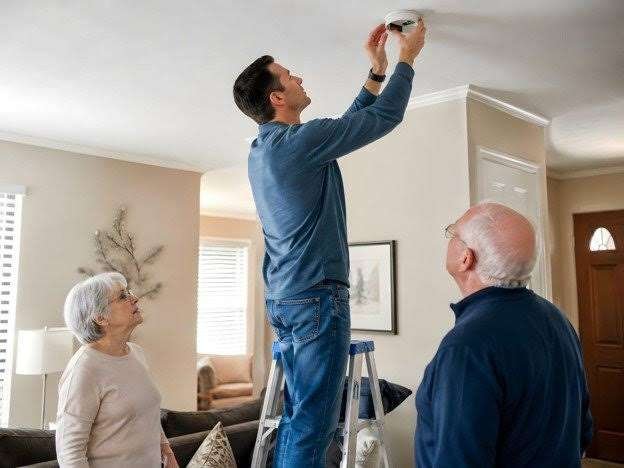
Smoke alarms and suitable fire detection systems can alert occupants when a potential fire condition is detected. This warning may provide valuable time to follow an emergency plan and contact emergency services.
Installing Suitable Smoke Alarms
The location and type of alarm should be appropriate for the building and follow manufacturer instructions and applicable safety requirements.
Families should consider whether warnings can be noticed in bedrooms, living areas, and other occupied spaces. A qualified fire safety professional can assess the most appropriate arrangement.
Accessible Warning Devices
An older person with hearing or vision difficulties may benefit from additional warning features.
Depending on individual requirements, these may include:
– Flashing visual alerts.
– Vibrating notification devices.
– Audible alarms with suitable warning characteristics.
– Interconnected alarms that provide warnings in multiple areas.
– Accessible emergency communication arrangements.
The purpose is to make sure that an occupant can recognise a warning promptly.
Regular Testing and Maintenance
An alarm that does not work properly cannot provide dependable protection.
Families and property managers should follow the manufacturer’s instructions for testing, cleaning, battery replacement, inspection, and equipment replacement. Larger installations should receive professional maintenance according to their design and applicable requirements.
4. Choosing a Fire Alarm System in Pakistan
When considering a Fire alarm system in Pakistan, households should focus on suitability, reliability, and the needs of everyone living in the property.
A small home may require a different arrangement from an apartment building, residential care facility, hospital, or multi-storey property.
Important considerations include:
– The size and layout of the building.
– The number of occupied rooms and floors.
– The needs of people with hearing or vision difficulties.
– Whether the system provides suitable audible and visual warnings.
– The reliability of its power supply.
– The availability of professional installation and maintenance.
– Compliance with relevant building and fire safety requirements.
Families should avoid choosing equipment based only on its purchase price. A system must be appropriate for the building and its occupants.
The Building Code of Pakistan – Fire Safety Provisions 2016 is an important national reference for building fire safety. The specific requirements applicable to a property depend on its characteristics, occupancy, and relevant local regulations.
For complex installations, qualified professionals should assess the design, installation, commissioning, and maintenance arrangements.
5. Creating an Accessible Emergency Escape Plan
An emergency escape plan should consider the abilities and needs of every household member. For an elderly person, this means thinking carefully about mobility, hearing, vision, and whether assistance will be required.
Identify Suitable Exit Routes
Identify the safest available routes from regularly occupied rooms to a safe outdoor location.
Consider whether the older adult can use the route comfortably. Doorways should be accessible, and pathways should remain free from stored items and other obstructions.
If the usual route involves stairs that the person cannot safely use, seek professional advice about suitable arrangements for that building.
Keep Exits Accessible
Avoid storing furniture, boxes, shoes, or household equipment in corridors and near doors.
Doors and exit routes should remain usable without unnecessary difficulty. Building owners and managers should also ensure that shared corridors and emergency exits are not blocked.
Select an Outdoor Meeting Point
Choose a safe meeting place outside the building where family members can gather after leaving.
Everyone should know its location. This makes it easier to confirm who has reached safety.
Agree on Assistance Arrangements
If an older adult needs help moving around, family members or caregivers should agree on responsibilities in advance.
The plan should identify who will provide assistance and how that person will communicate during an emergency. Avoid relying on an arrangement that depends on someone who may not always be present.
Discuss the Plan Regularly
Explain the emergency plan in simple language and make sure the older person understands it.
Practise appropriate evacuation arrangements without creating unnecessary physical strain or putting anyone at risk. If mobility support is needed, consult a relevant professional about safe arrangements.
6. Supporting Older Adults with Limited Mobility
Mobility needs should be considered before an emergency occurs.
A home can be made more accessible through practical improvements that also benefit other household members.
Improve Pathway Access
Keep commonly used routes clear and ensure that walking aids can be reached easily.
Remove unnecessary obstacles and address loose floor coverings or other hazards that could make movement difficult.
Improve Lighting
Good lighting can help older adults recognise their surroundings and locate doors and corridors.
Emergency lighting may also be an important feature in buildings where it is required. Property owners should ensure that installed systems are maintained properly.
Consider Building Layout
People living on upper floors may face additional challenges if stairs are difficult to use.
Building owners and managers should consider accessible evacuation arrangements when developing fire safety plans. Where necessary, qualified professionals should assess the building and recommend suitable measures.
Avoid Unsafe Lifting
Family members should not attempt to carry or move an older person in a way that could injure either individual.
Assistance arrangements should be discussed in advance and based on appropriate professional advice.
7. Helping Older Adults with Hearing or Vision Difficulties
Accessible communication is an important part of emergency preparation.
For People with Hearing Difficulties
Families should consider whether an older adult can hear alarms from their bedroom and other regularly occupied areas.
Where standard audible warnings may not be sufficient, suitable visual or vibrating notification devices may be considered.
It is also useful to agree on a simple way to communicate urgent information, particularly when the person cannot hear spoken instructions clearly.
For People with Vision Difficulties
Exit routes should be familiar, well-lit, and free from unnecessary obstacles.
Emergency instructions can be explained verbally and provided in a format the person can understand. Large, clear signs may help in shared residential buildings.
Families should avoid frequently changing furniture arrangements in important pathways.
8. The Role of Family Members and Caregivers
Family members and caregivers play an important role in helping older adults prepare for fire emergencies.
Their responsibilities should focus on prevention, communication, and practical support.
Discuss Safety Without Removing Independence
Older adults should be involved in decisions about their safety. Families can ask what assistance would be helpful and explain why certain precautions matter.
A respectful approach makes it easier to develop a plan that the person understands and feels comfortable following.
Check Household Equipment
Regularly look for visible damage to electrical cables, plugs, appliances, and other household equipment.
Arrange professional inspection or repair when needed. Do not attempt technical repairs without suitable qualifications.
Keep Emergency Information Accessible
Important contact information and the household emergency plan should be easy to locate.
Family members and caregivers should know whom to contact and where everyone should meet after leaving the building.
Coordinate with Building Management
In apartment buildings and shared residential properties, families should understand the building’s evacuation arrangements.
Building management should be informed about accessibility concerns that may affect safe evacuation, while respecting the older resident’s privacy.
9. Fire Safety in Hospitals and Residential Care Facilities
Hospitals and care facilities may accommodate people who cannot evacuate independently. This makes organised fire safety arrangements especially important.
Facility management should ensure that fire detection, alarm, emergency lighting, and evacuation arrangements are appropriate for the building and its occupants.
Important considerations include:
– Clearly assigned staff responsibilities.
– Accessible emergency communication.
– Unobstructed corridors and exits.
– Suitable evacuation arrangements for people with limited mobility.
– Regular inspection and maintenance of safety equipment.
– Staff awareness and appropriate emergency training.
– Coordination with local emergency services.
In healthcare environments, evacuation may require additional planning because some residents or patients depend on assistance from trained staff.
The facility should have a documented emergency plan that reflects the needs of its occupants and applicable requirements.
10. Fire Safety Awareness in Pakistan
Fire safety awareness can help families and communities identify risks before an emergency occurs.
In Pakistan, the Pakistan Engineering Council’s Building Code of Pakistan – Fire Safety Provisions 2016 provides an important framework for building fire safety. Punjab Civil Defence also identifies fire detection and alarm systems, firefighting arrangements, fire safety plans, emergency exits, and evacuation planning among the measures considered during inspections.
The Punjab Civil Defence Department also provides training and awareness activities covering fire safety, first aid, and evacuation drills.
These resources highlight the importance of combining equipment with planning and awareness.
Families should seek information from relevant local authorities and qualified safety professionals when assessing a property or arranging fire protection measures.
11. Common Fire Safety Mistakes to Avoid
Even when families understand the importance of fire safety, some preventable mistakes can weaken their preparations.
Ignoring Accessibility Needs
A plan that works for one household member may not work for an older person with limited mobility or sensory difficulties.
Include the elderly person’s needs when developing the emergency plan.
Depending on One Warning Method
An audible alarm may not be sufficient for someone with hearing loss.
Consider whether additional accessible warning arrangements are necessary.
Blocking Corridors and Exits
Stored items, furniture, and other obstacles can make evacuation more difficult.
Keep all escape routes clear and accessible.
Forgetting Maintenance
Fire alarms and other safety equipment require appropriate testing and maintenance.
Follow manufacturer instructions and arrange professional servicing where necessary.
Leaving Older Adults Out of Planning
An emergency plan is less useful if the person expected to follow it does not understand it.
Discuss the arrangements clearly and involve older adults in decisions that affect their safety.
12. A Practical Fire Safety Checklist for Elderly People
Families and caregivers can use this checklist as a starting point for reviewing household safety.
– [ ] Suitable smoke alarms or fire detection equipment are installed where appropriate.
– [ ] Warning devices can be noticed by older occupants.
– [ ] Additional visual or vibrating alerts are considered where needed.
– [ ] Electrical equipment is maintained and damaged items are addressed.
– [ ] Cooking and heating appliances are used according to instructions.
– [ ] Corridors, doorways, and exits remain clear.
– [ ] Emergency routes are accessible to the older person.
– [ ] A safe outdoor meeting point has been selected.
– [ ] Assistance arrangements are agreed upon where necessary.
– [ ] Family members and caregivers understand their responsibilities.
– [ ] Building management has been consulted about relevant accessibility concerns.
– [ ] Fire detection and other safety equipment receive appropriate maintenance.
This checklist is a general guide. It does not replace a professional fire safety assessment or the requirements that apply to a particular building.
Conclusion
Fire safety for older adults requires more than installing alarms or keeping firefighting equipment in a building. It involves understanding individual needs, reducing household hazards, providing reliable warnings, maintaining accessible escape routes, and agreeing on suitable assistance arrangements.
A suitable Fire alarm system in Pakistan can provide an important early warning, particularly when it is properly selected, installed, and maintained. However, families must also consider whether older occupants can hear, see, or otherwise recognise its warning.
Family members, caregivers, property owners, and building managers all have a role in creating safer environments. By involving elderly people in planning, addressing accessibility concerns, and maintaining appropriate safety equipment, they can improve emergency preparedness.
The most important priority during a fire is to reach safety and contact the appropriate emergency service. Older adults should not be expected to tackle a dangerous fire themselves.
Preparation, awareness, and accessible safety arrangements can help protect elderly people and make homes and shared buildings safer for everyone.
Frequently Asked Questions
1. Why is fire safety especially important for elderly people?
Some older adults may experience mobility, hearing, or vision difficulties that affect how quickly they recognise a warning and reach safety. A suitable emergency plan and accessible safety arrangements can help address these needs.
2. How can a fire alarm protect older adults?
A suitable fire alarm or smoke detection system can provide an early warning when it detects a potential fire. This may give occupants more time to follow their emergency plan and reach safety.
3. What fire alarm features may help an elderly person with hearing difficulties?
Depending on individual needs, visual alerts, vibrating notification devices, and other accessible warning features may be appropriate. A qualified professional can help assess the most suitable arrangement.
4. How can families make a home safer for elderly people?
Families can keep pathways clear, maintain electrical equipment, install suitable smoke alarms, improve lighting, and develop an emergency plan that considers the older person’s mobility and communication needs.
5. What should an elderly person do when a fire alarm sounds?
The person should follow the agreed