Fire incidents can happen in homes, offices, factories, schools, shopping centres, restaurants, warehouses, and other buildings. A small fire may become a serious emergency when people do not know how to respond. While installing fire protection equipment is important, equipment alone cannot guarantee safety. People must also understand how to recognise fire risks, respond to warning signals, follow evacuation procedures, and protect themselves and others.
This is where fire safety training becomes essential. It prepares individuals to respond calmly and responsibly during an emergency. Proper training helps employees, students, homeowners, and building occupants understand their responsibilities before an incident occurs.
In Pakistan, fire safety awareness is particularly important because buildings may contain electrical equipment, gas connections, generators, kitchens, storage areas, and other potential fire hazards. Regular training can help people recognise these risks and understand the safety arrangements available in their surroundings.
A reliable fire protection plan should combine awareness, suitable equipment, emergency procedures, and regular practice. Understanding the role of a fire alarm system in Pakistan is also an important part of this approach because occupants must know what an alarm sounds like and what action they should take when it activates.
What Is Fire Safety Training?
Fire safety training is an educational process that teaches people how to prevent fires, recognise hazards, respond to alarms, and follow emergency procedures. It focuses on awareness and preparedness rather than expecting ordinary occupants to act as professional firefighters.
Training can take place in workplaces, educational institutions, residential buildings, hospitals, hotels, factories, and commercial properties. Its content should reflect the type of building, the activities performed there, and the risks associated with its environment.
A basic training programme normally covers:
– Common causes of fires and how to recognise hazards.
– The importance of smoke detectors and alarm systems.
– Emergency exits and evacuation routes.
– Assembly points and headcounts.
– Responsibilities of designated safety personnel.
– General awareness of firefighting equipment.
– Emergency communication and reporting.
– Procedures for assisting people who may need additional support.
The purpose is to help everyone understand what to do without creating confusion or unnecessary risks.
Why Fire Safety Training Matters in Pakistan
Pakistan has a wide range of residential, commercial, and industrial buildings. Offices, shopping centres, educational institutions, factories, hospitals, and apartment complexes often have different fire risks.
Electrical faults, overloaded connections, cooking activities, heating equipment, gas-related incidents, poor housekeeping, and unsafe storage practices can all contribute to fire hazards.
Training helps people understand that fire prevention is a shared responsibility. Building owners may arrange safety equipment and maintenance, but occupants must also know how to recognise warning signs and respond appropriately.
1. It Improves Awareness of Fire Hazards
Many fire incidents begin with conditions that people overlook. Damaged electrical equipment, blocked exits, poor housekeeping, and improperly maintained appliances can create unnecessary risks.
Training teaches people to notice these conditions and report them to the responsible person. This makes fire prevention part of everyday behaviour instead of something considered only during emergencies.
2. It Reduces Panic During Emergencies
An unexpected alarm can create confusion, particularly in crowded buildings. People may not know which exit to use or where to gather after leaving the building.
Regular training helps occupants become familiar with emergency arrangements. When people understand the procedures in advance, they are more likely to respond calmly and follow instructions.
3. It Encourages Responsible Use of Safety Equipment
Buildings may contain smoke detectors, fire alarms, extinguishers, emergency lighting, sprinklers, and other protective equipment.
Training helps occupants understand the purpose of these systems and the importance of keeping them accessible and maintained. It also explains that equipment should only be used by appropriately trained people when conditions are safe and the situation is suitable.
4. It Supports Workplace Safety
Employees spend significant time inside workplaces, where machinery, electrical equipment, storage areas, and daily operations may create different hazards.
Fire safety training helps workers understand reporting procedures, evacuation arrangements, and their responsibilities. It also supports a workplace culture in which employees take safety concerns seriously.
Understanding the Role of a Fire Alarm System
A fire alarm system is an important part of a building’s overall safety arrangements. Its main purpose is to detect or identify signs of fire and alert occupants so that they can follow the emergency plan.
Depending on the building and system design, a fire alarm installation may include smoke detectors, heat detectors, manual call points, control panels, sounders, and visual warning devices.
However, installing an alarm system is only one part of fire preparedness. Occupants must understand what the warning means and how to respond.
For example, people should know:
– What the building’s fire alarm sounds like.
– Which warning signals require evacuation.
– Where the nearest approved exit routes are located.
– Where the designated assembly point is.
– Who is responsible for communicating with emergency services.
– How to report concerns about damaged or malfunctioning equipment.
The system should be inspected and maintained by qualified professionals according to applicable requirements and manufacturer guidance.
In Pakistan, the Building Code of Pakistan Fire Safety Provisions 2016 provides a framework for fire protection and life safety. It identifies fire alarm and detection systems, emergency response plans, and fire drills among important fire safety provisions for applicable buildings. Requirements should be checked with the relevant Authority Having Jurisdiction.
Main Types of Fire Safety Training
Not every building requires exactly the same training programme. A suitable programme should reflect the people using the premises and the hazards associated with the property.
1. Basic Fire Awareness Training
Basic fire awareness training is suitable for ordinary building occupants. It introduces common fire hazards, warning systems, evacuation procedures, and reporting responsibilities.
Participants learn why fire prevention matters and how their everyday decisions can influence building safety.
This type of training is useful in offices, schools, residential buildings, shops, and other shared environments.
2. Workplace Fire Safety Training
Workplace training focuses on hazards connected with specific jobs and working environments.
For example, office employees may need awareness of electrical equipment and evacuation arrangements. Factory workers may require additional information about machinery, production areas, storage practices, and site-specific emergency procedures.
Employers should make sure that employees understand the safety arrangements relevant to their duties.
3. Fire Warden Training
Some organisations appoint designated employees as fire wardens or emergency coordinators.
Their responsibilities may include supporting evacuation arrangements, communicating safety information, helping direct occupants towards approved exits, and reporting concerns to emergency personnel.
The exact responsibilities should be clearly documented. Fire wardens should not be expected to enter dangerous areas or perform tasks beyond their training.
4. Fire Drill Training
Fire drills allow occupants to practise the building’s evacuation arrangements in a controlled and organised manner.
A drill can help identify problems such as unclear instructions, blocked routes, confusion about assembly points, or difficulties communicating with occupants.
After each drill, the responsible team should review what happened and identify improvements.
5. Specialised Training for Designated Personnel
Certain workplaces may require more specialised training for employees with additional safety responsibilities.
This may include emergency coordination, reporting procedures, communication arrangements, and equipment awareness.
Specialised practical instruction should be delivered by qualified trainers and should reflect the relevant risks and applicable safety requirements.
How to Conduct Fire Safety Training Effectively
An effective training programme should be organised, understandable, and relevant to the building. A general presentation may introduce important ideas, but people also need to understand how those ideas apply to their own surroundings.
Step 1: Identify Potential Fire Risks
The first stage is understanding the building and its activities.
A workplace may contain electrical rooms, kitchens, storage spaces, machinery, fuel-related areas, or other locations with particular hazards. A residential building may have different concerns involving cooking, electrical appliances, and shared escape routes.
A suitable risk assessment helps identify the subjects that should receive attention during training.
Step 2: Explain the Emergency Plan
Every building should have clear emergency arrangements appropriate to its occupancy and risks.
Training should explain how occupants receive warnings, which routes they should use, where they should assemble, and how they can report an emergency.
The plan should also consider visitors, children, older occupants, and people who may need assistance during evacuation.
Step 3: Introduce the Fire Protection Equipment
Participants should become familiar with the safety equipment installed in their building.
This may include:
– Fire alarm and detection systems.
– Portable fire extinguishers.
– Fire hydrants and sprinkler systems.
– Emergency lighting.
– Exit signs.
– Fire doors and protected escape routes.
Training should explain the purpose of each item and the importance of keeping it accessible. Equipment-specific practical instruction should only be provided by qualified personnel in a properly controlled setting.
Step 4: Explain Alarm Response
People should know how to respond when an alarm activates.
Training should make clear that occupants must follow the building’s emergency plan, leave through approved evacuation routes, avoid unnecessary delays, and proceed to the designated assembly point.
They should not return to collect belongings or re-enter the building until authorised by the responsible emergency personnel.
Step 5: Practise the Evacuation Plan
Fire drills help turn written procedures into familiar actions.
A well-organised drill should follow the approved emergency plan and avoid creating unnecessary hazards. The responsible team should communicate the purpose of the exercise and make suitable arrangements for people who need assistance.
Step 6: Review Training Results
Training should not end when a session finishes. Organisations should review participant understanding, drill observations, and any problems identified.
If people are confused about an exit route or do not understand the alarm signals, those issues should be addressed before the next exercise.
The Importance of Fire Drills
Fire drills are a valuable part of fire safety training because they allow occupants to practise evacuation procedures.
A written plan may look clear, but a real building can present challenges. People may be unfamiliar with staircases, exit signs, assembly points, or the responsibilities of designated staff.
Regular drills help identify these problems.
After an exercise, the safety team should review:
– Whether occupants understood the alarm.
– Whether evacuation routes were clear.
– Whether people followed the expected procedures.
– Whether visitors and people needing assistance were considered.
– Whether communication arrangements worked.
– Whether everyone reached the correct assembly area.
– Whether any improvements are necessary.
The aim should be learning and improvement, not blaming individuals for mistakes.
Fire Safety Training for Different Environments
Residential Buildings
Homeowners and residents should understand common household fire risks and know how to leave the property safely.
Families should discuss escape routes, meeting points, and emergency communication. Children should receive age-appropriate safety education and know how to seek help from a responsible adult.
Apartment buildings should also communicate shared evacuation arrangements to residents.
Offices and Commercial Buildings
Offices may contain electrical equipment, printers, kitchens, storage rooms, and crowded working areas.
Employees should understand alarm signals, evacuation routes, and the location of assembly points. Visitors should also receive clear emergency information where appropriate.
Building management should ensure that exit routes remain accessible.
Schools and Educational Institutions
Schools should provide fire safety education that is suitable for students, teachers, and support staff.
Students need to understand the importance of following instructions, leaving belongings behind during an evacuation, and remaining with their group at the assembly point.
Teachers and designated staff should understand their responsibilities under the institution’s emergency plan.
Factories and Industrial Facilities
Industrial facilities may contain machinery, electrical installations, storage areas, and materials that require additional safety controls.
Training should reflect the specific risks of the site. Employees should understand reporting procedures, restricted areas, emergency communication, and evacuation arrangements.
Specialised industrial safety instruction should be delivered by qualified professionals.
Hospitals and Healthcare Facilities
Hospitals have additional evacuation challenges because patients may have limited mobility or require continuous care.
Training should explain the responsibilities of healthcare teams, support staff, security personnel, and management during emergencies.
Emergency arrangements must consider patient needs and the building’s specific evacuation procedures.
Common Fire Safety Training Mistakes to Avoid
Even organisations that arrange training may fail to achieve the intended results if their programmes are poorly planned.
1. Treating Training as a One-Time Activity
A single session cannot prepare people for every future situation. Staff members change, buildings are renovated, and emergency arrangements may be updated.
Training should therefore be reviewed periodically and repeated when necessary.
2. Ignoring Building-Specific Risks
Using the same general presentation for every workplace may leave important hazards unaddressed.
Training should reflect the actual building, its activities, and the people who use it.
3. Failing to Explain Alarm Signals
People may hear an alarm without understanding what it means.
Training should explain the building’s warning arrangements and the action occupants are expected to take.
4. Neglecting Visitors and Contractors
Visitors, delivery workers, and contractors may not know the building’s evacuation arrangements.
Organisations should consider how these individuals will receive emergency information and instructions.
5. Not Reviewing Fire Drills
A drill is less useful when nobody evaluates its results.
The responsible team should record observations, identify weaknesses, and make improvements to the emergency plan.
6. Overlooking People Who Need Assistance
Some occupants may need additional support because of mobility, sensory, or other accessibility requirements.
Emergency planning should consider these needs in advance rather than leaving arrangements until an incident occurs.
How Technology Supports Fire Safety Training
Technology can make fire safety awareness easier to communicate and maintain.
Fire alarm systems provide warnings that alert occupants to potential danger. Smoke and heat detectors support early detection, while emergency lighting and exit signs help people identify approved routes.
Digital training materials can also help organisations share safety information with employees. Videos, presentations, electronic checklists, and training records may support regular learning.
However, technology should support—not replace—clear emergency procedures and practical awareness.
A building with modern equipment still needs people who understand what the equipment does and how to respond when it activates.
Fire Safety Training and Regulations in Pakistan
Fire safety responsibilities in Pakistan may involve national provisions, provincial requirements, local building regulations, and instructions from the relevant authorities.
The Building Code of Pakistan Fire Safety Provisions 2016 provides a framework for fire prevention, detection, protection, and life safety. It addresses applicable requirements for buildings and identifies measures such as fire detection systems, emergency response plans, and fire drills.
In Punjab, the Civil Defence Department identifies fire detection and alarm systems, firefighting arrangements, fire safety plans, emergency fire control rooms, emergency exits, and evacuation plans among the measures considered during fire safety inspections.
Building owners and organisations should consult the relevant local authority to understand which requirements apply to their premises.
For formal training, organisations can also explore relevant programmes offered through Pakistan’s Civil Defence training system. Course availability and eligibility should be confirmed directly with the relevant institution.
How to Build a Long-Term Fire Safety Culture
Fire safety should become part of everyday organisational behaviour.
Management should communicate safety responsibilities clearly and make sure employees know how to report hazards. Safety equipment should remain accessible, and maintenance concerns should be addressed promptly.
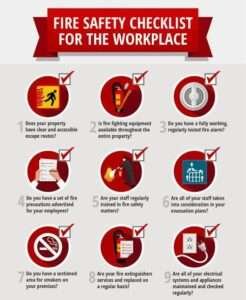
A long-term approach can include:
1. Reviewing fire risks regularly.
2. Providing suitable training to new employees.
3. Refreshing awareness for existing staff.
4. Conducting planned evacuation drills.
5. Maintaining fire alarm and detection equipment.
6. Keeping emergency routes clear.
7. Updating emergency plans when building conditions change.
8. Recording training and drill outcomes.
9. Addressing identified weaknesses.
10. Encouraging everyone to report unsafe conditions.
Management commitment is important, but every occupant has a role in maintaining a safer environment.
Conclusion
Fire safety training is an essential part of protecting people and property. It helps individuals understand fire hazards, recognise warning signals, follow evacuation procedures, and contribute to a safer environment.
In Pakistan, homes, schools, offices, factories, hospitals, and commercial buildings can all benefit from organised fire safety awareness. A suitable programme should reflect the building’s risks, explain the role of fire protection equipment, and include regular reviews and evacuation practice.
A properly maintained fire alarm system in Pakistan can provide an important warning when a potential fire is detected, but its effectiveness also depends on whether occupants understand how to respond. Combining suitable equipment with clear procedures and regular training creates a stronger approach to fire preparedness.
Fire safety is not simply about meeting a requirement