Fire safety is an important responsibility for every home, office, factory, warehouse, school, shopping centre, and commercial building. Fires can occur unexpectedly because of electrical faults, cooking accidents, poorly maintained equipment, or unsafe storage practices. Even a small incident can cause significant property damage, interrupt business operations, and put human lives at risk.
Many people believe that having fire extinguishers or installing alarm equipment is enough to protect a building. However, effective fire protection requires more than purchasing safety equipment. Regular inspections, proper maintenance, employee awareness, and emergency planning are equally important.
This is where fire safety checklists become valuable. A checklist provides a simple and organized way to review important safety arrangements, identify potential hazards, and make sure necessary precautions are not overlooked.
In Pakistan, fire safety awareness is particularly important in residential communities, industrial facilities, commercial markets, and public buildings. A structured checklist can help property owners and managers maintain safer environments while improving their understanding of fire protection responsibilities.
Whether it involves checking electrical installations, inspecting emergency exits, or maintaining a reliable fire alarm system in Pakistan, a checklist makes safety management easier and more consistent.
This article explores five important reasons fire safety checklists matter more than people think and explains how they can contribute to safer homes and workplaces.
1. Fire Safety Checklists Help Identify Potential Hazards Early
One of the biggest advantages of a fire safety checklist is that it helps people recognize potential hazards before they develop into serious problems.
Many fire risks are associated with everyday activities. Damaged electrical cables, overloaded circuits, combustible materials stored near heat sources, and poorly maintained machinery can all create unsafe conditions.
Without regular inspections, these problems may remain unnoticed.
A checklist gives property owners and safety managers a structured way to examine different areas of a building.
Important inspection points may include:
– Electrical wiring and connections.
– Heating and cooling equipment.
– Kitchen appliances and cooking areas.
– Storage rooms and combustible materials.
– Machinery and industrial equipment.
– Waste disposal arrangements.
– Fire detection equipment.
– Emergency exits and corridors.
For example, an office manager conducting a routine inspection may discover that electrical equipment has been placed too close to combustible materials. A warehouse supervisor may identify packaging waste accumulating near an electrical installation.
Identifying these problems early allows responsible people to arrange suitable corrective measures.
The purpose of a checklist is not simply to identify hazards. It also encourages people to take preventive action before an emergency occurs.
2. Checklists Help Ensure Fire Safety Equipment Is Maintained
Installing fire safety equipment is an important step, but equipment must remain in suitable working condition to provide reliable protection.
Over time, safety equipment may develop faults, become damaged, or require professional servicing. If inspections are ignored, building occupants may assume that their equipment is working when it actually requires attention.
A fire safety checklist helps ensure that important equipment receives regular attention.
Depending on the building’s requirements, inspection points may include:
– Fire alarm systems.
– Smoke and heat detectors.
– Manual call points.
– Fire extinguishers.
– Emergency lighting.
– Fire hydrants and hose reels.
– Sprinkler systems.
– Safety signs and exit indicators.
A suitable fire alarm system in Pakistan is an important consideration for buildings that require early detection and occupant notification arrangements.
However, simply installing an alarm does not guarantee that it will operate correctly during an emergency. Regular testing and professional maintenance are essential.
Building managers should follow manufacturer instructions, applicable standards, and recommended inspection schedules.
Checklist records can also help management identify recurring equipment problems and arrange repairs without unnecessary delays.
This makes routine maintenance a more organized responsibility rather than something that is remembered only when a problem occurs.
3. Fire Safety Checklists Improve Emergency Preparedness
An emergency can create confusion when people do not understand what they should do.
Employees may be unfamiliar with evacuation routes, visitors may not know where emergency exits are located, and residents may not know where to gather after leaving a building.
A fire safety checklist helps review whether the necessary emergency arrangements are available and understood.
A useful emergency preparedness review may cover:
– Availability of an emergency evacuation plan.
– Clear and accessible escape routes.
– Visible emergency exit signs.
– Functional emergency lighting where required.
– Designated outdoor assembly points.
– Emergency contact information.
– Staff responsibilities during an emergency.
– Arrangements for people who need additional assistance.
For workplaces, management should ensure that employees understand their responsibilities and know how to follow emergency instructions.
Families can also use simple checklists to review their home escape plans and make sure everyone knows the designated meeting point.
Regular evacuation exercises can help identify weaknesses in emergency arrangements. These exercises should be properly planned and supervised.
A checklist makes it easier to review whether emergency plans are practical, updated, and suitable for the actual building.
4. Checklists Encourage Employee Awareness and Responsibility
Fire safety should not be the responsibility of one person alone. Everyone who works or lives in a building has a role in maintaining a safe environment.
Employees may notice damaged equipment, blocked corridors, unsafe storage arrangements, or other problems during their daily activities.
However, without clear procedures, they may not know how to report these issues.
Fire safety checklists encourage employees to participate in workplace safety.
Businesses can assign appropriate inspection responsibilities to supervisors, maintenance teams, and other trained personnel.
Employees should understand:
– How to recognize common fire hazards.
– How to report unsafe conditions.
– Where emergency exits are located.
– What to do when an alarm sounds.
– Where firefighting equipment is located.
– How to follow evacuation instructions.
– Why safety procedures must be followed.
New employees should receive appropriate fire safety information during workplace orientation.
Refresher training and regular safety discussions can help maintain awareness over time.
For larger organizations, maintaining inspection and training records can also help managers understand which safety responsibilities have been completed and which require further attention.
When employees actively participate in fire prevention, safety becomes part of everyday workplace culture.
5. Fire Safety Checklists Help Reduce Property Damage and Business Disruption
Fire incidents can have consequences that extend far beyond the immediate damage to a building.
Businesses may lose inventory, equipment, important documents, and operational capacity. A serious incident may also affect customers, employees, suppliers, and business partners.
Homes may experience significant property damage and disruption to family life.
Although no checklist can guarantee that a fire will never happen, regular safety reviews can help identify preventable hazards and improve emergency preparedness.
For businesses, checklist-based inspections can support:
Better maintenance: Problems with equipment and building facilities can be identified earlier.
Improved organization: Storage areas, electrical installations, and emergency routes receive regular attention.
Reduced operational disruption: Better preparation may help limit the consequences of unexpected incidents.
Improved safety management: Responsibilities become easier to assign and monitor.
Greater confidence: Employees, customers, and visitors can feel more confident when safety arrangements are properly managed.
The cost of routine inspections is generally easier to plan for than the potential consequences of an unmanaged fire emergency.
Fire safety should therefore be treated as an investment in people, property, and business continuity.
Additional Areas Every Fire Safety Checklist Should Cover
Although the five reasons above explain why checklists are important, effective fire safety management requires attention to several specific areas.
Electrical Safety
Electrical installations should be reviewed regularly by qualified professionals.
Inspection points may include damaged cables, overloaded circuits, faulty connections, and poorly maintained equipment.
Electrical panels should remain accessible, and unauthorized modifications should be avoided.
Kitchen and Cooking Safety
Cooking areas require suitable management because heating appliances and cooking equipment can introduce fire risks.
Families and businesses should keep combustible materials away from heat sources, maintain appliances properly, and ensure that cooking areas remain organized.
Commercial kitchens should follow appropriate fire protection and maintenance requirements.
Storage and Housekeeping
Poor storage arrangements can increase fire risks and interfere with emergency movement.
Cardboard, paper, packaging, fabrics, and other combustible materials should be managed appropriately.
Walkways, corridors, and designated emergency exits should remain unobstructed.
Fire Detection and Alarm Arrangements
Smoke detectors, heat detectors, alarm panels, and notification devices should be suitable for the building and maintained according to relevant requirements.
Inspection records should identify any faults requiring professional attention.
Emergency Exits and Evacuation Routes
Emergency exits should be accessible, clearly identified, and appropriate for the building’s occupancy and layout.
Emergency lighting and exit signage should also be maintained where required.
Employee Training
Employees should receive appropriate instruction about fire prevention, alarm notifications, evacuation procedures, and emergency responsibilities.
Training should be reviewed periodically and updated when workplace arrangements change.
How to Create an Effective Fire Safety Checklist
A useful checklist should be easy to understand, relevant to the building, and practical to complete.
Businesses should avoid creating unnecessarily complicated documents that employees cannot use consistently.
The following steps can help:
Step 1: Identify the building’s risks
Consider the building’s activities, electrical installations, stored materials, machinery, and occupancy.
Step 2: Divide the building into inspection areas
Separate the premises into sections such as offices, kitchens, storage rooms, electrical areas, corridors, and production spaces.
Step 3: Include essential safety equipment
List the fire detection, alarm, firefighting, and emergency lighting equipment that needs inspection.
Step 4: Assign inspection responsibilities
Identify the responsible personnel and ensure they understand what they are expected to review.
Step 5: Record identified problems
Document damaged equipment, blocked exits, maintenance issues, and other safety concerns.
Step 6: Arrange corrective action
Assign responsibility for resolving problems and monitor progress until the necessary work is completed.
Step 7: Review the checklist regularly
Update the document whenever building layouts, equipment, occupancy, or operational activities change.
A checklist should support a wider fire safety management system. It cannot replace professional inspections, technical testing, or regulatory compliance assessments.
Fire Safety Checklist for Homes and Businesses in Pakistan
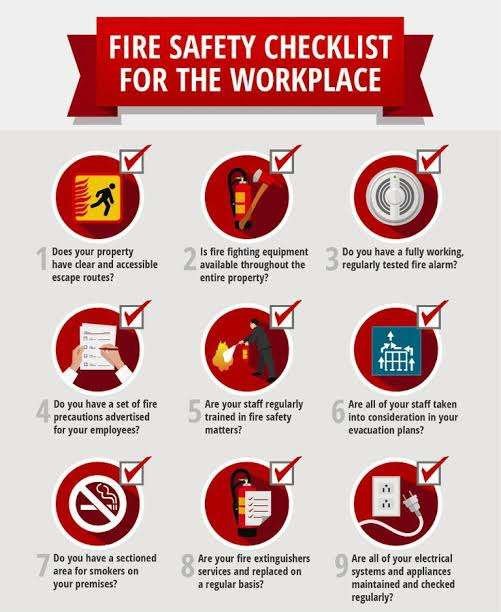
The following general checklist can help property owners and managers review important safety arrangements.
1. Fire Prevention
– [ ] Electrical wiring and equipment are maintained.
– [ ] Electrical circuits are not overloaded.
– [ ] Combustible materials are stored appropriately.
– [ ] Cooking equipment is managed safely.
– [ ] Waste is removed regularly.
– [ ] Heating equipment is used according to instructions.
2. Fire Detection and Protection
– [ ] Suitable fire detection equipment is installed.
– [ ] Fire alarm equipment is maintained.
– [ ] Smoke and heat detectors remain unobstructed.
– [ ] Fire extinguishers are accessible.
– [ ] Required firefighting equipment is inspected.
– [ ] Emergency lighting is maintained where required.
3. Emergency Preparedness
– [ ] An appropriate evacuation plan is available.
– [ ] Emergency exits remain clear.
– [ ] Exit signs are visible.
– [ ] Assembly areas are identified.
– [ ] Emergency contact details are available.
– [ ] Staff understand emergency responsibilities.
4. Training and Documentation
– [ ] Employees receive appropriate fire safety training.
– [ ] Inspection records are maintained.
– [ ] Maintenance issues are documented.
– [ ] Corrective actions are monitored.
– [ ] Emergency arrangements are reviewed regularly.
This checklist is a general guide. Actual inspection requirements depend on the building type, occupancy, hazards, applicable regulations, and professional recommendations.