Fire safety is an essential part of protecting people, buildings, businesses, and valuable property. A fire can start because of faulty electrical equipment, unsafe storage practices, cooking accidents, or poorly maintained machinery. Without proper precautions, even a small incident can quickly become a serious emergency.
In Pakistan, fire safety is an important responsibility for building owners, employers, property managers, and other people responsible for public and private premises. The Building Code of Pakistan — Fire Safety Provisions 2016 provides a national framework for fire prevention, life safety, and fire protection. Provincial departments and local authorities also play roles in inspections and enforcement, depending on the location and type of building. citeturn259210search24turn259210search0
Understanding these requirements helps people make informed decisions about building safety. Investing in preventive measures, such as suitable alarms, emergency exits, firefighting equipment, and staff training, can reduce risks and improve emergency preparedness.
This guide explains the importance of fire safety laws in Pakistan, the main areas of compliance, and why spending on prevention can make a significant difference.
1. Understanding Fire Safety Laws in Pakistan
Fire safety requirements are designed to reduce the likelihood of fires, help people recognise danger early, and provide safer ways to leave a building during an emergency.
The Building Code of Pakistan — Fire Safety Provisions 2016 was developed through the Pakistan Engineering Council (PEC) in collaboration with the National Disaster Management Authority (NDMA). Its purpose is to establish provisions addressing fire prevention, protection of buildings, and the safety of occupants. The code was formally published through a government notification in 2016. citeturn259210search24turn259210search9
However, fire safety compliance is not identical for every property. Requirements can depend on factors such as:
– The building’s location and applicable local regulations.
– Whether the premises are residential, commercial, industrial, or used for public gatherings.
– The size, height, layout, and occupancy of the building.
– The materials, equipment, and activities present.
– The applicable approval, inspection, and occupancy conditions.
For this reason, building owners should consult the relevant development authority, Civil Defence department, fire service, or qualified fire safety professional to establish which provisions apply to their premises.
Understanding the applicable rules is the first step towards building a reliable safety plan.
2. Why Fire Safety Compliance Matters
Fire safety requirements are not simply administrative obligations. They support practical measures that can protect lives and reduce disruption.
A fire can affect people who have little control over the condition of a building, including visitors, customers, tenants, students, and employees. Clear escape routes, working alarms, and accessible safety equipment help provide a coordinated response when danger occurs.
Compliance also encourages responsible property management. Regular inspections can identify blocked exits, damaged equipment, unsafe storage, and other concerns before they contribute to an emergency.
For businesses, prevention may help reduce property damage, interruptions to operations, inventory losses, and repair expenses. It can also improve employee confidence by demonstrating that management takes workplace safety seriously.
Meeting applicable requirements does not eliminate every fire risk, but it creates a more organised approach to prevention and emergency preparedness.
3. The Building Code of Pakistan — Fire Safety Provisions 2016
The Building Code of Pakistan — Fire Safety Provisions 2016 is an important reference for understanding fire protection and life safety in buildings.
It provides a framework for addressing matters such as fire prevention, building protection, and the safe movement of occupants during emergencies. The code’s application and enforcement should be considered alongside relevant federal, provincial, and local requirements. citeturn259210search24turn259210search26
Property owners should not assume that knowing the name of the code is enough to establish compliance. They need to understand which provisions apply to their building and whether additional requirements have been issued by the relevant authority.
A practical compliance process may include:
1. Identifying the authority responsible for the premises.
2. Reviewing the building’s approved plans and permitted use.
3. Determining the fire protection systems required for its occupancy and design.
4. Arranging professional assessments where necessary.
5. Keeping inspection, maintenance, and training records.
6. Addressing any deficiencies identified by the relevant authority or qualified professional.
These steps help turn legal requirements into everyday safety practices.
4. Fire Detection and Alarm Systems
Early warning is one of the most important elements of a building’s fire safety arrangements. A fire alarm system can alert occupants to a possible emergency, allowing them to begin evacuation procedures promptly.
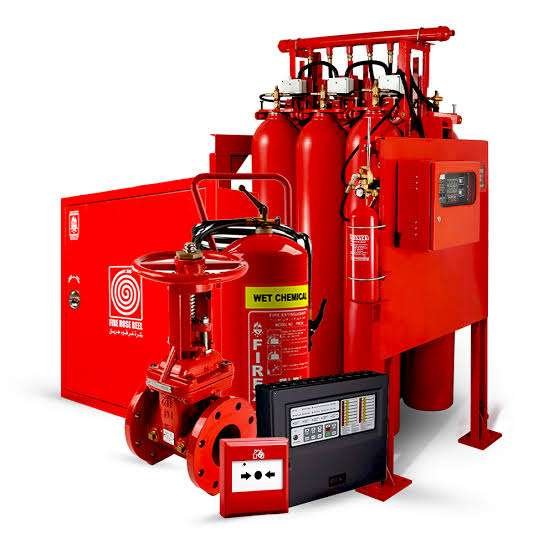
Depending on the building and its applicable requirements, a system may include smoke or heat detectors, manual alarm points, sounders, visual warning devices, and a control panel. The appropriate design depends on the premises, expected hazards, and applicable standards.
The Punjab Civil Defence Department lists fire detection and alarm systems among the safety measures covered by its inspection responsibilities for industries, commercial premises, and high-rise buildings. It also identifies other measures, including firefighting arrangements, fire safety plans, emergency control rooms, and evacuation planning. citeturn259210search0
When evaluating a fire alarm system in Pakistan, building owners should consider more than the initial purchase price. They should assess:
– Whether the system is appropriate for the building’s size and use.
– Whether its design meets applicable requirements.
– Whether devices are positioned by a qualified professional.
– Whether the system can be inspected, tested, and maintained.
– Whether occupants understand what the alarm means and how to respond.
An installed alarm is not a complete solution if it is disabled, poorly maintained, or misunderstood by occupants. Regular professional checks and staff awareness are essential parts of effective fire protection.
5. Firefighting Equipment and Emergency Preparedness
Fire safety arrangements may also require suitable firefighting equipment. Depending on the premises and applicable rules, this may include fire extinguishers, hydrants, sprinkler systems, and other approved equipment.
Different fires require different protective measures. Equipment should therefore be selected according to the hazards present, the building’s design, and the applicable standards. Selection, installation, and servicing should be handled by competent professionals.
The presence of equipment alone does not establish that a building is safe. Equipment must remain accessible, appropriately maintained, and suitable for its intended purpose. Staff should also understand that evacuation takes priority whenever a fire is spreading, smoke is present, or the situation is unsafe.
Occupants should never be expected to tackle a dangerous fire simply because equipment is available. They should follow the building’s emergency procedures and contact the appropriate emergency services.
A coordinated approach combines detection, warning, suitable protective equipment, and a clear evacuation plan.
6. Emergency Exits and Evacuation Plans
An emergency exit is useful only when people can find it and use it safely. Corridors, stairways, exit doors, and escape routes should be maintained according to the requirements applicable to the building.
Common concerns include blocked corridors, locked or obstructed exits, unclear signs, poor lighting, and stored materials that narrow escape routes. These issues can delay evacuation and create additional risks during an emergency.
A practical evacuation plan should explain:
– The available escape routes and exits.
– The designated assembly point outside the building.
– How occupants will receive emergency warnings.
– How visitors and people needing assistance will be supported.
– Who is responsible for coordinating evacuation.
– How occupants will be accounted for after leaving.
Building managers should ensure that the plan reflects the actual layout of the premises. Changes to rooms, partitions, occupancy, or building use may require the plan to be reviewed.
Fire drills help occupants become familiar with the process. Drills should be planned safely, communicated clearly, and reviewed afterwards so that any difficulties can be corrected.
7. Responsibilities of Building Owners and Business Operators
People responsible for buildings have an important role in maintaining safe premises. Their exact legal obligations depend on the relevant regulations, building type, approvals, and local authority requirements.
Practical responsibilities may include arranging required inspections, maintaining protective systems, keeping exits clear, ensuring safety signs are visible, and providing suitable emergency information to employees or occupants.
Business operators should also consider risks created by their daily activities. For example, kitchens, workshops, warehouses, factories, and electrical rooms may have different fire hazards and require different controls.
A responsible management approach includes:
– Scheduling inspections and maintenance.
– Recording defects and arranging appropriate repairs.
– Providing relevant staff training.
– Reviewing fire risks when the premises or activities change.
– Keeping required documents available for authorised inspections.
– Following instructions and corrective actions issued by the relevant authority.
Where a building is leased, owners, landlords, tenants, and operators should clarify their respective responsibilities. A lease agreement does not automatically remove any legal duties that apply to a particular party.
8. Fire Safety Inspections and Enforcement
Inspections help authorities assess whether applicable safety measures are in place. They may identify missing equipment, inadequate arrangements, or conditions that require corrective action.
Punjab Civil Defence states that it inspects fire safety measures at industrial premises, commercial properties, and high-rise buildings. Its published guidance also states that legal action may be initiated in cases of non-compliance under Rule 9 of the Civil Defence (Special Powers) Rules, 1951. The precise process and applicable requirements should be confirmed with the responsible authority. citeturn259210search0
Before an inspection, building managers can prepare by reviewing their records and arranging a professional assessment of the premises.
Useful preparation includes checking that:
– Required alarms and protective equipment are present and maintained.
– Escape routes remain clear.
– Emergency signs and instructions are visible.
– Maintenance and inspection records are organised.
– Staff know the emergency procedures.
– Previously identified deficiencies have been addressed.
No checklist can guarantee approval because the requirements depend on the building and the authority’s assessment. Owners should seek clarification directly from the relevant department when requirements are uncertain.
9. The Value of Investing in Fire Prevention
Fire prevention requires an investment of time and money, but the potential benefits extend beyond meeting formal requirements.
A well-planned safety budget may cover professional assessments, alarm systems, suitable firefighting equipment, emergency lighting, signage, training, and ongoing maintenance. The exact priorities should be based on the building’s risk profile and applicable requirements.
Small, regular investments can also help prevent avoidable problems. Replacing damaged equipment, arranging timely inspections, keeping exits clear, and teaching staff how to respond can improve preparedness without requiring a complete overhaul of the premises.
The costs of a fire may include property damage, lost stock, interrupted operations, repairs, and disruption to employees and customers. The consequences can be particularly serious when people cannot receive a timely warning or leave the building safely.
Prevention is therefore best viewed as part of responsible property management rather than an unnecessary expense.
10. Common Fire Safety Mistakes to Avoid
Even buildings with safety equipment can have preventable weaknesses. Common mistakes include:
Ignoring maintenance: Equipment may become unreliable when inspections and servicing are neglected.
Blocking escape routes: Stock, furniture, rubbish, or temporary storage should not obstruct designated exits and escape paths.
Overlooking staff training: Employees need to understand alarms, evacuation routes, assembly points, and their assigned responsibilities.
Choosing equipment without an assessment: A system that is suitable for one building may not be suitable for another.
Assuming one measure is enough: An alarm cannot replace escape routes, appropriate firefighting arrangements, risk assessment, and training.
Failing to document corrective action: Records help building managers track maintenance, defects, and follow-up work.
Avoiding these mistakes supports a consistent safety culture and makes it easier to identify concerns before an emergency occurs.
11. How to Build a Practical Fire Safety Compliance Plan
A straightforward plan helps property owners organise their responsibilities and monitor progress.
Step 1: Identify the applicable requirements. Contact the relevant building control, development, Civil Defence, or fire authority to understand the rules for the premises.
Step 2: Arrange a professional risk assessment. Have a competent person review the building’s layout, occupancy, potential fire hazards, and existing protective measures.
Step 3: Prioritise essential improvements. Address urgent hazards and deficiencies identified through the assessment or by the responsible authority.
Step 4: Install and maintain appropriate systems. Use qualified professionals for the design, installation, inspection, and servicing of alarms and other protective equipment.
Step 5: Prepare an evacuation plan. Make escape routes, exit information, and assembly arrangements clear to occupants.
Step 6: Train people and conduct drills. Provide relevant instructions and use planned drills to identify weaknesses in the evacuation process.
Step 7: Keep records and review progress. Record inspections, maintenance, training, and corrective actions. Review the plan when the building or its use changes.
This process helps make fire safety an ongoing responsibility instead of a one-time task.
Conclusion
Fire safety laws and building requirements in Pakistan provide an important foundation for protecting people and property. The Building Code of Pakistan — Fire Safety Provisions 2016 is a key reference, while provincial departments and local authorities help oversee relevant safety measures and compliance.
For building owners and businesses, the most effective approach is to understand the requirements that apply to their premises, arrange suitable professional assessments, maintain alarms and protective equipment, and prepare occupants for emergencies.
Investing in prevention can reduce avoidable risks, support business continuity, and contribute to safer homes, workplaces, and public buildings. Whether a property needs an upgraded alarm system, clearer escape routes, better maintenance, or staff training, taking action early can make a meaningful difference.
Frequently Asked Questions (FAQs)
1. What are the main fire safety regulations in Pakistan?
The Building Code of Pakistan — Fire Safety Provisions 2016 is a key national reference for fire prevention, building protection, and life safety. Applicable provincial and local rules, notifications, and approval conditions must also be considered.
2. Is a fire alarm system mandatory in every building in Pakistan?
Not necessarily under identical requirements for every building. Whether an alarm system is required, and what type is appropriate, depends on the applicable code, building use, design, and relevant authority’s requirements. Owners should confirm the rules for their premises.
3. Which department inspects fire safety measures in Pakistan?
The responsible department varies by location and property type. In Punjab, Civil Defence publishes guidance on inspecting fire safety measures in industrial, commercial, and high-rise premises. Building owners should contact the relevant local authority for their specific case.
4. What fire safety equipment should a commercial building have?
Depending on its risks and applicable requirements, a commercial building may need fire detection and alarm systems, suitable extinguishers, hydrants or sprinklers, emergency signs, and safe escape routes. A qualified professional and the relevant authority can help determine the required arrangements.
5. Why is fire safety maintenance important?
Regular maintenance helps identify defects and ensures that safety systems and equipment remain suitable for use. Inspections, maintenance records, staff training, and evacuation drills all contribute to better emergency preparedness.