Fire safety is an important responsibility for every home, office, school, shop, factory, warehouse, and public building. A small oversight, such as a blocked exit, damaged electrical socket, or poorly maintained alarm, can create serious risks during an emergency. Regular inspections help people identify these problems early and take appropriate action.
A fire safety checklist is a simple document that lists the important areas, equipment, and procedures that need attention. It helps building owners, managers, employees, and families understand what to inspect and when to arrange professional maintenance.
In Pakistan, fire safety deserves particular attention because buildings differ widely in their design, occupancy, electrical infrastructure, and emergency arrangements. A checklist can help property owners develop better habits and support compliance with applicable safety requirements.
This guide explains the essential fire safety checks, the importance of alarm systems, and how different types of buildings can improve their preparedness.
1. Why Are Fire Safety Checklists Important?
A checklist makes fire prevention more organised. Instead of relying on memory, responsible people can follow a written routine and record whether important safety measures have been reviewed.
The main benefits include:
– Early identification of hazards: Regular checks help identify damaged equipment, unsafe storage, and other concerns.
– Better emergency preparedness: People can confirm that alarms, exits, and emergency arrangements are ready.
– Improved maintenance: Inspection records help managers arrange servicing before equipment becomes unreliable.
– Greater awareness: Employees, residents, and students become more familiar with everyday safety responsibilities.
– Support for compliance: Written records can help demonstrate that a building’s safety arrangements are being reviewed.
A checklist does not replace a professional fire risk assessment. Instead, it provides a practical way to keep everyday safety tasks organised.
2. General Fire Safety Checklist for Every Building
Every property has different risks, but several basic checks apply to most buildings.
Building Condition and Housekeeping
Start by reviewing the general condition of the premises.
Check that:
– Corridors and stairways are free from unnecessary storage.
– Emergency exits are not blocked or locked in a way that prevents escape.
– Waste materials are removed regularly.
– Flammable materials are stored according to applicable safety requirements.
– Electrical rooms and other restricted areas are kept secure.
– Combustible decorations and materials are not placed carelessly near potential heat sources.
– Fire service access areas remain clear.
Good housekeeping reduces avoidable hazards and helps occupants move safely if evacuation becomes necessary.
Electrical Safety
Electrical faults are an important fire risk in residential and commercial properties. Damaged cables, defective sockets, unsuitable extensions, and overloaded electrical connections can create dangerous conditions.
The checklist should include:
– Checking for visibly damaged plugs, sockets, and cables.
– Looking for signs of overheating around electrical equipment.
– Avoiding overloaded sockets and extension cords.
– Ensuring electrical equipment is suitable for its intended use.
– Keeping electrical installations away from water and excessive heat.
– Arranging regular inspections by a qualified or licensed electrician.
– Recording reported electrical faults and confirming that professional repairs have been completed.
Never attempt electrical repairs without the required training and qualifications. Pakistan’s National Electric Power Regulatory Authority (NEPRA) advises the public to arrange wiring inspections through licensed electricians and avoid repairing electrical items independently.
Gas and Heating Safety
Homes, restaurants, and workplaces may use gas appliances or other heating equipment. These installations require suitable inspection and maintenance.
Include the following checks:
– Arrange professional inspection of gas appliances and connections.
– Keep the areas around heating equipment clear.
– Ensure appropriate ventilation is maintained.
– Pay attention to unusual smells or signs of equipment damage.
– Report suspected leaks or faults to the appropriate service provider.
– Ensure people know how to respond to a suspected gas emergency.
If a gas leak is suspected, leave the affected area, avoid operating electrical switches or creating ignition sources, and contact the appropriate emergency or gas service from a safe location.
3. Fire Alarm System Checklist
Early warning gives occupants valuable time to respond. A properly designed and maintained fire alarm system can detect signs of fire and alert people so they can follow the evacuation plan.
A fire alarm system in Pakistan should be selected according to the building’s size, layout, occupancy, and applicable regulations. The system may include smoke detectors, heat detectors, manual call points, control panels, sounders, and visual warning devices.
A regular inspection checklist should cover:
– Whether the installed system is appropriate for the building.
– Whether detectors and alarm devices are visibly undamaged.
– Whether the control panel displays any fault or warning indicators.
– Whether alarm devices can be heard or seen in relevant occupied areas.
– Whether backup power arrangements are maintained.
– Whether inspection and servicing records are up to date.
– Whether changes to the building have affected detector coverage.
– Whether responsible staff know how to report a fault.
Testing and servicing should follow the manufacturer’s instructions and applicable standards. Qualified fire safety professionals should carry out technical work.
Why Regular Alarm Maintenance Matters
An alarm system cannot provide dependable warning if it is neglected. Dust, physical damage, ageing components, power problems, or changes to a building can affect performance.
Property managers should keep a record of inspections, reported faults, servicing, and corrective work. Any fault should be referred promptly to a competent service provider.
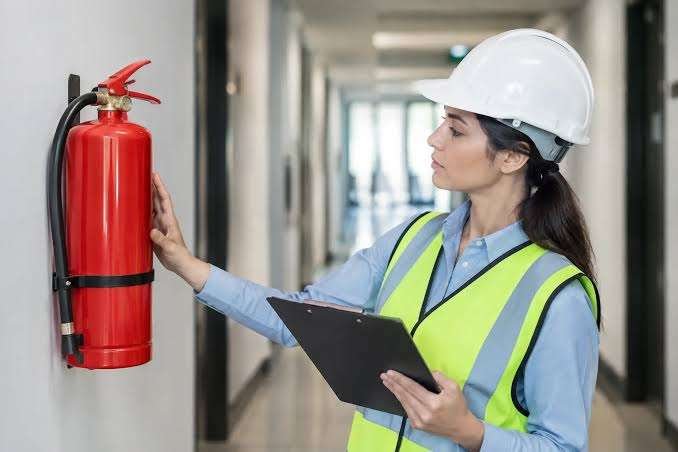
4. Fire Extinguisher and Fire Protection Equipment Checklist
Fire protection equipment must be appropriate for the building and the risks present. Different types of fires require different equipment, so a single extinguisher type is not suitable for every situation.
A general inspection checklist should include:
– Whether required equipment is present in designated locations.
– Whether access to the equipment is clear.
– Whether inspection labels and service records are current.
– Whether equipment shows visible damage or signs of leakage.
– Whether instructions and identification labels are readable.
– Whether fire doors and other installed protection features are in suitable condition.
– Whether hydrants, sprinklers, pumps, and related systems receive professional maintenance where installed.
Never assume that equipment is ready simply because it is visible. Its condition and suitability must be checked.
Children and untrained individuals should never attempt to fight a fire. If a fire occurs, occupants should raise the alarm, evacuate, and contact emergency services from a safe place.
5. Emergency Exit and Evacuation Checklist
A safe exit route is one of the most important parts of a building’s fire protection arrangements. Even a well-maintained alarm system cannot protect occupants effectively if they cannot leave the building safely.
Review the following points:
– Exit routes are clearly identified.
– Corridors and stairways remain unobstructed.
– Exit doors are usable during an emergency.
– Emergency lighting is maintained where required.
– Exit signs are visible and understandable.
– Evacuation instructions are displayed in suitable locations.
– Assembly points are identified outside the building.
– Occupants know how to report an emergency.
– Arrangements consider children, older people, visitors, and people with disabilities.
A building should have an evacuation plan that reflects its actual layout. Occupants should know the appropriate routes and should not depend on lifts during a fire unless a specifically designed and authorised evacuation arrangement applies.
6. Fire Safety Checklist for Homes
Household fire safety starts with simple habits and regular awareness.
Families can use this checklist:
– Smoke alarms are installed in suitable locations.
– Alarm devices are tested and maintained according to their instructions.
– Electrical sockets and cables are in good condition.
– Cooking areas are kept organised.
– Gas appliances receive professional maintenance.
– Matches, lighters, and other hazardous items are kept away from children.
– Hallways and doors are not blocked by stored belongings.
– Family members know the safest way out.
– Everyone knows the agreed outdoor meeting point.
– Emergency contact information is available.
Parents and guardians should explain that children must never play with fire or attempt to operate firefighting equipment. Their priority during an emergency is to alert an adult, leave the building safely, and stay outside.
Families should also discuss what to do if the usual exit is unavailable. Children should know how to seek help from a safe location rather than attempting to investigate a fire.
7. Workplace Fire Safety Checklist
Offices, shops, restaurants, and other commercial buildings often contain electrical equipment, furniture, packaging, cooking facilities, or stored materials. Employers and building managers should establish a routine inspection process.
A workplace checklist can include:
Daily or routine checks
– Keep escape routes clear.
– Remove waste and unnecessary combustible materials.
– Report damaged electrical equipment.
– Ensure fire safety signs remain visible.
– Keep access to safety equipment unobstructed.
Scheduled checks
– Review alarm and detection system maintenance records.
– Confirm that emergency lighting receives appropriate inspection.
– Review fire door condition.
– Check that evacuation instructions remain accurate.
– Confirm that staff know how to raise an alarm.
– Arrange professional servicing of installed fire protection systems.
Management checks
– Maintain a written fire safety plan.
– Assign clear responsibilities to trained staff.
– Record hazards and corrective actions.
– Review arrangements when the building layout or occupancy changes.
– Make sure contractors and visitors receive relevant safety information.
Employees should know how to report hazards without delay. Managers should make sure that concerns are investigated and resolved by competent people.
8. Fire Safety Checklist for Schools and Educational Institutions
Schools, colleges, and universities have a responsibility to protect students, teachers, support staff, and visitors. Their fire safety plans should account for the number of occupants and the needs of younger students.
Important checks include:
– Fire alarms and warning devices are maintained.
– Exit routes remain clear throughout the school day.
– Evacuation maps are displayed in appropriate areas.
– Staff understand their assigned responsibilities.
– Students receive age-appropriate fire safety education.
– Visitors know the emergency arrangements.
– Assembly points are suitable and clearly identified.
– Drills are organised according to applicable requirements.
– Records of inspections and drills are maintained.
Students should be taught to follow staff instructions, leave promptly when an alarm sounds, and remain at the assembly point. They should never return to the building to collect personal belongings.
9. Fire Safety Checklist for Factories and Warehouses
Factories and warehouses may contain machinery, packaging, chemicals, fuel, electrical installations, and large quantities of stored goods. Their safety arrangements need to reflect the specific activities taking place.
A suitable checklist should cover:
– Storage areas are organised and maintained.
– Materials are stored according to their safety requirements.
– Escape routes and fire service access remain clear.
– Fire detection and alarm systems are suitable for the premises.
– Installed suppression systems receive professional servicing.
– Electrical installations are inspected by qualified personnel.
– Emergency plans reflect the actual building layout.
– Workers receive relevant safety training.
– Contractors follow the site’s safety arrangements.
– Inspection findings are recorded and addressed.
Management should also review the effects of production changes, new machinery, building extensions, and changes in stored materials. These developments can introduce risks that were not considered in an older safety plan.
10. Fire Drills and Employee Awareness Checklist
A written emergency plan is useful only when people understand it. Fire drills help occupants become familiar with warning signals, evacuation routes, assembly points, and reporting procedures.
Before arranging a drill, responsible managers should:
– Review the current evacuation plan.
– Inform relevant staff about their responsibilities.
– Consider visitors and people requiring additional assistance.
– Confirm that assembly arrangements are suitable.
– Coordinate with relevant authorities where required.
After a drill, record the date, participation, observations, and any problems identified. If occupants were confused or routes were difficult to use, review the plan and make appropriate improvements.
Drills should be conducted safely and should never involve creating a real fire or exposing participants to dangerous conditions.
11. How Often Should Fire Safety Checks Be Completed?
There is no single inspection schedule that suits every building. The appropriate frequency depends on the building’s use, size, risks, equipment, manufacturer instructions, and local requirements.
A general planning approach may look like this:
Inspection period| Examples of checks
Daily or routine| Clear exits, housekeeping, visible hazards
Weekly or scheduled| Selected equipment and safety-area checks
Monthly or according to system guidance| Recorded inspections and designated functional checks
Periodically| Professional servicing and detailed assessments
After a building change| Review of alarms, exits, occupancy, and evacuation plans
This is a planning guide, not a substitute for legal requirements or the maintenance instructions for specific equipment. Building managers should establish a documented schedule with competent fire safety professionals.
12. Fire Safety Requirements and Guidance in Pakistan
Pakistan has national building safety guidance as well as provincial and local requirements. The Building Code of Pakistan (Fire Safety Provisions 2016), developed through the Pakistan Engineering Council in collaboration with the National Disaster Management Authority, provides an important framework for building fire safety.
Punjab Civil Defence identifies several important fire safety measures for relevant premises, including:
– Fire detection and alarm systems.
– Firefighting arrangements.
– Fire safety plans.
– Emergency fire control facilities.
– Emergency exits and evacuation plans.
– Ventilation and air-conditioning arrangements.
Requirements may differ according to building type, location, occupancy, and applicable regulations. Owners and managers should consult the relevant building control authority, Civil Defence department, and qualified professionals to confirm what applies to their premises.
A fire safety checklist can help organise inspections, but it should not be treated as proof of compliance on its own.
13. Common Fire Safety Checklist Mistakes
Even organisations that use checklists can overlook important details. Common mistakes include:
Using the same checklist for every building: A small house and a large factory have different risks. Checklists should reflect the actual premises.
Ignoring reported faults: A damaged alarm, blocked exit, or defective electrical installation should be recorded and referred for corrective action.
Checking equipment without reviewing records: Inspection dates, servicing details, and unresolved issues are important parts of maintenance.
Forgetting temporary changes: Renovations, events, new storage areas, and changes in occupancy may affect existing arrangements.
Ignoring people who need assistance: Evacuation planning should consider children, visitors, older people, and people with disabilities.
Treating a checklist as a one-time task: Fire safety requires ongoing attention rather than a single annual review.
Avoiding these mistakes makes the checklist more useful and helps create a stronger safety culture.
14. Creating an Effective Fire Safety Checklist
A good checklist should be clear, practical, and easy to update. It should identify what needs to be checked, who is responsible, and what action is required when a problem is found.
Consider including these details:
1. Building name and location.
2. Date and time of inspection.
3. Name of the responsible person.
4. Areas and equipment inspected.
5. Problems or hazards identified.
6. Corrective action required.
7. Person or department responsible for the action.
8. Target completion date.
9. Confirmation that the issue has been addressed.
10. Date of the next review.
Use simple language so employees and residents can understand their responsibilities. Keep records in an accessible place and review them when the building or its activities change.
Conclusion
Fire safety checklists are a practical way to organise prevention, maintenance, and emergency preparedness. They help people review electrical safety, housekeeping, alarm systems, firefighting equipment, emergency exits, and evacuation arrangements.
In Pakistan, homes and workplaces should consider relevant national codes, provincial regulations, and local authority requirements when developing their safety procedures. Regular inspections and professional maintenance are essential for keeping installed systems dependable.
A fire alarm system in Pakistan can provide an important early warning, but it must form part of a wider safety plan. Clear exits, trained staff, suitable equipment, and regular reviews all contribute to a safer environment.
The most important principle is simple: identify risks early, address problems through qualified professionals, and make sure everyone knows how to evacuate safely.
Frequently Asked Questions (FAQs)
1. What is a fire safety checklist?
A fire safety checklist is a written list of inspections and safety tasks used to identify hazards and review a building’s fire protection arrangements. It may cover alarms, electrical safety, emergency exits, equipment, housekeeping, and evacuation procedures.
2. How often should a fire safety checklist be completed?
The frequency depends on the building, its activities, equipment, and applicable regulations. Some conditions need routine attention, while alarm systems and other equipment require scheduled inspections and professional servicing according to relevant guidance.
3. Why is a fire alarm system important?
A fire alarm system helps warn occupants when a possible fire is detected or an alarm is activated. Early warning gives people an opportunity to follow the evacuation plan and reach a safe location.
4. Who is responsible for fire safety in a workplace?
Responsibility generally rests with the employer, building owner, or designated management, depending on the premises and applicable law. Employees also have a role in reporting hazards and following established safety procedures.
5. What should people do when a fire alarm sounds?
People should treat the warning seriously, follow the