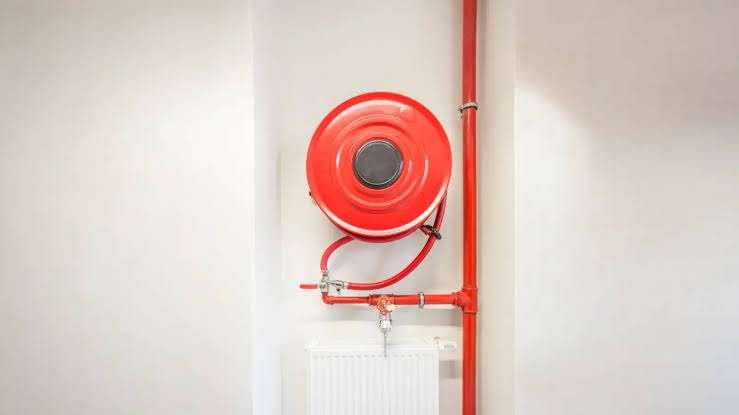
Home fire safety is an important part of protecting families, property, and communities. Many people think about smoke alarms and fire extinguishers when preparing their homes for emergencies, but other fire protection equipment may also be relevant in certain residential buildings. One example is the fire hose reel.
Fire hose reels are fixed firefighting installations designed to provide a water supply through a connected hose. They are commonly found in commercial buildings, industrial facilities, public properties, and some larger residential developments. Their purpose is to provide a controlled water supply for firefighting by people who are trained and authorized to use them.
However, fire hose reels are not necessary or suitable for every home. Their use depends on the building’s design, size, occupancy, fire safety requirements, and professional risk assessment. In many ordinary houses, other safety measures, such as smoke alarms, suitable extinguishers, clear exits, and an effective evacuation plan, may be more appropriate.
In Pakistan, homeowners and building managers should understand the role of different fire protection systems before deciding which equipment is needed. This guide explains what fire hose reels are, where they are commonly used, their benefits and limitations, and how they fit into a wider residential fire safety plan.
1. What Is a Fire Hose Reel?
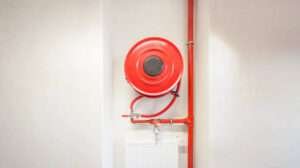
A fire hose reel is a fixed fire protection device that usually consists of a circular reel, a connected hose, a water supply, and associated fittings. It is designed to provide access to water for firefighting in buildings where such equipment is required.
Unlike portable fire extinguishers, which contain a limited quantity of extinguishing material, a hose reel is connected to a water supply. This allows it to provide water for an extended period when the installation is functioning correctly and the supply is available.
Fire hose reels are commonly installed in locations such as:
– Commercial buildings.
– Shopping centres.
– Warehouses.
– Factories.
– Large residential developments.
– Educational institutions.
– Public buildings.
– Certain apartment complexes.
Their placement and design should be determined by qualified fire safety professionals according to applicable building requirements.
Although some homeowners may consider installing a hose reel, it is important to understand that this equipment requires suitable infrastructure, professional installation, regular inspection, and appropriate training.
2. Are Fire Hose Reels Necessary in Every Home?
The short answer is no. A fire hose reel is not automatically required in every residential property.
A small independent house has different fire protection needs from a multi-storey apartment building or a large residential complex. The number of occupants, building layout, available water supply, exit arrangements, and applicable regulations all influence the type of fire protection equipment required.
For many ordinary homes, the most important priorities include:
– Working smoke alarms.
– Safe electrical installations.
– Properly maintained cooking appliances.
– Clear emergency exits.
– Suitable fire safety equipment where appropriate.
– A household evacuation plan.
– Awareness of emergency contact procedures.
Larger residential buildings may require additional fixed fire protection systems, depending on their design and applicable requirements.
Homeowners should not purchase a hose reel simply because it is available in the market. A qualified fire safety professional can assess the property and determine whether a fixed hose reel system is appropriate.
3. How Do Fire Hose Reels Support Building Fire Safety?
Fire hose reels form one part of a building’s overall fire protection arrangements. Their main function is to provide a connected water supply for firefighting where the system has been properly designed and installed.
In suitable buildings, a hose reel may provide trained and authorized personnel with access to water during an emergency, provided conditions are safe and the fire is still within the limits of the system’s intended use.
However, hose reels are not a replacement for evacuation procedures, smoke detection, fire alarms, or other safety arrangements.
A complete building fire safety plan may include:
– Fire detection and alarm systems.
– Emergency lighting.
– Clearly marked exits.
– Fire extinguishers.
– Fire hose reels where required.
– Suitable water supplies.
– Evacuation plans.
– Staff or resident safety awareness.
Each element has a different purpose. Their effectiveness depends on correct design, installation, maintenance, and coordination.
For ordinary residents, the priority during a dangerous fire should always be to leave the building and contact emergency services.
4. Understanding the Difference Between Fire Hose Reels and Fire Extinguishers
Fire hose reels and fire extinguishers are both used in fire protection, but they are designed for different purposes.
A fire extinguisher is a portable device containing a specific extinguishing agent. Different extinguishers are designed for different fire classifications, so the correct type must be selected for the hazards present.
A fire hose reel is a fixed installation connected to a water supply. It is generally intended for use in buildings where its installation is appropriate.
Some important differences include:
Feature| Fire Hose Reel| Fire Extinguisher
Installation| Usually fixed to a building| Portable equipment
Supply| Connected to a water source| Contains a limited amount of extinguishing agent
Common locations| Larger buildings and facilities| Homes, offices, shops, and other properties
Maintenance| Requires inspection of the complete installation| Requires inspection and servicing of the extinguisher
Main consideration| Building design and suitable water supply| Correct extinguisher type for the fire risk
Neither option is suitable for every fire situation. In particular, water must never be used on an electrical fire or a fire involving materials for which water is unsuitable.
Residents should not attempt to use a hose reel on an unfamiliar or dangerous fire. Evacuation and professional emergency response should come first.
5. Why Some Residential Buildings May Need Fire Hose Reels
Although ordinary houses may not need hose reels, larger residential buildings can have more complex fire protection requirements.
Apartment blocks, housing developments, and buildings with shared facilities may have long corridors, multiple floors, common service areas, and larger numbers of occupants.
These features can affect how fire safety equipment is selected and installed.
A professional assessment may consider:
– The total height of the building.
– The number of floors.
– The number of occupants.
– Shared corridors and common areas.
– The location of staircases and exits.
– The available water supply.
– The building’s fire risk assessment.
– Applicable local regulations and building requirements.
A fire hose reel may be included where it is required or considered suitable by the relevant professionals and authorities.
Building owners should never assume that a system is necessary simply because another building has one. The decision should be based on the property’s actual requirements.
6. The Importance of Professional Installation
A fire hose reel is part of a fixed building system. Its effectiveness depends on proper design, suitable materials, a reliable water supply, and professional installation.
Incorrect installation can affect the system’s performance and create maintenance problems.
Professional installation should consider:
Suitable location: The equipment should be positioned according to the building’s layout and relevant safety requirements.
Water supply: The system must have an appropriate water supply designed for its intended purpose.
Equipment quality: The hose, reel, fittings, and other components should meet applicable specifications.
Accessibility: The installation should not be hidden behind furniture, storage, or other obstacles.
Building compatibility: The system should be suitable for the property’s structure and fire protection arrangements.
Documentation: Installation and maintenance records should be kept by the responsible property owner or building manager.
Homeowners should use qualified fire protection professionals rather than attempting to install or modify fixed firefighting systems themselves.
7. Why Regular Fire Hose Reel Maintenance Matters
Installing a fire hose reel does not guarantee that it will work properly during an emergency. Like other fire protection equipment, it requires suitable inspection and maintenance.
Over time, equipment can deteriorate, components may become damaged, and building conditions may change.
Maintenance should be arranged through qualified service providers who can assess the complete installation.
Professional maintenance may include checking:
– The overall condition of the reel.
– The hose and its visible condition.
– Associated fittings and connections.
– The water supply.
– Accessibility and visibility.
– Signs of corrosion or deterioration.
– Relevant identification and inspection records.
The inspection frequency should follow applicable standards, manufacturer guidance, and local requirements.
Homeowners and building managers should maintain service records and arrange repairs when professionals identify problems.
Residents should not dismantle, adjust, or attempt to repair a hose reel. If equipment appears damaged or inaccessible, the concern should be reported to the responsible property manager.
8. Fire Hose Reels Are Not Suitable for Every Type of Fire
One important point about fire hose reels is that they are not universal firefighting solutions.
Most conventional hose reels supply water. Water may be unsuitable for fires involving energized electrical equipment, flammable liquids, or certain materials that react dangerously with water.
Using the wrong firefighting equipment can increase the danger rather than reduce it.
For this reason, fire protection systems must be selected according to the hazards present in the building.
Residents should understand that:
– Water must never be used on electrical fires.
– A fire involving flammable liquids may require a different extinguishing agent.
– Fires involving gas-related equipment require specialized emergency procedures.
– Smoke and heat can make an area unsafe even when flames appear limited.
– A fire that is spreading should not be approached by untrained occupants.
If a dangerous fire occurs, leave the building, warn others if it is safe, and contact emergency services from a safe location.
The purpose of residential fire safety equipment is to support a wider safety plan, not to encourage occupants to take unnecessary risks.
9. Fire Detection Is Just as Important as Firefighting Equipment
Fire hose reels are designed for firefighting in suitable circumstances, while smoke alarms and fire detection systems provide early warning.
These systems perform different but complementary roles.
A smoke alarm can alert occupants when smoke is detected. A professionally designed fire alarm system can provide coordinated warnings throughout a larger building and may include additional detection and control features.
A suitable fire alarm system in Pakistan should be selected according to the building’s size, occupancy, layout, and applicable safety requirements.
For residential properties, important fire detection considerations include:
– Suitable alarm coverage.
– Correct device placement.
– Reliable power arrangements.
– Regular testing and maintenance.
– Prompt repair of faulty equipment.
– Clear instructions for residents.
Homeowners should ensure that smoke alarms are not covered, disconnected, or ignored. Apartment building managers should also make sure that shared fire detection systems receive professional maintenance.
Early warning gives occupants an opportunity to evacuate before conditions become more dangerous.
10. Keep Emergency Exits Clear
Even the best fire protection equipment cannot replace a safe escape route.
During an emergency, smoke and heat may make parts of a building unsafe very quickly. Residents should therefore understand how to leave the property without depending on firefighting equipment.
Homeowners and building managers should ensure that corridors, stairways, and exit doors remain accessible.
Residents should avoid:
– Storing furniture in hallways.
– Blocking staircases with personal belongings.
– Placing items in front of emergency doors.
– Covering exit signs.
– Keeping shared escape routes locked or obstructed.
Every household should identify its main exit and an alternative route where available.
In apartment buildings, residents should understand the designated stairways and follow the building’s evacuation plan. Elevators should not be used during a fire unless emergency personnel specifically direct otherwise.
11. Fire Safety Responsibilities of Homeowners
Homeowners have an important responsibility to provide and maintain suitable safety arrangements for their properties.
For independent houses, this may involve maintaining electrical installations, providing suitable smoke alarms, and ensuring that exits remain accessible.
For apartment buildings and larger residential developments, responsibilities may also include shared fire protection systems and common escape routes.
Homeowners should:
1. Understand the fire safety requirements that apply to their property.
2. Arrange professional risk assessments where appropriate.
3. Maintain installed alarms and fire protection equipment.
4. Keep emergency routes accessible.
5. Address reported hazards promptly.
6. Provide residents with relevant emergency information.
7. Maintain records of inspections and repairs.
In shared buildings, property owners and management committees should communicate clearly about who is responsible for maintaining common fire safety equipment.
12. Fire Safety Responsibilities of Residents
Residents also have an important role in keeping their homes and shared buildings safe.
They should use appliances responsibly, avoid creating unnecessary fire hazards, and report problems when they are noticed.
Useful habits include:
– Avoid overloading electrical outlets.
– Keep combustible materials away from heat sources.
– Do not leave cooking unattended.
– Report damaged electrical equipment.
– Keep corridors and stairways clear.
– Learn the building’s evacuation arrangements.
– Avoid interfering with installed safety equipment.
– Take fire alarms seriously.
Residents should never assume that a building’s fire safety equipment will automatically protect everyone. Personal awareness and timely evacuation remain essential.
13. Fire Safety Considerations for Homes in Pakistan
Residential buildings in Pakistan vary considerably in size, design, age, and construction. Some properties are independent houses, while others are apartments or part of larger residential developments.
These differences mean that fire protection arrangements should be appropriate for each building.
Homeowners and property managers should consider local building requirements, available emergency access, electrical safety, cooking arrangements, and the number of people living in the property.
For larger buildings, professional fire safety planning may include fire alarms, emergency lighting, extinguishers, hose reels, and other fixed systems.
The selection of equipment should be based on a proper assessment rather than assumptions or purchasing trends.
Reliable fire safety planning also involves working with qualified service providers who understand applicable standards and can provide suitable installation and maintenance services.
14. Prepare a Household Fire Emergency Plan
Every home should have a simple fire emergency plan, whether or not it contains a fire hose reel.
The plan should explain how household members can leave the building and where they should meet outside.
A basic plan should include:
– The main exit.
– An alternative exit where available.
– A safe outdoor meeting point.
– Emergency contact information.
– Assistance arrangements for children or people with mobility difficulties.
– Instructions for responding to smoke alarms.
Parents and caregivers should explain the plan to children in simple language. Everyone should understand that leaving the building safely is more important than collecting personal belongings.
Residents should also know that they must not return inside until emergency personnel confirm that it is safe.
15. How to Decide Whether Your Property Needs a Fire Hose Reel
If you are considering a fire hose reel for your property, begin with a professional assessment rather than purchasing equipment immediately.
The assessment should consider the building’s size, layout, occupancy, fire hazards, available water supply, and relevant requirements.
For an ordinary independent home, the assessment may identify other priorities, such as smoke alarms, suitable extinguishers, electrical safety improvements, and a household evacuation plan.
For larger residential buildings, a fixed hose reel system may be appropriate if required by the building’s design or applicable safety provisions.
Before approving an installation, property owners should confirm:
– Whether the equipment is required or suitable.
– Whether the proposed product meets relevant specifications.
– Whether the installer is qualified.
– Whether an appropriate water supply is available.
– How the system will be inspected and maintained.
– Who will be responsible for ongoing servicing.
This approach helps avoid unnecessary installations and ensures that available resources are directed toward genuine safety needs.
Conclusion
Fire hose reels can be an important part of fire protection in suitable buildings, but they are not necessary for every home. Their use depends on building design, occupancy, water supply, applicable requirements, and professional assessment.
For ordinary households, working smoke alarms, safe electrical installations, suitable fire safety equipment, clear exits, and a reliable evacuation plan are essential priorities. Larger residential developments may need additional fixed systems, including hose reels, where professionally recommended or required.
In Pakistan, homeowners and building managers should make fire safety decisions based on the actual needs of their properties. A professionally designed fire alarm system in Pakistan can support early warning, while suitable firefighting equipment and regular maintenance provide additional protection.
Most importantly, residents should remember that personal safety comes first. If a fire becomes dangerous, evacuate immediately and contact emergency services. Fire protection equipment should never encourage untrained occupants to approach a fire or delay their escape.
Frequently Asked Questions (FAQs)
1. Do all homes need fire hose reels?
No. Fire hose reels are not necessary for every residential property. Their suitability depends on building size, design, occupancy, water supply, and applicable safety requirements. Many ordinary homes may have different fire safety priorities, such as smoke alarms and clear escape routes.
2. What is the main purpose of a fire hose reel?
A fire hose reel provides a fixed water supply for firefighting in buildings where the system is suitable. It is generally intended for use by trained and authorized people under appropriate safety conditions.
3. Can a fire hose reel be used on an electrical fire?
No. Water must never be used on an electrical fire because it can create an additional risk of electric shock. Occupants should evacuate and contact emergency services.
4. How often should fire hose reels be inspected?
Inspection and maintenance schedules depend on applicable standards, manufacturer instructions, and local requirements. Property owners should arrange regular professional inspections and keep maintenance records.
5. What fire safety equipment should every home consider?
Most homes should consider suitable smoke alarms, safe electrical installations, clear emergency exits, and an appropriate household evacuation plan. Other equipment should be selected according to the property’s specific risks and professional advice.