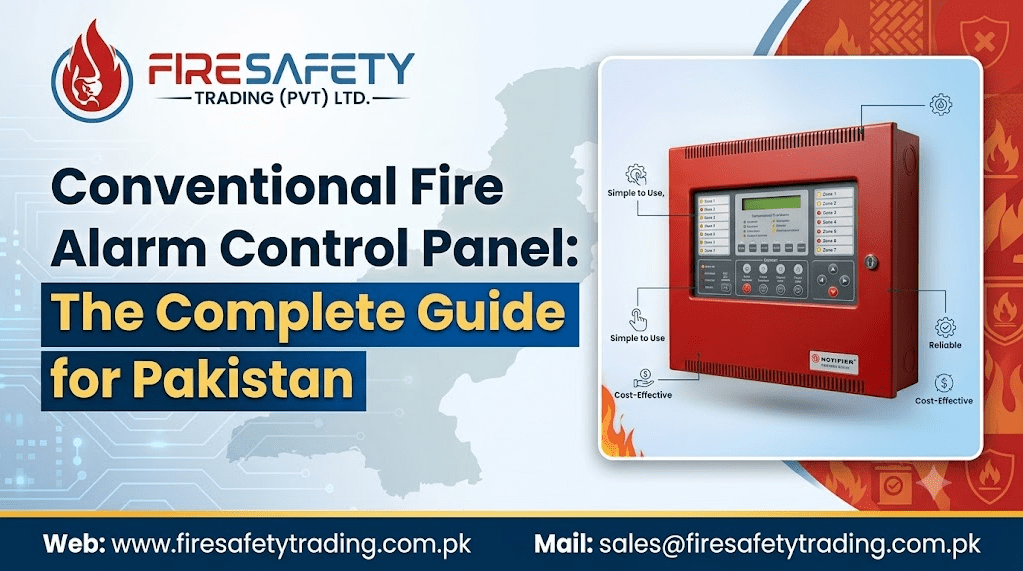
A conventional fire alarm control panel is one of the most trusted fire detection systems used in homes, shops, factories, and offices across Pakistan. It is simple, affordable, and reliable, which is why it remains a popular choice for small and medium-sized buildings. In this guide, we explain what a conventional fire alarm control panel is, how it works, its components, and how it compares with an addressable fire alarm system. We also cover the fire alarm system price in Pakistan so you can budget correctly before buying or installing one.
What Is a Conventional Fire Alarm Control Panel?
Fire Safety Trading (Pvt)
ToggleA conventional fire alarm control panel (FACP) is a central control unit that monitors a group of fire alarm devices, such as smoke detectors, heat detectors, and manual call points, connected through wired zones. Instead of identifying the exact device that triggered an alarm, the panel only tells you which zone or circuit the alarm came from. For example, if a smoke detector on the second floor activates, the panel will show “Zone 2” rather than the exact room.
This makes conventional panels easy to understand and operate, especially for small buildings where the fire zone can be quickly checked by staff or security guards without needing advanced training.
How Does a Conventional Fire Alarm Panel Work?
Each conventional fire alarm control panel is wired into several zones. Every zone covers a specific area of the building, such as a floor, a wing, or a department. When any detector or call point in that zone senses smoke, heat, or is manually activated, it sends a signal back to the control panel through the zone wiring.
The panel then processes this signal and triggers the following actions:
- Sounds the alarm bell or siren throughout the building
- Lights up an LED indicator for the affected zone on the panel
- Sends a signal to connected fire safety equipment, such as smoke extraction fans or sprinkler systems, if integrated
- Allows the building supervisor to identify the general area of the fire and respond quickly
Key Components of a Conventional Fire Alarm Control Panel
1. Main Control Panel
This is the brain of the system. It receives signals from all connected zones and controls the alarm output.
2. Zone Wiring
Each zone is a separate electrical circuit connecting multiple detectors. A building may have anywhere from 2 to 20+ zones, depending on its size.
3. Smoke and Heat Detectors
These devices sense fire indicators such as smoke particles or rising temperature and send a signal to the panel.
4. Manual Call Points
Break-glass units that allow people to manually raise an alarm during an emergency.
5. Sounders and Strobes
Audible alarms and flashing lights that alert everyone in the building once a fire signal is confirmed.
6. Power Supply and Battery Backup
Every panel includes a backup battery so the fire alarm system continues to work even during a power outage, which is especially important given frequent load-shedding in many parts of Pakistan.
Conventional vs Addressable Fire Alarm Panel
Many building owners in Pakistan ask whether they should choose a conventional or an addressable fire alarm system. Here is a simple comparison:
- Conventional panel: identifies the zone only, lower cost, easier wiring, best for small to medium buildings
- Addressable panel: identifies the exact device and location, higher cost, more precise, best for large commercial buildings, hospitals, and high-rise plazas
For small shops, single-floor offices, guest houses, and residential buildings, a conventional fire alarm control panel is usually the most cost-effective and practical solution.
Advantages of Conventional Fire Alarm Panels
- Lower installation and equipment cost compared to addressable systems
- Simple to install, operate, and understand
- Reliable performance for small and medium-sized buildings
- Widely available spare parts and technicians across Pakistan
- Suitable for shops, warehouses, schools, clinics, and residential buildings
Limitations of Conventional Fire Alarm Panels
- Cannot pinpoint the exact detector that triggered the alarm, only the zone
- Not ideal for very large buildings with many floors or rooms
- Zone wiring can become complex as the building grows
Fire Alarm System Price in Pakistan
The fire alarm system price in Pakistan depends on several factors, including the size of the building, the number of zones, the brand of equipment, and whether it is a conventional or addressable system. On average, a basic conventional fire alarm system for a small shop or office in Pakistan can start from a modest budget-friendly range, while larger buildings with more zones and detectors will naturally cost more due to additional wiring, detectors, and panel capacity.
Other factors that affect the fire alarm system price in Pakistan include:
- Number of smoke detectors, heat detectors, and call points required
- Panel brand and zone capacity (4-zone, 8-zone, 16-zone, etc.)
- Cable and wiring quality used for zone circuits
- Labor and installation charges based on building layout
- Whether integration with sprinklers or fire suppression systems is needed
Because pricing varies by project, it is best to get a customized quotation based on your building’s size and requirements rather than relying on a fixed number.
Installation and Maintenance of Conventional Fire Alarm Panels
Correct installation is critical for a conventional fire alarm control panel to function properly during an emergency. Zones must be wired correctly, detectors should be placed according to fire safety codes, and the panel should be tested regularly to confirm every zone is responding.
Regular maintenance also matters just as much as installation. Dust, humidity, and electrical faults can affect detector sensitivity over time, which is why routine servicing is recommended. You can learn more about professional upkeep through our fire alarm maintenance services page, where our certified technicians handle testing, battery checks, zone inspection, and compliance servicing for buildings across Pakistan.
Fire Safety Regulations and Standards in Pakistan
Fire alarm systems installed in commercial and residential buildings in Pakistan should follow recognized safety standards, such as NFPA 72 guidelines, along with local civil defense and building code requirements. These standards define how zones should be laid out, how many detectors are needed per area, and what response time the alarm system should provide. Working with an experienced fire safety company ensures your conventional fire alarm control panel is installed according to these standards, which is especially important for insurance compliance and safety audits.
Signs Your Fire Alarm Panel Needs Attention
Even a well-installed conventional fire alarm control panel can develop issues over time. Watch out for these warning signs, which usually mean it is time to call a technician:
- Frequent false alarms from a particular zone
- A zone LED that stays lit even after resetting the panel
- Weak or delayed sounder output during testing
- Battery backup that drains quickly or fails a load test
- Detectors that appear dusty, discolored, or physically damaged
Ignoring these signs can delay a real fire response, so it is important to schedule an inspection as soon as any fault appears.
Where Are Conventional Fire Alarm Panels Used in Pakistan?
- Retail shops and small commercial plazas
- Residential apartments and guest houses
- Schools, clinics, and small hospitals
- Warehouses and small factories
- Restaurants and single-floor offices
Choosing the Right Fire Alarm Panel for Your Building
Before selecting a fire alarm control panel, it is important to assess your building size, number of floors, and fire risk level. Small and medium buildings usually work well with a conventional system, while large commercial or high-rise buildings benefit more from an addressable system for precise fault location. Consulting a certified fire safety company ensures your system meets local safety standards and is installed with the correct zoning and detector placement.
It also helps to think ahead about future expansion. If you plan to add more floors, rooms, or departments to your building in the coming years, choosing a panel with a few extra zones from the start can save you from a costly upgrade later. A qualified fire safety consultant can walk through your building layout and recommend the right panel size, detector count, and cable routing before installation begins.
Why Work With a Certified Fire Safety Company
Buying a fire alarm control panel is only one part of the process. Proper design, correct detector placement, code-compliant wiring, and ongoing servicing are just as important as the equipment itself. A certified fire safety company in Pakistan will survey your building, recommend the right number of zones and devices, handle the installation safely, and provide after-sales maintenance so your system stays reliable for years. This also ensures your fire alarm system remains compliant during safety inspections, insurance audits, and civil defense checks.
Common Mistakes to Avoid When Installing a Fire Alarm Panel
Many building owners in Pakistan try to cut costs during installation, which can create serious safety gaps later. Avoid these common mistakes:
- Buying a panel with too few zones for the building size
- Placing smoke detectors near kitchens or bathrooms where steam can trigger false alarms
- Skipping professional wiring in favor of low-cost, untrained labor
- Not testing the system after installation before handing it over
- Forgetting to schedule routine maintenance after the warranty period ends
Avoiding these mistakes from the start saves money on repairs and, more importantly, ensures the system actually works when it matters most.
Conclusion
A conventional fire alarm control panel remains one of the most practical and budget-friendly fire safety solutions for buildings across Pakistan. It offers reliable zone-based fire detection, straightforward operation, and lower upfront cost compared to addressable systems. Whether you are setting up a new system or upgrading an old one, understanding how these panels work helps you make a safer and more informed decision for your property.
Frequently Asked Questions
1. What is a conventional fire alarm control panel?
It is a fire detection system that monitors wired zones and alerts you to which zone or area of the building a fire signal has come from, rather than the exact device.
2. How is a conventional fire alarm panel different from an addressable panel?
A conventional panel identifies only the zone, while an addressable panel identifies the exact detector or device, making it more precise but also more expensive.
3. What is the fire alarm system price in Pakistan?
The price varies based on building size, number of zones, detector count, and brand. Small setups cost less, while larger buildings with more zones require a bigger budget. A custom quote is recommended for accurate pricing.
4. Is a conventional fire alarm system good for small shops and offices?
Yes, conventional panels are ideal for small to medium-sized buildings such as shops, offices, clinics, and guest houses due to their affordability and simplicity.
5. How many zones can a conventional fire alarm panel support?
Conventional panels typically come in 2, 4, 8, or 16-zone configurations, depending on the size and needs of the building.
6. Does a conventional fire alarm panel work during a power outage?
Yes, every conventional fire alarm control panel includes a backup battery that keeps the system running during power cuts or load-shedding.
7. How often should a fire alarm panel be maintained?
Fire alarm panels should be tested and serviced regularly, typically every few months, to ensure detectors, zones, and batteries are working correctly.
8. Can a conventional system be upgraded to an addressable system later?
In most cases, upgrading requires replacing the panel and rewiring detectors, since conventional and addressable systems use different wiring and communication methods.
9. What components are included in a conventional fire alarm system?
A typical system includes the control panel, smoke and heat detectors, manual call points, sounders, strobes, zone wiring, and a backup battery.
10. Where can I get professional fire alarm installation and maintenance in Pakistan?
You can get expert installation and fire alarm maintenance services from certified fire safety professionals who ensure your system is compliant, tested, and reliable across all zones.