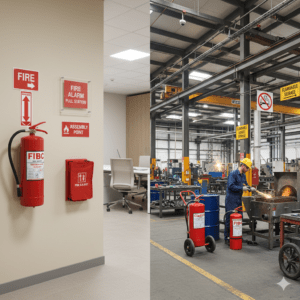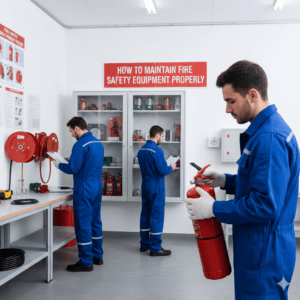
Five Fire Safety Roles Everyone Should Know

Fire safety is not just about having equipment in place; it is also about assigning clear roles and responsibilities. In any workplace, school, factory, or public building, knowing who is responsible for what can make the difference between a safe evacuation and a dangerous situation. The following five fire safety roles are considered essential to ensure complete protection from fire hazards.

1. Fire Warden (Fire Marshal)

The fire warden, sometimes called the fire marshal, is responsible for the day-to-day safety of people inside a building. Their duties include checking that fire exits are not blocked, monitoring fire safety equipment, and making sure evacuation procedures are followed. During an emergency, the fire warden leads people to safety and ensures everyone is accounted for.

2. Management or Employer

Employers and building management carry the legal responsibility of ensuring workplace safety. They must provide proper safety equipment, install alarms, maintain extinguishers, and organize training sessions for staff. They are also required to comply with government fire safety regulations in Pakistan, which makes their role both legal and practical.

3. Employees and Occupants

Every person working or studying in a building has a fire safety role. Employees must follow safety procedures, participate in fire drills, and report hazards such as faulty wiring, blocked exits, or missing extinguishers. In many cases, employees are also trained to use basic equipment such as fire extinguishers or fire blankets. Active participation ensures that everyone contributes to a safe environment.

4. Fire Safety Officer

In larger organizations, a trained fire safety officer may be appointed. This specialist ensures that fire safety suits, breathing apparatus, alarms, sprinklers, and hydrant systems are inspected regularly. They also perform risk assessments and keep records to prove compliance with fire laws. In case of an incident, the fire safety officer is the main point of contact for emergency services.

5. Emergency Services (Firefighters)

When a fire cannot be controlled internally, emergency services step in. Firefighters use advanced tools like safety gloves, safety shoes, breathing apparatus, and protective suits to handle dangerous situations. Their role is to rescue trapped individuals, extinguish large fires, and secure the site from further damage.

Why These Roles Matter

Having defined fire safety roles ensures that responsibilities are clear, actions are taken quickly, and confusion is avoided during emergencies. A fire warden cannot do their job without management support, employees cannot stay safe without training, and even firefighters need cooperation from building staff when they arrive.

Final Thoughts

Fire safety is a shared responsibility. From the fire warden checking exits daily to the firefighter responding during an emergency, every role plays an important part in saving lives and property. By understanding these five fire safety roles and ensuring that proper fire safety equipment is available, organizations can create safer environments and reduce the risks of fire tragedies.

Fire Safety Equipment and Its Importance

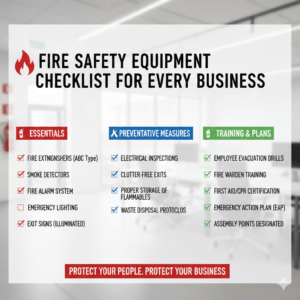
Fire safety equipment plays a vital role in protecting people, property, and workplaces from unexpected fire incidents. In many cases, a small fire can turn into a disaster within minutes if the right equipment is not available. That is why every school, office, factory, and even home is required to install basic fire safety equipment to ensure protection and compliance with safety standards.

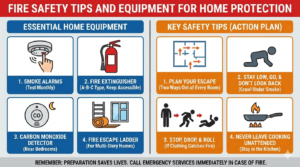
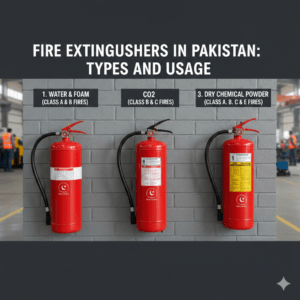
One of the most common and essential tools is the fire extinguisher. These portable devices are designed to tackle small fires before they spread. Depending on the situation, different types of extinguishers are used such as water, foam, dry powder, and carbon dioxide. Having the correct extinguisher in the right place can make the difference between a controlled fire and a major loss.

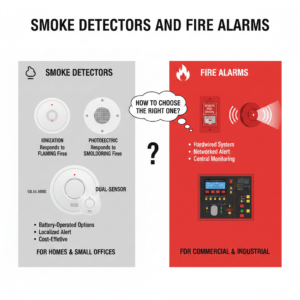
Equally important are fire alarms and smoke detectors. These systems provide early warning when smoke or heat is detected, giving occupants time to evacuate safely. In large buildings, fire alarm systems are often connected to sprinklers, emergency lights, and control rooms for quick response. Such systems fall under modern safety equipment that ensures overall workplace security.

For bigger emergencies, fire hydrant systems and fire hose reels are necessary. Hydrant points are installed so that firefighters can easily connect their hoses and control flames with a strong water supply. Hose reels, usually mounted on walls, allow people inside the building to take initial action until professional help arrives.

Another effective system is the fire sprinkler system. These sprinklers are installed in ceilings and activate automatically when high heat is detected. By spraying water directly on the flames, sprinklers prevent the fire from spreading further and give people more time to escape.

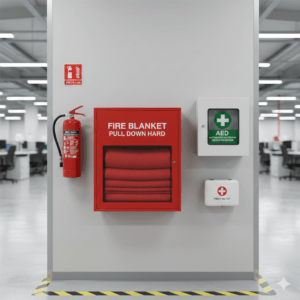
Besides these, smaller tools like fire blankets are very useful, especially in kitchens and laboratories. By covering a burning object, the blanket cuts off oxygen supply and stops the fire instantly. Emergency exit signs and lighting are equally important, as they guide people safely out of the building even if there is darkness or heavy smoke.

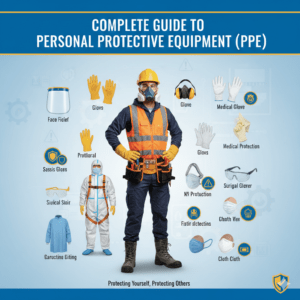
In commercial and industrial buildings, fire doors are installed to slow down the spread of heat and smoke. These special doors are heat-resistant and create safe compartments inside a building. Finally, for firefighters and rescue teams, personal protective equipment (PPE) such as helmets, safety gloves, safety shoes, flame-resistant fire safety suits, and breathing apparatus are necessary for their safety during operations.

Why Every Building Needs Fire Safety Equipment

The presence of proper fire safety equipment ensures early detection, quick control, and safe evacuation. It protects human lives, minimizes property loss, and fulfills legal obligations set by government authorities. In countries like Pakistan, educational institutions, factories, and offices are legally required to install approved firefighting systems.

Fire safety equipment is not just a precaution—it is a necessity. Investing in these tools means investing in safety, compliance, and peace of mind. Whether it’s a small extinguisher in a classroom or a full hydrant system in a factory, every piece of equipment plays an important role in preventing fire tragedies.

How Does the FM 200 Fire Suppression System Work?

The FM 200 fire suppression system is a modern solution designed to extinguish fire quickly without causing damage to property or harm to people. Actually, unlike traditional water sprinklers, which can destroy electronics, documents, and other sensitive equipment, fm 200 uses a clean gaseous agent that leaves no residue. and all that, its efficiency, speed, and safety make it one of the most preferred fire protection systems in critical environments. 

The first stage of the system’s operation is detection. Look, highly sensitive smoke and heat detectors are actually installed in the protected area, right? These detectors are capable of identifying fire in its earliest stages, even before it grows large enough to cause visible damage. As soon as smoke or heat levels cross a certain threshold, a signal is actually sent to the system’s control panel. Pretty much, once the control panel receives the detection signal, the system immediately triggers an alarm, and all. Basically, audible sirens and flashing lights alert the occupants of the building, kind of. you see, in most cases, there’s a built-in delay of a few seconds, giving people time to evacuate the area safely, you know? kind of thing, actually, this precaution ensures that when the suppression agent is released, the space is actually clear of occupants or at least they’re actually aware of the emergency. 

Look, after the alarm sequence, the system proceeds to the discharge phase. You see, the fm 200 agent, which is stored in high-pressure steel cylinders, is released into the room through a network of pipes and nozzles. This release is extremely rapid, typically completed within 10 seconds. The fast action is one of the key strengths of FM 200, as it prevents fire from spreading or causing extensive damage, kind of. 

In a way, the extinguishing power of fm 200 lies in its dual action. First, it absorbs heat from the fire, lowering the temperature of the flames below the combustion point, and all. piece of cake, second, it interrupts the chemical chain reaction that allows fire to sustain itself. 

Anyway, by combining these two effects, fm 200 can put out class a (solid), class b (liquid), and class c (electrical) fires effectively. kind of thing, now, one of the most key aspects of fm 200 is its safety for humans, and all. Basically, unlike carbon dioxide systems that reduce oxygen levels dangerously, fm 200 is discharged at a concentration that’s actually non-toxic and safe for people in occupied spaces, you know? right, well, this makes it suitable for offices, data centers, hospitals, and other environments where people may be present when a fire occurs, you know? Another advantage is that the system is actually clean and residue-free. Water-based suppression systems can flood server rooms or destroy paper files, but FM 200 leaves nothing behind. 

You see, after discharge, there’s no need for costly cleanup or repairs caused by the extinguishing agent itself, you know? All that’s required is ventilation to clear the air before normal operations can resume, right? Like, honestly, the reliability of the fm 200 system also depends on maintenance and readiness.

Regular checks are necessary to ensure that detection devices are functional, control panels are working, and cylinders are filled to the correct pressure. easy peasy, without proper upkeep, the system may fail to activate at the critical moment, which is why routine inspection is an essential part of its operation. right, seriously, in addition to its technical benefits, fm 200 is also designed to meet international fire safety standards, such as those defined by the national fire protection association (nfpa). 

Basically, this means that its performance and safety are globally recognized, giving organizations confidence that they’re investing in a tested and approved method of fire suppression. 

Good to go, to wrap things up, the fm 200 fire suppression system works through a carefully coordinated process: early fire detection, alarm activation, rapid gas discharge, chemical and thermal interruption of flames, and safe extinguishing without damage to assets or people, and all. Its speed, cleanliness, and reliability make it one of the most effective solutions available for fire protection in sensitive and high-value environments.

Fm 200 suppression system in islamabad – Best Solutions & Guide

Fire safety is one of the most critical aspects of urban development, especially in cities like Islamabad where government offices, commercial centers, and high-tech facilities coexist. kind of thing, and with the increasing reliance on data, electronics, and sensitive equipment, traditional fire suppression methods such as sprinklers aren’t always suitable, kind of. Seriously, this has led to growing adoption of clean agent systems like fm 200, which offer fast, reliable, and damage-free fire protection. 

The FM 200 suppression system uses heptafluoropropane (HFC-227ea), a gaseous agent stored in pressurized cylinders, you know? like, so yeah, when released, gas absorbs heat and interrupts the chemical chain reaction that sustains fire, extinguishing flames in seconds, right? Basically, unlike water or foam systems, fm 200 doesn’t leave behind any residue, making it ideal for areas where cleanliness and continuity are essential. and all that, and a major advantage of fm 200 is its safety for humans, you know? You see, at standard design concentrations, gas is actually non-toxic and can be safely discharged in occupied areas. 

This feature makes it suitable for offices, data centers, and hospitals in Islamabad, where the safety of both people and property is a top priority. Its ability to suppress fire quickly without evacuation delays significantly reduces risks during emergencies, right? good to go, in islamabad, fm 200 systems are widely installed in data centers, IT rooms, and telecom facilities, which are at constant risk due to high electrical loads, and all. And for organizations that depend on uninterrupted operations, such as banks and software companies, downtime caused by fire can lead to major financial and reputational losses. So to speak, you see, fm 200 offers protection without damaging servers, cables, or sensitive electronic devices. 

Another common use of FM 200 in the city is in government and diplomatic buildings. and all that, islamabad hosts embassies, ministries, and security offices where strict safety measures are required, and all. Honestly, the clean agent technology provides discreet yet highly effective fire suppression, ensuring that confidential documents, communication equipment, and mission-critical systems remain intact even after a fire incident. 

The healthcare sector in Islamabad also benefits from FM 200 systems. more or less, and hospitals and laboratories use advanced medical devices and conduct research that could be irreparably harmed by water-based firefighting, right? like, with fm 200, sensitive environments such as operating theaters, diagnostic rooms, and pharmaceutical storage areas are protected against fire without the risk of contamination or equipment damage. right, but educational institutions and research centers in Islamabad are also increasingly installing fm 200 systems. 

Libraries with rare manuscripts, laboratories with sensitive experiments, and digital resource centers all require fire protection that doesn’t compromise valuable assets. Seriously, by providing fast and residue-free suppression, fm 200 helps safeguard knowledge and innovation resources vital to the city’s academic development. 

One of the reasons behind the growing preference for FM 200 in Islamabad is the alignment with international safety standards, such as those set by the National Fire Protection Association (NFPA). so, guess what, as the city expands its role as a modern capital, organizations are encouraged to adopt systems that not only protect property but also comply with global best practices. and this ensures both legal compliance and peace of mind for stakeholders. So yeah, like all fire suppression systems, fm 200 requires regular inspection and maintenance. 

Seriously, cylinders must checked for correct pressure, detection systems must be tested, and the entire setup must be kept ready for activation. so yeah, in Islamabad, specialized fire safety service providers offer maintenance contracts to ensure the system remains reliable at all times. This preventive approach is essential for critical infrastructure where failure isn’t an option. 

To wrap things up, the FM 200 suppression system represents a modern, effective, and safe solution for fire protection in Islamabad. Pretty much, from government facilities to hospitals and from data centers to universities, it plays a vital role in preserving life, property, and continuity of services. As the capital continues to grow as a hub of governance, commerce, and technology, the importance of advanced fire suppression systems like FM 200 will only continue to increase.

FM-200 Fire Suppression System in Pakistan: Safe, Fast, and Reliable Protection


1. Introduction to FM-200 Fire Suppression Systems: Why They’re Essential in Pakistan

Definition and basic function (HFC-227ea clean agent for rapid fire suppression)

FM-200, also known by its chemical name HFC-227ea, is a clean agent fire suppression system designed for rapid fire control. It is widely used in modern industries because it extinguishes fire quickly without leaving behind water, foam, or powder residue. This makes it especially valuable for protecting sensitive environments where equipment and data cannot afford to be damaged by traditional firefighting methods.

The basic function of the HFC-227ea clean agent is to stop fire through heat absorption and chemical interference with the combustion process. When the system activates, the agent is discharged within seconds, lowering the heat energy and breaking the fire chain reaction. Unlike water-based systems, HFC-227ea does not harm electronics, documents, or delicate machinery, making it ideal for server rooms, data centers, hospitals, and control rooms.

Another important aspect of FM-200 fire suppression is its safety for occupied spaces. Since HFC-227ea is non-conductive, non-corrosive, and leaves no residue, it allows people to evacuate safely while ensuring the fire is suppressed almost instantly. Its efficiency and clean discharge are the main reasons why FM-200 has become one of the most trusted choices for rapid fire suppression in Pakistan and worldwide.

Importance in protecting high-value assets amid rising fire incidents in Pakistan

In Pakistan, the number of fire incidents in commercial and industrial sectors has been increasing, creating serious risks for businesses and institutions. Facilities such as data centers, telecom hubs, hospitals, banks, and corporate offices rely heavily on sensitive equipment and digital infrastructure. A small fire can cause damage worth millions of rupees, not just in property loss but also in downtime and data destruction. This is where the FM-200 fire suppression system plays an important role in protecting high-value assets.

Unlike traditional water sprinklers that can damage electronics, FM-200 uses a clean agent that extinguishes fire without leaving residue. This makes it particularly valuable for environments where uninterrupted operations and asset protection are critical. For example, a fire in a server room or hospital ICU cannot be fought with water, as it would destroy the very systems that must be preserved. FM-200 ensures rapid fire control while keeping equipment safe and operational.

As fire safety awareness grows in Pakistan, many organizations are now investing in FM-200 systems as part of their risk management strategy. The importance of this technology lies in its ability to provide instant protection, safeguard business continuity, and reduce the financial and reputational losses that often follow fire disasters. In today’s scenario, adopting FM-200 is not just a precaution—it is a necessity for protecting high-value assets amid rising fire incidents.

Overview of benefits (no residue, safe for occupied spaces, ozone-friendly)

One of the main reasons FM-200 fire suppression systems are widely adopted is the unique set of benefits they offer compared to traditional firefighting methods. The clean agent used in this system leaves no residue after discharge. This means there is no cleanup required, and sensitive environments such as server rooms, medical facilities, or data centers remain safe from water or chemical damage that other systems might cause.

Another major advantage is that FM-200 is safe for occupied spaces. In many workplaces, evacuation may take a few moments, and during that time the system can discharge without putting lives at risk. Employees and visitors can exit safely while the fire is being suppressed almost instantly, making it suitable for offices, hospitals, control rooms, and other occupied areas.

Environmental safety is also an important benefit. FM-200 is an ozone-friendly agent, meaning it does not harm the ozone layer when released. This compliance with international standards allows businesses in Pakistan to adopt modern fire protection solutions that are both effective and environmentally responsible. With its combination of no residue, human safety, and ozone-friendly design, FM-200 continues to be one of the most reliable fire suppression choices worldwide.

2. How Does an FM-200 Fire Suppression System Work? Step-by-Step Breakdown

Mechanism of action (disrupts fire triangle via heat absorption and free radical interruption)

The FM-200 fire suppression system works by targeting the very core of how fire sustains itself. Fire needs three elements to continue burning: heat, fuel, and oxygen—commonly called the fire triangle. FM-200 disrupts this balance through a rapid two-fold mechanism that makes it highly effective in controlling flames.

First, the HFC-227ea clean agent absorbs heat energy from the fire. When discharged, the gas quickly reduces the temperature in the protected area, weakening the heat element of the triangle. At the same time, FM-200 interrupts the chemical reaction taking place during combustion. By interfering with the free radicals that allow the fire to spread, the system breaks the chain reaction and brings the fire under control in seconds.

This dual action—heat absorption and free radical interruption—ensures that FM-200 suppresses fire without using water or foam. The process is fast, clean, and safe for both equipment and people, which is why it is widely installed in critical areas like server rooms, control panels, and telecom facilities across Pakistan.

Discharge process (10 seconds or less, pressurized cylinders with nitrogen)

The discharge process of an FM-200 fire suppression system is designed to act almost instantly, which is why it is trusted for protecting critical areas. Once a fire is detected by the detection system, the cylinders containing the HFC-227ea clean agent are activated. These cylinders are pressurized with nitrogen, allowing the agent to flow quickly through a network of pipes and discharge nozzles.

The entire release takes place in 10 seconds or less, filling the protected area with the FM-200 clean agent. This rapid action ensures that the fire does not have time to spread or cause further damage. Because of its speed, FM-200 is highly effective in safeguarding environments where even a few seconds of fire can result in major losses, such as data centers, medical equipment rooms, or power facilities.

The clean agent is discharged as a gas, which evenly distributes across the space without leaving residue or moisture. This makes the system suitable for locations that house electronics, documents, or valuable machinery, where traditional firefighting methods would cause additional harm. The combination of nitrogen pressurization and rapid release gives FM-200 its reputation as one of the fastest and most reliable fire suppression technologies available.

Activation methods (automatic detection or manual release)

An FM-200 fire suppression system is designed with flexible activation methods to ensure fire can be controlled immediately, no matter the situation. The most common method is automatic detection. In this setup, smoke or heat detectors are connected to the fire control panel. As soon as these detectors sense a fire, the panel triggers the cylinders to discharge FM-200 gas into the protected area. This automatic activation is highly effective in places like data centers or server rooms, where fires can spread quickly and staff may not be present to respond instantly.

Alongside automatic detection, FM-200 systems are also equipped with manual release options. Manual stations are installed at accessible points, allowing personnel to activate the system if they notice a fire before the detectors do. This dual approach adds a strong layer of reliability, ensuring that fire suppression can begin either through fast sensor-based detection or immediate human action.

By offering both automatic and manual activation methods, FM-200 systems provide maximum safety and flexibility. This combination ensures rapid fire response, protecting valuable equipment and lives even under unexpected conditions.

Safety considerations during operation (non-toxic, electrically non-conductive)

One of the key advantages of the FM-200 fire suppression system is its safety profile, which makes it suitable for a wide range of environments. The clean agent HFC-227ea is non-toxic when used within design concentrations, allowing people to safely evacuate during discharge. This feature is especially important in workplaces, hospitals, and control rooms where occupied spaces require a fire protection system that does not put lives at risk.

FM-200 is also electrically non-conductive, meaning it can be discharged directly onto live electrical equipment without causing short circuits or further damage. This makes it an ideal choice for protecting sensitive electronics such as servers, medical machines, and telecommunication systems. Unlike water-based suppression, which can destroy valuable equipment, FM-200 ensures safety for both people and assets.

During operation, proper system design and regular maintenance are critical to ensure that concentrations remain within safe limits. With correct installation, FM-200 offers reliable fire suppression while maintaining a high level of safety for occupants and the protected environment.

3. Types and Components of FM-200 Systems

Key components (cylinders, nozzles, control panels, detection systems)

An FM-200 fire suppression system is made up of several key components that work together to provide reliable and instant fire protection. The most important part is the cylinders, which store the HFC-227ea clean agent. These cylinders are kept under pressure with nitrogen, ensuring that the agent can be released quickly when needed.

From the cylinders, the gas travels through a network of pipes and is discharged into the protected area through specially designed nozzles. These nozzles are engineered to distribute FM-200 evenly, so that the fire is suppressed in every corner of the room within seconds.

The control panel is another critical component. It acts as the brain of the system, monitoring signals from smoke or heat detectors and activating the cylinders when a fire is detected. The detection system itself is responsible for identifying early signs of fire, such as smoke or rising temperature, and alerting the control panel immediately.

Together, these components—cylinders, nozzles, control panels, and detection systems—create a complete fire suppression solution that ensures fast and efficient protection for valuable assets. Each part has a specific role, and when properly maintained, they guarantee the effectiveness of FM-200 in high-risk environments.

System variations (pre-engineered vs. engineered, high-pressure 25-bar systems)

FM-200 fire suppression systems are available in different variations to meet the unique needs of various facilities. The two main categories are pre-engineered systems and engineered systems. A pre-engineered FM-200 system is designed for smaller, enclosed areas such as server racks, control cabinets, or small equipment rooms. These systems come with fixed configurations, making them quick to install and cost-effective for limited spaces.

On the other hand, engineered FM-200 systems are customized according to the specific requirements of larger or more complex facilities. Engineers design the system based on room size, equipment layout, and fire risk level. This type is commonly used in data centers, hospitals, and industrial plants where precision and wide-area coverage are essential.

Another important variation is the pressure level of the system. Modern FM-200 systems often operate at high pressure, typically 25-bar, which ensures the gas can be distributed efficiently across large pipe networks and into bigger rooms. This high-pressure capability allows for faster discharge and reliable performance even in facilities with extended piping arrangements.

By offering both pre-engineered and engineered solutions, along with advanced 25-bar high-pressure systems, FM-200 provides flexibility to protect everything from small sensitive enclosures to large-scale mission-critical environments.

Comparison with alternatives (e.g., CO2, Novec 1230)

When choosing a fire suppression system, it is important to compare FM-200 with other widely used alternatives such as CO2 and Novec 1230. Each system has unique strengths and limitations, which determine their suitability for different applications.

FM-200 fire suppression is often preferred in areas where people are present because it is non-toxic within design concentrations and safe for occupied spaces. In contrast, CO2 systems can be dangerous for humans, as high concentrations of carbon dioxide displace oxygen and make the environment unsafe for evacuation. While CO2 is effective for industrial hazards, it is not recommended for offices, server rooms, or healthcare facilities.

Novec 1230 is another clean agent alternative that competes closely with FM-200. Both are electrically non-conductive and leave no residue, making them safe for electronics. However, Novec 1230 is known for its very low global warming potential (GWP), which makes it more environmentally friendly. FM-200, while still ozone-friendly, has a higher GWP in comparison.

Cost and availability also influence decisions in Pakistan. FM-200 systems are widely available and supported by many local suppliers, often making them more practical for immediate use. Novec 1230 may carry a higher price tag, and CO2 is generally cheaper but not suitable for human-occupied areas.

Overall, FM-200 stands out as a balanced choice by combining rapid suppression, occupant safety, and proven reliability, especially for critical environments where both people and assets need protection.

Customization for different hazard levels (Class A, B, C fires)

The FM-200 fire suppression system is designed with flexibility so it can handle different classes of fire hazards commonly found in commercial and industrial facilities. This customization makes it a reliable solution for diverse environments where one type of system may not be enough.

For Class A fires, which involve ordinary combustible materials like paper, wood, or fabric, FM-200 suppresses flames by absorbing heat and interrupting the combustion process. This makes it suitable for office spaces, libraries, and archives where traditional extinguishing agents could damage assets.

Class B fires, caused by flammable liquids such as fuels, oils, and chemicals, present a greater challenge because they spread rapidly. FM-200 is effective here as well, as it quickly reduces heat energy and prevents the fire from reigniting. Facilities like chemical storage rooms, laboratories, and power plants often rely on this system for protection.

For Class C fires involving electrical equipment, FM-200 shows its greatest strength. Being electrically non-conductive, it can be discharged directly onto live electrical panels, server racks, and medical machinery without risk of short-circuiting or further damage. This is why it is commonly chosen for data centers, telecom facilities, and hospitals in Pakistan.

By customizing design concentrations and system layouts according to Class A, B, or C hazards, FM-200 ensures tailored fire protection that matches the exact risk level of the environment.

4. FM-200 Standards and Certifications for Reliable Protection

Key international standards (NFPA 2001, UL Listed, FM Approved)

FM-200 fire suppression systems are trusted worldwide because they comply with recognized international standards that ensure safety, reliability, and performance. The most important of these is NFPA 2001, which is the global standard for clean agent fire extinguishing systems. It provides detailed guidelines on system design, installation, concentration levels, and safety requirements. Compliance with NFPA 2001 guarantees that the FM-200 system performs effectively in protecting both assets and human life.

Another key certification is UL Listed (Underwriters Laboratories). A UL Listed FM-200 component means it has been tested under strict laboratory conditions for quality, durability, and safety. This gives end users confidence that the equipment meets international benchmarks for performance.

In addition to UL, many FM-200 systems are also FM Approved (Factory Mutual). FM Approval signifies that the system and its components have been independently evaluated and proven to work under real-world fire conditions. This approval is particularly important for high-value facilities, where reliability cannot be compromised.

By adhering to NFPA 2001, UL Listed, and FM Approved standards, FM-200 systems in Pakistan and worldwide provide assurance that they meet the highest levels of safety and effectiveness. These standards are one of the main reasons why organizations continue to choose FM-200 as a trusted fire protection solution.

Compliance in Pakistan (Building Code of Pakistan 2021, alignment with NFPA/BSI)

In Pakistan, the installation and use of FM-200 fire suppression systems must follow both local and international regulations to ensure safety and reliability. The Building Code of Pakistan 2021 specifically highlights the need for advanced fire protection measures in commercial, industrial, and high-rise buildings. This code encourages the use of clean agent systems like FM-200 in sensitive areas where water-based suppression is not suitable.

Alongside national requirements, FM-200 systems in Pakistan are also aligned with NFPA (National Fire Protection Association) standards, particularly NFPA 2001, which governs clean agent fire extinguishing systems. By adhering to NFPA guidelines, designers and installers ensure that the concentration levels, discharge times, and safety measures meet international benchmarks.

Additionally, compliance with BSI (British Standards Institution) standards provides further assurance of system quality and operational efficiency. Many Pakistani fire safety companies use NFPA and BSI standards together with local codes to design FM-200 systems that meet global expectations while satisfying national building regulations.

This alignment between the Building Code of Pakistan 2021 and recognized international standards like NFPA and BSI ensures that FM-200 systems are not only effective but also legally and technically compliant. It gives organizations confidence that their fire suppression solutions meet the highest levels of safety, both locally and globally.

Certifications to look for (CE marking, low GWP for environmental compliance)

When selecting an FM-200 fire suppression system, certifications play a critical role in confirming its safety, performance, and environmental compliance. One of the key marks to look for is the CE marking, which indicates that the equipment meets European safety, health, and environmental protection standards. CE-certified components give buyers confidence that the system has been manufactured and tested under strict international regulations.

Another important factor is environmental compliance. FM-200 systems should be evaluated based on their Global Warming Potential (GWP). While HFC-227ea is already considered ozone-friendly, choosing systems that are designed and documented with a lower GWP rating ensures alignment with global sustainability goals. This is especially relevant for organizations in Pakistan that want to follow international environmental guidelines and demonstrate corporate responsibility.

In addition to CE marking and low GWP certification, many reputable systems also carry approvals such as UL Listed and FM Approved, further confirming their reliability. By checking these certifications, businesses can make sure that their FM-200 systems are not only effective for fire protection but also compliant with safety and environmental standards.

Importance of certified systems for insurance and legal requirements

Certified FM-200 fire suppression systems are not only about safety and performance; they also play a major role in meeting insurance and legal requirements. In Pakistan, many commercial and industrial facilities are required by regulatory bodies and the Building Code of Pakistan 2021 to install fire protection systems that comply with international standards. Using uncertified equipment can lead to penalties, legal complications, or even closure of operations after inspections.

From an insurance perspective, certified FM-200 systems provide strong documentation that a facility has taken proper steps to minimize fire risk. Insurance companies often demand proof of compliance with recognized standards such as UL Listed, FM Approved, NFPA 2001, or CE marking before granting coverage. If a fire occurs and the installed system is uncertified or poorly documented, insurance claims may be reduced or rejected.

Having a certified FM-200 system ensures peace of mind for business owners. It demonstrates due diligence, satisfies legal obligations, and protects organizations from financial losses linked to both fire damage and insurance disputes. In today’s regulatory and business environment, certification is not an option—it is a necessity for reliable fire safety and long-term risk management.

5. Applications and Best Uses of FM-200 Systems

Ideal for data centers, server rooms, electrical/telecom facilities, museums, and industrial sites

FM-200 fire suppression systems are particularly suited for environments where sensitive equipment, valuable assets, and business continuity are critical. One of the most common applications is in data centers and server rooms, where even a minor fire can cause massive downtime and data loss. FM-200 provides rapid protection without damaging IT hardware, ensuring uninterrupted digital operations.

The system is also ideal for electrical and telecommunication facilities, where complex networks and power systems must remain safe from both fire and the harmful effects of water-based extinguishers. Because FM-200 is electrically non-conductive, it can be discharged directly over live equipment without causing short circuits.

Beyond technical environments, FM-200 is widely used in museums, libraries, and archives to safeguard priceless artifacts, documents, and cultural treasures. Its clean agent leaves no residue, preserving delicate items that could otherwise be destroyed by traditional suppression methods.

In addition, many industrial sites and manufacturing units in Pakistan rely on FM-200 to protect control rooms, hazardous storage areas, and production floors where Class A, B, and C fire risks exist. Its speed of action and ability to adapt to various hazard levels make it one of the most reliable choices for industrial fire protection.

By serving data centers, telecom hubs, museums, and industrial facilities alike, FM-200 stands out as a versatile system capable of protecting diverse high-value environments.

Suitability for occupied vs. unoccupied spaces in Pakistan’s urban settings

In Pakistan’s rapidly growing urban centers, buildings often combine commercial, residential, and industrial spaces where fire safety must balance both human safety and asset protection. FM-200 fire suppression systems are well-suited to this environment because they are safe for occupied spaces when used within design concentrations. Offices, hospitals, shopping malls, and control rooms benefit from FM-200’s clean agent, which can be discharged without putting people at immediate risk, allowing time for safe evacuation.

For unoccupied spaces, such as data vaults, telecom exchanges, storage areas, or unmanned server facilities, FM-200 remains equally effective. Since there are no occupants to consider, the system can be designed at optimal concentrations for maximum suppression efficiency. This ensures that critical infrastructure is protected even when no staff are present.

Urban settings in Pakistan, especially in cities like Karachi, Lahore, and Islamabad, face higher fire risks due to dense infrastructure and heavy reliance on electronics. FM-200 offers flexibility by being equally suitable for spaces where people work daily and for sealed areas that require round-the-clock fire protection. This adaptability makes it one of the most practical solutions for modern city environments.

Advantages over water-based systems (no damage to electronics)

FM-200 fire suppression systems provide clear advantages over traditional water-based sprinklers, especially in environments where electronics and delicate assets are at risk. The biggest benefit is that FM-200 leaves no water or moisture, which means it does not damage servers, electrical panels, or communication equipment. This makes it the preferred choice for facilities like data centers, telecom hubs, and hospitals, where water could cause more harm than the fire itself.

Another advantage is the speed of action. While water sprinklers rely on heat buildup to trigger and then spread water across the area, FM-200 discharges in 10 seconds or less, immediately suppressing the fire before it can spread. This rapid response reduces both property damage and downtime.

Water-based systems also require significant cleanup and can destroy documents, furniture, and sensitive machinery. In contrast, FM-200 is a clean agent that leaves no residue, eliminating the need for post-fire cleanup and allowing operations to continue with minimal disruption.

By avoiding water-related damage while delivering faster suppression, FM-200 offers unmatched protection for modern facilities that rely on electronics and uninterrupted business processes.

Limitations (not for outdoor or large-scale fires)

While FM-200 fire suppression systems offer many advantages, it is important to understand their limitations so they can be applied correctly. One key limitation is that FM-200 is not suitable for outdoor environments. Since it is a gaseous agent, wind or open spaces can quickly disperse the gas, reducing its effectiveness in suppressing fire. For this reason, FM-200 is recommended only for enclosed areas where the clean agent can reach the required concentration.

Another limitation is that FM-200 is not designed for large-scale fires, such as those in open warehouses, factories with wide floor areas, or industrial plants with heavy fuel loads. In such cases, the amount of agent required would be impractical, and other suppression methods like sprinklers or foam systems are more effective.

Additionally, FM-200 systems must be carefully maintained to ensure proper pressure and concentration levels. If the cylinders lose pressure over time or the room is not sealed correctly, the system may not perform as intended.

Understanding these limitations helps facility managers choose FM-200 for the right applications—smaller to medium enclosed spaces with sensitive equipment—while considering alternative solutions for outdoor or large-scale fire risks.

6. Installation Guidelines for FM-200 Systems in Pakistan

Site assessment and design (room volume, hazard analysis per NFPA 2001)

Designing an effective FM-200 fire suppression system begins with a thorough site assessment, which ensures the system matches the unique requirements of the protected space. The first factor engineers consider is room volume, since the concentration of FM-200 gas depends on the size of the enclosure. Accurate measurement of length, width, and height is essential to calculate the exact quantity of agent needed for effective suppression.

A detailed hazard analysis is also carried out to identify the type of fire risks present. For example, a server room will primarily have Class C electrical hazards, while a storage area may contain Class A combustibles or Class B flammable liquids. Each hazard type influences how the system is designed and what concentration levels are applied.

All assessments and designs are carried out in line with NFPA 2001 standards, which provide strict guidelines for clean agent fire suppression systems. These standards ensure that the system discharges within 10 seconds, maintains safe concentrations for occupied spaces, and achieves reliable suppression of the identified hazards.

By combining accurate room volume calculations with a proper hazard analysis under NFPA 2001, FM-200 systems are customized to deliver maximum safety and performance in Pakistan’s commercial and industrial facilities.

Professional installation process (wiring, cylinder placement, integration with alarms)

Professional installation of an FM-200 fire suppression system is critical to ensure both safety and effectiveness. The process begins with cylinder placement, which must be strategically located to provide uniform coverage across the protected area. Cylinders are mounted securely and connected to a network of pipes that deliver the clean agent to every corner through precision-engineered nozzles.

Next, the wiring of the control panel and detectors is carefully installed. Smoke and heat detectors are linked to the panel, which continuously monitors the environment for early signs of fire. This setup ensures that the system can activate automatically if a hazard is detected.

Integration with existing alarm systems is also a key step. When the system is triggered, visual and audible alarms alert occupants, providing time for safe evacuation while the FM-200 agent is discharged. Manual release stations are also installed for human-initiated activation if needed.

Proper professional installation guarantees that all components—cylinders, piping, detectors, control panels, and alarms—work seamlessly together. This ensures rapid and reliable fire suppression while maintaining safety for people and sensitive equipment.

Local providers’ services (e.g., in Karachi, Lahore, Islamabad)

In Pakistan, several local providers specialize in FM-200 fire suppression systems, offering a complete range of services from installation to maintenance. Major cities like Karachi, Lahore, and Islamabad have certified suppliers who can assess your facility, design a system according to NFPA 2001 standards, and professionally install cylinders, nozzles, and control panels.

These providers also offer refilling and servicing of FM-200 cylinders, ensuring that systems remain fully operational over time. Regular inspections, leak testing, and system checks are part of their services, which help maintain the effectiveness of the clean agent in critical areas such as data centers, telecom facilities, hospitals, and industrial plants.

Many local companies provide both automatic and manual release system installation, along with integration into building alarm systems for full compliance with national and international standards. Choosing a reliable FM-200 service provider in Pakistan ensures fast response times, proper system maintenance, and adherence to safety regulations, giving businesses peace of mind that their fire protection measures are dependable.

Post-installation training for staff on system operation

After the FM-200 fire suppression system is installed, proper post-installation training is essential to ensure that staff can respond appropriately in case of a fire emergency. Training typically includes familiarization with manual release stations, understanding the functioning of the control panel, and recognizing the alarms associated with the system.

Employees are also instructed on evacuation procedures, emphasizing that the system may activate automatically while occupants exit safely. Staff learn how to identify system faults or warnings, and how to report them promptly to ensure ongoing reliability.

Additionally, training covers basic maintenance awareness, such as checking visual indicators on cylinders and ensuring that pathways to manual release stations remain unobstructed. In Pakistan, many FM-200 service providers in cities like Karachi, Lahore, and Islamabad include hands-on demonstrations as part of their installation package.

By providing thorough post-installation training, organizations ensure that their personnel are prepared to act quickly and safely, maximizing the effectiveness of the FM-200 system while protecting both lives and valuable assets.

7. Maintenance, Inspection, and Refilling Procedures

Routine checks (quarterly visual inspections, annual testing per NFPA 72)

Routine checks are critical to ensure that FM-200 fire suppression systems remain fully operational and reliable. Facilities in Pakistan should implement quarterly visual inspections to examine cylinders, piping, nozzles, and control panels for any signs of damage, corrosion, or leaks. These inspections help identify minor issues before they compromise the system’s effectiveness.

In addition to visual checks, annual testing is conducted according to NFPA 72 standards, which govern fire alarm and detection systems. Annual tests verify that detectors, alarms, and the control panel respond correctly, and that the discharge system can release the clean agent effectively. This process may include system pressure checks, detector sensitivity testing, and functional drills.

Following a structured routine check schedule ensures that FM-200 systems perform as designed, maintaining both asset protection and occupant safety. Regular inspections and testing also satisfy insurance requirements and support compliance with local regulations in Pakistan, giving organizations confidence in their fire protection measures.

Refilling guidelines (shelf life ~20 years, professional recharge needed)

FM-200 fire suppression systems require proper refilling to maintain efficiency and safety over time. The HFC-227ea agent in FM-200 cylinders has a shelf life of approximately 20 years, but periodic checks are necessary to ensure the cylinders remain pressurized and free from leaks.

Refilling or recharging FM-200 must be carried out by trained professionals to guarantee correct pressure, concentration, and compliance with NFPA 2001 standards. Unauthorized refills can compromise the system, reduce suppression effectiveness, and pose safety risks in occupied spaces.

Professional service providers in Pakistan offer cylinder inspection, leak testing, and certified refilling. They also maintain records of refill dates and system performance, which is important for regulatory compliance and insurance verification. Following these guidelines ensures that FM-200 systems continue to protect data centers, industrial facilities, hospitals, and other critical areas effectively throughout their lifespan.

Storage recommendations (high-pressure cylinders, dry environments)

Proper storage of FM-200 cylinders is essential to ensure their longevity and operational safety. Since FM-200 cylinders are high-pressure vessels, they should be stored in well-ventilated, dry environments away from direct sunlight or sources of heat. Extreme temperatures or humidity can affect cylinder integrity and pressure, potentially compromising the system during discharge.

Cylinders should be kept upright and securely fastened to prevent tipping or accidental damage. Storage areas should also be free from corrosive chemicals, sharp objects, and other hazards that could puncture or weaken the vessel. Maintaining a clean and organized storage space ensures quick access during inspections, refilling, or emergency deployment.

Adhering to these storage guidelines helps extend the service life of FM-200 cylinders, preserves the integrity of the clean agent, and supports reliable system performance in Pakistan’s commercial, industrial, and high-value facilities.

Cost of maintenance packages and common issues to watch for

Maintaining an FM-200 fire suppression system in Pakistan involves regular inspections, testing, and occasional refilling. Many certified service providers offer maintenance packages that typically include quarterly visual inspections, annual functional tests per NFPA 72, leak detection, and cylinder recharge. Prices vary depending on facility size, system complexity, and city, with packages in major urban centers like Karachi, Lahore, and Islamabad generally ranging from moderate to premium levels.

Common issues to watch for include loss of cylinder pressure, damaged or obstructed nozzles, sensor malfunctions, or corroded piping. Ignoring these problems can compromise the system’s rapid response during a fire event. Routine maintenance also ensures alarms, control panels, and manual release stations remain fully operational.

By investing in professional maintenance packages and monitoring these common issues, organizations can maximize the lifespan and reliability of their FM-200 systems, ensuring continuous protection of high-value assets and compliance with safety regulations in Pakistan.

8. Top Brands, Suppliers, and Prices in Pakistan

Leading brands (DuPont FM-200, Ansul, Chemours)

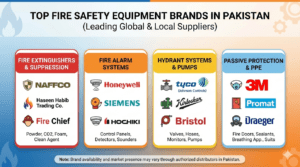
Several internationally recognized brands supply FM-200 fire suppression systems in Pakistan, ensuring high quality, reliability, and compliance with global standards. DuPont FM-200 is one of the most widely known, offering systems that meet NFPA 2001, UL Listed, and FM Approved standards. These systems are favored for data centers, hospitals, and industrial facilities due to their proven performance and safety features.

Ansul is another leading brand, renowned for its robust fire suppression solutions and comprehensive service support. Ansul FM-200 systems are designed for rapid discharge, leaving no residue, and are suitable for occupied spaces, making them popular in offices, telecom hubs, and laboratories.

Chemours, formerly part of DuPont, also provides FM-200 systems with a strong emphasis on environmental compliance and ozone-friendly formulations. Their solutions are widely adopted in Pakistan for critical infrastructure where both environmental and operational safety are priorities.

Choosing a trusted brand ensures access to certified equipment, professional installation services, and ongoing maintenance support. It also provides assurance that the FM-200 system will perform reliably in emergencies, safeguarding valuable assets and meeting regulatory requirements in Pakistan.

Key suppliers (Adams Fire Tech, Karachi Fire Corporation, Universal Fire Protection, Fire Safety Trading, Abdullah Fire Protection)

Pakistan has several reliable suppliers of FM-200 fire suppression systems, offering installation, maintenance, and refilling services across major cities. Adams Fire Tech is known for its certified solutions and wide range of system options suitable for data centers, industrial plants, and commercial facilities.

Karachi Fire Corporation provides professional installation and maintenance services, focusing on rapid discharge systems and compliance with NFPA 2001 standards. Universal Fire Protection caters to both small and large-scale installations, offering customized FM-200 designs for offices, telecom hubs, and hospitals.

Fire Safety Trading specializes in supplying cylinders, nozzles, and control panels while also providing training and post-installation support. Abdullah Fire Protection offers comprehensive FM-200 services, including site surveys, system design, and regular maintenance packages to ensure operational reliability.

Partnering with these trusted suppliers ensures that FM-200 systems in Pakistan are installed professionally, maintained regularly, and compliant with local and international safety standards. This guarantees that businesses, hospitals, and industrial facilities receive continuous and effective fire protection.

Price range (starts from Rs. 100,000 to Rs. 1,000,000+ based on size/project)

The cost of FM-200 fire suppression systems in Pakistan varies depending on the size of the facility, system design, and complexity of the installation. Entry-level systems for small server rooms or equipment cabinets generally start from around Rs. 100,000, including cylinders, nozzles, and basic control panels.

For larger installations, such as data centers, industrial plants, hospitals, or multi-room commercial facilities, costs can exceed Rs. 1,000,000. These projects often require multiple high-pressure cylinders, extensive piping networks, advanced detection systems, and integration with building alarms and safety protocols.

Additional factors influencing the price include professional installation fees, post-installation training, certification compliance (NFPA 2001, UL, FM Approved), and ongoing maintenance packages. Businesses in Pakistan are advised to consult certified FM-200 suppliers to receive a detailed quote tailored to their specific facility requirements.

Investing in a properly designed and installed FM-200 system ensures rapid fire suppression, protection of high-value assets, and compliance with safety regulations, making it a worthwhile expenditure for critical environments.

Where to buy (online/offline in major cities, factors affecting cost)

FM-200 fire suppression systems are available through both online and offline suppliers in Pakistan. Major cities like Karachi, Lahore, and Islamabad have certified distributors who provide full services, including site surveys, system design, professional installation, and post-installation maintenance. Offline visits allow businesses to inspect cylinders, nozzles, and control panels, while online inquiries can help compare prices and service packages from multiple providers.

Several factors affect the cost of FM-200 systems. These include the size of the protected area, the number of cylinders required, complexity of piping and nozzle layout, type of control panel, and whether the system is pre-engineered or fully engineered. Additional costs may arise from professional installation, post-installation training, and annual maintenance packages.

Choosing a reputable supplier is crucial to ensure that the FM-200 system complies with NFPA 2001, UL, and FM Approved standards. Verified providers also offer refilling services and routine maintenance, ensuring long-term reliability and protection of valuable assets. By considering both service quality and cost factors, businesses can select an FM-200 solution that is safe, effective, and tailored to their specific needs in Pakistan.

9. Fire Safety Regulations for FM-200 Systems in Pakistan

Overview of Building Code of Pakistan (BCP) 2021 and provincial fire safety rules

The Building Code of Pakistan (BCP) 2021 provides comprehensive guidelines for fire safety, construction standards, and emergency preparedness in both commercial and residential buildings. It mandates that critical facilities such as high-rise buildings, hospitals, data centers, and industrial sites implement advanced fire suppression measures, including clean agent systems like FM-200, to protect lives and high-value assets.

In addition to the national code, provincial fire safety rules in Sindh, Punjab, Khyber Pakhtunkhwa, and Islamabad Capital Territory specify local requirements for system design, installation, and maintenance. These rules often reference international standards such as NFPA, UL, and FM Approved, ensuring that installed systems meet global safety benchmarks while addressing region-specific fire risks.

Compliance with BCP 2021 and provincial regulations is essential for obtaining building permits, passing inspections, and qualifying for insurance coverage. It also ensures that FM-200 systems are properly designed for factors like room volume, occupancy, and hazard type, providing reliable fire protection across Pakistan’s diverse building types.

Mandatory compliance for commercial/industrial buildings

In Pakistan, compliance with fire safety regulations is mandatory for commercial and industrial buildings to safeguard lives, protect high-value assets, and reduce potential business losses. The Building Code of Pakistan (BCP) 2021 requires that these facilities implement appropriate fire suppression systems, including clean agent options like FM-200, based on hazard assessment and occupancy type.

Provincial fire safety rules in Sindh, Punjab, Khyber Pakhtunkhwa, and Islamabad Capital Territory enforce these requirements locally. Inspections and permits are tied to adherence with NFPA, UL, and FM Approved standards, ensuring that installed systems meet international safety benchmarks. Failure to comply can result in fines, legal liabilities, insurance issues, or operational restrictions.

Mandatory compliance ensures that commercial offices, data centers, hospitals, industrial plants, and high-rise complexes have properly designed, installed, and maintained fire suppression systems. It guarantees both the protection of people and continuity of operations in the event of a fire emergency.

Integration with overall fire plans (alarms, evacuation protocols)

Effective fire protection in Pakistan requires that FM-200 systems be fully integrated with the building’s overall fire safety plan. This includes seamless coordination with fire alarms, emergency evacuation protocols, and other suppression or detection systems. When a fire is detected, the FM-200 system works in tandem with alarms to alert occupants, giving them sufficient time to evacuate safely while the clean agent rapidly suppresses the fire.

Integration also ensures that FM-200 does not operate in isolation. For example, smoke or heat detectors linked to the control panel trigger both the discharge of the agent and simultaneous notifications to building security or fire response teams. Evacuation routes and protocols are planned to align with system activation, preventing bottlenecks and ensuring orderly exit.

In commercial, industrial, and high-rise buildings, combining FM-200 with audible/visual alarms and emergency response procedures maximizes the effectiveness of fire suppression while protecting human life and valuable assets. Proper integration is a key requirement under the Building Code of Pakistan 2021 and provincial fire safety regulations, ensuring compliance and operational safety across facilities.

Environmental regulations (low GWP, phase-out considerations)

FM-200 fire suppression systems in Pakistan are subject to environmental considerations, particularly regarding their Global Warming Potential (GWP). While HFC-227ea is ozone-friendly, its GWP is higher than some newer alternatives like Novec 1230. Businesses are encouraged to select FM-200 systems designed with the lowest possible GWP to comply with both local environmental policies and international sustainability guidelines.

Regulatory authorities and corporate sustainability programs may consider phase-out timelines for high-GWP agents in the future. Facilities that proactively adopt environmentally responsible FM-200 systems ensure long-term compliance and reduce the risk of needing costly retrofits or replacements.

In practice, this means working with certified suppliers who provide detailed documentation on GWP values, environmental certifications, and safe handling procedures. By adhering to these environmental regulations, organizations in Pakistan can balance effective fire protection with eco-conscious operations, supporting global efforts to mitigate climate impact.

10. FAQs: Common Questions About FM-200 Fire Suppression

What is the difference between FM-200 and CO2 systems?

FM-200 and CO2 are both widely used fire suppression agents, but they differ significantly in safety, application, and environmental impact.

Safety for Occupants: FM-200 is safe for occupied spaces when used within design concentrations. It allows people to remain in the room during discharge or evacuate safely. CO2, on the other hand, displaces oxygen, making it hazardous or even fatal for humans, so it is only suitable for unoccupied areas.

Application Areas: FM-200 is ideal for sensitive environments like data centers, hospitals, telecom facilities, and archives because it leaves no residue and is electrically non-conductive. CO2 is better suited for industrial areas or large unoccupied rooms where water-based suppression or clean agents cannot be effectively used.

Environmental Impact: FM-200 (HFC-227ea) is ozone-friendly, though it has a higher Global Warming Potential (GWP) than some newer agents. CO2 is a natural gas with zero ozone depletion potential, but its discharge requires high volumes and can contribute indirectly to greenhouse gas emissions.

Discharge Mechanism: FM-200 rapidly suppresses fire through heat absorption and free radical interruption, typically discharging in under 10 seconds. CO2 extinguishes fire mainly by displacing oxygen and cooling, which can require larger storage volumes and higher pressure.

In summary, FM-200 is preferred for occupied, sensitive, or high-value areas, while CO2 is mostly used for unoccupied industrial or hazardous spaces. The choice depends on safety requirements, environment sensitivity, and regulatory considerations.

Is FM-200 safe for human-occupied areas?

Yes, FM-200 fire suppression systems are considered safe for human-occupied areas when installed and operated according to design specifications. The clean agent HFC-227ea is non-toxic within recommended concentrations, allowing people to remain in the room briefly or evacuate safely during a fire event.

FM-200 is also electrically non-conductive and non-corrosive, making it ideal for offices, data centers, hospitals, control rooms, and other occupied spaces with sensitive equipment. Unlike CO2 systems, which displace oxygen and pose serious risks to humans, FM-200 suppresses fire rapidly without endangering life.

It is important, however, that the system is designed and maintained according to NFPA 2001 standards and manufacturer guidelines. Proper installation, concentration calculations, and routine inspections ensure that FM-200 provides both effective fire suppression and occupant safety in Pakistan’s commercial, industrial, and institutional settings.

How much does FM-200 cost per kg in Pakistan?

The cost of FM-200 (HFC-227ea) fire suppression agent in Pakistan varies based on factors such as supplier, quantity, and market conditions. While specific per-kilogram prices are not publicly listed, some suppliers provide pricing for complete systems that include the FM-200 agent, cylinders, detection and control panels, and installation.

For instance, Adams Fire Tech offers an FM-200 fire suppression system priced at ₨ 525,000. This price likely includes the agent along with other necessary components and services. adamsfiretech.com

To obtain an accurate per-kilogram cost for FM-200 in Pakistan, it’s advisable to contact suppliers directly for quotes based on your specific requirements. Suppliers such as Karachi Fire, Universal Fire Protection, and Fire Safety Trading can provide detailed pricing information and assist with system design and installation.

If you need assistance reaching out to these suppliers or require further information on FM-200 systems, feel free to ask.

Can FM-200 be used in residential settings?

Yes, FM-200 fire suppression systems can be used in residential settings, but their application is typically limited to high-value or sensitive areas within the home, such as server rooms, home theaters, or private data centers. The clean agent HFC-227ea is safe for occupied spaces, leaving no residue and protecting both people and property without causing water damage.

However, FM-200 systems are usually more expensive than traditional residential fire solutions like smoke detectors and sprinklers, and they require professional installation, proper room sealing, and routine maintenance to ensure effectiveness. For smaller rooms or single-use spaces, pre-engineered FM-200 systems are often recommended because they provide rapid fire suppression without the complexity of a fully engineered setup.

In residential use, FM-200 offers the advantage of protecting sensitive electronics, valuable documents, and furnishings from fire while minimizing cleanup and damage, making it a practical choice for luxury homes or private offices with critical equipment.

What is the discharge time of an FM-200 system?

The FM-200 fire suppression system is designed for rapid discharge, typically releasing the clean agent within 10 seconds or less after activation. This quick action ensures that fires are suppressed almost instantly, minimizing damage to sensitive equipment, documents, and infrastructure.

The rapid discharge is achieved using pressurized cylinders filled with HFC-227ea and nitrogen, which force the agent through nozzles evenly throughout the protected area. The system is engineered to fill the entire room to the required concentration almost immediately, effectively disrupting the fire triangle by absorbing heat and interrupting free radicals.

This fast discharge capability makes FM-200 ideal for data centers, server rooms, hospitals, telecom facilities, and other high-value environments in Pakistan where even a few seconds of fire exposure could result in significant losses. Proper system design and maintenance are critical to ensure that the discharge time meets these specifications reliably.

11. Conclusion: Invest in FM-200 for Ultimate Fire Safety

Recap of key benefits and why it’s a smart choice for Pakistan businesses

FM-200 fire suppression systems offer multiple benefits that make them a smart choice for businesses in Pakistan. One of the most important advantages is rapid fire suppression, with the agent discharging in 10 seconds or less to prevent fire spread and minimize damage.

The system is safe for occupied spaces, using a non-toxic, electrically non-conductive clean agent that protects both people and sensitive equipment, including servers, medical devices, and telecommunications infrastructure. Its no-residue, ozone-friendly formula ensures that valuable assets remain unharmed, avoiding costly cleanup after a fire incident.

FM-200 systems are versatile and customizable, suitable for Class A, B, and C hazards, and adaptable to different facility sizes and layouts. Integration with alarms, manual release stations, and evacuation protocols ensures coordinated safety across the building.

For Pakistan businesses, the combination of asset protection, human safety, regulatory compliance, and environmental responsibility makes FM-200 a reliable and forward-thinking fire suppression solution. Whether for data centers, hospitals, industrial plants, or high-rise offices, FM-200 helps safeguard lives and critical operations against fire risks.

Call to action (consult certified providers, schedule assessments)

Businesses and organizations in Pakistan are encouraged to consult certified FM-200 providers to assess their fire protection needs. Professional providers can perform a thorough site survey, design a system tailored to the facility’s size, occupancy, and hazard type, and ensure installation meets NFPA 2001, UL, and FM Approved standards.

Scheduling a fire safety assessment is the first step toward protecting high-value assets, sensitive equipment, and human life. Providers in cities like Karachi, Lahore, and Islamabad offer complete solutions, including installation, routine maintenance, refilling, and staff training.

Acting proactively with a certified FM-200 system ensures rapid fire suppression, compliance with local and international regulations, and long-term reliability. Contact a trusted supplier today to secure your facility against fire risks and maintain business continuity in Pakistan.

Resources for further info (NFPA guidelines, local fire authorities)

For businesses seeking more information on FM-200 fire suppression systems in Pakistan, several resources provide detailed guidance and regulatory standards. The National Fire Protection Association (NFPA) publishes comprehensive guidelines, including NFPA 2001, which covers clean agent fire extinguishing systems and provides recommendations for design, installation, and maintenance.

Local fire authorities and municipal fire departments in cities like Karachi, Lahore, and Islamabad can provide information on provincial fire safety rules, inspection requirements, and compliance obligations under the Building Code of Pakistan 2021.

Additionally, certified FM-200 providers often supply technical documentation, product datasheets, and training materials to help businesses understand system operation, maintenance, and environmental considerations. Utilizing these resources ensures that organizations implement safe, effective, and compliant fire suppression solutions tailored to their facility’s needs.

FM-200 fire suppression systems provide Pakistan businesses with a reliable, rapid, and safe solution for protecting high-value assets, sensitive equipment, and human life. With advantages such as quick discharge, no-residue operation, safety in occupied spaces, and compliance with international standards like NFPA 2001, FM-200 is ideal for data centers, hospitals, industrial facilities, and commercial buildings.

By choosing certified providers, scheduling proper assessments, and following maintenance and refilling guidelines, organizations can ensure long-term system reliability and regulatory compliance. For businesses seeking robust fire protection in Pakistan, FM-200 offers a smart, forward-thinking choice that balances safety, efficiency, and environmental responsibility.

Why Fire Safety Equipment is Crucial in Pakistan

Pakistan faces hundreds of fire-related incidents every year. According to Rescue 1122 and local media reports, fires in markets, factories, and even residential areas cause millions of rupees in damages annually. Cities like Karachi, Lahore, Faisalabad, and Islamabad witness frequent cases due to short circuits, gas leaks, and lack of preventive measures.

Unfortunately, many buildings either have no fire safety equipment installed or rely on outdated tools. Installing modern fire extinguishers, smoke detectors, sprinklers, and safety alarms is one of the simplest ways to reduce these risks. The cost of equipment is small compared to the potential damage to lives and property.

Common Fire Safety Equipment in Pakistan

When discussing fire safety, people often think only about fire extinguishers. In reality, there are multiple types of equipment, each serving a specific purpose. Let’s look at the most common ones and their estimated prices in Pakistan.

Fire Extinguishers Prices in Pakistan

Fire extinguishers are the first line of defense. They are available in different types, including:

  • CO₂ fire extinguishers: Ideal for electrical and electronic fires.

  • Dry powder extinguishers: Effective for flammable liquids, gases, and general use.

  • Water-based extinguishers: Suitable for ordinary combustible materials like wood and paper.

In 2025, the average price of fire extinguishers in Pakistan ranges from PKR 3,500 to PKR 15,000, depending on size, capacity, and type. For small offices or homes, a 2kg extinguisher may cost around PKR 3,500 to PKR 5,000. Larger industrial extinguishers can go above PKR 10,000.

Smoke Detectors and Fire Alarms

Smoke detectors are crucial for early fire detection. They trigger alarms before flames spread, giving occupants time to escape. In Pakistan, good quality smoke detectors start at PKR 1,200 and can go up to PKR 6,000, depending on sensitivity and brand.

For commercial use, a complete fire alarm system with interconnected detectors and control panels can cost between PKR 50,000 and PKR 200,000.

Fire Sprinkler Systems

Sprinkler systems are widely used in malls, hotels, and factories. They automatically release water when a fire is detected. While expensive, they are highly effective in reducing fire damage. In Pakistan, installation costs usually range from PKR 250 to PKR 600 per square foot, depending on building size and design.

Fire Blankets and Emergency Kits

Fire blankets are simple yet effective for small kitchen fires or clothing fires. They are priced between PKR 2,000 and PKR 5,000. Emergency kits, which may include blankets, masks, and first-aid supplies, usually cost around PKR 8,000 to PKR 20,000.

Safety Signs and Emergency Lighting

Fire safety is not just about extinguishing flames but also about safe evacuation. Glow-in-the-dark exit signs, safety symbols, and emergency lighting systems are affordable additions. In Pakistan, signs cost as little as PKR 500, while emergency lights range from PKR 3,000 to PKR 10,000.

Factors Affecting Fire Safety Equipments Prices

The prices of fire safety equipment in Pakistan vary due to several reasons:

  1. Type and size of equipment: Larger extinguishers or advanced alarm systems cost more.

  2. Brand and certification: Imported brands like Kidde or Honeywell are more expensive than local ones but offer international certification.

  3. Installation requirements: Equipment like sprinklers and alarms require professional installation, which adds to the cost.

  4. Location: Prices in Karachi and Lahore may differ slightly from smaller cities due to transportation and availability.

Government Regulations and Fire Safety Awareness in Pakistan

The Punjab Fire Safety Provisions 2016 and building safety codes by the National Disaster Management Authority (NDMA) highlight the need for fire safety compliance. Yet, enforcement is still limited. Most markets and residential areas lack even basic equipment.

Recent incidents, such as factory fires in Karachi and Lahore, have sparked discussions on stricter regulations. Authorities now encourage building owners to invest in fire alarms and extinguishers to avoid future tragedies. For authentic guidelines, readers can refer to the NDMA official site.

Real-Life Examples

In 2023, a massive fire in Karachi’s cooperative market destroyed property worth billions. Reports revealed that the market had no functional fire extinguishers or alarms. Similar cases in Lahore factories showed how lack of basic equipment led to loss of lives. These examples highlight the importance of not delaying safety investments.

Where to Buy Fire Safety Equipment in Pakistan

Fire safety equipment is available in almost all major cities through specialized suppliers. In Lahore and Karachi, companies provide both products and installation services. Many online platforms also sell fire extinguishers and smoke detectors, making it easier for homeowners to buy directly.

For readers interested in related topics, firesafetytrading.com.pk has detailed guides on home safety tips in Pakistan (internal linking suggestion).

Suggested Images for the Article

  1. Fire extinguisher installed in an office (alt text: “fire extinguisher price in Pakistan 2025”).

  2. Smoke detector close-up (alt text: “smoke detector for fire safety in Pakistan”).

  3. Firefighters responding to a commercial fire in Karachi (alt text: “fire safety equipment in Pakistan”).

Conclusion

Fire safety is an investment that saves lives, property, and businesses. The cost of installing fire safety equipment in Pakistan is far less than the damages caused by fire accidents. From affordable fire extinguishers for homes to advanced sprinkler systems for factories, every building must have suitable protection.

If you are planning to secure your home or business in 2025, now is the best time to explore fire safety equipment prices and choose the right solutions.


Stay connected with firesafetytrading.com.pk for more updates on fire safety, home security, and essential tips for a safer Pakistan.

Fire Alarm System & Maintenance in Pakistan | Complete Guide

1. Introduction to Fire Alarm Systems

Overview of Fire Alarm Systems and Their Role in Fire Safety

Fire safety is essential for homes, offices, factories, and commercial spaces in Pakistan. A reliable fire alarm system is the first line of defense, detecting smoke, heat, or flames before a fire spreads. These systems provide early warning, enabling safe evacuation and measures to control the situation. In Pakistan, where risks arise from electrical short circuits and gas leaks, demand for fire alarm systems and maintenance is increasing. (“Pakistan Fire Alarm And Detection Market (2025-2031) | Analysis & Revenue”, 2025)
A fire alarm system functions as a comprehensive safety solution, not just a siren. Detectors, control panels, and communication devices work together to identify threats and alert occupants. Effectiveness depends on meticulous installation and ongoing maintenance. Providers such as Fire Safety Trading deliver advanced solutions that meet both global standards and local regulations.
The role of fire alarm systems in Pakistan goes beyond installation. Without proper maintenance, detectors may fail, batteries can run out, or circuits could malfunction. Regular inspection and upkeep are essential. Professional fire alarm maintenance ensures systems remain ready to respond instantly in emergencies.
In industries, commercial buildings, and schools, fire alarm systems save lives and protect property. As cities like Karachi, Lahore, and Islamabad experience growth in high-rises and factories, reliable fire alarm systems and maintenance become crucial. Working with providers like Fire Safety Trading reduces fire risks and ensures lasting safety.
Importance of Fire Alarm Systems in Pakistan Due to Urbanization and Fire Incidents
Urban growth in Pakistan raises fire risks due to crowded spaces. Fire alarm systems are necessary, as early alerts ensure safe evacuation and protect people and property.
Major fires in factories, shopping malls, and homes in recent years highlight the consequences of inadequate safety measures. Electrical short circuits, gas leaks, and negligence are common causes of fires. This makes fire alarm systems and maintenance vital in Pakistan. Regular upkeep is necessary, as even advanced systems can fail without it, making professional maintenance essential.
Fire safety is crucial for Pakistan’s economic stability. Fire losses affect business owners, employees, and communities. Trusted providers like Fire Safety Trading help industries and homeowners protect lives and property. Especially in fast-growing urban centers like Karachi, Lahore, and Islamabad, reliable fire alarm systems and regular maintenance are essential for sustainable city planning.
Basic Components of Fire Alarm Systems: Detectors, Control Panels, and Notification Appliances
A reliable fire alarm system utilizes interconnected components to rapidly detect hazards and alert personnel. Knowing each part’s function is crucial for Pakistan’s growing cities and industries, underscoring the need for professional installation and maintenance to ensure safety and reliability.
Detectors, such as smoke, heat, and flame types, sense abnormal conditions and signal the control panel. Without regular maintenance, their sensitivity may drop or they may fail at critical moments. Inspection and servicing are essential.
The control panel serves as the system’s brain, receiving detector signals and triggering alarms when necessary. Modern panels, provided by companies like Fire Safety Trading, can connect with emergency teams or management systems. Their performance relies on proper installation and routine maintenance.
Notification appliances, such as sirens, bells, and strobe lights, alert people to evacuate. In busy commercial centers or schools, these alarms ensure timely warnings for safe exit. As demand for advanced fire alarm systems and maintenance grows in Pakistan, notification appliances are becoming increasingly smart, providing clear instructions in emergencies.

2. Types of Fire Alarm Systems

Conventional Fire Alarm Systems: Zoned Detection and Affordability
Conventional fire alarm systems are common in small businesses, schools, and residential buildings in Pakistan. They use zoned detection, dividing a building into areas. When smoke or heat is detected, the panel locates the affected zone for a quick response. While not pinpointing exact locations, they are suitable for medium-sized properties where such precision isn’t needed.
Their main advantage is affordability, which is crucial in Pakistan, where cost constraints often limit the implementation of fire safety measures. These systems provide effective protection at a low expense for schools, offices, and homes. However, reliable performance requires regular maintenance, as these systems may fail without it, making service essential for operation.
Organizations seeking dependable and economical solutions benefit from conventional systems installed by providers like Fire Safety Trading. These systems ensure early detection and evacuation, which is important in Pakistan’s rapidly urbanizing cities, where fire risks are high.
Addressable Fire Alarm Systems: Precise Location Identification and Scalability
As Pakistan’s cities grow, advanced fire safety is needed. Addressable systems provide precise, real-time data on fire locations. Unlike conventional systems, they pinpoint the activated detector, speeding up firefighting response and saving time during emergencies.
A key advantage of addressable systems is scalability. Large or expanding organizations can add detectors and devices with minimal rewiring. This flexibility suits universities, hospitals, and multi-story buildings in Pakistan. As safety standards continue to rise, professional installation and maintenance become increasingly essential.
To keep these advanced systems working, timely maintenance is vital. Even a small wiring or detector issue can compromise performance. Professional fire alarm maintenance ensures long-term reliability and optimal performance. Providers such as Fire Safety Trading offer installation, servicing, and monitoring to ensure buildings are compliant and prepared for emergencies.
Wireless and Hybrid Fire Alarm Systems: Flexible Installation and Modern Applications
Modern infrastructure and smart technology are driving the popularity of wireless and hybrid fire alarm systems in Pakistan. These systems enable flexible installation in areas where wiring is challenging, such as heritage buildings or large open spaces. Wireless systems utilize radio signals to connect detectors, panels, and alarms, thereby reducing installation time and minimizing property disruption.
Hybrid systems blend wired and wireless technology for reliability and flexibility. For instance, main zones in an office building can be wired, while wireless detectors cover areas that are difficult to wire. This adaptability suits a range of properties. As urban areas expand, the importance of fire alarm systems and their maintenance increases in line with modern safety standards.
Regular servicing is essential for these advanced systems. Wireless detectors require timely battery replacement, and signal strength must be regularly checked to ensure dependable device communication. Professional fire alarm maintenance ensures optimal functioning for all applications. Companies like Fire Safety Trading offer comprehensive installation and maintenance solutions.
Semi-Addressable Fire Alarm Systems: Combination of Conventional and Addressable Features
Semi-addressable systems are often considered a middle ground between conventional and fully addressable systems. Semi-addressable fire alarm systems offer a balance between conventional and fully addressable fire alarm systems. They are more affordable than fully addressable systems but include some advanced monitoring features. Unlike conventional systems that only show the zone, semi-addressable systems can identify the group of detectors or devices that triggered the alarm. This helps locate fire risks more accurately without the higher cost. tional institutions, and residential complexes. They provide better monitoring than conventional systems and are more budget-friendly than fully addressable ones, which is why many organizations are adopting them. The growing demand for fire alarm systems and maintenance in Pakistan indicates that people seek balanced solutions—affordable yet reliable enough to meet modern safety requirements.
Like all other systems, semi-addressable fire alarms also need proper servicing. Without professional fire alarm maintenance, issues such as wiring faults, weak batteries, or faulty detectors can compromise system performance. Regular checks by experts ensure that the system remains reliable and fully functional. Companies like Fire Safety Trading provide installation and maintenance services tailored for semi-addressable systems, helping organizations secure their buildings with cost-effective and efficient safety solutions.

3. Key Features and Components

Fire Alarm Detectors: Smoke, Heat, Carbon Monoxide, Multi-Sensor, and Manual Call Points
Detectors are the most crucial components of any fire alarm system because they are responsible for sensing early signs of danger. In Pakistan, where fire incidents often occur due to electrical faults, gas leaks, or industrial hazards, having the right type of detector installed makes all the difference. Each type of detector serves a unique purpose, and its effectiveness depends on the correct placement and proper maintenance of the Fire Alarm System in Pakistan.
Smoke detectors are the most widely used because they sense smoke particles in the air, making them ideal for offices, shopping malls, and residential spaces. Heat detectors, on the other hand, respond to a sudden rise in temperature, making them suitable for kitchens, boiler rooms, and industrial sites where smoke may not appear instantly. Carbon monoxide detectors are another vital addition, especially in enclosed areas like basements or car parking zones, where this silent and deadly gas can accumulate without warning.
Multi-sensor detectors combine smoke and heat sensing, offering higher accuracy and fewer false alarms. They are particularly useful in large commercial buildings in Pakistan, where both smoke and temperature changes need to be monitored. Manual call points, also known as break-glass units, allow occupants to raise an alarm themselves if they spot a fire before the detectors activate. These are commonly installed in corridors, staircases, and exit routes, ensuring quick human intervention when needed.
Detectors need regular servicing to work properly. Dust, electrical problems, or old sensors can cause them to fail. Routine checks by professionals are important to keep detectors in good condition. By working with providers like Fire Safety Trading, both organizations and homeowners can ensure their detectors remain reliable and ready to protect people and property.
Fire Alarm Control Panels: Processing Signals and Zoning
At the heart of every fire alarm system lies the control panel, which functions as the central hub. It processes signals from detectors and manual call points, then decides whether to activate alarms and notification appliances. Without the control panel, a fire alarm system cannot operate, as it is responsible for coordinating all components and ensuring accurate communication during an emergency.
In conventional setups, the control panel divides a building into zones. When a detector senses smoke or heat in one zone, the panel identifies the area, allowing building staff to quickly locate the problem. Addressable and semi-addressable systems take this a step further by displaying the exact device or group of devices that triggered the alarm. This zoning and monitoring capability highlights why fire alarm systems and maintenance in Pakistan are becoming a critical requirement, especially in multi-story buildings, factories, and commercial plazas.
Modern control panels offered by companies like Fire Safety Trading come with advanced features such as LCD displays, fault indicators, and integration with emergency systems. These innovations ensure faster response times and greater reliability. However, to keep them functioning at their best, routine servicing is necessary. With professional fire alarm maintenance, panels can be thoroughly checked for wiring faults, battery backups, and software updates, ensuring they continue to perform reliably without failure when needed most.
Fire Alarm Notification Devices: Horns, Strobes, and Electronic Sounders
Notification devices are a part of a fire alarm system that directly alert people when danger is detected. These devices play a life-saving role by ensuring everyone in the building is immediately aware of the emergency. In Pakistan, where fire incidents can spread rapidly due to overcrowded spaces and inadequate evacuation planning, reliable notification systems are crucial for public safety.
Horns are the most common type of alarm, producing loud sounds that signal people to evacuate instantly. Strobes provide flashing lights, which are particularly important in noisy environments such as factories or for individuals with hearing impairments. Electronic sounders are modern alternatives that can generate different tones and even pre-recorded voice instructions, guiding people on how to exit safely. These advanced features make them especially effective in schools, hospitals, and large commercial centers.
The efficiency of these devices depends not only on their quality but also on a properly functioning fire alarm system and regular maintenance in Pakistan. Without maintenance, batteries may weaken, sound levels may drop, or strobes may fail to flash during an emergency. Professional fire alarm maintenance ensures all notification devices are tested regularly and remain in full working order. With reliable service providers like Fire Safety Trading, organizations and homeowners can guarantee that their alarm signals are loud, visible, and effective enough to protect lives during any fire emergency.
Advanced Features of Fire Alarm Systems: Rapid Detection and Integration with Suppression Systems
Modern fire alarm systems are designed with advanced features that go far beyond basic detection and alerts. One of the most valuable improvements is rapid detection, which enables sensors to respond more quickly to the presence of smoke, heat, or gas. In high-risk environments like factories, shopping malls, or crowded offices in Pakistan, even a few seconds can make the difference between a contained fire and a major disaster. This speed gives people more time to evacuate safely while also allowing responders to act before the fire spreads.
Another key feature is the integration of fire alarm systems with suppression systems such as sprinklers, gas-based suppression units, or foam systems. When the alarm detects a fire, it can automatically trigger the connected suppression system, controlling the flames until firefighters arrive. This combined approach is becoming more important in Pakistan’s industrial sector, where hazardous materials and machinery require immediate intervention. The growing focus on fire alarm systems and maintenance in Pakistan reflects the need to ensure that such integrated systems always remain in top condition.
These advanced features require expert attention. Without professional maintenance, sensors may respond slowly, and automatic links to suppression systems could fail in an emergency. Trusted providers like Fire Safety Trading handle both installation and ongoing servicing, making sure rapid detection and system integration always work to protect people and property.

4. Regulations and Standards in Pakistan

Building Code of Pakistan (BCP) 2021 and Fire Safety Provisions
The Building Code of Pakistan (BCP) 2021 has made fire safety a mandatory component of construction and building management nationwide. (“Building Code of Pakistan – Fire Safety Provisions – 2016”, 2016) These provisions underscore the importance of installing certified fire alarm systems in commercial, residential, and industrial projects. By enforcing such rules, the government aims to reduce the rising number of fire incidents in rapidly urbanizing cities, such as Karachi, Lahore, and Islamabad, where crowded high-rises and commercial complexes pose a greater risk.
According to BCP 2021, buildings must be equipped with fire detection and alarm systems that provide early warnings and guide safe evacuation. (“Building Code of Pakistan-Fire Safety Provisions-2016”, 2016) For high-occupancy structures such as shopping malls, schools, hospitals, and industrial units, compliance with these fire safety measures is no longer optional but legally required. This makes fire alarm systems and maintenance in Pakistan an essential responsibility for builders, property owners, and facility managers.
Another key point of the code is the importance of system maintenance. It clearly emphasizes that alarms, detectors, and notification devices must be regularly tested and serviced to remain operational. Professional fire alarm maintenance ensures compliance with BCP standards while also keeping occupants safe from unexpected failures. Trusted companies like Fire Safety Trading provide solutions that meet these legal requirements, making it easier for organizations and homeowners to stay aligned with Pakistan’s updated fire safety laws.
Alignment of Fire Alarm Systems in Pakistan with International Standards (NFPA 72, BS 5839-1)
To ensure reliability and adherence to global best practices, modern fire alarm systems in Pakistan are increasingly being designed and installed in accordance with international standards. Two of the most widely recognized codes are NFPA 72, developed by the National Fire Protection Association in the United States, and BS 5839-1, the British Standard for fire detection and alarm systems. (“BS 5839-1:2025”, 2025) These guidelines encompass everything from system design and installation to inspection, testing, and maintenance, serving as a benchmark for fire safety worldwide.
For Pakistan, aligning with these standards is especially important because rapid urbanization has led to the construction of high-rise buildings, industrial complexes, and commercial centers where advanced fire protection is a necessity. Compliance with NFPA 72 and BS 5839-1 ensures that systems not only detect fires quickly but also minimize false alarms and provide reliable evacuation alerts. This approach highlights why fire alarm systems and maintenance in Pakistan must go beyond basic setups and follow globally accepted practices.
However, achieving this alignment requires proper servicing. Both NFPA 72 and BS 5839-1 stress the importance of routine checks, functional testing, and timely repairs to guarantee system performance. Professional fire alarm maintenance carried out by certified experts ensures that systems meet these standards in daily operation. Trusted providers like Fire Safety Trading deliver solutions that not only comply with Pakistani codes but also incorporate international guidelines, providing businesses and homeowners with complete peace of mind.
Provincial Fire Safety Regulations in Pakistan (Example: Khyber Pakhtunkhwa Fire Safety Regulations)
In addition to the Building Code of Pakistan (BCP 2021), several provinces have introduced their own fire safety laws to address regional challenges. For example, the Khyber Pakhtunkhwa Fire Safety Regulations highlight the importance of installing and maintaining proper fire alarm systems in both commercial and residential buildings. (“Owners of high-rise buildings told to get fire safety certificates”, 2024) These regulations were developed in response to the increasing number of fire incidents in urban and industrial areas of the province, where a lack of preparedness often results in significant losses.
The provincial regulations stress that building owners must ensure compliance by installing detection and alarm systems, emergency exits, and firefighting equipment. They also emphasize the importance of regular servicing to guarantee that safety measures remain fully functional. This reflects the growing recognition that fire alarm systems and maintenance in Pakistan are not only a preventive measure but also a legal requirement in many provinces.
Professional servicing is a key part of these laws. If systems are not maintained properly, they may fail during emergencies, leaving building owners liable for damages and penalties. By relying on certified experts for fire alarm maintenance, organizations and homeowners can ensure compliance while maintaining the safety of their occupants. Service providers like Fire Safety Trading support businesses across Pakistan in meeting both national and provincial fire safety standards, helping them mitigate risks and comply with legal obligations.
Fire Alarm System Requirements for Commercial, Industrial, and Public Buildings in Pakistan
The safety requirements for fire protection vary depending on the type of building, but in every case, a properly designed fire alarm system is a critical necessity. In commercial spaces such as shopping malls, office complexes, and hotels, fire alarm systems are mandatory to ensure the quick evacuation of occupants. (“Extract Building Code of Pakistan (BCP-2016) Fire Alarm System”, 2016) These setups must include smoke detectors, heat sensors, and clear notification appliances, such as horns and strobes, to guide people safely out of crowded areas. For such buildings, a timely fire alarm system and maintenance in Pakistan is essential, as any failure could put hundreds of lives at risk.
Industrial buildings face even greater risks due to the presence of heavy machinery, flammable materials, and large-scale operations. (“70pc buildings in Karachi have no fire safety system, Moot told, 2024) For factories, warehouses, and production units, fire alarm systems must include advanced features such as rapid detection, integration with suppression systems, and durable detectors that can withstand harsh conditions. Regular fire alarm maintenance is legally and practically necessary to keep these systems fully functional, as even minor delays in detection can result in severe damage.
Public buildings such as schools, hospitals, airports, and government offices also require specialized solutions. Hospitals, for example, need silent or voice-based alarm systems to prevent panic, while schools must have clear evacuation alerts for children. (“TYEE’s solution keeps hospitals, schools, and factories safe”, n.d.) In such cases, professional service providers like Fire Safety Trading design and maintain systems that comply with both national codes and international standards. By following proper installation and routine servicing, commercial, industrial, and public institutions in Pakistan can reduce risks and ensure the safety of both people and property.

5. Installation Guidelines

Site Assessment and Design Considerations for Fire Alarm Systems in Pakistan
Before installing a fire alarm system, one of the most important steps is conducting a proper site assessment. Every building has different risks depending on its structure, occupancy, and usage. For example, a hospital requires a system that avoids panic and ensures smooth evacuation, while an industrial site may need rapid detection devices near high-risk machinery. Without assessing these factors, the system may not provide complete coverage. This is why professional site surveys are a standard part of modern fire alarm systems and maintenance in Pakistan.
During the design process, factors such as building size, number of floors, fire load, and exit routes are carefully considered. The selection of detectors—such as smoke, heat, or multi-sensor—depends on the environment. Similarly, the placement of control panels and notification devices, such as horns and strobes, must ensure that alarms are both heard and visible across the entire facility. Experienced providers, such as Fire Safety Trading, utilize international standards, including NFPA 72 and BS 5839-1, when designing systems, ensuring both safety and compliance with Pakistani regulations.
Maintenance needs also affect system design. For example, detectors in dusty or humid environments may require more frequent service, highlighting the importance of professional maintenance. Planning for these factors during installation helps organizations follow fire safety laws and makes future maintenance simpler and more effective. Careful assessment and design help keep people, property, and business operations safe.
Compliance with Codes for Wiring, Placement, and System Integration
A properly installed fire alarm system is not just about choosing detectors and control panels—it must also comply with strict codes for wiring, placement, and integration. The Building Code of Pakistan (BCP 2021), along with international standards such as NFPA 72 and BS 5839-1, provides clear guidelines to ensure systems function reliably. (“Building Code of Pakistan 2021”, 2021) For example, wiring must be fire-resistant and routed safely to prevent damage in the event of an emergency. Incorrect cabling or poor-quality wires can cause failures that compromise the entire system, which is why compliance during installation is so important.
Placement of devices is another critical factor. Smoke detectors must be installed in ceilings or high points where smoke rises, while heat detectors should be positioned in areas prone to temperature changes, such as kitchens or boiler rooms. Notification devices, such as horns and strobes, must be visible and audible in every occupied space to ensure a quick response. These details are highlighted in both local and international codes, making proper fire alarm systems and maintenance essential in Pakistan for long-term performance.
Integration with other safety systems, such as sprinklers, emergency lighting, and evacuation routes, is also a key component of compliance. A fire alarm should not only detect danger but also automatically trigger suppression systems or notify emergency services. Regular inspections and fire alarm maintenance ensure that these integrations remain functional. Companies like Fire Safety Trading specialize in code-compliant installations and servicing, helping organizations in Pakistan achieve both safety and legal compliance while avoiding costly penalties.
Professional Fire Alarm Installation Services in Pakistan (Karachi, Lahore, Islamabad)
For a fire alarm system to work effectively, professional installation is just as important as choosing the right equipment. In Pakistan’s major cities, such as Karachi, Lahore, and Islamabad, the demand for expert installation services is growing rapidly due to the increased construction of high-rise buildings, commercial plazas, and industrial units. Proper installation ensures detectors, control panels, and notification devices are placed in compliance with codes and positioned where they will perform best in an emergency.
Unprofessional or poorly executed installations often result in serious issues, such as false alarms, inadequate coverage, or complete system failure. (“The Dangers of False Alarms”, 2023) That is why businesses and homeowners rely on trained technicians who understand international standards such as NFPA 72 and BS 5839-1, as well as local requirements under the Building Code of Pakistan (BCP 2021). With the rising awareness of fire alarm systems and maintenance in Pakistan, professional services are becoming a necessity rather than a choice.
Companies like Fire Safety Trading offer expert installation services across Karachi. Companies such as Fire Safety Trading provide expert installation services in Karachi, Lahore, Islamabad, and other cities. They ensure that every part of the system is installed properly and functions seamlessly with other safety features, such as sprinklers and emergency lights. Their teams also conduct inspections and testing after installation to ensure everything functions properly. Regular maintenance keeps the system reliable over time. This approach enables buildings in Pakistan to meet safety codes and provide genuine protection when needed. A fire alarm system cannot save lives if the people inside a building do not know how to respond when it activates. Training occupants on the proper use of fire alarms and safe evacuation procedures is a crucial component of comprehensive fire safety planning. In Pakistan, where fire incidents in schools, offices, and factories have often been worsened by panic and confusion, structured fire safety drills are becoming increasingly important.
Occupants should be trained to recognize the meaning of alarms, whether it’s a horn, strobe, or electronic sounder, and respond without delay. Training also includes familiarizing people with manual call points, which allow anyone to activate the alarm if they spot fire or smoke. This makes the system more effective in real-world scenarios. Proper awareness, combined with a fire alarm system and regular maintenance in Pakistan, ensures that alarms are not only functional but also acted upon promptly.
Evacuation training is equally critical. People must know the nearest exits, assembly points, and how to avoid hazardous areas, such as stairwells filled with smoke. Regular fire drills conducted in offices, hospitals, shopping malls, and factories prepare occupants to act calmly in the event of an emergency. To support this, professional service providers like Fire Safety Trading not only install systems but also guide organizations on developing evacuation strategies. With expert fire alarm maintenance and well-trained occupants, fire safety becomes far more effective in saving lives and reducing risks.

6. Maintenance and Testing Procedures

Quarterly Fire Alarm Inspections: Visual Checks, Soiling, and Damage
To maintain the full reliability of a fire alarm system, quarterly inspections are an essential part of fire safety planning. These inspections are not just formalities; they are preventive measures that ensure the system is always ready to respond in an emergency. In Pakistan, where dust, humidity, and electrical issues are common, quarterly checks help identify problems before they turn into failures. (“Professional Fire Alarm Maintenance in Pakistan 2024”, 2024)
Visual checks are one of the most important steps. Technicians examine detectors, control panels, and notification devices to confirm they are intact and free from any tampering. Detectors often face soiling due to dust or smoke particles, which can reduce their sensitivity. Regular cleaning during fire alarm system maintenance in Pakistan ensures that detectors respond accurately when smoke or heat is detected.
Inspections also involve checking for visible damage, such as broken call points, loose wiring, or blocked strobes, that could prevent alarms from functioning effectively. These small issues, if ignored, can compromise the entire system. That is why professional fire alarm maintenance services are essential to conduct thorough quarterly inspections. Trusted providers like Fire Safety Trading offer scheduled maintenance programs, ensuring that every component is regularly checked and kept in working condition to protect lives and property.
Annual Testing and Servicing of Fire Alarm Systems: Functionality Tests and Battery Replacement
While quarterly inspections focus on visual checks, a deeper level of testing is required at least once a year to ensure that every fire alarm system operates at peak performance. Annual servicing involves complete functionality tests where detectors, control panels, and notification devices are activated to confirm that they respond exactly as intended. In Pakistan, where fire risks are heightened by electrical faults and rapid urban development, these annual tests provide confidence that systems will function properly when lives depend on them. (“Repair, Service & Installation”, 2023)
Battery replacement is another key aspect of annual servicing. Since fire alarm systems often rely on backup batteries to operate during power outages, weak or expired batteries can cause failure at the worst possible moment. Routine replacement under the Fire Alarm System & Maintenance in Pakistan ensures uninterrupted performance. In addition, wiring integrity, signal strength, and integration with suppression systems or emergency lighting are also verified during these annual checks.
Professional servicing is important because only trained experts can spot hidden problems that might be missed during regular checks. Certified maintenance helps building owners avoid issues like false alarms, slow detection, or system failure. Companies such as Fire Safety Trading provide thorough annual maintenance across Pakistan, helping buildings stay safe and meet all safety standards year-round.
Fire Alarm Testing Protocols: Functional Tests and Backup Power Verification
For any fire alarm system to be trusted in an emergency, it must undergo strict testing protocols. These tests go beyond routine inspections, ensuring that every device, from detectors to notification appliances, performs exactly as designed. In Pakistan, where frequent power outages and environmental conditions can impact system performance, proper testing is crucial to ensure reliability.
Functional tests are conducted to simulate actual fire conditions. This includes checking smoke detectors with artificial smoke, heat detectors with controlled temperature changes, and manual call points by manually activating them. The control panel’s response is also observed to confirm that it processes signals correctly and triggers alarms without delay. Such thorough testing is an integral part of fire alarm systems and maintenance in Pakistan, as it confirms that each component is functioning properly, not just appearing to be intact.
Backup power verification is another vital step. Since fire incidents can happen during load shedding or power failures, systems rely on batteries or alternative power sources to stay active. Without verifying backup power, alarms may stop working when they are needed most. Professional fire alarm maintenance includes testing battery life, charging cycles, and automatic switchover from the main power source to the backup. Reliable providers like Fire Safety Trading ensure that both functional testing and power verification are completed regularly, giving building owners peace of mind that their systems will never fail during a real emergency.

7. Top Providers and Brands in Pakistan

Leading Fire Alarm System Brands in Pakistan
Choosing the right brand is just as important as properly installing and servicing a fire alarm system. In Pakistan, several internationally recognized brands are trusted for their reliability, advanced technology, and compliance with global standards. These brands offer a comprehensive range of solutions suitable for commercial, industrial, and residential projects, making them a vital component of professional fire alarm systems and maintenance services in Pakistan.
Gent by Honeywell is a globally respected brand known for its high-quality detectors, panels, and notification devices. It is widely used in large-scale projects, such as airports, hospitals, and shopping malls, due to its advanced features and reliability. (“Honeywell Gent Fire Alarm Systems”, n.d.) Global Fire Equipment (GFE) offers flexible systems that are well-suited for both small and medium-sized applications, providing cost-effective yet durable fire protection solutions.
C-TEC is another popular brand, particularly valued for its conventional and addressable fire alarm systems, which strike a balance between affordability and functionality. (“C-Tec Conventional Alarm System”, n.d.) For larger and more complex setups, Notifier by Honeywell is widely regarded as one of the top choices worldwide. Its systems are known for precise monitoring, integration capabilities, and scalability, making them highly suitable for Pakistan’s expanding urban infrastructure.
To keep these top brands working well, professional servicing is essential. Regular maintenance ensures that detectors and panels remain reliable and functional. Trusted providers like Fire Safety Trading supply, install, and maintain these brands throughout Pakistan, enabling organizations to meet high safety standards and comply with local regulations.
Key Fire Alarm System Providers in Pakistan
As the demand for reliable fire alarm system solutions grows in Pakistan, several professional companies have established themselves as trusted providers. These organizations supply, install, and maintain fire safety equipment, ensuring compliance with both local and international standards. Among them, some have earned a strong reputation for their expertise and customer support, making them essential partners for businesses, industries, and public institutions that take fire protection seriously.
Adams Fire Tech is recognized for providing a comprehensive range of fire detection and suppression solutions, serving both industrial and commercial projects. (“Fire Alarm System in Pakistan”, 2025) Karachi Fire Corporation has been a long-standing player in the market, providing both equipment and after-sales support to ensure systems remain functional. (“Karachi Fire Corporation”, 2025) Fire Safety Trading stands out for delivering international-standard solutions across Pakistan, with services ranging from design and installation to regular fire alarm maintenance, making it a one-stop solution for modern fire safety needs. (“Fire Safety Trading (Pvt) Ltd”, n.d.)
Other providers, such as DigitalPlus and Abdullah Fire Protection, are also contributing to the availability of certified products and technical expertise in the fire alarm sectoWith these key providers operating in cities such as Karachi, Lahore, Islamabad, and beyond, organizations now have access to professional fire alarm system and maintenance services in Pakistan that help reduce risks and ensure compliance with the Building Code of Pakistan (BCP 2021).1). This growing network of suppliers and service providers is raising the overall standard of fire safety nationwide.
Fire Alarm System Services in Pakistan: Design, Installation, and Maintenance Across Major Cities
A reliable fire alarm system requires more than just quality equipment; it needs complete services that cover design, installation, and long-term maintenance. In Pakistan, professional companies offer end-to-end fire safety solutions across major cities, including Karachi, Lahore, Islamabad, Faisalabad, and Peshawar. These services ensure that every building—from small offices to large industrial plants—meets safety standards and remains protected against fire risks.
The first step is system design, where experts assess the site, identify risks, and create customized layouts for detectors, panels, and notification devices. This ensures that alarms cover every corner of the building and comply with the Building Code of Pakistan (BCP 2021). After design, installation services are carried out by trained technicians who follow international standards such as NFPA 72 and BS 5839-1, ensuring wiring, placement, and integration are done correctly.
Once installed, regular fire alarm maintenance is essential to keep the system in perfect working order. After installation, regular maintenance is needed to keep fire alarm systems working properly. Maintenance teams perform quarterly checks, yearly servicing, and testing to ensure everything functions as it should. Providers like Fire Safety Trading offer these services nationwide, allowing businesses and homeowners to access expert help whenever needed. This support ensures long-term safety and reliability.l, Residential, and High-Risk Sectors in Pakistan
The role of a fire alarm system is not limited to one type of property—it extends across multiple sectors in Pakistan, each with unique fire safety challenges. In commercial buildings such as shopping malls, banks, offices, and hotels, fire alarms are critical for protecting both employees and visitors. These places typically experience high foot traffic, so rapid detection and clear evacuation are crucial to prevent panic, injury, or loss of life. In the industrial sector, including factories, warehouses, and production facilities, fire risks are even greater due to the presence of heavy machinery, flammable materials, and continuous operations. Industries such as textiles, chemicals, and pharmaceuticals rely on international-standard systems for maximum protection. In the oil and gas sector, fire alarms play a vital life-saving role by detecting heat, smoke, or gas leaks at the earliest stage, thereby reducing the likelihood of catastrophic damage. A reliable fire alarm system and maintenance in Pakistan are, therefore, a legal and practical necessity for these high-risk environments.
On the other hand, residential properties such as apartment complexes and housing societies also require alarm systems for everyday safety. With rising urbanization, apartments are being built closer together, increasing the risk of fire spreading quickly. Professional fire alarm maintenance ensures these systems remain functional in homes as well. Trusted providers like Fire Safety Trading serve all these sectors, offering tailored solutions that comply with both the Building Code of Pakistan (BCP 2021) and international standards, such as NFPA 72 and BS 5839-1.
Growing Demand for Fire Alarm Systems in Pakistan
The demand for fire alarm system solutions in Pakistan is rising steadily due to stricter regulations, increasing public awareness, and rapid urbanization. The Building Code of Pakistan (BCP 2021) and provincial regulations now require the installation of fire detection systems in various types of buildings, including high-rises and industrial plants. (“Extract Building Code of Pakistan (BCP-2016) Fire Alarm System”, 2016) This has pushed businesses and property owners to invest in reliable solutions that meet both safety and compliance requirements. Awareness among the public and corporate sectors has also grown after repeated fire incidents in shopping malls, factories, and residential towers. People now understand that prevention and early detection are far more effective than dealing with damage after a fire has occurred. As a result, professional fire alarm systems and maintenance in Pakistan are being prioritized, especially in cities such as Karachi, Lahore, and Islamabad, where urban density exacerbates fire risks.
Urbanization is another major driver of this demand. With the development of more high-rise apartments, industrial clusters, and commercial areas, urban growth is also increasing the need for fire alarm systems. As more high-rise buildings, industrial areas, and commercial centers are constructed, both authorities and building owners recognize the importance of robust fire safety solutions. Companies like Fire Safety Trading meet this need by providing design, installation, and regular maintenance services across Pakistan. As a result, fire alarm systems are now considered a necessary part of modern buildings. A part of the installation. For small setups, such as homes or small offices, basic conventional systems typically start at around Rs. 10,000, making them affordable for general use. (“Buy Fire Alarm System Pakistan 2024”, 2024) These entry-level systems provide essential coverage with detectors, a control panel, and notification devices, offering a cost-effective way to improve safety.
For larger commercial or industrial projects, the price increases as more advanced technology is required. Addressable, semi-addressable, and wireless systems are more expensive because they provide precise location detection, scalability, and integration with other fire safety measures. (“Addressable Fire Alarm System Explained: Components and Benefits”, n.d.) In high-risk sectors like oil & gas or textiles, companies prefer advanced brands that comply with Fire Alarm System & Maintenance standards in Pakistan, which may cost significantly more but deliver greater reliability.
Ongoing maintenance costs are crucial to consider, as they help ensure the system operates efficiently and meets the requirements of the Building Code of Pakistan (BCP 2021). Providers such as Fire Safety Trading offer comprehensive packages that cover design, installation, and maintenance, ensuring clear pricing and a consistent level of service. This helps businesses and homeowners choose systems that fit their safety needs and budgets.

9. Conclusion and Recommendations

Benefits of Compliant Fire Alarm Systems in Pakistan
Investing in a compliant fire alarm system brings multiple benefits that go beyond meeting legal requirements. The most important advantage is life safety, as properly designed and maintained systems detect fires at an early stage and provide timely warnings for safe evacuation. In a country like Pakistan, where high-rise buildings, crowded shopping malls, and large factories are common, early detection can mean the difference between a controlled incident and a tragic disaster.
Another key benefit is property protection. Fire can destroy valuable assets, machinery, and documents within minutes. With regular fire alarm systems and maintenance in Pakistan, businesses and homeowners ensure that detectors, panels, and notification devices remain fully functional, minimizing losses in the event of a fire. For industries such as textiles, pharmaceuticals, and oil & gas, where fire hazards are severe, compliance with standards like the Building Code of Pakistan (BCP 2021), NFPA 72, and BS 5839-1 is critical for safeguarding investments.
Compliant systems can also lead to insurance savings. Many insurance providers in Pakistan recognize certified systems as a risk-reduction measure, which can lower premiums and increase claim reliability. (“How to Save on Home Insurance with a Monitored Alarm System”, n.d.) To achieve these benefits, professional servicing through fire alarm maintenance is essential. Companies like Fire Safety Trading provide compliant solutions that not only enhance safety but also deliver long-term financial and operational advantages to businesses and property owners.
Tips for Selecting Fire Alarm Systems and Ensuring Ongoing Compliance
Choosing the right fire alarm system in Pakistan requires careful consideration of both current needs and future compliance. The first step is to assess the type of property—whether it is a residential apartment, commercial plaza, or industrial facility—because each has different fire risks and regulatory requirements. For example, factories in high-risk sectors, such as textiles or oil & gas, may need addressable or hybrid systems for precise detection, while small offices or homes can start with cost-effective conventional systems.
Compliance should never be overlooked. Building owners must ensure that their systems comply with the Building Code of Pakistan (BCP 2021) as well as international standards, such as NFPA 72 and BS 5839-1. This includes proper design, correct placement of detectors, fire-resistant wiring, and integration with other safety systems. Working with certified providers, such as Fire Safety Trading, helps ensure that installations are both technically sound and compliant with relevant laws and regulations.
Staying compliant means keeping up with maintenance. Even the best fire alarm system can fail without regular checks and servicing. Quarterly inspections and annual tests help keep alarms functioning properly. Professional maintenance ensures that detectors are clean, batteries are changed on time, and all parts function properly. These steps help protect lives, property, and business operations, giving everyone peace of mind.
Contact Fire Safety Trading for Professional Fire Alarm Consultation
When it comes to selecting, installing, and maintaining a fire alarm system, expert guidance is essential to ensure safety and compliance. In Pakistan, businesses, industries, and homeowners trust Fire Safety Trading for professional consultation and services. Their team of certified specialists provides end-to-end solutions, from initial site assessment and system design to installation and long-term fire alarm maintenance.
Whether you need a conventional setup for a small office, an addressable system for a shopping mall, or a customized solution for high-risk sectors like oil & gas or textiles, Fire Safety Trading offers tailored recommendations based on international standards such as NFPA 72 and BS 5839-1. Their consultation services also help organizations stay compliant with the Building Code of Pakistan (BCP 2021) and provincial fire safety regulations.
Choosing Fire Safety Trading means investing in reliable fire alarm systems and maintenance in Pakistan. Customers also gain the peace of mind that comes from working with a trusted and experienced provider. To learn more or request a consultation, contact Fire Safety Trading and make sure your property is protected with top-quality fire safety systems.

Complete Guide to Safety Shoes – Types, Features, Brands & Workplace Safety

Importance of Safety Shoes in Various Industries

Safety shoes are one of the most essential parts of personal protective equipment in workplaces. They are designed to protect workers from injuries caused by falling objects, sharp materials, slippery floors, electrical risks, and hazardous chemicals. In every industry, workers face different types of foot-related dangers. By choosing the right safety footwear, companies can reduce workplace accidents, improve productivity, and create a safer environment for employees.

In the construction industry, heavy materials, sharp nails, and uneven surfaces make workers highly vulnerable to foot injuries. Safety shoes with reinforced toe caps and puncture-resistant soles reduce the chances of crush injuries and nail punctures. Manufacturing and machine shops also require similar protection, as workers are exposed to moving equipment and sharp metal scraps. Here, durable safety boots with steel or composite toes ensure both safety and comfort during long shifts.

In warehouses and logistics, employees handle heavy loads and drive forklifts. Dropped goods or collisions can cause serious foot injuries if proper footwear is not used. Safety shoes with strong toe caps and ankle support are essential for these workers. Oil and gas industries present different hazards, including slippery floors, flammable materials, and exposure to chemicals. Specialized safety boots with slip-resistant soles, flame-retardant materials, and chemical-resistant layers are necessary to prevent accidents in these high-risk environments.

Electricians and workers in electrical industries need footwear that provides insulation against electric shocks. Safety shoes rated for electrical hazards prevent current from passing through the body in case of accidental contact with live wires. In healthcare and laboratories, the risks are different but equally serious. Shoes must be easy to clean, slip-resistant, and resistant to biological or chemical spills. These features not only protect workers but also help maintain hygiene in sensitive areas.

The hospitality and food industry requires safety shoes that prevent slips and falls in kitchens or wet areas. Chefs, waiters, and cleaning staff benefit most from footwear designed with non-slip soles. In mining and agriculture, workers deal with rocky, muddy, and uneven surfaces. Sturdy, waterproof boots with high durability protect against both environmental challenges and heavy machinery risks.

There are many types of safety shoes available to suit different industries. Steel-toe boots provide strong impact protection but are heavier, while composite-toe shoes are lighter and suitable for environments where metal-free footwear is required. Puncture-resistant soles made of steel or Kevlar protect against sharp objects, while slip-resistant outsoles improve grip on oily or wet floors. Some footwear is specially designed with metatarsal guards, waterproofing, chemical resistance, or electrical hazard protection. Choosing the right type of shoe depends on the specific risks in the workplace.

Comfort and proper fit are just as important as protection. Ill-fitting shoes can cause blisters, fatigue, and distraction, which increase the risk of accidents. Workers should always try on shoes with their usual work socks and ensure enough room for toe movement. Comfortable footwear reduces tiredness during long shifts, allowing employees to stay more focused and productive. Employers must also replace worn-out shoes on time because damaged footwear cannot provide the required safety.

Another key factor is compliance with safety standards. Certified safety shoes are tested for impact resistance, slip resistance, puncture protection, and electrical safety. Using footwear that meets recognized international standards not only protects workers but also ensures companies meet legal safety requirements.

Finally, safety shoes need regular care and maintenance. Workers should inspect their footwear for cracks, worn-out soles, or damaged protective layers. Shoes exposed to chemicals or oils must be cleaned properly to avoid weakening the material. Employers should include safety shoes in their PPE policies and provide training on proper use and inspection.

In conclusion, safety shoes are not just another piece of equipment—they are a vital investment in worker safety. From construction sites to hospitals, every industry has unique risks that can be reduced with the right protective footwear. By choosing suitable safety shoes, ensuring a good fit, and maintaining them regularly, companies can protect their workers, reduce accidents, and build a safer workplace culture.

Overview of the Role of Safety Shoes in Personal Protective Equipment (PPE)

Personal Protective Equipment, commonly known as PPE, plays a vital role in reducing risks at workplaces. It includes helmets, gloves, safety glasses, ear protection, and footwear. Among these, safety shoes are often overlooked, but in reality, they are one of the most important components of PPE. The feet carry the weight of the body and remain exposed to a wide range of hazards. By protecting them with proper safety shoes, workers can prevent injuries that may otherwise lead to pain, lost workdays, or even long-term disability.

The main role of safety shoes in PPE is to act as a barrier between workers and potential workplace hazards. For example, in construction sites or factories, heavy objects may fall unexpectedly. Reinforced toe caps in safety shoes absorb the impact and prevent broken or crushed toes. Similarly, sharp tools, nails, and metal scraps lying on the floor can pierce ordinary shoes, but puncture-resistant soles stop such injuries. In industries where workers move on wet, oily, or uneven surfaces, slip-resistant soles ensure grip and reduce the chances of falls. This makes safety shoes a frontline defense for one of the most injury-prone parts of the body.

Different jobs require different types of PPE, and safety shoes are no exception. For electricians, shoes with electrical hazard protection are a must, as they reduce the risk of shock when working near live wires. In chemical plants or laboratories, footwear with chemical-resistant materials prevents burns and contamination. For healthcare staff, easy-to-clean shoes protect against spills and biohazards while maintaining hygiene standards. Workers in logistics, warehouses, and retail need durable shoes with cushioning and ankle support to handle long hours of standing and moving heavy loads. This diversity shows that safety shoes are not just generic equipment—they are tailored to the specific safety needs of each profession.

Comfort and ergonomics also play a critical role in the effectiveness of PPE. If safety shoes are uncomfortable, workers may avoid wearing them, which defeats their purpose. Modern safety footwear combines protection with comfort through lightweight materials, breathable fabrics, and cushioned insoles. When shoes fit properly and support natural movement, they reduce fatigue, improve balance, and help workers stay focused throughout their shifts. In this way, safety shoes do not only prevent accidents but also enhance overall productivity.

Another important role of safety shoes in PPE is compliance with workplace safety standards. Many industries are governed by strict safety regulations that require certified protective footwear. Shoes that meet these standards are tested for impact, compression, puncture, and slip resistance. Wearing certified safety shoes ensures that both employees and employers meet legal safety obligations, protecting companies from fines and legal claims while safeguarding workers’ health.

Maintenance and training complete the PPE cycle. Safety shoes must be inspected regularly for wear and tear, just like helmets or gloves. A shoe with a damaged sole or broken toe cap cannot offer reliable protection. Workers should be trained to recognize when their footwear needs replacement and how to clean it properly after exposure to hazardous materials. Employers should also provide awareness sessions on the importance of PPE and enforce policies that make safety footwear a mandatory part of daily work gear.

Ultimately, safety shoes are not just a protective accessory—they are a crucial foundation of workplace safety. They allow workers to move confidently in hazardous environments, knowing that their feet are secure. By integrating safety shoes as a central part of PPE, industries can reduce accidents, improve efficiency, and build a culture where health and safety are always a priority. A single pair of shoes, when chosen and used correctly, can make the difference between a normal workday and a serious injury.

Key Features of Safety Shoes for Workplace Protection

Safety shoes are more than just durable footwear. They are carefully designed pieces of personal protective equipment (PPE) that safeguard workers from multiple hazards at the workplace. What makes safety shoes effective are the key features built into their design. These features are not the same for every industry, but certain elements are common in high-quality protective footwear. Understanding these features helps both employers and workers choose the right shoes for specific job requirements.

One of the most recognized features of safety shoes is the reinforced toe cap. This component is designed to protect the toes from heavy falling objects or accidental compression. Traditionally, steel toe caps have been used because of their strength and durability. They can withstand significant impact and weight, making them ideal for construction and heavy industries. However, modern alternatives like composite toe caps, made from materials such as fiberglass or carbon fiber, offer similar protection with a lighter weight. Composite toes are also non-metallic, which makes them suitable for workplaces with metal detectors or electrical risks. The reinforced toe cap remains one of the most critical features, as it prevents the most common workplace foot injuries.

Another essential feature is the slip-resistant sole. Slips, trips, and falls are some of the leading causes of workplace accidents. Safety shoes with specially designed outsoles provide extra grip on wet, oily, or uneven surfaces. The tread patterns and rubber compounds used in these soles are engineered to maintain stability and reduce the risk of slipping. In industries like hospitality, healthcare, or oil and gas, where floors are often slippery, slip-resistant soles are not just beneficial—they are necessary. A strong grip can save workers from serious injuries and improve overall workplace safety.

For environments where sharp objects are a concern, puncture-resistant midsoles are a vital feature. These midsoles, often made of steel or high-strength materials like Kevlar, prevent nails, shards, or other sharp objects from penetrating through the sole into the foot. This feature is especially important in construction sites, warehouses, and manufacturing plants, where workers are constantly exposed to debris and sharp hazards on the floor. By blocking these dangers, puncture-resistant midsoles significantly reduce the risk of painful and disabling injuries.

Electrical hazard protection is another key feature of certain safety shoes. These shoes are designed with non-conductive soles and materials to insulate workers from electric shocks. They are essential for electricians, utility workers, and technicians who may come into contact with live circuits. On the other hand, in environments where static discharge is a risk, such as electronics manufacturing, shoes with anti-static or conductive properties help prevent damage to sensitive equipment while still ensuring worker safety.

Comfort-related features are also crucial because workers often spend long hours on their feet. Safety shoes today come with cushioned insoles, arch support, and breathable materials to reduce fatigue and improve comfort. A proper fit and ergonomic design prevent blisters, muscle strain, and long-term health issues like back pain. By combining protection with comfort, modern safety footwear encourages workers to wear them consistently, ensuring maximum effectiveness.

Other specialized features include waterproofing and chemical resistance for industries where liquids and corrosive substances are common. Waterproof membranes keep feet dry in wet environments, while chemical-resistant materials protect against harmful spills. In some industries, metatarsal guards are added to protect the upper part of the foot, and ankle support is included for stability on uneven terrain.

In summary, the effectiveness of safety shoes lies in their features. Reinforced toe caps, slip-resistant soles, puncture-resistant midsoles, electrical protection, comfort design, and specialized resistance to water or chemicals all play a vital role in workplace safety. The right combination of these features depends on the specific industry and job role. By paying attention to these details, employers can choose safety shoes that not only protect workers from injuries but also improve their comfort, productivity, and confidence on the job.

Difference Between Safety Shoes and Normal Shoes

At first glance, safety shoes may look like normal shoes or boots, but their purpose and construction are completely different. While normal shoes are designed mainly for style, comfort, and casual use, safety shoes are built as protective equipment to guard workers against workplace hazards. Understanding the difference between the two helps workers and employers make informed choices about footwear for specific environments.

The most important difference lies in protection. Normal shoes are not designed to resist heavy impacts, sharp objects, chemicals, or electrical risks. They may provide basic comfort and fashion appeal, but they cannot prevent serious injuries in hazardous conditions. Safety shoes, on the other hand, are specially engineered to handle these risks. They include reinforced materials, protective toe caps, slip-resistant soles, and other safety features that shield the feet from common workplace accidents. This protective design makes them a crucial part of personal protective equipment (PPE).

Another key difference is the toe cap. Normal shoes often have soft or decorative toes with no protective layer. They can easily collapse under pressure if a heavy object falls on them. Safety shoes are equipped with reinforced toe caps, usually made of steel, aluminum, or composite materials. These toe caps are tested to withstand significant impact and compression, ensuring the toes remain safe even in severe accidents. This single feature highlights why safety shoes are essential in industries like construction, logistics, and manufacturing, where the risk of falling objects is high.

The sole structure is also very different between the two types of footwear. Normal shoes usually have rubber or synthetic soles designed for comfort and light walking. They provide limited grip and wear out quickly in tough environments. Safety shoes, however, are designed with heavy-duty outsoles that are slip-resistant, oil-resistant, and sometimes heat-resistant. Some even include puncture-resistant midsoles made of steel or Kevlar to protect against nails, glass, or metal shards on the ground. This makes safety shoes durable and reliable in challenging conditions, while normal shoes would fail quickly and leave the wearer vulnerable.

When it comes to materials, normal shoes are made from lightweight fabrics or leather mainly for fashion and everyday use. Safety shoes, however, use stronger and often thicker materials combined with protective technology. For example, some are waterproof to keep feet dry in wet conditions, while others are chemical-resistant to prevent burns or damage from hazardous substances. These material differences ensure that safety shoes are built for performance and survival, not just appearance.

Another distinction lies in comfort and ergonomics under heavy use. Normal shoes are designed for short-term wear in casual or office environments. If worn for long hours in tough workplaces, they can cause fatigue, back pain, or foot strain. Safety shoes, by contrast, are designed with cushioned insoles, arch support, and breathable linings to keep workers comfortable during long shifts. They combine comfort with safety, making it easier for employees to remain productive without compromising protection.

There is also a difference in compliance and certification. Safety shoes are tested according to international safety standards for impact, compression, puncture resistance, slip resistance, and electrical protection. They come with labels and certifications to prove they meet these requirements. Normal shoes do not undergo such testing because they are not meant for hazardous environments. Using normal footwear in workplaces with risks not only puts workers in danger but can also result in legal issues for employers who fail to provide proper PPE.

In summary, while normal shoes are designed for everyday life, safety shoes are built as a shield against workplace dangers. The reinforced toe caps, durable soles, resistant materials, and certified protection features of safety shoes make them completely different from regular footwear. Choosing normal shoes for industrial or hazardous jobs can lead to injuries and losses, whereas safety shoes provide peace of mind, compliance with regulations, and reliable protection. For workers in high-risk industries, the difference between wearing normal shoes and safety shoes is often the difference between safety and serious injury.

Importance of Safety Shoes at Work

Workplaces across different industries expose employees to a variety of risks, from falling objects and sharp materials to slippery floors and electrical hazards. Among all the protective gear, safety shoes hold a special place because they protect the foundation of the body—the feet. Without proper footwear, even a small accident can lead to serious injuries, medical costs, and loss of productivity. This makes safety shoes one of the most important investments for both employers and workers.

The primary importance of safety shoes at work is injury prevention. Feet are often exposed to heavy tools, machinery parts, or materials that can fall unexpectedly. A reinforced toe cap in safety shoes absorbs the impact and prevents crushed toes, which are among the most common workplace injuries. In construction, warehousing, and manufacturing, this protection is not optional—it is essential. By reducing the risk of fractures or severe injuries, safety shoes ensure workers can perform their tasks without constant fear of accidents.

Another critical role of safety shoes is protection against slips, trips, and falls. Slippery or uneven surfaces are common in industries such as oil and gas, hospitality, healthcare, and logistics. Shoes with slip-resistant soles provide better traction and stability, preventing accidents that might otherwise result in sprains, fractures, or head injuries. A safe walking surface boosts worker confidence and allows them to move freely and efficiently while handling their responsibilities.

In many workplaces, the ground may have sharp objects like nails, glass, or metal shards. Ordinary footwear cannot prevent puncture injuries, but safety shoes with puncture-resistant midsoles provide strong defense. By stopping sharp objects from penetrating through the sole, these shoes protect workers from painful wounds and infections that could cause long-term health issues or time away from work.

Safety shoes are also important for workers exposed to electrical hazards. Electricians and technicians often work around live circuits or equipment. Specially designed electrical hazard-rated shoes insulate the wearer from shocks, reducing the risk of fatal accidents. Similarly, in environments where static discharge can damage sensitive equipment, anti-static or conductive footwear helps maintain safety and equipment reliability.

Comfort and endurance are another overlooked aspect of why safety shoes are important at work. Many jobs require employees to stand or walk for long hours. Poor-quality footwear can cause fatigue, back pain, and poor posture, all of which lower productivity. Modern safety shoes are designed with cushioned insoles, arch support, and breathable materials, combining comfort with protection. This balance ensures workers remain alert, active, and less prone to mistakes caused by tiredness or discomfort.

From the employer’s perspective, safety shoes also reduce downtime and financial losses. Every injury means medical costs, compensation claims, and time off work. By equipping employees with certified safety shoes, companies prevent many avoidable accidents, ensuring smoother operations and higher overall productivity. Moreover, compliance with workplace safety standards protects businesses from penalties and legal challenges, which may arise if workers are found without proper protective equipment.

Safety shoes also play a role in building a culture of safety at the workplace. When workers see that employers invest in their protection, it boosts morale and trust. Employees feel valued and are more likely to follow other safety protocols. Consistent use of safety footwear becomes a visible reminder that workplace safety is a shared responsibility, leading to fewer careless mistakes and a stronger sense of discipline.

In conclusion, the importance of safety shoes at work cannot be overstated. They prevent injuries, protect against environmental and electrical hazards, improve comfort during long shifts, reduce costs for employers, and encourage a culture of safety. A simple step—wearing the right shoes—creates a safer and more productive workplace. For any job involving risks, safety shoes are not just footwear; they are a shield that protects workers every single day.

OSHA Rules and Standards for Safety Shoes

Workplace safety is not just about best practices; it is also about compliance with established laws and standards. In the United States, the Occupational Safety and Health Administration (OSHA) is the authority that sets and enforces regulations to protect workers. One of the key areas covered by OSHA is personal protective equipment (PPE), which includes safety shoes. Understanding OSHA rules and standards helps employers create safer workplaces and avoid penalties, while ensuring workers receive the right protection for their feet.

OSHA’s primary requirement for protective footwear is found under 29 CFR 1910.136. This regulation states that employers must ensure employees wear protective footwear when they are exposed to potential hazards such as falling objects, rolling objects, piercing objects, electrical risks, or slippery surfaces. In simple words, if a workplace poses any risk of foot injury, safety shoes become mandatory under OSHA law.

To make sure that protective footwear meets a reliable level of protection, OSHA requires that all safety shoes comply with the American Society for Testing and Materials (ASTM) standard F2413. This standard defines how shoes should be tested for impact resistance, compression resistance, puncture protection, electrical hazard protection, and other safety criteria. For example, shoes with an ASTM rating for impact resistance must protect toes from heavy objects dropped with significant force. Similarly, puncture-resistant shoes are tested to ensure that nails or sharp objects cannot penetrate the sole.

Another important OSHA rule is that safety shoes must be selected based on the specific hazards of the job. A construction worker may need steel-toe or composite-toe footwear with puncture-resistant soles, while an electrician needs shoes that provide insulation against electric shock. Workers in oil, gas, or chemical plants may require shoes that are slip-resistant and chemical-resistant. OSHA places the responsibility on employers to assess workplace hazards and provide the correct type of footwear accordingly.

Compliance is not just about providing the shoes; OSHA also requires employers to ensure that workers actually use them properly. Training is an important part of PPE programs, and employers must educate employees on when and why safety shoes are required, how to care for them, and when they should be replaced. For example, a damaged or worn-out shoe may no longer meet OSHA standards for protection, so replacement is necessary to maintain compliance.

It is also important to note that OSHA requires employers, not workers, to bear the cost of providing safety footwear when it is required for the job. This rule ensures that employees are not burdened with additional expenses for mandatory protective equipment. However, if workers choose to wear upgraded or stylish versions beyond what is required, those costs may be their personal responsibility.

Enforcement of OSHA rules is strict. Inspectors can issue citations and fines if workplaces are found in violation of PPE standards. Beyond financial penalties, non-compliance can also lead to higher injury rates, compensation claims, and legal issues for employers. For workers, not following OSHA guidelines may put their health and safety at serious risk.

The importance of OSHA standards goes beyond regulations; it creates a culture of safety. By ensuring that protective footwear is standardized, tested, and mandatory where risks exist, OSHA promotes consistency across industries. Workers can rely on safety shoes to perform as intended, while employers can operate with confidence knowing they are aligned with national safety requirements.

In conclusion, OSHA rules and standards for safety shoes highlight the responsibility of employers to protect workers from foot injuries in hazardous environments. By following OSHA’s PPE regulation (29 CFR 1910.136) and providing ASTM-compliant safety shoes, companies not only avoid fines but also ensure their employees remain safe, productive, and confident at work. Compliance with OSHA is not just about law—it is about valuing worker safety and building stronger workplaces.

Types of Safety Shoes (S1, S2, S3) and Their Functions

Safety shoes are not all the same. Different industries and job roles face unique hazards, so safety footwear is classified into categories to match those risks. In Europe and many international markets, safety shoes are grouped under EN ISO 20345 standards, which define levels such as S1, S2, and S3. Each category indicates a set of protective features that make the shoes suitable for particular environments. Understanding these types helps employers and workers choose the right footwear for maximum safety and comfort.

The S1 safety shoe is the most basic type of protective footwear within this standard. It includes a reinforced toe cap that can resist impact and compression, protecting the toes from falling or rolling objects. S1 shoes also feature antistatic properties, which reduce the risk of static electricity buildup, making them safer for environments where static sparks could be dangerous. Additionally, they have closed heels with energy-absorbing properties to improve comfort during long hours of standing or walking. These features make S1 shoes suitable for indoor jobs such as light manufacturing, logistics, warehouses, and assembly lines, where the risks are relatively low but protection is still necessary.

The S2 safety shoe builds on the S1 features by adding water resistance. This means the upper part of the shoe is designed to resist water penetration for a certain period, keeping feet dry in damp or mildly wet conditions. Like S1, it has toe protection, antistatic properties, and energy absorption in the heel. The added water resistance makes S2 shoes useful in industries like food processing, hospitality, and healthcare, where floors may be frequently wet or where workers deal with cleaning processes involving water. S2 footwear balances comfort and protection in environments where liquids pose a higher risk than sharp objects on the ground.

The S3 safety shoe offers the highest level of protection among the three types. It combines all the features of S1 and S2 but adds puncture-resistant midsoles and cleated outsoles for extra grip. The puncture-resistant sole, often made of steel or composite material, prevents sharp objects such as nails, glass, or metal shards from penetrating through the bottom of the shoe. The cleated outsole improves traction on uneven or slippery surfaces, reducing the chances of slipping or losing balance. Because of these advanced protections, S3 shoes are widely used in construction, agriculture, mining, and outdoor work where hazards are more severe. They are highly durable and suitable for challenging environments where both sharp objects and water exposure are common.

Choosing the right type depends entirely on the work environment. For example, an office-based technician who occasionally visits a factory floor may be fine with S1 shoes, while a chef working in a wet kitchen would benefit more from S2 footwear. On the other hand, a construction worker who deals with nails, mud, and heavy equipment daily must wear S3 shoes for complete protection. Using the wrong type not only reduces comfort but also exposes workers to unnecessary risks.

Another important factor is compliance. Safety shoes marked with S1, S2, or S3 are tested under strict EN ISO 20345 standards to ensure they perform as expected. Employers must assess the workplace hazards and provide the correct type of shoe to their employees. This not only ensures legal compliance but also builds a strong safety culture within the organization.

In conclusion, S1, S2, and S3 safety shoes represent different levels of protection, starting from basic impact resistance in S1, to water resistance in S2, and finally to full puncture resistance and maximum grip in S3. Each type has its own role and function, designed to suit specific industries and job conditions. By understanding these categories, companies can provide the right footwear to their workers, ensuring safety, comfort, and productivity across all levels of operation.

Where Safety Shoes Are Required

Safety shoes are an essential part of personal protective equipment (PPE) in workplaces where foot injuries are a risk. They are not just recommended but legally required in many industries because of the hazards employees face on a daily basis. From heavy machinery to slippery floors, safety shoes act as the first line of defense for workers. Knowing where safety shoes are required helps employers follow safety regulations and ensures that employees remain protected in high-risk environments.

The most obvious place where safety shoes are required is the construction industry. Construction sites are filled with heavy materials, power tools, and uneven terrain. Workers risk injuries from falling bricks, steel bars, and sharp nails on the ground. Safety shoes with reinforced toe caps, puncture-resistant soles, and slip-resistant outsoles are mandatory here. Without them, workers are exposed to constant danger from both falling objects and ground-level hazards.

Another key area is manufacturing and industrial plants. In these environments, employees often handle machinery, metals, chemicals, or moving parts that can cause serious injuries. A dropped tool or rolling machine part can easily crush a worker’s foot if protective footwear is not used. Factories are also places where oil, grease, or sharp scraps are present on floors, increasing the need for slip-resistant and puncture-resistant footwear. Safety shoes are therefore required to keep workers safe and operations running smoothly.

Warehousing and logistics is another sector where protective footwear is mandatory. Workers here handle heavy loads, operate forklifts, and move products across large areas. The chances of dropped packages, pallet impacts, or collisions are high. Safety shoes with reinforced toes and ankle support prevent serious injuries in such situations. Employers are legally obligated in many countries to provide this protection to their staff.

In the oil, gas, and chemical industries, the risks are even more complex. Employees are exposed to flammable substances, slippery surfaces, and corrosive chemicals. Safety shoes that are slip-resistant, flame-retardant, and chemical-resistant are required for anyone working in these hazardous conditions. A single spill or slip can have severe consequences, which is why strict footwear standards are enforced in these industries.

Safety shoes are also required in electrical and utility work. Electricians and technicians work near live wires and high-voltage equipment. OSHA and other safety bodies mandate the use of footwear designed with electrical hazard protection to insulate workers from shocks. In electronics manufacturing, anti-static shoes are necessary to protect sensitive equipment while also keeping employees safe from static discharge.

Even industries not immediately associated with danger require protective footwear. For example, healthcare workers and laboratory staff must wear shoes that are resistant to biological fluids and chemicals while also being easy to clean. In hospitality and food service, slip-resistant shoes are essential for chefs, waiters, and cleaning staff who work in wet kitchens and dining areas. These sectors may not involve heavy machinery, but slips and spills make safety shoes just as important.

Outdoor industries such as mining, agriculture, and forestry also require specialized safety shoes. Workers face rough terrain, mud, water, and heavy equipment, all of which pose risks. Sturdy, waterproof, and puncture-resistant footwear is mandatory to prevent injuries in these environments. For agricultural workers, waterproofing and durability are especially important, while miners depend on heavy-duty shoes with strong soles for stability in rocky conditions.

In summary, safety shoes are required in any workplace where there is a risk of falling objects, sharp materials, slippery surfaces, electrical hazards, or exposure to chemicals. This includes construction, manufacturing, warehousing, oil and gas, utilities, healthcare, hospitality, agriculture, and mining. They are not just protective gear but a legal requirement in many industries. Employers must identify the hazards present in their work environment and provide certified safety shoes to their employees. By doing so, they comply with safety regulations and ensure that workers stay protected, productive, and confident at work.

Popular Safety Shoe Brands and Their Importance in the Workplace

When it comes to workplace protection, safety shoes are a vital part of personal protective equipment (PPE). While the function of safety shoes is always the same—to protect workers from injuries—not all footwear is created equal. The quality, durability, and comfort of safety shoes vary from brand to brand. Over the years, several companies have built a strong reputation for manufacturing reliable safety footwear trusted across industries. Knowing the popular brands helps employers and workers make informed choices that balance protection, comfort, and long-term value.

One of the most recognized names in safety footwear is Bata Industrial. Bata, known globally for its footwear, has a dedicated line of industrial safety shoes that combine durability with modern design. Bata safety shoes meet international safety standards such as EN ISO and ASTM, ensuring they provide certified protection. They offer features like steel and composite toe caps, slip-resistant soles, and shock absorption. Their popularity comes not only from performance but also from their focus on comfort, making them a leading choice in industries like construction, manufacturing, and logistics.

Another trusted name is Tata Steel’s safety footwear division, which supplies shoes for heavy-duty industrial use. Being closely connected to the steel and manufacturing industry, Tata Steel designs shoes that can withstand tough environments. Their footwear often includes reinforced toe protection, oil- and chemical-resistant soles, and anti-slip designs suitable for hazardous workplaces. Tata Steel’s strong brand presence in industrial sectors gives employers confidence in their products’ reliability.

Liberty Warrior is another popular brand that has gained recognition in Asia and beyond. Liberty focuses on producing lightweight yet protective footwear suitable for long working hours. Their shoes often feature puncture-resistant midsoles, energy-absorbing heels, and high durability. They are widely used in construction, warehousing, and service industries. Liberty’s competitive pricing also makes them accessible for companies that need to provide safety shoes to large teams without compromising on quality.

Allen Cooper has built a reputation for producing stylish yet effective safety shoes. They combine modern designs with protection features like composite toes, oil-resistant soles, and breathable materials. Many workers prefer Allen Cooper shoes because they look similar to casual footwear while still meeting safety standards. This makes them a popular choice in industries where both appearance and protection matter.

In the international market, Caterpillar (CAT) is one of the most recognized safety shoe brands. Known for their rugged construction, CAT safety shoes are designed for heavy-duty environments such as mining, construction, and oil fields. Their footwear emphasizes durability, strong grip, and protection against harsh conditions. CAT’s global presence and reputation for toughness make them a preferred brand worldwide.

Another leading global brand is Dr. Martens Industrial Footwear. While Dr. Martens is famous for its casual boots, their industrial line provides certified safety shoes with steel toe caps, anti-static protection, and slip-resistant soles. These shoes are especially popular among workers who value both safety and long-term comfort. Their strong brand appeal also makes them one of the most recognizable names in workplace footwear.

Other reliable international brands include KEEN Utility, Timberland PRO, and Red Wing Shoes, all of which focus on high-quality protective footwear for industries such as construction, logistics, and energy. These brands are known for advanced comfort technology, modern materials, and compliance with global safety standards.

Choosing the right brand depends on factors like industry, budget, and specific workplace hazards. Some brands like Bata and Liberty focus on affordability and accessibility, making them ideal for large-scale use. Others like CAT, Dr. Martens, and Red Wing target specialized industries where maximum durability is needed. Regardless of the brand, the key is to ensure the safety shoes meet international standards and match the hazards of the workplace.

In conclusion, popular brands such as Bata, Tata Steel, Liberty Warrior, Allen Cooper, CAT, Dr. Martens, and Red Wing Shoes have earned trust in different industries for their protective and comfortable designs. Employers and workers should evaluate brand options not just for style but for safety performance, durability, and compliance with standards. By choosing reputable safety shoe brands, companies can safeguard their workforce and maintain a strong culture of workplace safety.

Most Expensive Safety Shoe Brands and Materials

Safety shoes are available in a wide range of prices, from budget-friendly options to premium designs that cost significantly more. The difference often lies in the quality of materials, advanced technology, and brand reputation. While affordable safety shoes provide basic protection, the most expensive brands focus on long-term durability, comfort, and specialized performance for high-risk environments. For industries where worker safety is non-negotiable, these premium shoes are considered a smart investment rather than a cost.

Among the top international brands, Red Wing Shoes is one of the most expensive and respected names in safety footwear. Known for its craftsmanship and durability, Red Wing uses high-quality full-grain leather, advanced slip-resistant outsoles, and safety technologies that meet or exceed global standards. Their boots are designed for demanding industries like mining, oil and gas, and construction, where long-lasting protection is essential. Red Wing shoes are expensive because they combine superior materials with a heritage of over a century in shoemaking.

Another high-end name is Timberland PRO, the professional line of the globally recognized Timberland brand. Timberland PRO boots use premium waterproof leather, anti-fatigue technology, and advanced toe protection (both steel and composite). These shoes are not only protective but also comfortable for long working hours. Their price reflects the brand’s focus on comfort, durability, and style, making them a favorite in industries where workers need strong performance along with all-day wearability.

KEEN Utility is another premium safety shoe brand known for innovative designs and eco-friendly materials. KEEN often uses waterproof Nubuck leather, breathable membranes, and asymmetrical toe protection that fits the natural shape of the foot. While KEEN Utility shoes are stylish, they are also built for rugged work environments. Their higher cost is justified by unique designs, superior comfort, and sustainable material sourcing.

Dr. Martens Industrial Footwear also offers safety shoes at the higher end of the market. Famous for their iconic boots, Dr. Martens extends the same durability and premium leather quality to their industrial line. With reinforced protection, slip-resistant soles, and anti-static properties, these boots combine fashion with functionality. Many professionals invest in Dr. Martens because they provide both workplace protection and long-term durability.

When it comes to materials, the most expensive safety shoes often use animal leather, especially full-grain or premium-quality leather. Leather is valued for its durability, comfort, and natural resistance to water and wear. Full-grain leather, which is the strongest part of the hide, is more expensive but provides long-lasting performance. Some premium shoes also use exotic leathers, which significantly raise the price. In addition, Kevlar midsoles, carbon fiber toe caps, and advanced rubber compounds for soles increase both protection and cost. These high-end materials make safety shoes tougher, lighter, and more comfortable, but they also contribute to higher prices.

Another factor influencing cost is technology and design. Expensive brands often include features like memory foam insoles, ergonomic arch support, anti-fatigue midsoles, and breathable waterproof membranes. These additions improve comfort during long shifts, reduce strain on workers’ joints, and extend the lifespan of the shoes. Cheaper models may offer basic protection, but they lack these advanced features that improve overall well-being and productivity.

In summary, the most expensive safety shoe brands—such as Red Wing, Timberland PRO, KEEN Utility, and Dr. Martens—justify their cost through superior craftsmanship, premium materials like full-grain animal leather, and advanced protective technologies. These shoes are built not just to meet minimum safety standards but to exceed them, providing durability, comfort, and style. For industries where workers face high risks every day, investing in premium safety footwear ensures long-term value by reducing injuries, improving comfort, and promoting a culture of safety.

Specific Models of Safety Shoes and Their Workplace Applications

When it comes to workplace protection, safety shoes are available in many models and variations. Different manufacturers design specific models to meet the demands of industries such as construction, manufacturing, logistics, and oil and gas. These models differ in design, material, and features, but their goal remains the same: protecting workers’ feet from injuries while providing comfort during long hours of use. Some well-known models include Hi Safety Shoes, Metro Safety Shoes, Liberty Warrior, Bata Industrial, and Allen Cooper. Understanding these specific models helps workers and employers choose the right footwear for their needs.

Hi Safety Shoes are designed for heavy-duty industrial use. They typically come with reinforced steel or composite toe caps, puncture-resistant midsoles, and oil- and slip-resistant soles. Hi Safety shoes are known for their durability and long-lasting performance in construction and engineering environments. Many of their models also focus on comfort, offering cushioned insoles and breathable linings to reduce fatigue during long shifts. Because of their sturdy build, Hi Safety shoes are widely used in construction, mechanical workshops, and factories.

Metro Safety Shoes are another popular choice, especially in industries where both protection and affordability matter. These shoes often feature steel toe protection, anti-slip soles, and shock-absorbing heels. Metro designs focus on providing reliable safety footwear at a cost-effective price, making them accessible for companies with large workforces. Metro Safety shoes are commonly used in warehouses, transport, and logistics sectors. Their wide availability and balance between price and protection make them a trusted model for general industrial use.

Liberty Warrior Safety Shoes are known for their wide range of models catering to different industries. The Warrior line includes lightweight shoes for warehouse work as well as heavy-duty boots for construction and mining. Features often include puncture-resistant midsoles, energy-absorbing heels, and water-resistant uppers. Liberty Warrior models are especially popular in South Asia, where they are trusted for their balance of affordability, durability, and compliance with safety standards.

Bata Industrial Safety Shoes remain one of the most globally recognized models. They are designed with international certifications such as EN ISO 20345 and ASTM standards, ensuring they meet strict safety requirements. Popular Bata models include options with steel toes, composite toes, anti-static properties, and slip resistance. Some are also chemical-resistant and waterproof, making them versatile across industries such as oil and gas, manufacturing, and healthcare. Bata Industrial shoes are valued for their quality and global brand reputation.

Allen Cooper Safety Shoes stand out for combining modern style with industrial protection. Many of their models resemble casual sports shoes but still come equipped with reinforced toe caps, slip-resistant soles, and breathable designs. Allen Cooper shoes are especially popular among younger professionals who want footwear that looks stylish while meeting safety standards. They are often used in light industries, logistics, and service sectors where both appearance and safety are important.

Each of these models serves a unique purpose. Hi Safety shoes focus on rugged durability, Metro shoes provide affordability and reliable protection, Liberty Warrior offers a wide range for different industries, Bata Industrial delivers globally certified footwear, and Allen Cooper combines style with safety. Choosing the right model depends on the specific risks of the workplace, whether it involves heavy machinery, sharp objects, slippery floors, or long hours of standing.

In conclusion, specific safety shoe models like Hi Safety, Metro Safety Shoes, Liberty Warrior, Bata Industrial, and Allen Cooper provide workers with tailored protection for different industries. By selecting the correct model, employers can ensure their teams remain safe, comfortable, and productive. The right footwear not only prevents injuries but also improves worker morale and confidence. For any organization, investing in reliable safety shoe models is an important step toward building a stronger safety culture.

Factors Affecting the Price of Safety Shoes

Safety shoes are a mandatory part of personal protective equipment (PPE) in many industries, but their prices can vary widely depending on several factors. From basic budget models to high-end premium brands, the cost of safety footwear is influenced by the materials used, the technology involved, and the level of protection offered. Understanding these factors helps employers and workers make informed decisions, ensuring they get the right balance of safety, comfort, and affordability.

One of the biggest factors that affect price is the material. Safety shoes made with synthetic leather or basic textiles are usually cheaper, while those using full-grain animal leather or specialized waterproof membranes are more expensive. Leather, especially premium-quality leather, offers durability, breathability, and long-term performance, which justifies its higher cost. Advanced materials like Kevlar midsoles, carbon fiber toe caps, or specialized rubber compounds for soles also increase the price due to their strength and unique protective qualities.

Another key factor is the type of toe protection. Shoes with steel toe caps are usually less expensive, as steel is widely available and cost-effective. Composite toe caps made from materials like fiberglass, carbon fiber, or plastic are lighter and more comfortable, but they are also more costly. Similarly, aluminum toe caps, while lightweight, add to the price due to their specialized manufacturing. Workers often choose between cost and comfort, depending on the demands of their job.

Durability also plays an important role in pricing. Low-cost safety shoes may provide initial protection but wear out quickly, requiring frequent replacements. High-quality models, on the other hand, are designed to withstand heavy use in demanding environments such as construction or mining. Shoes with stitched soles, abrasion-resistant uppers, and water-resistant coatings last longer and cost more upfront but save money in the long run by reducing replacement frequency.

Weight of the shoes is another factor that impacts cost. Heavier shoes, typically with steel reinforcements, are cheaper but can cause fatigue after long hours of use. Lightweight safety shoes, which use advanced composites, cushioned midsoles, and breathable fabrics, tend to be more expensive because of the specialized materials and technology involved. Workers who spend long shifts on their feet often prefer lightweight models despite the higher cost, as they reduce strain and improve comfort.

Special features and technology add significantly to the price. Shoes with anti-static properties, puncture-resistant midsoles, slip-resistant soles, and waterproof or flame-retardant materials are more expensive than basic models. High-end safety shoes may also include memory foam insoles, shock-absorbing heels, or anti-fatigue midsoles designed for maximum comfort. These features not only enhance safety but also improve worker productivity by reducing stress and injury risks.

The brand reputation also affects pricing. Established brands like Bata Industrial, Red Wing Shoes, and Timberland PRO invest heavily in research, testing, and certifications, which increases their product cost. These brands are trusted globally, and their higher prices often reflect their focus on compliance with international safety standards and long-term performance. Less-known brands may offer cheaper alternatives but might not provide the same level of quality or certification.

Finally, the industry requirements influence the type and cost of footwear. For example, safety shoes for healthcare or hospitality may only require slip resistance, making them cheaper. In contrast, industries like oil and gas or mining demand flame-retardant, chemical-resistant, and heavy-duty shoes, which are naturally more expensive due to advanced design and materials.

In conclusion, the price of safety shoes depends on multiple factors, including material, toe protection type, durability, weight, features, brand reputation, and industry needs. Employers should focus not just on cost but also on long-term value and compliance with safety standards. Investing in high-quality safety footwear may seem expensive at first, but it ensures worker safety, reduces injury risks, and lowers replacement costs over time.

Variety of Safety Shoe Types Available

Safety shoes are not a one-size-fits-all solution. Different workplaces expose workers to different risks, and that’s why safety footwear comes in a wide variety of types. Each type is designed with specific features to match industry requirements, ranging from protection against falling objects to resistance against electrical hazards or chemicals. Understanding the variety of safety shoe types helps workers and employers select the right footwear for their environment, ensuring maximum protection, comfort, and compliance with safety regulations.

One of the most common categories is the steel toe safety shoe. These shoes are designed with reinforced steel caps in the toe area, protecting workers from injuries caused by falling or heavy objects. They are widely used in construction, manufacturing, and warehousing, where risks of impact and compression are high. While they are durable and strong, steel toe shoes can be heavier compared to other options.

In response to the need for lighter footwear, composite toe safety shoes were developed. Instead of steel, these use materials like fiberglass, carbon fiber, or plastic. Composite toe shoes are lightweight, non-conductive, and more comfortable for long working hours. They are ideal for electricians, airport staff, and workers in environments where metal detectors are present. Although they are more expensive than steel-toe models, their comfort and versatility make them popular.

Another variety is the alloy toe safety shoe, which uses lightweight metals like aluminum. These shoes provide the same level of protection as steel but are much lighter. However, they tend to be pricier and slightly bulkier. Alloy toe shoes are suitable for industries where workers need strong protection without carrying the extra weight of traditional steel.

For environments with sharp objects on the ground, puncture-resistant safety shoes are essential. They come with midsoles made of steel or Kevlar, preventing nails, glass, or metal scraps from piercing through the sole. They are commonly used in construction, metalworking, and recycling industries, where debris on the ground is a constant hazard.

Slippery floors are a major cause of workplace accidents, which is why slip-resistant safety shoes are widely used in kitchens, hospitals, warehouses, and factories. These shoes are designed with special tread patterns and high-friction rubber soles that provide grip on wet or oily surfaces. While they may not always include reinforced toes, their main purpose is to prevent slips, trips, and falls.

For electricians and utility workers, electrical hazard (EH) safety shoes are critical. These shoes are made with non-conductive soles and materials that insulate the wearer from electrical shocks. Similarly, anti-static safety shoes are designed for industries like electronics and chemical manufacturing, where static discharge can damage sensitive equipment or ignite flammable substances.

In industries such as oil, gas, and firefighting, heat-resistant and flame-retardant safety shoes are necessary. These are built with specialized materials that can withstand high temperatures and resist ignition. They also often feature chemical-resistant soles and uppers, making them suitable for handling hazardous substances.

For workers in agriculture, mining, and outdoor environments, waterproof safety shoes or gumboots are commonly used. These protect against water, mud, and chemicals while providing durability on rough terrain. They are often designed with reinforced toes and puncture-resistant soles for all-around protection.

In addition to these functional categories, there are also lightweight safety sneakers and sports-style safety shoes. These are designed for workers in logistics, hospitality, and light industries who need safety protection but also want stylish, comfortable footwear for long shifts. They typically include composite toes, slip-resistant soles, and breathable fabrics.

In summary, the variety of safety shoe types includes steel toe, composite toe, alloy toe, puncture-resistant, slip-resistant, electrical hazard, anti-static, flame-retardant, waterproof, and lightweight sneaker-style shoes. Each type serves a specific purpose based on workplace risks. Choosing the right type not only ensures compliance with safety regulations but also provides workers with comfort and confidence while performing their jobs.

Allen Cooper Safety Shoe Models and Their Features

Allen Cooper is one of the most trusted names in the safety shoe industry, offering a combination of style, comfort, and protection. Unlike many traditional safety footwear brands that focus solely on rugged looks, Allen Cooper has introduced modern designs that resemble casual or sports shoes while still meeting international safety standards. Their models are widely used across industries such as construction, logistics, warehousing, and manufacturing. Among the many options, models like AC 777, IC 123, and 90G stand out for their unique features and suitability for different workplaces.

Allen Cooper AC 777 is one of the brand’s most popular models. It features a steel or composite toe cap designed to withstand heavy impact, providing reliable protection for construction and industrial workers. The shoe also comes with a slip-resistant outsole, making it ideal for oily or wet surfaces commonly found in factories and workshops. With a cushioned insole and breathable lining, AC 777 is comfortable for long shifts, reducing fatigue during extended hours of standing or walking. Its rugged design ensures durability, while its sporty appearance makes it more appealing compared to traditional bulky safety boots.

Allen Cooper IC 123 focuses on lightweight comfort without compromising on safety. This model often comes with a composite toe cap, making it lighter than steel-toe shoes and suitable for workers who need mobility throughout their day. IC 123 is designed with shock-absorbing midsoles and energy-absorbing heels, which help reduce pressure on joints during long working hours. The model is also equipped with anti-slip technology, ensuring firm grip on smooth or slippery surfaces. Many logistics and warehouse workers prefer this shoe because it allows them to move freely while still staying protected.

The Allen Cooper 90G model is known for its durability and premium finish. It often uses high-quality leather uppers, making it water-resistant and long-lasting. This model typically includes steel toe protection, puncture-resistant midsoles, and anti-static properties, which makes it suitable for industries like construction, oil and gas, and heavy manufacturing. The design is sleek yet professional, combining functionality with aesthetics. Workers who need both heavy-duty performance and a smart look often choose the 90G.

One of the reasons Allen Cooper models like AC 777, IC 123, and 90G have gained popularity is their balance between safety and style. Unlike traditional safety shoes that often feel heavy and uncomfortable, these models prioritize ergonomics. Features such as cushioned insoles, breathable mesh linings, and lightweight composite materials make them comfortable for long hours, reducing fatigue and improving productivity. This comfort factor is particularly important in industries where workers spend most of their time standing or walking.

Another advantage is that Allen Cooper safety shoes comply with international safety certifications such as EN ISO 20345. This ensures that their shoes meet global standards for impact resistance, slip resistance, puncture protection, and electrical safety. For employers, investing in certified shoes means compliance with occupational safety laws, while employees benefit from reliable protection.

In terms of pricing, Allen Cooper shoes are positioned in the mid-range segment. They are more affordable than premium international brands like Red Wing or Timberland PRO but offer higher quality compared to many local budget options. This makes them accessible for companies looking to provide protective footwear to their workforce without overspending.

In summary, Allen Cooper models like AC 777, IC 123, and 90G are excellent choices for workers across industries who need reliable safety shoes that combine protection, comfort, and modern design. Each model serves different workplace requirements: AC 777 for rugged durability, IC 123 for lightweight mobility, and 90G for long-lasting premium performance. By choosing the right model, employers and employees can ensure safety, compliance, and comfort in their daily work environment.

Other Popular Safety Shoe Brands and Their Features

While brands like Bata, Liberty, and Allen Cooper are well-known in the safety footwear market, there are several other reliable names that produce high-quality protective shoes. These brands may not always have the same global recognition, but they are trusted in industries for their durability, comfort, and compliance with safety standards. Notable examples include Acme Triton, Agarson Thunder, and UPS Safety Shoes, each offering specialized features to meet workplace demands.

Acme Triton Safety Shoes are designed for workers who require strong protection in challenging industrial environments. Known for their heavy-duty construction, Acme Triton shoes typically include steel toe caps, oil- and acid-resistant soles, and puncture-proof midsoles. Many models also come with heat resistance and anti-slip features, making them suitable for industries like steel plants, foundries, and construction. The use of high-quality leather and dual-density soles ensures both durability and comfort. Acme Triton shoes are particularly valued in heavy industries where maximum foot protection is critical.

Agarson Thunder Safety Shoes have gained popularity for balancing affordability with reliable performance. These shoes are often equipped with reinforced steel toes, shock-absorbing heels, and slip-resistant soles. Agarson Thunder focuses on ergonomic designs, ensuring that workers can wear them for long shifts without discomfort. Their lightweight models are especially useful for logistics, warehousing, and service industries, where mobility and comfort are just as important as protection. The brand is also recognized for its stylish designs, which appeal to younger professionals who prefer footwear that looks modern but still meets safety requirements.

UPS Safety Shoes are another strong contender in the industrial footwear market. Known for offering a wide range of models, UPS produces shoes that cater to both light-duty and heavy-duty work environments. Their footwear often includes features such as anti-static properties, waterproof uppers, energy-absorbing heels, and puncture-resistant soles. UPS Safety Shoes are used in industries ranging from electrical and mechanical work to warehousing and construction. Their reputation lies in offering dependable protection at competitive prices, making them a cost-effective choice for employers who need to equip large teams.

What sets these brands apart is their focus on industry-specific needs. Acme Triton emphasizes toughness and durability for heavy industries, Agarson Thunder prioritizes lightweight comfort and style, while UPS offers versatile models suitable for multiple sectors. This variety ensures that workers in different industries can find the right footwear to match their specific job hazards.

Another important factor is compliance with safety standards. All three brands—Acme, Agarson, and UPS—design shoes that adhere to safety certifications such as ISI (Indian Standards Institute) and EN ISO 20345. These certifications guarantee that the shoes provide adequate protection against impact, compression, slips, and punctures. For employers, choosing certified brands means compliance with occupational safety laws and reduced risks of workplace accidents.

In terms of pricing, these brands are positioned in the affordable to mid-range segment. They cost less than premium international brands like Red Wing or Timberland PRO but offer more reliable performance compared to unbranded or generic safety shoes. This makes them an attractive choice for companies in South Asia and beyond, where cost-effectiveness is a major factor in procurement decisions.

In summary, brands such as Acme Triton, Agarson Thunder, and UPS Safety Shoes provide excellent alternatives in the safety footwear market. Acme Triton delivers rugged durability for heavy industries, Agarson Thunder focuses on lightweight and stylish designs for comfort and mobility, and UPS offers versatile, cost-effective solutions for multiple sectors. By understanding the strengths of these brands, employers can choose footwear that ensures worker protection, complies with safety regulations, and fits within budget constraints.

Affordable Safety Shoe Options for Workers

Not every workplace requires high-end, premium safety shoes. Many industries, especially in developing markets, need affordable safety footwear that still meets essential protection standards without putting too much strain on company budgets. This is where brands like Metro Safety Shoes and Max Safety Shoes have made their mark. These brands focus on delivering durable, comfortable, and certified shoes at prices that are accessible for employers and workers alike.

Metro Safety Shoes are one of the most common affordable options used across industries in South Asia. These shoes typically come with steel toe caps for impact protection, oil- and slip-resistant soles for better grip, and shock-absorbing heels to reduce foot fatigue. While they may not include the advanced features of premium brands, Metro shoes provide reliable protection for workers in construction, logistics, warehousing, and general manufacturing. Their affordability makes them especially popular among small and medium enterprises that need to equip large teams without overspending.

One of Metro’s key strengths is its value-for-money design. The shoes are sturdy enough to handle everyday industrial hazards like falling tools, slippery floors, and sharp debris, yet lightweight enough for workers who remain on their feet for long hours. Metro safety shoes often use leather or synthetic uppers combined with simple yet effective sole designs. For many companies, this balance of durability and affordability makes Metro a go-to choice.

Max Safety Shoes are another budget-friendly option gaining popularity. They are designed with both protection and comfort in mind, making them suitable for a wide range of industries. Max shoes usually feature reinforced toes, anti-slip soles, and cushioned insoles, ensuring workers remain both safe and comfortable during long shifts. Many models are lightweight and breathable, making them suitable for environments such as warehousing, food processing, and light manufacturing.

What sets Max Safety Shoes apart is their focus on affordability without sacrificing compliance. Many of their products meet safety standards like ISI or EN ISO, ensuring that even budget models provide certified protection. For industries with large workforces, this combination of certification and low pricing makes Max an attractive option. Workers also appreciate their ergonomic designs, which reduce fatigue and provide a more comfortable fit compared to generic, non-branded safety footwear.

Both Metro and Max demonstrate that affordable safety shoes can still offer dependable features. These include:

  • Steel toe caps for impact resistance.

  • Slip-resistant soles to prevent accidents on wet or oily surfaces.

  • Shock absorption for reducing strain during long working hours.

  • Basic puncture resistance in some models for construction and industrial use.

While these affordable options may not include advanced features like composite toes, anti-static protection, or flame resistance, they are more than sufficient for industries where basic protection is the main requirement. They are also ideal for entry-level workers or industries with lower risk levels, where providing top-tier international brands would be unnecessary and costly.

In terms of pricing, Metro and Max safety shoes are positioned in the budget range, making them far cheaper than brands like Red Wing, Caterpillar, or Timberland PRO. For many companies in construction, logistics, and small manufacturing setups, this affordability ensures that workers can be equipped with proper footwear without exceeding safety budgets.

In conclusion, Metro Safety Shoes and Max Safety Shoes are two excellent affordable options for employers who want to provide workers with essential protection at reasonable costs. While they may lack some of the advanced features of premium brands, they still offer reliable safety, comfort, and compliance with key standards. By choosing such affordable safety footwear, companies can safeguard their employees, maintain compliance with regulations, and build a safer workplace culture without heavy financial pressure.

Premium Safety Shoe Choices for High-Risk Industries

While affordable safety shoes meet the needs of many workplaces, there are industries where premium safety footwear becomes a necessity. High-risk environments such as mining, oil and gas, steel plants, and heavy construction require shoes with advanced features that go beyond basic protection. Premium brands combine durability, comfort, and cutting-edge safety technologies, ensuring workers remain protected even under the harshest conditions. Two notable premium options are Highland Safety Shoes and Steel Samurai Safety Shoes, both of which are designed for demanding industries where safety cannot be compromised.

Highland Safety Shoes are recognized for their rugged build and premium-grade materials. Many of their models use full-grain leather uppers, which provide durability, water resistance, and long-term comfort. Highland shoes often feature reinforced steel or composite toe caps, puncture-resistant midsoles, and heat-resistant soles capable of withstanding extreme conditions. These qualities make them ideal for industries like foundries, heavy engineering, and oil refineries.

Another standout feature of Highland Safety Shoes is their ergonomic design. Premium cushioning, shock absorption, and arch support make them suitable for workers who spend long hours standing or moving around. Unlike basic models, Highland focuses not just on protection but also on reducing fatigue and joint strain, which directly improves worker productivity. Their higher price is justified by a longer lifespan and advanced features, which make them a long-term investment rather than a recurring cost.

Steel Samurai Safety Shoes represent another premium choice known for strength and advanced protective technology. Built for environments with multiple hazards, these shoes often include dual-density soles, energy-absorbing heels, and anti-static properties. Many Steel Samurai models are also resistant to chemicals, oils, and high temperatures, making them versatile for industries where multiple risks exist.

The brand places strong emphasis on durability and modern design. Unlike many traditional safety boots, Steel Samurai models often blend a rugged appearance with sporty elements, appealing to younger workers who prefer shoes that look stylish while meeting international safety standards. The combination of aesthetics and performance gives Steel Samurai an edge in the premium market.

What sets premium shoes like Highland and Steel Samurai apart is the quality of materials and compliance with strict certifications. Premium models usually meet or exceed standards such as EN ISO 20345, ASTM, and CE certifications, ensuring they provide reliable protection against impact, compression, slips, and electrical hazards. The use of advanced materials such as Kevlar midsoles, carbon fiber toe caps, and high-grade leather further drives up the cost but guarantees unmatched performance.

Another factor is worker comfort and productivity. Affordable safety shoes may protect against injuries, but they often lack advanced cushioning and ergonomic support. Premium models, on the other hand, integrate memory foam insoles, breathable mesh linings, and lightweight designs to ensure workers can wear them comfortably throughout long shifts. This reduces fatigue, prevents foot pain, and lowers the risk of musculoskeletal injuries over time.

In terms of pricing, Highland and Steel Samurai are positioned in the premium segment, costing significantly more than budget brands like Metro or Max. However, their durability and extended lifespan often make them more cost-effective in the long run. Instead of replacing cheaper shoes every few months, premium models last much longer, providing better value over time.

In conclusion, Highland Safety Shoes and Steel Samurai Safety Shoes are excellent premium choices for industries where maximum protection and durability are essential. With features such as reinforced toe caps, puncture resistance, chemical resistance, and ergonomic design, these brands provide workers with both safety and comfort. Although they come at a higher price, their reliability, certifications, and long-term value make them a worthwhile investment for employers committed to workplace safety.

Brand Reputation and Country of Origin in Safety Shoes

When it comes to safety footwear, brand reputation and country of origin play a major role in how workers and employers choose the right pair. Safety shoes are not just ordinary footwear—they are part of personal protective equipment (PPE) that protect workers from serious injuries. Because of this, companies often prefer brands that are reliable, certified, and have a strong track record. At the same time, the country of origin often influences the quality, trust, and pricing of the shoes.

Global brands like Red Wing Shoes (USA), Timberland PRO (USA), Caterpillar (USA), and Dr. Martens (UK) have earned their reputation worldwide for durability and comfort. These brands are associated with premium quality, strict compliance with international safety standards, and advanced features such as anti-fatigue technology, puncture resistance, and electrical hazard protection. Their country of origin adds to their trust, since the USA and UK have long traditions of high-quality industrial footwear manufacturing. Because of their reputation, these brands are often considered benchmarks in safety footwear, although their prices are higher compared to regional brands.

In Europe, brands like Uvex (Germany) and Puma Safety (Germany) are recognized for combining cutting-edge technology with comfort. Germany is known for its engineering excellence, and that reputation extends into footwear as well. These brands focus on lightweight designs, ergonomic fits, and environmentally friendly production. European safety shoes often carry certifications like EN ISO 20345, which are accepted worldwide as a mark of quality. The strong reputation of these brands is directly linked to their country’s emphasis on safety, precision, and compliance.

In Asia, several countries have become key players in the safety shoe market. For example, Bata Industrial (originally from the Netherlands, but now with a major presence in India) has built trust in South Asia for offering reliable and affordable safety shoes. Similarly, Liberty Warrior (India) and Allen Cooper (India) have gained strong reputations by providing durable, stylish, and cost-effective footwear that complies with international standards. Their country of origin matters here because India has a vast industrial sector, making local brands more accessible and affordable while still maintaining quality.

In China, numerous safety shoe manufacturers supply affordable options to the global market. While some Chinese brands face criticism for inconsistency, others have built strong reputations by producing safety shoes for international companies under strict quality controls. Many budget-friendly safety shoes available worldwide originate from China, making it a major hub for mass production.

From Pakistan, brands like Servis and Borjan have entered the PPE market by expanding into safety footwear. These companies are gradually building their reputation locally by focusing on affordability and accessibility, particularly for small industries. As Pakistan’s industrial sector grows, these homegrown brands are becoming important for providing cost-effective solutions.

The reputation of a brand often depends on factors like:

  • Compliance with safety standards (EN ISO, ASTM, CE, ISI).

  • Durability and comfort, especially for long working hours.

  • Customer trust and feedback across industries.

  • Innovation in materials and design, such as lightweight composites or ergonomic cushioning.

Meanwhile, the country of origin influences how buyers perceive the quality. For instance, shoes from the USA, UK, and Germany are often associated with premium quality and higher prices, while shoes from India, China, and Pakistan are linked to affordability and accessibility. Both aspects matter—reputation ensures trust in performance, while the country of origin often decides whether the product is viewed as premium, mid-range, or budget-friendly.

In conclusion, when choosing safety shoes, both brand reputation and country of origin are important factors. International brands from the USA, UK, and Germany are known for premium quality and innovation, while Indian, Chinese, and Pakistani brands are valued for affordability and practicality. By understanding the connection between a brand’s reputation and its origin, employers and workers can make better purchasing decisions that balance safety, comfort, and cost.

Definition of Safety Shoes and Their Protective Elements

Safety shoes are a specialized type of footwear designed to protect workers from injuries in industrial and commercial environments. Unlike normal shoes, safety shoes are considered part of Personal Protective Equipment (PPE), as they provide crucial protection against hazards such as falling objects, sharp materials, slippery floors, electrical shocks, and chemical exposure. Their primary role is to act as a shield between the worker’s feet and workplace dangers, ensuring both safety and comfort during long working hours.

The most widely recognized feature of safety shoes is the steel toe cap. This reinforced section at the front of the shoe protects against impact and compression, such as when heavy objects fall on the foot or machinery rolls over it. Steel toe shoes are tested to withstand high levels of force, making them a basic requirement in industries like construction, warehousing, and manufacturing.

In addition to steel toes, many safety shoes now use composite toe caps made of materials like fiberglass, carbon fiber, or Kevlar. These provide similar protection but are lighter in weight and non-conductive, making them suitable for environments where electrical safety is important. Composite toes are especially useful in industries that require metal-free footwear, such as airports or electronics manufacturing.

Another vital protective element is puncture resistance. Safety shoes often come with midsoles made of steel or Kevlar that prevent sharp objects such as nails, glass, or scrap metal from penetrating the sole. This feature is critical for construction sites, workshops, and recycling plants, where workers are constantly exposed to sharp debris on the ground.

Slip resistance is another key feature. Industrial workplaces often have oily, wet, or uneven surfaces that increase the risk of falls. Safety shoes are designed with slip-resistant outsoles that provide better grip and stability, significantly reducing workplace accidents. Many shoes also feature oil- and acid-resistant soles, making them suitable for chemical plants, refineries, and food processing industries.

For industries that deal with high temperatures, heat resistance is an essential protective element. Certain safety shoes are built with soles that can withstand extreme heat, protecting workers from burns when working near furnaces, welding stations, or molten metal. Conversely, in cold environments, insulated safety shoes provide warmth and prevent frostbite.

Some safety shoes also offer electrical hazard protection. These models are built to reduce the risk of electric shocks, making them suitable for electricians, power plant workers, and anyone working near live circuits. Anti-static and conductive options are also available for industries where static electricity could damage sensitive equipment.

Modern safety shoes also integrate ergonomic features that focus on worker comfort while maintaining protection. Cushioned insoles, breathable linings, shock-absorbing heels, and lightweight materials help workers wear them for long hours without discomfort. This balance of safety and comfort improves productivity and reduces fatigue.

In summary, safety shoes are not just ordinary footwear; they are a protective shield designed with multiple safety elements. From steel toe caps and puncture-resistant midsoles to slip-resistant soles, heat resistance, and electrical protection, each feature addresses specific workplace hazards. Choosing the right safety shoe depends on the nature of the job and the risks involved, but their ultimate purpose remains the same: protecting workers’ feet and ensuring a safer work environment.

Types of Safety Shoes and Their Purposes

Safety shoes come in many different types, each designed to protect workers from specific risks in the workplace. Since industries face different hazards—ranging from heavy falling objects to slippery floors, chemical spills, or electrical shocks—it is important to understand the types of safety shoes and their purposes. Choosing the right type ensures that workers not only stay protected but also remain comfortable during long shifts.

One of the most common types is the steel toe safety shoe. These shoes are built with a reinforced steel cap at the front to protect the toes from heavy impacts and compression. They are widely used in industries such as construction, shipping, and warehousing where workers handle heavy tools, equipment, or materials that could accidentally fall. The purpose of this type is straightforward: preventing toe injuries that can otherwise be severe or even permanent.

A lighter alternative is the composite toe safety shoe. Instead of steel, these shoes use materials like fiberglass, Kevlar, or carbon fiber. Their purpose is to provide the same level of protection against impact while being lightweight and non-metallic. Composite shoes are useful in jobs that require frequent movement, such as logistics or airport security, and they are also preferred in electrical environments since they do not conduct electricity.

For workplaces where sharp objects are scattered on the ground, puncture-resistant safety shoes are essential. These shoes come with midsoles made of steel or Kevlar that prevent nails, glass, and other sharp debris from penetrating the sole. Their main purpose is to protect the underside of the foot, making them ideal for construction sites, recycling plants, and workshops.

Another important type is the slip-resistant safety shoe. Slippery floors are one of the biggest causes of workplace accidents. These shoes are equipped with specially designed soles that provide strong grip and traction even on wet or oily surfaces. Their purpose is to reduce slips, trips, and falls, which are common in industries like food processing, hospitality, and chemical plants.

In high-temperature environments, workers rely on heat-resistant safety shoes. Built with soles that can withstand extreme heat, these shoes are designed for welders, foundry workers, and people working near furnaces or molten materials. Their purpose is to protect against burns and ensure safety in conditions where ordinary shoes would quickly wear out or melt.

On the other hand, industries that operate in cold climates require insulated safety shoes. These are designed with thermal linings that keep the feet warm while still offering impact and slip protection. Their purpose is to prevent frostbite and maintain comfort during long shifts in freezing conditions.

For electricians and workers in the power sector, electrical hazard (EH) safety shoes are crucial. These shoes are designed to protect against electric shocks by preventing current from passing through the body. Similarly, anti-static and conductive safety shoes are used in industries such as electronics manufacturing, where static electricity could damage sensitive equipment. Their purpose is to either prevent static build-up or safely discharge it, depending on the job requirements.

Finally, there are waterproof safety shoes, which are used in wet or outdoor environments like agriculture, mining, and construction. Their purpose is to keep the feet dry while still providing protection from impact, slips, and other hazards.

In summary, safety shoes come in many forms—steel toe, composite toe, puncture-resistant, slip-resistant, heat-resistant, insulated, electrical hazard, and waterproof—each serving a unique purpose. The right choice depends on the risks present in the workplace. By matching the shoe type to the job requirement, employers ensure that workers are properly protected, comfortable, and able to perform their duties without unnecessary risk.

Selection Criteria for Safety Shoes

Choosing the right safety shoes is not as simple as picking any pair from the shelf. Since they are a part of Personal Protective Equipment (PPE), safety shoes must be carefully selected according to workplace risks, job requirements, and worker comfort. The right pair not only prevents injuries but also supports productivity and long-term foot health. Below are the most important selection criteria for safety shoes that employers and workers should consider.

The first factor is fit and comfort. A safety shoe that does not fit properly can cause blisters, foot pain, and fatigue, which can reduce a worker’s efficiency. Shoes that are too tight may restrict blood circulation, while loose shoes can cause instability. It is essential to choose the correct size with proper arch support, cushioning, and breathable linings. Since workers often wear these shoes for 8 to 12 hours daily, comfort is just as important as protection.

Another key criterion is anti-slip properties. Slips and falls are some of the most common workplace accidents, particularly in environments like kitchens, oil refineries, or chemical plants where floors may be wet or greasy. Safety shoes with slip-resistant outsoles provide strong grip and traction, reducing the risk of falls. Depending on the workplace, employers should check for oil- and acid-resistant soles as well.

Toe protection is one of the main features of safety shoes. Options include steel toe caps and composite toe caps. Steel toes provide maximum strength against heavy impact, while composite toes are lighter and suitable for environments where metal detection or electrical insulation is necessary. The choice depends on the type of hazards workers are exposed to.

Puncture resistance is another critical factor for industries such as construction or waste management, where sharp objects like nails, glass, or scrap metal are common on the floor. Safety shoes with steel or Kevlar midsoles prevent sharp objects from penetrating the sole and injuring the foot.

The weight of the shoe also plays a big role. Heavier shoes may provide durability, but they can also cause fatigue during long shifts. On the other hand, lightweight composite shoes are easier to wear for extended periods. Employers must balance weight with protection based on the work environment.

For environments involving high or low temperatures, thermal protection is an important selection criterion. Heat-resistant safety shoes are designed for welders, foundry workers, and furnace operators, while insulated shoes are made for cold storage and outdoor jobs in winter conditions. Similarly, waterproof shoes are required for workers in agriculture, construction, and mining where moisture is unavoidable.

Electrical protection must also be considered for electricians and workers dealing with power systems. Electrical Hazard (EH) shoes prevent electric shocks, while anti-static or conductive shoes are used in industries like electronics where static build-up could damage equipment. Selecting the right type depends on whether the workplace requires insulation from electricity or controlled discharge of static.

The durability and material quality of the shoe are equally important. Premium materials like full-grain leather, Kevlar midsoles, and dual-density PU soles last longer and perform better under extreme conditions. While these options may be more expensive, they provide better long-term value compared to cheaper shoes that need frequent replacement.

Finally, buyers should always check for certifications and standards such as EN ISO 20345, ASTM, ISI, or CE. Certified shoes guarantee that they have been tested for impact, compression, slip resistance, and other safety requirements. Without certification, employers risk purchasing shoes that do not provide adequate protection.

In summary, the best safety shoes are selected by considering fit, anti-slip properties, toe protection, puncture resistance, weight, thermal protection, electrical safety, durability, and certifications. By carefully evaluating these factors, companies can ensure that their workers are equipped with footwear that not only protects them from hazards but also enhances comfort and efficiency in daily tasks.

Alternative Names for Safety Shoes

Safety shoes are known worldwide as a core part of Personal Protective Equipment (PPE). However, depending on the country, industry, or even workplace culture, they are often referred to by different names. These alternative names not only reflect regional preferences but also highlight the wide range of purposes safety shoes serve across industries. Understanding these terms helps employers, workers, and buyers recognize that all these names usually point to the same concept: footwear designed to protect workers’ feet from injury.

One of the most common alternative names is work boots. This term is popular in industries like construction, mining, and agriculture where the shoes are often high-ankle boots that provide both safety and stability. Work boots are generally associated with heavy-duty designs that protect against falling objects, sharp debris, and rough surfaces. The term is especially common in North America, where workers typically prefer the rugged style of boots over low-cut safety shoes.

Another widely used term is safety boots. While “safety shoes” is often used to describe low-cut designs, “safety boots” usually refer to high-ankle versions that offer additional protection to the ankles and lower legs. Safety boots are popular in environments such as oil fields, steel plants, and heavy construction sites. The purpose of the term is to emphasize extra coverage and protection compared to standard safety shoes.

In some regions, they are also called protective footwear. This term is broader and often used in safety regulations, guidelines, and compliance documents. Protective footwear includes all types of shoes and boots designed for workplace safety, ranging from steel-toe shoes to insulated boots and anti-static footwear. It is a formal term that covers both budget-friendly and premium models.

Another alternative name commonly used is industrial shoes. This phrase highlights the fact that the footwear is specifically designed for industrial environments such as factories, warehouses, and workshops. Industrial shoes usually emphasize features like anti-slip soles, impact resistance, and durability, making the term suitable for industries that prioritize function over style.

In sectors such as hospitality, healthcare, and food processing, safety shoes are sometimes referred to as non-slip shoes. These are typically lightweight designs that focus more on slip resistance than on heavy impact protection. The term is widely used in kitchens, hotels, and hospitals, where preventing slips and falls is the primary concern.

Another alternative is steel-toe shoes or steel-toe boots, which focus on the most recognized protective element. Workers often use this term informally when discussing footwear with reinforced toe caps, even if the shoes also include other safety features like puncture resistance or heat protection. The phrase is especially common among workers in construction, logistics, and warehousing.

Some buyers and suppliers also use the phrase PPE footwear. This highlights the fact that safety shoes are officially part of the personal protective equipment required by occupational safety standards. The term is usually found in compliance documents, procurement contracts, and workplace training materials.

While these names differ, their purpose remains the same: to describe shoes that protect workers from workplace hazards. Whether called work boots, safety boots, protective footwear, industrial shoes, non-slip shoes, steel-toe shoes, or PPE footwear, they all represent the same essential piece of equipment. The choice of terminology often depends on the industry, the specific design of the shoe, and the region where it is used.

In conclusion, safety shoes go by many names—work boots, safety boots, protective footwear, industrial shoes, non-slip shoes, steel-toe shoes, and PPE footwear. Each name reflects a slightly different focus, whether it is the design, purpose, or workplace environment. By understanding these alternative names, employers and workers can make more informed decisions when purchasing or discussing safety footwear, ensuring that the right level of protection is always prioritized.

Comparison Between Safety Shoes and Non-Slip Shoes

When discussing workplace footwear, two common terms often appear: safety shoes and non-slip shoes. At first glance, they may seem similar because both aim to protect workers from accidents. However, they serve different purposes, are designed for different industries, and come with distinct features. Understanding the differences between the two helps employers and workers choose the right footwear for their specific job environment.

Safety shoes are a type of protective footwear designed to guard against multiple workplace hazards. Their defining features often include steel or composite toe caps, puncture-resistant midsoles, and slip-resistant outsoles. They are built to protect against falling objects, sharp debris, electrical hazards, extreme temperatures, and slippery surfaces. Safety shoes are considered part of Personal Protective Equipment (PPE), making them mandatory in industries like construction, mining, warehousing, oil and gas, and heavy manufacturing.

In contrast, non-slip shoes are designed with a specific focus on preventing slips, trips, and falls. Their soles are made with special rubber compounds and tread patterns that grip the floor surface, even when wet or greasy. These shoes are most commonly used in industries like hospitality, healthcare, cleaning services, and food processing, where workers face frequent exposure to spills and slippery floors. Unlike safety shoes, non-slip shoes usually do not come with reinforced toe caps or puncture-resistant features. Their primary goal is stability and traction rather than full protection.

One of the main differences lies in the level of protection. Safety shoes provide multi-hazard protection, including impact, compression, puncture, and electrical resistance. They are versatile and suited for high-risk environments. Non-slip shoes, on the other hand, focus only on slip prevention. They are lightweight, more comfortable for long walking or standing hours, and better suited for workplaces where slips and falls are the main concern but heavy impact or sharp debris risks are minimal.

Another key distinction is comfort and design. Safety shoes are often bulkier and heavier due to steel toes and thick soles. They are built for durability in rugged environments, which sometimes sacrifices lightness. Non-slip shoes are generally lighter, more flexible, and designed to look like casual or professional footwear, making them suitable for hotels, restaurants, and hospitals where appearance and comfort are important.

When it comes to workplace requirements, safety shoes are usually mandatory in industries where workers are exposed to multiple hazards. Regulatory bodies such as OSHA (Occupational Safety and Health Administration) often require them for construction, mining, and manufacturing. Non-slip shoes, while not always legally mandated, are often required by employers in hospitality, healthcare, and retail to reduce workplace accidents caused by slips and trips.

In terms of cost, non-slip shoes are usually more affordable because they have fewer protective elements. Safety shoes, with their advanced materials such as steel caps, Kevlar midsoles, or heat-resistant soles, tend to be more expensive. However, the higher price reflects their ability to withstand harsh conditions and last longer.

In summary, both safety shoes and non-slip shoes play important roles, but they cater to very different needs. Safety shoes are ideal for high-risk environments where workers need protection from multiple hazards like falling objects, sharp debris, or electrical shocks. Non-slip shoes are best suited for environments where the biggest danger is slipping on wet or greasy floors. Employers should evaluate the specific risks in their industry before deciding which footwear to provide.

By understanding the differences, companies can ensure that workers are equipped with the right footwear—whether it is the all-round protection of safety shoes or the specialized slip prevention of non-slip shoes. Both contribute to a safer workplace but in very different ways.

Durability and Steel Toe Identification in Safety Shoes

One of the most important factors in safety footwear is durability, as these shoes are expected to withstand harsh working conditions while providing consistent protection. Workers in construction, factories, logistics, and heavy industries often spend 8 to 12 hours a day in their shoes, exposing them to impact, heat, moisture, chemicals, and sharp objects. If the footwear is not durable, it not only wears out quickly but also puts the worker’s safety at risk. Along with durability, another crucial aspect is steel toe identification, since many workplaces specifically require shoes with reinforced toe caps.

Durability of Safety Shoes

Durability refers to how long a pair of safety shoes can perform effectively under tough conditions. Several factors determine this:

  • Material quality: Shoes made from full-grain leather or high-grade synthetic materials last longer than cheaper alternatives. Leather resists tearing and maintains shape even under stress, while high-quality synthetics add flexibility and lightweight comfort.

  • Sole construction: Dual-density polyurethane (PU) soles or rubber soles are highly durable, offering resistance to oil, chemicals, and abrasion. Goodyear welt or direct injection constructions are more long-lasting than glued soles.

  • Protective layers: Features such as Kevlar midsoles, heat resistance, and water-resistant coatings contribute to the shoe’s lifespan, especially in demanding environments like steel plants, foundries, and oil fields.

  • Maintenance: Even the most durable shoe requires care. Cleaning, drying, and conditioning extend life, while neglect can shorten it drastically.

Durable safety shoes not only save costs by lasting longer but also ensure consistent protection, reducing the chance of accidents caused by worn-out footwear.

Steel Toe Identification

One of the defining features of many safety shoes is the steel toe cap, designed to protect the toes from impact and compression injuries. Identifying whether a shoe has a steel toe is important for compliance, especially since safety regulations often require them in high-risk industries.

There are several ways to identify steel toe safety shoes:

  1. Manufacturer labels and markings: Reputable brands mark their shoes with certifications like EN ISO 20345, ASTM, or ISI. A code such as “SB,” “S1,” or “S3” often indicates the type of protection. Steel toe shoes are usually marked with symbols showing impact resistance.

  2. Toe hardness test: Gently pressing or tapping the front area of the shoe can help distinguish a steel cap from a soft toe. Steel toe areas feel rigid, unlike normal or composite toe shoes.

  3. Magnet test: Since steel is magnetic, placing a small magnet near the toe box can help confirm its presence. If the magnet sticks, the shoe has a steel toe.

  4. Weight difference: Steel toe shoes are generally heavier than composite toe versions, although modern lightweight steel designs may reduce this difference.

  5. Visual inspection: Many safety shoes highlight the reinforced toe section through design lines, stitching, or thicker upper material, though this is not always obvious.

Steel toe caps are designed to withstand forces of at least 200 joules of impact, making them reliable protection against falling objects, rolling machinery, or compression injuries. For this reason, they remain the most common choice in industries such as construction, warehousing, and manufacturing.

Balancing Durability and Protection

Durability and steel toe protection go hand in hand. Durable shoes ensure long service life, while steel toes provide safety against one of the most frequent workplace accidents—toe injuries. When buying, workers should check for both features to ensure the shoes are not only strong enough to last but also certified for impact protection.

In conclusion, durability and steel toe identification are two critical aspects of safety footwear. A durable shoe ensures long-term reliability in harsh environments, while steel toe protection shields workers from severe injuries. By choosing shoes that excel in both areas, employers and workers can maximize safety, comfort, and cost-effectiveness.


Fire Safety Equipment in Rawalpindi

Rawalpindi, one of Pakistan’s most vibrant and densely populated cities, is a hub of residential, commercial, and industrial activity. With its proximity to the capital Islamabad and its role as a major transportation and military center, Rawalpindi has seen rapid urbanization over the past few decades. This growth, while economically beneficial, has also introduced a host of safety challenges  among them, the persistent threat of fire hazards.

Fire safety is often overlooked in developing urban environments, and Rawalpindi is no exception. Despite the increasing number of high-rise buildings, shopping malls, schools, hospitals, and industrial zones, many structures lack even the most basic fire protection systems. The consequences of such negligence can be devastating, leading to loss of life, property damage, and long-term economic setbacks.

This article aims to provide a comprehensive overview of fire safety equipment in Rawalpindi. It will explore the types of equipment available, the suppliers and distributors operating in the city, the regulatory framework governing fire safety, and the challenges faced in implementing effective fire prevention strategies. Whether you are a homeowner, business owner, policymaker, or concerned citizen, understanding the landscape of fire safety in Rawalpindi is essential for building a safer future.

The Importance of Fire Safety in Urban Pakistan

Fire safety is not merely a technical issue; it is a matter of public health, urban planning, and civic responsibility. In cities like Rawalpindi, where population density is high and infrastructure is often outdated, the risk of fire-related incidents is significantly elevated. The lack of awareness, insufficient regulation, and limited access to modern fire safety equipment contribute to a dangerous environment where even a small spark can lead to a major disaster.

Economic Impact

Fires can cause millions of rupees in damages, affecting homes, businesses, and public institutions. The economic toll includes not only the cost of rebuilding but also the loss of productivity, disruption of services, and increased insurance premiums. In industrial zones, fires can halt production for weeks, affecting supply chains and employment.

Human Cost

The most tragic consequence of fire incidents is the loss of human life. In many cases, fatalities occur not because the fire was particularly severe, but because there were no alarms, extinguishers, or escape routes available. Children, elderly individuals, and people with disabilities are especially vulnerable in such situations.

Legal and Regulatory Pressure

As awareness grows, so does the pressure on building owners and developers to comply with fire safety regulations. Non-compliance can lead to fines, legal action, and even the closure of facilities. However, enforcement remains inconsistent, and many buildings continue to operate without adequate safety measures.

Common Causes of Fire Incidents in Rawalpindi

Understanding the root causes of fire incidents is crucial for developing effective prevention strategies. In Rawalpindi, several factors contribute to the frequency and severity of fires:

1. Electrical Short Circuits

One of the most common causes of fires in urban Pakistan is electrical malfunction. Many buildings in Rawalpindi still rely on outdated wiring systems that are not equipped to handle modern electrical loads. Overloaded circuits, poor insulation, and lack of grounding can lead to sparks and fires, especially during peak usage hours.

2. Gas Leaks

Natural gas is widely used for cooking and heating in Rawalpindi. However, poor maintenance of gas lines, faulty appliances, and negligence in turning off valves can result in leaks. When gas accumulates in enclosed spaces, even a small flame or spark can trigger a massive explosion.

3. Industrial Hazards

Rawalpindi’s industrial zones, such as those in Chaklala and Westridge, house factories that deal with flammable materials, chemicals, and heavy machinery. Improper storage, lack of ventilation, and absence of fire suppression systems make these areas particularly vulnerable to fire outbreaks.

4. Kitchen Fires

In residential areas, kitchen fires are a frequent occurrence. These are often caused by unattended cooking, overheating of oil, or malfunctioning stoves. In apartment complexes, a single kitchen fire can quickly spread to neighboring units if not contained.

5. Arson and Vandalism

While less common, deliberate acts of arson do occur, especially in politically charged environments or during civil unrest. Vandalism involving firecrackers or incendiary devices can also lead to unintended fires.

6. Lack of Fire Exits and Evacuation Plans

Many buildings in Rawalpindi are constructed without proper fire exits or evacuation routes. In the event of a fire, occupants may find themselves trapped, leading to panic and injury. Stairwells are often blocked, elevators are used improperly, and emergency lighting is absent.

Types of Fire Safety Equipment in Rawalpindi

Fire safety equipment is the backbone of any fire prevention and response strategy. In Rawalpindi, the availability and use of such equipment vary widely depending on the type of building, its purpose, and the awareness level of its occupants. This section explores the most commonly used fire safety tools, their functions, and how they are deployed across residential, commercial, and industrial settings.

1. Fire Extinguishers

Fire extinguishers are the most recognizable and widely used fire safety devices. They are designed to combat small fires before they escalate. In Rawalpindi, you’ll find various types of extinguishers, each suited to different fire classes:

a. Water-Based Extinguishers

These are ideal for Class A fires involving solid combustibles like wood, paper, and cloth. Commonly found in schools, offices, and homes, they are simple to use but ineffective against electrical or oil fires.

b. Foam Extinguishers

Foam extinguishers are used for Class B fires involving flammable liquids such as petrol, diesel, and paint. They work by forming a blanket over the liquid surface, cutting off oxygen and suppressing vapors.

c. Carbon Dioxide (CO₂) Extinguishers

These are essential for electrical fires. CO₂ extinguishers are commonly installed in server rooms, offices, and commercial buildings. They leave no residue, making them safe for sensitive equipment.

d. Dry Powder Extinguishers

Versatile and effective against Class A, B, and C fires, dry powder extinguishers are often used in industrial zones and workshops. However, they can reduce visibility and leave a mess, which makes them less ideal for indoor use.

e. Wet Chemical Extinguishers

Specialized for kitchen fires involving cooking oils and fats (Class K), these extinguishers are increasingly being installed in restaurants and commercial kitchens in Rawalpindi.

Local Insight: Many buildings in Rawalpindi still rely on outdated or expired extinguishers. Regular inspection and refilling are crucial, yet often neglected.

2. Fire Alarm Systems

Fire alarms are critical for early detection and evacuation. A well-designed alarm system can save lives by alerting occupants before a fire spreads. In Rawalpindi, fire alarm systems range from basic smoke detectors to integrated smart systems.

a. Smoke Detectors

These devices sense smoke particles and trigger alarms. They are inexpensive and easy to install, making them suitable for homes and small offices.

b. Heat Detectors

Used in environments where smoke may be present due to normal operations (e.g., kitchens or factories), heat detectors activate when temperatures rise beyond a set threshold.

c. Manual Call Points

Also known as break-glass units, these allow individuals to manually trigger the alarm in case of fire. They are typically installed near exits and stairwells.

d. Sirens and Strobes

Once activated, alarms emit loud sounds and flashing lights to alert occupants. In noisy environments like factories, strobes are essential for visual signaling.

Rawalpindi Reality: Many residential buildings lack even basic smoke detectors. Commercial buildings often install alarms to meet legal requirements but fail to maintain them.

3. Sprinkler Systems

Automatic sprinkler systems are among the most effective tools for controlling fires in large buildings. They activate when heat reaches a certain level, releasing water to suppress flames.

a. Wet Pipe Systems

These are the most common type, with water constantly in the pipes. They are reliable and quick to respond.

b. Dry Pipe Systems

Used in areas prone to freezing, these systems contain pressurized air that is released before water flows.

c. Deluge Systems

Designed for high-hazard areas, deluge systems release large volumes of water simultaneously. They are used in chemical plants and industrial zones.

d. Pre-Action Systems

These systems require two triggers  heat and smoke  before activation, reducing the risk of accidental discharge.

Local Challenge: Sprinkler systems are rare in Rawalpindi’s residential sector due to cost and lack of awareness. High-rise buildings and malls are more likely to have them, but maintenance is inconsistent.

4. Fire Blankets

Fire blankets are made of fire-resistant materials and are used to smother small fires, especially in kitchens. They are also useful for wrapping around a person whose clothing has caught fire.

Usage Tips:

  • Pull the tabs to release the blanket.
  • Cover the fire completely to cut off oxygen.
  • Leave in place until the fire is extinguished.

Rawalpindi Context: Fire blankets are underutilized. Few households or restaurants keep them on hand, despite their affordability and effectiveness.

5. Emergency Exit Signs and Lighting

During a fire, visibility can be compromised due to smoke and power outages. Emergency lighting and exit signs guide occupants to safety.

a. Illuminated Exit Signs

These signs are powered by backup batteries and remain lit during emergencies. They are mandatory in commercial buildings but often missing in smaller establishments.

b. Emergency Lighting

Installed in corridors, stairwells, and exits, these lights activate automatically during power failure.

Rawalpindi Reality: Many buildings lack proper signage. In some cases, exit doors are locked or blocked, rendering signs useless.

6. Fire Hose Reels and Hydrants

For larger fires, hose reels and hydrants provide a continuous water supply. These are typically installed in commercial and industrial buildings.

a. Hose Reels

Connected to the building’s water supply, hose reels allow trained personnel to fight fires before firefighters arrive.

b. Fire Hydrants

External hydrants provide access to municipal water for firefighting vehicles. Their placement and maintenance are critical.

Local Insight: Hydrant systems in Rawalpindi are often poorly maintained. Some are blocked by parked vehicles or construction debris.

7. Fire Suppression Systems

Advanced suppression systems use gases or chemicals to extinguish fires without water. These are used in data centers, museums, and high-value storage areas.

a. FM-200 Systems

These release a clean agent gas that suppresses fire without damaging equipment.

b. Inert Gas Systems

Use gases like nitrogen or argon to reduce oxygen levels and extinguish flames.

c. Kitchen Hood Suppression

Automatically activates when fire is detected under commercial kitchen hoods.

Rawalpindi Status: These systems are rare and expensive. Only high-end facilities and multinational offices tend to install them.

8. Personal Protective Equipment (PPE)

Firefighters and trained personnel require PPE to safely combat fires. This includes:

  • Fire-resistant suits
  • Helmets with visors
  • Gloves and boots
  • Breathing apparatus

Local Challenge: Rawalpindi’s fire department is often underfunded, with limited access to modern PPE. Private security firms may offer better-equipped teams for commercial clients.

9. Fire Safety Kits

Compact kits for homes and vehicles typically include:

  • Mini fire extinguisher
  • Fire blanket
  • Smoke detector
  • Emergency whistle
  • First aid supplies

Rawalpindi Opportunity: These kits are available but not widely promoted. Retailers and safety advocates could boost adoption through awareness campaigns.

10. Smart Fire Safety Devices

With the rise of smart homes and IoT, fire safety is becoming more intelligent:

  • Wi-Fi smoke detectors
  • Mobile alert systems
  • Remote sprinkler activation
  • Integration with home automation platforms

Local Trend: Uptake is slow but growing. Developers in Bahria Town and DHA Rawalpindi are beginning to include smart safety features in new constructions.

Key Suppliers and Distributors in Rawalpindi

Rawalpindi’s growing awareness of fire safety has led to the emergence of several suppliers and distributors offering a wide range of fire protection products. These companies cater to residential, commercial, and industrial clients, providing not only equipment but also installation, maintenance, and training services.

1. Universal Fire Protection (PVT) Ltd

Located in Rehmanabad, Universal Fire Protection is one of the most prominent names in the region. They offer a comprehensive range of fire extinguishers, alarm systems, hydrants, and suppression systems. Their clientele includes hospitals, schools, factories, and government buildings. The company also provides fire safety audits and training sessions for staff.

2. Concorde Trading Co

Situated on Murree Road, Concorde Trading Co specializes in firefighting gear, including PPE for firefighters, hose reels, and fire-resistant doors. They are known for importing high-quality equipment from Europe and the Middle East, ensuring compliance with international standards.

3. CTI System & Solutions

This Saddar-based company focuses on integrated fire and security systems. Their offerings include smart smoke detectors, CCTV-linked fire alarms, and automated sprinkler systems. CTI is popular among high-rise developers and commercial complexes in Bahria Town and DHA.

4. Minhas Safety Concerns

Minhas Safety Concerns is a local distributor that caters to small businesses and residential clients. They offer affordable fire extinguishers, blankets, and basic alarm systems. Their mobile refilling service is especially useful for clients who cannot transport heavy equipment.

5. Creative Home Automation

Located in Shamsabad, this company blends fire safety with smart home technology. Their systems allow users to monitor smoke detectors and alarms via mobile apps. They also offer integration with voice assistants and home security platforms.

6. Fire Safety Trading

This vendor focuses on maintenance and refilling services. They provide doorstep inspections, pressure testing, and certification for extinguishers. Their technicians are trained to handle both domestic and industrial-grade equipment.

7. Online Retailers

Platforms like Daraz.pk and OLX Pakistan have made fire safety equipment more accessible. Homeowners can now purchase smoke detectors, mini extinguishers, and fire blankets online, often with free delivery in Rawalpindi.

Challenges in the Market Despite the availability of suppliers, several challenges persist:

  • Lack of regulation: Not all vendors follow safety standards.
  • Counterfeit products: Some low-cost extinguishers are ineffective or expired.
  • Limited awareness: Many customers don’t know what equipment they need.

Opportunities for Growth

  • Training partnerships: Suppliers can collaborate with schools and offices to offer fire safety workshops.
  • Government contracts: Public sector buildings need upgrades, presenting a business opportunity.
  • Mobile services: On-site inspections and refills are in high demand.

Fire Safety Regulations and Compliance

Fire safety regulations in Pakistan are governed by a mix of national building codes, provincial laws, and municipal bylaws. In Rawalpindi, enforcement falls under the jurisdiction of the Rawalpindi Development Authority (RDA), Civil Defence Department, and local fire brigades.

National Building Code of Pakistan (NBCP)

The NBCP outlines mandatory fire safety provisions for different types of buildings. Key requirements include:

  • Installation of fire extinguishers on every floor
  • Emergency exits and stairwells
  • Fire-resistant construction materials
  • Smoke detectors and alarm systems
  • Sprinkler systems in high-rise buildings

While the code is comprehensive, its implementation is inconsistent. Many buildings are approved without proper inspections, and retrofitting older structures is rarely enforced.

Punjab Fire Safety Act

This provincial law mandates fire safety compliance for commercial and industrial buildings. It includes provisions for:

  • Annual fire safety audits
  • Staff training in fire response
  • Maintenance of equipment
  • Penalties for non-compliance

However, enforcement is weak due to limited manpower and budget constraints.

Civil Defence Guidelines

The Civil Defence Department conducts inspections and issues fire safety certificates. Their guidelines include:

  • Proper signage and evacuation plans
  • Accessible fire extinguishers
  • Functional alarm systems
  • Fire drills and training

Certificates are often required for insurance and licensing, but many businesses bypass the process or obtain them through informal channels.

Fire Brigade Oversight

Rawalpindi’s fire brigade plays a role in inspecting buildings and responding to emergencies. However, they are often under-resourced and lack modern equipment. Coordination between the brigade and regulatory bodies is limited, leading to gaps in enforcement.

Compliance Challenges

  • Corruption and loopholes: Some developers avoid compliance through bribes or political connections.
  • Lack of awareness: Many building owners are unaware of legal requirements.
  • Resource constraints: Regulatory bodies lack staff and equipment to conduct thorough inspections.

Recommendations

  • Digital tracking: Create an online registry of certified buildings and inspection schedules.
  • Public reporting: Allow citizens to report non-compliant buildings anonymously.
  • Incentives: Offer tax breaks or subsidies for compliant buildings.
  • Training for inspectors: Improve the capacity of regulatory staff through workshops and certifications.

Maintenance and Refilling Services

Estimated word count: ~600 words

Installing fire safety equipment is only the first step. Regular maintenance ensures that the tools will function during an emergency. In Rawalpindi, maintenance and refilling services are offered by a mix of private vendors and government departments.

Fire Extinguisher Refilling

Extinguishers lose pressure over time or expire after use. Refilling involves:

  • Pressure testing
  • Replacing seals and valves
  • Refilling with appropriate extinguishing agent
  • Certification and labeling

Most vendors recommend refilling every 6–12 months, depending on usage and type.

Alarm System Testing

Smoke detectors and alarms must be tested monthly. Maintenance includes:

  • Battery replacement
  • Sensor calibration
  • Software updates (for smart systems)
  • Cleaning to remove dust and debris

Sprinkler System Inspection

Sprinklers require:

  • Valve checks
  • Pipe integrity testing
  • Flow rate measurement
  • Replacement of corroded parts

Emergency Lighting and Signage

Backup batteries should be tested quarterly. Signs must be visible and unobstructed. Maintenance includes:

  • Battery replacement
  • Bulb checks
  • Cleaning and repositioning

Service Providers

  • Fire Safety Trading: Offers mobile refilling and inspection services.
  • Universal Fire Protection: Provides annual maintenance contracts.
  • CTI Systems: Specializes in smart system diagnostics.
  • Civil Defence Department: Conducts inspections for certification.

Common Issues

  • Neglect: Equipment is installed but never maintained.
  • Fake refills: Some vendors use substandard agents.
  • No documentation: Lack of maintenance logs makes audits difficult.

Best Practices

  • Maintain a fire safety logbook
  • Schedule quarterly inspections
  • Train staff to perform basic checks
  • Use certified vendors only

Public Awareness and Education

Public awareness is the cornerstone of effective fire safety. Even the most advanced equipment is useless if people don’t know how to use it or respond appropriately during emergencies. In Rawalpindi, fire safety education is still in its infancy, with limited outreach and engagement across communities.

1. Awareness in Residential Areas

Most households in Rawalpindi lack basic fire safety knowledge. Few residents know how to operate a fire extinguisher, identify fire hazards, or create evacuation plans. In densely populated neighborhoods like Satellite Town, Committee Chowk, and Dhoke Khabba, the risk is compounded by narrow streets, shared utilities, and aging infrastructure.

2. Schools and Educational Institutions

While some private schools conduct fire drills and safety workshops, many public schools do not. Teachers and students are often unaware of emergency protocols. The absence of fire alarms, extinguishers, and exit signage in school buildings poses a serious threat to student safety.

3. Commercial and Industrial Awareness

Businesses are more likely to invest in fire safety due to regulatory pressure. However, training is often limited to a few staff members. In industrial zones, workers may be exposed to flammable materials without proper protective gear or training in fire response.

4. Role of Media and NGOs

Local media occasionally reports on fire incidents but rarely runs educational campaigns. NGOs like Rescue 1122 and the Civil Defence Department have conducted workshops, but these efforts are sporadic and underfunded.

5. Community Engagement

There is a need for community-based fire safety programs. Mosques, community centers, and union councils could serve as platforms for training sessions, awareness drives, and distribution of safety materials.

Key Recommendations:

  • Introduce fire safety modules in school curricula.
  • Launch city-wide awareness campaigns using radio, TV, and social media.
  • Encourage neighborhood fire safety committees.
  • Partner with local influencers to promote safety messages.

Challenges in Implementation

Despite growing awareness and availability of equipment, Rawalpindi faces several challenges in implementing effective fire safety measures.

1. Financial Constraints

Many homeowners and small businesses cannot afford fire safety equipment. Extinguishers, alarms, and sprinkler systems are seen as luxury items rather than necessities. Without subsidies or incentives, adoption remains low.

2. Regulatory Gaps

While laws exist, enforcement is weak. Building inspections are infrequent, and penalties for non-compliance are minimal. Corruption and bureaucratic delays further undermine the system.

3. Infrastructure Limitations

Older buildings in Rawalpindi were constructed without fire safety in mind. Retrofitting them with alarms, sprinklers, and exits is expensive and technically challenging. Narrow streets and congested layouts also hinder evacuation and firefighting efforts.

4. Lack of Training

Even when equipment is installed, users are often untrained. Staff may panic during emergencies or misuse extinguishers. Fire drills are rare, and safety protocols are poorly communicated.

5. Maintenance Neglect

Equipment is frequently installed to meet legal requirements but never maintained. Extinguishers go unrefilled, alarms stop working, and exit signs fade or fall off. Without regular inspections, these tools become symbolic rather than functional.

6. Emergency Response Limitations

Rawalpindi’s fire brigade is under-resourced. Response times can be slow due to traffic congestion, outdated vehicles, and limited manpower. Coordination between emergency services is also lacking.

Case Example: In 2023, a fire broke out in a commercial plaza near Saddar. Despite having extinguishers and alarms, the staff failed to respond effectively. The fire brigade arrived late due to blocked roads, and the building suffered extensive damage. This incident highlights the gap between equipment availability and operational readiness.

Recommendations for Improvement

To build a fire-safe Rawalpindi, a multi-pronged strategy is needed. Here are actionable recommendations for government bodies, businesses, and citizens:

1. Strengthen Regulations

  • Enforce mandatory fire safety audits for all commercial and public buildings.
  • Increase penalties for non-compliance.
  • Digitize inspection records to improve transparency.

2. Financial Incentives

  • Offer subsidies or tax breaks for installing fire safety equipment.
  • Provide low-interest loans for retrofitting older buildings.
  • Encourage insurance companies to reward compliant properties.

3. Public Education

  • Launch awareness campaigns in Urdu and Punjabi for broader reach.
  • Distribute fire safety kits during community events.
  • Create instructional videos and infographics for social media.

4. Training and Certification

  • Mandate fire safety training for school staff, factory workers, and office employees.
  • Partner with NGOs and private firms to offer certification programs.
  • Include fire safety in vocational training curricula.

5. Infrastructure Upgrades

  • Retrofit older buildings with basic safety features.
  • Ensure all new constructions meet NBCP standards.
  • Improve road access for emergency vehicles.

6. Emergency Services Support

  • Invest in modern firefighting equipment and vehicles.
  • Expand fire brigade staffing and training.
  • Establish satellite fire stations in high-risk zones.

7. Community Engagement

  • Form neighborhood safety committees.
  • Conduct regular fire drills in residential blocks.
  • Encourage citizen reporting of fire hazards.

Vision for the Future: With coordinated efforts, Rawalpindi can transform from a reactive to a proactive city in fire safety. The goal is not just to reduce fire incidents but to build a culture of preparedness, responsibility, and resilience.

Future Outlook

As Rawalpindi continues to urbanize and modernize, the future of fire safety in the city hinges on innovation, policy reform, and cultural change. The next decade presents both challenges and opportunities for transforming how fire risks are managed.

1. Smart Fire Safety Systems

The integration of Internet of Things (IoT) technologies into fire safety is gaining traction. Smart smoke detectors, mobile alert systems, and automated sprinkler controls are already being adopted in upscale developments like Bahria Town and DHA. These systems offer real-time monitoring, remote access, and predictive analytics  allowing for faster response and better prevention.

2. AI and Data-Driven Risk Management

Artificial intelligence can help identify high-risk zones by analyzing historical fire data, building materials, and population density. Municipal authorities could use these insights to prioritize inspections, allocate resources, and design safer infrastructure.

3. Public-Private Partnerships

Collaboration between government agencies, private companies, and NGOs will be essential. Joint ventures could fund training programs, subsidize equipment for low-income communities, and develop fire safety curricula for schools and vocational institutes.

4. Climate Change and Urban Density

Rising temperatures and erratic weather patterns increase the risk of fires, especially in densely packed urban areas. Future planning must account for these environmental factors by enforcing stricter building codes and promoting fire-resistant materials.

5. Youth Engagement and Education

Empowering the next generation with fire safety knowledge is key. Schools, universities, and youth organizations can play a pivotal role in shaping a culture of preparedness. Gamified learning apps, competitions, and volunteer programs could make fire safety education more engaging.

Vision Statement: A fire-safe Rawalpindi is not just a technical goal  it’s a civic aspiration. With the right investments, policies, and public engagement, the city can become a model of resilience and safety for all of Pakistan.

Conclusion

Fire safety in Rawalpindi is a multifaceted issue that touches every aspect of urban life  from residential homes and commercial centers to schools, hospitals, and industrial zones. While the city has made strides in equipment availability and regulatory frameworks, significant gaps remain in awareness, enforcement, and maintenance.

This comprehensive guide has explored the types of fire safety equipment available in Rawalpindi, the key suppliers and distributors, the regulatory landscape, and the challenges faced in implementation. It has also offered actionable recommendations for improving fire safety through education, infrastructure upgrades, and policy reform.

The path forward requires a collective effort. Government bodies must enforce regulations and invest in emergency services. Businesses must prioritize safety over short-term cost savings. Citizens must educate themselves and demand safer environments. And educators, media outlets, and community leaders must champion the cause of fire prevention.

Rawalpindi stands at a crossroads. With rapid urban growth comes increased risk  but also the opportunity to build smarter, safer, and more resilient communities. Fire safety is not a luxury; it is a necessity. It protects lives, preserves property, and ensures the continuity of progress.

Let this article serve not just as a resource, but as a call to action. Whether you’re a policymaker drafting new regulations, a homeowner installing your first smoke detector, or a student learning about fire hazards for the first time  your role matters. Together, we can ignite a movement toward a fire-safe Rawalpindi.

Check More:

Fire Extinguisher Refilling & Maintenance in Rawalpindi | Complete Guide

Importance of Fire Safety in Pakistan with a Focus on Rawalpindi

Fire safety has become a pressing need in Pakistan due to increasing urban development, rising commercial activity, and growing population density. In cities like Rawalpindi, where residential colonies, business centers, and industrial zones exist side by side, the risk of fire accidents is higher. Many buildings are still not equipped with proper fire safety systems, and this lack of preparedness often results in heavy losses of property and, unfortunately, human lives. Raising awareness about preventive measures, installing modern fire equipment, and ensuring compliance with safety standards are critical steps toward making Rawalpindi a safer city.

The presence of high-rise buildings, shopping plazas, schools, and hospitals in Rawalpindi makes the situation even more sensitive. A single fire incident in a crowded marketplace can lead to massive destruction if safety precautions are ignored. Fire safety is not only about reacting to emergencies but also about creating a culture of prevention where every household, office, and industrial unit takes responsibility for maintaining reliable safety measures.

Why Fire Extinguishers Need Refilling and Maintenance

Owning a fire extinguisher is not enough; keeping it in working condition is equally important. Over time, extinguishers lose pressure or their chemical agents expire, which makes them ineffective during an emergency. Many people in Pakistan assume that once purchased, an extinguisher will last for years without attention. In reality, fire extinguishers require periodic inspection, refilling, and servicing to ensure they are ready for immediate use.

If an extinguisher has been used even slightly, it must be refilled without delay. Exposure to heat or moisture can also damage the cylinder, making it unsafe. Regular maintenance helps detect leaks, corrosion, or blockages that might stop the extinguisher from functioning at the critical moment. Trained technicians use professional equipment to refill extinguishers and certify them as safe for use. Neglecting this process can mean having a safety tool that looks reliable but fails when needed the most.

Overview of Fire Safety Services in Rawalpindi

Rawalpindi now offers a variety of fire safety solutions through specialized companies and service providers. These services range from supplying fire extinguishers, smoke detectors, and fire alarms to installing advanced sprinkler systems for large buildings. Regular inspection programs are available for schools, hospitals, offices, and factories to ensure compliance with national safety standards.

Maintenance services in Rawalpindi also include fire extinguisher refilling, cylinder hydro-testing, and emergency response training. Many firms provide fire drills and awareness sessions to educate employees and residents on how to act during an emergency. For new construction projects, companies offer fire safety consultancy, helping builders design layouts that include proper escape routes and safety equipment placement.

With increasing awareness, more businesses and institutions in Rawalpindi are investing in professional fire safety contracts to protect lives and property. Access to these services is gradually improving, but consistent effort is still required to make fire safety a standard practice rather than a neglected responsibility.

What is a Fire Extinguisher and How it Works

A fire extinguisher is a portable device designed to control or put out small fires before they spread. It works by releasing a special extinguishing agent, such as water, foam, carbon dioxide, or dry chemicals that cuts off the fire’s oxygen supply, lowers its temperature, or interrupts the chemical reaction causing the flames.

When you press the handle, the extinguisher’s internal pressure forces the extinguishing agent out through the nozzle. Directing this agent at the base of the fire is crucial, because attacking the flames from the top will not stop the source of burning. Fire extinguishers are meant for quick, first-response action, giving people enough time to control the fire or safely evacuate until professional help arrives.

Different Types of Fire Extinguishers

Fire extinguishers are not all the same; each is designed for specific fire risks. Understanding the types helps people choose the right one for their environment.

  • Water Extinguishers: Used for Class A fires involving solid materials like wood, paper, and cloth. They cool the flames and remove heat but are not suitable for electrical or oil fires.

  • Foam Extinguishers: Effective on Class A (solid) and Class B (liquid) fires. Foam creates a blanket that cuts off oxygen and prevents re-ignition. Commonly used in warehouses and petrol stations.

  • Carbon Dioxide (CO2) Extinguishers: Best for electrical fires and flammable liquids. CO2 displaces oxygen around the flames and leaves no residue, making it safe for offices, computer rooms, and banks.

  • Dry Chemical Powder (DCP) Extinguishers: A versatile option that works on Class A, B, and C fires (solids, liquids, and gases). They are widely used in industries and workshops but leave powder residue that requires cleanup.

Each type has its own strength and limitation, which is why careful selection is necessary.

Which Extinguisher is Suitable for Homes, Offices, and Industries in Rawalpindi

In Rawalpindi, the choice of fire extinguisher depends on the specific environment.

For homes, a small ABC Dry Chemical Powder extinguisher is the safest choice. It covers multiple fire types, including kitchen accidents, electrical short circuits, or burning furniture. A CO2 extinguisher can also be kept in kitchens where electrical appliances are used.

For offices, CO2 extinguishers are highly recommended because they handle electrical equipment fires without leaving residue. Pairing them with DCP extinguishers provides extra safety for paper, furniture, and small flammable liquid risks.

For industries, the selection must be more advanced. Large-scale factories in Rawalpindi’s industrial zones often store flammable chemicals, gases, or heavy machinery. DCP extinguishers are widely used here due to their versatility. Foam extinguishers are necessary in areas with oil and liquid fuel, while water extinguishers can be installed in storage spaces with wood, paper, or packaging material.

Every site in Rawalpindi whether a home, a commercial office, or an industrial unit must have its extinguishers regularly refilled and maintained. Choosing the correct type not only ensures compliance with safety regulations but also gives people confidence that they are prepared to respond quickly in case of an emergency.

How Fire Extinguishers Lose Pressure Over Time

A fire extinguisher is only effective when it is fully pressurized. Over time, even if it has never been used, extinguishers can lose pressure due to natural wear and tear. Tiny leaks in the valve, exposure to heat, or damage to the cylinder body can slowly release the gas or propellant that pushes the extinguishing agent out. In some cases, the internal chemicals may also degrade, affecting performance.

When pressure drops below the required level, the extinguisher may not discharge properly during an emergency. This is why regular inspection and pressure checks are necessary. Simply having an extinguisher in place does not guarantee safety unless it is maintained in working condition.

Risks of Not Refilling on Time

Ignoring the refilling and maintenance of extinguishers carries serious risks. The most obvious danger is that during a fire, the extinguisher may not function at all, leaving people helpless in a life-threatening situation. Businesses, schools, hospitals, and factories in Pakistan face even greater risks, as a failed extinguisher can result in massive property damage, injuries, or loss of lives.

Another concern is the false sense of security. People may believe they are protected because an extinguisher is present, but if it is empty or under-pressurized, it becomes nothing more than a decoration on the wall. In industrial areas of Rawalpindi, such negligence can also result in financial penalties, legal action, and reputational damage for businesses.

Legal and Safety Requirements in Pakistan

In Pakistan, fire safety regulations fall under local municipal bylaws, building codes, and civil defense requirements. Commercial buildings, factories, and educational institutions are required to install functional fire extinguishers and keep them maintained at all times. Inspections by civil defense authorities or local fire departments often include checking whether extinguishers are filled, properly labeled, and easily accessible.

For Rawalpindi and other major cities, compliance with these laws is not just a formality it is a legal responsibility. Failure to meet safety standards can lead to fines, cancellation of business licenses, or even closure of the premises. More importantly, it exposes people to avoidable dangers.

Regular refilling, hydro-testing of cylinders, and documented service records are considered part of best practices. Companies that follow these requirements not only meet legal obligations but also demonstrate commitment to employee and customer safety.

Availability of Fire Extinguisher Refilling Services in Rawalpindi

Rawalpindi, being one of Pakistan’s busiest cities with a mix of commercial hubs, residential areas, and industrial zones, has developed a strong demand for fire safety solutions. Among these, fire extinguisher refilling services are widely available. Many specialized safety companies and civil defense–approved vendors in the city provide refilling, testing, and certification for all types of extinguishers, including CO2, DCP, foam, and water-based units.

From Saddar to Commercial Market, and across the industrial areas of Rawat and Chaklala, businesses and institutions can easily access professional refilling facilities. These services ensure that extinguishers remain fully pressurized, filled with the right agent, and ready to function in emergencies. Unlike buying a new extinguisher every time, timely refilling is more affordable and ensures compliance with legal safety standards.

Process of Fire Extinguisher Refilling Explained Step by Step

The refilling of a fire extinguisher is a careful process carried out by trained technicians. It involves several steps to ensure safety and reliability:

  1. Initial Inspection – The extinguisher is examined for visible damage, corrosion, or leaks. The pressure gauge is checked to confirm whether it has dropped below the safe level.

  2. Discharge and Cleaning – Any remaining agent is safely discharged, and the cylinder is cleaned inside to remove residue or moisture.

  3. Valve and Component Check – The valve, hose, and nozzle are inspected and serviced. If any part is worn out, it is replaced to avoid malfunction.

  4. Refilling with Correct Agent – The extinguisher is refilled with the appropriate extinguishing agent, such as CO2 for electrical fires or DCP for general use.

  5. Re-pressurization – The cylinder is re-pressurized to the recommended level using professional equipment.

  6. Leak Test and Weighing – The extinguisher is tested for leaks and weighed to ensure the correct quantity of agent has been added.

  7. Sealing and Tagging – Finally, the extinguisher is sealed, labeled with the service date, and certified as ready for use.

This process guarantees that the extinguisher is fully functional and safe for another service cycle.

Trusted Service Providers and Why Professional Refilling Matters

In Rawalpindi, several civil defense–approved companies provide reliable extinguisher refilling and certification. Professional service providers not only refill but also conduct safety inspections, issue service tags, and provide guidance on proper extinguisher placement. This ensures compliance with both safety regulations and insurance requirements.

Choosing a trusted provider matters because poorly refilled extinguishers can be dangerous. Untrained refilling may lead to under-pressurization, overfilling, or even cylinder damage, making the extinguisher unsafe. Certified technicians use calibrated equipment, follow safety standards, and guarantee that every extinguisher is ready for real emergencies.

For homes, offices, and industries in Rawalpindi, professional refilling is not just about meeting a legal requirement it is about saving lives and protecting property. Businesses that invest in regular professional refilling demonstrate responsibility and gain the confidence of employees, customers, and regulators.

CO2 Fire Extinguisher Refilling in Rawalpindi

Carbon Dioxide (CO2) extinguishers are widely used in offices, banks, computer labs, and commercial setups in Rawalpindi because they are safe for electrical fires and leave no residue. CO2 extinguishers, however, need regular refilling since the gas can escape over time or after partial use. In Rawalpindi, certified service providers offer quick and safe CO2 refilling using high-pressure filling systems. These services ensure that the extinguisher is refilled with the correct weight of CO2, properly sealed, and tested for leaks before being returned to the client. Professional refilling is critical because incorrect handling of pressurized gas cylinders can be hazardous.

DCP Fire Extinguisher Refill in Rawalpindi

Dry Chemical Powder (DCP) extinguishers are the most common type used in homes, shops, petrol pumps, and industrial areas of Rawalpindi. They are effective on multiple classes of fire, including flammable liquids, gases, and solid materials. Refilling DCP extinguishers involves emptying the old powder, cleaning the cylinder, and filling it with fresh, high-quality chemical powder before re-pressurizing it. Many service providers in Rawalpindi also replace damaged valves or hoses during the process. Regular refilling ensures that the powder does not clump or lose its effectiveness, giving users confidence that the extinguisher will work instantly in an emergency.

Foam and Water Extinguisher Refill Services

Foam extinguishers are particularly useful for liquid fires, such as oil or petrol, while water extinguishers are effective for solid combustibles like wood, cloth, and paper. In Rawalpindi, foam and water extinguisher refilling services are available for schools, hospitals, and storage facilities where such risks are common. The refilling process includes emptying old liquid, cleaning the cylinder, refilling with fresh agent, and restoring pressure. Professional service providers ensure that the refilled extinguishers meet international standards, as incorrect refilling can reduce the foam’s ability to smother flames or the water’s pressure output.

Comparison of Different Refilling Types

Each type of extinguisher requires a different refilling method, depending on its extinguishing agent and application:

  • CO2 Refilling: Requires high-pressure filling systems and strict safety handling. Best for electrical and sensitive equipment fires.

  • DCP Refilling: Involves powder replacement and re-pressurization. Suitable for a wide range of fire types, making it versatile for Rawalpindi’s homes and industries.

  • Foam Refilling: Needs precise mixing of foam concentrate and water to maintain effectiveness. Ideal for petrol pumps, warehouses, and chemical storage.

  • Water Refilling: Relatively simple but must ensure proper sealing and pressure. Effective for schools, residential areas, and textile storage.

The choice of extinguisher and refilling type depends on the fire risks in each environment. For Rawalpindi’s industrial zones, DCP and foam extinguishers are essential, while CO2 extinguishers are better suited for offices and commercial setups. Water extinguishers remain reliable for residential and educational spaces.

Regular Inspection and Maintenance Services

In Rawalpindi, where commercial markets, residential complexes, and industries operate side by side, regular fire extinguisher inspection and maintenance services are essential. A fire extinguisher that is not maintained may fail during an emergency, no matter how new it looks. Professional inspection includes checking the pressure gauge, verifying the weight of the extinguisher, examining the hose and nozzle for blockages, and ensuring the safety pin and seal are intact.

Maintenance also involves hydro-testing for cylinders, which confirms their structural strength, especially in high-pressure extinguishers like CO2 units. These inspections are recommended at least once a year, while high-risk workplaces such as petrol stations or factories may require more frequent checks. Regular maintenance not only ensures compliance with safety regulations but also gives peace of mind that the extinguisher will perform reliably in critical moments.

How Servicing is Different from Just Refilling

Many people assume that refilling alone makes an extinguisher safe, but servicing is a much broader process. Refilling simply replaces the extinguishing agent and restores pressure, while servicing includes a complete examination of the extinguisher’s condition.

During servicing, technicians inspect the cylinder for corrosion or dents, test the valve and discharge mechanism, replace worn-out parts, and verify that the extinguisher meets safety standards. For foam and DCP extinguishers, servicing also checks the quality of the extinguishing agent to ensure it has not expired or degraded. In short, refilling addresses the quantity of extinguishing material, while servicing ensures the overall reliability and safety of the equipment.

Benefits of Choosing Professional Service Companies

Selecting a professional fire safety company in Rawalpindi provides several important benefits. Certified companies use advanced tools and follow civil defense–approved methods for refilling, servicing, and testing extinguishers. This guarantees accuracy in pressure levels, correct filling of agents, and proper safety sealing.

Professional companies also maintain detailed service records, which are often required during safety inspections or audits. They provide expert guidance on where to place extinguishers, which types to install, and how often to maintain them. Some even offer fire drills and awareness sessions for staff, preparing people to act quickly in emergencies.

Most importantly, professional servicing reduces risks. A poorly refilled extinguisher may look fine but can fail when needed. On the other hand, a professionally serviced extinguisher is tested, certified, and dependable. For homes, offices, and industries in Rawalpindi, partnering with a trusted service provider means protecting lives, property, and business reputation while meeting legal safety requirements.

Price Range of New Fire Extinguishers in Rawalpindi

In Rawalpindi’s local market, the price of a new fire extinguisher depends on its type, size, and brand. On average, small extinguishers for home or shop use can start from around PKR 3,000 to PKR 6,000. Medium-sized extinguishers, often used in schools and offices, usually fall in the range of PKR 7,000 to PKR 12,000. Larger industrial extinguishers, such as 12kg DCP or high-capacity CO2 units, can cost between PKR 15,000 and PKR 30,000 or more. Imported brands may cost slightly higher, while locally manufactured extinguishers are generally more affordable but still effective when purchased from certified suppliers.

Factors That Affect the Cost

Several factors influence the price of fire extinguishers in Rawalpindi’s market:

  1. Type of Extinguisher – CO2 extinguishers tend to cost more because they require high-pressure cylinders, while water extinguishers are often cheaper. Foam and DCP extinguishers fall in the middle range.

  2. Size and Capacity – A 1kg or 2kg extinguisher is cheaper and designed for small-scale use, while 6kg, 12kg, or larger units cost significantly more due to higher agent capacity.

  3. Brand and Certification – Recognized brands with international or civil defense certification may carry a higher price but ensure better reliability and compliance with safety regulations.

  4. Accessories and Features – Some extinguishers come with wall brackets, hose extensions, or pressure indicators, which add to the overall cost.

Best Options for Small Businesses, Schools, and Offices

For small businesses in Rawalpindi, ABC Dry Chemical Powder extinguishers (2kg or 4kg) are the most practical choice. They are cost-effective, versatile, and capable of tackling different types of fires, including electrical short circuits and flammable materials.

For schools, safety standards recommend keeping multiple extinguishers across classrooms, labs, and corridors. A mix of DCP and water extinguishers (6kg or 9kg sizes) is ideal since they cover both solid combustibles like paper and wood, and electrical fires from equipment.

For offices, CO2 extinguishers are highly recommended because they can control electrical fires without damaging computers or electronic devices. Pairing CO2 units with a few DCP extinguishers ensures complete coverage for other risks like furniture or small liquid fires.

Investing in the right extinguisher may seem costly at first, but it is far more affordable than dealing with the damage caused by an uncontrolled fire. Choosing certified products from trusted suppliers in Rawalpindi ensures both compliance with safety regulations and long-term protection of property and lives.

Average Cost of Fire Extinguisher Refilling in Pakistan

Across Pakistan, the cost of fire extinguisher refilling is generally more affordable than purchasing a new unit. On average, small extinguishers such as 1kg or 2kg DCP models can be refilled for around PKR 500 to PKR 1,000. Medium-sized extinguishers (4kg to 6kg) usually cost between PKR 1,200 and PKR 2,000 to refill. Larger units, including 12kg DCP or CO2 extinguishers, may cost anywhere from PKR 2,500 to PKR 5,000 depending on the service provider and location. Foam and water extinguishers often fall in a similar range as DCP models, while CO2 refilling is typically more expensive due to the high-pressure filling process.

How Rawalpindi Refill Costs Compare to Other Cities

In Rawalpindi, extinguisher refilling costs are competitive compared to other major cities like Karachi, Lahore, or Islamabad. Since Rawalpindi is close to the federal capital and has many civil defense–approved service providers, the rates are often slightly lower than in Islamabad while maintaining the same quality standards. For example, a 6kg CO2 extinguisher might cost PKR 2,500–3,000 to refill in Rawalpindi, whereas the same service could be PKR 3,000–3,500 in Karachi due to higher overheads and transport costs. Lahore’s prices are usually similar to Rawalpindi, though certain industrial areas may charge extra depending on service demand. Overall, Rawalpindi is considered cost-effective for both small-scale and bulk refilling orders.

Factors That Impact Refill Cost

Several factors determine how much you will pay for extinguisher refilling:

  1. Type of Extinguishing Agent – CO2 is more costly because it requires high-pressure refilling equipment and specialized handling. DCP powder is cheaper and widely available, while foam and water refills fall in the mid-range.

  2. Cylinder Size and Capacity – Naturally, larger extinguishers cost more to refill since they require more extinguishing agent and higher levels of pressurization.

  3. Quality Standards and Certification – Refilling done by certified service providers may cost slightly more but ensures safety compliance and proper testing. Low-cost, uncertified refilling might save money upfront but increases risk.

  4. Condition of the Extinguisher – If parts like the valve, nozzle, or hose need replacement during refilling, the overall cost increases. Regular maintenance can reduce these additional expenses.

  5. Location and Demand – Costs may vary slightly between cities depending on transport charges, local demand, and availability of refilling stations.

For Rawalpindi residents and businesses, investing in professional refilling services not only keeps costs reasonable but also ensures extinguishers are safe, certified, and ready to perform in emergencies.

Detailed Breakdown of Fire Extinguisher Refill Charges

The cost of fire extinguisher refilling in Pakistan varies based on type, size, and service provider. On average, the charges are as follows:

  • DCP Extinguishers: Small 1kg–2kg units cost around PKR 500–1,000, while larger 6kg–12kg cylinders can cost PKR 1,500–3,000.

  • CO2 Extinguishers: Refilling a 2kg–6kg unit usually costs PKR 2,000–3,500, while a 12kg cylinder may cost PKR 4,000–5,000 due to the high-pressure gas handling process.

  • Foam Extinguishers: Typically range between PKR 1,200–2,500 depending on size.

  • Water Extinguishers: Among the most affordable, usually between PKR 800–1,800.

In Rawalpindi, prices are generally lower than in Karachi and Islamabad because of higher competition among service providers and proximity to wholesale suppliers. Businesses that require bulk refilling can often negotiate discounted rates.

Where to Find Affordable Yet Reliable Services in Rawalpindi

Rawalpindi offers a wide network of fire safety companies and refill stations approved by Civil Defence. Areas like Saddar, Commercial Market, and industrial hubs such as Rawat and Chaklala have several trusted vendors who provide certified refilling and testing. Many professional companies also offer on-site refilling and inspection services for offices, schools, and factories, which saves time and ensures compliance with safety standards.

To ensure affordability without compromising quality, it is best to choose companies that are recognized by local authorities, provide service tags with dates, and issue receipts for accountability. Businesses in Rawalpindi that require long-term contracts often benefit from annual maintenance packages that combine refilling, servicing, and inspection at reduced rates.

Tips to Avoid Low-Quality or Fake Refilling

Unfortunately, low-quality refilling practices do exist in the market. Some untrained vendors use expired chemicals, low-grade powder, or do not pressurize cylinders properly, leaving extinguishers useless during emergencies. To avoid these risks, keep the following tips in mind:

  • Always ask for service documentation with refill dates and technician signatures.

  • Ensure the extinguisher is weighed after refilling to confirm the correct amount of agent has been added.

  • Look for Civil Defence approval or certifications displayed at the service provider’s workshop.

  • Inspect the seal and safety pin after refilling—if they are not intact, the extinguisher may not be properly serviced.

  • Avoid extremely low prices that seem unrealistic, as they often indicate compromised quality.

By choosing trusted service providers in Rawalpindi, homes, schools, and businesses can maintain safe, reliable extinguishers at a fair cost without risking poor-quality refilling.

Trusted Suppliers and Shops in Rawalpindi

Rawalpindi has several well-established fire safety suppliers that provide extinguishers, refilling services, and maintenance solutions. Areas like Saddar, Commercial Market, Raja Bazaar, and the Rawat industrial belt host reliable shops and service providers offering Civil Defence–approved products. Many of these suppliers not only sell new extinguishers but also provide after-sales support, such as annual servicing, refilling, and safety training.

Well-known fire safety companies in Rawalpindi also cater to offices, schools, hospitals, and factories, ensuring that their equipment meets both local safety regulations and international standards. Buying from these trusted suppliers ensures access to certified extinguishers—whether CO2, DCP, Foam, or Water units—at competitive prices.

How to Check Supplier Credibility

With many options available in the city, verifying supplier credibility is important before making a purchase. Here are some key steps to ensure you are dealing with a reliable provider:

  • Look for Registration and Certification: A credible supplier should be registered with Civil Defence or relevant authorities and be able to show proof of approval.

  • Check Service Tags and Documentation: Reliable suppliers provide proper documentation for extinguishers and refilling, including manufacturing or service dates.

  • Inspect Quality Standards: Ensure the extinguisher carries the correct labeling, pressure gauge, and manufacturing details. Cheap or fake products often lack these essentials.

  • Ask for References: Established suppliers usually have long-term clients such as schools, offices, or industrial units. Asking for references or past work is a good credibility test.

  • Customer Support: A trusted supplier offers after-sales services like inspection, training, and emergency support, not just one-time sales.

Benefits of Buying from a Registered Supplier

Purchasing fire extinguishers from a registered supplier in Rawalpindi offers several advantages. Firstly, it ensures that the equipment meets safety and legal requirements, helping businesses stay compliant during inspections. Secondly, registered suppliers provide certified refilling and maintenance, guaranteeing that extinguishers are safe and effective when needed.

Another benefit is reliability of quality. Registered suppliers source their extinguishers from approved manufacturers, reducing the risk of counterfeit or low-quality products that could fail in emergencies. Additionally, these suppliers often offer warranty and professional support, such as training on how to use extinguishers and guidance on proper placement within a building.

For businesses, schools, and industries in Rawalpindi, buying from a registered supplier not only protects lives and property but also builds trust with employees, customers, and regulatory authorities. Investing in quality and credibility ensures long-term safety and peace of mind.

Popular Areas and Markets in Rawalpindi for Fire Extinguishers

Rawalpindi has several active markets where fire extinguishers and safety equipment are commonly available. Saddar is one of the busiest hubs, offering a wide range of shops that deal in safety products for both residential and commercial use. Commercial Market in Satellite Town is another popular area where schools, offices, and small businesses often source their extinguishers.

For larger-scale needs, Raja Bazaar and Rawat Industrial Area have suppliers that cater to factories, warehouses, and petrol stations. These areas also host vendors who provide refilling and maintenance services along with new equipment. Being close to Islamabad, many Rawalpindi suppliers also serve clients in the twin cities, making it convenient for organizations to source quality extinguishers locally.

What to Check Before Purchasing from a Shop

Before buying a fire extinguisher, it is important to verify the quality and authenticity of the product. Customers should first check the manufacturing and expiry date, as expired extinguishers may not function properly. The pressure gauge should be in the green zone, showing that the extinguisher is fully charged.

It is also essential to check for Civil Defence approval or supplier registration, which ensures that the product meets safety standards. Labels on the extinguisher must clearly mention the type (CO2, DCP, Foam, or Water) and usage instructions. Buyers should also ensure that the cylinder is free from dents or corrosion, as damaged cylinders may leak or fail under pressure.

After-Sales Services and Support

A good supplier in Rawalpindi does more than just sell extinguishers—they also provide after-sales support. This includes refilling, servicing, and inspection at regular intervals. Some suppliers offer annual maintenance contracts for schools, offices, and industries, which cover scheduled refilling, testing, and certification of extinguishers.

Another important service is training and awareness sessions, where staff are taught how to use extinguishers properly during emergencies. Reliable suppliers also provide emergency response support, ensuring that clients always have functional and safe equipment. Choosing a shop or supplier that offers strong after-sales services guarantees long-term reliability and compliance with local safety laws.

Government Requirements for Businesses and Homes

In Pakistan, fire safety is regulated under local municipal bylaws, Civil Defence directives, and building safety codes. In cities like Rawalpindi, businesses are legally required to install functional fire extinguishers and keep them maintained at all times. Schools, hospitals, shopping plazas, petrol pumps, factories, and offices are subject to inspections where extinguishers, alarms, and emergency exits are checked.

For residential buildings, while the law is less strict compared to commercial properties, housing authorities and Civil Defence strongly recommend keeping at least one extinguisher in every home, especially in kitchens and multi-story apartments. New construction projects in Rawalpindi are increasingly required to include basic fire safety equipment in order to receive approvals.

Importance of Having Fire Extinguishers in Commercial Areas

Rawalpindi is home to dense commercial hubs like Saddar, Raja Bazaar, and Commercial Market, where hundreds of shops and offices are located in close proximity. A single fire accident in such an area can spread quickly and cause massive loss of property and lives. Having fire extinguishers in commercial spaces is not just a legal formality but a lifesaving necessity.

Extinguishers allow staff or shopkeepers to respond immediately to small fires, often preventing them from turning into disasters before the fire brigade arrives. In industries, banks, restaurants, and schools, fire extinguishers also protect sensitive equipment, records, and assets from being destroyed. Their presence builds public trust, as customers and employees feel safer in an environment that takes fire safety seriously.

Penalties and Risks of Not Following Safety Laws

Ignoring fire safety requirements in Rawalpindi can lead to both legal and financial consequences. Civil Defence and municipal inspectors have the authority to issue fines, seal non-compliant businesses, or even cancel trade licenses. In case of a fire incident, if investigations reveal that extinguishers were missing, expired, or non-functional, owners can face legal liability and heavy damages.

The risks, however, go far beyond penalties. A lack of safety measures exposes people to injuries and fatalities, while businesses risk losing valuable assets and reputation. Insurance claims may also be rejected if it is proven that safety laws were ignored.

For this reason, maintaining up-to-date fire extinguishers and complying with government safety regulations is not only a matter of avoiding penalties but also a critical step toward protecting lives, property, and long-term business stability.

Ignoring Expiry Dates

One of the most common mistakes people make with fire extinguishers is ignoring their expiry date. Every extinguisher comes with a manufacturer’s lifespan, usually 5 to 15 years, depending on type and brand. After this period, the extinguisher may lose pressure, its internal agent may degrade, or the cylinder itself may weaken.

In Rawalpindi, many homes, offices, and even small businesses keep extinguishers mounted on walls for years without checking their validity. During an emergency, such expired equipment often fails to discharge properly, putting lives and property at serious risk. Regularly checking expiry labels and replacing or refilling units on time is crucial for dependable fire safety.

Using the Wrong Extinguisher Type

Another dangerous mistake is using the wrong type of extinguisher for a particular fire. Each extinguisher is designed for specific fire classes: CO2 for electrical fires, water for solid combustibles, foam for flammable liquids, and DCP for general use.

For example, using a water extinguisher on an electrical fire in an office can cause electrocution, while spraying foam on a gas fire may make the flames spread. In Rawalpindi’s diverse environments—schools, factories, shopping plazas, and residential areas—it is important to match extinguisher types with the fire risks present. Proper training and clear labeling help prevent misuse during critical moments.

Delaying Refills Until an Emergency

Many people assume that fire extinguishers are one-time purchases and forget that they require regular refilling. Delaying refills until an actual emergency is a dangerous practice. Over time, extinguishers lose pressure or their extinguishing agents expire, rendering them useless when needed most.

In Rawalpindi, professional refilling services are widely available, yet negligence remains common. Waiting for an emergency before refilling means depending on equipment that may already have failed. Regular inspections, timely refills, and servicing by certified companies ensure that extinguishers are always ready for action.

Qualities of a Good Fire Extinguisher Service Provider

Choosing the right fire extinguisher service provider in Rawalpindi can make the difference between reliable safety equipment and ineffective tools. A good provider is one that offers comprehensive services—from sales and refilling to inspection, servicing, and emergency support. They should have a skilled team of trained technicians who understand different types of extinguishers, such as CO2, DCP, Foam, and Water units.

Another important quality is transparency. Trusted providers always give proper documentation, service tags, and receipts after refilling or maintenance. They also guide clients on correct extinguisher placement, usage training, and legal compliance, making them a long-term partner in fire safety rather than just a one-time vendor.

Certifications and Safety Standards to Look For

When selecting a supplier or service provider, certifications should be a top priority. In Rawalpindi, a reliable company should be approved by Civil Defence Pakistan or registered with relevant municipal authorities. This ensures that their services meet national safety standards.

Good providers also follow international standards, such as ISO or NFPA guidelines, for refilling, servicing, and testing extinguishers. Proper hydro-testing of cylinders, accurate pressure checks, and the use of certified extinguishing agents are signs of a provider that values safety over shortcuts.

Without these certifications, there is no guarantee that the extinguisher will function during an emergency. That is why businesses, schools, and industries must always verify approvals before signing a contract.

Customer Reviews and Experience

Customer feedback is another strong indicator of a service provider’s reliability. Companies with positive reviews and repeat clients demonstrate that they consistently deliver quality service. In Rawalpindi, many schools, hospitals, and offices openly recommend their trusted safety providers, which is a good sign of credibility.

Experience also matters. A provider that has been operating for several years usually has better-trained staff, well-maintained equipment, and established procedures. New or unverified vendors may offer low prices, but they often lack the professionalism and dependability required for something as critical as fire safety.

Checking online reviews, asking for client references, and looking at past projects can help individuals and businesses in Rawalpindi make informed decisions.

How Often to Check Extinguishers at Home or Office

Fire extinguishers should never be treated as “install and forget” items. In homes and offices, basic checks should be done once every month. This quick inspection includes looking at the pressure gauge, ensuring the safety pin is intact, and checking that the extinguisher is in its proper place and easy to access.

In addition to monthly checks, a professional inspection once a year is highly recommended. Certified technicians in Rawalpindi provide full servicing, including refilling, hydro-testing, and part replacement if needed. For high-risk workplaces such as petrol stations, restaurants, or factories, inspections may be required more frequently due to heavier usage and exposure to heat or chemicals.

Signs Your Extinguisher Needs Immediate Attention

Certain warning signs mean that an extinguisher may fail in an emergency and requires urgent servicing:

  • Pressure gauge in red zone – indicates loss of pressure or overcharging.

  • Damaged hose or nozzle – cracks, blockages, or wear reduce effectiveness.

  • Broken safety seal or missing pin – extinguisher may have been tampered with or partially discharged.

  • Rust, dents, or corrosion on cylinder – weakens structural strength and poses safety risks.

  • Past expiry date or missed refill schedule – expired extinguishers cannot be trusted in emergencies.

If any of these issues are noticed, the extinguisher should be serviced or refilled immediately by a professional provider.

Preventive Measures to Increase Lifespan

Proper care extends the life of extinguishers and ensures they work when needed most. Some preventive steps include:

  • Correct Placement – keep extinguishers away from direct sunlight, moisture, or corrosive environments that can weaken the cylinder.

  • Regular Cleaning – wipe dust and dirt off the extinguisher to keep labels and instructions visible.

  • Staff and Family Awareness – ensure people know how to use the extinguisher correctly, as misuse can damage parts.

  • Scheduled Refills and Servicing – never wait for an emergency; follow the manufacturer’s and Civil Defence’s recommended timelines.

  • Rotate Extinguishers if Needed – in workplaces, move extinguishers between high-risk and low-risk areas to balance wear and tear.

By taking these simple preventive measures, homes, offices, and industries in Rawalpindi can maximize the lifespan of their fire extinguishers while staying compliant with safety standards.

Risks of Using Unauthorized Refillers

In Rawalpindi, many small shops and street vendors claim to offer cheap fire extinguisher refilling. While their prices may seem attractive, using unauthorized refillers is extremely risky. These vendors often use low-quality or uncertified extinguishing agents, which may not work in an actual fire. They may also skip crucial steps like pressure testing or sealing, leaving the extinguisher unreliable and even dangerous to handle.

Another risk is legal non-compliance. Businesses inspected by Civil Defence can face fines if their extinguishers are found to be refilled by unregistered providers. In the worst cases, faulty refilling can cause extinguishers to leak, lose pressure, or even explode due to incorrect handling.

Quality Assurance in Professional Service

Professional service providers in Rawalpindi follow strict standards to ensure extinguishers are safe and functional. Certified companies use approved extinguishing agents, maintain proper cylinder pressure, and carry out hydrostatic testing when needed. They also attach service tags and documentation, making it clear when the extinguisher was last refilled and when the next inspection is due.

Trusted providers also train their technicians, ensuring that every refill meets both Pakistani Civil Defence requirements and international safety guidelines. This level of quality assurance guarantees that the extinguisher will work effectively when it is needed most.

Cost vs. Safety Comparison

At first glance, unauthorized refillers may charge less—sometimes only a fraction of professional rates. However, the hidden cost of poor quality is far higher. An extinguisher that fails during a fire can result in massive property loss, injuries, or even lives lost. Businesses can also face legal penalties, insurance claim rejections, and reputational damage if they are found using uncertified services.

On the other hand, paying slightly more for professional refilling ensures reliability, compliance, and peace of mind. For homeowners, offices, and industries in Rawalpindi, the cost difference is minor compared to the value of safety and legal protection. In fire safety, cutting corners is never worth the risk—choosing professional refilling is the smarter, safer investment.

1. How much does it cost to refill a fire extinguisher in Rawalpindi?

So a rough typical range for refilling in Rawalpindi: PKR 500 to PKR 4,000, mainly depending on size and type.

2. How long does refilling take?

  • For small extinguishers (1-2 kg DCP or water/foam), refilling can often be done in a few hours (2-4 hours) if the service centre is working and has spare parts.

  • For larger cylinders, CO2 units, or units needing additional work (valve replacement, leak test, painting, hydro-testing etc.), it may take 1 full day or possibly more.

  • If the shop is busy or needs to order parts, it might take 1-2 days.

3. Can I refill an extinguisher at home?

  • In general, no  it is not safe or recommended to try to do a full refill at home unless you are a trained technician and have proper equipment.

  • CO2 refilling especially requires high-pressure equipment, safety controls, leak tests. Using improper tools or agents can lead to malfunction, risk of explosion, or poor performance.

  • However, you can do basic checks at home (pressure gauge, visible damage, is pin intact, nozzle clear) but actual refilling (replacing agent, re-pressurizing) should be done by certified service providers.

4. How often should I refill or service my extinguisher?

  • Refilling is mandatory any time the extinguisher has been used, even partially. After use, it must be refilled so it’s fully ready. universalfireprotection.com.pk+1

  • For units not used, a full professional inspection & servicing (which includes pressure check, leak test, cleaning, etc.) is generally required once a year. Rawalpindi service providers follow this norm. universalfireprotection.com.pk+1

  • Some components (cylinder, valve, sealing) may require periodic testing (hydrostatic testing) every few years depending on type. Manufacturer or supplier guidelines must be followed.

5. What’s the difference between refilling and buying new?

Aspect Refilling Buying New
Cost Much cheaper, especially for mid-size units. You pay only for the agent, labour, testing, etc. More expensive upfront: full cost of a new extinguisher, even parts and production overhead.
Time If in good condition, can be faster than sourcing a new one; but depends whether service centre is nearby. Immediate use with no risk of existing wear & tear. But ordering and delivery may take time.
Condition & Reliability Depends on how well the unit is maintained old or damaged units may not last long even after refill. Parts might be worn out. New units are fresh, under warranty, come with up-to-date features and safety. Less risk of failure in early years.
Environmental impact More sustainable: reusing the same cylinder reduces waste. Produces more waste if old units are discarded prematurely.
Safety & Legal Compliance Must be certified; only valid if service has been done properly (good quality agent, pressure, test etc.) Fully compliant (if bought from a certified supplier); less risk of legal / safety issues if done correctly.

Importance of Timely Refilling and Servicing

Fire extinguishers are only effective when they are properly maintained and fully charged. Over time, even if an extinguisher has never been used, the pressure inside can drop, and the extinguishing agent may degrade. In Rawalpindi, where homes, offices, and commercial hubs face diverse fire risks, timely refilling and servicing is crucial to prevent equipment failure during emergencies.

Regular servicing ensures that the extinguisher’s cylinder, valve, hose, and nozzle are in perfect condition. Refilling immediately after any use restores full capacity, giving users confidence that the extinguisher will function correctly when needed most. Delaying maintenance or refill can result in extinguishers that are unreliable, which could lead to severe property damage, injuries, or even fatalities.

Why Choosing the Right Supplier or Service Matters

Selecting a trusted and certified service provider is just as important as owning a fire extinguisher. A professional supplier ensures the use of high-quality extinguishing agents, proper pressure refilling, and adherence to Civil Defence safety standards. They also provide service documentation and maintenance tags, which are essential for legal compliance, insurance claims, and workplace safety audits.

On the other hand, unverified suppliers may offer cheap refills but use poor-quality materials or skip safety checks, leaving extinguishers ineffective or unsafe. For businesses, schools, and industries in Rawalpindi, partnering with a reliable service provider ensures long-term safety, legal compliance, and peace of mind.

Encouragement for Readers to Take Fire Safety Seriously

Fire safety is not a luxury—it is a responsibility that protects lives, property, and livelihoods. Every home, office, and commercial establishment in Rawalpindi should prioritize installing, refilling, and servicing fire extinguishers on time. Regular checks, timely refills, and professional servicing are simple steps that can prevent devastating consequences during a fire.

Investing in certified extinguishers and trusted services is an investment in safety. Taking fire precautions seriously today ensures that your family, employees, and assets remain protected tomorrow. Don’t wait for an emergency to act; fire safety is a proactive responsibility that can save lives.