
Fire safety is not a luxury. It is a basic necessity for every home, office, shop, factory, and commercial building. One small fire can turn into a major disaster within minutes if the right safety measures are not in place. Among all fire safety equipment, fire extinguishers remain the first and most important line of defence.
When selected correctly and used properly, fire extinguishers can save lives, protect property, and prevent serious financial loss. This article explains why fire extinguishers are a complete safety solution for both homes and businesses, how they work, and how to choose the right type.
Why Fire Extinguishers Are Essential
Fire Safety Trading (Pvt)
ToggleFires often start small. A short circuit, cooking oil ignition, overheating machinery, or careless smoking can quickly create a dangerous situation. Fire extinguishers are designed to control or completely put out these fires before they spread.
In homes, they give residents the chance to act immediately and escape safely. In businesses, they reduce downtime, protect employees, and help meet legal fire safety requirements. Having fire extinguishers installed is not just about compliance. It is about preparedness and responsibility.
How Fire Extinguishers Work
Fire extinguishers work by removing one or more elements of the fire triangle, which includes heat, oxygen, and fuel. Different extinguishers use different methods such as cooling the fire, cutting off oxygen, or interrupting the chemical reaction. This is why using the correct extinguisher type is critical. Using the wrong one can make the fire worse or cause injury.
Types of Fire Extinguishers and Their Uses
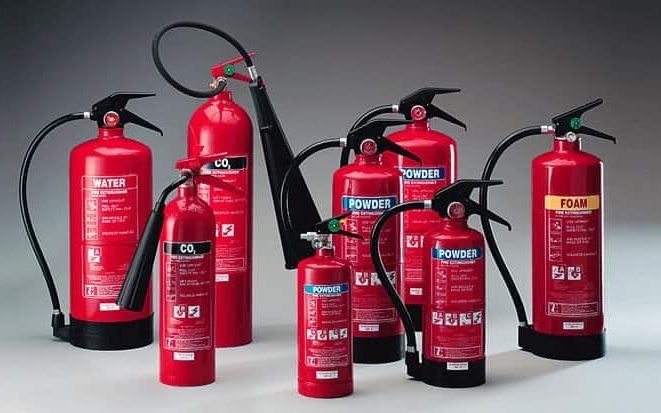
Water Fire Extinguishers
Water extinguishers are suitable for fires involving solid materials such as wood, paper, and textiles. They work by cooling the flames and reducing heat. These are commonly used in homes, schools, and offices. However, they should never be used on electrical or flammable liquid fires.
Foam Fire Extinguishers
Foam extinguishers are effective for flammable liquids like petrol, oil, and paint, as well as solid materials. They form a blanket over the fire, cutting off oxygen and preventing re-ignition.
They are ideal for offices, warehouses, and commercial buildings.
Dry Powder Fire Extinguishers
Dry powder extinguishers are versatile and can handle fires involving solids, liquids, gases, and electrical equipment. They are often used in industrial environments and vehicles. Although very effective, they can reduce visibility and leave residue, which makes them less suitable for enclosed indoor spaces like homes.
Carbon Dioxide Fire Extinguishers
CO₂ extinguishers are best for electrical fires and flammable liquids. They work by displacing oxygen and cooling the fire. These extinguishers are commonly installed in server rooms, offices, and areas with electrical equipment. They leave no residue, making them clean and efficient.
Wet Chemical Fire Extinguishers
Wet chemical extinguishers are designed specifically for cooking oil and fat fires. They are essential for kitchens, especially in restaurants and commercial food preparation areas.
They cool the fire and create a soapy layer that prevents re-ignition.
Fire Extinguishers for Homes
Every home should have at least one suitable fire extinguisher, especially in the kitchen. Fires caused by cooking accidents are one of the most common household risks. Having a fire extinguisher gives homeowners valuable time to control small fires or escape safely. It also provides peace of mind, knowing that basic fire protection is in place.
Fire Extinguishers for Businesses
For businesses, fire extinguishers are not optional. They are part of legal fire safety responsibilities and workplace protection.
Offices, factories, shops, hospitals, and schools all require properly selected and strategically placed extinguishers. Regular inspection and staff training are also essential to ensure effectiveness during an emergency. A well-planned fire extinguisher system helps businesses minimise damage and demonstrate commitment to employee safety.
Correct Placement and Maintenance
Fire extinguishers must be easily accessible and clearly visible. They should be installed near exits and high-risk areas such as kitchens, electrical rooms, and machinery zones. Regular inspection and servicing ensure that extinguishers are always ready to use. Pressure levels, seals, and expiry dates must be checked according to safety guidelines.
An extinguisher that is not maintained properly may fail when it is needed most.
Training and Awareness
Even the best fire extinguisher is useless if people do not know how to use it. Basic fire safety training helps individuals stay calm and act correctly in emergencies. Learning the simple PASS technique can make a big difference. Pull the pin, aim at the base of the fire, squeeze the handle, and sweep from side to side.
Final Thoughts
Fire extinguishers are a complete and reliable safety solution for both homes and businesses. They provide immediate protection, reduce fire damage, and save lives when used correctly.
Investing in the right fire extinguishers, installing them properly, and maintaining them regularly is a smart and responsible decision. Fire safety starts with preparation, and fire extinguishers remain one of the most effective tools to protect people and property.
Also Read: